

P2463 on 2007-2014 Chevrolet Silverado 3500: DPF Soot Accumulation Causes and Fixes
P2463 means your Diesel Particulate Filter (DPF) is clogged with soot. The most common fix is to drive at highway speeds for 20-30 minutes to allow the DPF to 'regenerate' and burn off the soot. If that doesn't work, the DPF pressure sensor or its hoses may have failed, or an underlying issue is preventing regeneration.
- P2463 on your Silverado most often means you need to drive at sustained highway speeds to let the DPF clean itself.
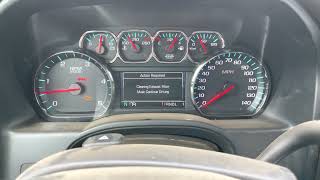
- Do not ignore the 'Clean Exhaust Filter' message. Failing to act will lead to reduced engine power and potential DPF damage.
- If highway driving doesn't clear the code, the next most likely culprits are a faulty DPF pressure sensor or its connecting hoses.
- Before considering an expensive DPF replacement, ensure all sensors, hoses, and the regeneration function have been thoroughly checked.
- Driving habits are the leading cause; if you frequently drive short distances, make it a point to take a longer, higher-speed drive at least once per tank of fuel.
What's Unique About the 2007-2014 Chevrolet SILVERADO 3500
The 2007-2014 Silverado 3500 spans two key Duramax engine generations, the LMM (2007.5-2010) and LML (2011-2014), which were among the first to incorporate DPF systems to meet stricter emissions laws. A significant number of P2463 codes on these trucks are due to driving habits—specifically, too much short-trip, low-speed driving or excessive idling—which prevent the exhaust from getting hot enough to perform a passive 'regeneration' cycle. GM issued multiple Technical Service Bulletins (TSBs), such as #10-06-05-002K, to address this exact scenario, instructing owners to "keep driving until message is cleared," highlighting how common this owner-education issue was. If these warnings are ignored, the truck will enter a reduced power mode, and self-cleaning becomes impossible, requiring dealer service.
Diagnostic Flowchart
Tap your situation to follow the diagnostic path that matches what you're seeing on this vehicle.
Generation note: This range covers the GMT900 platform and two Duramax engine versions: the LMM (VIN 8th digit '6') from 2007.5-2010 and the LML (VIN 8th digit '8') from 2011-2014. While both use a DPF, the LML has a more complex system that also includes Diesel Exhaust Fluid (DEF) for its SCR system and a dedicated '9th injector' (hydrocarbon injector) to introduce fuel for active regeneration. P2463 is primarily related to the DPF soot level on both, but the failure points leading to it can differ.
Symptoms You May Notice
- "Clean Exhaust Filter" or similar message on the Driver Information Center (DIC).
- Check Engine Light is on.
- Reduced engine power or "limp mode".
- Noticeable decrease in fuel economy.
- Black smoke from the exhaust in severe cases.
- Frequent or constantly active regeneration cycles.
- Overheated DPF housing or other exhaust components.
- Replacing the entire DPF assembly when only the pressure sensor or its hoses were faulty. This is a very expensive mistake.
- Replacing oxygen sensors, which are not the primary cause for this specific DPF code.
- Repeatedly attempting forced regenerations without diagnosing the root cause of why it's not regenerating on its own (e.g., bad sensor, failed 9th injector).
Most Likely Causes
- DPF requires a regeneration cycle 🔴 High Probability Driving habits that don't allow for passive regeneration (e.g., short trips, excessive idling) are very common, leading to soot buildup. This was a known issue addressed by multiple GM TSBs.
How to confirm: A "Clean Exhaust Filter Keep Driving" message appears on the DIC. The code often appears without any actual part failure, especially on trucks with high idle hours.
Typical fix: Drive the vehicle at speeds above 30 mph (50 km/h) for 20-30 minutes to allow the DPF to heat up and complete a regeneration cycle.
Est. part cost: $0 - Failed DPF Differential Pressure Sensor 🟡 Medium Probability The sensor is exposed to harsh exhaust conditions and can fail over time, sending false readings of high pressure to the ECM even when the filter is clean. Moisture or internal contamination can also cause the sensor to drift from its correct calibration.
How to confirm: Use a scan tool to monitor the DPF pressure sensor voltage/pressure readings. With the engine off, the reading should be zero. At idle, it should be very low (e.g., under 1 psi). If readings are illogical (e.g., high pressure with engine off, erratic jumps), the sensor is likely faulty.
Typical fix: Replace the DPF pressure sensor.
Est. part cost: $70-$150 - Clogged or cracked DPF pressure sensor hoses 🟡 Medium Probability The rubber or metal hoses connecting the exhaust to the pressure sensor can become clogged with soot or crack/kink from heat and vibration, leading to incorrect pressure readings. Owners on forums report these hoses breaking during removal due to brittleness.
How to confirm: Visually inspect the hoses for cracks, brittleness, or damage. Remove them and check for blockages by blowing low-pressure compressed air through them. A complete blockage will trap pressure and mimic a clogged DPF.
Typical fix: Clean the hoses if clogged or replace them if damaged. It is often recommended to replace them when replacing the sensor.
Est. part cost: $40-$100 - Permanently clogged or failed DPF ⚪ Low Probability If regeneration cycles are repeatedly ignored or fail due to other issues, the soot can bake into hard ash that cannot be burned off, permanently clogging the filter. High idle time is a major contributor, as ash loading is not cleared by regeneration.
How to confirm: A forced regeneration using a professional scan tool fails to clear the code or significantly lower the soot level reading (e.g., soot load remains high). The DPF may need to be removed for inspection and flow testing.
Typical fix: Have the DPF professionally cleaned by a specialized service or replace the entire DPF assembly.
Est. part cost: $300-$800 (for cleaning), $1500-$3000+ (for replacement)
Rare But Worth Checking
- Failed exhaust gas temperature (EGT) sensor: The ECM uses these sensors to monitor temperatures required for regeneration. If a sensor fails and provides a false low-temperature reading, the ECM may not initiate a regen cycle, leading to soot buildup.
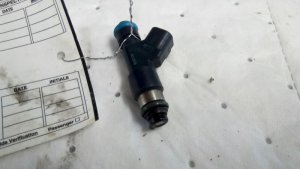
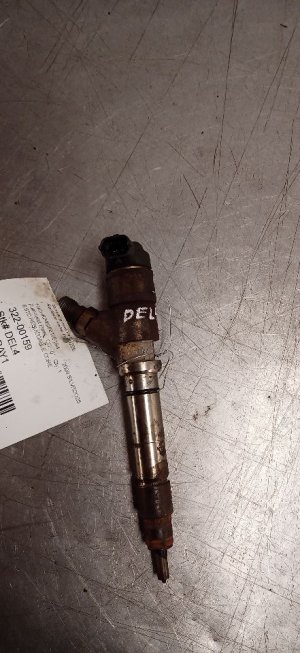
- Failed 9th injector (LML engines): On 2011+ LML engines, a dedicated '9th injector' (hydrocarbon injector) sprays fuel into the exhaust stream to initiate regeneration. If this injector fails, clogs, or its fuel line is restricted, regeneration cannot occur, leading directly to P2463. 🎬 See this walkthrough on replacing the LML 9th injector
- Air intake leak or collapsed air filter: A collapsed or dirty air filter, or a leak in the charge air system after the turbo, can cause rich running conditions, creating excessive soot that overwhelms the DPF. TSB PI0845 for LML engines specifically calls out inspecting for air leaks as a primary diagnostic step for P2463. Forum experts note LML engines are very sensitive to intake leaks, which can cause various codes.
- Other underlying engine fault codes: The ECM will often inhibit a forced or active regeneration if other engine-related fault codes are present, such as for glow plugs or the EGR system. Resolving these other codes is necessary before the P2463 can be addressed.
Diagnosis Steps
- Check the Driver Information Center (DIC) for messages like "Clean Exhaust Filter Keep Driving". If present, follow the instructions and drive at highway speeds (above 30 mph) for 20-30 minutes.
- If the code returns, connect an OBD-II scanner to confirm P2463 is present. Check the freeze frame data. Use the scanner to view live data for DPF Soot Load %, DPF pressure, and Exhaust Gas Temperatures.
- Monitor the DPF pressure sensor readings. The value should be near zero with the engine off and low at idle (e.g., <1 psi). If it reads high with the engine off, the sensor is bad.
- Visually inspect the DPF pressure sensor hoses for any signs of cracking, melting, kinking, or physical damage. As reported by owners, these can be brittle and break easily.
- Carefully remove the hoses and inspect them for blockages. Blow low-pressure compressed air through them to ensure they are clear. Soot buildup inside is common.
- For LML (2011+) engines, test the 9th injector (hydrocarbon injector). A capable scan tool can command it on; with the injector removed from the exhaust, you should see fuel spray. If not, it has likely failed.
- Inspect the air intake system for leaks and check the air filter for collapse or extreme dirtiness, which can cause excessive soot.
- If sensors, hoses, and the 9th injector are good, a forced regeneration may be attempted with a capable scan tool. 🎬 Watch: How to perform a DPF regen using a scan tool This should only be done after verifying the engine oil is not diluted with fuel and resolving any other engine codes.
- If a forced regeneration fails to lower soot levels significantly or the code returns quickly, the DPF is likely clogged with non-burnable ash and requires professional off-vehicle cleaning or replacement.
Parts You'll Likely Need
- Diesel Particulate Filter (DPF) Pressure Sensor
(OEM #12643955) - DPF Pressure Sensor Hoses/Pipes
- Hydrocarbon Injector (9th Injector) - LML Only
(OEM #19421482) - Diesel Particulate Filter (DPF) Assembly
Related Codes That Often Appear With This One
- P24A0 — Mentioned in TSB #PIP5085B. This code relates to 'Closed Loop DPF Regeneration Control at Limit - Temperature Too Low,' indicating a problem with the regeneration process itself (like a bad 9th injector or EGT sensor), which directly leads to soot buildup and P2463.
- P0420 — Also mentioned in TSB #PIP5085B. While typically a gasoline catalyst code, GM service information links it with P2463 on LML engines, often pointing to a failure in the hydrocarbon (9th) injector system preventing proper DPF regeneration.
- P0101 — This Mass Air Flow (MAF) sensor code can be triggered by a collapsed/dirty air filter or an intake leak. These conditions cause incorrect air/fuel mixtures, leading to excess soot production that clogs the DPF and sets P2463.
Technical Service Bulletins (TSBs) & Recalls
- 10-06-05-002K: The main TSB covering the 'Keep Driving' message and P2463, explaining that driving habits are a primary cause and instructing drivers on how to allow a regeneration to complete.
- PI0845: A preliminary information bulletin for LML engines specifically, instructing technicians to inspect for air induction leaks when P2463 is set, as this can cause excessive soot.
- PIP5085B: Connects P2463 with P0420 and P24A0, pointing towards issues with the regeneration system itself, often the 9th injector on LML models.
- 17-NA-352: Provides information on DPF soot accumulation and how to interpret it, noting that a service regeneration is not always as effective as a 'Regeneration Enable' followed by a drive cycle.
Platform-Specific Known Issues
- High Idle Time and Ash Loading: These trucks, especially if used as work or fleet vehicles, accumulate high idle hours. Idling does not produce enough heat for regeneration, causing rapid soot buildup. Over time, this leads to a high concentration of non-burnable ash, which can't be cleared by regeneration and will eventually require DPF replacement. A common calculation used by technicians is (Engine Hours x 33) to estimate 'equivalent miles'; if this number is much higher than the odometer reading, high idle time is a likely factor.
- 9th Injector Failures on LML (2011-2014): The LML engine's hydrocarbon (9th) injector is critical for active regeneration. When it fails or clogs, the truck loses its ability to self-clean the DPF, quickly leading to a P2463 code. This is a common failure point specific to the LML generation and is often accompanied by codes P24A0 or P0420.
Mechanic-Grade Diagnostic Values
- DPF Pressure Sensor Voltage (KOEO - Key On, Engine Off) — expected: ~0.5V. Failure: A reading significantly higher than 0.5V (e.g., 1.0V or more) with the engine off points to a faulty sensor.
- DPF Pressure Sensor Voltage (Engine at Idle) — expected: 0.5V to 0.55V. Failure: Voltage that is high at idle or does not change when the engine is revved suggests a clogged DPF, clogged sensor hoses, or a bad sensor.
- DPF Pressure Sensor 5V Reference Wire — expected: 4.5V - 5.0V. Failure: Voltage outside this range indicates a wiring or ECM problem, not a sensor failure.
- DPF Soot Load (Calculated) — expected: Regeneration typically initiates around 42 grams on LML or 100-115% on newer systems.. Failure: P2463 often sets when soot load is extremely high (e.g., over 80 grams or 140%), indicating that a normal regeneration is locked out and a service regeneration is required.
Scan Tool Commands That Help
- GDS2 / Tech2: Service Regeneration (also called Forced Regeneration) — This command is used when the P2463 code is set and the truck is in 'limp mode'. The ECM has determined the soot load is too high for a normal driving regeneration and requires a stationary, high-temperature cleaning cycle commanded by a technician.
- GDS2 / Tech2: DPF Regeneration Enable — This function is used to command the ECM to perform a regeneration on the next drive cycle, once driving conditions are met. This may be used if a service regeneration is not immediately necessary but the system is inhibited.
- GDS2 / Tech2: Injector Test (for 9th Injector on LML) — This bidirectional command activates the 9th injector, allowing a technician to verify it is spraying fuel. It's a critical step on LML engines if regeneration is failing to start.
Wiring & Ground Locations
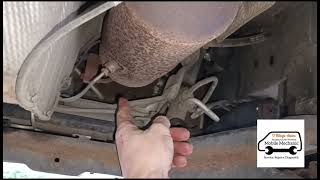
- DPF Pressure Sensor Connector — The sensor is typically mounted on a bracket near the transmission bellhousing or on the frame rail, connected by two hoses to the DPF.. Testing the three pins at this connector is a primary diagnostic step. You should find a 5-volt reference, a ground (near 0V), and a signal wire (around 0.5V KOEO). Incorrect voltages here can quickly diagnose a bad sensor versus a wiring issue.
Real Owner Repair Stories
- DuramaxDiesels.com forum user (2015 Duramax LML) — DPF cleaning message, then 'Reduced Engine Power' limp mode, and finally code P2463 for soot accumulation.
❌ Tried (didn't work) Driving to initiate a normal regen. The truck would not regen because it was already in limp mode.
✅ What actually fixed it The root cause was a failed EGT #4 sensor that was reading an implausible 1832°F on a cold start, which set codes P2471 and P113A. The bad EGT data prevented the truck from ever entering regeneration mode, which eventually led to the DPF clogging and setting P2463. Replacing the faulty EGT sensor allowed the system to function correctly again, but a service regeneration was still needed to clear the initial P2463. - Reddit user on r/Duramax (2007.5 Duramax LMM) — P2463 code, 'Clean Exhaust System' message, reduced power mode.
❌ Tried (didn't work) Replacing the DPF pressure sensor and its pipes, attempting a manual regen with a code reader (which failed and put the truck into limp mode).
✅ What actually fixed it The user was eventually able to successfully run a 'DPF Service Regen' which dropped the soot level from a calculated 81 grams down to a very low level, clearing the code. However, the 'Clean Exhaust Filter' message returned on the very next drive, indicating the service regen was a temporary fix and an underlying issue causing rapid soot buildup (or a sensor misreading) was still present. The user's next step was to replace the DPF pressure sensor again.
"I Checked Everything" — The Actual Cause
- On LML engines, un-metered air leaks after the Mass Airflow (MAF) sensor are a known cause of excessive soot production. A leak at the turbo intake horn or charge air cooler pipes can cause the engine to run rich, creating more soot than the DPF can handle. This condition will not be found with a standard exhaust smoke test and may not even set a MAF-related code, making it a commonly missed root cause for P2463.
OEM Part Supersession History
12630257→12643955— Updated design for the DPF Pressure Sensor.
Heads up: Part number 12643955 has also been referenced as superseded by 25203477, though 25203477 is often marketed as a 4-bar MAP sensor. Verify application before purchasing.12661071→19421482— Updated design for the LML Hydrocarbon '9th' Injector.
Model Year Variations Within This Range
- 2007.5-2010 (LMM Engine): The LMM engine initiates an active DPF regeneration by injecting extra fuel during the exhaust stroke of the main engine cylinders. This means a failure to regenerate could be related to the main fuel injectors or engine controls, but there is no separate, dedicated injector to diagnose.
- 2011-2014 (LML Engine): The LML engine uses a dedicated '9th injector' (hydrocarbon injector) located in the exhaust downpipe to spray fuel directly into the exhaust stream to start regeneration. This adds a specific, common failure point: the 9th injector itself can clog or fail, preventing regeneration and directly causing a P2463 code.
Helpful Videos

Used OEM Parts in Stock
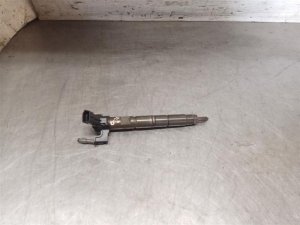

New Aftermarket Parts Available


The information in this article is provided for general reference and educational purposes only. Vehicle specifications, procedures, and part compatibility can vary by production date, trim level, and region. Always consult your vehicle's factory service manual and verify part numbers before purchasing or performing repairs. Safety-critical components such as airbags, seat belts, and braking systems should be installed by a qualified professional.
- Chevrolet SILVERADO 3500:
- 🎬 Helpful Videos
- 🛍️ Shop This Part
- What's Unique About the 2007-2014 Chevrolet SILVERADO 3500
- Diagnostic Flowchart
- Symptoms You May Notice
- Most Likely Causes
- Rare But Worth Checking
- Diagnosis Steps
- Parts You'll Likely Need
- Related Codes That Often Appear With This One
- Technical Service Bulletins (TSBs) & Recalls
- Platform-Specific Known Issues
- Mechanic-Grade Diagnostic Values
- Scan Tool Commands That Help
- Wiring & Ground Locations
- Real Owner Repair Stories
- "I Checked Everything" — The Actual Cause
- OEM Part Supersession History
- Model Year Variations Within This Range
- 🎟️ Get 5% Off