

P2463 on 2012-2016 Chevrolet Express: DPF Soot Accumulation Causes & Fixes
Code P2463 on a 2012-2016 Chevy Express with the 6.6L Duramax engine means the Diesel Particulate Filter (DPF) is clogged with soot. This is often due to failed regeneration cycles caused by short-trip driving or a faulty DPF pressure sensor. A forced regeneration or sensor replacement is the most common fix.
- P2463 means your van's diesel particulate filter is clogged with soot.
- First, try driving on the highway at a steady speed (above 30 mph) for 30 minutes to allow the van to clean the filter itself.
- If highway driving doesn't work, the most common culprits are a bad DPF pressure sensor or its hoses.
- Do not ignore this code. It will lead to reduced engine power and can cause permanent, costly damage to the DPF.
- This issue is often preventable with regular highway driving to allow the DPF to complete its self-cleaning cycles.
What's Unique About the 2012-2016 Chevrolet EXPRESS
The 2012-2016 Express vans with the 6.6L Duramax diesel engine (LGH) have a known pattern of this issue, as documented by multiple GM Technical Service Bulletins. The LGH engine in these vans is a de-rated version of the LML found in Silverado trucks, designed for commercial use. 🎬 Watch: How a DPF regen works and why they fail. The primary issue is often driver behavior; these vans require highway driving at sustained speeds to automatically clean the DPF (a process called regeneration). If driven mostly for short trips, in stop-and-go traffic, or subjected to extended idling, the system cannot regenerate, leading to a soot-clogged filter and the P2463 code. GM has issued several bulletins to dealerships explaining this process and emphasizing that if no component fault is found, the cost of a forced regeneration may not be covered by warranty.
Diagnostic Flowchart
Tap your situation to follow the diagnostic path that matches what you're seeing on this vehicle.
Symptoms You May Notice
- Check Engine Light is on
- "Reduced Engine Power" message displayed on the Driver Information Center (DIC)
- Vehicle enters "limp mode," with significantly limited power and acceleration
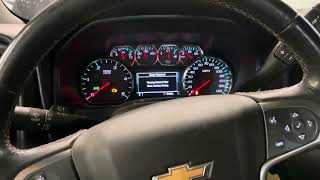
- DIC messages such as "Clean Exhaust Filter See Owner Manual Now" or "Cleaning Exhaust Filter Keep Driving Until Message is Cleared".
- Increased fuel consumption
- Noticeable decrease in engine performance
- Excessive black smoke from the exhaust in severe cases
- Replacing the DPF immediately. The DPF is the victim, not usually the root cause. The actual cause is often a failed sensor, an air leak, or incomplete regeneration cycles. Always diagnose sensors, check for leaks, and attempt a forced regeneration before condemning the expensive DPF assembly.
Most Likely Causes
- Failed DPF Regeneration Cycles 🔴 High Probability These vans are often used for commercial purposes involving short trips and extended idling, which prevents the exhaust from getting hot enough for a complete regeneration cycle. GM bulletins specifically note that this driving style is a primary cause.
How to confirm: Review driving habits. If the van is rarely driven at highway speeds for 30+ minutes, this is a likely cause. A capable scan tool can show the DPF soot level (P2463 may set when soot reaches 70 grams or more) and the distance/time since the last successful regeneration.
Typical fix: First, attempt to initiate a regeneration cycle by driving at a sustained speed of over 30 mph (50 km/h) for 20-30 minutes until the DIC message clears. If that fails (which is likely once P2463 is set), a mechanic will need to perform a "forced regeneration" or "Service Regeneration" with a diagnostic scan tool. 🎬 See how to handle a clogged DPF and forced regeneration.
Est. part cost: $0-$200 (for a shop-forced regeneration) - Faulty DPF Pressure Sensor 🟡 Medium Probability These sensors operate in a harsh environment and can fail, get clogged with soot, or provide inaccurate readings to the ECM. The hoses connected to the sensor can also become clogged, cracked, or melted.
How to confirm: Use a scan tool to monitor the DPF pressure sensor readings. With the engine off, the reading should be 0 PSI. At idle, it should be very low, typically around 0.5 volts. If the reading is high with the engine off or does not increase with RPM, the sensor is likely faulty. A mechanic can also test the sensor's voltage output; it receives a 5-volt reference from the ECM.
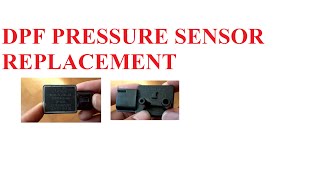
Typical fix: Replace the DPF pressure sensor and/or its hoses. This is a relatively accessible part. 🎬 Watch this walkthrough on how to change the pressure sensor.
Est. part cost: $50-$150 - Faulty 9th Injector (Hydrocarbon Injector/Vaporizer) ⚪ Low Probability The Duramax engine uses a dedicated 9th injector to spray fuel into the exhaust stream to start DPF regeneration. This injector can clog or fail, preventing the exhaust from reaching the required temperature for regeneration. Failures can sometimes result in white smoke from the passenger side of the engine bay during attempted regens.
How to confirm: A scan tool can command the 9th injector to operate while monitoring exhaust temperatures (EGTs). If EGTs do not rise sufficiently during a forced regen, the injector is a likely suspect. After removal or replacement, the injector must be purged of air using a scan tool to enable a DPF regeneration.
Typical fix: Clean or replace the 9th injector assembly.
Est. part cost: $200-$400 - Faulty Exhaust Gas Temperature (EGT) Sensor ⚪ Low Probability The regeneration process is highly dependent on precise temperature control. If one of the multiple EGT sensors fails or provides an inaccurate reading, the ECM will not initiate or will abort regeneration to avoid a potential fire or damage.
How to confirm: Use a scan tool to compare readings from all EGT sensors with the engine cold (they should all be close to ambient temperature) and during operation. A sensor that reads significantly different from the others or doesn't change with engine temperature is likely faulty.
Typical fix: Replace the faulty EGT sensor.
Est. part cost: $40-$100 per sensor
Rare But Worth Checking
- Physically Damaged or Ash-Saturated DPF: If the vehicle has been driven for an extended period with the P2463 code active, the soot can become so compacted that even a forced regeneration won't work. Furthermore, over the life of the vehicle, non-combustible ash (a byproduct of burning soot and engine oil) accumulates and will eventually fill the DPF, requiring professional off-vehicle cleaning or complete replacement.
- Intake or Exhaust Air Leaks: A leak in the air induction system (post-turbo, especially at the charge air cooler hoses) or exhaust system (pre-DPF) can alter the air/fuel mixture and sensor readings, leading to excessive soot production and contributing to the DPF clogging. GM bulletin PI0845 (superseded by later bulletins) details checking for air leaks, specifically at the charge air cooler (CAC) hoses, as a key diagnostic step before forcing a regeneration.
Diagnosis Steps
- Read the code with an OBD-II scanner and check for any other related codes (e.g., for EGT sensors, pressure sensor circuits, or underboost). Address other codes first.
- Check the Driver Information Center (DIC) for messages. If it says "Keep Driving to Clean Filter," attempt a highway drive at over 30 mph for at least 30 minutes. If P2463 is already set, this will likely not work.
- Inspect the entire air induction system for leaks, especially the charge air cooler (CAC) hoses and connections, per GM service bulletins.
- Inspect the DPF pressure sensor hoses. Look for cracks, melting, kinks, or soot blockages.
- Using a capable scan tool, monitor the DPF pressure sensor readings. With the engine off, it should be 0 PSI. At idle, it should be near 0 PSI (around 0.5V). During a hard acceleration, it might briefly spike but should not be excessively high (e.g., over 2-3 PSI at steady cruise). If readings are illogical, the sensor is a prime suspect.
- If sensors and hoses are good, attempt a "Service Regeneration" or "Forced Regeneration" using the scan tool. Monitor EGTs during this process to ensure they reach the target temperatures (over 1000°F).
- If regeneration fails to start or complete, investigate the components required for regeneration: check EGT sensor readings for plausibility and test the function of the 9th injector (hydrocarbon injector).
- If all sensors are working and regeneration still fails or the code returns quickly, the DPF may be saturated with ash. It will need to be removed for professional 'baking and cleaning' or replacement.
Parts You'll Likely Need
- DPF Pressure Sensor
(OEM #ACDelco 12630257)— This sensor is a common failure point. It can provide false high-pressure readings, tricking the ECM into thinking the DPF is clogged when it isn't.
Trusted brands: ACDelco (GM Genuine), Bosch, Standard Motor Products (SMP)
OEM price range: $80-$150
Aftermarket price range: $50-$100 - DPF Pressure Sensor Pipe/Hose
(OEM #GM 84316440 (example, verify by VIN))— The pipes or rubber hoses connecting the DPF to the pressure sensor can crack, melt, or get clogged with soot, causing incorrect readings.
Trusted brands: GM Genuine, Dorman
OEM price range: $70-$130
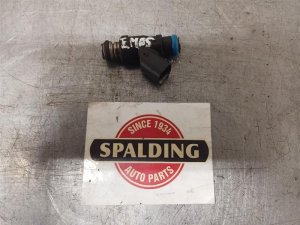
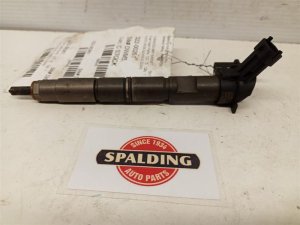
Aftermarket price range: $40-$80 - Indirect Fuel Injector (9th Injector)
(OEM #GM 12661071 / 19421482)— This injector is critical for DPF regeneration. It can become clogged or fail electronically, preventing the regeneration process from starting or completing successfully, leading to soot buildup.
Trusted brands: GM Genuine
OEM price range: $200-$400
Related Codes That Often Appear With This One
- P0299 (Turbocharger Underboost) - Can be seen if the DPF is so restricted that it affects turbo performance, or if a boost leak is the root cause of excess soot.
- P2459 (Diesel Particulate Filter Regeneration Frequency) - Often appears alongside P2463, indicating the system has been trying to regenerate too often before the filter became critically full.
Technical Service Bulletins (TSBs) & Recalls
- TSB #10-06-05-002 (multiple revisions like M, L, E): This is the primary informational bulletin from GM. It explains to dealers and technicians that the 'Clean Exhaust Filter' messages and code P2463 are often caused by driving habits (short trips, idling) that prevent automatic regeneration. It outlines the warning message stages and clarifies that a forced regeneration for this reason may not be a warrantable repair.
- TSB PI0845: This Preliminary Information bulletin instructs technicians to inspect for air leaks, particularly at the charge air cooler (CAC) hoses, before performing a service regeneration for a P2463 code. This suggests that boost leaks are a known contributor to the problem.
Platform-Specific Known Issues
- GM has issued multiple Technical Service Bulletins (TSBs) regarding P2463 and the DPF cleaning messages on the DIC. Bulletins like #10-06-05-002M emphasize that driver action (highway driving) is required and that a service visit for a forced regen due to driving style may not be covered under warranty.
- Extended idling is a major issue for these vans. A technician video highlights a work truck with only 79k miles but over 4800 engine hours, calculating to an 'equivalent mileage' of over 150,000 miles, leading to a severely clogged DPF.
- The 9th injector (hydrocarbon injector) used on the LML/LGH engines is a known failure point that prevents regeneration. GM has previously issued special policy warranty extensions for this part on some models.
Mechanic-Grade Diagnostic Values
- DPF Pressure Sensor Signal Voltage (KOEO) — expected: ~1.0V. Failure: Voltage significantly different, or 0V/5V, indicates a sensor or wiring fault.
- DPF Pressure Sensor Signal Voltage (Idle) — expected: ~0.5V. Failure: Significantly higher voltage at idle suggests a blockage or a faulty sensor.
- DPF Pressure Sensor Reference Voltage — expected: 5V. Failure: No voltage or low voltage indicates a wiring problem or an issue with the ECM's 5V reference circuit.
- Fuel Injector (Piezo) Resistance — expected: 150k - 210k Ohms. Failure: A reading outside this range indicates a faulty injector coil.
- Fuel Rail Pressure (Cranking) — expected: > 10 MPa. Failure: Pressure less than 10 MPa during cranking indicates a high-pressure fuel system issue that could prevent proper 9th injector function.
Scan Tool Commands That Help
- GDS2 / Tech 2: Service Regeneration — This is the primary tool-commanded function to burn off excessive soot when P2463 is set and passive regeneration is disabled. It is essential after confirming no other mechanical faults exist.
- GDS2 / Tech 2: DPF Regeneration Enable — Used to purge air from the 9th injector (hydrocarbon injector) after it has been replaced or the fuel line has been disconnected. Failure to do this can cause the new injector to fail.
- GDS2 / Tech 2: EGR Valve Closed Command — Used during diagnostics to check for air leaks in the induction system. With the EGR closed, the 'Air Leak Equivalence Ratio' parameter should be between 0.80:1 and 1.20:1. A value outside this range points to an air leak.
Wiring & Ground Locations
- G103 — Located at the left rear of the engine compartment on the cowl, above the brake booster.. This is a major ground point for the Body Control Module (BCM) and Engine Control Module (ECM). A poor connection here can cause erratic sensor readings and communication issues.
- ECM Ground (Pin 73) — Pin 73 on the ECM X2 connector is a primary ground for the module.. A compromised ground on this specific pin can lead to a host of engine management and sensor-related codes, including those for the DPF system.
- Main Engine Ground — The main ground cable from the battery typically bolts to the passenger side front of the engine block on these vans.. All sensors ground through the engine block back to the battery. A corroded or loose main engine ground can create a voltage potential difference, causing inaccurate readings from critical sensors like the DPF pressure sensor and EGT sensors.
Real Owner Repair Stories
- YouTube video from Dairle Auto Classic Restoration Repair (2010 Chevrolet Express 3500 Duramax Van) — Vehicle was in Reduced Power mode with a DPF-related code (P2463 is implied).
❌ Tried (didn't work) The video does not detail prior failed attempts, but focuses on the direct solution.
✅ What actually fixed it The technician used an Autel scan tool to perform a forced "Service Regeneration." The process involved running the engine at a high RPM for an extended period as commanded by the scan tool, which successfully cleaned the filter and allowed the code to be cleared.
OEM Part Supersession History
GM 12661071→GM 19421482— This is a part number update for the Indirect Fuel Injector (9th Injector) assembly used on 2011-2016 LGH/LML engines. The reason for the change is not specified but often relates to minor revisions or supplier changes.
Heads up: The parts are interchangeable for the specified model years.
Model Year Variations Within This Range
- 2011-2016: The Chevrolet Express and GMC Savana vans in this period used the 6.6L LGH Duramax engine, not the LML found in most Silverado/Sierra pickups of the same era. The LGH is a de-rated version with a smaller turbocharger and lower power output (260 hp, 525 lb-ft) paired with a GM 6L90E transmission instead of the Allison. While many DPF components are shared, diagnostics should be specific to the LGH.
- 2012: A GM service bulletin specifically calls out that on 2012 Express and Savana vans, the DPF Service Regeneration function on the scan tool will not run if the calculated soot accumulation is over 120 grams. This software lockout is a specific diagnostic hurdle for this model year.
Helpful Videos
Used OEM Parts in Stock

New Aftermarket Parts Available


The information in this article is provided for general reference and educational purposes only. Vehicle specifications, procedures, and part compatibility can vary by production date, trim level, and region. Always consult your vehicle's factory service manual and verify part numbers before purchasing or performing repairs. Safety-critical components such as airbags, seat belts, and braking systems should be installed by a qualified professional.
- Chevrolet EXPRESS:
- 🎬 Helpful Videos
- 🛍️ Shop This Part
- What's Unique About the 2012-2016 Chevrolet EXPRESS
- Diagnostic Flowchart
- Symptoms You May Notice
- Most Likely Causes
- Rare But Worth Checking
- Diagnosis Steps
- Parts You'll Likely Need
- Related Codes That Often Appear With This One
- Technical Service Bulletins (TSBs) & Recalls
- Platform-Specific Known Issues
- Mechanic-Grade Diagnostic Values
- Scan Tool Commands That Help
- Wiring & Ground Locations
- Real Owner Repair Stories
- OEM Part Supersession History
- Model Year Variations Within This Range
- 🎟️ Get 5% Off