

P2463 on 2007-2011 Chevrolet Express: DPF Restriction Causes and Fixes
P2463 means the Diesel Particulate Filter (DPF) is clogged with soot. The most common fix is to drive at highway speeds (over 30 MPH) for 20-30 minutes to let the filter 'regenerate'. If that fails, the issue is often a faulty DPF pressure sensor or its hoses. A forced 'service' regeneration at a shop may be required if soot levels are critically high.
- P2463 means your van's diesel particulate filter is clogged with soot.
- Your first and cheapest step is to drive on a highway at over 50 MPH for about 30 minutes to let the system clean itself.
- If highway driving doesn't work, the most likely culprits are a bad DPF pressure sensor or its connecting hoses.
- Do not ignore this code, especially if the 'Engine Power is Reduced' message appears. This can lead to very expensive DPF replacement.
- If you frequently idle or make short trips, this code is likely to reappear. Ensure the van gets regular highway time to keep the DPF healthy.
What's Unique About the 2007-2011 Chevrolet EXPRESS
For the 2007-2011 Express vans, this code is directly tied to the 6.6L Duramax diesel engines (LMM and LGH) and their emissions systems. These engines were among the first to incorporate DPFs to meet stricter emissions standards. A common issue on these vans, which are often used for commercial purposes involving extended idling or short stop-and-go trips, is that the DPF doesn't get hot enough to clean itself (regenerate) automatically. GM has issued multiple Technical Service Bulletins, such as #10-06-05-002M, acknowledging this and providing specific guidance for both drivers and technicians on how to respond to DIC messages and when a service regeneration is necessary.
Diagnostic Flowchart
Tap your situation to follow the diagnostic path that matches what you're seeing on this vehicle.
Symptoms You May Notice
- Check Engine Light (Malfunction Indicator Lamp) is on.
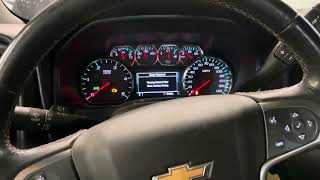
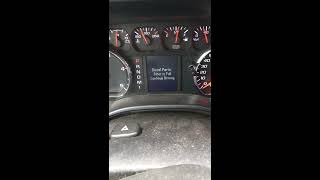
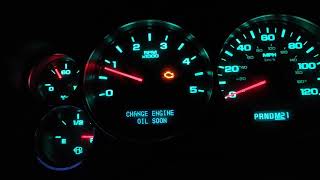
- Driver Information Center (DIC) message, such as 'Clean Exhaust Filter See Owner Manual Now' or 'Cleaning Exhaust Filter Keep Driving'.
- Engine power is reduced (also known as 'limp mode').
- Increased fuel consumption due to frequent, incomplete regeneration attempts.
- Inability to accelerate past a certain speed.
- Excessive black smoke from the exhaust if the DPF is physically failing.
- Rough idling or engine misfires.
- Replacing the DPF immediately. The DPF is expensive ($1,500-$3,000+) and often not the root cause. The problem is frequently a much cheaper failed sensor, clogged hoses, or simply the need for a regeneration cycle.
Most Likely Causes
- Insufficient DPF Regeneration Due to Driving Habits 🔴 High Probability These vans are often used for commercial work with extended idling or short, low-speed trips, which prevent the exhaust from getting hot enough for the DPF to self-clean (regenerate).
How to confirm: Review driving habits. If the vehicle is rarely driven at highway speeds for extended periods, this is the likely cause. The first step is to attempt a regeneration by driving as instructed by GM's TSBs.
Typical fix: Drive the vehicle at a sustained speed of over 30-50 MPH for at least 20-30 minutes until the DIC message clears.
Est. part cost: $0 - Faulty DPF Differential Pressure Sensor 🟡 Medium Probability The sensor measures soot buildup by comparing pressure before and after the DPF. Over time, these sensors can fail or provide inaccurate readings, falsely triggering the P2463 code even if the filter is clean.
How to confirm: A technician can use a scan tool to monitor the sensor's voltage readings. With the key on and engine off, the pressure reading should be zero. At idle, it should be low (approx. 0.5-0.7V), and rise with RPM (approx. 1.6V at 2000 RPM). If the reading is high with the engine off or doesn't change with RPM, the sensor is likely faulty.
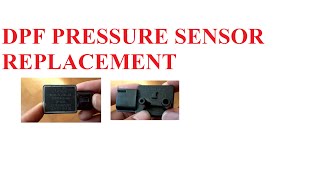
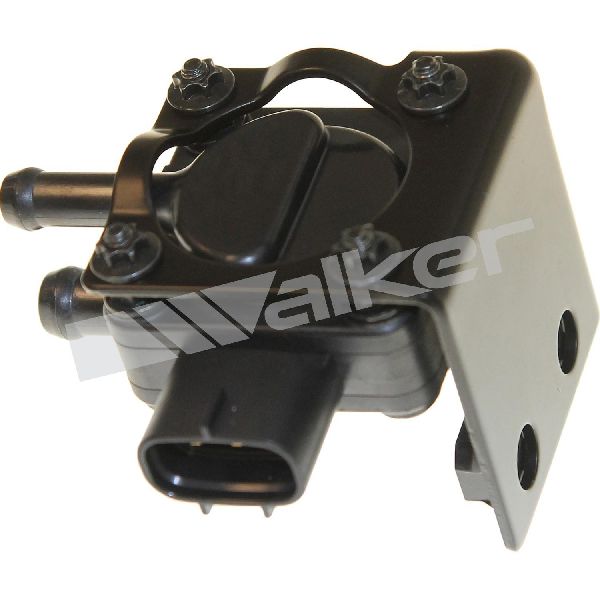
Typical fix: Replace the DPF differential pressure sensor. The common OEM part number is GM 12643939, which corresponds to ACDelco part 213-4687. 🎬 See this walkthrough on how to change the pressure sensor.
Est. part cost: $50-$150 - Clogged or Damaged DPF Pressure Sensor Hoses 🟡 Medium Probability The rubber hoses connecting the DPF to the pressure sensor can become clogged with soot, or they can crack, melt, or collapse from heat and age, leading to incorrect pressure readings.
How to confirm: Visually inspect the hoses for any signs of damage, melting, or kinks. Remove the hoses and check for blockages by blowing compressed air through them. Ensure they have a continuous downward slope from the sensor to the DPF to prevent moisture collection.
Typical fix: Replace the damaged or clogged hoses. This is a low-cost repair, often done at the same time as sensor replacement.
Est. part cost: $20-$60 - DPF Requires Forced 'Service' Regeneration ⚪ Low Probability If normal driving doesn't clear the filter and soot levels become critically high (e.g., over 70 grams), the system will disable automatic regeneration and require a manual procedure. On some models, if soot load exceeds 120 grams, the standard service regeneration may be locked out.
How to confirm: A professional-grade scan tool is needed to view the DPF soot level data (PID). If the level is critically high and a 'Reduced Engine Power' message is active, a service regeneration is required.
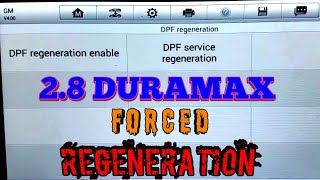
Typical fix: A technician uses a bidirectional scan tool (like a Tech 2 or GDS2) to command a stationary 'service' regeneration, which runs the engine at high RPM for 30-70 minutes to burn off the soot. This must be done in a well-ventilated area away from flammable materials. 🎬 Watch: How to perform a forced regeneration using a scan tool.
Est. part cost: $0 (Labor cost only)
Rare But Worth Checking
- Exhaust Leaks: Leaks in the exhaust system before or near the DPF can throw off pressure and temperature sensor readings, preventing regeneration and leading to an incorrect P2463 code. Check for soot trails or audible leaks, especially around flanges and gaskets.
- Underlying Engine Issues: Problems causing excessive soot, such as leaking fuel injectors, a restricted air filter, or charge air cooler (CAC) leaks, can overwhelm the DPF system faster than it can regenerate. These must be fixed to solve the DPF issue long-term.
- End-of-Life DPF (Ash Accumulation): Regeneration burns soot into ash. Over many miles (typically 100,000+), this incombustible ash builds up and permanently clogs the filter. At this point, no amount of regeneration will work, and the DPF requires professional off-vehicle cleaning or replacement.
Diagnosis Steps
- Read the code with an OBD-II scanner to confirm P2463 is present. Note any other codes, as they may point to the root cause.
- Check the Driver Information Center (DIC) for messages like 'Clean Exhaust Filter'. If present and the engine is not in limp mode, attempt a regeneration by driving at highway speeds (above 30-50 mph) for 20-30 minutes.
- If regeneration fails or is not possible, perform a thorough visual inspection of the DPF pressure sensor hoses. Look for cracks, melting, kinks, or loose connections.
- Remove the hoses and check for soot blockages by blowing low-pressure compressed air through them.
- Using a capable scan tool, monitor the DPF differential pressure sensor readings. With the Key On, Engine Off (KOEO), the pressure should read at or near 0 kPa/0 PSI. If it shows a significant reading, the sensor is biased and faulty.
- Start the engine. At idle, the pressure should be low (e.g., 1-3 kPa or ~0.5-0.7V). Rev the engine; the pressure should rise smoothly (e.g. ~1.6V at 2000 RPM). If it's unresponsive or erratic, the sensor is suspect.
- If sensor readings are suspect despite good hoses, test the sensor's wiring. Check for 5V reference, good ground, and signal integrity at the ECM connector pins.
- If the sensor and hoses are good but the filter is confirmed to be clogged (via scan tool soot level data), a forced 'service' regeneration is necessary. This should be done by a professional in a safe, well-ventilated area.
- If a forced regeneration fails or the code returns quickly, investigate underlying causes like exhaust leaks, charge air cooler (CAC) leaks, or engine issues causing excessive soot (e.g., faulty injectors, MAF sensor, or EGR problems).
- If the vehicle has high mileage (100,000+ miles) and has had many regeneration cycles, the DPF may be at the end of its life due to ash accumulation and require professional off-vehicle cleaning or replacement.
Parts You'll Likely Need
- DPF Differential Pressure Sensor
(OEM #12643939)— This sensor is a common failure point. It can provide false readings that the DPF is clogged, making it a primary suspect after checking hoses and attempting regeneration.
Related Codes That Often Appear With This One
- P0299 — A severely clogged DPF can create excessive exhaust backpressure, preventing the turbocharger from spooling up effectively and causing a 'Turbocharger Underboost' condition.
- P244C — This code relates to exhaust temperature being too low for regeneration. If the exhaust can't get hot enough (e.g., due to a faulty thermostat), regeneration will fail, leading to soot accumulation and eventually P2463.
- P0101 — This code for Mass Air Flow (MAF) Sensor Performance can be triggered by air leaks in the intake system. These same leaks can cause excessive soot production, leading to P2463. GM Preliminary Bulletin PI0845 specifically advises checking for any air leak condition when P2463 is present.
Technical Service Bulletins (TSBs) & Recalls
- 10-06-05-002M
- 10-06-05-002L
- 100605002E
- PI0845
Platform-Specific Known Issues
- GM has issued multiple Technical Service Bulletins (TSBs) related to P2463 and DPF messages, indicating this is a well-documented issue. The primary advice is to educate the driver on how to allow automatic regeneration to occur by driving at highway speeds.
- In some cases, the Engine Control Module (ECM) software may not adequately diagnose frequent DPF regeneration, requiring a software update at the dealership as per recall N192273630 (though this recall primarily targets later model years, software updates can be a factor).
Mechanic-Grade Diagnostic Values
- DPF Differential Pressure Sensor Signal Voltage (at sensor) — expected: Approx. 0.5V - 0.7V at idle, rising to approx. 1.6V at 2000 RPM (unrestricted).. Failure: Voltage reading near 0V or as high as 4.0V, or a reading that does not change with RPM. A high reading with the engine off indicates a biased sensor.
- DPF Differential Pressure Sensor Reference Voltage (at sensor connector) — expected: 5 Volts (Key On, Engine Off). Failure: Voltage significantly lower or higher than 5V indicates a wiring or ECM issue.
- DPF Soot Load (via Scan Tool PID) — expected: Rises with use, then drops to a low percentage after a successful regeneration.. Failure: Code P2463 may set when soot mass exceeds 70 grams. Service regeneration may be disabled if soot mass exceeds 120 grams on some models.
- Scan Tool Air Leak Equivalence Ratio (with EGR commanded closed) — expected: Normal range is between 0.80:1 and 1.20:1.. Failure: A value outside this range suggests an air leak in the induction system before or after the turbo, which can cause excessive soot.
Scan Tool Commands That Help
- Tech 2 / GDS2: DPF Service Regeneration — To command a stationary, high-temperature cleaning of the DPF when passive regeneration has failed and soot levels are critically high.
- Tech 2: DPF/Catalyst 2 Reset — Used as part of a specific procedure to unlock a service regeneration when soot levels are over the maximum threshold (e.g., >120 grams). This is performed before attempting the regeneration.
- Tech 2: Reductant Fluid Quality Test (RFQT) — As a workaround in some cases where the DPF Service Regeneration will not start. A technician can start the RFQT, then exit that screen and immediately command the DPF Service Regeneration, which may then initiate.
Wiring & Ground Locations
- ECM Connector X1, Pin 14 — At the Engine Control Module (ECM).. This is the 5-Volt Reference 2 circuit for the DPF Pressure Sensor on the LMM engine. A fault here will cause incorrect sensor readings.
- ECM Connector X1, Pin 35 — At the Engine Control Module (ECM).. This is the Low Reference (ground) circuit for the DPF Pressure Sensor on the LMM engine. A bad ground here will cause incorrect sensor readings.
- G103 — Located at the left rear of the engine compartment on the cowl, often above the brake booster.. This is a major ground point for the BCM, Instrument Panel Cluster, and Data Link Connector. While not directly for the DPF sensor, a poor connection here can cause a wide range of communication and module errors. A GM TSB for other codes specifically calls out ensuring this ground is clean and tight.
- Engine Block to Body Ground Strap — Typically runs from the rear of the driver's side cylinder head to the firewall.. Provides the primary ground path for the engine block and its attached sensors to the vehicle's body. A corroded or broken strap can cause intermittent and hard-to-diagnose sensor issues.
Real Owner Repair Stories
- Topic on diymobileaudio.com forums (2015 Duramax (Note: newer than article range, but demonstrates a key failure pattern applicable to all DPF-equipped Duramax)) — Check Engine Light, 'Cleaning Exhaust Filter' message, followed by 'Engine Power Reduced' (limp mode). Codes P2471, P113A, and finally P2463.
❌ Tried (didn't work) Initially driving the vehicle, which could not trigger a regen. Replacing the EGT sensor cleared the EGT codes but P2463 and limp mode remained.
✅ What actually fixed it The root cause was faulty thermostats (related to a previous P01F0 code) that prevented the engine from reaching proper operating temperature. This failure to get hot prevented DPF regeneration over a long period, causing the DPF to clog (P2463) and eventually causing an EGT sensor to fail from the skewed readings. The fix required replacing the thermostats to allow proper engine temperature, replacing the failed EGT sensor, and then addressing the clogged DPF.
Model Year Variations Within This Range
- 2007.5-2010 (LMM Engine): These models use a post-combustion injection strategy for DPF regeneration, where extra fuel is injected on the exhaust stroke to heat up the DPF. This method can lead to fuel dilution of the engine oil.
- 2010-2011 (LGH Engine): The LGH engine, introduced in vans around 2010, features a '9th injector' system. This dedicated injector sprays fuel directly into the exhaust stream upstream of the DPF to generate heat for regeneration. This design is more efficient and avoids the engine oil dilution problems associated with the LMM's method.
Helpful Videos
We Have This Part in Stock


The information in this article is provided for general reference and educational purposes only. Vehicle specifications, procedures, and part compatibility can vary by production date, trim level, and region. Always consult your vehicle's factory service manual and verify part numbers before purchasing or performing repairs. Safety-critical components such as airbags, seat belts, and braking systems should be installed by a qualified professional.
- Chevrolet EXPRESS:
- 🎬 Helpful Videos
- 🛍️ Shop This Part
- What's Unique About the 2007-2011 Chevrolet EXPRESS
- Diagnostic Flowchart
- Symptoms You May Notice
- Most Likely Causes
- Rare But Worth Checking
- Diagnosis Steps
- Parts You'll Likely Need
- Related Codes That Often Appear With This One
- Technical Service Bulletins (TSBs) & Recalls
- Platform-Specific Known Issues
- Mechanic-Grade Diagnostic Values
- Scan Tool Commands That Help
- Wiring & Ground Locations
- Real Owner Repair Stories
- Model Year Variations Within This Range
- 🎟️ Get 5% Off