

P2459 on 2011-2015 Ford F-350 SD 6.7L: DPF Regeneration Frequency Causes and Fixes
This code means your truck's Diesel Particulate Filter (DPF) is trying to clean itself (regenerate) too often. This is frequently caused by faulty sensors giving incorrect data to the truck's computer. The most common fixes involve replacing a faulty DPF pressure sensor or an Exhaust Gas Temperature (EGT) sensor. For 2015-2016 models, a dealer-installed software update (TSB 17-2234) for the Powertrain Control Module (PCM) is also a primary solution.
- P2459 means your DPF is trying to clean itself too often, pointing to an underlying problem.
- Before replacing any parts, check if your truck needs a PCM software update from a Ford dealer, as this is a very common fix specified in TSBs.
- The most likely hardware culprits are the DPF pressure sensor or one of the four EGT sensors.
- Use a scan tool to check live data from these sensors to avoid guessing and replacing the wrong parts.
- Ignoring this code will likely lead to a more severe P2463 code, reduced engine power, and a potentially very expensive DPF replacement.
What's Unique About the 2011-2015 Ford F-350 SD

On the 6.7L Power Stroke engine in this generation of Super Duty trucks, Ford has specifically identified software logic as a primary cause for this code, especially for the 2015-2016 model years. Multiple Technical Service Bulletins (TSBs) have been issued recommending a PCM re-flash to correct the parameters that monitor regeneration frequency. This makes a trip to the dealer for a software check a crucial first step. Additionally, the DPF pressure sensor and its connecting connecting hoses are well-documented failure points on these trucks, often tricking the PCM into initiating unnecessary regens.
Diagnostic Flowchart
Tap your situation to follow the diagnostic path that matches what you're seeing on this vehicle.
Symptoms You May Notice
- Check Engine Light is on
- A message in the instrument cluster like "Drive to Clean Exhaust Filter"
- Noticeably more frequent regeneration cycles (you may hear a change in engine/exhaust sound and see a temporary drop in fuel economy). Some owners report regens as frequently as every 80-100 miles.
- Reduced engine power or sluggish acceleration if the DPF becomes heavily restricted.
- In some cases, excessive black smoke from the exhaust.
- Strong diesel odor from the exhaust due to partially burned soot.
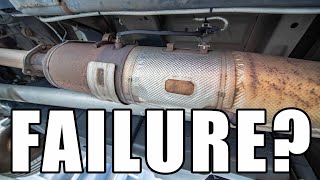
- Replacing the entire DPF assembly. The DPF itself is often just the victim of another failing component, like a sensor or incorrect software. Always diagnose sensors and check for TSBs before condemning the expensive DPF. 🎬 Watch: How to diagnose P2459 without replacing the DPF Many owners have reported dealers incorrectly diagnosing a bad DPF when only a $150 sensor was needed.
Most Likely Causes

- Faulty DPF Pressure Sensor 🔴 High Probability This sensor constantly measures exhaust backpressure to determine how full the DPF is. It operates in a harsh environment and is a very common failure point. An incorrect reading can trick the PCM into thinking the DPF is full when it isn't, triggering constant regens.
How to confirm: Use a scan tool (like FORScan) to monitor the DPF pressure sensor's readings (PID: DPFP). At idle with the engine warm, the pressure should be very low (near 0 PSI). Under heavy acceleration, it should rise. A sensor that is stuck high, low, or doesn't change logically is faulty.
Typical fix: Replace the DPF pressure sensor. Before replacing, inspect the rubber hoses connected to it for clogs, cracks, or melting.
Est. part cost: $50-$150 - Powertrain Control Module (PCM) Software Calibration 🔴 High Probability Ford has released multiple TSBs (e.g., 17-2234 for 2015-16 models) indicating the factory software can be overly sensitive or have flawed logic for monitoring DPF regeneration. This can cause the PCM to misinterpret correct sensor data and trigger P2459.
How to confirm: A Ford dealership or a shop with a Ford-specific scan tool (IDS) can check your vehicle's current software calibration version against the latest available. This is especially critical for 2015-2016 models.
Typical fix: Reprogramming the PCM to the latest software version. This must be done by a dealer or a qualified independent shop with J2534 equipment.
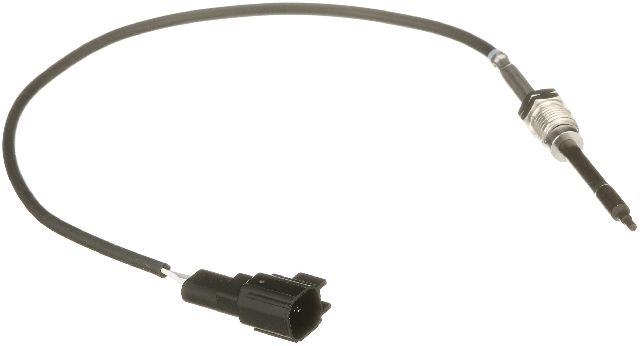
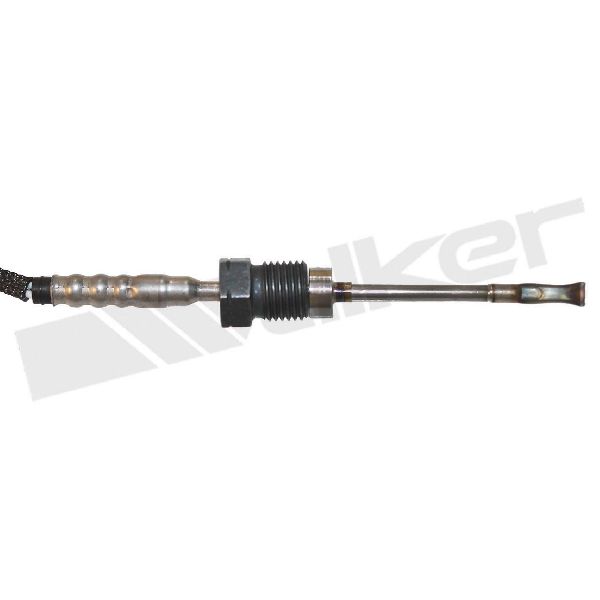
Est. part cost: $0 (if under warranty) - $150 - Faulty Exhaust Gas Temperature (EGT) Sensor 🟡 Medium Probability The 6.7L Power Stroke uses four EGT sensors to monitor and control the regeneration process. If a sensor fails or provides inaccurate readings, the PCM cannot achieve or maintain the correct temperature for an effective regeneration, leading to failed or incomplete cycles and thus more frequent attempts.
How to confirm: Use a scan tool to view live data from all four EGT sensors (PIDs EGT11, EGT12, EGT13, EGT14). The readings should be plausible and rise and fall together with the engine running. A sensor that is stuck at a specific temperature or reads ambient temperature when the engine is hot is likely faulty.
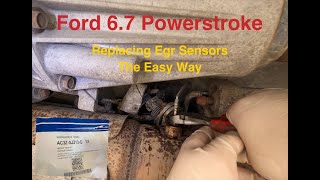
Typical fix: Identify and replace the faulty EGT sensor. For the 2011-2016 models, the same sensor part number often fits all four locations. 🎬 Watch: The easy way to replace your EGT sensors
Est. part cost: $40-$100 per sensor - Driving Habits (Short Trips) 🟡 Medium Probability If the truck is used primarily for short trips without reaching highway speeds for extended periods, the DPF may not get hot enough to perform a complete passive or active regeneration. This causes soot to build up faster than normal, legitimately increasing regen frequency.
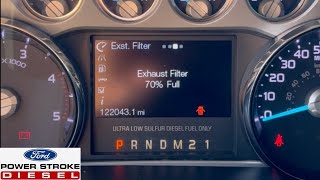
How to confirm: Review recent driving patterns. If the truck rarely sees 20+ minutes of continuous highway driving, this is a likely contributor. Some owners enable the DPF status screen with FORScan to monitor the soot percentage and see it fill rapidly with city driving. 🎬 See how to enable the DPF soot percentage screen
Typical fix: Take the vehicle for an extended drive (30-45 minutes) at highway speeds to allow a full regeneration cycle to complete. If the issue persists, a manual (stationary) regeneration may be required using a scan tool. Some TSBs enable an 'Operator Commanded Regeneration' (OCR) feature for this purpose.
Est. part cost: $0
Rare But Worth Checking
- Clogged or Restricted DPF Pressure Sensor Hoses: The rubber hoses leading to the DPF pressure sensor can become clogged with soot or debris, or collapse internally, causing inaccurate pressure readings. It's a simple check before replacing the sensor itself.
- Upstream Air/Fuel Issues: Problems like boost leaks from a cracked cold-side charge air cooler (CAC) pipe (a known issue), a failing EGR valve, or faulty fuel injectors can cause the engine to produce excessive soot, overwhelming the DPF and triggering more frequent regenerations.
Diagnosis Steps
- Check for Technical Service Bulletins (TSBs). Contact a Ford dealer with your VIN or search online to see if your vehicle is covered by TSBs like 17-2234 (for 2015-16 models), SSM 47402, or TSB 16-0098, which all address this code.
- Scan for all DTCs. Note any other codes that are present, as they can provide clues to the root cause (e.g., P2201, P2463).
- Use a capable scan tool to monitor live data. Focus on DPF-related PIDs: DPF Soot Load (%), DPF Pressure (DPFP), and all four EGT sensor readings (EGT11, 12, 13, 14).
- Evaluate DPF Pressure Sensor data. At idle with the engine warm, the pressure should be very low (near 0 PSI). Under acceleration, it should rise logically. If it's stuck high, low, or doesn't change, suspect a faulty sensor or clogged hoses.
- Evaluate EGT Sensor data. With the engine running, watch the temperatures from all EGT sensors. They should all read within a similar range and increase/decrease with engine load. A sensor that is out of line with the others is likely bad.
- Inspect DPF pressure sensor hoses. Remove them and check for cracks, melting, or blockages from soot.
- If sensor data is normal and no TSBs apply, inspect the air intake system for leaks. Pay close attention to the plastic cold-side charge air cooler (CAC) pipe, which is known to crack and cause boost leaks, leading to excess soot.
- If all else fails, a manual (stationary) regeneration can be commanded with a scan tool. If it fails to complete, it will likely set a code pointing to the specific reason (e.g., not reaching temperature), which can help pinpoint a faulty EGT sensor.
Parts You'll Likely Need

- DPF Pressure Sensor
(OEM #BC3Z-9J460-A (may be superseded))— This is one of the most common hardware failures to cause P2459 by sending incorrect soot level data to the PCM.
Trusted brands: Motorcraft, Bosch, Grizzly
OEM price range: $100-$150
Aftermarket price range: $50-$90 - Exhaust Gas Temperature (EGT) Sensor
(OEM #BC3Z-12B591-C (fits 2011-2014) or AC3Z-5J213-B (fits multip)— These sensors are critical for the regeneration process. Failure of any of the four sensors can prevent a successful regen, leading to more frequent attempts.
Trusted brands: Motorcraft, Standard Motor Products (SMP)
OEM price range: $60-$110
Aftermarket price range: $40-$80
Related Codes That Often Appear With This One
- P2463 — This code means 'DPF Restriction - Soot Accumulation'. It often appears after P2459 has been active for a while, indicating the frequent regenerations are no longer able to keep the filter clean and it is now severely clogged.
- P2201 — This code relates to the NOx sensor circuit. Problems in the emissions system can trigger multiple related codes. Ford TSB 17-2234 specifically lists P2459 and P2201 together as being potentially resolved by a PCM reprogram for 2015-2016 models.
- P246C — This code means 'DPF Restriction - Forced Limited Power'. It indicates the DPF is so clogged that the PCM is about to or has already derated engine power to prevent damage. It's a more severe progression of the same underlying issue causing P2459.
Technical Service Bulletins (TSBs) & Recalls
- Supersedes TSB 17-0021. For 2015-2016 F-Super Duty trucks with a 6.7L engine exhibiting P2459, P2201, P2463, and/or P246C. The fix is to reprogram the PCM to the latest calibration.
- Advises that when diagnosing P2459 and related codes, a manual regeneration and DPF parameter reset with a scan tool may be necessary as part of the diagnostic process.
- Addresses frequent regeneration attempts and P2459, noting that if unsuccessful, it can lead to P2463 (soot accumulation). This points to P2459 being a precursor to a more clogged state.
Platform-Specific Known Issues
- Bulletin #17-2234: For 2015-2016 models, this TSB advises that DTC P2459 (among others) may be resolved by reprogramming the PCM to the latest calibration.
- Bulletin #SSM 47402: For 2013 models, this bulletin notes that a manual regeneration and DPF parameter reset may be necessary when diagnosing P2459.
- Bulletin #TSB 16-0098: For 2013 models, this TSB directly links P2459 to frequent regeneration attempts and warns that unsuccessful attempts can lead to a P2463 code due to high soot accumulation.
Mechanic-Grade Diagnostic Values
- DPF Pressure Sensor Voltage (Key-On, Engine-Off) — expected: ~0.5V. Failure: Voltage below 0.10V or above 4.90V indicates a circuit fault. A reading of 0V can indicate a short-to-ground or open reference circuit.
- DPF Pressure Sensor Pressure (Key-On, Engine-Off) — expected: 0 kPa / 0 PSI. Failure: Any reading significantly above zero indicates a biased sensor that needs replacement.
- DPF Pressure Sensor Range — expected: 0-80 kPa (0-11.6 psi). Failure: A sensor that reads outside this range or is stuck at a fixed value under changing engine load is faulty.
- EGT Sensor Resistance (Emergency Diagnosis) — expected: A 330 ohm resistor can be used to temporarily simulate a working sensor.. Failure: An open circuit (no resistance) on a sensor indicates it has failed completely.
Scan Tool Commands That Help
- FORScan: DPF_SOOT_LOAD, REGEN_STATUS, DPF_SL% — Use these PIDs to monitor the DPF soot load percentage, see if a regeneration is currently active, and compare the PCM's calculated soot level (DPF_SL%) with the dash display value. This helps determine if regens are being triggered appropriately.
- FORScan: Diesel Particulate Filter Static Regeneration — To manually initiate a stationary regeneration cycle when the DPF is heavily loaded and the vehicle cannot be driven at highway speeds to perform an automatic regen. This is a critical tool for clearing a clogged filter before it requires replacement.
- FORScan / Ford IDS: Enable DPF % in Menu (IPC Module 720-07-02) / DPF Manual Regeneration - PCM — To enable the 'Exhaust Filter Full' percentage screen on the instrument cluster and/or enable Operator Commanded Regeneration (OCR). This allows the driver to monitor soot levels and initiate a manual regen without a scan tool, which is especially useful for trucks with high-idle or short-trip usage patterns.
Wiring & Ground Locations
- DPF Sensor Harness — The wiring harness for the DPF pressure and temperature sensors runs along the passenger side of the vehicle, near hot exhaust components and the EGR cooler.. This harness is susceptible to melting or rubbing through, especially near the EGR cooler. A short-to-ground or open circuit in these wires can cause false sensor readings, leading directly to P2459 and related codes.
- PCM Engine Connector (C175B) — The middle connector on the Powertrain Control Module (PCM), located on the driver's side firewall.. The injector control circuits, which can affect soot production if faulty, are located in this connector. A technician might test for short-to-ground on injector pins here to diagnose an over-fueling condition causing the DPF to load too quickly.
- Main PCM Ground — Located on the body near the PCM on the driver's side firewall.. A poor ground connection for the PCM can cause a host of intermittent electrical issues and incorrect sensor readings, including those from the DPF system. Verifying clean and tight grounds is a fundamental step in diagnosing electrical faults.
Real Owner Repair Stories
- Ford Truck Enthusiasts Forum (2011 Ford F-550 6.7L with 135k miles) — Vehicle went into limp mode and eventually shut down. Code P2463 (DPF Soot Accumulation) was present.
❌ Tried (didn't work) A service shop attempted a manual regeneration, but it failed because the DPF was too plugged and the truck would not stay running.
✅ What actually fixed it The user was advised that the DPF for a chassis cab (narrow frame) is different from a pickup (wide frame) and that the DPF was likely at the end of its service life due to ash accumulation, requiring a full replacement. - Ford Truck Enthusiasts Forum (Ford 6.7L Power Stroke (year not specified)) — P242D (Exhaust Gas Temperature Sensor Circuit High Bank 1 Sensor 3) and another DEF heater code.
❌ Tried (didn't work) Clearing codes at the dealer did not resolve the issue as the fault was with the component itself.
✅ What actually fixed it The user replaced the faulty EGT sensor (Bank 1, Sensor 3). They also experimented and found that a 330 ohm resistor could be used as a temporary 'dummy sensor' to trick the computer and get the truck out of limp mode in an emergency.
OEM Part Supersession History
BC3Z-9J460-A→BC3Z-9J460-B, BC3Z-9J460-E, BC3Z-9J460-G— Part revisions to improve reliability and performance.
Heads up: The latest part number, BC3Z-9J460-G, is generally backward compatible for 2013-2019 models. However, always confirm fitment with VIN as early 2011-2012 models may have slight differences.
Model Year Variations Within This Range
- 2011-2014: These models used a smaller, dual-compressor wheel 'SST' turbocharger which was more prone to failure. They also used a plastic oil pan and a different oil cooler design.
- 2015-2016: Ford switched to a larger, more reliable single Garrett GT37 variable geometry turbocharger. The fuel system was also upgraded with a higher-flow CP4.2 injection pump and revised injector nozzles. These changes resulted in a power increase. These model years are also specifically called out in TSBs for PCM software updates to fix P2459.
- 2012: A DPF differential pressure sensor was added to the exhaust system for the 2012 model year to better monitor DPF condition.
Helpful Videos

We Have This Part in Stock



The information in this article is provided for general reference and educational purposes only. Vehicle specifications, procedures, and part compatibility can vary by production date, trim level, and region. Always consult your vehicle's factory service manual and verify part numbers before purchasing or performing repairs. Safety-critical components such as airbags, seat belts, and braking systems should be installed by a qualified professional.
- Ford F-350 SD:
- 🎬 Helpful Videos
- 🛍️ Shop This Part
- What's Unique About the 2011-2015 Ford F-350 SD
- Diagnostic Flowchart
- Symptoms You May Notice
- Most Likely Causes
- Rare But Worth Checking
- Diagnosis Steps
- Parts You'll Likely Need
- Related Codes That Often Appear With This One
- Technical Service Bulletins (TSBs) & Recalls
- Platform-Specific Known Issues
- Mechanic-Grade Diagnostic Values
- Scan Tool Commands That Help
- Wiring & Ground Locations
- Real Owner Repair Stories
- OEM Part Supersession History
- Model Year Variations Within This Range
- 🎟️ Get 5% Off