

P2459 on 2017 Chevrolet Silverado: DPF Regeneration Frequency Causes and Fixes
On a 2017 Silverado with the 6.6L Duramax, code P2459 means the Diesel Particulate Filter (DPF) is self-cleaning (regenerating) too often. The most common causes are frequent short trips, use of a non-OEM air filter, a faulty DPF pressure sensor, or leaks in the charge air cooler piping. The fix often involves a long highway drive, installing a genuine ACDelco air filter, sensor replacement, or tightening boost pipe connections.
- P2459 means your truck's DPF is trying to clean itself too often, which points to an underlying problem.
- Before replacing any parts, check for simple causes: ensure you're getting enough highway driving time and inspect the charge air cooler pipes for leaks as per TSB #PIP5468F.
- The most common faulty parts are the DPF pressure sensor and upstream air system components like the air filter or MAF sensor.
- Do NOT immediately replace the DPF. It is an expensive part, and the P2459 code is almost always caused by a separate, less expensive issue.
What's Unique About the 2017-2017 Chevrolet SILVERADO
The 2017 Silverado introduced the 6.6L Duramax L5P engine, which has a highly complex emissions system. Unlike the prior LML engine, the L5P does not use a separate '9th injector' for regeneration, instead relying on post-combustion injection from the main fuel injectors to heat the exhaust. Code P2459 on this truck is frequently linked to issues upstream of the DPF that create excess soot. GM has issued multiple Technical Service Bulletins (TSBs), including PIP5468F and its successor 22-NA-013, that group P2459 with codes related to the charge air cooler system, suggesting that boost leaks are a known issue. Furthermore, TSB 24-NA-197 specifically identifies the use of non-OEM air filters as a primary cause of P2459 on the L5P, as their different airflow characteristics can alter fuel metering and create more soot.
Diagnostic Flowchart
Tap your situation to follow the diagnostic path that matches what you're seeing on this vehicle.
Symptoms You May Notice
- Check Engine Light is on
- Message on the Driver Information Center (DIC) like 'Service Exhaust System' or 'Cleaning Exhaust Filter, Continue Driving'
- Reduced engine power or 'limp mode'
- Increased fuel consumption
- Excessive black smoke from the exhaust
- Engine running hotter than usual
- Strong diesel or exhaust odor
- Fuel smell in engine oil, or oil level rising on dipstick
- Replacing the Diesel Particulate Filter (DPF) assembly. The P2459 code indicates a frequency problem, not necessarily a failed filter. The DPF is usually just clogged as a symptom; the root cause is almost always an upstream sensor, leak, software, or maintenance issue like the wrong air filter.
Most Likely Causes
- Driving Habits (Frequent Short Trips) 🔴 High Probability Diesel engines with DPFs need to reach and maintain high exhaust temperatures for 20-30 minutes to self-clean. If the truck is only used for short, low-speed trips, it may never complete a full regeneration cycle, causing the system to try more frequently.
How to confirm: Review recent driving patterns. If the truck rarely sees sustained highway speeds for 20-30 minutes, this is a likely contributor.
Typical fix: Drive the vehicle at a sustained highway speed (50+ mph) for 20-30 minutes to allow a full, passive regeneration cycle to complete. Some owners report needing a 45-minute drive to ensure a thorough clean.
Est. part cost: $0 - Upstream Air System Issues (Air Filter, MAF Sensor) 🔴 High Probability Per GM TSB 24-NA-197, the L5P engine is highly sensitive to airflow, and using a non-OEM air filter can alter MAF sensor readings, leading to incorrect fuel calculations and excess soot. A collapsed or missing air filter will also cause extreme soot loading.
How to confirm: Inspect the air filter. If it is dirty, collapsed, or a non-GM brand, it is the primary suspect. Inspect the MAF sensor for contamination like dust or oil.
Typical fix: Replace the dirty or aftermarket air filter with a genuine OEM ACDelco part (ACDelco A3230C for 2017-2019 models). Clean the MAF sensor with a dedicated MAF sensor cleaner and allow it to dry completely before reinstalling. A 'Small Quantity Data reset' using a scan tool is required per TSB 24-NA-197 after replacing a non-OEM filter.
Est. part cost: $30-$80 - Loose or Leaking Charge Air Cooler (CAC) Ductwork 🟡 Medium Probability TSB #PIP5468F and its successor #22-NA-013 directly link P2459 to loose CAC ductwork on the 2017-2019 L5P Duramax. The factory crimp-style clamps on the hot-side pipe are known to allow the rubber boot to slip off, creating a boost leak that generates excess soot. A static visual check may not reveal the leak, as it can open up under engine torque.
How to confirm: Visually inspect all charge air cooler pipe connections, especially the hot-side pipe coming from the turbo. Look for a gap between the rubber boot and the metal pipe lip. Pressure testing the system is the most effective method.
Typical fix: Tighten or replace clamps and seals on the charge air cooler piping. Upgrading the factory hot-side pipe to a more robust aftermarket version with better clamps is a common preventative fix.
Est. part cost: $20-$100 - Faulty DPF Pressure Sensor 🟡 Medium Probability These sensors live in a harsh environment and are prone to failure from heat and soot. A skewed sensor can incorrectly report high soot levels, tricking the ECM into triggering unnecessary regenerations. The hoses connected to the sensor can also become clogged with soot.
How to confirm: Use a scan tool to monitor the DPF pressure sensor readings with the key on, engine off; it should read at or near zero PSI (or ~0.5 volts). If it shows a pressure reading, it is faulty. Also inspect the sensor's hoses and metal pipes for cracks, blockages, or melting.
Typical fix: Replace the DPF pressure sensor (ACDelco P/N 12677718) and clean or replace its associated hoses/pipes. This repair requires a sensor relearn procedure using a scan tool.
Est. part cost: $50-$150
Rare But Worth Checking
- Exhaust Leaks: A leak in the exhaust system upstream of the DPF can alter pressure and temperature readings, confusing the sensors and leading to incorrect regeneration frequency.
- Faulty Exhaust Gas Temperature (EGT) Sensor: The ECM relies on multiple EGT sensors to monitor the regeneration process. A faulty sensor providing incorrect temperature data can disrupt the cycle, making it ineffective and causing it to repeat.
- ECM Software Issue: In some cases, the logic for triggering regeneration may be too sensitive. A dealership may have an updated software calibration to correct the regeneration frequency, as referenced in TSB #21-NA-214.
- Leaking Fuel Injectors: A main fuel injector that is leaking or has poor balance rates can cause excessive soot production, overwhelming the DPF. This is a less common but serious issue that can also lead to oil dilution.
Diagnosis Steps
- Check for other stored trouble codes that could indicate the root cause (e.g., P2463, P0101, P0299).
- CRITICAL FIRST STEP: Inspect the engine air filter. If it is not a genuine GM/ACDelco part, or if it is dirty/collapsed, replace it with an OEM filter (ACDelco A3230C) as per TSB 24-NA-197.
- Review driving habits. If the vehicle is used for frequent short trips, perform a DPF regeneration drive by maintaining a speed over 50 mph for 20-30 minutes.
- Thoroughly inspect the entire charge air cooler system for loose clamps, cracked hoses, or leaks, as detailed in TSB #22-NA-013. Pay close attention to the connection at the throttle body and the crimp-style clamp on the hot-side CAC pipe. 🎬 Watch: How to fix the common hot-side pipe leak
- Using a professional scan tool, monitor the DPF pressure sensor data with the key on, engine off. The reading should be close to zero. Inspect the sensor's hoses for any signs of damage, melting, or blockage.
- Inspect the MAF sensor for contamination. If dirty, clean it with dedicated MAF sensor cleaner. 🎬 Check out this guide on replacing the MAP sensor
- If the above steps do not reveal a cause, inspect for exhaust leaks between the engine and the DPF.
- As a final step, check with a GM dealer for any available ECM software updates that address DPF regeneration logic, referencing TSB #21-NA-214.
Parts You'll Likely Need
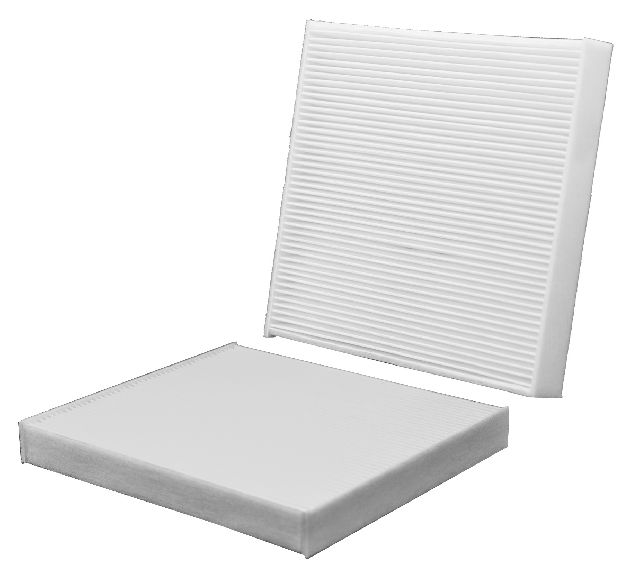
- Air Filter
(OEM #ACDelco A3230C / GM 23433339)— A restricted or incorrect (non-OEM) type of air filter is a primary cause of excess soot production on the L5P engine, leading to more frequent regenerations, per TSB 24-NA-197.
Trusted brands: ACDelco, GM Genuine Parts
OEM price range: $40-$70
Aftermarket price range: $25-$50 - DPF Pressure Sensor
(OEM #ACDelco 12677718)— This sensor is a common failure point. It provides the ECM with the primary data used to calculate soot load, and an inaccurate reading can directly cause P2459 by tricking the ECM into thinking a regeneration is needed when it is not.
Trusted brands: ACDelco, Bosch, Standard Motor Products
OEM price range: $50-$150
Aftermarket price range: $30-$90
Related Codes That Often Appear With This One
- P2463 — P2463 means 'DPF Soot Accumulation - Too High'. This code often appears because the underlying issue causing frequent regenerations (P2459) eventually leads to the filter becoming overwhelmed with soot.
- P0101 — This code relates to the Mass Air Flow (MAF) sensor. It often appears with P2459 because a charge air cooler leak, a faulty MAF sensor, or a non-OEM air filter can cause both codes. TSB #PIP5468F and #22-NA-013 list them together.
- P0299 — This code indicates 'Turbocharger/Supercharger Underboost'. It is commonly seen with P2459 due to charge air cooler leaks, which cause both a loss of boost pressure and the creation of excess soot. TSB #PIP5468F and #22-NA-013 also link these codes.
Technical Service Bulletins (TSBs) & Recalls
- TSB #PIP5468F / #22-NA-013: Links a wide array of codes, including P2459, to loose charge air cooler (CAC) ductwork. It advises pressure testing the CAC system as a key diagnostic step.
- TSB #24-NA-197: Specifically identifies non-OEM (aftermarket) engine air filters as a cause for P2459 and P2463 on L5P engines due to altered airflow affecting fuel metering. The fix is to install an OEM filter and perform a data reset.
- TSB #21-NA-214: A broader TSB that suggests an ECM/TCM software update can resolve a cluster of engine and transmission codes, which can include P2459.
Platform-Specific Known Issues
- TSB #PIP5468F and its revisions specifically call out loose charge air cooler ductwork as a cause for a group of DTCs including P2459 on 2017-2019 Silverado models with the 6.6L L5P engine.
Mechanic-Grade Diagnostic Values
- DPF Differential Pressure Sensor Voltage (Key On, Engine Off) — expected: ~0.5V. Failure: A reading significantly higher or lower, or a reading of 5V if the sensor is unplugged (which confirms the 5V reference from the ECM is good).
- DPF Differential Pressure Sensor Reading (at idle, after successful regen) — expected: 0 PSI / 0 kPa. Failure: Any reading above zero indicates a remaining restriction or a faulty sensor.
- DPF Soot Accumulation (GDS2 Scan Tool) — expected: ECM attempts regeneration at ~100%. 'Continue Driving' message appears at 115%.. Failure: DTC P2463 sets at 140%, and a service regeneration is required.
Scan Tool Commands That Help
- GM GDS2: Service Regeneration — Used to command a forced, stationary cleaning of the DPF when soot levels are high (often with P2463) and passive regeneration is not occurring. This is a primary diagnostic and repair step.
- GM GDS2: Small Quantity Data reset — This function MUST be performed after replacing a non-GM air filter with an OEM one, as per TSB #24-NA-197, to reset fuel metering adaptations.
- GM GDS2: DPF Pressure Sensor Reset/Relearn — After replacing the DPF differential pressure sensor, this function is required to calibrate the new sensor's baseline reading to the ECM.
- GM GDS2: Injector Balance Rates — To check for a faulty or leaking fuel injector that could be creating excess soot, overwhelming the DPF.
Wiring & Ground Locations
- DPF Pressure Sensor Connector — The sensor is located on the exhaust system, and its connector is a 3-wire, weatherproof male plug.. The connector harness has three 20-gauge wires: a 5-volt supply, a ground, and a signal wire back to the ECM. Damage or corrosion to these wires or pins can cause incorrect sensor readings, leading to P2459.
- MAP Sensor — Located on top of the intake manifold on the passenger side of the engine bay.. A faulty MAP sensor can affect air/fuel calculations, potentially leading to excess soot. It is located near the Fuel Pressure sensor.
- Fuel Rail Pressure Sensor — Located to the right of the MAP sensor on the intake manifold, passenger side.. Incorrect fuel pressure readings can lead to improper combustion and excess soot, contributing to the P2459 code.
Real Owner Repair Stories
- Turbo Diesel Register forum user 'gsbrockman' (Ram (Note: Not a Silverado, but a relevant diesel with P2459)) — Check Engine Light with only code P2459 stored.
❌ Tried (didn't work) Cleaning a dirty EGR valve.
✅ What actually fixed it Diagnosis revealed a faulty TMAP (Temperature Manifold Absolute Pressure) sensor was reading 205°F when the ambient temperature was 60°F. Replacing the TMAP sensor resolved the code and improved fuel economy and throttle response. - YouTube video by 'Duramax P2463 P2459' (6.6L Duramax L5P) — Reduced engine power message, 'Cleaning exhaust filter' message, codes P2463 and P2459.
❌ Tried (didn't work) A service regeneration was attempted but was unlikely to succeed on its own due to the severity of the issue.
✅ What actually fixed it The root cause was a completely collapsed engine air filter that was sucked into the intake tube, causing extreme soot production (231% soot load). The fix required replacing the air filter, cleaning the intake tube, and then performing a successful service regeneration. The truck also had extremely high idle hours, contributing to the problem.
"I Checked Everything" — The Actual Cause
- According to GM TSB #22-NA-013, a static visual inspection of the charge air cooler (CAC) system may not reveal a leak. The leak often only occurs during engine roll or when applying brake torque, meaning a standard smoke test at idle might pass. The actual cause is a loose connection that separates under load, creating a boost leak and triggering codes like P2459.
OEM Part Supersession History
55599156→12677718— Standard part revision and update by the manufacturer.
Heads up: The new part (12677718) is the correct replacement for the DPF Pressure Sensor. It requires programming/setup procedures with a scan tool after installation.Bosch 0281006809→GM 12685369— Part number update for the Diesel Particulate Matter (PM) Sensor.
Heads up: This is for the Particulate Matter sensor, not the DPF pressure sensor. A reset procedure is required after installation.
Helpful Videos

We Have This Part in Stock




The information in this article is provided for general reference and educational purposes only. Vehicle specifications, procedures, and part compatibility can vary by production date, trim level, and region. Always consult your vehicle's factory service manual and verify part numbers before purchasing or performing repairs. Safety-critical components such as airbags, seat belts, and braking systems should be installed by a qualified professional.
- Chevrolet SILVERADO:
- 🎬 Helpful Videos
- 🛍️ Shop This Part
- What's Unique About the 2017-2017 Chevrolet SILVERADO
- Diagnostic Flowchart
- Symptoms You May Notice
- Most Likely Causes
- Rare But Worth Checking
- Diagnosis Steps
- Parts You'll Likely Need
- Related Codes That Often Appear With This One
- Technical Service Bulletins (TSBs) & Recalls
- Platform-Specific Known Issues
- Mechanic-Grade Diagnostic Values
- Scan Tool Commands That Help
- Wiring & Ground Locations
- Real Owner Repair Stories
- "I Checked Everything" — The Actual Cause
- OEM Part Supersession History
- 🎟️ Get 5% Off