

P2457 on 2020-2024 Ram 3500 6.7L Cummins: EGR Cooler Performance Causes and Fixes
On a 2020-2024 Ram 3500 with the 6.7L Cummins, code P2457 almost always indicates a clogged or inefficient EGR cooler due to soot buildup. The most common and reliable fix is replacing the EGR cooler assembly. Be aware that this code can cause a false P1404 trouble code, so diagnose P2457 first to avoid unnecessary EGR valve replacement.
- P2457 on your Ram 3500 means the EGR cooler is not working efficiently, most likely due to internal soot blockage.
- Before suspecting other parts, check your engine coolant level and look for any leaks.
- Crucially, if you also have a P1404 code, fix the P2457 problem first. The P1404 is likely a symptom, not a separate problem.
- The most common and reliable repair is to replace the entire EGR cooler assembly.
- This repair is possible for an experienced DIYer but is labor-intensive (DIY Difficulty 4/5).
What's Unique About the 2020-2024 Ram 3500

The 6.7L Cummins engine is known for producing a significant amount of soot, which makes the EGR system, and particularly the EGR cooler, prone to clogging. This is the most frequent cause of P2457 on these trucks. Additionally, Ram has issued Technical Service Bulletins (TSBs) noting that a P2457 fault can cause the ECM to erroneously set a P1404 code for the EGR position sensor. Diagnosing the P2457 code first is critical to avoid misdiagnosis and unnecessary parts replacement. The high cost of dealer service for this issue, sometimes quoted over $2,500 for an EGR service, leads many owners to seek DIY or independent shop solutions.
Diagnostic Flowchart

Tap your situation to follow the diagnostic path that matches what you're seeing on this vehicle.
Symptoms You May Notice

- Check Engine Light (MIL) illuminated
- Reduced engine power or sluggish acceleration, especially under load
- Vehicle may enter "limp mode"
- Increased fuel consumption
- More frequent DPF regeneration cycles
- In rare cases of an internal leak, white smoke/steam from the exhaust and noticeable coolant loss
- Higher than normal Exhaust Gas Temperature (EGT) readings on a monitor
- Replacing the EGR valve or EGR position sensor for a P1404 code without first addressing the P2457 code. TSBs #1806823 and #1808822 explicitly state that P2457 can cause a false P1404 code.
- Assuming the EGR cooler is bad without first checking for simpler cooling system issues like low coolant or air pockets.
Most Likely Causes

- Clogged or Restricted EGR Cooler 🔴 High Probability The 6.7L Cummins produces significant soot, which naturally accumulates in the EGR cooler over time, restricting the exhaust gas passages and insulating them from the coolant.
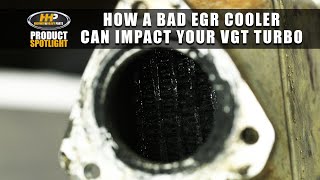
How to confirm: Requires removal of the EGR cooler for visual inspection. A heavy buildup of black, dry soot or a white, crusty residue (indicating a past or present coolant leak) inside the cooler's passages confirms the diagnosis. Service manuals list checking for "exhaust gas fouling" as a primary diagnostic step. A pressure-drop test can also be performed to detect internal blockage.
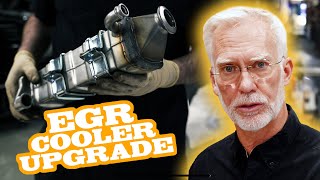
Typical fix: Replace the EGR cooler assembly. While cleaning is sometimes attempted, it is often not a reliable long-term solution as the internal passages are difficult to fully clear. Replacement is the recommended fix. 🎬 Watch this video if you want to try cleaning the cooler.
Est. part cost: $700-$1100 - Engine Cooling System Fault 🟡 Medium Probability The EGR cooler's performance is entirely dependent on the engine's main cooling system. Any issue that reduces coolant flow, such as low coolant level, air in the system, or a failing water pump, will directly impact the cooler's performance and can trigger P2457.
How to confirm: Check the coolant level and condition. Inspect for leaks, particularly around the water pump and associated hoses. Test the thermostat to ensure it is not stuck open, which would prevent the engine from reaching optimal temperature and limit cooler performance. A Reddit user with a 2020 Ram 5500 traced overheating and massive coolant loss to a failed EGR cooler, confirming the link between general cooling system health and this component.
Typical fix: Top off or flush the cooling system. Repair any leaks found, which may involve replacing the water pump, hoses, or thermostat.
Est. part cost: $20-$400 - Failed EGR Cooler Bypass Valve 🟡 Medium Probability
How to confirm: Use a high-level scan tool like wiTECH to command the EGR cooler bypass valve to open and close. Monitor sensor data to see if the valve responds to commands. The valve is often integrated into the cooler assembly, and physical access for inspection requires removing several components. A related code, P24A5 (EGR Cooler Bypass Bank 1 Control Stuck), may also be present.
Typical fix: If the bypass valve is faulty, the entire EGR cooler assembly typically needs to be replaced.
Est. part cost: $700-$1100 - Faulty EGR Temperature Sensor ⚪ Low Probability
How to confirm: Use a scan tool to monitor the EGR temperature sensor readings. Compare the readings to a known good vehicle or check against ambient temperature when the engine is cold. The sensor should show a plausible temperature rise when the EGR valve opens. An implausible or stuck reading, or a voltage below 0.08 volts, points to a sensor or circuit failure.
Typical fix: Replace the faulty EGR temperature sensor. It is often recommended to inspect the sensor before condemning the entire cooler.
Est. part cost: $50-$150
Rare But Worth Checking
- Cracked EGR Cooler (Internal Leak): This is a serious failure where engine coolant leaks into the exhaust stream. It can cause significant white smoke/steam from the tailpipe, rapid coolant loss, and potentially lead to engine damage. When the cooler is removed, a white, crusty residue is often visible inside, which is cooked coolant. A Reddit user described finding coolant "all over inside" the EGR cooler and valve on their 2020 Ram. Pressure testing the cooling system is the best way to confirm an internal leak.
- Powertrain Control Module (PCM) Software/Hardware Fault: In some cases, the PCM may have corrupted calibration data or a hardware fault causing it to misinterpret sensor data and falsely trigger P2457. Manufacturers may release software updates to adjust the diagnostic thresholds for this code. A technician may recommend a PCM re-flash as a diagnostic step if all mechanical and sensor components check out.
Diagnosis Steps
- Use an OBD-II scanner to confirm P2457 is present and check for any other codes. Pay close attention to P1404, P0401, or any cooling system codes. If P1404 is present, ignore it until P2457 is resolved.
- Thoroughly inspect the engine coolant level and condition. Ensure it is full and free of contaminants. Check for any signs of leaks on the ground or around the water pump, radiator, and hoses.
- With a capable scan tool, monitor the EGR temperature sensor data while driving. The ECM sets P2457 when it doesn't see the expected temperature drop across the cooler during EGR operation.
- Pressure test the cooling system to check for external and internal leaks. A loss of pressure with no visible external leak strongly suggests a cracked EGR cooler.
- If no other issues are found, the next step is to remove and inspect the EGR cooler. Check the exhaust gas passages for heavy soot buildup or complete blockage. A professional video shows this process involves removing the crankcase filter and several bolts, and highlights the white residue left by internal coolant leaks. 🎬 Watch a pro diagnose and replace the EGR cooler correctly.
- When replacing the cooler, it is critical to also replace all associated gaskets and O-rings to prevent future exhaust or coolant leaks.
- After repair, clear all codes and perform a drive cycle to confirm the fix and ensure the check engine light does not return. For some automatic transmission models, a key-off period of 10 minutes may be required after a PCM flash.
Parts You'll Likely Need
- EGR Cooler Assembly
(OEM #68444764AA)— This is the most common failure point. The assembly often includes the cooler core and bypass valve, and replacement is the most reliable fix for internal clogging or failure.
Trusted brands: Mopar, Bullet Proof Diesel
OEM price range: $800-$1200
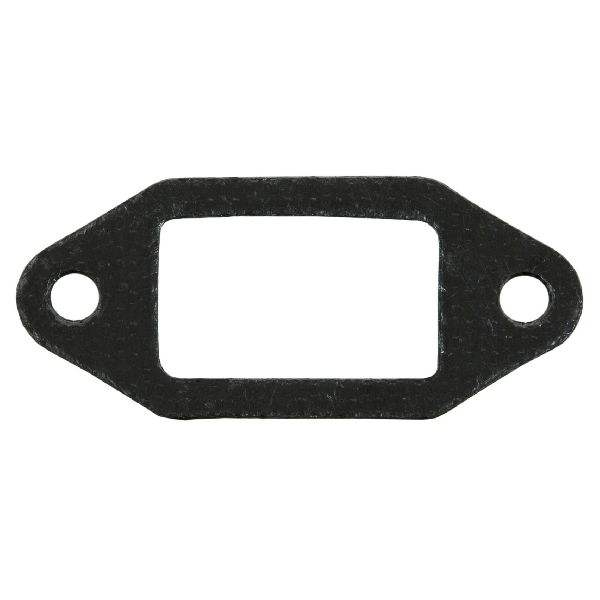
Aftermarket price range: $500-$900 - EGR Cooler Gasket Kit — When replacing the EGR cooler, it is essential to replace all mounting gaskets and coolant O-rings to prevent leaks. These are often sold separately from the cooler itself.
Trusted brands: Mopar, Fel-Pro
OEM price range: $50-$100
Aftermarket price range: $30-$60
Related Codes That Often Appear With This One
- P1404 — As stated in manufacturer TSBs, P2457 can erroneously cause this EGR Position Sensor Rationality code to be set. [Bulletin #1806823, #1808822]
- P0401 — Insufficient EGR Flow. A clogged cooler can severely restrict flow, triggering both a performance code (P2457) and a flow code (P0401).
- P2459 — Diesel Particulate Filter Regeneration Too Frequent. Inefficient EGR operation can lead to changes in combustion and higher soot production, causing the DPF to load up faster. [Bulletin #08-350-25]
Technical Service Bulletins (TSBs) & Recalls
- Bulletin #08-350-25: Lists P2457-00 as 'Exhaust Gas Recirculation Cooling System Performance' alongside other related emissions DTCs.
- Bulletin #1806823: Notes that P1404 can be erroneously set when P2457 is present.
- Bulletin #1808822: Repeats the warning that P2457 can trigger a false P1404 DTC.
Platform-Specific Known Issues
- A known issue documented in TSBs #1806823 and #1808822 is that the P2457 code can cause a false P1404 (EGR Position Sensor Rationality Closed) code. The repair procedure for this condition is to address the cause of P2457, not the EGR valve itself.
- Due to the high soot output of the 6.7L Cummins, cleaning the EGR cooler is often a temporary fix at best. Forum discussions and mechanic recommendations strongly favor full replacement to prevent a recurring problem.
Mechanic-Grade Diagnostic Values
- EGR Temperature Sensor Signal Voltage — expected: Varies with temperature. Should not be below 0.08 Volts.. Failure: A reading below 0.08 Volts for 2 seconds will set a fault, indicating a short to ground or sensor failure.
- EGR Cooler Efficiency Temperature Differential — expected: A specific temperature drop (e.g., 20-30°F) across the cooler when EGR is active.. Failure: A temperature drop lower than the manufacturer's specification indicates reduced efficiency from clogging or low coolant flow.
Scan Tool Commands That Help
- wiTECH or equivalent: EGR System Test / Actuation Test — This bidirectional command allows a technician to manually command the EGR valve and cooler bypass valve, verifying their mechanical operation separately from the engine's normal commands. This helps isolate a stuck valve from a sensor or wiring issue.
- wiTECH: Flash PCM / Reprogram Module — If all mechanical and sensor checks pass, a PCM software update may be required. Manufacturers release updates that can adjust the sensitivity and diagnostic criteria for codes like P2457 to prevent false positives.
Wiring & Ground Locations
- Engine Harness Ground Studs — Various points on the engine block and chassis/frame. A 2022 Ram Body Builder Guide shows multiple ground studs available on the chassis frame. A forum post for a 2019 model shows diagrams with ground points on the lower right front of the engine and other locations.. The EGR temperature sensors and bypass valve actuator rely on a solid ground connection to function and report data correctly. A poor ground can cause erratic sensor readings or actuator failure, potentially mimicking a clogged cooler and triggering P2457. Checking ground resistance (should be <15 Ohms) is a valid diagnostic step.
- EGR Temperature Sensor Connector — On the EGR cooler assembly. It is a 2-pin flat harness connector.. This is the direct connection point for the sensor that provides the temperature data to the PCM. Checking for 5V reference and a good ground at this connector is a primary electrical diagnostic step before replacing the sensor or cooler.
Real Owner Repair Stories
- Reddit user in r/Cummins (2020 Ram 5500 with 210k miles) — Severe overheating (230+°F), constant and rapid coolant loss without visible external leaks, boiling in the coolant reservoir.
❌ Tried (didn't work) Replaced radiator, water pump, thermostat, and fan clutch. The issue of rapid coolant loss and overheating persisted.
✅ What actually fixed it Upon removing the EGR cooler and valve, the owner found them filled with coolant, indicating a severe internal leak. The final fix was replacing the EGR cooler assembly.
OEM Part Supersession History
Unknown→68444764AA— Standard part evolution and potential design improvements.
Heads up: Part number 68444764AA is specified for 2019-2024 Ram 2500/3500 trucks with the 6.7L Cummins engine. While some vendors list it for earlier models, it's critical to verify fitment for the specific model year as EGR systems changed over generations.
Model Year Variations Within This Range
- 2019-2024: The 5th Generation Ram (2019+) features a revised EGR setup compared to previous generations, along with a Security Gateway Module (SGM) that can complicate diagnostics and tuning by blocking unauthorized communication with the ECU. This means that advanced diagnostics and resets often require a capable, modern scan tool like wiTECH.
Helpful Videos
We Have This Part in Stock

The information in this article is provided for general reference and educational purposes only. Vehicle specifications, procedures, and part compatibility can vary by production date, trim level, and region. Always consult your vehicle's factory service manual and verify part numbers before purchasing or performing repairs. Safety-critical components such as airbags, seat belts, and braking systems should be installed by a qualified professional.
- Ram 3500:
- 🎬 Helpful Videos
- 🛍️ Shop This Part
- What's Unique About the 2020-2024 Ram 3500
- Diagnostic Flowchart
- Symptoms You May Notice
- Most Likely Causes
- Rare But Worth Checking
- Diagnosis Steps
- Parts You'll Likely Need
- Related Codes That Often Appear With This One
- Technical Service Bulletins (TSBs) & Recalls
- Platform-Specific Known Issues
- Mechanic-Grade Diagnostic Values
- Scan Tool Commands That Help
- Wiring & Ground Locations
- Real Owner Repair Stories
- OEM Part Supersession History
- Model Year Variations Within This Range
- 🎟️ Get 5% Off