

OBD-II Code P2455: Diesel Particulate Filter Pressure Sensor 'A' Circuit High
The Ultimate 2026 Guide to Diagnosing and Fixing P2455
- P2455 is strictly an electrical fault indicating high voltage (over 4.8V) in the DPF pressure sensor circuit, not a clogged filter.
- Over 80% of P2455 codes are caused by an internally shorted sensor or a melted wiring harness near the exhaust.
- Stop driving within 50 miles; ignoring this code disables DPF regeneration, leading to limp mode and a $2,000+ DPF replacement.
- Never replace the sensor without performing a disconnect test; if the scanner still reads 5V with the sensor unplugged, the wiring harness is shorted.
What Does P2455 Mean?

P2455 means the Engine Control Module (ECM) is receiving an abnormally high voltage signal (typically over 4.8V) from the DPF pressure sensor. This sensor measures soot buildup by comparing exhaust pressure before and after the filter. A high voltage signal indicates a direct electrical short or sensor failure, not a clogged DPF.
Technical definition: The SAE/OBD-II definition is "Diesel Particulate Filter Pressure Sensor 'A' Circuit High". The Powertrain Control Module (PCM) detects a signal voltage from DPF pressure sensor 'A' exceeding the maximum threshold (usually 4.8V to 5.0V) for a continuous 3-15 seconds. The ECM interprets this 5V signal as a critical short-to-power fault.
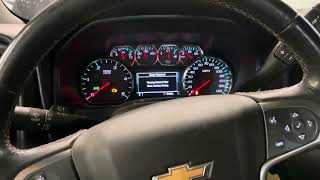
🎬 Watch: A professional diagnosis of the DPF pressure sensor circuit.Can I Drive With P2455?
Yes, But With Caution. You can drive under 50 miles, but doing so risks severe damage. Ignoring P2455 disables DPF regeneration, forcing the vehicle into limp mode. Continued driving causes irreversible DPF clogging, a repair exceeding $2,000, and destroys turbocharger seals due to extreme backpressure.
Common Causes

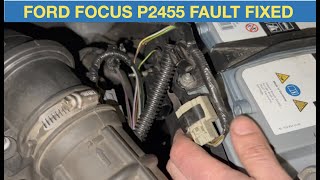
- Faulty DPF Pressure Sensor (Very Common) — Constant exposure to extreme exhaust heat and vibration destroys the sensor's internal electronics. This internal short sends a continuous 5V signal directly to the ECM. 🎬 See this walkthrough on fixing a P2455 sensor fault.
- Shorted or Damaged Wiring Harness (Common) — The sensor wiring routes near 1,000°F+ exhaust components. Wires melt, chafe against brackets, or break, creating a direct short to a 5V or 12V power source. Corrosion inside the connector also bridges pins, triggering the high-voltage code.
- Blocked or Melted Sensor Hoses (Less Common) — The sensor uses two rubber or silicone hoses to sample exhaust pressure. These hoses clog with hard soot, kink, or melt shut. A total blockage traps pressure against the sensor diaphragm, forcing an erratically high voltage reading.
- Poor Sensor Ground (Rare) — A corroded ground wire at the sensor connector forces the signal voltage to 'float' to a maximum 5V level, which the ECM flags as a circuit high fault.
- Faulty Engine Control Module (ECM) (Very Rare) — A damaged analog-to-digital converter inside the ECM misreads a normal 1V signal as 5V. This requires professional verification and only occurs after verifying the sensor and wiring are flawless.
Symptoms

- Check Engine Light & DPF Warning — The MIL illuminates immediately. A dedicated exhaust filter warning message often appears on the driver information center.
- Limp Mode (Reduced Engine Power) — The ECM intentionally restricts fuel delivery and limits RPM to prevent catastrophic engine damage from excessive exhaust backpressure.
- Plummeting Fuel Economy — Limp mode parameters and a restricted exhaust system slash fuel efficiency by 15% or more.
- Failed DPF Regeneration & Black Smoke (also visible on scanner) — The ECM aborts all self-cleaning regeneration cycles because it cannot trust the sensor data. The DPF saturates with soot, causing heavy black smoke under acceleration.
- Elevated Exhaust Temperatures (also visible on scanner) — Trapped exhaust gases force the engine to work harder, spiking EGTs (Exhaust Gas Temperatures) and engine coolant temps.
Diagnostic Flowchart

Tap your situation to follow the diagnostic path that matches what you're seeing on this code.
Common Fixes & Costs
- Replace the DPF Pressure Sensor — Parts: $60-$180, Labor: $100-$200, ~0.8 hr book time (DIY)
- Repair Damaged Wiring Harness — Parts: $20-$60, Labor: $150-$300, ~2 hr book time (Intermediate)
- Replace DPF Sensor Hoses — Parts: $20-$50, Labor: $50-$150, ~0.7 hr book time (DIY)
- Perform Forced DPF Regeneration — Parts: $0, Labor: $150-$250, ~1.2 hr book time (Professional)
- Replace Engine Control Module (ECM) — Parts: $800-$1500, Labor: $200-$400, ~2.5 hr book time (Professional)
DIY vs Professional
- Replace the DPF Pressure Sensor — Beginner: Yes
- Repair Damaged Wiring Harness — Beginner: No
- Replace DPF Sensor Hoses — Beginner: Yes
- Perform Forced DPF Regeneration — Beginner: No
- Replace Engine Control Module (ECM) — Beginner: No
Used vs. New Parts: Buying Guide
When a used part is worth it: Never buy a used DPF pressure sensor. It is a highly sensitive electronic component degraded by heat and soot. The $50 savings is not worth the guaranteed repeat failure.
Donor quality checklist:
- Do not buy used sensors.
- Do not buy used wiring pigtails; the insulation is already brittle.
Decision logic:
- If The part is a DPF Pressure Sensor → Buy new OEM. Aftermarket sensors fail frequently, and used sensors are a waste of labor.
- If The required fix is a wiring pigtail → Buy a new OEM or high-quality aftermarket pigtail with pre-installed weather seals.
Warranty tradeoff: Used sensors have no warranty. New OEM sensors carry a 1-2 year warranty, ensuring you don't pay twice for a defective part.
Worst-case if a used part fails: $300 (cost of repeat labor and buying the new part you should have bought initially).
What Happens If You Wait — Timeline
- 0-1 week: Check Engine Light illuminates. ECM disables DPF regeneration. Vehicle drives normally but soot begins accumulating rapidly. (MPG impact: 0-5%% · Added cost: $0)
- 1 week - 1 month: Vehicle enters limp mode. Power is slashed. Fuel economy drops noticeably as exhaust backpressure builds. (MPG impact: 10-15%% · Added cost: $100 (wasted fuel))
- 1 - 3 months: DPF reaches critical soot mass. P2463 triggers. Fixing P2455 now requires a professional forced regeneration or chemical DPF cleaning. (MPG impact: 15-25%% · Added cost: $300-$800 (forced regen/cleaning))
- 3+ months: DPF is permanently destroyed by hardened ash. Extreme backpressure blows turbocharger oil seals, causing catastrophic turbo failure. (MPG impact: 25-40%% · Added cost: $2,500-$6,000 (DPF and turbo replacement))
Cost of Not Fixing It
- 0-1 Month: Vehicle enters limp mode. Fuel economy drops by 15%. DPF begins clogging due to disabled regeneration. (Added cost: $100 (wasted fuel))
- 1-3 Months: DPF becomes severely clogged, triggering P2463. A professional forced regeneration is now mandatory after fixing the sensor. (Added cost: $300-$800 (forced regeneration or cleaning))
- 3+ Months: DPF is irreversibly destroyed by hardened ash. Extreme backpressure blows turbocharger seals. (Added cost: $2,500-$6,000 (DPF and turbo replacement))
Diagnosis Steps
- Scan Live Data (Key On, Engine Off)
Connect an OBD-II scanner. Access the live data stream and view the 'DPF Pressure Sensor Voltage' PID. A normal KOEO reading is ~0.5V. A reading stuck at 4.8V to 5.0V confirms a hard short to power or a dead sensor.
Tools: OBD-II Scanner with Live Data (Beginner) - Visual Inspection of Harness & Hoses
Locate the sensor (usually on the firewall or near the transmission). Inspect the wiring harness for melted insulation, chafing, or tight bends. Check the two rubber hoses for cracks, melting, or hard soot blockages.
Tools: Flashlight (Beginner) - The Disconnect Test (Crucial Step)
Unplug the DPF pressure sensor. Watch the live voltage on your scanner. If the voltage drops to 0V, the wiring is good and the sensor is internally shorted. If the voltage stays at 5.0V, the sensor is fine and the wiring harness is shorted to power.
Tools: OBD-II Scanner with Live Data (Intermediate) - Test Connector Pins
With the sensor unplugged and Key On, probe the harness connector with a multimeter. You must find: 1) 5V reference, 2) Ground (<0.1V), and 3) Signal wire. If the signal wire reads 5V while unplugged, trace the harness to find the short.
Tools: Digital Multimeter (Intermediate) - Clear Sensor Hoses
Remove the hoses from the sensor. Blow low-pressure compressed air through them (towards the exhaust, away from the sensor) to clear soot blockages. Blocked hoses trap pressure and skew voltage.
Tools: Pliers, Compressed Air (Intermediate) - Perform a 'Wiggle Test'
With the engine running and scanner connected, aggressively wiggle the wiring harness from the sensor to the ECM. If the live voltage spikes or drops out, slice open the wire loom at that exact spot to repair the broken wire.
Tools: OBD-II Scanner with Live Data (Intermediate) - Verify ECM Integrity
If the signal wire shows 0V at the ECM connector but reads 5V when plugged in, the ECM's internal driver is shorted. Take the vehicle to a specialized diesel diagnostic shop to verify before replacing the ECM.
Tools: Digital Multimeter, Wiring Diagram (Professional)
When This Code Triggers (Freeze-Frame Conditions)
- Engine Coolant Temp: 180-210°F (82-99°C) (The engine is fully warmed up and at normal operating temperature.)
- RPM: 1500-2500 RPM (The fault triggers during steady-state cruising or light acceleration.)
- Engine Load: 30-60% (The vehicle is under moderate load, such as highway cruising.)
- Vehicle Speed: 45-65 mph (72-105 kph) (The ECM actively monitors DPF parameters during highway speeds.)
Related Codes
- P2454 — The exact opposite code (Circuit Low). P2455 is a short to power (5V), while P2454 is a broken wire or short to ground (0V).
- P2453 — Circuit Range/Performance. The sensor works, but the readings are illogical (e.g., showing high pressure when the engine is off). Usually caused by clogged hoses.
- P2002 — DPF Efficiency Below Threshold. A direct consequence of P2455 disabling regeneration. Fix the P2455 electrical fault first.
- P2463 — DPF Restriction. Indicates the DPF is critically full of soot because P2455 prevented self-cleaning.
Climate & Environmental Factors
- High Humidity / Rain: Moisture intrudes into cracked sensor connectors, bridging the 5V reference to the signal wire and triggering P2455.
- Cold Weather: Prevents the exhaust from reaching regeneration temperatures, accelerating soot buildup in the sensor hoses.
- Road Salt: Destroys the sensor's ground connection at the chassis, causing the signal voltage to float to 5V.
How to Talk to a Mechanic About This Code
Say this: "I have an active P2455 code, which is a DPF Pressure Sensor Circuit High fault. I need a diagnostic appointment to perform a disconnect test and determine if the sensor is shorted or if the wiring harness is melted."
This proves you know P2455 is an electrical circuit fault. It prevents the shop from immediately selling you a $2,000 DPF replacement without testing the 5V circuit first.
Avoid saying:
- 'My DPF is clogged.'
- 'My check engine light is on, can you look at it?'
- 'Just replace the DPF sensor.'
Questions to ask before authorizing the repair:
- What was the sensor voltage on the scan tool when the sensor was unplugged?
- If the wiring is shorted, can you show me exactly where the harness is melted?
- Are you installing an OEM sensor or an aftermarket brand?
- Does my truck require a scan tool calibration after the new sensor is installed?
Where to Take It: Dealer vs Independent vs Chain
- Dealer:
Best for: Vehicles under powertrain or emissions warranty., Repairs covered by a specific Technical Service Bulletin (TSB).
Downsides: Labor rates are 50% higher than independent shops., Dealers often replace entire $800 wiring harnesses instead of splicing a $30 pigtail. (Typical cost: +50% vs. baseline) - Independent Shop:
Best fit. A reputable diesel shop diagnoses 5V reference shorts daily and repairs wiring efficiently without dealer markups.
Best for: Out-of-warranty trucks., Cost-effective wiring harness repairs.
Downsides: Must verify the shop specializes in diesel emissions and auto electrics. (Typical cost: +0% vs. baseline) - Chain Shop:
AVOID. Chain shops frequently misdiagnose P2455 as a clogged DPF.
Best for: Routine fluid changes.
Downsides: Technicians lack the training to diagnose 5V reference circuits., High likelihood of firing the 'parts cannon' and replacing a good sensor. (Typical cost: -10% vs. baseline)
When to Walk Away From the Repair
If the repair estimate exceeds 40% of the vehicle's Kelley Blue Book private-party value, consider selling the vehicle.
- Car worth $25000, fix is $350: Fix it. A sensor or wiring repair is a minor maintenance cost.
- Car worth $10000, fix is $4500: Borderline. The fault was ignored, destroying the DPF and turbo. Get a second opinion from an independent diesel shop before authorizing.
- Car worth $5000, fix is $3000: Walk away. The repair cost is 60% of the truck's value.
What Scan Tool You Need for This Code
Minimum: A scanner that reads live data, specifically the 'DPF Pressure Sensor Voltage' PID.
A $20 code reader cannot display live voltage. Without live voltage, you cannot perform the disconnect test, guaranteeing you will guess wrong between a bad sensor and a shorted wire.
Budget: BlueDriver Pro (~$100) — Connects via Bluetooth to display the live DPF voltage required to diagnose the circuit.
Mid-range: Foxwell NT510 Elite (~$180) — Provides brand-specific live data and bidirectional controls to force a DPF regeneration after the repair.
Professional: Autel MaxiCOM MK808Z (~$450) — A professional tablet that performs forced regenerations, sensor calibrations, and full module scans.
Rent vs buy: Buy the BlueDriver. Auto parts stores rent scanners, but they often lock out the live data features required for this specific diagnosis.
How to Clear the Code After You Fix It
- Secure all connectors and zip-tie wiring away from exhaust pipes.
- Use an OBD-II scanner to clear P2455 from the ECM memory.
- Perform a DPF Sensor Calibration via scan tool (mandatory on Ford and GM models).
Drive cycle (~30 minutes): Start cold. Idle for 3 minutes. Drive 20 minutes in mixed conditions, maintaining 55 mph for at least 5 continuous minutes. Perform three smooth decelerations without braking.
Readiness monitors affected: Diesel Particulate Filter Monitor, Exhaust Gas Sensor Monitor
Before emissions retest: drive at least 50 miles to fully set monitors.
Watch out for:
- Disconnecting the battery does not clear permanent codes and resets all monitors to 'incomplete'.
- Skipping the sensor calibration step on newer trucks causes the code to return immediately.
Will This Fail Emissions / State Inspection?
Yes — this code typically fails an OBD-II emissions inspection.
- California: Automatic Smog Check failure. For 2007+ diesels, only the Particulate Filter monitor and one other monitor can be incomplete.
- New York: Automatic failure due to illuminated MIL and incomplete DPF readiness monitor.
- Texas: Fails the OBD-II inspection in all 17 emissions-testing counties.
Most Commonly Affected Vehicles
- Ford F-250 / F-350 6.4L & 6.7L Powerstroke (2008-2022) — Wiring harnesses melt against the exhaust bracket. Always inspect the loom before replacing the sensor.
- Chevrolet / GMC Silverado / Sierra 2500HD 6.6L Duramax (2011-2016) — LML engines suffer from high sensor failure rates and chafed wiring near the transmission bell housing.
- Ram 2500 / 3500 6.7L Cummins (2007-2018) — Wiring harnesses rub against chassis grounding straps, shorting the 5V reference wire.
- Volkswagen / Audi Jetta, Golf, Passat TDI (2009-2015) — Sensors fail internally at high rates. Connector placement allows water intrusion and corrosion.
- BMW 335d, X5 xDrive35d (2009-2018) — Prone to clogged sensor pipes. The sensor is usually replaced preventatively when cleaning the DPF.
Manufacturer-Specific Notes
- Ford: On Powerstroke engines, a broken wire inside the harness insulation is common. A physical 'wiggle test' while watching live data is mandatory before buying a sensor.
- Chrysler / FCA (Ram): TSB 18-054-15 addresses fretting corrosion on connector terminals. The official fix replaces the connector pigtail with silver-plated terminals for better conductivity.
- General Motors (Chevy/GMC): Duramax wiring looms frequently rub against engine bay brackets, wearing through the insulation and shorting the signal wire. Secure the harness tightly after repair.
Real Owner Stories
2012 Ford F-250 6.7L at 113K miles
After a professional DPF cleaning and replacing the pressure sensor, P2455 appeared immediately on startup.
What they tried:
- Installed an aftermarket Standard brand pressure sensor.
- Reset DPF learned values using FORScan.
- Verified 5V reference at the plug.
Outcome: The aftermarket sensor was dead out of the box. Installing an OEM Ford sensor permanently resolved the code.
Lesson: Never use cheap aftermarket sensors for critical diesel emissions components. They frequently fail immediately. Buy OEM parts to avoid chasing ghost codes.
2017 Ram 2500 Cummins
Truck threw P2455 and entered limp mode while towing.
What they tried:
- Visual inspection of the sensor and wiring harness.
Outcome: The owner found the wiring harness melted against the exhaust pipe, shorting the 5V reference to the signal wire. Splicing in a $30 pigtail connector fixed the issue without replacing the $150 sensor.
Lesson: Always inspect the wiring harness before buying parts. A melted wire mimics a dead sensor perfectly on a scan tool.
2008 Ford Focus 1.6 TDCi
Persistent P2455 code remained after replacing the DPF, sensor, and hoses.
What they tried:
- Replaced DPF, sensor, and hoses.
- Replaced the entire engine bay wiring harness.
Outcome: The root cause was a failed ECM input driver. The owner spent thousands on parts before a shop diagnosed the ECM failure.
Lesson: If a new sensor and verified wiring do not clear the code, stop replacing parts. Take the vehicle to a specialized diesel diagnostic shop to test the ECM.
How to Prevent This Code From Triggering
- Perform 30-minute highway drives weekly (Weekly) — Generates the 1,100°F+ exhaust temperatures required for passive DPF regeneration, burning off soot before it clogs the sensor hoses.
- Use low-SAPS engine oil (Every oil change) — Low-SAPS (Sulphated Ash, Phosphorus, Sulphur) oils produce less incombustible ash, preventing permanent DPF and sensor port blockages.
- Maintain Fuel and Air Systems (Every 15,000 miles) — Replacing air and fuel filters ensures clean combustion. Dirty injectors or restricted air intake drastically increase soot production, overwhelming the DPF.
- Avoid prolonged idling (Daily) — Idling drops exhaust temperatures, halting regeneration and rapidly packing the DPF and sensor hoses with wet soot.
Frequently Asked Questions
What is the most common mistake when diagnosing P2455?
The biggest mistake is replacing the sensor without unplugging it first. Because a shorted wire and a dead sensor both read 5V on a scanner, you must disconnect the sensor. If the scanner still reads 5V unplugged, the wiring is shorted and a new sensor won't fix it.
Can I clean a DPF pressure sensor?
No, the sensor is a sealed electronic unit and cannot be cleaned. P2455 indicates an electrical short, not dirt. However, you must clean the rubber hoses connecting the sensor to the exhaust, as they clog with soot.
How much does it cost to fix code P2455?
Diagnostic fees run $100-$200. Replacing the sensor costs $150-$400 total, while wiring repairs range from $150-$400 depending on harness damage. A rare ECM replacement exceeds $1,500.
What is 'limp mode'?
Limp mode is a protective ECM protocol that drastically cuts engine power and limits speed. It activates during P2455 to prevent catastrophic engine damage from extreme exhaust backpressure.
Will code P2455 clear itself?
No. P2455 is a hard electrical fault that remains active until the short is repaired and the code is manually cleared with a scanner.
What happens if I ignore P2455?
Ignoring P2455 permanently disables DPF regeneration. The filter will completely clog with soot, requiring a $2,000+ replacement and potentially destroying your turbocharger.
Can a bad fuel injector cause P2455?
Indirectly, yes. A leaking injector causes excessive soot, clogging the DPF rapidly. This extreme backpressure stresses and damages the DPF pressure sensor, eventually triggering P2455.
Key Takeaways
- P2455 is strictly an electrical fault indicating high voltage (over 4.8V) in the DPF pressure sensor circuit, not a clogged filter.
- Over 80% of P2455 codes are caused by an internally shorted sensor or a melted wiring harness near the exhaust.
- Stop driving within 50 miles; ignoring this code disables DPF regeneration, leading to limp mode and a $2,000+ DPF replacement.
- Never replace the sensor without performing a disconnect test; if the scanner still reads 5V with the sensor unplugged, the wiring harness is shorted.
Helpful Videos

The information in this article is provided for general reference and educational purposes only. Vehicle specifications, procedures, and part compatibility can vary by production date, trim level, and region. Always consult your vehicle's factory service manual and verify part numbers before purchasing or performing repairs. Safety-critical components such as airbags, seat belts, and braking systems should be installed by a qualified professional.
- 🎬 Helpful Videos
- What Does P2455 Mean?
- Can I Drive With P2455?
- Common Causes
- Symptoms
- Diagnostic Flowchart
- Common Fixes & Costs
- DIY vs Professional
- Used vs. New Parts: Buying Guide
- What Happens If You Wait — Timeline
- Cost of Not Fixing It
- Diagnosis Steps
- When This Code Triggers (Freeze-Frame Conditions)
- Related Codes
- Climate & Environmental Factors
- How to Talk to a Mechanic About This Code
- Where to Take It: Dealer vs Independent vs Chain
- When to Walk Away From the Repair
- What Scan Tool You Need for This Code
- How to Clear the Code After You Fix It
- Will This Fail Emissions / State Inspection?
- Most Commonly Affected Vehicles
- Manufacturer-Specific Notes
- Real Owner Stories
- 2012 Ford F-250 6.7L at 113K miles
- 2017 Ram 2500 Cummins
- 2008 Ford Focus 1.6 TDCi
- How to Prevent This Code From Triggering
- Frequently Asked Questions
- What is the most common mistake when diagnosing P2455?
- Can I clean a DPF pressure sensor?
- How much does it cost to fix code P2455?
- What is 'limp mode'?
- Will code P2455 clear itself?
- What happens if I ignore P2455?
- Can a bad fuel injector cause P2455?
- Key Takeaways
- 🎟️ Get 5% Off