

OBD-II Code P2453: Diesel Particulate Filter Pressure Sensor 'A' Circuit Range/Performance
What P2453 means, why it triggers, and how to fix it
- Inspect the DPF pressure sensor hoses first; replacing cracked or clogged $30 silicone hoses resolves P2453 in the majority of cases.
- Do not drive extensively with P2453; the disabled regeneration cycle will permanently clog the DPF, turning a $150 sensor repair into a $3,000+ filter replacement.
- Perform a DPF pressure sensor calibration with an advanced scan tool after installing a new sensor to prevent the code from immediately returning.
- If code P2463 (Soot Accumulation) appears alongside P2453, fix the sensor circuit first, then immediately perform a forced regeneration to clear the accumulated soot.
What Does P2453 Mean?

The Powertrain Control Module (PCM) receives an illogical signal from the DPF pressure sensor. This sensor measures soot accumulation by reading exhaust pressure before and after the filter. If the pressure reading stays flat when you rev the engine or reads high when the engine is off, the computer triggers this 'Range/Performance' code.
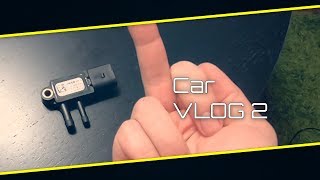
Technical definition: Diesel Particulate Filter Pressure Sensor 'A' Circuit Range/Performance. The PCM detects the sensor's voltage reading is implausible for the current engine load and exhaust flow. 🎬 See this walkthrough for diagnosing P2453 circuit range performance issues. This indicates a performance or logic failure, rather than a hard electrical short or open circuit (which trigger P2454 or P2455).
Can I Drive With P2453?
Yes, But With Caution. You can drive briefly, but stop as soon as possible. The engine enters a reduced power 'limp mode'. The faulty sensor signal disables the DPF's self-cleaning (regeneration) process. Driving without regeneration permanently clogs the DPF with soot, turning a $150 sensor repair into a $3,000 DPF replacement.
Common Causes

- Blocked, cracked, or melted DPF pressure sensor hoses (Very Common) — Small rubber or silicone hoses connecting the sensor to the DPF clog with soot, crack from heat, or melt. This is the most frequent failure point on Ram EcoDiesel and Ford Powerstroke trucks.
- Faulty DPF pressure sensor (Common) — The sensor fails internally from heat, vibration, or contamination, sending unstable or flatlined readings to the PCM. 🎬 Watch: How to fix a DPF differential pressure sensor error.
- Clogged or failing Diesel Particulate Filter (DPF) (Common) — Excessive soot and ash buildup pushes exhaust backpressure beyond the sensor's calibrated range. This occurs when the automatic regeneration process fails.
- Damaged wiring or connectors (Less Common) — Corroded or frayed wires disrupt the 5V reference or signal circuit, introducing electrical noise that causes implausible readings.
- Faulty engine thermostat (Less Common) — A thermostat stuck open prevents the engine from reaching the 180°F+ required for DPF regeneration, indirectly causing soot buildup and triggering P2453.
- Exhaust system leaks (Less Common) — Leaks upstream of the DPF or near the pressure taps vent exhaust gas, causing falsely low pressure readings.
- Incorrectly installed or crossed sensor hoses (Rare) — Swapping the pre-DPF and post-DPF hoses during a repair feeds negative pressure differentials to the PCM.
- Faulty Powertrain Control Module (PCM) or software (Rare) — Outdated PCM software misinterprets valid sensor signals. Manufacturers often issue TSBs with software updates to correct this logic.
Symptoms

- Reduced engine power (Limp Mode) — The PCM limits engine power and RPM to prevent turbocharger and exhaust system damage.
- DPF or exhaust system warning messages — Dashboard displays show 'DPF Clean Required,' 'Exhaust System Fault,' or 'Engine Power Reduced'.
- Decreased fuel economy — Fuel efficiency drops 10-20% due to inefficient combustion and constant regeneration attempts.
- Black smoke from exhaust — Visible black soot exits the tailpipe during acceleration if the DPF substrate cracks.
- Check Engine Light is on (also visible on scanner) — The Malfunction Indicator Lamp (MIL) illuminates immediately.
- Failed or frequent DPF regeneration (also visible on scanner) — The vehicle attempts constant, unsuccessful regeneration cycles or disables the process entirely.
Diagnostic Flowchart

Tap your situation to follow the diagnostic path that matches what you're seeing on this code.
Common Fixes & Costs
- Replace DPF pressure sensor hoses — Parts: $20-$80, Labor: $100-$150, ~1 hr book time (DIY)
- Replace the DPF pressure sensor — Parts: $50-$250, Labor: $100-$200, ~1.2 hr book time (Intermediate)
- Repair wiring or connector for the sensor — Parts: $10-$30, Labor: $150-$300, ~1.8 hr book time (Advanced)
- Forced regeneration or professional DPF cleaning — Parts: $0, Labor: $250-$800, ~1.5 hr book time (Professional)
- Replace the Diesel Particulate Filter (DPF) — Parts: $2000-$5000+, Labor: $300-$600, ~3.5 hr book time (Professional)
Used vs. New Parts: Buying Guide
When a used part is worth it: Buying a used DPF pressure sensor is highly discouraged. These sensors degrade from extreme heat and vibration, making used parts unreliable.
Donor-vehicle mileage cap: roughly under 40000 miles for the part to have meaningful remaining life.
Donor quality checklist:
- Select from low-mileage vehicles wrecked for non-engine reasons.
- Avoid sensors from rust-belt regions due to connector corrosion.
- Match the part number exactly.
Decision logic:
- If The part is a DPF Pressure Sensor. → Buy new OEM or high-quality aftermarket. The risk of a used sensor failing shortly after installation is too high.
- If The part is a DPF assembly and budget is a major constraint. → Consider a professionally cleaned used unit if budget is constrained.
Warranty tradeoff: Used sensors offer 30-90 day warranties. New aftermarket sensors provide 1-year to lifetime warranties.
Worst-case if a used part fails: $300 to cover repeat labor and the cost of the new sensor that should have been purchased initially.
What Happens If You Wait — Timeline
- 0-1 month: The PCM disables automatic DPF regeneration. The vehicle drives normally, but the DPF actively fills with soot. (MPG impact: 0-5%% · Added cost: $0-$50 in wasted fuel)
- 1-3 months: The DPF becomes severely restricted. The engine enters 'limp mode' with reduced power, requiring a professional off-car DPF cleaning. (MPG impact: 5-15%% · Added cost: $250-$800)
- 3-6 months: Hardened soot and ash critically clog the DPF. Extreme exhaust backpressure strains turbocharger seals and degrades engine performance. (MPG impact: 15-25%% · Added cost: $2,000-$5,000)
- 6+ months: The DPF substrate cracks or melts. Extreme backpressure destroys the turbocharger and damages exhaust valves. (MPG impact: >25%% · Added cost: $5,000-$10,000+)
Cost of Not Fixing It
- 0-1 Month: Reduced fuel economy (10% drop) and sluggish performance as regeneration attempts fail. The engine enters 'limp mode'. (Added cost: $50 in wasted fuel)
- 1-6 Months: The DPF clogs with soot and ash. Increased exhaust backpressure strains the turbocharger and engine components. (Added cost: $400-$800 for professional off-car DPF cleaning)
- 6+ Months: Catastrophic DPF failure requires full replacement. Extreme backpressure destroys the turbocharger and exhaust manifolds. (Added cost: $3,000-$8,000+ for DPF and turbocharger replacement)
Diagnosis Steps
- Read Codes and Live Data
Use an OBD-II scanner to confirm P2453 is present and check for related codes. Access live data and observe the 'DPF Pressure' or 'Exhaust Pressure' Parameter ID (PID).
Tools: OBD-II Scanner (Beginner) - Perform KOEO/KOER Sensor Check
With Key On, Engine Off (KOEO), the DPF pressure sensor reading must be exactly 0 PSI (0 kPa / ~0.5 Volts). Start the engine. At idle, pressure rises slightly (0 to 0.2 PSI). High KOEO readings indicate a bad sensor or clogged hose.
Tools: Advanced OBD-II Scanner (Intermediate) - Visually Inspect Sensor Hoses and Wiring
Locate the DPF pressure sensor. Inspect its two hoses for cracks, melting, kinks, or soot blockages. Trace the wiring harness for frayed wires or connector corrosion.
Tools: Flashlight, Inspection Mirror (Intermediate) - Test the Sensor Hoses for Blockages
Disconnect the hoses from the sensor. Blow low-pressure compressed air through them towards the DPF. If air cannot pass, replace the clogged hoses.
Tools: Pliers, Low-pressure compressed air (Intermediate) - Advanced Test: Check Sensor Circuit Voltages
Unplug the sensor connector and turn the ignition on. Use a multimeter to verify ~5V on the reference wire and continuity to ground on the ground wire. Missing voltage indicates a wiring or PCM fault.
Tools: Multimeter (Advanced) - Advanced Test: Test Sensor Voltage Response
Back-probe the sensor's signal wire. With KOEO, voltage sits near 0.5V. Steadily increase engine RPM to 2500; voltage must smoothly increase towards 1.6V+. Stuck or erratic voltage confirms a bad sensor.
Tools: Multimeter with back-probe pins (Advanced) - Advanced Test: Test Sensor Resistance
Disconnect the sensor and measure resistance between its pins. A reading of 'OL' (Open Loop) or near-zero Ohms indicates internal sensor failure.
Tools: Multimeter (Advanced) - Advanced Test: Test Sensor with a Hand Vacuum/Pressure Pump
Disconnect hoses and attach a hand vacuum/pressure pump to the sensor's inlet port. Apply pressure while monitoring live data voltage. The voltage must rise proportionally. If it drops out, replace the sensor.
Tools: Multimeter or Advanced Scanner, Hand Vacuum/Pressure Pump (Advanced) - Check for Underlying Regeneration Issues
If the sensor and hoses pass, check engine coolant temperature via live data. If it stays below 175°F (80°C), replace the stuck-open thermostat preventing regeneration.
Tools: Advanced OBD-II Scanner (Advanced) - Perform Sensor Reset/Calibration
After replacing the sensor, use an advanced scan tool to perform the 'DPF Pressure Sensor Learn' or 'Reset Learned Values' procedure. Skipping this causes the code to return.
Tools: Advanced OBD-II Scanner (Professional)
When This Code Triggers (Freeze-Frame Conditions)
- Engine Coolant Temp: 180-205°F (82-96°C) (Fully warmed up, often during or after a failed regeneration attempt.)
- RPM: 1500-2500 RPM (Steady state cruise or light acceleration when the PCM expects a predictable pressure rise.)
- Engine Load: 30-60% (The engine works moderately, producing enough exhaust flow to make an irrational sensor reading obvious.)
- Vehicle Speed: 40-65 mph (65-105 kph) (Highway driving conditions where passive regeneration is expected but sensor readings fail to correlate with soot load.)
Related Codes
- P2454 — DPF Pressure Sensor 'A' Circuit Low. Indicates a hard electrical short to ground. P2453 is a logic fault; P2454 is a physical wiring or internal sensor short.
- P2455 — DPF Pressure Sensor 'A' Circuit High. Indicates an open circuit or short to power. Test for a constant 5V+ signal, whereas P2453 shows an unresponsive but present voltage.
- P2463 — DPF Restriction - Soot Accumulation. A faulty sensor (P2453) prevents regeneration, causing the clog (P2463). Fix the sensor circuit first, then force a regeneration.
- P2002 — DPF Efficiency Below Threshold. A faulty pressure sensor feeds incorrect data to the PCM, falsely triggering this efficiency code. Diagnose P2453 first.
Climate & Environmental Factors
- High Altitude: Lower oxygen levels increase soot production by 30%. Cooler ambient temperatures prevent the exhaust from reaching regeneration thresholds.
- High Humidity / Rain: Moisture causes condensation buildup in the DPF sensor hoses. This water freezes in cold climates or causes corrosion, blocking pressure signals.
- Cold Weather: Engines struggle to reach the 180°F+ operating temperature required for passive or active DPF regeneration during short trips.
How to Talk to a Mechanic About This Code
Say this: "I have a P2453 code. Please inspect the DPF pressure sensor hoses for cracks or blockages and check the sensor's live data before recommending a DPF cleaning or replacement."
Directs the mechanic to follow a logical, cost-effective diagnostic path instead of quoting the most expensive repair.
Avoid saying:
- 'My check engine light is on.'
- 'I think my DPF is clogged.'
- 'Just fix whatever is wrong.'
Questions to ask before authorizing the repair:
- What was the KOEO pressure reading?
- Did you physically inspect the hoses?
- Can you show me the pressure readings proving the DPF is clogged?
- Is the sensor calibration included in the quote?
- Can I keep the old parts?
Where to Take It: Dealer vs Independent vs Chain
- Dealer:
Best for: Vehicles still under an emissions or powertrain warranty., Complex models (especially German brands like VW, Audi, BMW) that require proprietary software for sensor calibration., If a known Technical Service Bulletin (TSB) or recall exists for this issue.
Downsides: Highest labor rates, often 50-100% more than independent shops., May be quicker to recommend full DPF replacement over diagnosing simpler components. (Typical cost: +75% vs. baseline) - Independent Shop:
Best fit for most vehicles. An independent diesel specialist offers a good balance of expertise and value.
Best for: Out-of-warranty vehicles where cost is a primary concern., Shops that specialize in diesel trucks or your specific vehicle brand., Most common P2453 fixes like hose or sensor replacement.
Downsides: Quality and diagnostic capabilities vary widely; vet shops based on reviews and ASE certifications., May not have the latest manufacturer-specific tools for required calibrations on newer or European models. (Typical cost: +0% vs. baseline) - Chain Shop:
AVOID for diagnosis. High risk of misdiagnosis and unnecessary expensive services.
Best for: Potentially simple, visible hose replacements.
Downsides: Technician skill varies dramatically; often lack deep diesel diagnostic experience., High pressure to upsell services like unnecessary DPF cleanings., Generally not equipped for advanced diagnostics or sensor calibrations. (Typical cost: -10% vs. baseline)
When to Walk Away From the Repair
If the estimated repair cost exceeds 50% of the vehicle's current private-party market value, consider selling the vehicle as-is.
- Car worth $8000, fix is $450: Fix it. A sensor or hose replacement is a minor cost relative to vehicle value.
- Car worth $15000, fix is $3500: Borderline. The DPF requires replacement. Get a second opinion and weigh against replacement vehicle costs.
- Car worth $6000, fix is $4000: Walk away. The repair cost is two-thirds of the truck's value. Sell as a mechanic's special.
What Scan Tool You Need for This Code
Minimum: A scanner that reads codes and displays live data for the 'DPF Pressure' PID.
A $20 code reader cannot show live sensor readings (pressure at idle vs. RPM) required to differentiate a faulty sensor from a clogged hose.
Budget: BlueDriver Pro Scan Tool (~$100) — Provides detailed code definitions and customizable live data graphing for the DPF pressure sensor.
Mid-range: Foxwell NT510 Elite / NT710 (~$180) — Includes brand-specific special functions to perform the mandatory 'DPF Pressure Sensor Adaptation' on VW, Audi, and BMW models.
Professional: Autel MaxiCOM MK808 / MK808BT (~$450-550) — Offers full bidirectional control to reliably perform DPF sensor calibrations and force DPF regenerations across all manufacturers.
Rent vs buy: AutoZone loaner tools lack live data and calibration functions. Buying at least a budget scanner with live data is mandatory for P2453.
How to Clear the Code After You Fix It
- Use an advanced OBD-II scan tool to perform the DPF pressure sensor reset/calibration.
- Clear the P2453 and related fault codes.
- Perform a complete drive cycle to run readiness monitors.
Drive cycle (~30 minutes): Start cold and idle for 3 minutes. Drive 20 minutes mixing city and highway speeds. Include 5 minutes of steady driving over 50 mph to initiate regeneration. Allow the vehicle to cool completely.
Readiness monitors affected: Catalyst (CAT) Monitor, Exhaust Gas Recirculation (EGR) System Monitor, Oxygen (O2) Sensor Monitor
Before emissions retest: drive at least 100 miles to fully set monitors.
Watch out for:
- Clearing the code without fixing the root cause guarantees its return.
- Forgetting the sensor 'relearn' procedure on European models triggers an immediate fault.
- Testing emissions before monitors read 'Ready' results in failure.
Will This Fail Emissions / State Inspection?
Yes — this code typically fails an OBD-II emissions inspection.
- California: An illuminated Check Engine Light causes an automatic failure. The vehicle must complete drive cycles to set OBD readiness monitors before re-testing.
- New York: Vehicles 1996 and newer require OBD-II inspections. P2453 causes an automatic failure.
- Texas: In the 17 emissions-testing counties, any active emissions code like P2453 results in an inspection failure.
Most Commonly Affected Vehicles

- Ram 1500/Grand Cherokee EcoDiesel (2014-2020) — Rubber hoses to the DPF sensor frequently crack or melt. TSB S2008000063 links P2453 with P2463. Check for the AEM software update on 2014-2016 models.
- Ford F-Series Super Duty (Powerstroke) (2011-2019) — Restricted or kinked sensor hoses are the primary cause. Charge Air Cooler (CAC) hose leaks also generate excessive soot, triggering this code.
- GMC/Chevrolet Sierra/Silverado (Duramax) (2007-2016) — Condensation and soot block the pressure sensor tubes. Ensure lines slope downward continuously. Check Special Coverage Adjustment #18-NA-038.
- BMW Various Diesel Models (335d, X5 xDrive35d) (2009-2018) — Highly susceptible due to frequent short trips. A hidden stuck-open thermostat prevents regeneration, clogging the DPF and triggering the code.
- Volkswagen/Audi TDI Models (Jetta, Golf, Passat, A3) (2009-2015) — The G450 sensor (located in a foil pouch behind the oil filler cap on CBEA/CJAA engines) fails frequently. Requires VCDS adaptation after replacement.
- Mercedes-Benz Sprinter, E-Class, C-Class Diesels (2010-2018) — Prone to sensor and hose failures on high-mileage Sprinter vans used for short delivery routes.
- Jeep Wrangler/Cherokee (Gas/Diesel) (2018-2025) — TSBs #18-036-21 and #18-078-25 resolve P2453 on 2.0L gas models via a PCM update. EcoDiesel models share Ram's hose failure points.
- Toyota Hilux, Avensis (with D-CAT/DPNR) (2007-2015) — Faulty sensors or crossed vacuum hoses after service trigger the code. Models with BMW-sourced engines suffer thermostat failures.
Manufacturer-Specific Notes
- Ford: Inspect 6.7L Powerstroke pressure sensor hoses for kinks before replacing the sensor. Check Charge Air Cooler (CAC) hoses for boost leaks.
- GM (Duramax): LMM and LML pressure sensor tubes trap condensation. Ensure tubes slope downward. Check Special Coverage Adjustment #18-NA-038.
- Ram/Jeep (EcoDiesel): Rubber hoses are the primary weak point. TSB S2008000063 notes P2453 appears with P2463. PCM software updates alter DPF logic.
- Volkswagen/Audi: The G450 sensor hides in a foil pouch behind the oil filler cap on CBEA/CJAA engines. VCDS adaptation is mandatory after replacement.
- BMW/Mercedes-Benz: A stuck-open thermostat is a hidden cause of regeneration failure, leading to a clogged DPF and P2453.
- Subaru/Toyota: Sensor replacement requires a specialized scan tool relearn procedure to calibrate the new sensor to the ECU.
Real Owner Stories
2016 Ram 1500 EcoDiesel at 110K miles
Check Engine Light illuminated with code P2453. The truck ran fine, but the owner feared DPF damage.
What they tried:
- The owner researched forums, which overwhelmingly pointed to the sensor hoses as the primary failure point for this specific truck.
Outcome: Inspection revealed one of the two rubber hoses connecting to the DPF pressure sensor was cracked and brittle. The owner replaced both with high-temperature silicone tubing for $30. After clearing the code, it never returned.
Lesson: On many trucks, especially the Ram EcoDiesel, cheap rubber hoses are the most common failure point. Always inspect them for cracks or soot blockages before buying an expensive new sensor.
2012 VW Jetta TDI at 130K miles
P2453 triggered reduced engine power. The owner took the car to a general mechanic.
What they tried:
- Seeing a DPF code, the mechanic assumed the filter was clogged and performed a $500 forced regeneration and chemical cleaning service.
Outcome: The Check Engine Light returned two days later. A second, specialized shop diagnosed a faulty G450 DPF pressure sensor. Replacing and calibrating the $300 sensor fixed the issue permanently.
Lesson: P2453 points to a sensor performance issue, not a clogged filter. Never authorize an expensive DPF cleaning service without first testing the sensor and its circuit.
2008 Ford F-350 6.4L Powerstroke
The truck suffered frequent regenerations, reduced power, and code P2453. The DPF pressure sensor read an impossible 1.1 PSI with the engine off.
What they tried:
- The owner replaced the DPF pressure sensor and the Engine Control Module (ECM), but the high reading persisted. He then inspected the large C110 electrical connector on the driver's side.
Outcome: The C110 connector's locking lever was loose following a previous cab-off repair. Securing the connector restored the 5V reference circuit, dropping the KOEO reading to 0 PSI and solving the problem.
Lesson: If P2453 appears after a major repair, suspect a disturbed connection. Marginal connections in main harnesses send false signals that mimic component failures.
How to Prevent This Code From Triggering
- Use the correct low-ash engine oil (Every oil change) — Standard oils contain metallic additives that turn into non-combustible ash, permanently clogging the DPF. Use API CJ-4/CK-4 or ACEA C3 (Low-SAPS) rated oils.
- Ensure regular highway driving (At least once a week) — Short city trips prevent the exhaust from reaching regeneration temperatures. Drive 20-30 minutes at highway speeds (over 50 mph) weekly to burn off accumulated soot.
- Reduce engine idle time (Daily habit) — Idling produces excess soot while exhaust temperatures remain too low for regeneration, rapidly loading the DPF and straining the sensor.
- Address other engine issues promptly (As needed) — Leaking injectors, faulty EGR valves, or boost leaks cause inefficient combustion. This dramatically increases soot production, overwhelming the DPF and triggering P2453.
Frequently Asked Questions
What is the most common mistake when diagnosing P2453?
The most common mistake is replacing the expensive DPF without testing the pressure sensor and hoses. Because P2453 is a 'Range/Performance' code, the root cause is usually a $30 cracked hose or a faulty sensor.
Can I fix P2453 myself?
Yes, replacing cracked hoses is a beginner-friendly DIY repair. Replacing the sensor is an intermediate task. Accurate diagnosis is required to avoid replacing functional parts.
Do I need to reset the computer after replacing the DPF pressure sensor?
Yes, most modern diesels require a 'DPF pressure sensor reset' using an advanced scan tool. This calibrates the ECU to the new sensor's baseline values. Skipping this causes the code to return immediately.
Can a bad thermostat cause a P2453 code?
Yes. A thermostat stuck open prevents the engine from reaching the high temperatures required for DPF regeneration. The resulting soot buildup causes abnormal backpressure readings, triggering P2453.
What's the difference between P2453 and P2463?
P2453 means the pressure sensor's signal is illogical. P2463 means the DPF is physically restricted with soot. A bad sensor (P2453) prevents regeneration, causing the real clog (P2463).
Will the P2453 code clear itself?
No. The underlying mechanical or electrical fault must be repaired. Afterward, clear the code with a scanner and perform a sensor calibration procedure.
Is a DPF delete a valid way to fix P2453?
No. A DPF delete is illegal for on-road vehicles, causes emissions test failures, and voids warranties. It is not a valid repair strategy.
What does it cost to fix code P2453?
Replacing clogged or cracked hoses costs under $150. A new sensor replacement ranges from $150 to $350. If the DPF is permanently clogged from ignoring the issue, replacement costs $2,000 to $5,000+.
Key Takeaways
- Inspect the DPF pressure sensor hoses first; replacing cracked or clogged $30 silicone hoses resolves P2453 in the majority of cases.
- Do not drive extensively with P2453; the disabled regeneration cycle will permanently clog the DPF, turning a $150 sensor repair into a $3,000+ filter replacement.
- Perform a DPF pressure sensor calibration with an advanced scan tool after installing a new sensor to prevent the code from immediately returning.
- If code P2463 (Soot Accumulation) appears alongside P2453, fix the sensor circuit first, then immediately perform a forced regeneration to clear the accumulated soot.
Helpful Videos

The information in this article is provided for general reference and educational purposes only. Vehicle specifications, procedures, and part compatibility can vary by production date, trim level, and region. Always consult your vehicle's factory service manual and verify part numbers before purchasing or performing repairs. Safety-critical components such as airbags, seat belts, and braking systems should be installed by a qualified professional.
- 🎬 Helpful Videos
- What Does P2453 Mean?
- Can I Drive With P2453?
- Common Causes
- Symptoms
- Diagnostic Flowchart
- Common Fixes & Costs
- Used vs. New Parts: Buying Guide
- What Happens If You Wait — Timeline
- Cost of Not Fixing It
- Diagnosis Steps
- When This Code Triggers (Freeze-Frame Conditions)
- Related Codes
- Climate & Environmental Factors
- How to Talk to a Mechanic About This Code
- Where to Take It: Dealer vs Independent vs Chain
- When to Walk Away From the Repair
- What Scan Tool You Need for This Code
- How to Clear the Code After You Fix It
- Will This Fail Emissions / State Inspection?
- Most Commonly Affected Vehicles
- Manufacturer-Specific Notes
- Real Owner Stories
- 2016 Ram 1500 EcoDiesel at 110K miles
- 2012 VW Jetta TDI at 130K miles
- 2008 Ford F-350 6.4L Powerstroke
- How to Prevent This Code From Triggering
- Frequently Asked Questions
- What is the most common mistake when diagnosing P2453?
- Can I fix P2453 myself?
- Do I need to reset the computer after replacing the DPF pressure sensor?
- Can a bad thermostat cause a P2453 code?
- What's the difference between P2453 and P2463?
- Will the P2453 code clear itself?
- Is a DPF delete a valid way to fix P2453?
- What does it cost to fix code P2453?
- Key Takeaways
- 🎟️ Get 5% Off