

P2450 on 2021-2025 Lincoln Corsair: Causes, Fixes, and TSB Details
On a 2021-2025 Lincoln Corsair, code P2450 typically points to a fault in the evaporative (EVAP) emissions system, often the switching valve (also known as a vapor blocking valve). However, a known PCM software issue can also trigger this code, especially on 2.5L Hybrid models, so checking for available updates with a dealer is a critical first step before replacing parts.
- For 2023-2025 Corsair models, always check with a dealer for a PCM software update (TSB 25-2326) before replacing any parts for a P2450 code.
- The code points to a problem with the EVAP system's switching valve, which is responsible for managing fuel vapors.
- Avoid 'topping off' your fuel tank, as this can flood the EVAP system with liquid fuel and cause this code.
- Aside from the software issue, the most common hardware failure is the switching valve itself, which is a moderately priced part and relatively easy to replace for a DIYer.
What's Unique About the 2021-2025 Lincoln CORSAIR
For the Lincoln Corsair, particularly the 2.5L Hybrid models, this code is not always a straightforward hardware failure. Lincoln has issued a Technical Service Bulletin (TSB 25-2326) indicating that a PCM software glitch can falsely trigger the P2450 code on 2023-2025 models. This makes a dealer visit for a potential software reflash a primary diagnostic step. Additionally, TSBs for related Lincoln and Ford models (like the Ford Escape, which shares the Corsair's platform) suggest that overfilling the fuel tank can saturate the EVAP system and contribute to this code, making owner habits a potential factor.
Diagnostic Flowchart
Tap your situation to follow the diagnostic path that matches what you're seeing on this vehicle.
Generation note: The 2021-2025 model years cover the first generation of the Lincoln Corsair, which is built on the same C2 platform as the Ford Escape. This includes the pre-facelift models (2021-2022) and the facelifted models (2023-2025). The known TSB for a software issue (25-2326) specifically applies to 2023-2025 models with the 2.5L hybrid engine. The underlying EVAP system architecture is similar across these years.
Symptoms You May Notice
- Illuminated Check Engine Light is the most common and often only symptom.
- A faint fuel odor may be noticeable, especially around the rear of the vehicle after refueling.
- Difficulty starting the engine or a rough idle immediately after filling the gas tank.
- Automatic failure of a state emissions inspection.
- On some Ford platform mates, a dead battery has occurred concurrently with the P2450 code, though the causal link is unclear.
- Replacing the EVAP switching valve without first checking for the software TSB. This can lead to unnecessary expense as the code may return until the PCM is updated.
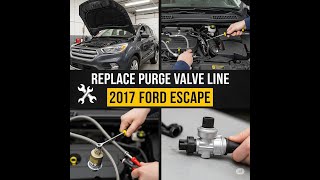
- Replacing the purge valve under the hood instead of the vapor blocking/switching valve, 🎬 Watch: How to replace a Ford canister purge valve. which is typically located near the fuel tank.
Most Likely Causes
- Powertrain Control Module (PCM) Software Error 🔴 High Probability A specific TSB (#TSB 25-2326) was issued for 2023-2025 models with the 2.5L hybrid engine, indicating the PCM software can incorrectly set this DTC. Software-related glitches are not uncommon on modern Ford/Lincoln vehicles.
How to confirm: A Lincoln dealership can check if your vehicle's VIN is covered by TSB 25-2326 and if a software update is available. This is the first logical step.
Typical fix: Reprogramming the PCM with the latest software version. This must be done by a dealer or a qualified shop with Ford/Lincoln diagnostic tools (like FDRS). 🎬 Watch: How a Ford PCM software reflash is performed.
Est. part cost: $0 if under warranty, otherwise dealer labor rates apply for flashing (approx. $100-$200). - Faulty EVAP System Switching Valve (Vapor Blocking Valve) 🟡 Medium Probability This valve (Ford often calls it the 'Evaporative Emissions Blocking Valve') is a solenoid that can fail mechanically, getting stuck open or closed due to internal wear or contamination from fuel or charcoal canister debris. On many Ford products, this valve is located on or near the fuel tank, requiring the tank to be dropped for replacement.
How to confirm: A technician can use a bi-directional scan tool to command the valve to open and close while monitoring its response via the Fuel Tank Pressure (FTP) sensor. A lack of pressure change indicates a stuck valve. One can also test for power and ground at the valve's connector.
Typical fix: Replacement of the EVAP switching/blocking valve. This can be labor-intensive if the fuel tank must be removed.
Est. part cost: $50-$150 - Overfilling the Fuel Tank ⚪ Low Probability Consistently 'topping off' the tank after the pump automatically stops can force liquid fuel into the charcoal canister and EVAP lines, which are designed only for vapor. This can saturate the charcoal, damage sensors, and cause valves to stick. A TSB for related Ford/Lincoln hybrids (SSM 53982) explicitly mentions this as a cause for P2450.
How to confirm: This is diagnosed by reviewing user habits and inspecting the charcoal canister and associated lines for signs of raw fuel saturation.
Typical fix: Advise the owner to stop topping off the fuel tank. If the charcoal canister is saturated, it will likely need to be replaced along with any affected valves.
Est. part cost: $0 if caught early, $200-$400 for a new charcoal canister if damaged. - Wiring or Connector Issues ⚪ Low Probability Not specific to this platform, but any vehicle can experience damage to wiring harnesses or corrosion in connectors, leading to a loss of signal to the EVAP valve. The wiring to the valve is often routed near the fuel tank and underbody, exposing it to road debris and moisture.
How to confirm: Visually inspect the wiring harness and connector leading to the EVAP switching valve for damage. Use a multimeter to check for proper voltage, ground, and signal integrity at the connector when the valve is commanded on/off by a scan tool.
Typical fix: Repairing the damaged wire or cleaning/replacing the connector.
Est. part cost: $5-$50
Rare But Worth Checking
- Faulty Fuel Tank Pressure (FTP) Sensor: If the sensor that reports pressure/vacuum to the PCM is faulty, it may not register a change when the switching valve operates, leading the PCM to incorrectly blame the valve.
- Leaking or Clogged EVAP Hoses: A crack or blockage in one of the EVAP lines can prevent the system from holding a vacuum during its self-test, which could be misinterpreted by the PCM.
- Faulty Capless Fuel Filler Neck: A damaged or non-sealing capless fuel filler assembly can cause a persistent EVAP leak, potentially contributing to various EVAP codes.
Diagnosis Steps
- Connect an OBD-II scanner to confirm P2450 is the primary code and check for any other stored DTCs.
- Crucial First Step: Contact a Lincoln dealer with your VIN to determine if TSB 25-2326 applies to your vehicle (especially 2023-2025 2.5L Hybrid models). If it does, having the PCM reprogrammed is the first and most important action.
- If no TSB applies, inquire about refueling habits. If the owner frequently 'tops off' the tank, explain how this can cause the issue and inspect the EVAP canister for fuel saturation.
- Perform a thorough visual inspection of the EVAP system hoses, charcoal canister, and the switching valve's wiring and connector for any obvious damage, cracks, or corrosion.
- Using a capable bi-directional scan tool, command the EVAP switching/blocking valve to open and close. While doing so, monitor the Fuel Tank Pressure (FTP) sensor data. A healthy system will show a change in vacuum/pressure. No change suggests the valve is stuck or not receiving the command.
- If the valve does not actuate (no audible click), test the wiring. Disconnect the valve and check for battery voltage and a ground signal at the connector when the valve is commanded on. If power and ground are present, the valve itself has likely failed.
- If the valve actuates but the FTP sensor shows no change, the system may have a significant leak. A smoke test is the next step to find the source of the leak (e.g., cracked hose, bad canister, faulty fuel filler neck).
- If the valve and wiring test good and there are no leaks, the issue could be a faulty FTP sensor or, in very rare cases, a faulty PCM driver circuit.
Parts You'll Likely Need
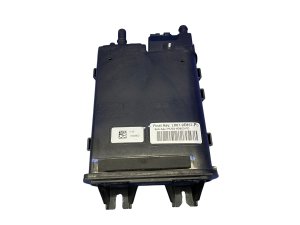
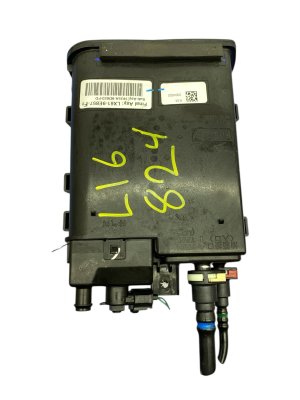
- EVAP System Switching Valve / Vapor Blocking Valve
(OEM #FL3Z-9F945-C (Example from F-150 TSB, specific Corsair P/N may vary))— This is the component directly identified by the P2450 code's definition. It can fail mechanically by getting stuck open or closed.
Trusted brands: Motorcraft, Standard Motor Products (SMP)
OEM price range: $70-$150
Aftermarket price range: $50-$100
Technical Service Bulletins (TSBs) & Recalls
- TSB 25-2326: States that an illuminated MIL with DTC P2450 may be due to the software level of the PCM on 2023-2025 Corsair 2.5L models.
- SSM 53982: Notes that on some Ford hybrids (2024 Maverick), P2450 can be due to an EVAP system concern or customer overfilling of the fuel tank.
- SSM 53601: Similar to the above, notes P2450 on Lincoln Nautilus hybrids can be from an EVAP concern or overfilling the fuel tank.
- TSB 18-2387: Although for a 2015 F-150, this TSB for P2450 provides excellent context, id
Platform-Specific Known Issues
- TSB 25-2326: Some 2023-2025 Corsair models with the 2.5L engine may exhibit an illuminated MIL with DTC P2450 due to the PCM software level. The prescribed fix is to reprogram the PCM.
- SSM 53601 / SSM 53982: While for other Lincoln/Ford hybrids (Nautilus, Maverick), these bulletins indicate that P2450 can be caused by an 'evaporative emission system concern' or by the 'customer overfilling' the fuel tank, which is relevant context for the Corsair as well.
Mechanic-Grade Diagnostic Values
- Fuel Tank Pressure (FTP) Sensor Reading During EVAP Test — expected: During a vacuum-based test, the PCM expects to see the pressure drop to approximately -8.0 in-H2O. During an Engine Off Natural Vacuum (EONV) test, it looks for a pressure rise above 2.5 in-H2O from natural vapor generation.. Failure: If the target negative pressure of -8.0 in-H2O is not achieved, a large leak (P0455) may be set. If pressure exceeds the target significantly, it can trigger P1450, indicating a blockage. If the pressure does not rise during the EONV test, a small leak code (P0442/P0456) may be set.
Hidden / Shadow Codes Worth Checking
- P2450:00: This is the most common variant of the code on modern Ford/Lincoln vehicles. The ':00' suffix is a standard part of Ford's DTC reporting and doesn't typically indicate a specific sub-fault beyond the primary definition of P2450. It confirms the fault is active and not intermittent at the time of the scan. (see via Ford Diagnostic & Repair System (FDRS), FORScan, or other professional-grade scan tools.)
Scan Tool Commands That Help
- Ford Diagnostic & Repair System (FDRS): EVAP System Test — This is a comprehensive, guided test within the dealer software that automatically commands the various EVAP solenoids (including the switching/blocking valve) to open and close while monitoring the FTP sensor. It's the most effective way to verify the functionality of the entire system and pinpoint a failing component without manual testing. It can confirm if the valve is physically responding to PCM commands.
Real Owner Repair Stories
- Reddit user on r/lincolnmotorco (2021 Lincoln Corsair, 58k miles) — Check Engine Light came on, but the drive felt completely normal with no noticeable performance issues.
❌ Tried (didn't work) The user was seeking advice before taking it for repair.
✅ What actually fixed it The user did not post a follow-up with the final repair, but was asking if the issue was urgent and if it would be covered under the powertrain warranty. - F-150 Powerboost owner on Reddit (2023 Ford F-150 XLT Powerboost) — Check Engine Light with code P2450 came on about a month after purchasing the vehicle new.
❌ Tried (didn't work) Dealer replaced the 'fuel tank isolation valve', but the light returned 5 days later.
✅ What actually fixed it The Check Engine Light turned off on its own after a highway trip and had not returned as of the last update. The owner speculated that highway driving may have cleared the issue, but the root cause remains unconfirmed. The code appeared to be intermittent.
OEM Part Supersession History
CU5Z-9F945-A→HU5Z-9F945-A— Part has been updated by the manufacturer. This is common for solenoids to improve durability or change suppliers.
Heads up: While this part number is for a commonly used EVAP purge solenoid and not the specific P2450 blocking valve, it demonstrates Ford's practice of superseding emission component part numbers. Always verify the exact part number for your vehicle's VIN and specific application, as using a superseded but incorrect part can cause compatibility issues.
Model Year Variations Within This Range
- 2024-2025: A small number of 2024-2025 Corsairs were subject to a recall for improperly sealed rear combination lamps (Part #s LJ7B-13405-AM, LJ7B-13404-AM). This could allow water ingress into the rear of the vehicle, potentially affecting nearby wiring and connectors for components like the EVAP system, which are often routed in the same area. While not a direct cause of P2450, it highlights a potential source of wiring issues due to moisture on these specific model years.
Helpful Videos

We Have This Part in Stock

The information in this article is provided for general reference and educational purposes only. Vehicle specifications, procedures, and part compatibility can vary by production date, trim level, and region. Always consult your vehicle's factory service manual and verify part numbers before purchasing or performing repairs. Safety-critical components such as airbags, seat belts, and braking systems should be installed by a qualified professional.
- Lincoln CORSAIR:
- 🎬 Helpful Videos
- 🛍️ Shop This Part
- What's Unique About the 2021-2025 Lincoln CORSAIR
- Diagnostic Flowchart
- Symptoms You May Notice
- Most Likely Causes
- Rare But Worth Checking
- Diagnosis Steps
- Parts You'll Likely Need
- Technical Service Bulletins (TSBs) & Recalls
- Platform-Specific Known Issues
- Mechanic-Grade Diagnostic Values
- Hidden / Shadow Codes Worth Checking
- Scan Tool Commands That Help
- Real Owner Repair Stories
- OEM Part Supersession History
- Model Year Variations Within This Range
- 🎟️ Get 5% Off