

P2450 on 2020-2025 Ford Escape: EVAP Valve and Software Fixes
On a 2020-2025 Ford Escape, code P2450 most often points to a software issue requiring a dealer update, as noted in TSB 25-2326. If not software, it's likely a faulty EVAP system valve near the fuel tank. A software update is a dealer-only fix, while valve replacement can be a moderately difficult DIY.
- First, check if your vehicle needs a software update (TSB 25-2326), as this is a common, non-mechanical cause for P2450.
- Do not 'top off' your fuel tank. Stop at the first click to prevent damage to the EVAP system.
- If a software update doesn't fix it, the most likely failed part is the EVAP switching/blocking valve (Fuel Tank Isolation Valve) located near the fuel tank.
- The vehicle is safe to drive with this code, but it will not pass an emissions test until it is repaired.
What's Unique About the 2020-2025 Ford ESCAPE

For the fourth-generation Ford Escape (2020-2025) and its platform mates like the Lincoln Corsair and Ford Maverick Hybrid, this code is frequently linked to software glitches in the Powertrain Control Module (PCM), especially on hybrid models. Ford has issued multiple Technical Service Bulletins (TSBs) acknowledging that the P2450 code can be triggered by software errors, customer overfilling of the fuel tank, or an actual EVAP system component failure. This makes it crucial to check for software updates before replacing any parts, as a simple reflash at the dealer often resolves the issue.
Diagnostic Flowchart

Tap your situation to follow the diagnostic path that matches what you're seeing on this vehicle.
Symptoms You May Notice

- Check Engine Light is on.
- Possible faint fuel smell, especially near the rear of the vehicle after refueling.
- Vehicle will fail an emissions inspection.
- Rarely, a rough idle or stumble immediately after refueling.
- Replacing the gas cap. The 2020-2025 Escape has a capless fuel filler system, so there is no cap to be loose or faulty.
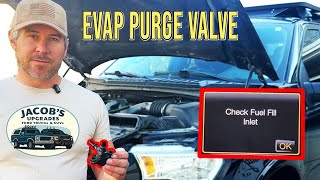
- Replacing the purge valve under the hood. P2450 specifically refers to the vent or blocking valve near the tank (often called the Fuel Tank Isolation Valve), not the canister purge valve in the engine bay. 🎬 Watch: How to replace a purge valve if yours is faulty
Most Likely Causes

- Powertrain Control Module (PCM) Software Error 🔴 High Probability Ford has issued TSB 25-2326 specifically stating that a PCM software issue can cause this DTC on these vehicles. This is a known issue across several Ford models using similar powertrain technology.
How to confirm: A Ford dealer or a qualified shop with access to Ford's service information can check if the vehicle's PCM software is outdated and if TSB 25-2326 applies by checking the VIN in the OASIS system.
Typical fix: Reprogramming the PCM with the latest software update using the Ford Diagnostic and Repair System (FDRS).
Est. part cost: $0 - Faulty EVAP System Switching/Blocking Valve 🟡 Medium Probability This valve, also called a Fuel Tank Isolation Valve (FTIV), can get stuck open due to internal wear or contamination. TSBs for other Ford models (like TSB 18-2387 for the F-150) confirm this part is a common failure point for this code, requiring replacement. Owners on forums for platform-mates have confirmed this was the dealer's fix.
How to confirm: Using a bidirectional scan tool, command the valve to close and see if it holds a vacuum. If it doesn't, the valve is stuck open. A functional test involves applying 12V power directly to the valve's pins and listening for an audible click; no click indicates a failed solenoid.
Typical fix: Replace the faulty valve assembly. This part is often located on or near the fuel tank and may require lowering the tank for access.
Est. part cost: $50-$150 - Overfilling the Fuel Tank ⚪ Low Probability TSBs SSM 53982 and SSM 53601 for hybrid models explicitly mention this as a possible cause. Topping off the tank can force liquid fuel into the charcoal canister and EVAP lines, damaging valves and sensors. This is particularly noted on the hybrid powertrain shared with the Maverick and Nautilus.
How to confirm: This is diagnosed by ruling out other causes and reviewing refueling habits with the vehicle owner. The code may appear shortly after a refueling event.
Typical fix: If the charcoal canister is saturated, it may need to be replaced. The primary fix is to advise the owner to stop refueling after the pump's first automatic shut-off.
Est. part cost: $150-$300 - Wiring or Connector Issue ⚪ Low Probability Wiring to the EVAP switching valve, which is located under the vehicle, is exposed to the elements and can become corroded or damaged. A poor connection can prevent the PCM from correctly operating or sensing the valve's position.
How to confirm: Visually inspect the wiring harness and connector leading to the valve for any signs of corrosion, breaks, or loose pins. Test for proper voltage (~12V) and ground at the connector when the valve is commanded open with a scan tool.
Typical fix: Repair the damaged section of the wiring harness or clean/replace the connector.
Est. part cost: $10-$50
Diagnosis Steps
- Check for Technical Service Bulletins (TSBs). This is the most critical first step. A Ford dealer can check your VIN against TSB 25-2326 and others to see if a software update is the required fix.
- Review Refueling Habits. Especially on hybrid models, confirm that the fuel tank is not being 'topped off' after the pump automatically stops.
- If no TSBs apply, perform a visual inspection of the EVAP system. Look for any cracked, disconnected, or damaged hoses, especially around the fuel tank and charcoal canister.
- Inspect the wiring and connector for the EVAP switching/blocking valve for damage or corrosion. Test for voltage and ground at the connector using a multimeter. One pin should have battery voltage (VPWR) with the key on, and the other is the control circuit from the PCM.
- Using a bidirectional scan tool, command the EVAP switching valve (Fuel Tank Isolation Valve) to close. Listen for a click and verify with a vacuum gauge or smoke machine that it is sealing properly.
- If a bidirectional tool is unavailable, a manual test can be performed by applying 12V power and a ground directly to the valve's pins. A healthy valve will produce an audible 'click' when power is applied. If it does not click, it is mechanically stuck and needs replacement.
- If the valve does not operate correctly or fails to seal during testing, it needs to be replaced.
- If the valve works correctly, perform a smoke test on the entire EVAP system 🎬 Watch: A helpful guide on diagnosing and fixing the P2450 code to check for leaks from hoses or the charcoal canister, although this is less common for this specific code.
Parts You'll Likely Need
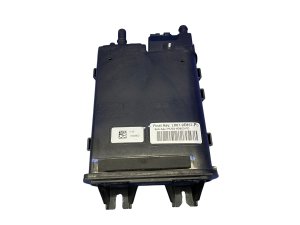
- Evaporative Emission System Blocking Valve
(OEM #LX6Z-9F945-A (Verify with VIN))— This is the valve identified in the code's definition, also known as the Fuel Tank Isolation Valve (FTIV). It can physically stick open, causing the fault. TSBs for other Ford vehicles and owner reports confirm this part as the primary mechanical failure point for this code.
Trusted brands: Motorcraft
OEM price range: $70-$150
Aftermarket price range: $50-$100
Technical Service Bulletins (TSBs) & Recalls
- TSB 25-2326: PCM software level may cause DTC P2450.
- SSM 53982: Hybrid models may exhibit P2450 due to an EVAP concern or overfilling the fuel tank.
- SSM 53601: Hybrid models may exhibit P2450 due to an EVAP concern or overfilling the fuel tank.
- TSB 18-2387: (F-150 context) Confirms that replacing the 'evaporative emission blocking valve' is the hardware fix for P2450, providing historical context for the part failure. 🎬 See how this common Ford valve failure is repaired
Platform-Specific Known Issues
- TSB 25-2326: Notes that on some 2020-2022 Escape models, this code may be caused by a software issue in the PCM and the fix is to reprogram the module.
- TSB SSM 53982 & SSM 53601: On hybrid models (shared with Maverick and Nautilus), this code can be caused by an EVAP system concern or by the customer overfilling the fuel tank.
Mechanic-Grade Diagnostic Values
- Voltage at Fuel Tank Isolation Valve Connector — expected: One pin should show battery voltage (~12V) with the key in the 'On' position. The other pin is the ground-side control from the PCM.. Failure: No voltage on the power pin indicates a wiring or fuse issue upstream. If power is present but the valve doesn't operate when commanded, the fault is likely the valve or the PCM's control circuit.
- Functional 'Click' Test — expected: When 12V power is applied directly to the valve's two pins, a sharp 'click' should be heard as the internal solenoid actuates.. Failure: Silence when power is applied indicates the solenoid is seized or electrically failed, confirming the valve is bad.
Hidden / Shadow Codes Worth Checking
- P2450:00: The ':00' is a Failure Type Code (FTC) used by Ford. For this DTC, it indicates the base fault ('Performance or Stuck Open') has occurred without any additional circuit-specific information. It means the PCM has detected the performance issue through its EVAP system pressure tests, rather than detecting an electrical fault like a short or open circuit in the valve's wiring. (see via Ford-specific scan tools like FDRS or FORScan will display the code with this suffix.)
Scan Tool Commands That Help
- Ford IDS/FDRS: Output State Control (OSC) — A technician would use the OSC function to manually command the Fuel Tank Isolation Valve (often called the Vapor Blocking Valve or VBV in the software) to change state (On/Off). This allows for testing the valve's mechanical response (listening for a click) and its ability to seal the system during a smoke or vacuum test, without having to run a full automated EVAP monitor cycle.
Wiring & Ground Locations
- Fuel Tank Isolation Valve Connector — On the valve itself, which is typically mounted on or very near the fuel tank, under the vehicle.. This 2-pin connector provides power and control to the valve. Pin 1 is typically the control signal (ground-side switched by the PCM) and Pin 2 is battery power (VPWR). Verifying power at this connector is a key step to rule out a wiring issue before condemning the valve.
Real Owner Repair Stories
- Reddit user on r/F150Powerboost (2023 Ford F-150 XLT Powerboost) — Check Engine Light with code P2450.
❌ Tried (didn't work) The dealer replaced the 'fuel tank isolation valve', but the Check Engine Light returned about 5 days later with the same code.
✅ What actually fixed it The Check Engine Light turned off on its own after a highway trip and did not return. The user speculated that highway speeds may have cleared the system. This outcome is inconclusive but highlights the intermittent nature of the fault, which aligns with the potential for it to be a software issue that can self-correct temporarily.
Helpful Videos
Used OEM Parts in Stock
New Aftermarket Parts Available


The information in this article is provided for general reference and educational purposes only. Vehicle specifications, procedures, and part compatibility can vary by production date, trim level, and region. Always consult your vehicle's factory service manual and verify part numbers before purchasing or performing repairs. Safety-critical components such as airbags, seat belts, and braking systems should be installed by a qualified professional.
- Ford ESCAPE:
- 🎬 Helpful Videos
- 🛍️ Shop This Part
- What's Unique About the 2020-2025 Ford ESCAPE
- Diagnostic Flowchart
- Symptoms You May Notice
- Most Likely Causes
- Diagnosis Steps
- Parts You'll Likely Need
- Technical Service Bulletins (TSBs) & Recalls
- Platform-Specific Known Issues
- Mechanic-Grade Diagnostic Values
- Hidden / Shadow Codes Worth Checking
- Scan Tool Commands That Help
- Wiring & Ground Locations
- Real Owner Repair Stories
- 🎟️ Get 5% Off