

P2450 on 2013-2017 Ford C-MAX ENERGI: EVAP Switching Valve Causes and Fixes
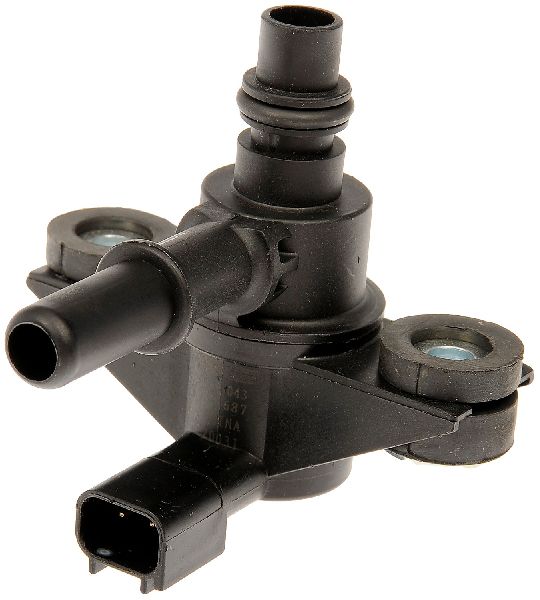
On a 2013-2017 Ford C-MAX, code P2450 is most often caused by a faulty canister purge valve located on the engine, not the switching valve near the tank. Ford has issued a Technical Service Bulletin (TSB 19-2207) for this exact issue, recommending replacement of the valve and a software update. This is an easy DIY fix, with the correct part (OEM part # AU5Z-9C915-E, which supersedes AU5Z-9C915-D) costing around $40-$70.
- P2450 on a C-MAX ENERGI almost always points to a bad canister purge valve, not the more complex switching valve near the fuel tank.
- Ford has issued TSBs (19-2207, SSM 48301) confirming this is a known issue with a straightforward fix.
- The most effective diagnostic step is to test the canister purge valve in the engine bay for vacuum leakage; it's a simple test that can be done in minutes.
- The repair is DIY-friendly, involving the replacement of a single, accessible part in the engine bay.
- When replacing the valve, it's also recommended to have a dealer or capable shop perform the PCM software update mentioned in TSB 19-2207.
What's Unique About the 2013-2017 Ford C-MAX ENERGI
The Ford C-MAX, particularly the Energi (PHEV) model, has a complex EVAP system to manage fuel vapors even when the gasoline engine is off for extended periods. While the P2450 code definition points to a "switching valve" which is often near the fuel tank on other vehicles like the F-150, on the C-MAX and its platform mates (Fusion Hybrid, MKZ Hybrid), this code is frequently linked to the much more accessible canister purge valve in the engine bay. Ford has released specific TSBs for the C-MAX that direct technicians to replace the canister purge valve and update software, confirming this is a known platform issue.
Diagnostic Flowchart
Tap your situation to follow the diagnostic path that matches what you're seeing on this vehicle.
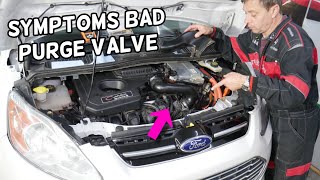
Symptoms You May Notice 🎬 Watch: Common symptoms of a failing purge valve on this platform.
- Check Engine Light (Malfunction Indicator Lamp) is on.
- A faint fuel odor may be noticeable, especially around the rear of the vehicle.
- Difficulty starting the engine or a rough idle immediately after refueling. Some owners report needing to press the accelerator pedal to get the car to start after a fill-up.
- A hissing sound when opening the fuel cap due to vacuum in the tank.
- Slightly reduced fuel economy.
- Replacing the fuel cap. While a bad fuel cap can cause other EVAP codes (like P0457 or P0455), it is not a typical cause for P2450, which points to a valve performance issue rather than a general system leak.
- Replacing the EVAP switching/blocking valve near the tank when the actual fault is the easier-to-access canister purge valve in the engine bay. This is a very common misdiagnosis on the C-MAX/Fusion platform due to the generic nature of the P2450 code definition.
Most Likely Causes
- Faulty Canister Purge Valve 🔴 High Probability Ford has identified a high failure rate for this part on the C-MAX and similar platforms, issuing TSB 19-2207 which recommends its replacement due to poor sealing capability. The valve can get stuck open, causing a constant, un-commanded vacuum pull on the fuel tank, which triggers codes P1450 and P2450.
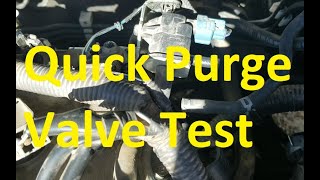
How to confirm: With the engine running, disconnect the EVAP hose from the purge valve. If you can feel vacuum with your finger at the valve's port when its electrical connector is unplugged, it is stuck open and has failed. The valve should be normally closed with no power applied. 🎬 See how to test your purge valve without using any tools.
Typical fix: Replace the canister purge valve located in the engine bay and clear the trouble codes. A PCM software update is also recommended by Ford as per TSB 19-2207 to complete the repair.
Est. part cost: $40-$85 - EVAP System Switching/Blocking Valve Failure ⚪ Low Probability While less common on the C-MAX than the purge valve, the code's definition directly points to this component. This valve is typically located near the fuel tank and charcoal canister. On other Ford models like the F-150, this is a more common cause for P2450.
How to confirm: Diagnosis requires accessing the valve near the fuel tank, which is difficult. A professional scan tool can be used to command the valve open and closed while checking for voltage and physical operation. This is more involved than testing the purge valve.
Typical fix: Replace the EVAP blocking valve assembly. This often requires lowering the fuel tank or charcoal canister for access.
Est. part cost: $100-$300 - Wiring or Connector Issues ⚪ Low Probability
How to confirm: Visually inspect the wiring harnesses and connectors for both the canister purge valve (in the engine bay) and the switching valve (near the tank). Look for any signs of corrosion, damage, or loose connections.
Typical fix: Repair or replace the damaged section of the wiring harness or the connector.
Est. part cost: $10-$50
Rare But Worth Checking
- Powertrain Control Module (PCM) Software Conflict: TSB SSM 48301 notes that a PCM software conflict can cause incorrect diagnostic results when testing for this code. This suggests the fault may lie in the software's interpretation, and an update could be part of the fix. TSB 19-2207 also explicitly calls for a PCM update as part of the purge valve replacement procedure.
- Clogged Charcoal Canister: If the charcoal canister becomes saturated with fuel (often from habitually overfilling the gas tank), it can cause various EVAP pressure and flow problems, potentially triggering P2450. This is often accompanied by difficulty refueling (the pump clicks off repeatedly).
Diagnosis Steps
- Check for Technical Service Bulletins (TSBs). TSB 19-2207 and SSM 48301 are highly relevant and point directly to the fix.
- Scan for other codes. The presence of codes like P1450 strongly points toward the canister purge valve.
- Test the Canister Purge Valve. Locate the valve on the engine. Disconnect its electrical connector and the hose coming from the charcoal canister. Start the engine. If you feel any vacuum suction from the valve's port, it is stuck open and must be replaced.
- Inspect wiring and hoses. Visually check the hoses around the purge valve and the wiring for any obvious cracks, damage, or loose connections.
- If the purge valve tests good, the next step is to diagnose the switching/blocking valve near the fuel tank. This is more involved and may require a professional.
- Follow the modified diagnostic procedure in TSB SSM 48301 if performing a pinpoint test from the service manual to avoid incorrect results. It specifically advises opening the fuel door during one of the test steps.
Parts You'll Likely Need
- Evaporative Emission Canister Purge Valve
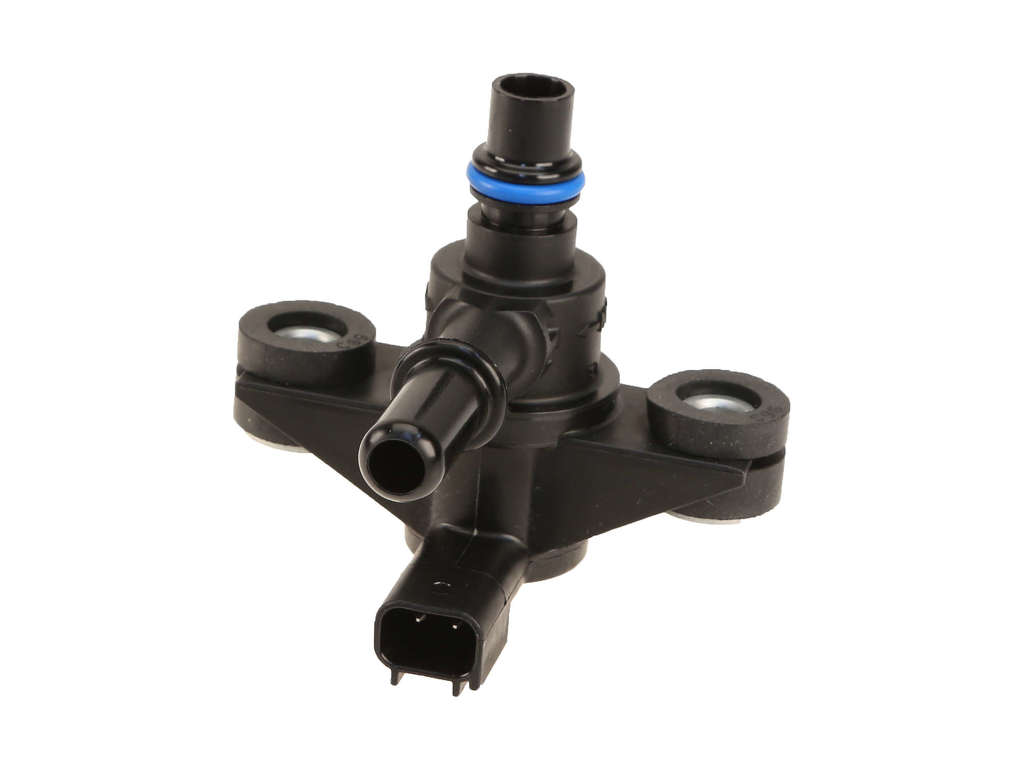
(OEM #AU5Z-9C915-E)— This is the most common failure part for P2450 on this specific vehicle, as identified by Ford in TSB 19-2207. It's an easy and inexpensive part to replace. 🎬 Watch this step-by-step walkthrough of the purge valve replacement process.
Trusted brands: Motorcraft, Dorman
OEM price range: $40-$70
Aftermarket price range: $35-$60
Related Codes That Often Appear With This One
- P1450 — This is a very common Ford-specific code for 'Unable to Bleed Up Fuel Tank Vacuum'. It's almost always caused by the same faulty canister purge valve stuck open and is the most frequent companion code to P2450 on this platform. It is mentioned in the same TSBs (19-2207, SSM 48301).
- P2451 — This code means the EVAP switching valve is 'Stuck Closed'. Seeing it with P2450 ('Stuck Open') can indicate an intermittent valve or a complex electrical/PCM issue. A Reddit user with a Fusion Hybrid reported seeing both codes simultaneously.
- P0496, P04ED, P04EF, P04EE — These are all EVAP system codes. TSB SSM 48301 groups them with P2450, indicating they can appear together due to a common root cause or a diagnostic software conflict on the C-MAX.
Technical Service Bulletins (TSBs) & Recalls
- SSM 48301: Notes a PCM software conflict can cause incorrect results during pinpoint tests for P2450 and other EVAP codes, requiring a modified procedure.
- 19-2207: Supersedes a previous TSB, identifying a faulty canister purge valve as the cause for P1450 and other EVAP codes, recommending replacement and a PCM software update for C-MAX, Fusion, and MKZ hybrids.
Platform-Specific Known Issues
- TSB 19-2207: Primary Cause Identified: Ford identified that the sealing capability of the canister purge valve can degrade, causing codes P1450, P0456, P0457, P04EE, and/or P04EF. The official fix is to replace the valve (part specified in the TSB) and update the PCM software. This TSB covers 2013-2017 C-Max, Fusion, and MKZ Hybrid/Energi models.
- TSB SSM 48301: Diagnostic Procedure Warning: This bulletin warns that following the standard workshop manual diagnostic procedure for P2450 (and related codes like P1450, P0496) may lead to incorrect results due to a PCM software conflict. It provides a specific instruction to open the fuel door during one of the test steps to ensure accuracy.
Mechanic-Grade Diagnostic Values
- Fuel Tank Pressure (FTP) Sensor Voltage — expected: 2.6 to 2.65 Volts. Failure: A significant deviation from this range with the system at atmospheric pressure (e.g., fuel cap off) indicates a biased sensor or wiring issue.
- Canister Purge Valve (CPV) Voltage — expected: ~12V when commanded open, ~0V when commanded closed.. Failure: Correct voltage is present but the valve does not physically operate (audible click or change in flow), indicating a mechanically stuck valve.
- Short-Term Fuel Trim (STFT) during Purge Valve Test — expected: Fuel trims will go negative (e.g., -10% or more).. Failure: Commanding the purge valve open with a scan tool causes no change in fuel trims, suggesting the valve is not opening or there is a blockage.
Scan Tool Commands That Help
- Ford IDS (or equivalent like FORScan): EVAP System Test — This is an automated test that runs the onboard diagnostic routine, checking for leaks and valve function, and will return a pass/fail result.
- Ford IDS, FORScan, high-end OBD2 scanners: Vapor Management Valve / Canister Purge Valve (CPV) Command — Allows manual control (On/Off or duty cycle %) of the purge valve in the engine bay to check its mechanical and electrical function while monitoring fuel trims or feeling for vacuum.
- Ford IDS, FORScan, high-end OBD2 scanners: Canister Vent Valve (CVV) Command — Allows manual control (On/Off) of the vent valve/solenoid near the canister to seal the system for leak testing with a smoke machine or vacuum gauge.
Wiring & Ground Locations
- G105 — Left side of the engine compartment.. A poor ground at this location could affect the operation of engine-bay-mounted components of the EVAP system, such as the canister purge valve.
- G104 — Located at the rear of the transmission.. This ground point could be relevant for components located toward the middle or rear of the vehicle, potentially including EVAP system wiring harnesses.
- Main Engine Compartment Ground — To the right of the 12V battery, near the engine compartment fuse box.. This is a primary grounding point for the vehicle's electrical system under the hood and ensuring it is clean and tight is a crucial first step in diagnosing any electrical fault.
- Powertrain Control Module (PCM) — Front of the left front wheelwell.. Knowing the PCM's location is critical for inspecting its connectors and wiring harness for damage or corrosion, which could cause a P2450 code.
"I Checked Everything" — The Actual Cause
- In some cases across the Ford lineup, a P2450 code can be triggered even when a smoke test passes, indicating no system leaks. One documented root cause was a faulty electrical connector on the Fuel Tank Pressure (FTP) sensor. The damaged connector sent incorrect, but still plausible, pressure data to the PCM, tricking it into thinking the switching valve had failed its performance test when the valve itself was fine. The fix was repairing the sensor's connector, not replacing any EVAP valves or hoses.
OEM Part Supersession History
AU5Z-9C915-A, AU5Z-9C915-B, AU5Z-9C915-C, AU5Z-9C915-D→AU5Z-9C915-E— The original canister purge valves were prone to premature failure of their internal seals, leading to vacuum leaks that would trigger P1450 and related EVAP codes. The updated part has improved sealing capability.
Heads up: All previous versions are superseded by AU5Z-9C915-E. While older versions will fit, they are prone to the original failure mode and should not be used.
Model Year Variations Within This Range
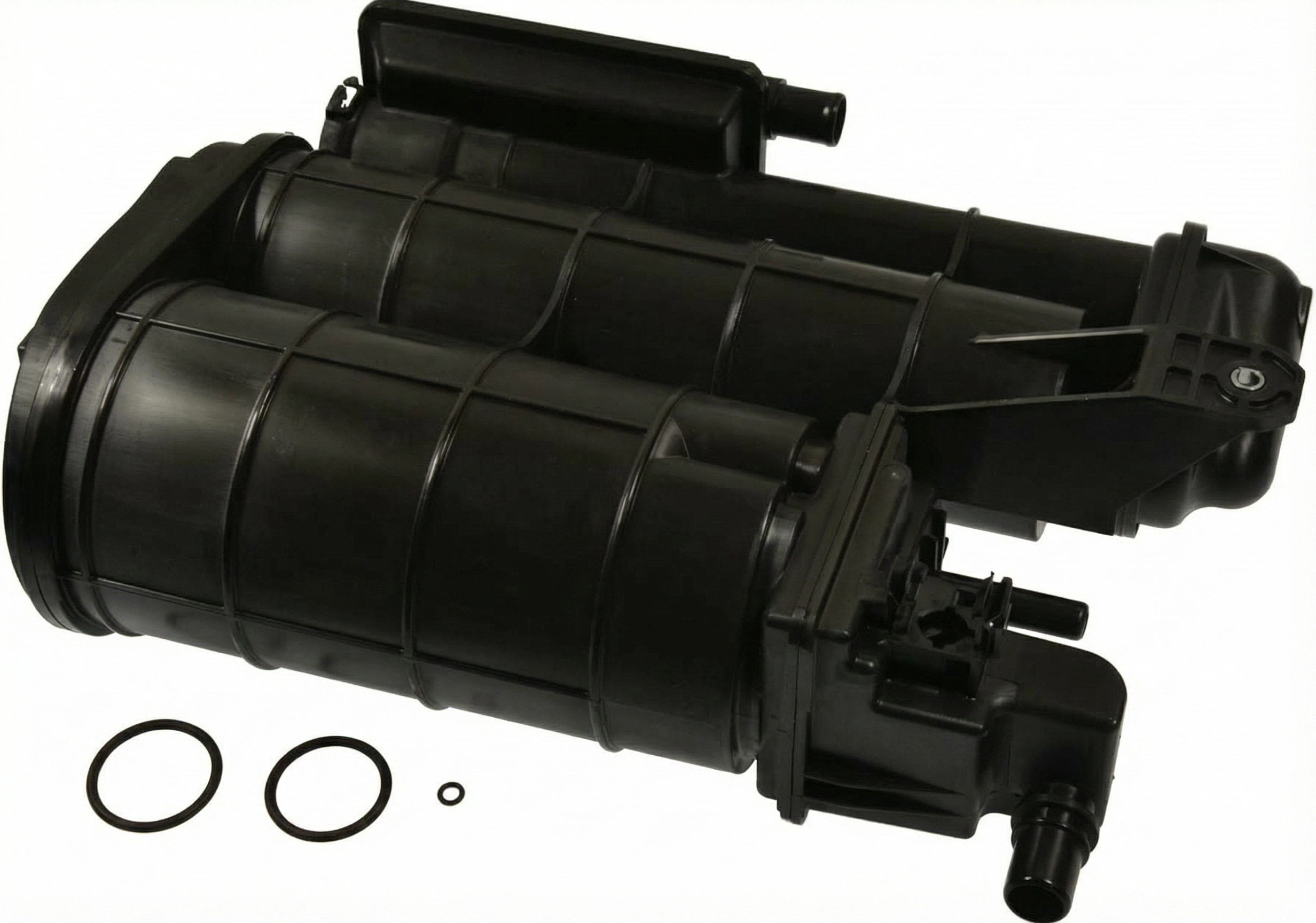
- 2013-2017: The C-MAX Hybrid (non-plug-in) and C-MAX Energi (plug-in) use different, non-interchangeable EVAP Vapor Canisters. The standard Hybrid uses part number FV6Z-9D653-K, while the Energi uses parts from the CU5Z-9D653-F family. While not the direct cause of P2450, installing the wrong canister during a broader EVAP system repair will cause persistent problems.
Helpful Videos

Used OEM Parts in Stock
New Aftermarket Parts Available


The information in this article is provided for general reference and educational purposes only. Vehicle specifications, procedures, and part compatibility can vary by production date, trim level, and region. Always consult your vehicle's factory service manual and verify part numbers before purchasing or performing repairs. Safety-critical components such as airbags, seat belts, and braking systems should be installed by a qualified professional.
- Ford C-MAX ENERGI:
- 🎬 Helpful Videos
- 🛍️ Shop This Part
- What's Unique About the 2013-2017 Ford C-MAX ENERGI
- Diagnostic Flowchart
- Symptoms You May Notice
- Most Likely Causes
- Rare But Worth Checking
- Diagnosis Steps
- Parts You'll Likely Need
- Related Codes That Often Appear With This One
- Technical Service Bulletins (TSBs) & Recalls
- Platform-Specific Known Issues
- Mechanic-Grade Diagnostic Values
- Scan Tool Commands That Help
- Wiring & Ground Locations
- "I Checked Everything" — The Actual Cause
- OEM Part Supersession History
- Model Year Variations Within This Range
- 🎟️ Get 5% Off