

P2442 on 2011-2014 Audi S5: Secondary Air Valve Stuck Open (Bank 2) Causes and Fixes
For a 2011-2014 Audi S5, code P2442 is most often caused by a failed secondary air injection (combi) valve on the driver's side, a faulty vacuum solenoid, or a cracked vacuum line. The repair typically involves replacing the specific valve or solenoid, costing between $75 and $250 for the parts. This is a well-documented issue with a specific Audi TSB guiding the diagnosis.
- P2442 on a 2011-2014 S5 is an emissions-only fault and will not cause driving problems.
- The most likely cause is a failed Bank 2 (driver's side) combi valve, as stated in an Audi TSB.
- If you also have a P2440 code for Bank 1, the shared vacuum solenoid is the probable culprit.
- Confirm the diagnosis before buying parts by testing the valve with a handheld vacuum pump.
- Do not confuse this 'stuck open' code with the more common 'insufficient flow' codes (P0491/P0492), which require a different and more labor-intensive repair (carbon cleaning).
What's Unique About the 2011-2014 Audi S5
The 2011-2014 S5 uses two different engines: a 4.2L V8 (2011-2012 Coupé) and a 3.0L Supercharged V6 (2013-2014 Coupé and all Cabriolets). Both engines are known for this issue. An official Audi Technical Service Bulletin (TSB #A011519 2040403) directly addresses this code, pointing to either a bad combi valve (Scenario A) or a faulty vacuum solenoid (Scenario B), which simplifies diagnosis. Unlike the more common 'insufficient flow' codes (P0491/P0492) on these engines that point to carbon-clogged ports, P2442 specifically indicates a mechanical or vacuum-related valve control problem.
Diagnostic Flowchart
Tap your situation to follow the diagnostic path that matches what you're seeing on this vehicle.
Generation note: The 2011-2014 year range covers the end of the B8 generation and the B8.5 facelift (2013+). The key difference is the engine change. The 2011-2012 S5 Coupé uses a 4.2L V8, while the 2013-2014 S5 Coupé and 2011-2014 S5 Cabriolet use a 3.0L Supercharged V6. The function of the secondary air system is the same, but the part numbers and specific locations of the combi valves differ. The TSB applies to both engine types.
Symptoms You May Notice
- Check Engine Light is on.
- Vehicle will not pass an emissions test.
- No noticeable drivability issues or performance loss.
- Slightly louder or unusual exhaust note for the first 60-90 seconds after a cold start.
- Replacing the oxygen (O2) sensors. This code is for the air injection system, not the O2 sensors, although a stuck valve can affect O2 sensor readings during the cold-start phase.
- Cleaning the secondary air ports. Clogged ports are a very common issue on these engines but cause 'Insufficient Flow' codes (P0491/P0492), not 'Stuck Open' codes (P2440/P2442). Cleaning the ports will not fix a mechanically stuck valve.
Most Likely Causes
- Defective Bank 2 Combi Valve 🔴 High Probability The internal diaphragm of the valve can fail or tear over time, causing it to stick open. This is a known issue addressed by an Audi TSB as 'Scenario A'.
How to confirm: With the engine cool, use a handheld vacuum pump on the port of the Bank 2 (driver's side) combi valve. If it doesn't hold vacuum, the diaphragm is torn and the valve is bad. You can also apply vacuum and listen for the valve actuating. The valve is located on the rear of the driver's side cylinder head.
Typical fix: Replace the Bank 2 combi valve and the associated gasket.
Est. part cost: $100-$250 - Defective Vacuum Solenoid Valve (N112) 🟡 Medium Probability The single solenoid that controls vacuum to both combi valves can fail, preventing it from properly directing vacuum to close the valves. The TSB notes this as 'Scenario B', the primary cause if both P2440 (Bank 1) and P2442 (Bank 2) are present.
How to confirm: Test the solenoid for proper electrical resistance (typically 25-35 Ω) and function. When commanded by a scan tool or by applying a 9V battery to its pins, it should click and pass vacuum from the source to the output ports. On the 3.0T, it's located near the front of the engine, while on the 4.2L V8 it is often near the firewall.
Typical fix: Replace the secondary air injection vacuum solenoid.
Est. part cost: $50-$100 - Cracked or Disconnected Vacuum Line 🟡 Medium Probability Plastic and rubber vacuum lines in the engine bay become brittle with age and heat cycles, leading to cracks and leaks. A leak in the line going to the Bank 2 combi valve will prevent it from closing. This is a common issue on many Audi/VW platforms.
How to confirm: Visually inspect all vacuum lines connected to the SAI solenoid and combi valves for cracks, brittleness, or loose connections. A smoke test can also quickly identify leaks. Pay close attention to the line that runs under the supercharger on 3.0T models, as it is a common failure point.
Typical fix: Replace the damaged section of vacuum line or the entire harness.
Est. part cost: $10-$40
Rare But Worth Checking
- Failed Secondary Air Injection Pump: While a failed pump usually causes 'insufficient flow' codes, if it fails in a way that allows moisture back into the system, it can damage the valves, leading to a 'stuck open' code. A loud whining or grinding noise on cold start points to a failing pump.
- Moisture Ingress: Water from the exhaust can travel back into the SAI system, especially if a one-way check valve fails. This moisture can cause corrosion or freeze in cold weather, causing the combi valve to stick open. This is a more common cause on other platforms like Toyota but can happen on Audis.
Diagnosis Steps
- Read the fault codes with an OBD-II scanner to confirm P2442 is present. Check if P2440 is also present.
- If both P2440 and P2442 are stored and appeared at the same time, the TSB identifies the common vacuum solenoid valve as the likely culprit. Inspect it, its connector, and test its function.
- If only P2442 is present, focus on Bank 2 (driver's side). The TSB identifies this as 'Scenario A', pointing to the Bank 2 combi valve.
- Visually inspect the vacuum lines running from the solenoid to the Bank 2 combi valve for any cracks, breaks, or loose fittings. A common failure point on the 3.0T is the line running under the supercharger.
- Locate the Bank 2 combi valve at the rear of the driver's side cylinder head.
- With the engine off and cool, disconnect the vacuum line from the combi valve and attach a handheld vacuum pump. 🎬 See how to use a vacuum pump to test the valve.
- Apply vacuum. If the valve does not hold vacuum (the needle on the pump drops), its internal diaphragm is ruptured, and the valve must be replaced.
- If the valve holds vacuum, the issue is likely upstream (the vacuum line or the solenoid). Re-test the solenoid by applying 12V power and checking if it clicks and passes vacuum.
- Listen for the SAI pump running on a cold start (it sounds like a vacuum cleaner for about 60-90 seconds). If it's silent or makes a grinding noise, the pump itself may have issues, though this is less likely to be the direct cause of P2442. 🎬 Watch: Step-by-step guide for replacing the 3.0T secondary air pump.
Parts You'll Likely Need
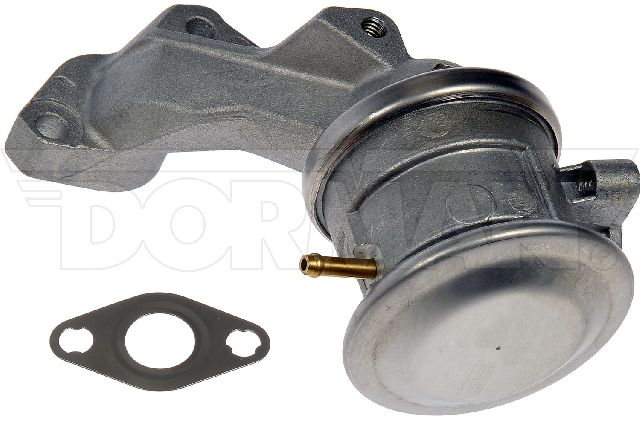
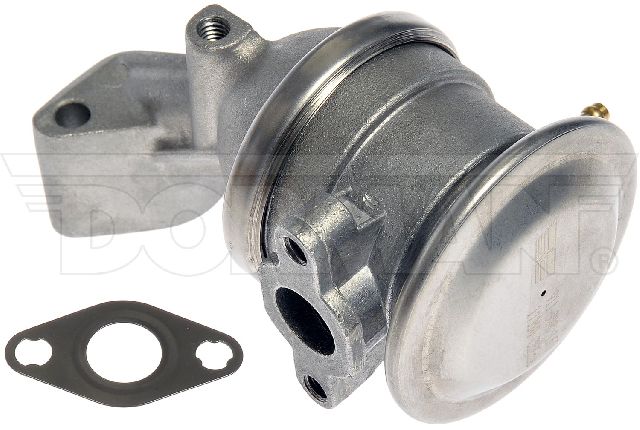
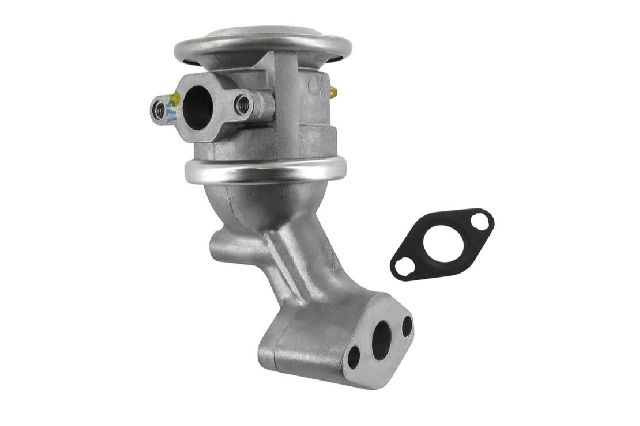
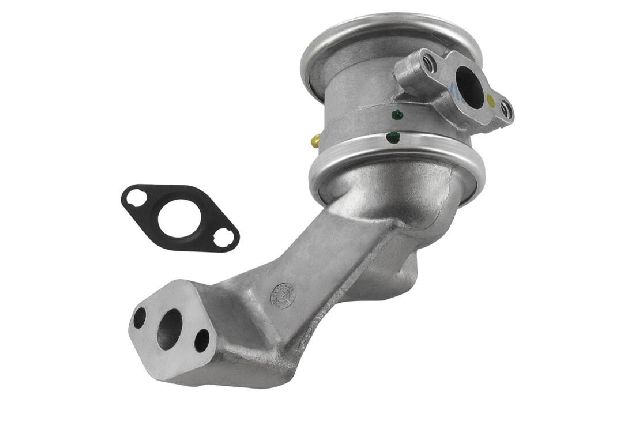
- Secondary Air Injection Valve (Combi Valve) - Bank 2
(OEM #079131102D (replaces 079131102C for 4.2L V8), 06E131101K (3.0T V6) - verify with VIN)— This is the most common failure point for a solo P2442 code, as identified by the manufacturer TSB. The internal diaphragm fails, causing the valve to stick.
Trusted brands: Pierburg (OEM), Hella, Genuine Audi
OEM price range: $180-$250
Aftermarket price range: $100-$160 - Secondary Air Injection Solenoid Valve
(OEM #037906283C (for both 4.2L V8 and 3.0T V6) - verify with VIN)— This single solenoid controls both combi valves. Its failure is the likely cause if codes for both banks (P2440 and P2442) are present simultaneously.
Trusted brands: Pierburg (OEM), Bosch, Hella
OEM price range: $80-$120
Aftermarket price range: $50-$90
Related Codes That Often Appear With This One
- P2440 — P2440 is the equivalent code for Bank 1 (passenger side). If both P2440 and P2442 appear at the same time, the TSB strongly suggests the single vacuum solenoid that controls both valves is the culprit ('Scenario B').
Technical Service Bulletins (TSBs) & Recalls
- A011519 2040403 / 01 16 73 / 01 17 48: MIL on, DTCs P2440 and/or P2442 stored. States the cause is a defective combi valve (Scenario A) or vacuum solenoid (Scenario B). This TSB has been revised multiple times, with the latest version being 2040403/5.
Platform-Specific Known Issues
- Official Audi TSB Guidance: Audi has issued Technical Service Bulletin #A011519 2040403 (and its revisions), which directly addresses codes P2440 and P2442. It provides a clear diagnostic path: if only one code is present, replace that bank's combi valve. If both codes are present, replace the shared vacuum solenoid.
- Real-World Repair Story: An owner of a 2013 S5 with 82k miles reported getting codes P2440 and P2442. After being quoted $4,000 by an independent shop due to the complexity of accessing the lines under the supercharger, they took it to an Audi dealer. The dealer repair, which likely involved replacing the solenoid and/or vacuum lines, cost approximately $1,700 after a $200 diagnostic fee.
Mechanic-Grade Diagnostic Values
- Resistance of SAI Solenoid Valve (N112) — expected: 25 to 35 Ohms. Failure: A reading outside this range (open circuit or short) indicates a faulty solenoid.
Scan Tool Commands That Help
- VCDS (VAG-COM): 01-Engine -> Output Tests (03) -> Secondary Air Injection Solenoid (N112) — To directly command the N112 solenoid to cycle. You should hear a clicking sound from the solenoid, confirming the ECM can control it and the solenoid's coil is functional. This helps isolate a wiring problem from a failed solenoid.
- VCDS (VAG-COM): 01-Engine -> Output Tests (03) -> Secondary Air Pump Relay (J299) — To manually activate the secondary air pump. You should hear the pump running (it sounds like a vacuum cleaner). This test confirms the pump motor, relay, and wiring are functional. It's useful for differentiating a 'stuck valve' code from a 'no flow' code.
- VCDS (VAG-COM): 01-Engine -> Basic Settings (04) -> Group 077 — To run the entire SAI system diagnostic test sequence. The tool will command the pump and valves to operate and report the system status (e.g., 'Test ON', 'System OK'). A failure during this test after verifying components individually points to a blockage or a valve that isn't opening/closing correctly under real conditions.
Wiring & Ground Locations
- SAI Pump Relay (J299) — Located in the plenum E-box (the electronics box in the plenum chamber, under the windshield).. While not a direct cause of a 'stuck open' valve, a faulty relay or its wiring can affect the overall system diagnosis. Testing power at this relay is a key step if the pump doesn't run during output tests.
- Engine Ground Strap — A primary engine-to-chassis ground point is located on the frame rail near the right-side (passenger) engine mount.. A poor engine ground can cause a variety of unpredictable electrical issues and fault codes. While not a common cause for P2442 specifically, verifying the main grounds are clean and tight is a fundamental step in any electrical diagnosis.
- SAI Solenoid Valve (N112) — On the 3.0T engine, it is located near the front of the engine. On the 4.2L V8, it is often found near the firewall, sometimes attached to the intake manifold.. This solenoid directly controls the vacuum supply to both combi valves. Knowing its location is critical for testing, as it's the primary suspect when both P2440 and P2442 are present.
Real Owner Repair Stories
- Ross-Tech Forums user (2012 Audi A6 3.0T (same engine and SAI system as S5)) — Yellow Check Engine light with code P2442 stored.
❌ Tried (didn't work) The user first suspected issues related to a recent supercharger-off service, but diagnosis pointed specifically to the SAI system.
✅ What actually fixed it The issue was resolved by replacing the 'Secondary Air Inlet Solenoid' (N112 valve, part #037906283C). The repair cost was $216 for the part, a $67 diagnostic fee, and $50 in labor.
OEM Part Supersession History
06E-131-101-E, 06E-131-101-J→06E-131-101-K— Standard part revision and improvement by the manufacturer.
Heads up: The newer part number (06E131101K) is the correct replacement for the older versions.
Helpful Videos


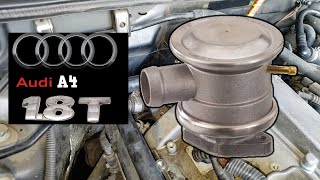
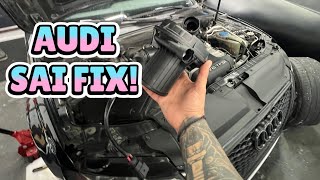
Used OEM Parts in Stock


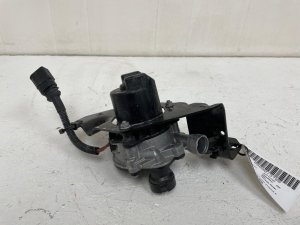
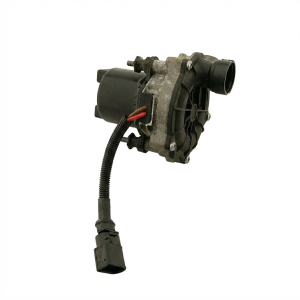
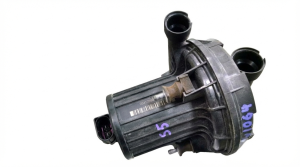
New Aftermarket Parts Available
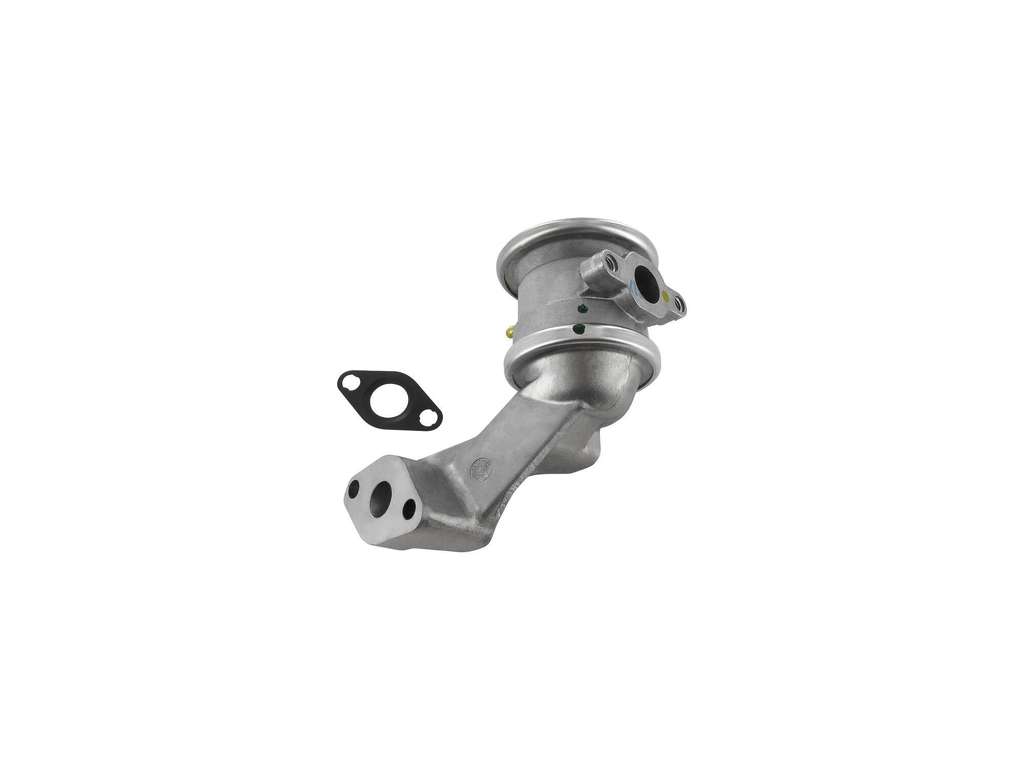
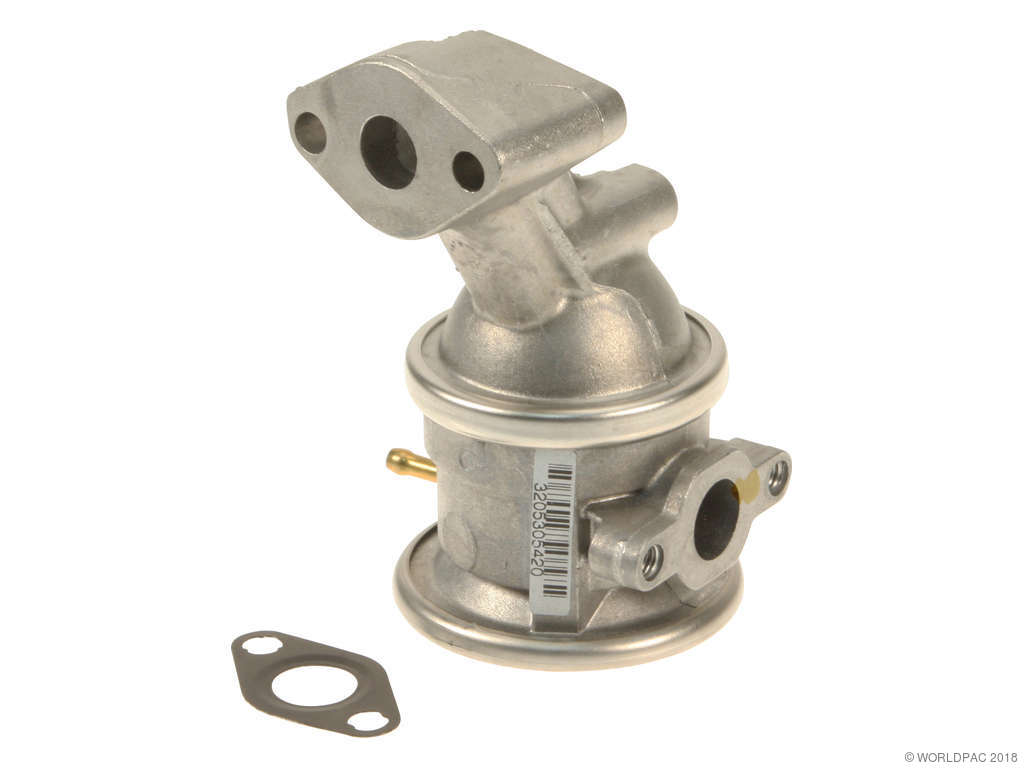

The information in this article is provided for general reference and educational purposes only. Vehicle specifications, procedures, and part compatibility can vary by production date, trim level, and region. Always consult your vehicle's factory service manual and verify part numbers before purchasing or performing repairs. Safety-critical components such as airbags, seat belts, and braking systems should be installed by a qualified professional.
- Audi S5:
- 🎬 Helpful Videos
- 🛍️ Shop This Part
- What's Unique About the 2011-2014 Audi S5
- Diagnostic Flowchart
- Symptoms You May Notice
- Most Likely Causes
- Rare But Worth Checking
- Diagnosis Steps
- Parts You'll Likely Need
- Related Codes That Often Appear With This One
- Technical Service Bulletins (TSBs) & Recalls
- Platform-Specific Known Issues
- Mechanic-Grade Diagnostic Values
- Scan Tool Commands That Help
- Wiring & Ground Locations
- Real Owner Repair Stories
- OEM Part Supersession History
- 🎟️ Get 5% Off