

P2442 on 2011-2014 Audi S4: Secondary Air Valve Stuck Open Fixes
For a 2011-2014 Audi S4, code P2442 almost always points to a failed secondary air injection (combi) valve on Bank 2 or a faulty vacuum control solenoid. A new combi valve costs around $150-$270, and the fix is a common DIY project. If P2440 for Bank 1 appears at the same time, the issue is almost certainly the shared vacuum solenoid.
- P2442 on your S4 means the driver's side secondary air valve is stuck open.
- An official Audi TSB identifies the two most likely causes: a bad combi valve (for just P2442) or a bad vacuum solenoid (if P2440 is also present).
- Diagnosis is straightforward: check for dual codes first, then test the combi valve with a handheld vacuum pump.
- This is a common and very DIY-friendly repair that does not require extensive tools or experience, unless a vacuum line under the supercharger has failed.
- Do not replace the expensive secondary air pump, as it is rarely the cause of this specific code.
What's Unique About the 2011-2014 Audi S4

On the Audi 3.0T supercharged engine, the secondary air system uses vacuum-actuated 'combi valves' rather than electric ones found on some other vehicles. An official Audi Technical Service Bulletin (TSB) confirms that this code is commonly caused by either a defective combi valve or a faulty vacuum solenoid that controls the valves. This makes diagnosis relatively straightforward compared to platforms where the cause is less documented. The valves are located at the front of the engine, making access for testing and replacement feasible for a DIYer.
Diagnostic Flowchart
Tap your situation to follow the diagnostic path that matches what you're seeing on this vehicle.
Generation note: The 2011-2014 model years cover the B8 (pre-facelift) and B8.5 (facelift) generations of the Audi S4. Both use the same 3.0L TFSI supercharged V6 engine and a similar secondary air injection system, so the causes and repairs for P2442 are consistent across this year range. This issue is also common on other Audi models with the same engine.
Symptoms You May Notice
- Check Engine Light is on
- Vehicle will fail an emissions test
- Slightly rough or stumbling idle on a cold start
- Audible exhaust leak or different, louder engine note during the first 30-90 seconds after a cold start
- In some cases, no noticeable symptoms other than the Check Engine Light
- Replacing the secondary air pump. The pump creates the air pressure, but this code specifically points to a fault with the switching valve that directs the airflow, not the pump itself. The TSB from Audi does not list the pump as a cause for this code.
Most Likely Causes

- Defective Bank 2 Combi Valve (Secondary Air Injection Valve) 🔴 High Probability This is a primary failure point identified by Audi in a Technical Service Bulletin (A011519 2040403/3). The valve's internal rubber diaphragm can tear or the valve itself can get stuck due to carbon buildup or mechanical failure. This is the most likely cause if P2442 is the only code present.
How to confirm: With the engine off and cool, apply vacuum to the valve's nipple with a handheld vacuum pump. It should hold vacuum and you should see the valve linkage actuate. If it doesn't hold vacuum, the diaphragm is torn. If it holds vacuum but doesn't move, it is seized. In either case, it is faulty.
Typical fix: Replace the Bank 2 (driver's side) combi valve and the associated gasket.
Est. part cost: $150-$280 - Defective Vacuum Solenoid (N112) 🟡 Medium Probability This solenoid, often referred to as the N112 valve, controls vacuum to both combi valves. It's the second failure point listed in Audi's TSB. If it fails, it can cause both P2442 (Bank 2) and P2440 (Bank 1) to appear simultaneously. Its plastic construction can become brittle from engine heat over time.
How to confirm: The TSB explicitly states that if both P2440 and P2442 are stored at the same time, the solenoid is the likely culprit. You can also test it by applying 12V to its terminals to see if it clicks and correctly routes vacuum from the source port to the outlet ports. A resistance test can also be performed; the expected value is 25-35 Ohms.
Typical fix: Replace the vacuum control solenoid. It is typically located near the front of the engine.
Est. part cost: $40-$80 - Cracked or Leaking Vacuum Lines ⚪ Low Probability The plastic and rubber vacuum lines in the engine bay become brittle over time due to constant heat cycles and can crack or break. A leak in the line between the solenoid and the Bank 2 combi valve will prevent it from closing properly.
How to confirm: Visually inspect all vacuum lines running from the solenoid to both combi valves for cracks, breaks, or loose connections. A smoke test is the most effective way to reveal hard-to-see leaks. One owner on Reddit noted a dealer repair cost of ~$1700 because a vacuum line runs under the supercharger, requiring significant labor to access.
Typical fix: Replace the damaged section of vacuum line. Pre-formed OEM hoses are available.
Est. part cost: $10-$50
Rare But Worth Checking
- Clogged Secondary Air Injection Ports: While less common for a 'stuck open' code, severe carbon buildup in the cylinder head ports can affect system performance and sometimes trigger related codes like 'insufficient flow'. This is a much more involved and expensive repair, often requiring removal of the supercharger for access. 🎬 See how to diagnose carbon buildup and insufficient flow codes
- Faulty Secondary Air Injection Pump: A failing pump typically causes 'insufficient flow' codes (P0491/P0492), not 'stuck open' codes. However, in rare cases, debris from a disintegrating pump could theoretically jam a combi valve open. A failing pump may also blow a 50A fuse due to excessive current draw.
Diagnosis Steps

- Read the fault codes with an OBD-II scanner to confirm P2442 is present. Check if P2440 is also stored.
- If both P2440 and P2442 are present, the primary suspect is the vacuum control solenoid (N112) per TSB A011519 2040403/3. Proceed to test or replace the solenoid.
- If only P2442 is present, begin by locating the Bank 2 combi valve on the driver's side of the engine.
- Visually inspect the vacuum line running to the Bank 2 combi valve for any visible cracks, breaks, or loose fittings.
- Using a handheld vacuum pump, test the Bank 2 combi valve directly. Disconnect the vacuum line and apply 20-25 inHg of vacuum. The valve should hold the vacuum without leaking down. If it fails to hold vacuum, the internal diaphragm is torn and the valve must be replaced.
- If the valve holds vacuum, watch the actuator arm on the side of the valve as you apply and release vacuum. It should move smoothly. If it doesn't move, the valve is seized internally.
- If the valve and lines test good, re-examine the vacuum solenoid. It may be failing intermittently or only for one bank. Test its resistance with a multimeter (expect 25-35 Ohms) and listen for a 'click' when it's commanded to activate via a capable scan tool or by applying 12V directly.
- If all components seem to function, a smoke test is the definitive method to find a hairline crack in a vacuum hose that is not visible to the naked eye.
Parts You'll Likely Need

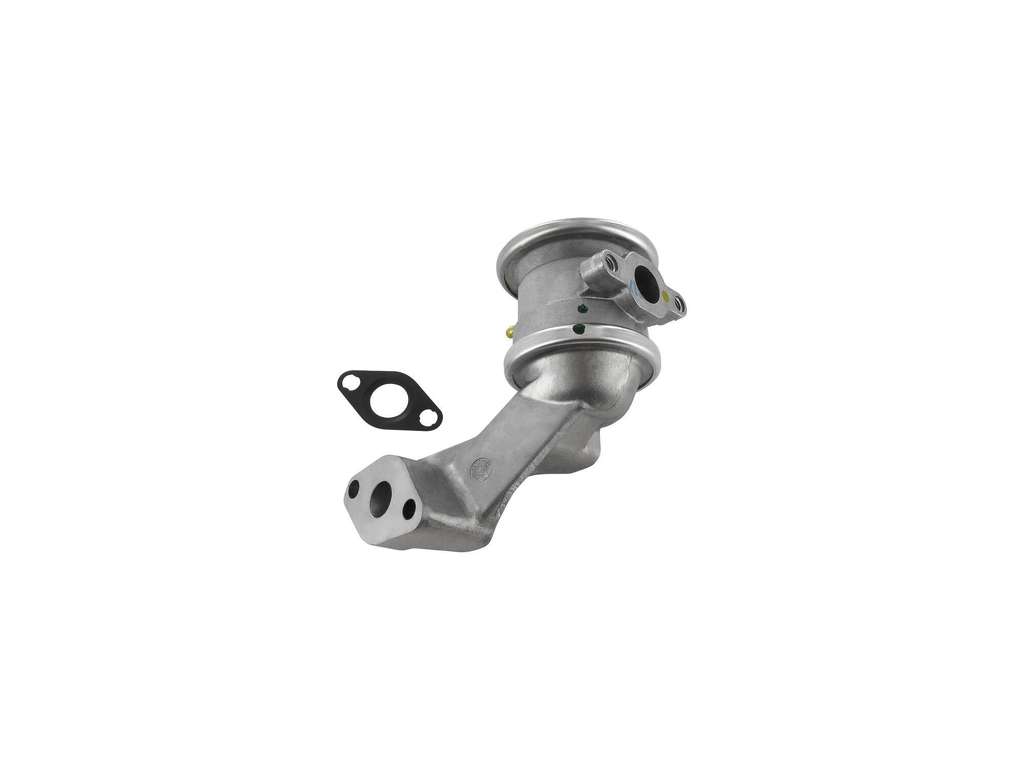
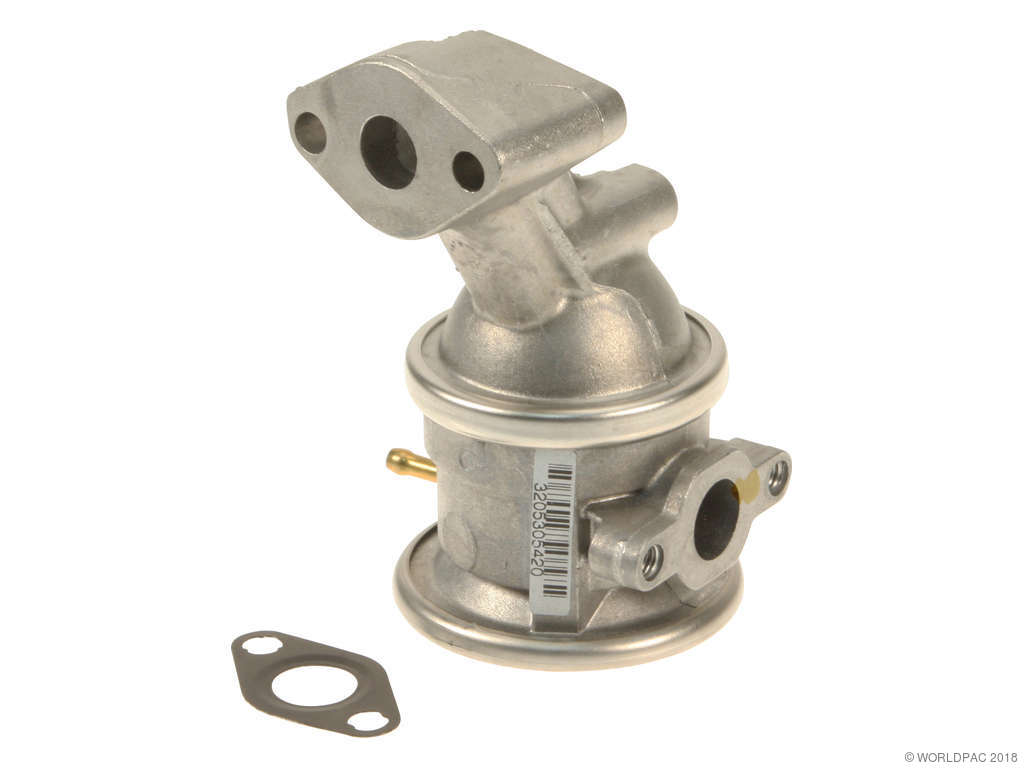
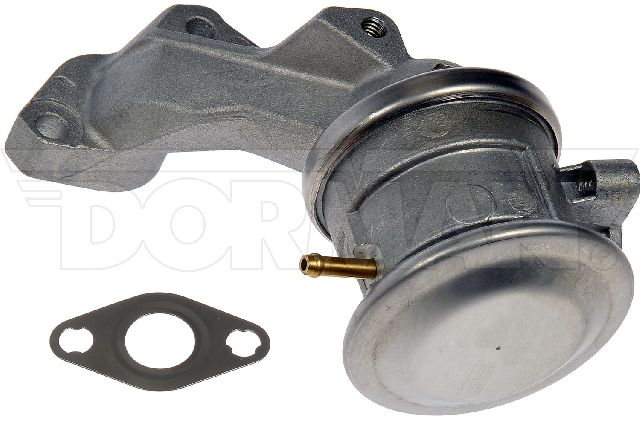
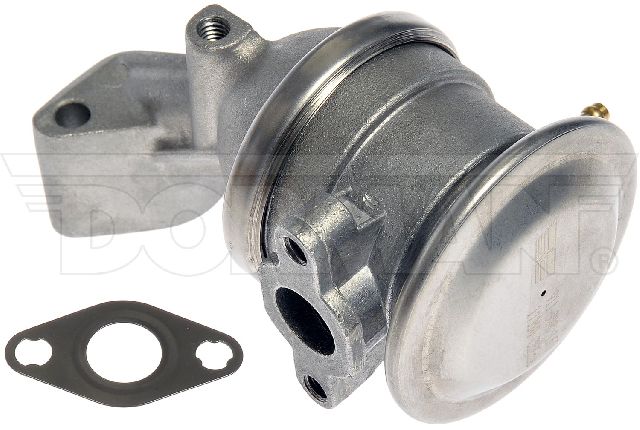
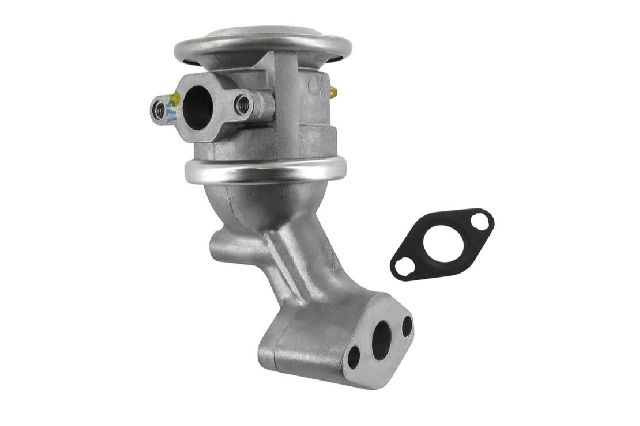
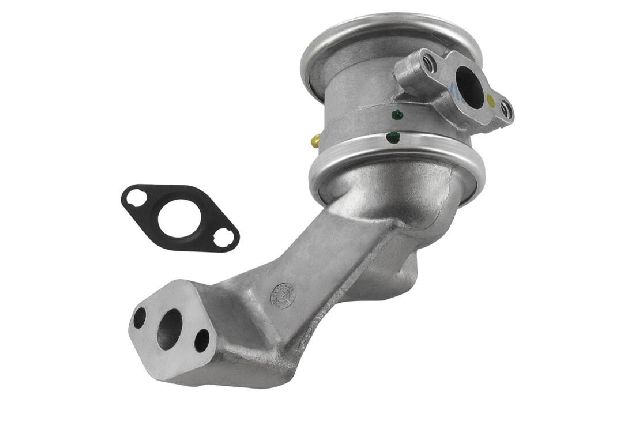
- Secondary Air Injection Valve (Combi Valve), Bank 2/Left
(OEM #06E131101M (or 06E131101K))— This is the most common failure point for an isolated P2442 code, as confirmed by an Audi TSB. The internal diaphragm fails or the valve gets stuck. Bank 2 is the driver's side in LHD cars.
Trusted brands: Genuine Audi, Pierburg (OEM supplier)
OEM price range: $220-$280
Aftermarket price range: $150-$200 - Secondary Air Injection Solenoid Valve (N112)
(OEM #037906283C)— This solenoid controls both combi valves. It is the most likely cause if codes P2442 and P2440 are present simultaneously.
Trusted brands: Genuine VW/Audi, Pierburg (OEM supplier), Bosch
OEM price range: $60-$80
Aftermarket price range: $30-$50 - Combi Valve Gasket
(OEM #06E131120A)— A new gasket should always be used when replacing the combi valve to prevent exhaust leaks.
Trusted brands: Genuine Audi, Elring
OEM price range: $5-$10
Aftermarket price range: $2-$5
Related Codes That Often Appear With This One
- P2440 — This is the identical code for Bank 1 (passenger side). If both P2440 and P2442 appear together, it strongly suggests the shared vacuum control solenoid (N112) has failed, as noted in Audi's TSB.
Technical Service Bulletins (TSBs) & Recalls
- A011519 2040403/3 / 01 16 73 2040403/3: MIL on (DTC P2440(00) and/or P2442(00)). States one of the combi valves or the vacuum solenoid is defective. Provides the diagnostic logic of checking for single vs. dual codes.
Platform-Specific Known Issues
- Audi released Technical Service Bulletin #A011519 2040403/3 (also listed as 01 16 73 and updated several times) which directly addresses codes P2440 and P2442 on the 3.0T engine. It explicitly states the cause is either a defective combi valve (if a single code is present) or a defective vacuum solenoid (if both codes are present simultaneously).
Mechanic-Grade Diagnostic Values
- N112 (Secondary Air Injection Solenoid Valve) Resistance — expected: 25.0 - 35.0 Ohms. Failure: A reading outside this range, or an open/short circuit, indicates a faulty solenoid.
- N112 Solenoid Connector Voltage — expected: 12V (Battery Voltage) on one pin when commanded ON by the ECU.. Failure: No voltage suggests a wiring issue, blown fuse, or problem with the ECU driver.
Scan Tool Commands That Help
- VCDS (VAG-COM): [Engine - 01] -> [Basic Settings - 04] -> Group 077 — This initiates the SAI system's self-test sequence. The ECU will run the pump and cycle the valves, reporting back 'System OK' or 'System NOT OK'. This is useful for verifying a repair or checking overall system function after addressing a specific component.
- VCDS (VAG-COM): [Engine - 01] -> [Output Tests - 03] -> Select 'Secondary Air Injection (AIR) Pump Relay' and 'Secondary Air Injection Solenoid Valve (N112)' — This allows you to manually activate individual components. You can command the SAI pump to run to check its operation audibly, and command the N112 solenoid to click, verifying the electrical circuit and solenoid function independently of the combi valves.
Wiring & Ground Locations
- Engine Ground Point — There are several key ground points in the engine compartment. A primary one for the engine harness is located on the left (driver's side) frame rail.. A poor ground connection for the engine harness can cause intermittent and unusual electrical faults for various sensors and solenoids, including the N112 solenoid.
- N112 Solenoid Connector — The N112 solenoid is located at the front of the engine. It has a 2-pin electrical connector.. This is the connector where voltage and resistance tests are performed. One pin receives 12V from the ECU to activate the solenoid, and the other is the control signal wire.
Real Owner Repair Stories
- Reddit user on r/Audi (2013 Audi S5 (same 3.0T engine)) — Check Engine Light with codes P2440 and P2442.
❌ Tried (didn't work) Initial diagnosis by an independent shop led to a high quote ($4k), suggesting they may have been looking to replace multiple components like both combi valves and the solenoid.
✅ What actually fixed it The final repair, performed by a dealer for ~$1700, was a leaking vacuum line that runs under the supercharger. The high cost was due to the significant labor required to remove the supercharger for access to the line.
OEM Part Supersession History
06E131101K→06E131101M— Part revision and update by the manufacturer. The 'M' revision is the latest version of the Bank 2 combi valve.
Heads up: The older part number 06E131101L is also listed as being replaced by 06E131101M.N/A→037906283C— This part number is used across many VW/Audi applications for various vacuum control functions, including the SAI solenoid (N112) and the EVAP purge valve (N80).
Model Year Variations Within This Range
- 2013-2014 (B8.5): The B8.5 facelift models (2013+) received revisions to address some reliability concerns of the earlier B8 models, such as an improved water pump/thermostat design and updated DSG mechatronics. However, the secondary air injection system, including the combi valves and solenoid that cause P2442, remained fundamentally the same across the 2011-2014 range.
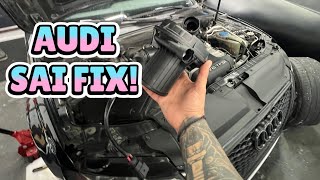
Helpful Videos


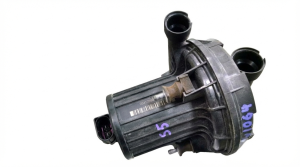
Used OEM Parts in Stock
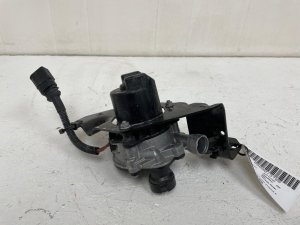
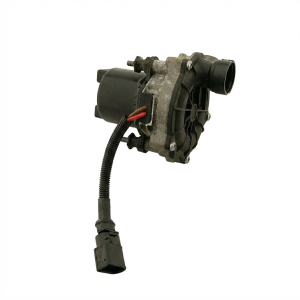
New Aftermarket Parts Available

The information in this article is provided for general reference and educational purposes only. Vehicle specifications, procedures, and part compatibility can vary by production date, trim level, and region. Always consult your vehicle's factory service manual and verify part numbers before purchasing or performing repairs. Safety-critical components such as airbags, seat belts, and braking systems should be installed by a qualified professional.
- Audi S4:
- 🎬 Helpful Videos
- 🛍️ Shop This Part
- What's Unique About the 2011-2014 Audi S4
- Diagnostic Flowchart
- Symptoms You May Notice
- Most Likely Causes
- Rare But Worth Checking
- Diagnosis Steps
- Parts You'll Likely Need
- Related Codes That Often Appear With This One
- Technical Service Bulletins (TSBs) & Recalls
- Platform-Specific Known Issues
- Mechanic-Grade Diagnostic Values
- Scan Tool Commands That Help
- Wiring & Ground Locations
- Real Owner Repair Stories
- OEM Part Supersession History
- Model Year Variations Within This Range
- 🎟️ Get 5% Off