

P2442 on 2011-2014 Audi Q5: Secondary Air Valve Stuck Open Causes and Fixes
For a 2011-2014 Audi Q5 with a V6 engine, code P2442 means the Bank 2 (driver's side) secondary air combination (combi) valve is stuck open. This is often caused by a failed valve diaphragm or a faulty vacuum solenoid (Part #06E906517A) that controls it. This is a well-known issue confirmed by Audi TSB 01 16 73 / 2040403. The correct combi valve for Bank 2 is the LEFT side valve, part #06E131101N.
- P2442 on a V6 Audi Q5 points specifically to a problem with the Bank 2 (driver's side) secondary air valve or its control system.
- This is a known issue confirmed by an Audi Technical Service Bulletin.
- The most likely cause is a failed combination (combi) valve, followed by the vacuum solenoid that controls it.
- If you also have code P2440 for Bank 1, the shared vacuum solenoid is the prime suspect.
- The repair is straightforward for a DIYer with basic tools and does not typically require expensive diagnostics.
What's Unique About the 2011-2014 Audi Q5
This is a well-documented problem on Audi's 3.0T and 3.2L V6 engines from this era, affecting not just the Q5 but many other models. Audi has issued at least one detailed Technical Service Bulletin (TSB 01 16 73) acknowledging that the combination valves or their shared control solenoid are prone to failure. While the P2442 code specifically points to a stuck valve, the root cause is frequently the N112 vacuum solenoid that operates it. A more severe, and labor-intensive, issue on these engines is the complete blockage of the secondary air passages inside the cylinder heads with carbon buildup. While this typically triggers 'insufficient flow' codes (P0491/P0492), it highlights the sensitivity of the entire SAI system and can be a related long-term problem.
Diagnostic Flowchart
Tap your situation to follow the diagnostic path that matches what you're seeing on this vehicle.
Symptoms You May Notice
- Check Engine Light is on
- Vehicle will fail an emissions test
- Slightly louder exhaust noise or a 'hissing' sound from the engine bay for a minute after a cold start
- Hesitation during acceleration
- Engine may stall at startup or idle
- Vehicle may enter 'limp mode', limiting speed and engine power
- Replacing the secondary air pump. The pump supplies the air, but P2442 specifically points to a problem with the *valve* being stuck open. A bad pump would cause insufficient flow codes like P0491/P0492.
- Replacing the wrong combi valve. P2442 is for Bank 2, which is the driver's side (Left) on a Q5. Ordering a 'Right' side valve will not fix the issue.
Most Likely Causes
- Defective Secondary Air Combination (Combi) Valve (Bank 2) 🔴 High Probability The valve's internal diaphragm can rupture, or it can become mechanically stuck with carbon buildup. This is a known issue acknowledged by Audi TSB #A011519 2040403.
How to confirm: With the engine cold, locate the Bank 2 (driver's side) combi valve at the rear of the cylinder head. Disconnect its vacuum line and attach a handheld vacuum pump. The valve should hold vacuum without leaking down. If it doesn't, the diaphragm is torn. If it holds vacuum, start the engine (cold) and listen for air flowing through the valve for the first ~60 seconds. If it continues to flow after the SAI pump shuts off, it's stuck open.
Typical fix: Replace the Bank 2 (driver's side/LEFT) combination valve and its gasket. The correct part is the LEFT side valve.
Est. part cost: $150-$250 - Defective Vacuum Solenoid Valve (N112) 🟡 Medium Probability The solenoid that controls vacuum to both combi valves is a common failure point and is often the true culprit. Audi's TSB explicitly lists this as a primary cause. If both P2440 (Bank 1) and P2442 (Bank 2) appear at the same time, the solenoid is the most likely cause.
How to confirm: Locate the solenoid valve (often labeled N112, part number 06E906517A). It is typically mounted near the intake manifold. Test its coil resistance with a multimeter (should be 25-35 Ω). Apply 12V power to its terminals and listen for a distinct click. Check that vacuum is present at the inlet port and that it passes vacuum to the outlet ports only when energized.
Typical fix: Replace the vacuum solenoid valve.
Est. part cost: $40-$80 - Cracked or Leaking Vacuum Lines ⚪ Low Probability Over time, the plastic and rubber vacuum lines in the engine bay become brittle from heat cycles and can crack or break, causing a loss of vacuum signal to the combi valve.
How to confirm: Visually inspect all vacuum lines running from the solenoid to both combi valves for any signs of cracking, brittleness, or disconnection. A smoke test is the most effective way to find small, hard-to-see leaks.
Typical fix: Replace the damaged section of vacuum hose or the entire pre-formed hose assembly.
Est. part cost: $20-$50
Rare But Worth Checking
- Clogged Secondary Air Injection Ports:
Diagnosis Steps
- Scan the ECM for codes. Confirm if P2442 is present alone or with P2440.
- If both P2440 and P2442 are stored and appeared at the same time, the shared vacuum solenoid (N112) is the primary suspect. Test it for electrical function and its ability to pass vacuum when energized.
- If only P2442 is present, focus on the Bank 2 (driver's side) components.
- Visually inspect the vacuum lines running to the Bank 2 combi valve for obvious cracks or breaks.
- With the engine off, disconnect the vacuum line from the Bank 2 combi valve and attach a handheld vacuum pump. Apply vacuum. The valve must hold the vacuum without leaking down. If it doesn't, the internal diaphragm is ruptured, and the valve needs replacement.
- If the valve holds vacuum, start the engine from cold. Verify that vacuum is being supplied to the line by the solenoid for the first 30-90 seconds. If no vacuum is ever present, the problem is likely the solenoid, its wiring, or the vacuum source.
- If the valve holds vacuum and the vacuum supply is working correctly, the valve is likely mechanically stuck open due to carbon or internal failure. Replacement is the only reliable fix.
- If all other components test good, consider the rare possibility of the ECM software being out of date, as mentioned in TSB #24 12 15 (2025547/3), though this is less common than a hardware failure.
Parts You'll Likely Need
- Secondary Air Injection Combination Valve (Bank 2, Left Side)
(OEM #06E131101N)— This valve is the most common failure point for an isolated P2442 code. It fails by sticking internally or its diaphragm rupturing. Bank 2 is the driver's side, which corresponds to the LEFT side valve.
Trusted brands: Pierburg, Genuine Audi
OEM price range: $200-$275
Aftermarket price range: $140-$180 - Secondary Air Injection Solenoid Valve (N112)
(OEM #06E906517A)— This solenoid controls the vacuum signal for both combi valves. It's a very likely culprit, especially if both Bank 1 (P2440) and Bank 2 (P2442) codes are present.
Trusted brands: Bosch, Pierburg, Genuine Audi/VW
OEM price range: $60-$100
Aftermarket price range: $30-$50 - Vacuum Hose Assembly
(OEM #06E133773BE)— The pre-formed plastic vacuum lines can become brittle and crack from engine heat, causing leaks that prevent the combi valve from operating correctly.
Trusted brands: Genuine Audi
OEM price range: $40-$60
Related Codes That Often Appear With This One
- P2440 — This is the equivalent code for Bank 1 (Secondary Air Injection System Switching Valve Stuck Open Bank 1). If both P2440 and P2442 appear simultaneously, it strongly suggests the shared vacuum control solenoid (N112) has failed, as it's highly unlikely both valves would fail at the exact same moment.
Technical Service Bulletins (TSBs) & Recalls
- A011519 2040403- / 01 16 73 / 01 17 48: MIL on with DTC P2440 and/or P2442. The TSB provides a clear diagnostic path: if only one code is present, suspect the combi valve for that bank. If both codes are present and set at the same time, the shared vacuum solenoid is the most likely cause.
- 24 12 15 / 2025547/3: MIL on with DTCs P2440 and P2442. This TSB addresses a potential software issue in the ECM for 3.2L engines that could erroneously trigger these codes and provides an update via SVM.
- 01 16 69 / 2033001/8: Addresses carbon-clogged SAI ports in the cylinder heads, the typical cause for P0491/P0492 codes, which is a related, severe issue for this engine family.
Platform-Specific Known Issues
- Audi TSB #A011519 2040403 (and its later revisions like 01 17 48 2040403/5) is the primary document for this issue. It states that if only one code is present (P2440 or P2442), the corresponding combi valve for that bank is likely faulty. If BOTH codes are present and set at the same time, the shared vacuum solenoid is the cause.
- Another TSB, #24 12 15 (2025547/3), mentions an ECM software update for some 3.2L models that can address erroneous SAI faults, though this is considered a much less common fix than replacing the failed hardware.
- A third TSB, #01 16 69 2033001/8, addresses the more severe issue of carbon-clogged SAI ports in the cylinder heads, which typically causes P0491/P0492 but is an important related issue for this engine family.
Mechanic-Grade Diagnostic Values
- N112 Vacuum Solenoid (06E906517A) Coil Resistance — expected: 25 - 35 Ω. Failure: A reading significantly outside this range, or an open/short circuit, indicates a failed solenoid coil.
- N112 Vacuum Solenoid Connector Voltage — expected: Battery Voltage (~12V) on one pin with key on, engine off.. Failure: No voltage suggests a problem with the wiring harness, fuse, or the ECM's driver circuit.
Scan Tool Commands That Help
- VCDS (VAG-COM) or ODIS: Engine (01) -> Output Tests (03) -> Secondary Air Injection Solenoid Valve (N112) — This command allows you to manually activate the N112 solenoid. You should hear a distinct click from the solenoid and, if a vacuum gauge is attached, see vacuum being passed through it. This directly tests the electrical and mechanical function of the solenoid.
- VCDS (VAG-COM) or ODIS: Engine (01) -> Output Tests (03) -> Secondary Air Injection Pump Relay (J299) — This command forces the secondary air pump to run. You should hear it operate (it sounds like a vacuum cleaner). While P2442 is a valve code, this test helps confirm the overall system is receiving power and the pump itself is functional, which is useful for ruling out related issues.
- VCDS (VAG-COM) or ODIS: Engine (01) -> Basic Settings (04) -> Group 077 — This function runs a complete diagnostic test of the secondary air injection system. The ECU will command the pump and valves to run and then measure the airflow reported by the oxygen sensors. The result will display 'System OK' or 'System NOT OK'. This is the most comprehensive way to test the entire system's functionality after a repair.
Wiring & Ground Locations
- Ground Connection (12) — In the engine compartment on the left side, located in the plenum chamber (the area below the windshield).. This is a primary engine management ground point. A poor connection here can cause a variety of intermittent electrical faults for sensors and solenoids controlled by the ECM, including the N112 solenoid.
- Ground Connection on left front long member (671, 672) — On the left frame rail in the engine bay, potentially behind the wheel housing liner.. This serves as a chassis ground for various components in the front of the vehicle. Corrosion or looseness can lead to voltage drop issues for nearby electrical systems.
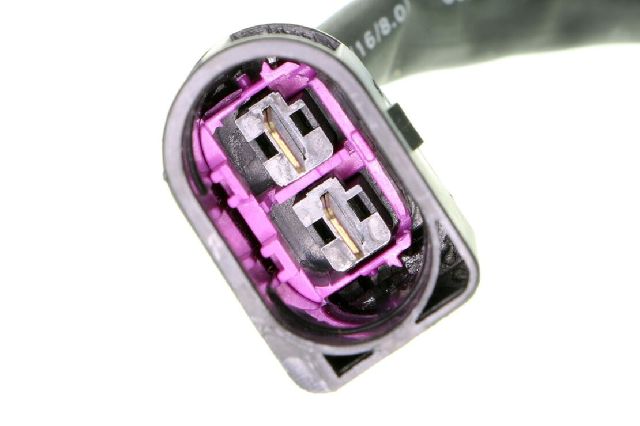
- N112 Solenoid Connector — Two-pin connector on the N112 solenoid, which is mounted near the back of the engine, often under a small plastic cover.. This is the direct connection point for testing voltage and resistance of the solenoid. One pin should receive ~12V from the ECM, and the other is the control signal (grounded by the ECM to activate).
Real Owner Repair Stories
- Ross-Tech Forums user (2012 Audi A6 3.0T, 107k miles) — Yellow Check Engine Light with code P2442 stored.
❌ Tried (didn't work) The owner had recently completed a major service including carbon cleaning, PCV valve, thermostat, and water pump, none of which were related to the new code.
✅ What actually fixed it The issue was resolved by replacing the 'Secondary Air Inlet Solenoid' (N112 valve). The part cost $216, plus diagnostic and labor fees.
OEM Part Supersession History
6E906517→06E906517A— Part revision and update by the manufacturer. The new part is a direct replacement.
Heads up: The part number 06E906517A is used for both the SAI solenoid and the EVAP purge valve (N80) on many VW/Audi vehicles, which can cause confusion when ordering. Ensure the part is specified for the Secondary Air Injection system.
Model Year Variations Within This Range
- 2011-2012: These model years primarily used the 3.2L V6 (CALB) engine. TSB 24 12 15, which mentions a potential ECM software update for erroneous P2440/P2442 codes, is specifically associated with this engine.
- 2013-2014: These model years primarily used the 3.0T Supercharged V6 engine. While the SAI system components and failure modes are nearly identical to the 3.2L, the specific ECM software TSB does not apply. Hardware failures (combi valve, solenoid) are the overwhelmingly common cause.
Helpful Videos
Used OEM Parts in Stock

New Aftermarket Parts Available



The information in this article is provided for general reference and educational purposes only. Vehicle specifications, procedures, and part compatibility can vary by production date, trim level, and region. Always consult your vehicle's factory service manual and verify part numbers before purchasing or performing repairs. Safety-critical components such as airbags, seat belts, and braking systems should be installed by a qualified professional.
- Audi Q5:
- 🎬 Helpful Videos
- 🛍️ Shop This Part
- What's Unique About the 2011-2014 Audi Q5
- Diagnostic Flowchart
- Symptoms You May Notice
- Most Likely Causes
- Rare But Worth Checking
- Diagnosis Steps
- Parts You'll Likely Need
- Related Codes That Often Appear With This One
- Technical Service Bulletins (TSBs) & Recalls
- Platform-Specific Known Issues
- Mechanic-Grade Diagnostic Values
- Scan Tool Commands That Help
- Wiring & Ground Locations
- Real Owner Repair Stories
- OEM Part Supersession History
- Model Year Variations Within This Range
- 🎟️ Get 5% Off