

P2442 on 2012-2014 Audi A7 3.0T: Secondary Air Valve Stuck Open (Bank 2) Causes and Fixes
For a 2012-2014 Audi A7 with the 3.0T engine, code P2442 almost always points to a failed Bank 2 Secondary Air Injection (SAI) Combination Valve or the vacuum solenoid that controls it. This is a well-documented issue confirmed by an Audi Technical Service Bulletin (TSB). The diagnostic path is straightforward: if P2442 appears alone, the Bank 2 valve is the culprit; if it appears with P2440 (Bank 1), the shared solenoid is the cause.
- P2442 on a 2012-2014 A7 3.0T is a very specific code with a clear diagnostic path provided by Audi.
- Before buying parts, check if code P2440 is also present. If yes, the vacuum solenoid is the likely culprit; if no, the Bank 2 combi valve is the primary suspect.
- Always perform a quick visual inspection of the vacuum hoses, as a simple, inexpensive hose replacement can sometimes fix the issue.
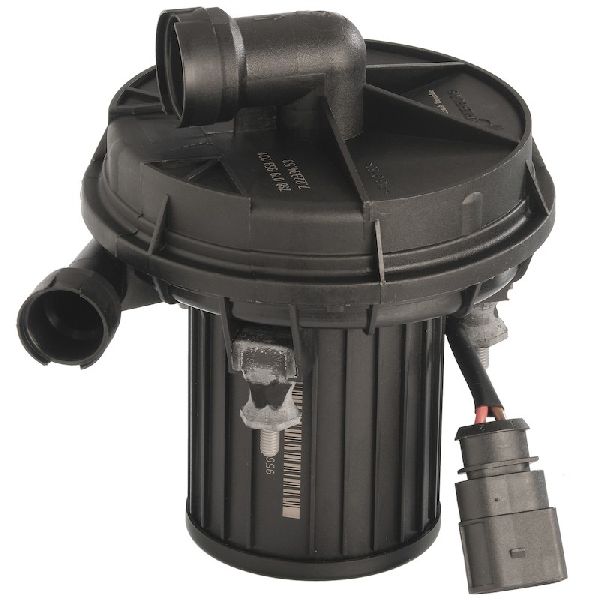
- Do not ignore this code. While the car is drivable, a stuck-open valve can lead to the failure of the more expensive secondary air pump.
What's Unique About the 2012-2014 Audi A7
This is a known issue on the Audi 3.0T supercharged V6 engine used across many models, including the A7. Audi released a Technical Service Bulletin (TSB 2040403 and its revisions) specifically for this code and its Bank 1 counterpart, P2440. The TSB provides clear diagnostic paths for technicians, noting two distinct scenarios: Scenario A, where only one code is present (e.g., P2442), points to a failure of the corresponding combination valve. Scenario B, where both P2440 and P2442 are present 🎬 Watch: This video explains the system fault and TSB scenarios., points to the failure of the single shared vacuum solenoid that controls both valves.
Diagnostic Flowchart
Tap your situation to follow the diagnostic path that matches what you're seeing on this vehicle.
Symptoms You May Notice
- Illuminated Check Engine Light is the most common and often only symptom.
- Possible faint whistling or altered exhaust sound during the first 30-90 seconds after a cold start when the SAI pump is active.
- Vehicle will fail an emissions test.
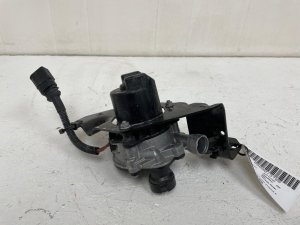
- Replacing the secondary air pump. 🎬 Watch: Why the pump is often misdiagnosed as the problem. The pump's function is to create pressure; a 'stuck open' valve code is related to the valve itself or its control system, not a faulty pump. A bad pump typically causes 'insufficient flow' codes (P0491/P0492).
Most Likely Causes
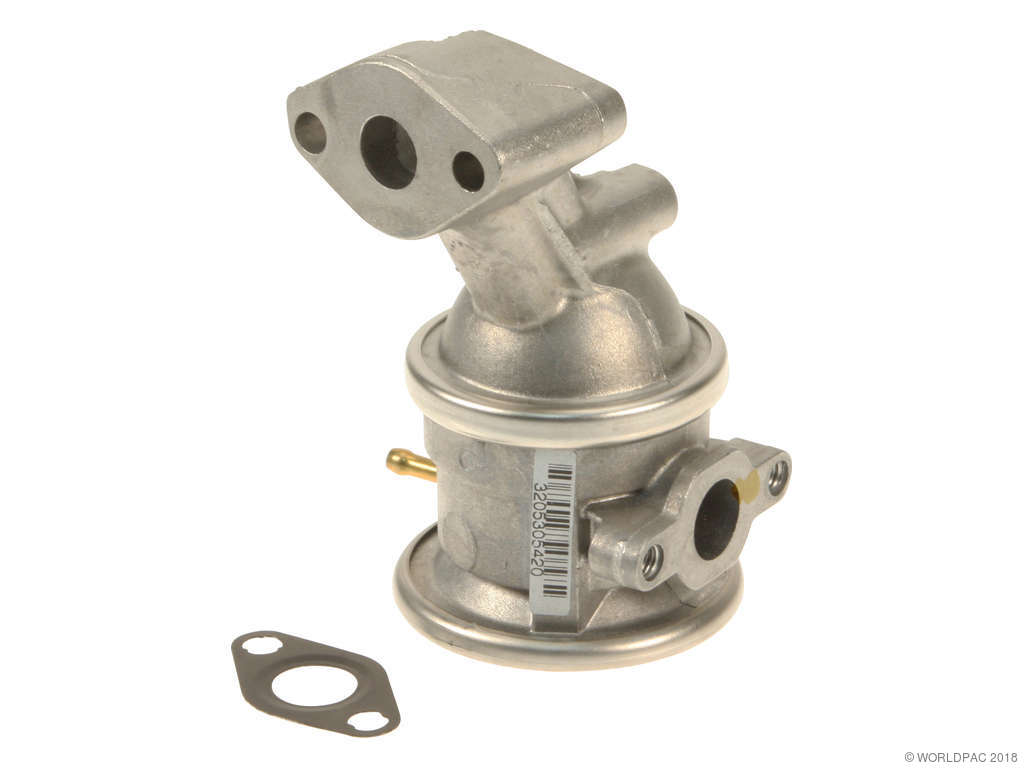
- Defective Bank 2 Combination (Combi) Valve 🔴 High Probability This is a known failure point addressed by Audi's TSB A011519. The internal diaphragm can fail or the valve can stick due to carbon and moisture. It is the primary cause if P2442 is the only SAI code present ('Scenario A' in the TSB).
How to confirm: With the engine off, disconnect the vacuum line from the Bank 2 (driver's side) valve and apply vacuum with a hand pump. It should hold vacuum. If it doesn't, the internal diaphragm is torn. If it holds vacuum, try actuating it with the pump to feel for smooth operation; any stickiness indicates a problem. This is the likely cause if P2442 is the only SAI code present.
Typical fix: Replace the Bank 2 (driver's side) combination valve and the associated gasket.
Est. part cost: $70-$150 - Defective Vacuum Control Solenoid 🔴 High Probability This solenoid controls both combi valves. Per TSB A011519, it is a common failure point that affects the entire system, designated as 'Scenario B' in the bulletin.
How to confirm: This is the most likely cause if both P2440 (Bank 1) and P2442 (Bank 2) are stored in the ECM simultaneously. The solenoid is located near the front of the engine, often mounted to the bracket that holds the oil filter housing. A technician can test the solenoid for correct electrical resistance and function with a multimeter or command it on/off with an advanced scan tool.
Typical fix: Replace the vacuum control solenoid valve (often called a pressure converter or change-over valve).
Est. part cost: $40-$100 - Cracked or Leaking Vacuum Hoses 🟡 Medium Probability The plastic and rubber vacuum lines in the engine bay become brittle over time due to heat cycles and can easily crack or break, especially the fittings at the solenoid and valves.
How to confirm: Visually inspect all vacuum lines running from the control solenoid to both combination valves. Listen for a hissing sound with the engine running. A smoke test is the most definitive way to identify small leaks that aren't visually apparent.
Typical fix: Replace the damaged section of vacuum hose. It's often inexpensive and easy to do.
Est. part cost: $5-$25
Rare But Worth Checking
- Carbon-Clogged Secondary Air Ports: While this issue is very common on the 3.0T engine, it typically causes 'Insufficient Flow' codes (P0491/P0492), not 'Stuck Open' codes. Extreme carbon buildup could theoretically interfere with valve operation, but it's an unlikely cause for P2442 and should only be considered after all other components have been verified as functional. The repair is invasive, often requiring removal of the supercharger or engine service position. 🎬 See: How carbon buildup affects the secondary air injection ports.
Diagnosis Steps
- Read the fault codes with an OBD-II scanner. Note if P2442 is present alone or with P2440.
- If both P2440 and P2442 are present (TSB Scenario B), the primary suspect is the vacuum control solenoid. Proceed to test and likely replace it.
- If only P2442 is present (TSB Scenario A), the primary suspect is the Bank 2 combination valve.
- Begin by visually inspecting the vacuum lines running to the Bank 2 (driver's side) combination valve for any obvious cracks, breaks, or disconnections.
- If lines are intact, test the Bank 2 combination valve directly. Disconnect the vacuum line and attach a hand vacuum pump. The valve should hold vacuum. If it leaks down, the valve's diaphragm is torn and it must be replaced.
- If the valve holds vacuum, test the control solenoid to ensure it is sending vacuum to the valve when commanded by a scan tool or during the first 30-60 seconds of a cold start.
- If all components test correctly, check for any wiring issues at the solenoid connector, such as corrosion or damage.
Parts You'll Likely Need
- Secondary Air Injection Combination Valve (Bank 2)
(OEM #06E131102K (supersedes 06E131102J, 06E131102B))— This is the valve that sticks open, directly causing the P2442 code. It's the most likely failure point when this code appears alone.
Trusted brands: Audi (OEM), Pierburg
OEM price range: $120-$160
Aftermarket price range: $70-$110 - Secondary Air Injection Solenoid Valve
(OEM #06E906283F (also seen as 06F906283F))— This solenoid controls the vacuum supply to both combination valves. Its failure is the most likely cause when P2442 and P2440 codes are present together.
Trusted brands: Audi (OEM), Bosch, Pierburg
OEM price range: $70-$110
Aftermarket price range: $40-$80 - Combination Valve Gasket
(OEM #06E131120C)— A new gasket is required when replacing the combination valve to prevent exhaust leaks. The TSB was revised to specifically include this part.
Trusted brands: Audi (OEM), Victor Reinz
OEM price range: $5-$15
Aftermarket price range: $3-$10
Related Codes That Often Appear With This One
- P2440 — Stands for 'Secondary Air Injection System Switching Valve Stuck Open Bank 1'. If P2440 and P2442 appear together, it strongly indicates the failure of the single vacuum solenoid that controls both valves, as outlined in Audi's TSB.
Technical Service Bulletins (TSBs) & Recalls
- A011519 2040403 (also revised as 01 16 73 2040403/3, 01 17 48 2040403/5) - MIL on (DTC P2440(00) and/or P2442(00))
Platform-Specific Known Issues
- Audi has issued Technical Service Bulletin #A011519 2040403 (and later revisions like 2040403/5) for the 3.0T engine, which explicitly addresses codes P2440 and P2442. The bulletin states, 'One of the combi valves is defective or the vacuum solenoid is defective,' confirming these as the primary failure points. It instructs technicians to check if the MIL was triggered by one or both codes to determine whether to replace a single valve (Scenario A) or the shared solenoid (Scenario B).
Mechanic-Grade Diagnostic Values
- Vacuum Control Solenoid (N112) Coil Resistance — expected: 25 - 35 Ohms. Failure: A reading of infinite Ohms (open circuit) or near-zero Ohms (short circuit) indicates a failed solenoid.
- Voltage at Vacuum Control Solenoid (N112) Connector — expected: Battery Voltage (~12V) on one pin with Key On, Engine Off.. Failure: No voltage suggests a problem with the fuse or wiring harness leading to the solenoid.
- ODIS Scan Tool - SAI Air Mass Flow — expected: 0.1 to 0.7 (older software) or 13 to 16 (newer software) in measuring blocks MASS_SA_REL and MASS_SA_REL after a Basic Settings test.. Failure: Values outside this range after a successful pump test may indicate other system issues, though this test is primarily for 'Insufficient Flow' faults.
Hidden / Shadow Codes Worth Checking
- Advanced Measuring Values (UDS): On modern Audis using the UDS protocol, traditional Measuring Blocks (Group 08) are unavailable. Technicians must use 'Advanced Measuring Values' in tools like VCDS to see live data. For the SAI system, dealer tools (ODIS) can access specific values like relative air mass (MASS_SA_REL) during diagnostic routines. (see via VCDS (VAG-COM) or ODIS (dealer software).)
Scan Tool Commands That Help
- VCDS (VAG-COM): 01-Engine -> Output Tests - 03 — This function allows a technician to sequentially activate individual components of the SAI system, including the pump relay and the vacuum solenoid (N112). This is used to confirm if the solenoid 'clicks' and if the pump runs, helping to isolate a failed electrical component without a cold start.
- ODIS (Dealer Tool): 01-Engine -> Basic Settings -> Checking Secondary Air System (or Test 77) — This is the official dealer procedure to run a complete functional test of the SAI system. It activates the pump and valves while monitoring system pressure or flow, providing a pass/fail result and displaying key data in measuring blocks.
Wiring & Ground Locations
- N112 — This is the VAG component name for the Secondary Air Injection Solenoid Valve that controls the vacuum to both combi valves.. Identifying the component by its official name is crucial when looking at wiring diagrams or ordering parts. It is the primary suspect when codes P2440 and P2442 appear together.
- Engine Ground Straps — There are primary ground points on the engine block that connect to the chassis frame. One common location is on the front right of the engine, near the alternator. Another is on the left side of the engine bay connecting to the frame rail.. A poor ground connection can cause intermittent and strange electrical behavior in sensors and solenoids, including the N112 solenoid. While not a common cause for this specific code, it should be checked if the solenoid and wiring test good.
Real Owner Repair Stories
- Ross-Tech Forums User (2012 Audi A6, 3.0T Engine, 107,624 miles) — Yellow Check Engine Light came on, VCDS scan revealed fault code P2442.
❌ Tried (didn't work) The owner initially researched fuses based on other forum posts but was advised this was unlikely to be the cause.
✅ What actually fixed it The vehicle was taken to a shop where the 'Secondary Air Inlet Solenoid' (N112) was replaced. This resolved the P2442 code and the Check Engine Light. The repair cost was a $67 diagnostic fee, $216 for the part, and $50 for labor.
"I Checked Everything" — The Actual Cause
- In one documented case for a related SAI system, the standard VCDS Output Test showed the vacuum solenoid was clicking, suggesting it was electrically functional. However, a smoke test performed on the vacuum lines revealed that the body of the solenoid itself was leaking smoke (vacuum). This is a failure mode that would be missed by simple electrical checks.
OEM Part Supersession History
Various older versions→06E131102K (Combi Valve), 06E906283F (Solenoid)— Audi released updated parts to improve reliability and prevent the sticking/failure issue. The TSB specifically mentions using the updated components for the repair.
Heads up: The solenoid part number 06F906283F is often listed as an alternative. The '06E' and '06F' prefixes typically denote the original engine family the part was designed for (V6/V8 vs I4 Turbo), but they are often functionally identical and interchangeable. Always confirm fitment with the supplier based on your vehicle's VIN.
Model Year Variations Within This Range
- 2012-2014: No significant variations related to the secondary air injection system components or the P2442 fault are known to exist within this specific model year range for the A7. The TSB applies to the entire 2012-2014 range, indicating a consistent design and fault pattern.
Helpful Videos


Used OEM Parts in Stock

New Aftermarket Parts Available



The information in this article is provided for general reference and educational purposes only. Vehicle specifications, procedures, and part compatibility can vary by production date, trim level, and region. Always consult your vehicle's factory service manual and verify part numbers before purchasing or performing repairs. Safety-critical components such as airbags, seat belts, and braking systems should be installed by a qualified professional.
- Audi A7:
- 🎬 Helpful Videos
- 🛍️ Shop This Part
- What's Unique About the 2012-2014 Audi A7
- Diagnostic Flowchart
- Symptoms You May Notice
- Most Likely Causes
- Rare But Worth Checking
- Diagnosis Steps
- Parts You'll Likely Need
- Related Codes That Often Appear With This One
- Technical Service Bulletins (TSBs) & Recalls
- Platform-Specific Known Issues
- Mechanic-Grade Diagnostic Values
- Hidden / Shadow Codes Worth Checking
- Scan Tool Commands That Help
- Wiring & Ground Locations
- Real Owner Repair Stories
- "I Checked Everything" — The Actual Cause
- OEM Part Supersession History
- Model Year Variations Within This Range
- 🎟️ Get 5% Off