

P2440 on 2014-2020 Volkswagen Passat: Secondary Air Valve Stuck Open Causes and Fixes
On a 2014-2020 VW Passat, code P2440 means the Secondary Air Injection (SAI) switching valve is stuck open. This is very often caused by a software glitch on 2014-2015 1.8T models (engine codes CPKA, CPRA), which VW addressed with a TSB requiring a dealer software update. For other models, the cause is typically a faulty combi valve, a cracked plastic air hose, or a failing SAI pump. A software check should be the first step for affected model years before replacing any parts.
- For 2014-2015 Passat 1.8T models, check for the software TSB (#V011514 2040822) before replacing any parts.
- The most common physical causes are a failed SAI switching valve (combi valve) or a cracked air hose.
- Diagnosis involves listening for the SAI pump on a cold start and testing the switching valve for activation.
- This code will cause an automatic failure on an emissions test.
- Driving with this code is unlikely to cause immediate damage, but it should be addressed to ensure the emissions system functions correctly.
What's Unique About the 2014-2020 Volkswagen Passat

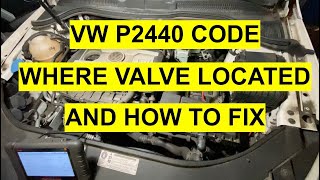
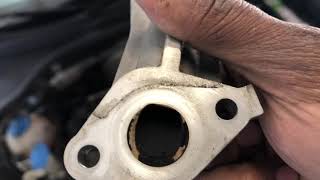
For the 2014-2015 Passat with the 1.8T Gen3 engine (engine codes CPKA and CPRA), this code is frequently caused by an erroneous software fault in the Engine Control Module (ECM). Volkswagen issued Technical Service Bulletin (TSB) 01-15-14 (also listed as TPI 2040822) to address this specific issue, which requires a software update at a dealership rather than a physical part replacement. The TSB explicitly warns technicians not to replace components for P2440 or the related P0491 code before performing the software update. For other years and engines, the cause is more typically a physical component failure like the valve itself 🎬 Watch: How to diagnose and fix a P2440 code on your Passat. or a cracked hose.
Diagnostic Flowchart

Tap your situation to follow the diagnostic path that matches what you're seeing on this vehicle.
Symptoms You May Notice
- Check Engine Light is on
- Audible noise, like a vacuum cleaner, from the SAI pump that does not shut off after a minute or two from a cold start
- Potential for rough running or poor acceleration, though often there are no drivability symptoms.
- In rare cases, the vehicle may enter a reduced-power "Limp Mode".
- Replacing the SAI pump when the actual issue is a cracked hose or a faulty switching valve.
- Replacing the switching valve on a 2014-2015 model when the root cause is a software issue that requires an ECM update as per TSB 2040822.
- Mistaking the turbocharger's auxiliary water pump for a component of the SAI system.
Most Likely Causes

- Faulty Engine Control Module (ECM) Software 🔴 High Probability Volkswagen issued TSB #01-15-14 (TPI 2040822) specifically for 2014-2015 Passat 1.8T models (engine codes CPKA, CPRA) where the ECM software can erroneously trigger P2440 and/or P0491.
How to confirm: A VW dealership or a qualified independent shop with factory tools (like ODIS) can check if the TSB applies to your vehicle's VIN and if the software update has been performed.
Typical fix: Reprogramming (flashing) the ECM with updated software. The TSB explicitly states not to replace parts before performing this update.
Est. part cost: $0 - Faulty Secondary Air Injection (SAI) Switching Valve / Combi Valve 🟡 Medium Probability The valve is exposed to hot exhaust gases and moisture, which can cause carbon buildup or internal mechanical/electrical failure, causing it to stick.
How to confirm: With the engine cold, use a scan tool to command the valve to open and close; listen for a distinct click. You can also apply 12V directly to the valve's electrical terminals to check for activation. If it doesn't click, or if it's stuck internally, it has failed. Resistance across the two pins should be between 3-5 ohms.
Typical fix: Replacement of the SAI switching valve and its gasket.
Est. part cost: $150-$300 - Cracked or Disconnected Air Hose 🟡 Medium Probability The corrugated plastic hoses in the SAI system become brittle over time due to engine heat and age, leading to cracks and air leaks. A leak can cause the pressure sensor to misread the system's state, triggering a P2440 code even if the valve is working correctly.
How to confirm: Visually inspect all hoses running from the SAI pump to the switching valve. A Reddit user with a similar VW model found the hose clamp had failed, causing the hose to come off the pump. A smoke test is the most effective way to find small leaks.
Typical fix: Replacement of the cracked hose. Some owners attempt temporary repairs with tape, but this is not a reliable long-term solution.
Est. part cost: $20-$70 - Failed Secondary Air Injection (SAI) Pump ⚪ Low Probability The pump motor can fail or ingest water, causing it to seize. While this more commonly causes insufficient flow codes (like P0491), a pump that fails to shut off can contribute to pressure issues that may trigger P2440.
How to confirm: Listen for the pump (sounds like a small vacuum cleaner) in the front fender area for the first 30-90 seconds of a cold start. If there is no sound, check the fuse and relay first, then test for power at the pump connector. If the pump runs continuously and doesn't shut off, it points to a control problem.
Typical fix: Replacement of the SAI pump.
Est. part cost: $200-$400
Rare But Worth Checking
- Faulty SAI Pressure Sensor: The system uses a pressure sensor (G609) to verify its operation. If the sensor provides an incorrect reading, it can trick the ECM into thinking the valve is stuck open when it isn't. This will usually set a specific sensor-related code as well, but not always.
- Wiring or Connector Issue: Damage or corrosion to the wiring or electrical connector for the SAI switching valve can prevent it from receiving the signal to close. Check for 12V power at the connector with the key on and check for continuity on the ground wire back to the ECM.
Diagnosis Steps
- Scan the ECM for fault codes. Note if P2440 is present alone or with other codes like P0491.
- For 2014-2015 1.8T models (CPKA/CPRA engines), your first and most important step is to contact a VW dealer to check if TSB #V011514 2040822 applies to your VIN. An ECM software update may be the entire fix.
- On a cold start (after the car has sat for several hours), listen for the SAI pump in the front passenger fender area. It should run for 30-90 seconds and sound like a small vacuum cleaner before shutting off.
- If the pump runs, visually inspect all associated hoses for cracks, especially the corrugated plastic lines that can become brittle and the connections at the pump and combi valve. A smoke test is highly recommended to find hidden leaks.
- Locate the SAI switching valve (combi valve) on the cylinder head. Inspect its electrical connector for damage or corrosion.
- Test the valve's electrical circuit. Unplug the connector. With the ignition on, one pin should have 12V power. The other pin is the ground, controlled by the ECM. Check the resistance of the valve itself across its two pins; it should be low, around 3-5 ohms. An infinite reading means the solenoid is open and bad.
- Test the valve's mechanical function. You can use a capable scan tool to command it on and off while listening for a click. Alternatively, apply 12V power and ground directly to its pins and listen for a click. No click means the valve is seized and needs replacement.
- If the valve clicks and the wiring is good, the problem may be internal carbon buildup preventing a full seal, a faulty pressure sensor giving false readings, or a crack in the valve housing itself.
Parts You'll Likely Need
- Secondary Air Injection Switching Valve (Combi Valve)
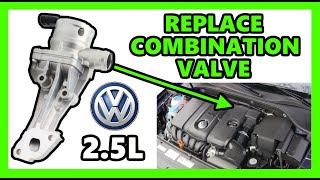
(OEM #06J131097D)— This valve is the most common mechanical failure point that directly causes a P2440 code by physically sticking open due to carbon, moisture, or solenoid failure.
Trusted brands: Pierburg (OEM supplier), Bosch, Standard Motor Products
OEM price range: $250-$350
Aftermarket price range: $150-$250 - Secondary Air Injection Hose
(OEM #1K0131128D)— The plastic hoses become brittle with age and engine heat, leading to cracks that cause pressure leaks. The system's pressure sensor can interpret this leak as a stuck-open valve.
Trusted brands: Vaico, URO Parts, Genuine VW/Audi
OEM price range: $50-$100
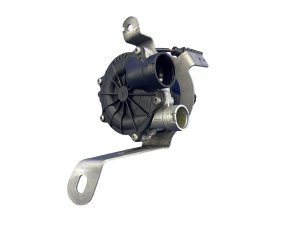
Aftermarket price range: $20-$60 - Secondary Air Injection Pump
(OEM #07K131333A)— Less common for P2440 specifically, but the pump can fail, leading to various SAI system codes. It may be replaced if it's seized, has ingested water, or fails electrical tests.
Trusted brands: Genuine VW/Audi, Pierburg
OEM price range: $250-$450
Aftermarket price range: $150-$300
Related Codes That Often Appear With This One
- P0491 — This code means 'Secondary Air Injection System Insufficient Flow.' It is very common to see P2440 and P0491 together, as they both relate to the same system and can be triggered by the same faults, including leaks or a failing pump. The software TSB for the Passat addresses both codes simultaneously.
Technical Service Bulletins (TSBs) & Recalls
- V011514 2040822 / 01-15-14 / TPI 2040822
- VIN4APIN20200617
- VIN4APIN20200413
Platform-Specific Known Issues
- A known software issue on 2014-2015 Passat 1.8T models (engines CPKA, CPRA) can cause false P2440 and P0491 codes. This is documented in Volkswagen TSB #V011514 2040822 (also listed as TPI 2040822 / 01-15-14) and requires an ECM software update.
Mechanic-Grade Diagnostic Values
- SAI Switching Valve (Combi Valve / N112) Solenoid Resistance — expected: 3 to 5 Ohms. Failure: An infinite reading (open circuit) or zero ohms (short circuit) indicates a failed solenoid.
- SAI Switching Valve (Combi Valve / N112) Connector Voltage — expected: One pin should show ~12V (battery voltage) with the ignition on, engine off. The other pin is the ground, controlled by the ECM.. Failure: No voltage suggests a wiring break, blown fuse, or faulty relay. If voltage is present but the valve doesn't activate, the ground control from the ECM may be faulty, or the valve itself has failed.
- SAI Pressure Sensor (G609) Signal Voltage — expected: Approximately 2.8V at rest (engine off).. Failure: A significantly different voltage, such as the nearly 4.0V seen in one diagnostic video on a faulty sensor, indicates a sensor failure.
Scan Tool Commands That Help
- VCDS (VAG-COM) or equivalent VW/Audi scan tool (e.g., Autel, ODIS): Output Test (or Active Test) for the Secondary Air Injection System — This function allows the technician to command the SAI pump to turn on and the Combi Valve (N112) to open and close without needing a cold start. It's essential for testing the electrical and mechanical function of individual components. You can listen for the pump to run and the valve to click, confirming the circuit and relay are working.
Wiring & Ground Locations
- N112 Combi Valve Connector — On the Secondary Air Injection Switching Valve (Combi Valve), which is typically mounted on the cylinder head.. This 2-pin connector provides power and ground to the solenoid that opens and closes the valve. One pin (often red) should have 12V with the key on, and the other is the ground switched by the ECM. Testing here is critical to determine if a failure is electrical (wiring/ECM) or mechanical (the valve itself).
- SAI Pump Relay (J299) — Often located in the under-hood fuse/relay box. On some models, it may be part of a relay panel under the driver's side dash.. While P2440 is a 'valve stuck open' code, issues with the pump's control circuit can sometimes be related. If the pump runs continuously, it could be due to a stuck relay, which might contribute to abnormal pressure readings. Checking this relay is part of a complete system diagnosis.
- G609 Pressure Sensor Connector — This sensor is integrated into the plastic hose assembly between the SAI pump and the combi valve.. The ECM uses the signal from this sensor to determine if the combi valve is open or closed. A bad reading from this sensor can trick the ECM into setting a P2440 code even if the valve is mechanically sound. The connector has 3 pins: 5V reference, signal, and ground.
Real Owner Repair Stories
- YouTube video by 'Monty's' (2012 VW Passat 2.5L) — Check Engine Light with code P0491 (Insufficient Flow), which is commonly seen with P2440.
❌ Tried (didn't work) The video focuses directly on the cause without detailing failed attempts.
✅ What actually fixed it The port in the cylinder head where the combi valve mounts was completely blocked with carbon buildup. Removing the valve and cleaning out the carbon deposits from the passage resolved the insufficient flow issue. This highlights that even if the valve and pump are working, a physical blockage can cause SAI system codes.
Model Year Variations Within This Range
- 2014-2015: Models with the 1.8T Gen3 engine (CPKA, CPRA) are subject to TSB #V011514 2040822, which indicates that an erroneous ECM software fault can trigger P2440 and P0491. This is a known issue for which the primary fix is a software update, not part replacement. This is less of a concern for 2016+ models which likely received updated software from the factory.
Helpful Videos
We Have This Part in Stock


The information in this article is provided for general reference and educational purposes only. Vehicle specifications, procedures, and part compatibility can vary by production date, trim level, and region. Always consult your vehicle's factory service manual and verify part numbers before purchasing or performing repairs. Safety-critical components such as airbags, seat belts, and braking systems should be installed by a qualified professional.
- Volkswagen PASSAT:
- 🎬 Helpful Videos
- 🛍️ Shop This Part
- What's Unique About the 2014-2020 Volkswagen Passat
- Diagnostic Flowchart
- Symptoms You May Notice
- Most Likely Causes
- Rare But Worth Checking
- Diagnosis Steps
- Parts You'll Likely Need
- Related Codes That Often Appear With This One
- Technical Service Bulletins (TSBs) & Recalls
- Platform-Specific Known Issues
- Mechanic-Grade Diagnostic Values
- Scan Tool Commands That Help
- Wiring & Ground Locations
- Real Owner Repair Stories
- Model Year Variations Within This Range
- 🎟️ Get 5% Off