

P2440 on 2017-2020 Volkswagen Jetta: Secondary Air Valve Stuck Open Causes and Fixes
On a 2017-2020 VW Jetta, code P2440 means the secondary air injection switching valve (combi valve) is stuck open. This is most commonly due to a faulty valve, a cracked hose, or an ECM software issue. Before replacing parts, it is critical to check with a VW dealer for any applicable software updates, as this can be the sole cause of the fault.
- P2440 indicates the secondary air injection switching valve is stuck open, which is an emissions system fault.
- The most likely causes are a failed switching (combi) valve, a cracked plastic hose, or an ECM software glitch.
- Before replacing any parts, check for soot in the air hose to confirm a stuck valve and inquire with a dealer about potential software updates.
- Driving with this code will cause an emissions test failure and can lead to more expensive damage to the air pump if ignored.
- Diagnosis involves listening for the air pump on a cold start and visually inspecting the system's hoses for cracks.
What's Unique About the 2017-2020 Volkswagen JETTA

For the 2017-2020 Jetta, which spans the end of the A6 (Mk6) and the beginning of the A7 (Mk7) generations, the P2440 code can be a mix of mechanical and software issues. Volkswagen has issued Technical Service Bulletins (TSBs) for similar models and years indicating that outdated ECM software can incorrectly trigger this fault, sometimes in conjunction with P0491. However, the combi valve itself is also a common failure point, getting stuck with carbon or moisture. 🎬 Watch: How to diagnose and fix the P2440 code. Another frequent issue on these platforms is the corrugated plastic hosing for the system becoming brittle and cracking from engine heat cycles, causing pressure leaks that the system's pressure sensor interprets as a stuck-open valve.
🎬 See how to fix and verify the air pressure sensor.Diagnostic Flowchart

Tap your situation to follow the diagnostic path that matches what you're seeing on this vehicle.
Generation note: The 2017-2020 range covers two Jetta generations: the A6 (2011-2018) and the A7 (2019-present). The A6 models in this range often used 1.4T, 1.8T, and 2.0T engines, while the A7 primarily uses a 1.4T (and 2.0T for the GLI). While the secondary air injection system functions similarly in both, part numbers for the combi valve, pump, and hoses may differ. The underlying causes of a P2440 code are generally consistent across both generations and their various TSI engines.
Symptoms You May Notice

- Check Engine Light is on
- Audible vacuum cleaner-like noise from the engine bay for 30-90 seconds on a cold start (this is normal operation; the absence of this sound could indicate a failed pump or relay).
- Vehicle will fail an emissions test.
- In some cases, poor acceleration or engine stalling may be noticed, though this is less common.
- Replacing the oxygen sensors. While the secondary air system affects oxygen levels in the exhaust, the O2 sensors are usually just reporting the condition, not causing it.
- Replacing the air pump when the actual fault is a less expensive cracked hose, stuck valve, or software issue. Always diagnose the entire system before condemning the pump.
- Mistaking the auxiliary coolant pump for the turbocharger as the secondary air pump.
Most Likely Causes

- Faulty Secondary Air Injection Switching Valve (Combi Valve) 🔴 High Probability The valve is directly exposed to exhaust gases and moisture, which can cause carbon buildup or internal corrosion, leading to the valve sticking open.
How to confirm: With the engine cold and off, remove the large hose leading from the air pump to the combi valve. If there is black soot inside the hose or at the valve inlet, it's a strong indicator that exhaust is flowing backward through a stuck-open valve. The valve's solenoid can also be tested with a multimeter for resistance (should be around 3-5 ohms) or by applying 12V to listen for a click. A hand vacuum pump can be used to test if the valve's diaphragm holds vacuum.
Typical fix: Replace the combi valve and its gasket. While some attempt to clean the valve, this is often a temporary solution.
Est. part cost: $150-$300 - Cracked or Disconnected Secondary Air Injection Hose 🟡 Medium Probability The corrugated plastic hoses used in the system become brittle over time due to constant engine heat cycles and can easily crack, especially at connection points and bends.
How to confirm: Visually inspect all plastic hoses running from the air pump to the combi valve for any visible cracks or disconnections. A smoke test is the most effective way to find small, hard-to-see leaks. Forum users often report finding the hose completely disconnected from the pump.
Typical fix: Replace the cracked hose assembly. Temporary repairs with tape are not recommended for a long-term fix.
Est. part cost: $50-$150 - Outdated Engine Control Module (ECM) Software 🟡 Medium Probability Volkswagen has released TSBs (e.g., #V011514 2040822) for various models indicating that software glitches can erroneously trigger P2440, sometimes along with P0491. The TSB explicitly states not to replace components before checking for and performing the software update.
How to confirm: A Volkswagen dealership or a qualified shop with OEM tools (like ODIS) can check your vehicle's VIN to see if an ECM software update is pending.
Typical fix: Update the ECM software. This must be done by a dealer or a properly equipped independent shop.
Est. part cost: $0 if under warranty, $200-$400 if out of warranty - Failed Secondary Air Injection Pump ⚪ Low Probability Failure is often a secondary issue. If the combi valve fails and sticks open, hot exhaust gas and moisture can flow back to the pump, causing it to corrode, seize, or melt internal components.
How to confirm: Listen for the pump (it sounds like a small vacuum cleaner) in the engine bay during the first 30-90 seconds of a cold start. If it doesn't run, check its fuse (often a 40A or 50A fuse in the engine bay fuse box) and relay first. If the fuse and relay are good, test for 12V power at the pump's electrical connector during a cold start.
Typical fix: Replace the secondary air injection pump. It is crucial to also diagnose and replace the combi valve if it's stuck open to prevent repeat failure of the new pump.
Est. part cost: $250-$500
Rare But Worth Checking
- Faulty Secondary Air Injection Pressure Sensor: The ECM uses this sensor (G609) to monitor the system's operation. A faulty sensor can send incorrect voltage data, leading the ECM to believe the valve is stuck open even when it isn't. This sensor is often integrated into the hose assembly and may require replacing the entire hose.
- Wiring or Connector Issue: Damage to the wiring or corrosion in the connector for the switching valve's solenoid can prevent it from operating correctly. Check for 12V power at the connector with the key on and check the ground wire for continuity.
Diagnosis Steps
- Scan the ECM for any other related trouble codes. Note any codes like P0491 or P0411 that are present.
- CRITICAL FIRST STEP: Contact a VW dealer with your VIN to check for any open campaigns or Technical Service Bulletins (TSBs) related to P2440 or the secondary air system. TSB #V011514 2040822 is a known software update for this issue on similar platforms.
- On a cold start (after the car has sat for several hours), listen for the sound of the secondary air pump running for the first 30-90 seconds. It will sound like a loud vacuum cleaner.
- If the pump runs, visually inspect the plastic hoses between the pump and the switching (combi) valve for cracks or disconnections. A common failure point is the hose coming loose from the pump itself. A smoke test is highly recommended to find hairline cracks.
- Remove the large hose from the combi valve and check for black soot inside. Soot indicates the valve is stuck open and allowing exhaust to flow backward.
- If the pump does not run, check the fuse (typically 40A or 50A) and relay for the secondary air injection system, usually located in the engine bay fuse box.
- If the fuse and relay are good, use a multimeter to check for 12V power and ground at the pump connector during a cold start.
- Test the combi valve solenoid: check for 12V at its connector with the key on. Check the solenoid's resistance with a multimeter (expect 3-5 ohms). Apply 12V directly to the solenoid to listen for an audible click.
- The combi valve's mechanical function can be tested with a hand-held vacuum pump to see if its diaphragm holds vacuum.
Parts You'll Likely Need
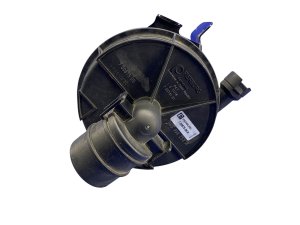
- Secondary Air Injection Switching Valve (Combi Valve)
(OEM #06J131097D, 06K131097AA, 06K131097K, 06K131097L)— This is the most common mechanical part to fail, sticking open due to carbon and moisture exposure, directly causing the P2440 code. Part number varies by engine and model year.
Trusted brands: Pierburg, Genuine VW/Audi
OEM price range: $200-$370
Aftermarket price range: $100-$180 - Secondary Air Injection Hose
(OEM #1K0131128D)— The plastic becomes brittle with age and heat, leading to cracks that cause pressure leaks, which the system's pressure sensor can misinterpret as a stuck valve.
Trusted brands: Genuine VW/Audi
OEM price range: $70-$120
Aftermarket price range: $40-$80 - Secondary Air Injection Pump — Often fails as a secondary issue after the combi valve gets stuck open and allows moisture/exhaust to flow backward into the pump, causing it to seize or burn out.
Trusted brands: Pierburg, Bosch, Genuine VW/Audi
OEM price range: $400-$550
Aftermarket price range: $150-$300
Related Codes That Often Appear With This One
- P0491 — This code for 'Secondary Air Injection System Insufficient Flow' is often linked to P2440 in VW TSBs, as both can be caused by software glitches or major system leaks.
- P0411 — Another 'Incorrect Flow Detected' code. A valve stuck open disrupts the expected airflow and pressure, which can trigger P0411 alongside P2440.
Technical Service Bulletins (TSBs) & Recalls
- VIN4APIN20200617
- VIN4APIN20200413
- V011514 2040822 / TSB 01-15-14
Platform-Specific Known Issues
- The NHTSA lists Technical Service Bulletin #VIN4APIN20200617, which notes customer complaints of the MIL being on with P2440 for this vehicle range.
- A second TSB, #VIN4APIN20200413, also lists P2440 among other codes as a customer complaint, indicating it's a known issue to the manufacturer.
Mechanic-Grade Diagnostic Values
- Combi Valve (N112) Solenoid Resistance — expected: 3 to 5 Ohms. Failure: Infinite resistance (open circuit) or zero Ohms (short circuit) indicates a failed solenoid.
- Combi Valve (N112) Connector Voltage — expected: ~12V (Battery Voltage) on one pin with Key On, Engine Off. Failure: No voltage suggests a problem with the fuse, relay (J299), or wiring harness.
- SAI Pressure Sensor (G609) Signal Voltage — expected: ~2.8V at rest (Key On, Engine Off) for a known-good sensor.. Failure: A significantly higher voltage, such as 4.5V or more, points to a faulty sensor.
- Wiring Harness Continuity (e.g., from sensor to ECM) — expected: Maximum of 1.5 Ohms. Failure: Higher resistance indicates corrosion or a break in the wire.
Hidden / Shadow Codes Worth Checking
- N/A (Extended Fault Information): Volkswagen vehicles do not typically use distinct 'shadow codes' like some other brands. Instead, dealer-level tools like ODIS or advanced tools like VCDS provide extended fault data, including 'Fault Type' and 'Status.' This information gives more context than the P-code alone, helping to distinguish between an electrical fault (e.g., short to ground) and a mechanical one (e.g., implausible signal). (see via ODIS (dealer software) or VCDS (Ross-Tech).)
Scan Tool Commands That Help
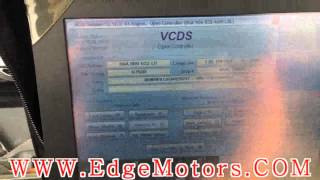
- VCDS (VAG-COM): [01 - Engine] -> [Output Tests - 03] — This function allows a technician to sequentially command individual components, such as the SAI Pump Relay (J299) and the Combi Valve Solenoid (N112). It's used to verify that the ECM can control the components and that the wiring is intact, helping to isolate electrical vs. mechanical failures.
- VCDS (VAG-COM): [01 - Engine] -> [Basic Settings - 04] -> Group 077 — This initiates the complete secondary air injection system self-test. The ECM runs the pump and monitors the pressure sensor to verify the entire system is functional. This is useful for confirming a fix or for setting the emissions readiness monitor.
- ODIS (Dealer Tool): Guided Fault Finding -> Actuator Test for V101/N112 — This is the dealership method for systematically testing the SAI pump (V101) and combi valve (N112) as part of a guided diagnostic plan for a specific fault code.
Wiring & Ground Locations
- SAI Pump Relay (J299) — Typically located in the under-hood fuse/relay box, often referred to as the E-box.. This relay provides power to the secondary air pump. If it fails or is stuck, the pump will not run, which can lead to various SAI system codes, although it's more commonly associated with insufficient flow codes.
- SAI Pump Fuse — A high-amperage fuse (typically 40A or 50A) located in the under-hood fuse/relay box.. This is the main fuse for the pump motor. If it's blown, the pump will be completely inoperative. This is a critical first check if the pump makes no noise on a cold start.
- Combi Valve Connector (N112) — The electrical connector is located directly on the combi valve, which is mounted to the cylinder head.. This is the primary test point for checking voltage supply (~12V on Pin 1) and solenoid resistance (3-5 Ohms across pins). Pin 2 is the ground switched by the ECM.
- Main Engine Ground Strap — A braided strap connecting the engine block to the vehicle's chassis/frame, often near the transmission or a motor mount.. While not specific to P2440, a poor engine ground can cause a wide range of unpredictable electrical issues and incorrect sensor readings. Verifying this connection is clean and tight is a good practice when diagnosing any electronic fault.
Real Owner Repair Stories
- Compilation of common repair paths from technician videos (VW 2.0T Engine (similar to Jetta applications)) — Check Engine Light with code P2440.
❌ Tried (didn't work) Initially suspecting the expensive combi valve or air pump without full diagnosis.
✅ What actually fixed it A thorough inspection revealed a crack in the corrugated plastic hose running from the air pump, often hidden under the airbox. A smoke test confirmed the leak. Replacing the hose resolved the code. In other cases, testing the combi valve solenoid showed it was out of spec (e.g., open circuit), and replacing the valve was the correct fix.
"I Checked Everything" — The Actual Cause
- In cases where a smoke test reveals no leaks and the combi valve and pump test functional, the root cause is often not a physical leak. The two most likely culprits are either an ECM software glitch that incorrectly sets the code, requiring a dealer update, or carbon-clogged secondary air passages inside the cylinder head itself, which requires removing the combi valve to inspect and clean.
OEM Part Supersession History
06K131097J→06K131097K, which was then superseded by 06K131097AA.— Revisions are common for emissions components to improve durability against heat, moisture, and carbon buildup.
Heads up: The parts are generally interchangeable, but it is always recommended to use the latest revision (06K131097AA) for the most updated design.
Model Year Variations Within This Range
- 2017-2018 (Mk6) vs. 2019-2020 (Mk7): The 2019 model year marked the switch to the A7 (Mk7) platform, which primarily uses the EA211 family 1.4T engine. While late Mk6 models also had a 1.4T, the engine architecture and surrounding components (harnesses, hose routing) are different. The EA211 engine, in particular, is noted for its susceptibility to carbon buildup, which can affect EGR and secondary air systems. While the P2440 fault logic is the same, the physical location and part numbers of components may vary between these generations.
Helpful Videos
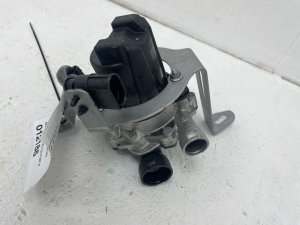
Used OEM Parts in Stock

New Aftermarket Parts Available


The information in this article is provided for general reference and educational purposes only. Vehicle specifications, procedures, and part compatibility can vary by production date, trim level, and region. Always consult your vehicle's factory service manual and verify part numbers before purchasing or performing repairs. Safety-critical components such as airbags, seat belts, and braking systems should be installed by a qualified professional.
- Volkswagen JETTA:
- 🎬 Helpful Videos
- 🛍️ Shop This Part
- What's Unique About the 2017-2020 Volkswagen JETTA
- Diagnostic Flowchart
- Symptoms You May Notice
- Most Likely Causes
- Rare But Worth Checking
- Diagnosis Steps
- Parts You'll Likely Need
- Related Codes That Often Appear With This One
- Technical Service Bulletins (TSBs) & Recalls
- Platform-Specific Known Issues
- Mechanic-Grade Diagnostic Values
- Hidden / Shadow Codes Worth Checking
- Scan Tool Commands That Help
- Wiring & Ground Locations
- Real Owner Repair Stories
- "I Checked Everything" — The Actual Cause
- OEM Part Supersession History
- Model Year Variations Within This Range
- 🎟️ Get 5% Off