

P2440 on 2009-2016 Volkswagen Jetta: SAI Valve Stuck Open Causes and Fixes
On a 2009-2016 VW Jetta, code P2440 most often means the Secondary Air Injection (SAI) switching valve (combi valve) is stuck open due to carbon buildup, or the engine's computer (ECM) needs a software update. A dealer software update can cost $200-$600 if out of warranty. The valve itself can sometimes be cleaned, but replacement costs about $150-$300 for the part.
- Before buying any parts for a P2440 code, check if your vehicle needs the ECM software update mentioned in TSB #V011514 2040822.
- The most common physical failure is the Secondary Air Injection (SAI) switching valve itself, which gets stuck open.
- A simple check for black soot inside the air hose leading to the valve can quickly confirm that it's stuck open and allowing exhaust to flow backward.
- Driving with this code will cause an emissions failure and could lead to more expensive repairs if hot exhaust damages the SAI pump.
What's Unique About the 2009-2016 Volkswagen JETTA

For this generation of Volkswagen Jetta, the P2440 code presents a unique diagnostic challenge. A well-documented Technical Service Bulletin (TSB) confirms that outdated engine computer software can erroneously trigger this code, meaning no physical part is actually broken. However, the code is also frequently caused by a genuine mechanical failure of the switching valve (combi valve), which is prone to getting stuck with carbon deposits. This makes it critical to check the vehicle's software history before replacing any parts, as a costly repair could be avoided with a simple, albeit sometimes expensive, software flash at the dealer.
Diagnostic Flowchart

Tap your situation to follow the diagnostic path that matches what you're seeing on this vehicle.
Generation note: This range covers the late Volkswagen Jetta Mk5 (2009-2010) and the Jetta Mk6 (2011-2016). The Secondary Air Injection system is present on engines in both generations, particularly the 2.5L 5-cylinder (CBUA, CBTA) and 2.0L TSI engines (CCTA, CBFA), and the causes are generally consistent. The software issue noted in TSB V011514 2040822 specifically lists 2014-2015 models with various engines but the issue of erroneous software-related faults is common across the VW lineup.
Symptoms You May Notice

- Check Engine Light is on
- Vehicle may enter a reduced-power "limp mode"
- Audible noise, like a vacuum cleaner, from the SAI pump at incorrect times or for an extended duration
- Failure to pass an emissions inspection
- Engine hesitation when accelerating
- Replacing the SAI pump when the switching valve is the actual cause.
- Replacing the switching valve when the ECM simply requires a software update per TSB #V011514 2040822.
- Replacing parts before performing a smoke test to check for simple, inexpensive-to-fix vacuum leaks in the SAI hoses.
Most Likely Causes

- Outdated Engine Control Module (ECM) Software 🔴 High Probability Volkswagen issued TSB #V011514 2040822 stating that "Current ECM software are causing erroneous faults" for P2440 and P0491 on various 2014-2015 models including Jetta, Beetle, and Passat. This pattern of software issues causing false emissions codes exists for other models and years as well.
How to confirm: A Volkswagen dealer or a properly equipped independent shop with ODIS software can check the vehicle's software version against the TSB to see if an update is available. This is the most crucial first step.
Typical fix: Update the ECM software. This must be performed by a dealer or qualified shop. If the vehicle is out of warranty, this can be costly, with owners reporting charges from $200 to over $600 for diagnosis and flashing.
Est. part cost: $0 - Failed Secondary Air Injection (SAI) Switching Valve (Combi Valve) 🔴 High Probability The valve, often called a "combi valve," is directly exposed to exhaust gases and can become stuck due to heavy carbon buildup or internal mechanical failure. The carbon prevents the valve from closing fully.
How to confirm: Remove the valve. When de-energized, you should not be able to blow air through it. If you can, it's stuck open. On electronically controlled valves, test the internal solenoid for correct resistance (typically 3-6 ohms) and apply 12V to listen for a click. Visual inspection may reveal soot inside the air lines, confirming it's stuck open.
Typical fix: Replace the SAI switching valve and the corresponding gasket. In some cases, the valve can be removed and thoroughly cleaned with carburetor cleaner to restore function, avoiding the cost of a new part.
Est. part cost: $150-$300 - Cracked or Leaking Hoses 🟡 Medium Probability The plastic and rubber hoses in the SAI system can become brittle and crack over time due to engine heat and age, causing pressure leaks that the system interprets as a stuck valve.
How to confirm: Visually inspect all hoses connected to the SAI pump and switching valve for cracks, especially at connection points and bends. A smoke test is the most effective method for finding small, hard-to-see leaks.
Typical fix: Replace the damaged section of hose.
Est. part cost: $20-$50
Rare But Worth Checking
- Failed Secondary Air Injection Pump: While a failed pump more commonly causes an 'insufficient flow' code (P0411/P0491), a weak or failing pump can contribute to pressure-related codes like P2440. One owner reported that a cheap aftermarket pump did not provide sufficient pressure, causing the code to return until an OEM unit was installed. Check if the pump runs on a cold start; it should sound like a vacuum cleaner for about 30-60 seconds.
- Wiring or Connector Issue: Damage to the wiring or connector for the switching valve solenoid can prevent it from operating correctly. Check for 12V power at the connector with the key on. Rodent damage to engine bay wiring is also a known, though uncommon, cause of such electrical faults.
Diagnosis Steps
- Read the fault codes with an OBD-II scanner.
- Crucial First Step: Check with a VW dealer or independent VW specialist if TSB #V011514 2040822 (or other relevant software update TSBs) applies to your vehicle's VIN and if the update has been performed. If not, this is the most logical first action.
- On a cold engine, start the car and listen for the SAI pump running for the first 30-90 seconds. It will be a distinct, loud whirring sound from the front of the engine bay. If you hear nothing, suspect the pump, relay, or fuse.
- If the pump runs, perform a smoke test on the SAI system to check for leaks in the hoses between the pump, pressure sensor, and the combi valve. This is the most reliable way to rule out leaks.
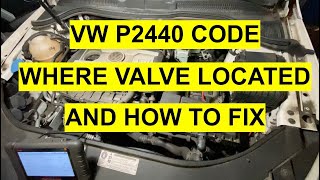
- Locate the SAI switching (combi) valve. On the 2.5L engine, it's on the back of the cylinder head. On the 2.0T, it's mounted to the side of the cylinder head. 🎬 Watch: How to diagnose and fix P2440 on 2.0T engines
- Disconnect the air hose leading to the valve from the pump. Check for any black soot or moisture inside the hose. The presence of soot is a strong indicator that the valve is stuck open, allowing exhaust to flow backward.
- Test the valve itself. For electronically controlled valves, disconnect the electrical connector and measure the resistance between the two pins on the valve's solenoid. It should be between 3-6 ohms. You can also apply 12V directly to these pins; you should hear a distinct 'click' as the solenoid actuates.
- If possible, remove the valve (typically 2-3 bolts). Try to blow through the exhaust port. If air passes through, the valve is confirmed to be stuck open. At this point, you can attempt to clean it thoroughly with carburetor cleaner or replace it.
- If the valve tests good, the software is up to date, and there are no leaks, inspect the wiring and connector to the valve for damage, corrosion, or rodent activity.
Parts You'll Likely Need
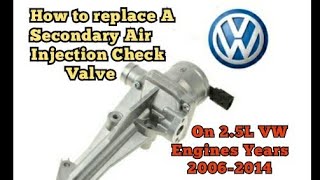
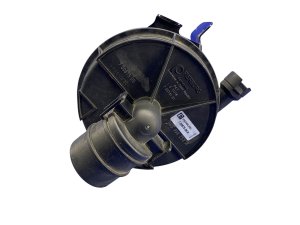
- Secondary Air Injection Switching Valve (Combi Valve)
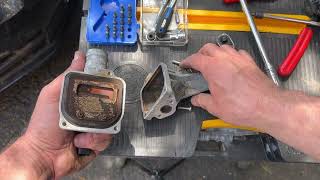
(OEM #07K131351C (for 2.5L), 06J131120B (for 2.0T))— This is the component identified by the code itself. It fails by getting stuck open due to carbon buildup or mechanical wear. 🎬 Watch: Dissecting a failed combi valve to see internal carbon
Trusted brands: Pierburg (OEM supplier), Bosch, Standard Motor Products
OEM price range: $200-$300
Aftermarket price range: $150-$220 - Combi Valve Gasket
(OEM #07K131348 (for 2.5L))— The gasket provides the seal between the valve and the cylinder head. It is essential and should always be replaced when the valve is serviced to prevent exhaust leaks.
Trusted brands: Victor Reinz, Elring
OEM price range: $10-$20
Aftermarket price range: $5-$15
Related Codes That Often Appear With This One
- P0491 — This code for 'Secondary Air Injection System Insufficient Flow' is explicitly mentioned alongside P2440 in VW's TSB about erroneous faults caused by ECM software. A stuck open valve can also disrupt flow readings, triggering both codes.
- P0411 — This is another code for 'Incorrect Flow Detected' in the SAI system. It can appear if the valve being stuck open disrupts the expected airflow and pressure readings, as the system is not sealed when it expects to be.
Technical Service Bulletins (TSBs) & Recalls
- V011514 2040822: Notes that on certain 2014-2015 Jetta, Passat, and Beetle models, outdated ECM software can cause erroneous P2440 or P0491 codes. The fix is a software update. The bulletin warns that a battery charger must be used during the update to prevent module failure.
- 2054613: A similar TSB for the 2019
Platform-Specific Known Issues
- A known software issue can cause a false P2440 code, as documented in Volkswagen TSB #V011514 2040822. This bulletin specifically addresses erroneous P2440 and P0491 faults on 2014-2015 models and calls for an ECM software update. Similar software-related TSBs exist for other models like the Tiguan, indicating a pattern.
- The 2.5L I5 and 2.0T TSI engines are susceptible to significant carbon buildup, not just on the intake valves but also within the secondary air passages and on the combi valve itself. This buildup is a primary cause of the valve physically sticking open.
Mechanic-Grade Diagnostic Values
- SAI Switching/Combi Valve Solenoid Resistance — expected: 3 to 5 ohms. Failure: Infinite resistance (open circuit) or zero resistance (short circuit) indicates a failed solenoid.
- SAI Switching/Combi Valve Connector Voltage — expected: 12V on the power wire with ignition on. Failure: No voltage suggests a wiring issue, blown fuse, or faulty relay.
- SAI Pressure Sensor (G609) Signal Voltage — expected: Approximately 2.8V with the new style sensor installed and system at rest.. Failure: A significantly different voltage (e.g., a reading of 3.9V on a faulty sensor) indicates a sensor failure.
- Wiring continuity from G609 sensor to ECM — expected: 1.5 ohms maximum. Failure: Higher resistance indicates a break or corrosion in the wiring harness.
Scan Tool Commands That Help
- VCDS (VAG-COM) by Ross-Tech: Output Test (03) — To sequentially activate individual components like the SAI pump relay and the N112 (SAI solenoid valve). This confirms the ECM can command the components and that the wiring from the ECM is intact.
- VCDS (VAG-COM) by Ross-Tech: Basic Settings - Group 077 — To initiate the SAI system test sequence to check for functionality and help set the readiness monitor. The ECU will run the pump and check for the expected pressure change. If the test aborts, it often indicates a prerequisite has not been met.
- VCDS (VAG-COM) by Ross-Tech: Guided Readiness Script — To have the tool guide you through the specific steps (engine speed, temperature) needed to run all the system monitors and set readiness, including the SAI system. This is more user-friendly than manually running basic settings blocks.
Wiring & Ground Locations
- Fuse S131 (50A) — In the fuse box on top of the battery.. This is the main fuse for the Secondary Air Injection pump motor. If this fuse is blown, the pump will not run, which can lead to various SAI-related codes.
- Ground Point 671 — On the left front longitudinal member (frame rail) in the engine compartment.. This is a primary engine compartment ground connection. A loose or corroded ground here can cause intermittent electrical issues for various systems, including the SAI pump and valve.
- Ground Point 18 — Directly on the engine block.. Provides the ground path for components mounted directly to the engine. Ensuring this is clean and tight is crucial for the proper operation of sensors and solenoids like the combi valve.
Real Owner Repair Stories
- BobIsTheOilGuy forum user 'djb' (BMW with similar vacuum-operated SAI system) — Secondary Air monitor would not set readiness, preventing passing emissions.
❌ Tried (didn't work) Testing every component multiple times., Replacing all hoses.
✅ What actually fixed it The root cause was slow oxygen sensors. They were not slow enough to trigger their own fault code during normal operation, but during the specific warm-up phase when the SAI system is tested, their slow response prevented the ECU from confirming the SAI system was working correctly. Replacing both upstream and downstream O2 sensors allowed the SAI monitor to finally set.
OEM Part Supersession History
07K131351B→07K131351C— Likely an internal revision to improve durability or address a known failure mode, common for parts exposed to high heat and carbon.
Model Year Variations Within This Range
- 2009-2010 (Mk5) vs 2011-2016 (Mk6): While the 2.5L engine was used in both generations, there were internal engine code changes (e.g., CBUA, CBTA). While the fundamental SAI system design is the same, specific hose routings, connector locations, and ECM software versions can differ. Always verify parts and procedures by VIN.
- 2014-2015: These model years are specifically called out in TSB #V011514 2040822 for having erroneous P2440 faults that are correctable with an ECM software update. While the hardware may be identical to other years, they are known to be affected by this specific software glitch.
Helpful Videos
Used OEM Parts in Stock


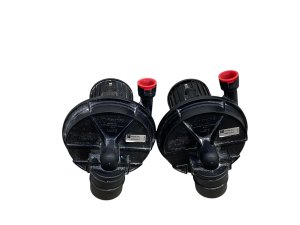
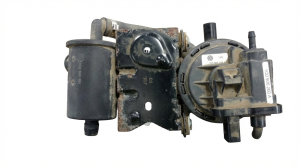
New Aftermarket Parts Available
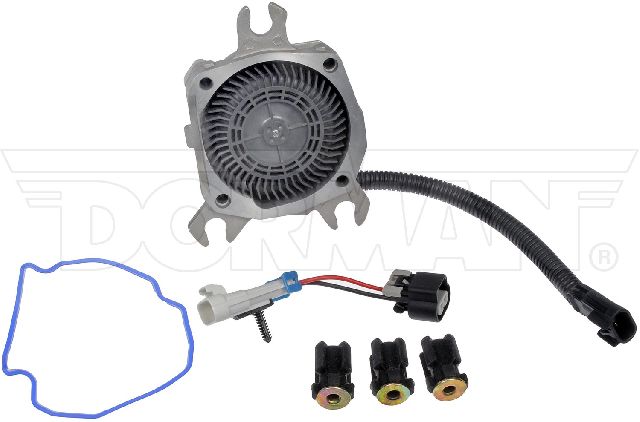


The information in this article is provided for general reference and educational purposes only. Vehicle specifications, procedures, and part compatibility can vary by production date, trim level, and region. Always consult your vehicle's factory service manual and verify part numbers before purchasing or performing repairs. Safety-critical components such as airbags, seat belts, and braking systems should be installed by a qualified professional.
- Volkswagen JETTA:
- 🎬 Helpful Videos
- 🛍️ Shop This Part
- What's Unique About the 2009-2016 Volkswagen JETTA
- Diagnostic Flowchart
- Symptoms You May Notice
- Most Likely Causes
- Rare But Worth Checking
- Diagnosis Steps
- Parts You'll Likely Need
- Related Codes That Often Appear With This One
- Technical Service Bulletins (TSBs) & Recalls
- Platform-Specific Known Issues
- Mechanic-Grade Diagnostic Values
- Scan Tool Commands That Help
- Wiring & Ground Locations
- Real Owner Repair Stories
- OEM Part Supersession History
- Model Year Variations Within This Range
- 🎟️ Get 5% Off