

P2440 on 2013-2015 VW Beetle: Secondary Air Valve Stuck Open Causes & Fixes
On a 2013-2015 VW Beetle with the 2.5L engine, code P2440 indicates the secondary air injection switching valve is stuck open. Before replacing parts on a 2013 model, you must check if your vehicle needs a crucial ECM software update as described in VW TSB #V011514 2040822, which is a known cause for false codes. If the software is current, the most likely mechanical culprits are a carbon-fouled combi valve (Part No. 07K131351C), a cracked plastic SAI hose, or a faulty SAI pressure sensor.
- For a 2013 VW Beetle, your first step for a P2440 code should be checking with a dealer if the ECM software update from TSB #V011514 2040822 has been performed.
- If the software is current, the most likely mechanical fault is the Secondary Air Injection (Combi) Valve being stuck open, often due to carbon buildup.
- Thoroughly inspect all plastic and rubber hoses in the SAI system for cracks or breaks before buying expensive parts, as leaks are a common cause.
- Driving with this code will cause an automatic failure of an emissions test.
What's Unique About the 2013-2015 Volkswagen BEETLE
For the 2013-2015 Beetle, particularly models with the 2.5L 5-cylinder engine (CBUA/CBTA), this code has two very common but distinct causes. First, a significant number of P2440 codes on 2013 models are not caused by a mechanical failure but by a software glitch. Volkswagen issued Technical Service Bulletin #V011514 2040822 specifically for 2013 models where the original ECM software can erroneously trigger this fault code. Second, the combi valve itself is prone to getting stuck with carbon, and the associated plastic hoses are known to become brittle and crack. Therefore, the first diagnostic step for any owner of a 2013 model should be to verify with a dealer if this software update has been performed before attempting any hardware replacements.
Diagnostic Flowchart
Tap your situation to follow the diagnostic path that matches what you're seeing on this vehicle.
Symptoms You May Notice
- Check Engine Light is on.
- Loud 'vacuum cleaner' or 'jet engine' noise from the secondary air pump for 60-90 seconds on a cold start.
- Possible brief rough idle immediately after a cold start.
- Vehicle will fail an emissions inspection.
- In some cases, the engine may hesitate on acceleration or stall when idling if the valve is stuck significantly open.
- Replacing the secondary air pump when the actual issue is a stuck combi valve, a software error, or a cracked hose.
- Replacing the combi valve without first checking for the TSB software update on applicable 2013 models.
- Replacing oxygen sensors, which are not directly related to the mechanical operation of the SAI valve and are rarely the cause of this specific code.
Most Likely Causes
- Outdated ECM Software (Erroneous Fault) 🔴 High Probability Specifically documented for 2013 models in Volkswagen TSB #V011514 2040822, which states the original software can cause false P2440 and/or P0491 codes. The TSB provides specific software version numbers that are known to be faulty.
How to confirm: A VW dealership or a shop with access to VW service bulletins can check the vehicle's service history and current software version by its VIN. The TSB requires the use of the ODIS diagnostic system to perform the update.
Typical fix: Update the Engine Control Module (ECM) software to the latest version. The TSB provides the specific SVM Unit Code needed for the update.
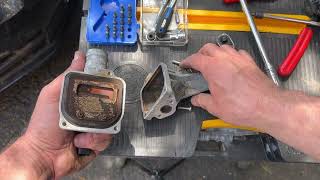
Est. part cost: $0 - Faulty Secondary Air Injection Switching Valve (Combi Valve) 🔴 High Probability The valve is exposed to hot exhaust gases and moisture, which causes carbon buildup on the valve seat 🎬 Watch: See a teardown of a carbon-fouled Beetle combi valve. or diaphragm failure, preventing it from closing. This is a very common failure on the 2.5L engine.
How to confirm: With the engine cold, use a handheld vacuum pump on the valve's vacuum port to test if it holds vacuum and actuates properly. It should not lose vacuum over several minutes. With diagnostic software like VCDS, an output test can be run on the engine controller (Address 01) to command the valve (N112) to open and close, listening for an audible 'pop' or click.
Typical fix: The valve can sometimes be cleaned of carbon deposits, but if the internal diaphragm has failed or it's severely seized, replacement is necessary. The OEM part is often made by Pierburg.
Est. part cost: $150-$300 - Cracked, Broken, or Disconnected Hoses 🟡 Medium Probability The corrugated plastic and rubber hoses in the SAI system become brittle with age and repeated heat cycles, leading to cracks and pressure leaks. A leak can be misinterpreted by the pressure sensor as a stuck-open valve.
How to confirm: Visually inspect all hoses connected to the secondary air pump and the combi valve for cracks, especially at connection points and bends. A smoke test is the most effective method for revealing hard-to-see leaks.
Typical fix: Replace the damaged hose section. The hose assembly may include an integrated pressure sensor.
Est. part cost: $30-$100
Rare But Worth Checking
- Failing Secondary Air Injection Pump: While a failing pump usually causes an 'insufficient flow' code like P0411, a stuck-open combi valve can cause exhaust moisture to backflow into the pump, causing it to fail prematurely. 🎬 Watch: Step-by-step guide to replacing the secondary air pump. In some cases, a weak pump can contribute to erratic pressure readings that trigger P2440.
- Faulty SAI Pressure Sensor (G609): The system uses a pressure sensor (G609) to verify its operation. This sensor is often integrated into the plastic hose assembly. If the sensor itself is faulty, it can send incorrect voltage readings to the ECM, triggering the P2440 code even if the valve is working correctly. Forum users have reported chasing this issue, where the sensor's voltage output changes erratically with temperature.
- Wiring or Connector Issue: Damage to the wiring or the 2-pin electrical connector for the combi valve's solenoid (N112) can prevent it from receiving the signal to close. Check for 12V at the connector with the key on. Corrosion or bent pins at the pressure sensor connector can also cause false readings.
- Blocked Cylinder Head Ports: In severe cases, the secondary air ports inside the cylinder head where the combi valve mounts can become completely blocked with carbon. This typically causes an 'insufficient flow' code (P0491/P0492) but can be related if multiple system faults are present.
Diagnosis Steps
- Read the fault codes using an OBD-II scanner.
- For 2013 models, contact a VW dealer with your VIN to determine if TSB #V011514 2040822 applies and if the ECM software update has been performed. This is the most critical first step.
- If the software is up-to-date or the vehicle is a 2014-2015 model, perform a cold start and listen for the secondary air pump. It should sound like a loud vacuum cleaner for about 30-90 seconds.
- If the pump runs, visually inspect all hoses connected to the pump and the combi valve for obvious cracks, breaks, or disconnections. The corrugated plastic lines are especially suspect. A smoke test is recommended for a thorough check.
- Locate the combi valve (N112) on the cylinder head. It's a metal valve with a black plastic solenoid on top. Test its function using a handheld vacuum pump on the vacuum nipple to see if it opens and holds vacuum. It should not leak down.
- Using a tool like VCDS, navigate to Engine (01) -> Output Tests (03) and cycle through the tests until you find the Secondary Air Injection Valve (N112). Activate it and listen for a click or 'pop'.
- Inspect the 2-pin electrical connector at the combi valve. With the ignition on, one pin should have ~12V. The other is ground-switched by the ECM. Check the resistance of the valve's solenoid; it should be low (e.g., 3-5 ohms).
- If the valve and hoses are good, the issue may be with the SAI pressure sensor (G609). This 3-wire sensor can be tested for 5V reference, ground, and a signal wire whose voltage should change when the pump is running.
Parts You'll Likely Need
- Secondary Air Injection Combination Valve
(OEM #07K131351C)— This valve is the most common mechanical failure point, getting stuck open due to carbon buildup or internal diaphragm failure.
Trusted brands: Pierburg, Genuine VW
OEM price range: $250-$460
Aftermarket price range: $120-$220 - Secondary Air Injection Hose Assembly
(OEM #07K198125)— The plastic hoses become brittle and crack over time, causing leaks that the system's pressure sensor interprets as a stuck-open valve. The replacement assembly often includes the pressure sensor (G609).
Trusted brands: Genuine VW
OEM price range: $80-$150
Aftermarket price range: $50-$100
Related Codes That Often Appear With This One
- P0491 — This code for 'Insufficient Flow' is explicitly mentioned alongside P2440 in TSB #V011514 2040822 as being potentially caused by the same software issue. A physical leak in a hose or a carbon-blocked port can also trigger both codes.
- P0411 — Another 'Incorrect Flow Detected' code for the SAI system. It can be triggered by the same underlying faults, such as major hose leaks or a combination of a stuck valve and a weak pump.
- P2432 — This code indicates 'Secondary Air Injection System Airflow/Pressure Sensor Circuit Low'. It points more directly to a problem with the pressure sensor or its wiring, which can be a root cause for a P2440 misdiagnosis.
Technical Service Bulletins (TSBs) & Recalls
- V011514 2040822: Addresses erroneous P0491 and/or P2440 codes stored in the ECM fault memory on 2013 models due to a software issue, requiring an update. It provides specific SVM codes for the flash procedure.
- VIN4APIN20200617: A general bulletin that lists P2440 as one of several potential codes related to a 'MIL-on' (Check Engine Light on) customer complaint, confirming it's a recognized fault.
Platform-Specific Known Issues
- A software glitch is a documented cause of erroneous P2440 codes on 2013 models, requiring an ECM update via TSB #V011514 2040822.
Mechanic-Grade Diagnostic Values
- SAI Combi Valve (N112) Solenoid Resistance — expected: 3.5–8.5 Ω at approx. 20° C. Some sources state a tighter range of 3-6 Ohms.. Failure: An infinite reading (open circuit) or zero ohms (short circuit) indicates a failed solenoid.
- SAI Combi Valve (N112) Connector Voltage — expected: One pin should have ~12V (battery voltage) with the ignition on, engine off. The other pin is ground-switched by the ECM.. Failure: No voltage suggests a wiring break, blown fuse, or faulty relay.
- SAI Pressure Sensor (G609) Signal Voltage (Key On, Engine Off) — expected: Approximately 2.8V at rest with a known-good sensor.. Failure: A significantly different voltage, such as 3.9V, can indicate a faulty sensor sending an incorrect pressure reading.
- SAI Pressure Sensor (G609) Reference Voltage — expected: One pin should read 5V (reference voltage from ECM).. Failure: Missing 5V reference points to a wiring issue or an ECM fault.
- Wiring continuity from G609 sensor to ECM (J623) — expected: 1.5 ohms maximum.. Failure: Higher resistance indicates a break or corrosion in the wiring harness.
Scan Tool Commands That Help
- VCDS (VAG-COM): Engine (01) -> Output Tests (03) — This function allows a technician to sequentially activate individual components, including the SAI pump relay (J299) and the combi valve solenoid (N112). It's used to confirm the ECM can command the parts and that the wiring is intact. A click should be heard from the N112 solenoid when activated.
- VCDS (VAG-COM): Engine (01) -> Basic Settings -> Group 077 — This initiates the SAI system's self-test sequence. The ECM will run the pump and check for the expected pressure change from the G609 sensor. This is used to verify the entire system's functionality after a repair and to help set the readiness monitor.
- VCDS (VAG-COM): Engine (01) -> Basic Settings -> Group 060 (Throttle Body Adaptation) — While not directly for the SAI system, ensuring the throttle body is properly adapted is a prerequisite for many other diagnostic tests and readiness monitors to run correctly. This should be done if the battery was disconnected or the ECM was cleared.
Wiring & Ground Locations
- J623 — Engine Control Module (ECM), located in the center of the plenum chamber under the windshield cowl.. The ECM controls the N112 solenoid and reads the G609 pressure sensor. All related wiring terminates here.
- N112 Connector — A 2-pin connector directly on the Secondary Air Injection (Combi) Valve, located on the cylinder head.. This is the connection point for testing voltage supply and resistance of the valve's solenoid.
- G609 Connector — A 3-pin connector, often integrated into the plastic SAI hose assembly between the air pump and the combi valve.. This is the connection point for testing the pressure sensor's 5V reference, ground, and signal voltage.
- Ground Point 15 — On top of the cylinder head, near the ignition coils (for 1.8L, but similar location on 2.5L).. A poor engine ground can cause erratic behavior in sensors and solenoids mounted to the engine, including the SAI components.
- Ground Point 85 — Ground Connection 1 in the engine compartment wiring harness.. This is a primary ground connection for the engine wiring harness which includes the SAI system wiring.
Real Owner Repair Stories
- YouTube video by 'Monty's' (2012 VW Passat 2.5L) — Check Engine Light with code P0491 (Insufficient Flow), which is commonly seen with P2440.
❌ Tried (didn't work) The video directly diagnosed the issue without showing failed attempts.
✅ What actually fixed it The port in the cylinder head where the combi valve mounts was completely blocked with carbon buildup. The final fix was removing the combi valve and physically cleaning the carbon deposits out of the passage in the cylinder head.
OEM Part Supersession History
N/A→07K131351C— This is the current, most commonly cited part number for the combi valve for this application.7k131125c, 7k131128c→07K198125— The individual hose components were consolidated into a single repair kit assembly.
Heads up: The repair kit 07K198125 is the modern replacement and includes the hose with the integrated pressure sensor, which is a common failure point.
Model Year Variations Within This Range
- 2013 only: A specific Technical Service Bulletin (TSB #V011514 2040822) was issued for 2013 models where the original ECM software could erroneously trigger P2440 and/or P0491. 2014-2015 models are less likely to have this specific software issue, making a mechanical or sensor fault more probable.
Helpful Videos
Used OEM Parts in Stock

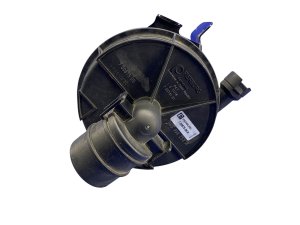

New Aftermarket Parts Available



The information in this article is provided for general reference and educational purposes only. Vehicle specifications, procedures, and part compatibility can vary by production date, trim level, and region. Always consult your vehicle's factory service manual and verify part numbers before purchasing or performing repairs. Safety-critical components such as airbags, seat belts, and braking systems should be installed by a qualified professional.
- Volkswagen BEETLE:
- 🎬 Helpful Videos
- 🛍️ Shop This Part
- What's Unique About the 2013-2015 Volkswagen BEETLE
- Diagnostic Flowchart
- Symptoms You May Notice
- Most Likely Causes
- Rare But Worth Checking
- Diagnosis Steps
- Parts You'll Likely Need
- Related Codes That Often Appear With This One
- Technical Service Bulletins (TSBs) & Recalls
- Platform-Specific Known Issues
- Mechanic-Grade Diagnostic Values
- Scan Tool Commands That Help
- Wiring & Ground Locations
- Real Owner Repair Stories
- OEM Part Supersession History
- Model Year Variations Within This Range
- 🎟️ Get 5% Off