

P2440 on 2008-2015 Toyota Sequoia 5.7L: Air Injection Valve Stuck Open Causes & Fixes
On a 2008-2015 Toyota Sequoia with the 5.7L V8, code P2440 almost always means the Secondary Air Injection Switching Valve for Bank 1 is stuck open, usually due to moisture and corrosion. This triggers a 'limp mode' with severely reduced power. The fix involves replacing the valve assembly under the intake manifold, a costly repair at a dealership but a manageable DIY. An electronic bypass kit is a popular, though not emissions-compliant, alternative.
- P2440 on a 5.7L Sequoia means the Bank 1 air injection valve is stuck open, a very common issue for this engine.
- The primary cause is the valve assembly failing due to moisture and corrosion, which often requires removing the intake manifold to replace.
- This fault will trigger a 'limp mode,' severely reducing engine power, and will cause an automatic emissions test failure.
- While dealer repair can be very expensive ($2000+), a skilled DIYer can replace the valve for the cost of parts, or consider an aftermarket bypass kit for off-road use where legally permitted.
- Always check for the companion code P2442 (Bank 2), as both sides often fail together.
What's Unique About the 2008-2015 Toyota SEQUOIA

This is an extremely common and well-documented problem on Toyota's 5.7L (3UR-FE) V8 engine used in the Sequoia, Tundra, Land Cruiser, and Lexus LX570. The design of the air switching valves makes them susceptible to failure from moisture and carbon buildup, a problem often exacerbated by cold weather, as noted in Toyota's own Technical Service Bulletins. The failure is so frequent that Toyota issued a Warranty Enhancement Program (Customer Support Program ZHA) for this system on many vehicles, extending coverage to 10 years or 150,000 miles, though most from this year range have now aged out of the coverage period.
Diagnostic Flowchart

Tap your situation to follow the diagnostic path that matches what you're seeing on this vehicle.
Symptoms You May Notice
- Check Engine Light is on
- Vehicle enters 'limp mode' with reduced engine power
- Flashing 'VSC OFF' and '4LO' lights on the dashboard.
- Vehicle will not pass an emissions test.
- Loud vacuum cleaner or whining noise from the passenger fender well on cold starts, which may stop as the pump fails completely.
- Replacing only the air injection pumps without checking the switching valves. If a valve is stuck open, the new pumps can be quickly damaged by back-flowing exhaust gas and moisture.
- Replacing oxygen (O2) sensors. While this is an emissions system code, it is not directly related to O2 sensor function.
- Clearing the code and continuing to drive. The code will almost certainly return after two consecutive cold starts, and driving with a stuck-open valve can cause further damage.
Most Likely Causes

- Failed Air Injection Switching Valve (Bank 1) 🔴 High Probability The valves are located in the engine valley under the intake manifold, where they are exposed to heat and can collect moisture from the exhaust, leading to internal corrosion and the valve mechanism physically sticking open. The internal reed valve and diaphragm can burn or corrode, preventing a proper seal.
How to confirm: Visually inspect the valve for corrosion or damage after removing the intake manifold. Use a bidirectional scan tool to command the valve to open and close; listen for an audible click. If it doesn't actuate, or if it's visibly burnt upon disassembly, it has failed.
Typical fix: Replace the entire air switching valve assembly. On the 5.7L engine, this is a single unit (for both banks) located under the intake manifold.
Est. part cost: $450-$750 - Moisture Intrusion in the SAI System 🔴 High Probability As noted in TSB T-SB-0033-12 Rev, the system is prone to issues in freezing conditions. Condensation from the exhaust can get past the stuck-open switching valves and collect in the air lines or the air pumps, causing corrosion and damage to the pump motors and impellers.
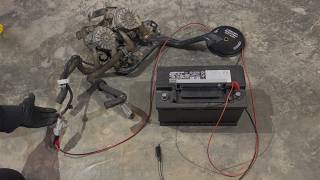
How to confirm: When replacing the valve or inspecting the pumps, check the air lines for any signs of water or a white, chalky residue from corrosion. The pumps themselves may be seized or sound gritty when bench-tested with a 12V source.
Typical fix: Dry out the system and replace any components damaged by moisture. The root cause (stuck valve) must be addressed to prevent recurrence. Some owners modify the air pump inlet to prevent future water ingestion.
Est. part cost: $0 if drying out, or cost of damaged parts - Failed Secondary Air Injection Pump(s) 🟡 Medium Probability If the switching valve sticks open, hot exhaust gas can flow backward and damage the air pumps. Also, moisture that gets past the valve can collect in the pumps and cause them to seize. The foam filter on the pump inlet can also degrade, allowing debris into the pump.
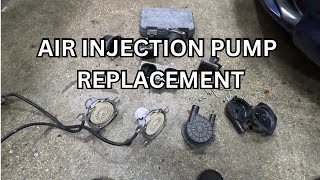
How to confirm: Listen for the pumps (which sound like a small vacuum cleaner) to run for 30-90 seconds after a cold start. If they are silent or make a loud grinding noise, they have likely failed. They can be accessed in the passenger-side front fender well for direct testing. 🎬 See how to remove and test the air injection pumps.
Typical fix: Replace the failed air injection pump(s). They are located in the passenger-side front fender well. It is highly recommended to inspect/replace the switching valves at the same time.
Est. part cost: $175-$350 per pump
Rare But Worth Checking
- Wiring or Connector Issue: Damage to the wiring harness or corrosion in the connector for the switching valve can prevent it from receiving the signal from the ECM. This is worth checking before replacing expensive parts, though it is less common than mechanical failure of the valve itself.
- ECM (Engine Control Module) Issue: TSB T-SB-0033-12 Rev mentions that for some 2012-2013 models, an ECM software update may be required to correct the logic for the SAI system in freezing conditions. While less common, it's a possibility for specific model years. A failed ECM is very rare but can be caused by prolonged driving with a faulty valve.
Diagnosis Steps
- Confirm the presence of P2440 with an OBD-II scanner. Note any other related codes.
- On a cold start, listen for the air pumps in the passenger fender well. They should run for 30-90 seconds. A loud grinding or a complete lack of sound indicates a pump problem.
- If the vehicle is in limp mode, clearing the code may temporarily restore power, but it will likely return on the next cold start cycle.
- Access the air switching valve assembly, which requires removing the intake manifold. 🎬 Watch this step-by-step guide to replacing the air switching valve. This is a multi-hour job.
- Inspect the valve assembly and its electrical connector for signs of corrosion, melting, or damage. Upon disassembly of the valve covers (T15/T25 Torx), check for burnt or rusted internal components.
- Check the air lines connected to the valve and pumps for moisture or white, chalky corrosion.
- If the valve is visibly damaged or fails functional testing (with a bidirectional scanner or direct voltage), it must be replaced.
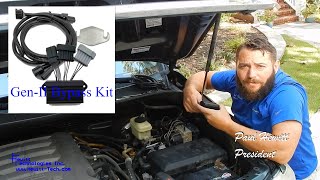
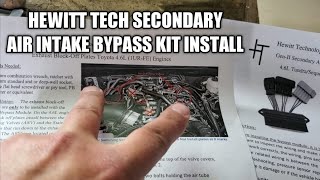
- An increasingly popular, though not emissions-compliant, alternative is to install a Secondary Air Injection System Bypass Kit from a company like Hewitt-Tech. This electronically bypasses the system to prevent codes and limp mode, but is intended for off-road use only and will not pass emissions inspections in states that require them. 🎬 Watch a complete installation of the air injection bypass kit.
Parts You'll Likely Need

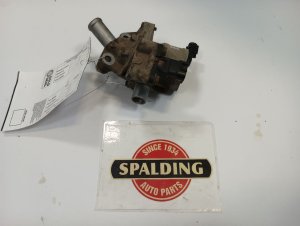
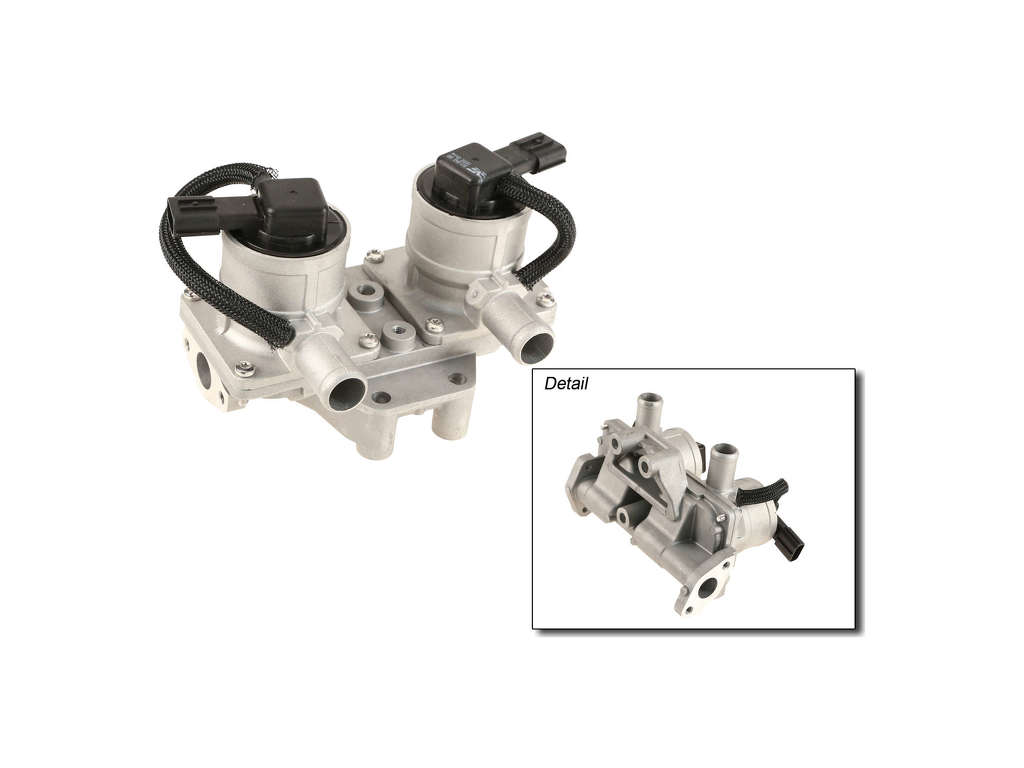
- Air Injection Switching Valve Assembly
(OEM #25701-38064)— This is the component that fails and directly causes the P2440 code. On the 5.7L V8, it is a single assembly for both banks. This part number supersedes 25701-38060, 25701-38061, 25701-38062, 25701-38063, 25701-38120, and 25701-38121.
Trusted brands: Toyota (OEM), Dorman (911-643)
OEM price range: $500-$750
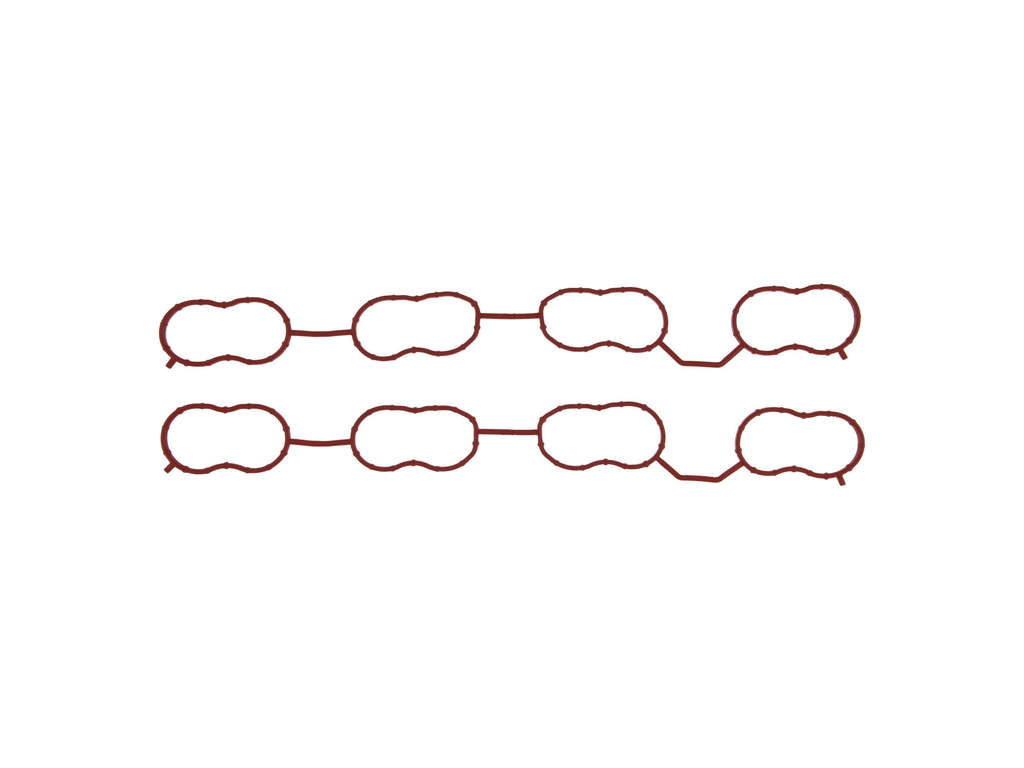
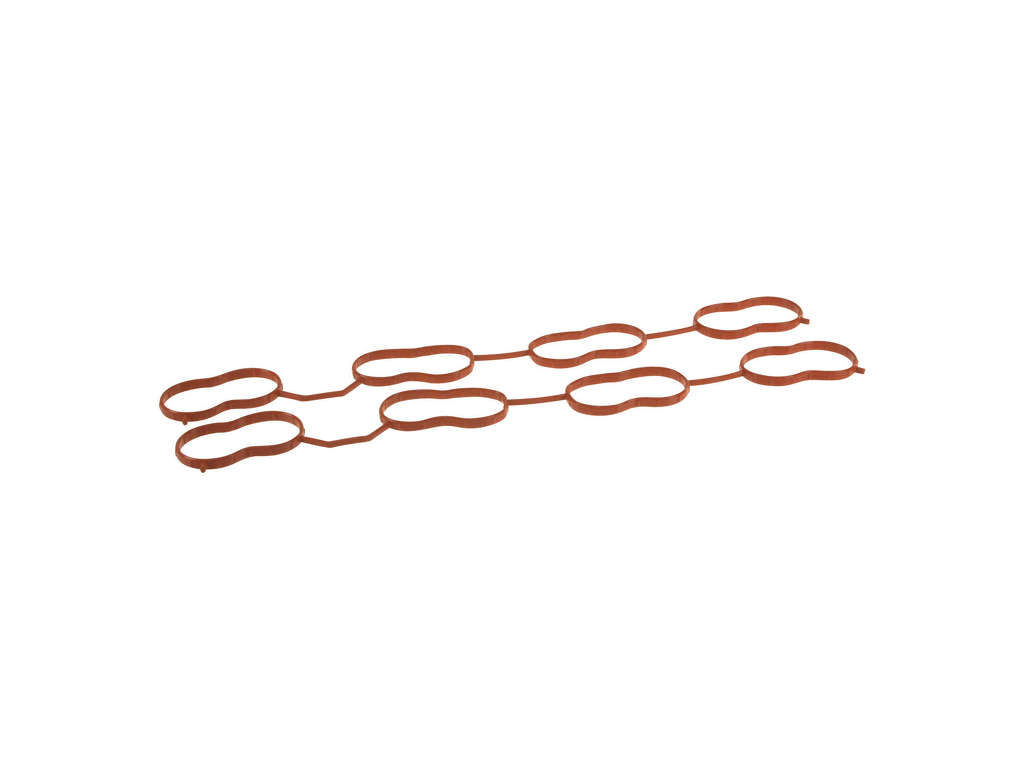
Aftermarket price range: $175-$350 - Intake Manifold Gaskets
(OEM #17171-0S030)— These must be replaced anytime the intake manifold is removed to access the switching valve.
Trusted brands: Toyota (OEM), Fel-Pro
OEM price range: $20-$40
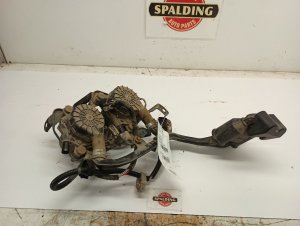
Aftermarket price range: $15-$30 - Air Pump Assembly — Often fails as a consequence of the valve failure. There are two pumps, one for each bank, mounted on a single bracket. They are often replaced as a pair if one is bad.
Trusted brands: Toyota (OEM), Dorman
OEM price range: $300-$500 per pump
Aftermarket price range: $150-$300 per pump
Related Codes That Often Appear With This One
- P2442 — This is the identical code for the Bank 2 switching valve stuck open. The valves are part of the same assembly on the 5.7L engine and often fail together or in close succession.
- P2441 / P2443 — These codes indicate the switching valve is stuck closed for Bank 1 (P2441) or Bank 2 (P2443). This points to a failure of the same component, just in the opposite manner.
- P0418 / P0419 — These codes point to a fault in the secondary air injection pump circuit, which can be a related failure, often caused by a seized pump motor.
- P2445 — This code indicates the Secondary Air Injection System Pump is Stuck Off for Bank 1, which is a direct consequence of the pump failing, often due to moisture from a stuck-open valve.
Technical Service Bulletins (TSBs) & Recalls

- T-SB-0143-14: Acknowledges P2440/P2442 on Sequoia and Tundra with 3UR engines.
- T-SB-0033-12 Rev: Addresses P2440/P2442 in freezing conditions for 2012-2013 models and recommends an ECM logic revision.
Platform-Specific Known Issues
- Toyota issued Technical Service Bulletin T-SB-0143-14 for Sequoia and Tundra vehicles with 3UR engines that exhibit P2440 or P2442.
- Toyota also issued TSB T-SB-0033-12 Rev for 2012-2013 Sequoia and Tundra models with the 5.7L engine that may throw P2440/P2442 in freezing conditions, sometimes requiring an ECM update.
- A Warranty Enhancement Program (ZHA) was offered for many of these vehicles, extending coverage for the SAI system to 10 years or 150,000 miles, but most 2008-2015 models are now past this period.
Mechanic-Grade Diagnostic Values
- Secondary Air Pump Motor Resistance — expected: 0.4 to 1.0 Ω. Failure: A reading outside this range indicates a faulty pump motor.
- Secondary Air Pump Motor Insulation Test — expected: 10 kΩ or higher. Failure: A reading below 10 kΩ between the terminals and the pump body indicates a short.
Scan Tool Commands That Help
- Toyota Techstream: Air Injection Check / Manual Mode — This utility allows a technician to manually command the air pumps (AIR PUMP 1, AIR PUMP 2) and air switching valves (ASV1, ASV2) ON and OFF. This is used to functionally test the components to see if they operate when commanded, helping to isolate a failed pump, stuck valve, or control circuit issue.
- Toyota Techstream: ECU Flash Reprogramming — As per TSBs T-SB-0143-14 and T-SB-0033-12 Rev, if a 2012-2013 vehicle exhibits P2440/P2442 in freezing conditions, the ECM logic may need to be updated. This function flashes the ECM with a new calibration file to change how the system operates in cold weather to prevent false codes. A power supply maintaining 13.5V must be used during this procedure.
Wiring & Ground Locations
- Main Engine Ground — The main engine grounds are located at the rear of the cylinder heads, one on each side, near where the engine mates to the transmission.. A poor engine ground can cause a variety of electrical issues, including erratic sensor readings and improper operation of electronically controlled components like the Air Injection Control Driver and switching valves.
- Air Injection Control Drivers (AID) — On the 5.7L Sequoia, the two AIDs are mounted on a common bracket on the inner driver-side fender in the engine bay.. These drivers are the modules that control the air pumps and valves based on signals from the ECM. All wiring for the system, including power and control signals, routes through this location, making it a key point for electrical diagnosis.
OEM Part Supersession History
25701-38060, 25701-38061, 25701-38062, 25701-38063→25701-38064— Component revision and improvement to address common failure modes.
Heads up: The newer part number 25701-38064 is the correct and most current replacement for all previous versions on the 2008-2015 Sequoia 5.7L.
Model Year Variations Within This Range
- 2012-2013: These model years may be uniquely susceptible to throwing P2440/P2442 in freezing ambient conditions due to ECM logic. Toyota issued TSB T-SB-0033-12 Rev, which involves reprogramming the ECM with updated software rather than just replacing hardware.
Helpful Videos

Used OEM Parts in Stock



New Aftermarket Parts Available


The information in this article is provided for general reference and educational purposes only. Vehicle specifications, procedures, and part compatibility can vary by production date, trim level, and region. Always consult your vehicle's factory service manual and verify part numbers before purchasing or performing repairs. Safety-critical components such as airbags, seat belts, and braking systems should be installed by a qualified professional.
- Toyota SEQUOIA:
- 🎬 Helpful Videos
- 🛍️ Shop This Part
- What's Unique About the 2008-2015 Toyota SEQUOIA
- Diagnostic Flowchart
- Symptoms You May Notice
- Most Likely Causes
- Rare But Worth Checking
- Diagnosis Steps
- Parts You'll Likely Need
- Related Codes That Often Appear With This One
- Technical Service Bulletins (TSBs) & Recalls
- Platform-Specific Known Issues
- Mechanic-Grade Diagnostic Values
- Scan Tool Commands That Help
- Wiring & Ground Locations
- OEM Part Supersession History
- Model Year Variations Within This Range
- 🎟️ Get 5% Off