

P2440 on 2005-2009 Toyota 4Runner: Secondary Air Valve Stuck Open Causes and Fixes
P2440 on a 4Runner almost always means the Secondary Air Injection Switching Valve for Bank 1 is stuck open, usually due to moisture or debris from a failing air pump. The root cause is often the disintegration of the pump's internal foam filter. The fix is to replace the valve and often the pump, which can cost over $2,000 at a dealership. Due to the high cost and common recurrence, aftermarket bypass kits that disable the system are a popular, cheaper alternative.
- P2440 on a V8 4Runner means the driver's side air injection valve is stuck open.
- The root cause is almost always moisture or debris from a failing air pump located in the passenger-side fender well.
- A proper repair involves replacing the faulty valve(s) AND the air pump to prevent a repeat failure.
- The repair is labor-intensive as the valves are located under the intake manifold.
- Many owners choose to install an aftermarket bypass kit, which is a much cheaper and permanent solution if allowed in your state.
What's Unique About the 2005-2009 Toyota 4RUNNER

This is a notoriously common and frustrating issue on Toyota trucks and SUVs from this era equipped with the 4.7L 2UZ-FE V8 engine, including the 4Runner, Tundra, Sequoia, and Land Cruiser. The system's design is flawed; the air pump is located in the fender well where it can ingest moisture, and its internal foam filter degrades over time. This foam debris is then shredded by the pump and forced through the air lines, contaminating and seizing the delicate air switching valves. The failure is so common that Toyota issued a Technical Service Bulletin (T-SB-0230-12) and a whole market for aftermarket bypass kits exists to eliminate the system entirely.
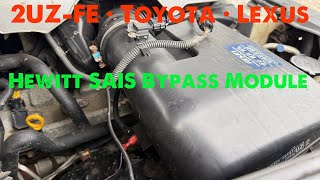
🎬 See how to install a bypass kit for this common flaw.Diagnostic Flowchart
Tap your situation to follow the diagnostic path that matches what you're seeing on this vehicle.
Symptoms You May Notice
- Check Engine Light is on
- Flashing 'VSC OFF' and 'TRAC OFF' lights accompanying the Check Engine Light.
- Vehicle enters 'limp mode' (reduced power and speed, often limited to ~35 mph).
- Loud 'vacuum cleaner' or 'jet engine' noise from the passenger side fender for 30-90 seconds on a cold start, which is the sound of the air pump running.
- Inability to pass an emissions test.
- Replacing only the Air Switching Valve without addressing the root cause (a failing air pump). If the pump is sending moisture or debris, the new valve will likely fail again prematurely.
- Cleaning the valve without a full rebuild. While some owners have had temporary success cleaning the valve, the internal components are often too corroded or damaged for this to be a long-term fix.
Most Likely Causes

- Failed Air Switching Valve (Bank 1) 🔴 High Probability The valves are highly susceptible to corrosion and seizure from moisture and, more critically, from disintegrated foam filter debris forced into them by the air pump. This contamination physically jams the valve's reed and plunger mechanism.
How to confirm: The valve is located under the intake manifold on the driver's side of the engine. It can be tested with a capable scan tool (like Toyota's Techstream) to see if it actuates. Visual inspection after removal often shows obvious signs of water damage, rust, or black, sticky debris from the pump filter.
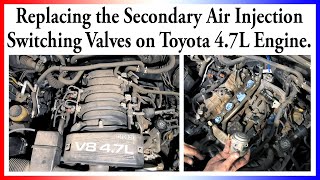
Typical fix: Replace the Bank 1 Air Switching Valve. 🎬 Watch: Step-by-step guide to replacing the air injection valves. It is highly recommended to also replace the air pump and inspect/replace the Bank 2 valve at the same time, as it has been exposed to the same contaminants.
Est. part cost: $200-$500 - Failing Air Injection Pump 🔴 High Probability The air pump's internal foam filter degrades and turns into a sticky, shredded mess. The pump then ingests this debris and forces it downstream, clogging the air switching valves. The pump's location in the fender well also makes it susceptible to ingesting water.
How to confirm: Listen for the pump running on a cold start. Inspect the air lines and the inlet of the switching valves for black, sticky particles. If this debris is present, the pump has failed and contaminated the system. A popular preventative measure is the 'Uni-Filter Mod' where the stock foam is replaced with a more durable filter before it fails.
Typical fix: Replace the air injection pump assembly. This is considered mandatory if debris is found in the system, otherwise the new valves will fail quickly. Many owners also replace the stock foam filter on the new pump as a preventative measure.
Est. part cost: $200-$600 - Damaged Pressure Sensor ⚪ Low Probability If the valve is stuck open, hot exhaust gases can flow backward and damage the delicate pressure sensor located within the valve assembly. Repeatedly clearing the code and driving in limp mode increases the risk of this damage.
How to confirm: This is difficult to test directly. It is usually diagnosed after replacing a mechanically stuck valve if the code persists. The sensor sends a signal to the ECM based on exhaust pulsation, and if it's damaged, it may send an incorrect signal.
Typical fix: The pressure sensor is integrated into the air switching valve assembly, so the entire valve must be replaced. Some bypass kits offer specific add-ons to address a faulty pressure sensor signal.
Est. part cost: $200-$500
Rare But Worth Checking
- Wiring or Connector Issue: A damaged wire or corroded connector for the valve or Air Injection Control Driver can prevent the valve from receiving the correct signal from the ECM. This is less common than mechanical failure from debris.
- Failed Air Injection Control Driver: This is the control module for the SAI system. While uncommon, its failure can cause various system codes, including P2440. TSB T-SB-0230-12 includes steps for diagnosing the driver.
Diagnosis Steps

- Scan the vehicle for all OBD-II codes. Note any other codes that accompany P2440, especially P2442 (Bank 2).
- On a cold start, listen for the air pump running for the first 30-90 seconds. It should be clearly audible from the passenger side fender area.
- If the pump runs, use a scan tool with bidirectional controls (like Toyota Techstream) to command the Bank 1 Air Switching Valve (ASV) open and closed. Listen for a click and check if the system pressure changes as reported by the scan tool.
- If the valve does not respond, inspect the wiring and connector going to the valve for damage or corrosion.
- Remove the air hose from the switching valve assembly (located under the intake manifold) and inspect for moisture or black, sticky, carbon-like debris. The presence of either strongly suggests the air pump's foam filter has disintegrated and contaminated the entire system.
- If contamination is found, the only complete repair is to replace the air pump and both air switching valves (Bank 1 and Bank 2), as the other valve is likely to fail soon.
- If no contamination is found and the valve is unresponsive, the valve itself has likely failed 🎬 Watch: How to fix and clean stuck air injection valves. internally due to moisture-induced corrosion or simple mechanical failure.
Parts You'll Likely Need

- Air Switching Valve (Bank 1)
(OEM #25710-50022)— This is the component identified by the code as being stuck open. It's the most direct cause of the P2440 code. Part number supersedes 25710-50020 and 25710-50021.
Trusted brands: Toyota (OEM), Dorman (911-604)
OEM price range: $200-$400
Aftermarket price range: $150-$250 - Air Injection Pump
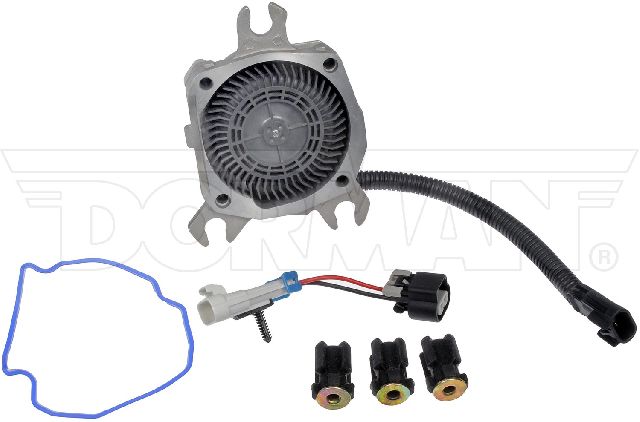
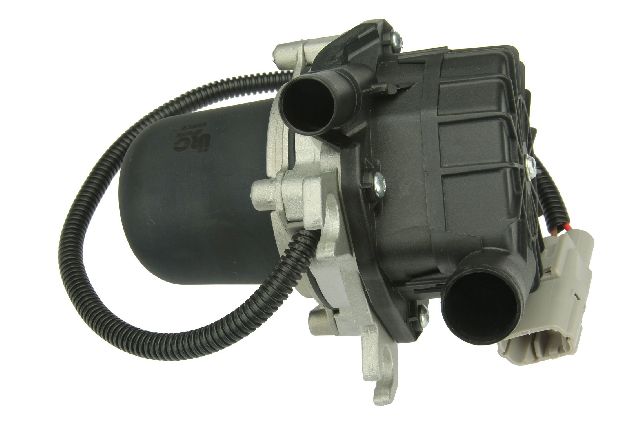
(OEM #17600-0F010)— The failure of this pump's internal filter is the primary reason moisture and debris enter the system, causing the valves to fail. It's almost always replaced as part of a complete repair.
Trusted brands: Toyota (OEM), Dorman (306-010), Standard Motor Products
OEM price range: $500-$700
Aftermarket price range: $200-$400 - Intake Manifold Gaskets
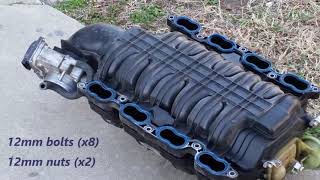
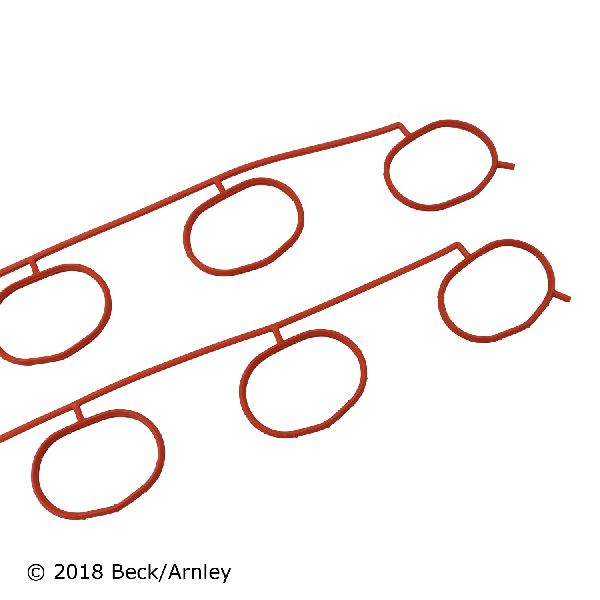
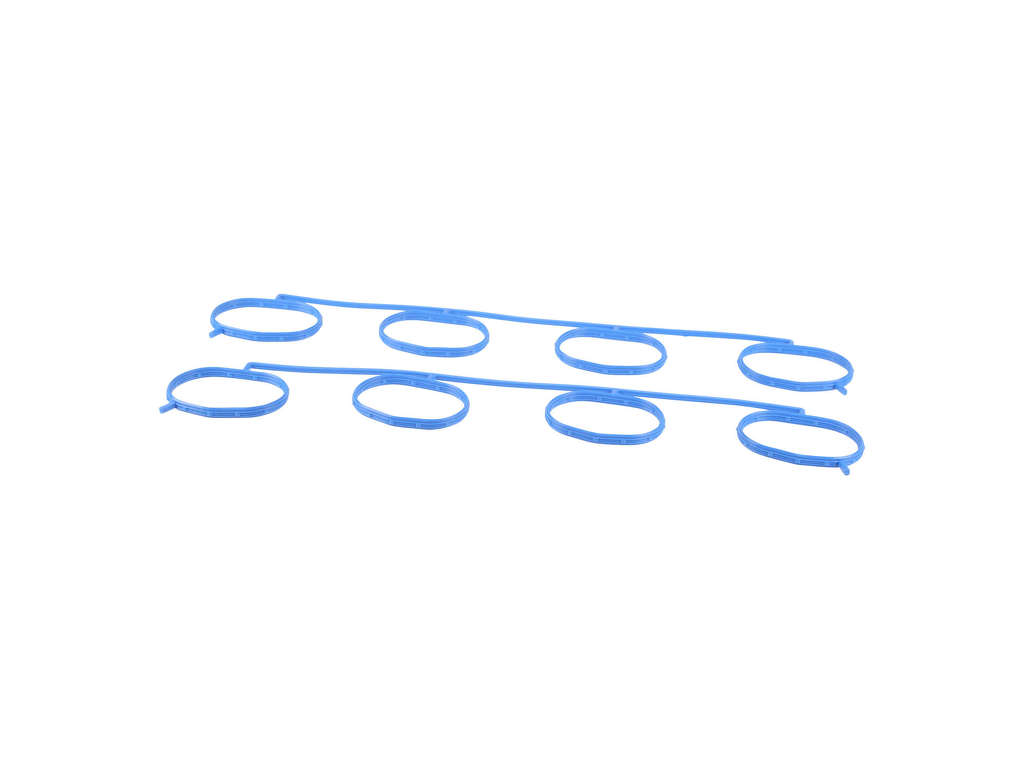
(OEM #17171-50030)— Accessing the air switching valves, which are located in the 'V' of the engine under the intake manifold, requires removing the manifold. The gaskets are single-use and must be replaced during reassembly.
Trusted brands: Toyota (OEM), Fel-Pro
OEM price range: $40-$60
Aftermarket price range: $20-$40 - SAI Bypass Kit
(OEM #N/A)— A popular alternative to the expensive OEM repair, this kit electronically bypasses the SAI system, preventing codes from being set. This is often seen as a permanent, cost-effective solution, especially for vehicles in areas without strict emissions testing.
Trusted brands: Hewitt Technologies, Slyfox
OEM price range: N/A
Aftermarket price range: $150-$400
Related Codes That Often Appear With This One
- P2441 — Secondary Air Injection System Switching Valve Stuck Closed Bank 1. This can occur if the valve is intermittently sticking or if the pressure sensor is faulty.
- P2442 — Secondary Air Injection System Switching Valve Stuck Open Bank 2. This indicates the passenger side valve has also failed, which is very common and often happens around the same time.
- P0418 — Secondary Air Injection System Relay 'A' Circuit. This points to an electrical issue with the pump or its control circuit, often seen when the pump fails or when there are wiring issues.
- P2445 — Secondary Air Injection System Pump Stuck Off Bank 1. This indicates the pump itself is not running, which is the source of the moisture/debris problem.
Technical Service Bulletins (TSBs) & Recalls
- T-SB-0230-12 Rev1 (October 17, 2013): Updated the original bulletin to include DTC P2445 and diagnosis of the Air Injection Control Driver. Also expanded applicability to include 2006-2007 Land Cruiser.
- T-SB-0230-12 (November 27, 2012): Original bulletin identifying P2440 and related codes on 4Runner, Sequoia, and Tundra models with the 2UZ-FE engine. It states the condition may be caused by debris from the air pump contaminating the system.
Platform-Specific Known Issues
- Toyota issued Technical Service Bulletin T-SB-0230-12, which acknowledges this issue on 2005-2009 4Runners with the 2UZ-FE engine. It identifies debris passing through the air injection pump assembly and contaminating various components in the system as the cause for P2440 and a host of related codes.
- Due to the high cost of OEM repair (often quoted at $2,000-$4,000), many owners opt for an aftermarket Secondary Air Injection System Bypass Kit. These kits, from brands like Hewitt-Tech, electronically trick the ECU into thinking the system is working correctly. This allows the owner to clear the check engine light and limp mode without replacing the expensive components, and is a popular, well-documented alternative in owner forums.
Mechanic-Grade Diagnostic Values
- Air Pressure (Gauge) Value on Techstream — expected: Increase from 0 to 1 psi. Failure: If the pressure does not increase from 0 to 1 psi while the pump is running during the forced operation test, it indicates a fault in the system requiring further inspection of the pump assembly.
Scan Tool Commands That Help
- Toyota Techstream: Powertrain – Engine and ECT – Utility – Secondary Air Injection Check – Manual Mode — This function allows a technician to manually command the air pump and switching valves (ASV 1 and ASV 2) ON and OFF to verify their mechanical operation and check for pressure changes, which is a critical step in diagnosing P2440.
Wiring & Ground Locations
- Air Injection Control Driver — On the 4.7L 2UZ-FE engine, the entire SAIS, including the control driver, is located under the intake manifold in the 'V' of the engine.. This driver module controls the operation of the pump and valves. A failure in this module can cause electrical-related SAI codes, including P2440, and TSB T-SB-0230-12 outlines diagnostic steps that may lead to its replacement if codes like P0418 or P2445 are present.
Real Owner Repair Stories
- Reddit user in r/Justrolledintotheshop (2007 Toyota 4Runner with 4.7L V8) — Secondary air injection system codes (P2440 implied).
❌ Tried (didn't work) Received a dealership quote of approximately $4,000 for a full system repair.
✅ What actually fixed it The owner purchased and installed an aftermarket bypass kit for around $200 in 2015/2016. They reported that the vehicle has had no issues with the system since the installation of the bypass kit.
OEM Part Supersession History
25710-50020, 25710-50021→25710-50022— Standard part revision and improvement by the manufacturer.89580-34010, 89580-34011, 89581-34040, 89581-34041, 89581-71010→89580-34012— Supersession for the Air Injection Control Driver as listed in TSB T-SB-0230-12 Rev1.
Model Year Variations Within This Range
- 2005-2009: The Secondary Air Injection (SAI) system was first introduced on the 4.7L 2UZ-FE V8 engine in the 2005 model year, which coincided with the addition of VVT-i to the engine for the 4Runner platform. Pre-2005 4.7L engines in other Toyota models did not have this system. The engine blocks for VVT-i engines have additional mounting points in the intake valley specifically for the SAI system components.
Helpful Videos

Used OEM Parts in Stock


New Aftermarket Parts Available


The information in this article is provided for general reference and educational purposes only. Vehicle specifications, procedures, and part compatibility can vary by production date, trim level, and region. Always consult your vehicle's factory service manual and verify part numbers before purchasing or performing repairs. Safety-critical components such as airbags, seat belts, and braking systems should be installed by a qualified professional.
- Toyota 4RUNNER:
- 🎬 Helpful Videos
- 🛍️ Shop This Part
- What's Unique About the 2005-2009 Toyota 4RUNNER
- Diagnostic Flowchart
- Symptoms You May Notice
- Most Likely Causes
- Rare But Worth Checking
- Diagnosis Steps
- Parts You'll Likely Need
- Related Codes That Often Appear With This One
- Technical Service Bulletins (TSBs) & Recalls
- Platform-Specific Known Issues
- Mechanic-Grade Diagnostic Values
- Scan Tool Commands That Help
- Wiring & Ground Locations
- Real Owner Repair Stories
- OEM Part Supersession History
- Model Year Variations Within This Range
- 🎟️ Get 5% Off