

P2440 on 2012-2014 Audi A7: Secondary Air Injection Valve Stuck Open Causes and Fixes
On a 2012-2014 Audi A7 with the 3.0T engine, code P2440 is almost always caused by a failed secondary air injection combination (combi) valve for Bank 1 or the vacuum solenoid that controls it. This is a known issue documented in Audi Technical Service Bulletin #A011519 2040403- and its revisions. The repair is straightforward and involves replacing the specific failed component.
- P2440 on a 2012-2014 A7 almost always points to a specific, known issue with the emissions system.
- The most likely cause is a failed Bank 1 (passenger side) combination valve, a repair that is accessible for DIY.
- If you also have a P2442 code for Bank 2, the problem is more likely the single vacuum solenoid that controls both valves.
- Do not ignore this code, as it can lead to the failure of the more expensive secondary air pump due to moisture damage.
- Always check for official TSBs from Audi, as they provide a clear and direct path to diagnosing this specific code.
What's Unique About the 2012-2014 Audi A7
The 3.0T supercharged engine used in the C7 generation Audi A7 has a well-documented history with this specific fault. Audi has issued multiple revisions of a Technical Service Bulletin (TSB) for this exact issue across many models that use this engine, including the A7. The TSB points directly to either a defective combi valve or a faulty vacuum solenoid, making diagnosis more straightforward than on other platforms where causes might be more varied. The diagnostic logic in the TSB (Scenario A vs. Scenario B) provides a clear path for technicians and DIYers to follow.
Diagnostic Flowchart
Tap your situation to follow the diagnostic path that matches what you're seeing on this vehicle.
Symptoms You May Notice
- Check Engine Light is on.
- Vehicle may fail an emissions test.
- A loud, vacuum-cleaner-like noise from the engine bay for the first 30-90 seconds after a cold start.
- In rare cases, the engine may hesitate or run rough during warm-up.
- Vehicle may enter a reduced power "limp mode" in some instances.
- Replacing the Secondary Air Pump when the actual fault is the combi valve. The pump is more expensive and often fails as a *result* of a stuck-open valve, not the cause of it.
- Replacing the oxygen sensors. The O2 sensors are correctly reporting the out-of-spec exhaust mixture caused by the excess air; they are not the root cause of the problem.
Most Likely Causes
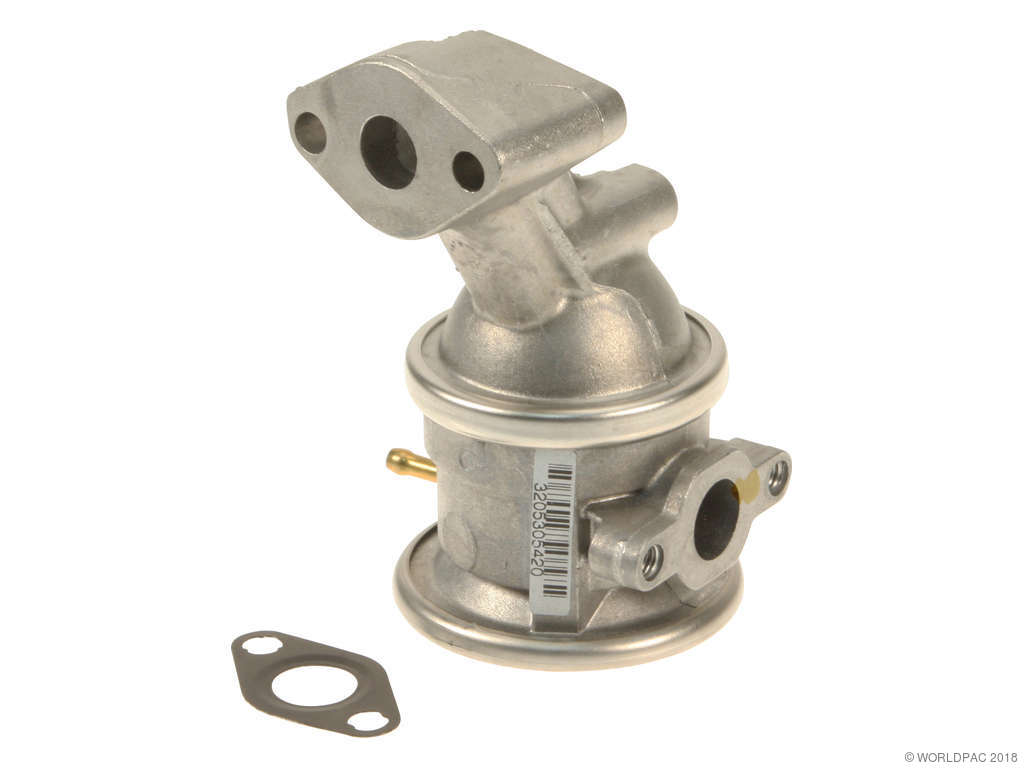
- Defective Secondary Air Injection Combination (Combi) Valve (Bank 1) 🔴 High Probability This is the primary cause identified by Audi in TSB #A011519 2040403- and its revisions (like 2040403/3 and 2040403/5). The valve's internal diaphragm can fail or the valve itself can get stuck with carbon deposits, causing it to remain open.
How to confirm: With the engine off and cool, apply vacuum to the valve's vacuum port using a hand-held vacuum pump. The valve should hold vacuum. If it doesn't, the diaphragm is torn and the valve needs replacement. This is the definitive test for Scenario A in the Audi TSB.
Typical fix: Replace the Bank 1 combination valve. Bank 1 is on the passenger side of the engine in North American vehicles.
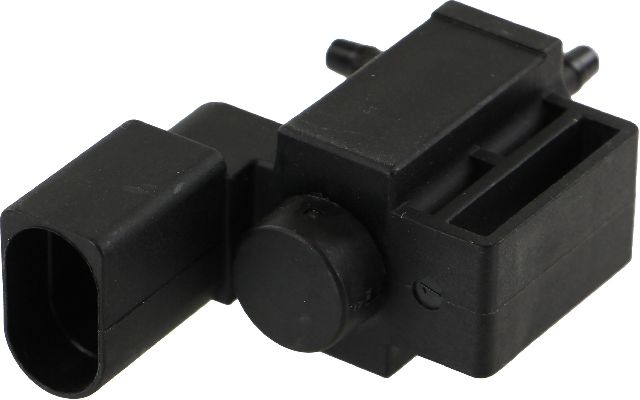
Est. part cost: $70-$180 - Defective Vacuum Solenoid Valve (N112) 🟡 Medium Probability This is the second scenario outlined in Audi's TSB. This single solenoid, also called a change-over valve, controls vacuum to both combi valves. If it fails internally, it can cause one or both valves to remain open.
How to confirm: The TSB notes that if both P2440 (Bank 1) and P2442 (Bank 2) are stored simultaneously, the solenoid is the likely culprit (Scenario B). It can also be tested by checking for 25-35 ohms of resistance across its terminals and verifying it clicks and passes vacuum when commanded on by a scan tool.
Typical fix: Replace the vacuum solenoid valve. It is typically located at the rear center of the engine.
Est. part cost: $30-$80 - Cracked or Disconnected Vacuum Lines ⚪ Low Probability The plastic and rubber vacuum lines in the engine bay become brittle over time with exposure to heat cycles and can crack or break. A user on AudiWorld found a broken vacuum line near the solenoid was the cause of their issue.
How to confirm: Visually inspect all vacuum lines running from the N112 solenoid to both combi valves for any cracks, breaks, or loose connections. A smoke test can also reveal hard-to-see leaks.
Typical fix: Replace the damaged section of vacuum hose.
Est. part cost: $10-$30
Rare But Worth Checking
- Clogged Secondary Air Ports in Cylinder Head: While this typically causes 'Insufficient Flow' codes (P0491/P0492), severe blockages can affect the system's pressure readings and potentially contribute to valve operation issues. Audi has a separate TSB and a special tool for cleaning these ports, which is a much more involved repair requiring removal of components at the front of the engine. 🎬 See this walkthrough for accessing components under the supercharger.
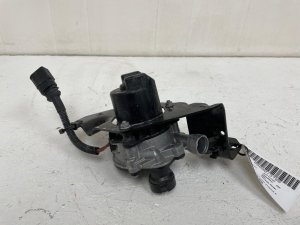
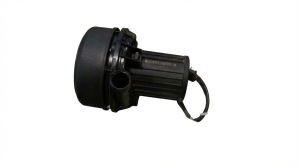
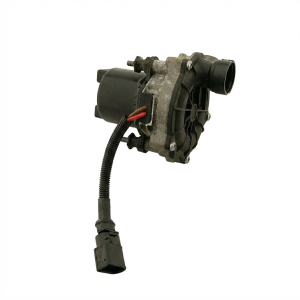
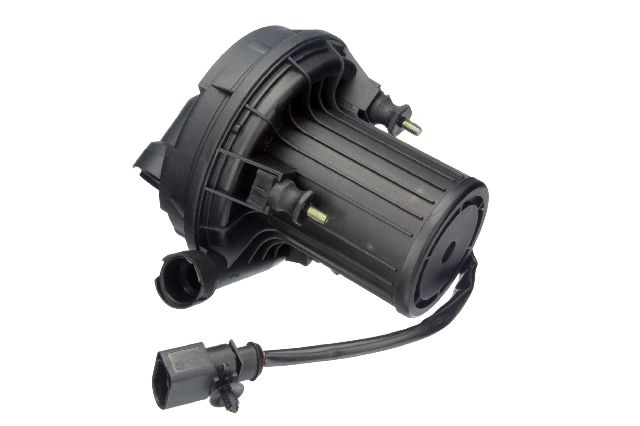
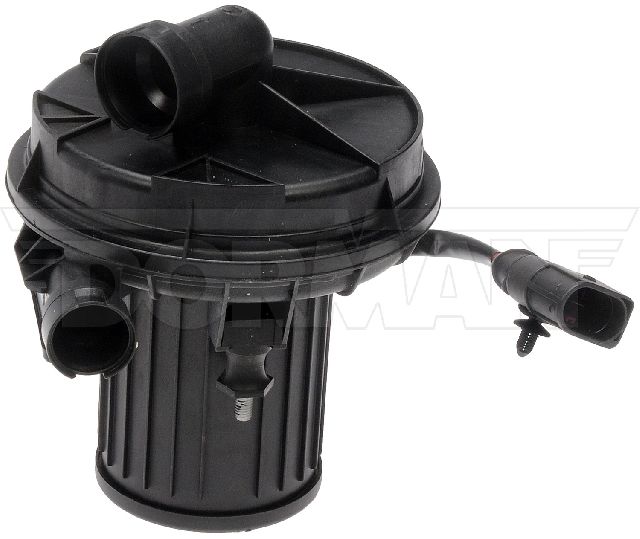
- Faulty Secondary Air Injection Pump: A failing pump usually causes 'Insufficient Flow' codes. However, it is often damaged as a *result* of a stuck-open combi valve allowing moisture and exhaust backflow into the pump assembly. If the pump is noisy or fails to run, it may need to be replaced along with the faulty valve. 🎬 Watch: Learn the symptoms and replacement costs for the air pump.
- Faulty SAI Pressure Sensor: On some VW/Audi platforms, a faulty pressure sensor (G609 on the 3.0T) can send incorrect readings to the ECM, falsely triggering a 'stuck open' code. This is less common than the valve or solenoid failure but is a possibility if other components test good.
Diagnosis Steps
- Read the fault codes using an OBD-II scanner (like VCDS for VW/Audi). Confirm P2440 is present. Check if P2442 is also present and if the MIL bit is active for one or both codes.
- If only P2440 is present (or its MIL bit is the only one active), suspect the Bank 1 combi valve (Scenario A).
- If P2440 and P2442 are present and were stored at the same time (both MIL bits active), the primary suspect is the vacuum solenoid valve N112 (Scenario B).
- Visually inspect all vacuum lines connected to the combi valves and the N112 control solenoid for any visible cracks, brittleness, or disconnections. A user on AudiWorld found a simple broken hose to be the culprit.
- Test the Bank 1 combi valve directly. It is located on the back of the passenger-side cylinder head. Disconnect the vacuum line and attach a hand-held vacuum pump. Apply vacuum; if the valve does not hold vacuum, its internal diaphragm is ruptured, and it must be replaced.
- If the valve holds vacuum, test the N112 vacuum solenoid. Check for power and ground at the solenoid's electrical connector. Use a scan tool to command the solenoid on and off, verifying that it clicks and allows vacuum to pass through when activated. Resistance should be between 25-35 ohms.
- If all components test correctly, the issue could be a wiring problem between the ECM and the solenoid, a faulty SAI pressure sensor providing bad data, or in very rare cases, a fault within the Engine Control Module (ECM) itself.
Parts You'll Likely Need
- Secondary Air Injection Combination Valve (Bank 1)
(OEM #06E131101J)— This is the most common failure part for code P2440, as identified in Audi's TSB. The internal diaphragm fails, causing it to remain open. This part number has been superseded by 06E131101K.
Trusted brands: Audi (OEM), Pierburg
OEM price range: $120-$180
Aftermarket price range: $70-$110 - Secondary Air Solenoid Valve (Change-Over Valve)
(OEM #06E906283E)— This solenoid controls vacuum to both combi valves and is the likely culprit if codes for both banks (P2440 and P2442) are present simultaneously. The TSB revision 2040403/5 lists an updated part number 037906283C.
Trusted brands: Audi (OEM), Pierburg, Bosch
OEM price range: $50-$80
Aftermarket price range: $30-$50
Related Codes That Often Appear With This One
- P2442 — Stands for 'Secondary Air Injection System Switching Valve Stuck Open Bank 2'. If both P2440 and P2442 appear at the same time, it strongly points to the common vacuum solenoid valve (N112) being the cause, as it controls both valves. This is explicitly stated as 'Scenario B' in the Audi TSB.
- P0491 / P0492 — These codes indicate 'Insufficient Flow' in the secondary air system. They can sometimes appear if there are underlying issues like clogged ports or a weak air pump, which can be related to the overall health of the SAI system.
Technical Service Bulletins (TSBs) & Recalls
- A011519 2040403- / 01 16 73 2040403/3 / 01 17 48 2040403/5: MIL on, DTC P2440 and/or P2442 stored. Details diagnostic scenarios pointing to either a defective combi valve or a defective vacuum solenoid and lists updated part numbers.
Platform-Specific Known Issues
- Audi TSB #01 16 73 2040403/3 (and newer revisions): Audi released Technical Service Bulletin #A011519 2040403- and its subsequent revisions like 2040403/3 and 2040403/5 which directly address DTCs P2440 and P2442 on the 3.0T engine. The bulletin explicitly states the cause is either a defective combi valve (Scenario A: one code present) or a defective vacuum solenoid (Scenario B: both codes present simultaneously). This makes diagnosis highly specific for this platform.
Mechanic-Grade Diagnostic Values
- SAI Pressure Sensor (G609) Signal Voltage — expected: ~2.9 VDC with engine off/SAI pump off. Voltage should rise to 3.3V - 3.5V when the pump runs.. Failure: Voltage is stuck, does not change when the pump activates, or is at 0V or 5V.
- Vacuum Solenoid Valve (N112) Resistance — expected: 25-35 Ohms. Failure: An infinite reading (open circuit) or zero ohms (short circuit).
Scan Tool Commands That Help
- VCDS (VAG-COM) / ODIS: 01-Engine -> Output Tests (03) — To individually command the Secondary Air Injection pump (V101) and the change-over solenoid valve (N112) to activate. This is used to confirm if the components are receiving the command from the ECM and if they are functional (e.g., you can hear the pump run and the valve click).
- VCDS (VAG-COM) / ODIS: 01-Engine -> Basic Settings (04) -> Group 077 — This initiates the SAI system's complete diagnostic test sequence. It may be required to run this before the ECM will allow certain output tests to function, and it can be used to verify the success of a repair.
Wiring & Ground Locations
- Main Engine Ground Strap — Typically runs from the engine block to the chassis frame rail, often on the driver's or passenger's side in the engine bay.. While not specific to P2440, a poor or corroded main engine ground can cause a wide range of erratic electrical issues and incorrect sensor readings. If primary components test good but issues persist, verifying all major ground connections is a critical step that is often overlooked.
Real Owner Repair Stories
- Ross-Tech Forums user (2013 Audi S4 (B8.5) with 3.0T engine, 67k miles) — Check Engine Light with code P2440 appeared immediately after the engine was removed and reinstalled for a major service (oil leak gaskets, timing chain, carbon cleaning).
❌ Tried (didn't work) Replaced the N112 vacuum solenoid valve. Tested the Bank 1 combi valve with a vacuum pump; it initially didn't click but started to after blowing out some gunk with compressed air. Ran VCDS basic settings for the SAI system, which passed and failed intermittently.
✅ What actually fixed it The user's post details the diagnostic journey but does not contain a final confirmed fix. The value is in highlighting that the code can appear after a major service and may not be resolved by simply replacing the common parts (N112 solenoid). The user also noted that their 2013 model appeared to lack the pressure sensor (G609) found on earlier models, complicating the diagnosis.
When the Usual Fixes Don't Work
- In at least one documented case on a Ross-Tech forum, an owner of a 3.0T engine experienced a persistent P2440 code immediately following a major engine-out service. Despite replacing the N112 solenoid and confirming the combi valve was not seized, the code returned. This indicates that while the TSB scenarios (bad valve or bad solenoid) are the most common causes, they are not exhaustive. Other factors, such as wiring harness issues, grounding problems introduced during a major repair, or a faulty pressure sensor, can also trigger this code.
OEM Part Supersession History
06E131101E, 06E131101J→06E131101K— Updated design to improve durability and prevent diaphragm failure.06E906283E→037906283C— Updated part per Audi TSB 2040403/5.
Heads up: The replacement part 037906283C is a widely used VAG solenoid and is often listed by parts suppliers as an 'EVAP Purge Valve' rather than a secondary air solenoid. This can cause confusion, but it is the correct updated part for this application.
Model Year Variations Within This Range
- 2013-2014 (vs. 2012): There is forum evidence suggesting that later models in this range may not have the G609 pressure sensor located at the T-junction of the SAI hoses as found on some earlier 3.0T engines. In these cases, the ECM likely infers the 'stuck open' condition by monitoring oxygen sensor reactions after the SAI pump cycle is complete, making diagnosis slightly different as there is no direct pressure value to monitor.
Helpful Videos
Used OEM Parts in Stock

New Aftermarket Parts Available



The information in this article is provided for general reference and educational purposes only. Vehicle specifications, procedures, and part compatibility can vary by production date, trim level, and region. Always consult your vehicle's factory service manual and verify part numbers before purchasing or performing repairs. Safety-critical components such as airbags, seat belts, and braking systems should be installed by a qualified professional.
- Audi A7:
- 🎬 Helpful Videos
- 🛍️ Shop This Part
- What's Unique About the 2012-2014 Audi A7
- Diagnostic Flowchart
- Symptoms You May Notice
- Most Likely Causes
- Rare But Worth Checking
- Diagnosis Steps
- Parts You'll Likely Need
- Related Codes That Often Appear With This One
- Technical Service Bulletins (TSBs) & Recalls
- Platform-Specific Known Issues
- Mechanic-Grade Diagnostic Values
- Scan Tool Commands That Help
- Wiring & Ground Locations
- Real Owner Repair Stories
- When the Usual Fixes Don't Work
- OEM Part Supersession History
- Model Year Variations Within This Range
- 🎟️ Get 5% Off