

OBD-II Code P2436: Secondary Air Injection System Air Flow/Pressure Sensor Circuit Range/Performance (Bank 2)
What P2436 means, why it triggers, and how to fix it for good
- Code P2436 indicates the Bank 2 secondary air injection pressure sensor is sending an out-of-range voltage signal (often below 0.5V or above 4.5V) to the engine computer.
- Inspect the one-way check valve first; a stuck-open valve allows hot exhaust to flow backward, destroying the $150+ pressure sensor and air pump.
- Toyota and Lexus V8 models (2007-2013) immediately enter a dangerous 'limp mode' when P2436 triggers, cutting engine power and limiting highway speeds.
- Never replace the sensor without testing the circuit; use a multimeter to verify the 5-volt reference signal before spending $200 on parts.
What Does P2436 Mean?
Your car's Powertrain Control Module (PCM) detects a problem with the air flow or pressure sensor in the Secondary Air Injection (AIR) system for engine bank 2. This system pumps fresh air into the exhaust during a cold start to burn off unburned fuel and reduce emissions. Code P2436 means the sensor's reading is illogical or outside the expected range during the PCM's self-test.
Technical definition: The SAE/OBD-II definition is "Secondary Air Injection System Air Flow/Pressure Sensor Circuit Range/Performance Bank 2". The PCM detects the voltage signal from the Bank 2 air flow/pressure sensor falls outside manufacturer limits or fails to correlate with barometric pressure during the self-test. On Toyota systems, this triggers if the pressure sensor indicates a value below 45.6 kPa (342 mmHg) or above 135 kPa (1013 mmHg).
Can I Drive With P2436?
yes_but_with_caution. You can drive with a P2436 code, but address it promptly. While the system primarily controls emissions, a related failure causes many vehicles to enter 'limp mode,' drastically reducing engine power and making highway speeds unsafe. If the check engine light flashes, it indicates a severe misfire that quickly destroys your catalytic converter—a repair costing $800 to $2,500. Ignoring the code guarantees a failed emissions test and leads to expensive secondary damage.
Common Causes
- Failed or stuck-open Secondary Air Injection Check Valve (Very Common) — A one-way check valve prevents hot, moist exhaust gases from flowing back into the AIR system. When this valve sticks open, exhaust soot and moisture destroy the pressure sensor and the air pump. This is the most frequent root cause of a P2436 code. 🎬 Watch: How to replace a secondary air injection check valve.
- Faulty Secondary Air Injection Pressure Sensor (Very Common) — The pressure sensor fails due to age, internal electronic faults, or contamination from a failed check valve. Once contaminated, it sends erratic or out-of-range voltage signals to the PCM.
- Blocked or restricted AIR system hoses or passages (Common) — Hoses crack, become brittle, or clog with carbon buildup. This prevents proper airflow, causing the sensor to read incorrect pressure levels during the system test.
- Wiring or connector issues (Common) — The wiring harness or electrical connector for the pressure sensor suffers from corrosion, burnt wires, bent pins, or rodent damage, interrupting the 5-volt reference or signal wire.
- Failed Secondary Air Injection Pump (Less Common) — The electric air pump wears out or shorts internally, often due to moisture intrusion from a bad check valve. A weak pump fails to generate enough pressure, contributing to illogical sensor readings.
- Water Intrusion or Icing (Less Common) — In cold climates, condensation builds up in the AIR pump and hoses. This water freezes, creating a solid blockage or damaging the pump blades, leading to out-of-range pressure readings.
- Improper Previous Repairs (Less Common) — If the sensor connector pigtail was recently replaced, the signal and reference wires are often accidentally swapped. 🎬 Watch: How to correctly re-repair a swapped sensor wiring harness. This immediately causes incorrect readings and triggers the code.
- Exhaust or Intake Leaks (Rare) — A significant vacuum leak or an exhaust leak near the AIR system alters sensor readings enough to cause the PCM to flag a performance issue.
- Failing Powertrain Control Module (PCM) or Software (Rare) — The vehicle's main computer experiences a software glitch or internal fault, misinterpreting the sensor signal. An outdated software version sometimes requires a dealer re-flash.
Symptoms
- Check Engine Light is on — The most common and often the only symptom. The light illuminates after the PCM detects the fault across two consecutive drive cycles.
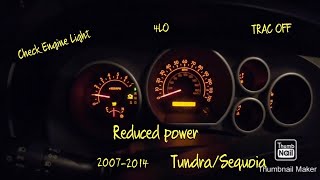
- Reduced Engine Power ('Limp Mode') — On Toyota and Lexus models, this code triggers a 'limp mode' that severely restricts acceleration and limits vehicle speed to protect the engine.
- Failed emissions test — The AIR system is strictly for emissions control. A malfunction guarantees the vehicle fails the OBD-II emissions portion of a state inspection.
- Noise from the AIR system — A loud noise, resembling a vacuum cleaner or jet engine, occurs for longer than usual on a cold start, pointing to a failing air pump or stuck relay.
- Hesitation or rough idle on cold starts (also visible on scanner) — The vehicle experiences a brief period of rough running, stumbling, or stalling immediately after a cold start because fuel mixture calculations are skewed.
- Abnormal exhaust odor — Because the system fails to burn off rich startup emissions, a strong smell of unburned fuel emits from the exhaust during a cold start.
Diagnostic Flowchart
Tap your situation to follow the diagnostic path that matches what you're seeing on this code.
Common Fixes & Costs
- Replace Secondary Air Injection Check Valve — Parts: $150-$400, Labor: $200-$400, ~1.5 hr book time (Intermediate)
- Replace Secondary Air Injection Pressure Sensor — Parts: $75-$250, Labor: $100-$200, ~0.8 hr book time (DIY)
- Replace Secondary Air Injection Pump — Parts: $200-$800, Labor: $150-$400, ~2 hr book time (Intermediate)
- Repair Wiring or Replace Connector — Parts: $10-$50, Labor: $150-$400, ~2.5 hr book time (Intermediate)
- Clean Carbon-Blocked Cylinder Head Passages — Parts: $20-$50, Labor: $400-$1200, ~6.5 hr book time (Advanced)
- Reprogram or Replace PCM — Parts: $0-$1200, Labor: $150-$250, ~1.5 hr book time (Pro Only)
Used vs. New Parts: Buying Guide
When a used part is worth it: For expensive components like the air injection pump on a high-mileage vehicle out of warranty, a used part from a reputable salvage yard is a cost-effective option. It makes no sense for sensors or check valves, where new part costs are low and failure rates are high.
Donor-vehicle mileage cap: roughly under 100000 miles for the part to have meaningful remaining life.
Donor quality checklist:
- Verify the part number matches exactly.
- Source parts from vehicles in dry climates to minimize corrosion and moisture damage.
- Demand a short-term warranty (30-90 days) to protect against receiving a dead part.
Decision logic:
- If Part is a sensor or check valve → Buy new. The cost savings of a used part are minimal, and the failure rate is high.
- If Part is the air pump and the vehicle is >120K miles → A used part is a reasonable gamble on a tight budget, but a new aftermarket part provides a better warranty and longer life expectancy.
- If Vehicle is under warranty or a related TSB/warranty extension exists → Use new OEM parts at a dealership to ensure coverage.
Warranty tradeoff: Used parts typically come with a 30-90 day warranty. New aftermarket parts carry a 1-year to limited lifetime warranty. New OEM parts have a 1-year/12,000-mile warranty.
Worst-case if a used part fails: $200-$500 if a used pump or valve fails shortly after installation, requiring you to pay for labor twice.
What Happens If You Wait — Timeline
- 0-1 month: Code P2436 sets. The Check Engine Light illuminates. Most vehicles show no drivability symptoms. Sensitive vehicles (Toyota/Lexus) enter 'limp mode' immediately. (MPG impact: 0%% · Added cost: $0)
- 1-6 months: If a failed check valve is the cause, hot exhaust and moisture flow backward into the AIR system. The pressure sensor sustains damage from soot and moisture. The air pump begins corroding internally. (MPG impact: 0-5%% · Added cost: $200-$1000 (Cost to replace the air pump and/or sensor damaged by the check valve failure).)
- 6-12 months: The air pump motor, weakened by corrosion, fails completely. The catalytic converter no longer heats up quickly on cold starts, leading to accelerated aging and carbon fouling of the catalyst substrate. (MPG impact: 5-10%% · Added cost: $400-$1200 (Cost of a new air pump and valves, plus fuel waste).)
- 12+ months: The catalytic converter's efficiency drops below the legal threshold, triggering catalyst inefficiency codes (e.g., P0420, P0430). The vehicle fails emissions testing, requiring converter replacement. (MPG impact: 10-15%% · Added cost: $1500-$3000 (Cost of catalytic converter replacement on top of AIR system repairs).)
Cost of Not Fixing It
- Immediate: Guaranteed failure of an OBD-II emissions test. On Toyota and Lexus vehicles, the car enters 'limp mode,' severely limiting speed and power. (Added cost: $0)
- 1-6 months: If the root cause is a failed check valve, hot exhaust gases and moisture flow backward, destroying the air pump and pressure sensors. This turns a small repair into a multi-part replacement. (Added cost: $400-$1200)
- 6+ months: A non-functioning AIR system means the catalytic converter fails to heat up efficiently on cold starts. This leads to premature catalyst aging and eventual failure. (Added cost: $1200-$2800)
Diagnosis Steps
- Read Codes and Review Freeze Frame Data
Use an OBD-II scanner to confirm P2436 is present and check for related codes (e.g., P0411, P2435, P2437, P2431). Review the freeze frame data to understand the engine conditions (speed, temp) when the fault triggered.
Tools: OBD-II Scanner (Beginner) - Visually Inspect the System
Examine the Bank 2 secondary air injection system. Check the pressure sensor, air pump, check valves, and hoses for damage, cracks, loose connections, or signs of heat damage. Inspect the air pump inlet for debris.
Tools: Flashlight (Beginner) - Check Sensor Wiring and Connector
Unplug the connector at the Bank 2 pressure sensor. Inspect for corroded, bent, or pushed-out pins. Check the wiring for breaks, chafing, or melting. Verify wire colors are in the correct positions per the service manual to rule out a botched previous repair.
Tools: None (Visual Inspection) (Beginner) - Test Sensor Circuit Voltage
With the key on, engine off (KOEO), use a multimeter to test the sensor connector. Verify the 5-volt reference wire and ground wire are active. Backprobe the signal wire to check the sensor's output voltage; it should read a specific baseline voltage (e.g., ~1.0V) with the pump off.
Tools: Digital Multimeter (Intermediate) - Command the AIR Pump and Watch Live Data
Use a bi-directional scan tool to command the AIR pump ON. Listen for the pump. While running, watch the live data from the Bank 2 pressure sensor. The voltage or pressure reading must change immediately. If the pump runs but the sensor value remains static, the sensor is bad or the passage is blocked.
Tools: Bi-directional Scan Tool (Intermediate) - Test the Check Valve Function
Locate the one-way check valve for Bank 2. Disconnect the hose from the air pump side. With the engine running, ensure air only flows towards the exhaust manifold and not backward. A failed check valve allowing exhaust backflow is the primary cause of sensor failure.
Tools: Basic Hand Tools (Intermediate) - Check for System Blockages
If the pump and sensor function, disconnect the hoses and check for carbon buildup or restrictions. On GM and BMW models, air passages inside the cylinder head completely clog with carbon, requiring extensive cleaning.
Tools: Basic Hand Tools, Borescope (optional), Cleaning Tools (brushes, picks) (Advanced) - Verify Specific Voltage Thresholds
Compare sensor voltage to manufacturer specs. For example, Toyota systems set a fault if the sensor voltage is below 0.5V or above 4.5V while running. A reading of exactly 0V or 5V indicates a hard electrical short or open circuit.
Tools: Digital Multimeter, Manufacturer Service Manual (Advanced) - Scope the Sensor Signal
For intermittent issues, connect an oscilloscope to the sensor's signal wire and ground. Start the car cold. You should see a clean, stable voltage line that rises to a new stable level when the pump activates. A noisy signal confirms a faulty sensor or wiring issue.
Tools: Oscilloscope (Pro Only)
When This Code Triggers (Freeze-Frame Conditions)
- Engine State: Post-cold start (The AIR system test runs for 30-120 seconds after a cold start to heat the catalytic converter quickly. The code sets during this phase.)
- Engine Coolant Temp: Below 122°F (50°C) (The monitor runs when the engine is cold. The fault logs when the pressure reading is implausible for the cold-start, pump-on condition.)
- RPM: 700-1200 RPM (The test typically runs at idle speed immediately after starting the engine.)
- Vehicle Speed: 0 mph (The initial AIR system self-check measuring pressure occurs when the vehicle is stationary.)
Related Codes
- P2431 — The equivalent 'Range/Performance' code for Bank 1. If you have both P2431 and P2436, the fault is a component common to both banks, such as the AIR pump, its relay, or a system power issue.
- P2435 — The generic circuit code for the Bank 2 sensor. P2436 indicates an illogical signal, while P2435 indicates a general electrical fault like an open or short. They often appear together.
- P2437 — Indicates the signal from the Bank 2 pressure sensor is too low. This points toward an open in the signal wire, a poor ground connection, or a sensor failed with a low voltage reading.
- P2438 — Indicates the signal voltage from the Bank 2 pressure sensor is too high. This leads a technician to check for a short to voltage in the wiring harness or an internal sensor failure.
- P0411 — Means 'Incorrect Flow Detected' in the AIR system. If P2436 and P0411 appear together, it strongly suggests a physical air movement problem, like a weak pump or blocked passage.
Climate & Environmental Factors
- Cold Climates: Cold weather significantly increases the likelihood of P2436. Condensation in the AIR system freezes, creating ice blockages that damage the pump motor or prevent airflow, leading to out-of-range pressure readings. Some ECUs disable the system below 14°F (-10°C) to prevent a frozen pump from draining the battery.
- High Humidity / Short Trips: Humid environments and frequent short trips contribute to moisture buildup in the exhaust and AIR system. If the vehicle doesn't run long enough to evaporate the condensation, water is drawn back into the pump and sensors by a faulty check valve, causing corrosion.
- Altitude: Operating at high altitude affects the baseline barometric pressure readings the PCM uses as a reference for the AIR pressure sensor. A marginal sensor falls out of its expected performance range more easily at altitude.
How to Talk to a Mechanic About This Code
Say this: "I have a P2436 code and I'd like to schedule a diagnostic. I authorize one hour of diagnostic time to start. Please test the secondary air injection system to find the root cause, whether it's the sensor, wiring, the pump, or a check valve. Do not replace any parts without my explicit authorization after you find the cause."
This signals you are an informed customer. It sets clear boundaries, authorizes a specific amount of diagnostic time to prevent a surprise bill, and requires the shop to diagnose rather than just swap parts. It prevents them from replacing the sensor when the actual cause is a cheaper valve or a more expensive pump.
Avoid saying:
- 'My check engine light is on, can you look at it?' (This is too vague and invites a costly fishing expedition).
- 'Just fix whatever is wrong.' (This gives the shop a blank check).
- 'My friend said it's probably the sensor.' (This leads them to replace the sensor without proper diagnosis, wasting your money).
Questions to ask before authorizing the repair:
- What was the specific failure you found during the diagnosis?
- Can you show me the failed part or a photo of the issue?
- If the check valve failed, do you recommend replacing the pump due to potential moisture damage?
- Is there a warranty on the parts and labor for this specific repair?
- Can you provide a written estimate with a full breakdown of parts and labor costs?
Where to Take It: Dealer vs Independent vs Chain
- Dealer:
Best for: Vehicles under warranty or covered by a specific warranty extension (like Toyota's CSP ZHA)., Complex, manufacturer-specific electrical or software issues, common in German brands., When a Technical Service Bulletin (TSB) or recall exists for the problem.
Downsides: Highest labor rates and parts costs., Quicker to recommend replacing an entire assembly rather than a smaller failed component. (Typical cost: +50% vs. baseline) - Independent Shop:
Excellent fit for most cases. A good independent shop easily diagnoses and repairs the mechanical (pump, valves, hoses) and common electrical (sensor, wiring) faults that cause P2436. They are the best value, especially if the issue is a well-known problem on your model.
Best for: Out-of-warranty vehicles where cost is a primary concern., Building a long-term relationship with a mechanic who knows your vehicle's history., Getting a second opinion on a dealer's expensive quote.
Downsides: Quality and expertise vary widely; vetting is crucial (look for ASE certifications and good reviews)., Lacks the very latest manufacturer-specific diagnostic tools or software for brand-new models. (Typical cost: +0% vs. baseline) - Chain Shop:
AVOID for diagnosis. While they replace a sensor if you tell them to, they are not the right choice to accurately diagnose the root cause of a P2436 code. There is a high risk of misdiagnosis and being sold parts you don't need.
Best for: Simple, routine maintenance like oil changes or tire rotations.
Downsides: Technician skill varies dramatically and turnover is high., Business model encourages upselling unnecessary services to meet quotas., Lacks the in-depth diagnostic experience for a complex emissions system code like P2436. (Typical cost: -10% vs. baseline)
When to Walk Away From the Repair
If the estimated repair cost exceeds 40-50% of the car's private-party value, sell the car as-is instead of repairing it.
- Car worth $4000, fix is $2200: Walk away. The repair is over 50% of the car's value. It's not economically sound.
- Car worth $12000, fix is $1800: Fix it. The repair cost is only 15% of the car's value and is well below the threshold.
- Car worth $3000, fix is $1200: Borderline. At 40% of the car's value, consider the car's overall condition. If it needs other repairs soon, walk away.
What Scan Tool You Need for This Code
Minimum: A scanner that reads live data for the AIR pressure sensor. A basic code reader is not enough.
A $20 code reader only tells you the P2436 code exists. It cannot show live voltage or pressure readings from the sensor, which is essential to know if the sensor responds at all. Without live data, you are blind to the system's actual performance.
Budget: BlueDriver Pro or Foxwell NT301 (~$70-100) — These scanners connect to your smartphone (BlueDriver) or act as a handheld unit (Foxwell) to show live data streams. You watch the pressure sensor's voltage in real-time to see if it changes when the engine starts, which is the first critical diagnostic step.
Mid-range: XTOOL A30M or OBDLink MX+ (~$150-250) — These scanners offer bi-directional control. You use the scanner to command the secondary air pump to turn ON and OFF manually. This tests the pump and sensor's reaction without waiting for a cold start, dramatically speeding up diagnosis.
Professional: Autel MaxiCOM MK808S (~$450-600) — Provides full bi-directional control, access to all vehicle modules, and OEM-level diagnostic functions. It runs specific system tests, graphs data professionally, and diagnoses complex or intermittent issues that cheaper scanners miss.
Rent vs buy: For a one-time diagnosis, AutoZone offers a 'Loan-A-Tool' program to borrow a basic OBD-II scanner. You pay a deposit equal to the tool's cost, fully refunded when returned within 90 days. However, to properly diagnose P2436, you need live data or bi-directional control, which loaner tools rarely have. Buying a budget pick for around $100 is a smart investment.
How to Clear the Code After You Fix It
- Use an OBD-II scan tool to clear the diagnostic trouble codes.
- Perform the specific drive cycle required for the Secondary Air Injection monitor to run.
- Verify the readiness monitor shows as 'Complete' or 'Ready'.
Drive cycle (~20 minutes): The AIR monitor primarily runs after a cold start. Let the vehicle sit for at least 8 hours. Start the engine and let it idle in Drive (or Neutral for manual) for 2-5 minutes. Drive at a steady speed between 45-60 mph for 5-10 minutes. The monitor completes during this process. Some vehicles require multiple cold starts to pass.
Readiness monitors affected: Secondary Air (AIR) System, Oxygen (O2) Sensor, Catalyst (CAT)
Before emissions retest: drive at least 50 miles to fully set monitors.
Watch out for:
- Clearing the code with a scanner does not complete the repair; the underlying fault must be fixed, or the code returns immediately.
- Disconnecting the battery clears the code but resets all emissions readiness monitors, requiring a full drive cycle before passing an emissions test.
- Failing to allow the vehicle to cool down sufficiently (an 8+ hour 'cold soak') prevents the AIR monitor from running.
Will This Fail Emissions / State Inspection?
Yes — this code typically fails an OBD-II emissions inspection.
- California: A P2436 code is an automatic failure for a smog check. All readiness monitors must be 'Ready' or 'Complete' for the test to proceed. After repair, a full drive cycle is required.
- New York: The NYS vehicle inspection includes an OBD-II scan. An active P2436 code causes an immediate failure.
- Texas: In the 17 counties requiring emissions testing, an active check engine light with code P2436 results in a failed inspection.
Most Commonly Affected Vehicles
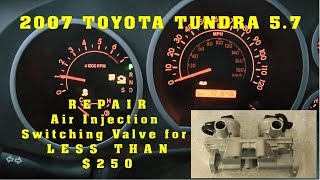
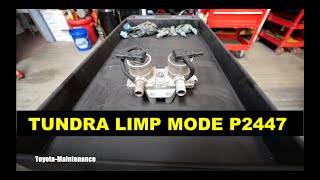
- Toyota Tundra (2007-2013) — Extremely common on 4.7L and 5.7L V8s. Moisture from failed check valves destroys the pumps and sensors, triggering limp mode. Toyota issued warranty extension CSP ZHA for these parts.
- Toyota Sequoia (2008-2012) — Uses the same failure-prone 5.7L V8 secondary air injection system as the Tundra, leading to identical issues with pumps, valves, and sensors. Covered under warranty extension CSP ZHA.
- Lexus GX470 (2005-2009) — Shares a similar system with the Tundra/4Runner. Plastic air pump blades disintegrate, sending debris downstream that jams the switching valves, leading to pressure sensor codes.
- Chevrolet Equinox, Impala, Traverse (2012-2017) — Covered by TSB 17-NA-339. The cause is carbon buildup completely restricting the air passages in the cylinder head, or ice buildup in the system in cold climates.
- Subaru Forester, Impreza, Legacy (2007-2012) — On 2.5L non-turbo models, plastic air switching valves stick open or closed, directly causing pressure codes. A recall (WTM-73) was issued for the pump relay on some turbo models.
- BMW 3-Series (E90/E92), 5-Series (E60) (2006-2011) — Models with N51/N52 engines frequently experience clogged secondary air ports in the cylinder head, a labor-intensive repair. Failure of the electric air pump itself is also common.
- Volkswagen/Audi A4, Q7, Jetta (2009-2016) — These models experience air pump failure that sounds like a loud bearing noise on startup. A TSB recommends an updated pump and hoses to resolve insufficient flow codes.
- Mercedes-Benz C-Class, E-Class, ML-Class (2006-2012) — These vehicles suffer from failed air pumps and clogged air passages, leading to secondary air system codes including P2436. The Bosch pump 0580000025 is a common replacement.
Manufacturer-Specific Notes
- Toyota/Lexus: On V8 models, the system is notorious for moisture-related failures that trigger limp mode. Toyota issued Warranty Enhancement Program ZHA for certain models, extending coverage for pumps and valves to 10 years or 150,000 miles. Aftermarket bypass kits are a popular (though illegal) solution that tricks the PCM.
- General Motors (Chevrolet/GMC): On vehicles like the Chevrolet Equinox, this code is frequently caused by carbon-clogged passages in the cylinder head, requiring a specific, labor-intensive cleaning procedure outlined in TSB 17-NA-339. In cold climates, ice forms in the pump and hoses.
- Subaru: The plastic air switching valves are a major point of failure. They stick open or closed. Replacing just the valve for the corresponding bank often fixes the issue. A safety recall (WTM-73) was issued for the secondary air pump relay on many turbocharged models.
- BMW: Carbon-clogged ports in the cylinder head are a very common cause for secondary air codes on N51/N52 engines. Technicians use a borescope to inspect the passages before attempting the difficult cleaning process. Lazy O2 sensors are sometimes misinterpreted by the DME as an airflow problem.
Real Owner Stories
2010 Toyota Tundra V8 at 115K miles
Check engine light came on, and the truck immediately went into 'limp mode,' with no power to accelerate.
What they tried:
- Owner read codes P2436 and P0411.
- A local shop quoted over $2,500 to replace both air pumps and valves.
- Owner discovered Toyota's Warranty Enhancement Program (CSP ZHA) online.
Outcome: The Toyota dealership confirmed the failure was covered. They replaced the air injection pumps and switching valves under the 10-year/150,000-mile extended warranty at no cost. The repair solved the limp mode and cleared the codes.
Lesson: For affected Toyota/Lexus models, always check for active warranty extensions or TSBs before paying for this expensive repair. A call to the dealer with your VIN saves thousands of dollars.
2013 Chevrolet Traverse at 105K miles
Check engine light on with codes P2435 and P2436. The vehicle ran fine. A previous shop replaced the Bank 2 valve/sensor assembly and connector pigtail, but the codes returned immediately.
What they tried:
- A second mechanic inspected the previous repair and found the new connector wired incorrectly; the 5V reference and signal wires were swapped.
- The mechanic corrected the wiring by swapping the two pins in the connector.
Outcome: After correcting the swapped wires, the live data for the Bank 2 pressure sensor immediately matched the Bank 1 sensor reading. The codes cleared and did not return. The repair cost 3 hours of diagnostic labor, with no new parts needed.
Lesson: If a code appears immediately after a part and its connector are replaced, suspect an improper repair. Swapping wires on a pigtail is a common mistake easily identified by comparing wire colors to a diagram.
2008 Subaru Forester 2.5L at 140K miles
P2436 code appeared, but no other symptoms were present. The owner wanted to perform a DIY repair.
What they tried:
- Based on forum research indicating air switching valves are a common failure point on Subarus, the owner decided to replace the Bank 2 valve.
- The owner purchased an aftermarket valve and replaced it themselves. Access was tight but manageable with basic tools.
Outcome: Replacing the Bank 2 air switching valve, which contains the integrated pressure sensor, resolved the P2436 code. The code cleared and did not return.
Lesson: On certain makes like Subaru, the air switching valve is a notoriously high-failure item. When a code points to a problem in that system, starting with the most common failure part is an effective DIY strategy.
How to Prevent This Code From Triggering
- Inspect and test the AIR system check valves during major services (e.g., timing belt, water pump). (Every 60,000-90,000 miles) — The one-way check valve is the primary root cause of cascading failures. It prevents hot, moist exhaust from flowing backward. When it fails, corrosive condensate destroys the expensive air pump and sensors.
- Clean the air pump's inlet filter/screen. (Every 30,000 miles or during engine air filter replacement) — The air pump pulls in fresh air. Keeping this path free of debris ensures the pump doesn't overwork, extending its life and preventing unfiltered particles from entering the system.
- Apply dielectric grease to the pressure sensor and pump connectors. (Anytime they are disconnected for service.) — This prevents moisture intrusion and corrosion on the electrical pins, a common cause of intermittent or out-of-range voltage signals that trigger the P2436 code.
- Use a quality fuel system cleaner periodically. (Every 5,000-10,000 miles) — Fuel additives ensure complete combustion, reducing unburned fuel and carbon soot in the exhaust. This lessens the load on the catalytic converter and reduces carbon buildup in the cylinder head's secondary air passages.
Frequently Asked Questions
I replaced the sensor but the P2436 code is still there. What did I miss?
First, verify you didn't swap wires on a replacement connector pigtail. More often, the new sensor is working correctly and detecting a real pressure problem. Test for a failing check valve, a weak air pump, or a downstream blockage.
What is 'Bank 2'?
On V-shaped engines, the cylinders are split into two groups. Bank 1 is the side containing cylinder #1. Bank 2 is the opposite side.
Can a bad oxygen sensor cause a P2436 code?
Not directly, but the systems are related. The PCM monitors downstream oxygen sensors to confirm the AIR system is injecting fresh air. A lazy O2 sensor contributes to flow codes like P0411, but rarely triggers a P2436 pressure sensor fault.
What is an AIR system bypass kit and is it a good idea?
Bypass kits simulate correct signals to trick the PCM into thinking the AIR system works perfectly. While this turns off the check engine light and exits limp mode, it is illegal for emissions-controlled vehicles. You will fail visual smog inspections in strict states.
Will a bad P2436 sensor affect my gas mileage?
No, it does not impact fuel economy. The secondary air system only operates for 30 to 120 seconds during a cold start. It does not affect engine performance or fuel mixture once the car warms up.
Is it safe to drive with the P2436 code?
You can drive, but proceed with caution. Many Toyota and Lexus vehicles enter a 'limp mode' with severely reduced power, making highway driving dangerous. A flashing check engine light means immediate catalytic converter damage is occurring—stop driving immediately.
How can I prevent the P2436 code from coming back?
Ensure the one-way check valves function correctly. These valves stop moisture and exhaust from flowing backward and destroying the pump and sensors. Always inspect or replace the check valves when installing a new air pump or pressure sensor.
What does a P2436 repair cost?
Costs range from $150 for a simple wiring fix to over $2,500 for a full Toyota air injection pump and valve replacement at a dealership. Always diagnose the root cause to avoid paying for unnecessary parts. Check for manufacturer warranty extensions, like Toyota's CSP ZHA, before paying out of pocket.
Key Takeaways
- Code P2436 indicates the Bank 2 secondary air injection pressure sensor is sending an out-of-range voltage signal (often below 0.5V or above 4.5V) to the engine computer.
- Inspect the one-way check valve first; a stuck-open valve allows hot exhaust to flow backward, destroying the $150+ pressure sensor and air pump.
- Toyota and Lexus V8 models (2007-2013) immediately enter a dangerous 'limp mode' when P2436 triggers, cutting engine power and limiting highway speeds.
- Never replace the sensor without testing the circuit; use a multimeter to verify the 5-volt reference signal before spending $200 on parts.
Helpful Videos

The information in this article is provided for general reference and educational purposes only. Vehicle specifications, procedures, and part compatibility can vary by production date, trim level, and region. Always consult your vehicle's factory service manual and verify part numbers before purchasing or performing repairs. Safety-critical components such as airbags, seat belts, and braking systems should be installed by a qualified professional.
- 🎬 Helpful Videos
- What Does P2436 Mean?
- Can I Drive With P2436?
- Common Causes
- Symptoms
- Diagnostic Flowchart
- Common Fixes & Costs
- Used vs. New Parts: Buying Guide
- What Happens If You Wait — Timeline
- Cost of Not Fixing It
- Diagnosis Steps
- When This Code Triggers (Freeze-Frame Conditions)
- Related Codes
- Climate & Environmental Factors
- How to Talk to a Mechanic About This Code
- Where to Take It: Dealer vs Independent vs Chain
- When to Walk Away From the Repair
- What Scan Tool You Need for This Code
- How to Clear the Code After You Fix It
- Will This Fail Emissions / State Inspection?
- Most Commonly Affected Vehicles
- Manufacturer-Specific Notes
- Real Owner Stories
- 2010 Toyota Tundra V8 at 115K miles
- 2013 Chevrolet Traverse at 105K miles
- 2008 Subaru Forester 2.5L at 140K miles
- How to Prevent This Code From Triggering
- Frequently Asked Questions
- I replaced the sensor but the P2436 code is still there. What did I miss?
- What is 'Bank 2'?
- Can a bad oxygen sensor cause a P2436 code?
- What is an AIR system bypass kit and is it a good idea?
- Will a bad P2436 sensor affect my gas mileage?
- Is it safe to drive with the P2436 code?
- How can I prevent the P2436 code from coming back?
- What does a P2436 repair cost?
- Key Takeaways
- 🎟️ Get 5% Off