

OBD-II Code P2423: Hydrocarbon Adsorption Catalyst Inefficiency
What P2423 means, why it triggers, and how to fix it
- Code P2423 indicates a failure in the Bank 1 Hydrocarbon Adsorption Catalyst, a specialized component required to trap emissions during the first 5 minutes of a cold start.
- Never replace a $1,500+ catalytic converter without first using a scan tool to verify that the downstream O2 sensor voltage is rapidly fluctuating between 0.1V and 0.9V.
- Always fix accompanying misfire (P0300-P0312) or fuel trim (P0171-P0175) codes before addressing P2423, as unburned fuel will destroy a brand-new catalytic converter within weeks.
- Driving with an active P2423 code guarantees a failed state emissions test and risks severe engine damage from exhaust backpressure, potentially adding $3,000+ in engine repairs.
What Does P2423 Mean?

P2423 means the Powertrain Control Module (PCM) detects the Hydrocarbon Adsorption Catalyst (HCAC) on engine bank 1 is failing its efficiency test. This specialized catalyst traps harmful hydrocarbon (HC) emissions during cold starts before the main converter reaches operating temperature. The PCM uses upstream and downstream oxygen sensors to monitor this oxygen storage capacity.
Technical definition: The SAE/ISO definition for P2423 is "HC Adsorption Catalyst Efficiency Below Threshold (Bank 1)". The PCM has determined the bank 1 hydrocarbon adsorption catalyst efficiency is below the minimum allowable level, a critical failure for PZEV (Partial Zero Emission Vehicle) emissions standards.
Can I Drive With P2423?
Yes, But With Caution. You can drive short distances, but doing so risks severe engine damage. Ignoring P2423 causes reduced engine power ('limp mode'), stalling, and hesitation. Continuing to drive with a failing catalyst creates excessive backpressure, potentially adding $800-$2,500+ for a catalytic converter replacement to your final bill.
Common Causes

- Failed Catalytic Converter (Very Common) — The internal precious metals degrade or get contaminated by engine oil, coolant, or excessive unburned fuel. An underlying engine misfire is usually the root cause.
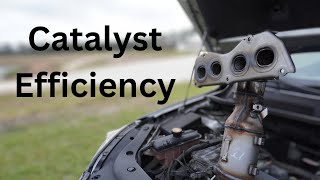
- Failed or 'Lazy' Oxygen (O2) Sensor(s) (Common) — The PCM relies on O2 sensor data to judge the catalyst. A downstream 🎬 Watch: How to diagnose catalyst efficiency and sensor data. sensor providing incorrect or slow-to-react ('lazy') data tricks the computer into flagging a good converter as failed.
- Exhaust System Leak (Common) — A crack in the exhaust pipes, flex pipe, or gaskets upstream of the converter allows unmetered oxygen into the system. This extra oxygen skews O2 sensor readings, triggering P2423.
- Engine Misfires or Rich/Lean Fuel Mixture (Common) — Unburned fuel entering the exhaust destroys catalytic converters. Faulty spark plugs, ignition coils, or leaking injectors cause a rich condition that superheats and melts the catalyst's internal structure.
- Incorrect Catalytic Converter Type Installed (Less Common) — California Emissions (CARB/PZEV) vehicles require specific, high-efficiency converters. Installing a standard EPA (49-state) converter on a CARB-spec vehicle triggers P2423 immediately.
- Contaminated or Incorrect Fuel (Less Common) — Using leaded fuel or certain fuel additives poisons the catalyst. Winter-blend gasoline formulations with different evaporation properties occasionally trigger seasonal codes.
- Faulty Engine Sensors (MAF, Coolant Temp) (Rare) — Erroneous data from the Mass Air Flow (MAF) or Engine Coolant Temperature (ECT) sensor causes the PCM to calculate an incorrect air/fuel mixture, damaging the converter over time.
- PCM Software or Hardware Issue (Rare) — The vehicle's computer sometimes runs outdated software with overly sensitive catalyst efficiency thresholds. Manufacturers issue Technical Service Bulletins (TSBs) with software updates to fix this false code.
Symptoms

- Check Engine Light is On — The Malfunction Indicator Lamp (MIL) steadily illuminates on the dashboard. This is often the only initial symptom.
- Reduced Engine Performance — The vehicle feels sluggish, hesitates during acceleration, or enters a reduced power 'limp mode' due to restricted exhaust flow.
- Increased Fuel Consumption — The engine runs inefficiently, leading to a noticeable 5-15% decrease in miles per gallon (MPG).
- Engine Stalling or Rough Idle — The engine stalls when coming to a stop or idles erratically, indicating significant exhaust backpressure from a clogged converter.
- Failed Emissions Test — The vehicle automatically fails state-mandated emissions or smog inspections.
- Unusual Exhaust Noises or Smells — A rattling sound indicates the catalyst's internal honeycomb structure has broken apart. A rotten egg (sulfur) smell points to a failing converter processing unburned fuel.
Diagnostic Flowchart
Tap your situation to follow the diagnostic path that matches what you're seeing on this code.
Common Fixes & Costs
- Replace Catalytic Converter
— Parts: $800-$2,500+, Labor: $150-$300, ~1.5 hr book time
(Professional)
Nissan Altima (2010-2012, 2.5L): OEM 208A2-JA10B (Front assembly) (Alt: Walker 55594 (CARB), MagnaFlow 49504 (Federal))
Toyota Camry (2005-2006, 2.4L PZEV): OEM 25051-28180 (Manifold), 17420-0H060 (Rear) (Alt: AP/Catco 771142 (CARB Manifold), Walker 55435 (Federal Rear))
Lexus IS250 (2006-2010, Bank 1): OEM 17410-31560 (Alt: MagnaFlow 5571205 (CARB), Walker 93251 (Federal)) - Replace Oxygen (O2) Sensor(s)
— Parts: $50-$250, Labor: $100-$300, ~1.0 hr book time
(DIY)
Nissan Altima (2010-2012, 2.5L Downstream): OEM 226A0-ET000 (Alt: Denso 234-4381, Bosch 15387)
Toyota Camry (2005-2006, 2.4L PZEV Downstream): OEM 89467-06030 (Alt: Denso 234-4261, NTK/NGK 23162)
Lexus IS250 (2006-2010, Bank 1 Sensor 2): OEM 89465-30730 (Alt: Denso 234-4521, Bosch 15125) - Repair Exhaust Leak — Parts: $20-$100, Labor: $100-$400, ~2.0 hr book time (Intermediate)
- Address Underlying Misfire/Fuel System Issue — Parts: $25-$500+, Labor: $100-$500+, ~1.5 hr book time (Intermediate)
- Update/Reprogram PCM — Parts: $0, Labor: $100-$250, ~1.0 hr book time (Professional)
- Professional Diagnosis — Parts: $0, Labor: $150-$165, ~1.0 hr book time (Professional)
Used vs. New Parts: Buying Guide
When a used part is worth it: Used OEM catalytic converters from low-mileage vehicles (under 80,000 miles) scrapped for non-engine reasons (e.g., rear-end collision) are viable when new OEM parts are prohibitively expensive.
Donor-vehicle mileage cap: roughly under 80000 miles for the part to have meaningful remaining life.
Donor quality checklist:
- Verify the donor vehicle did not have a check engine light or fail an emissions test.
- Match the part number exactly; do not rely on visual similarity.
- Avoid parts from regions with heavy road salt use to minimize rust issues.
- Check that the internal honeycomb structure is intact and not rattling.
Decision logic:
- If Vehicle is under 8 years/80,000 miles → Check for federal emissions warranty coverage before buying any part.
- If Vehicle is a California Emissions (CARB/PZEV) model → Strongly favor a new CARB-compliant or used OEM part to avoid the code returning.
- If Vehicle is over 150,000 miles and budget is the primary concern → A used OEM or new high-quality aftermarket part is an acceptable risk, but has a shorter lifespan.
Warranty tradeoff: Used parts offer a 30-90 day warranty. New aftermarket parts include a 1-5 year warranty. New OEM parts installed at a dealer carry a 1-year warranty.
Worst-case if a used part fails: $400-$1,500 if a used or cheap aftermarket part fails prematurely, requiring repeat labor and a second replacement part.
What Happens If You Wait — Timeline
- 0-2 weeks: Check Engine Light (MIL) illuminates with code P2423. No other symptoms are noticeable. The vehicle automatically fails any OBD-II emissions test. (MPG impact: 0-2%% · Added cost: $0)
- 2 weeks - 3 months: The catalyst's efficiency degrades. A slight drop in fuel economy occurs. The engine runs slightly richer, stressing the catalyst with higher temperatures. (MPG impact: 2-5%% · Added cost: $25-$75 in wasted fuel)
- 3-8 months: The catalyst substrate clogs or cracks from sustained high temperatures. The driver notices sluggish acceleration and hesitation. Exhaust backpressure builds, straining the engine. (MPG impact: 5-15%% · Added cost: $800-$2,500 (Catalytic converter replacement is now unavoidable. The delay destroyed the converter.))
- 8+ months: The catalyst becomes severely clogged, creating extreme exhaust backpressure. The engine stalls, refuses to accelerate, or fails to start. This backpressure causes internal engine damage like burned exhaust valves or failed piston rings. (MPG impact: 15-30%+% · Added cost: $3,000-$7,000+ (Engine damage has occurred on top of the required catalytic converter replacement.))
Cost of Not Fixing It
- 0-1 month: Guaranteed failed emissions test and a 5-10% drop in fuel economy. (Added cost: $20-$50 in wasted fuel.)
- 1-6 months: The catalyst substrate clogs or melts, causing excessive exhaust backpressure. This causes reduced engine performance, hesitation, and overheating of the converter. (Added cost: $800-$2,500 for catalytic converter replacement.)
- 6+ months: Severe clogging creates enough backpressure to blow head gaskets, damage piston rings, or fail engine seals. This causes total engine failure. (Added cost: $3,000-$7,000 for major engine repairs.)
Diagnosis Steps

- Scan for Codes & Review Freeze Frame Data
Connect an OBD-II scanner. Confirm P2423 and record any O2 sensor, misfire, or fuel trim codes. Analyze the freeze frame data to see the exact engine conditions (RPM, temp) when the code set.
Tools: OBD-II Scanner (Beginner) - Address All Other Codes First
Diagnose and repair misfire (P0300-P0312), fuel system, or O2 sensor codes before addressing P2423. Replacing a converter without fixing the primary issue destroys the new converter.
Tools: OBD-II Scanner (Intermediate) - Analyze Live Oxygen Sensor Data (The Key Test)
Observe upstream (Sensor 1) and downstream (Sensor 2) O2 sensor voltage at a steady 2,000 RPM. A healthy downstream sensor remains steady around 0.5V-0.7V. If it fluctuates rapidly like the upstream sensor, the catalyst has failed.
Tools: Advanced OBD-II Scanner with Live Data Graphing (Intermediate) - Thoroughly Inspect the Exhaust System
Visually inspect the exhaust from the manifold to the tailpipe. Look for black soot stains indicating leaks. Listen for hissing sounds around flexible pipe sections.
Tools: Flashlight, Safety Glasses, Mechanic's Mirror (Beginner) - Perform a Catalytic Converter Temperature Test
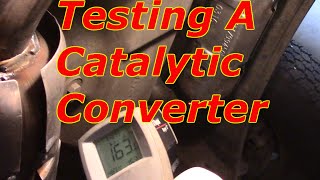
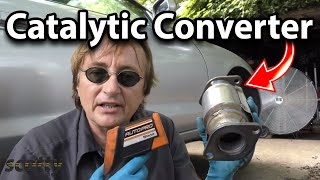
Use an infrared thermometer to measure the exhaust pipe temperature before and after the converter. The outlet must be at least 100°F hotter than the inlet. If temperatures are similar, the converter has failed.
Tools: Infrared Thermometer (Beginner) - Check for Technical Service Bulletins (TSBs)
Search for TSBs related to P2423 for your specific vehicle. Manufacturers frequently release PCM software updates to adjust catalyst monitor sensitivity, fixing false codes.
Tools: Internet Access (Beginner) - Pro Tip: Check Long-Term Fuel Trims
Observe Long-Term Fuel Trim (LTFT) values. Consistently high positive (> +10%) or negative (< -10%) values indicate vacuum leaks or leaking injectors, which damage the catalyst and require immediate repair.
Tools: Advanced OBD-II Scanner (Professional) - Pro Tip: Use an Oscilloscope for Definitive Sensor Analysis
Connect an oscilloscope to the downstream O2 sensor. A 'lazy' sensor shows a slow, rounded waveform, while a bad catalyst shows an overly active waveform mirroring the upstream sensor.
Tools: Automotive Oscilloscope, Back-probe Pins (Professional) - Advanced: Test O2 Sensor Heater Resistance
Disconnect the O2 sensor and measure resistance between the two heater circuit wires using a multimeter. An open circuit or dead short indicates a failed heater element.
Tools: Multimeter, Vehicle Service Manual (Advanced) - Advanced: Test Fuel Pressure
Connect a fuel pressure gauge to the fuel rail. Compare key-on, engine-off (KOEO) and idle pressures against manufacturer specs. Improper pressure causes rich/lean conditions that destroy converters.
Tools: Fuel Pressure Gauge, Vehicle Service Manual (Advanced)
When This Code Triggers (Freeze-Frame Conditions)
- Engine Coolant Temp: 170-230°F (Engine is fully warmed up.)
- RPM: 1500-2500 (Steady cruise or light acceleration.)
- Engine Load: 15-35% (Part-throttle, not under heavy acceleration or deceleration.)
- Vehicle Speed: 40-60 mph (Steady highway or expressway driving.)
Related Codes
- P0420 — P0420 is the generic code for 'Catalyst System Efficiency Below Threshold'. P2423 specifically indicates a failure of the cold-start Hydrocarbon trapping function. Having both codes guarantees a faulty catalytic converter.
- P2424 — This is the identical code for Bank 2 of the engine. The diagnostic process is exactly the same, just performed on the opposite side of the engine.
- P0137 / P0138 — These indicate a circuit fault (low or high voltage) with the downstream oxygen sensor. If present with P2423, the O2 sensor or its wiring is the primary suspect and must be repaired first.
- P0300-P0312 — These indicate an engine misfire. A misfire dumps raw fuel into the exhaust, destroying the catalyst. You must fix the misfire before replacing the converter.
Climate & Environmental Factors
- Cold Weather: On some GM vehicles, extreme cold prevents the HCAC from reaching operating temperature within the PCM's time limit, triggering a false code. A software update fixes this.
- Winter-Blend Gasoline: Winter-blend fuels have higher volatility. This affects the combustion process and occasionally pushes a borderline catalyst efficiency monitor outside its threshold, triggering seasonal codes.
- High Altitude: Less dense air at high altitudes causes engines to run slightly richer. This change in operating parameters pushes aging sensors or marginal converters past the failure threshold.
How to Talk to a Mechanic About This Code
Say this: "I have a P2423 code and I'd like to schedule a diagnostic. I want to confirm if the root cause is the catalytic converter itself or a sensor issue. Could you please check the live data from the downstream O2 sensor and look at the Mode $06 catalyst monitor test results before recommending a replacement?"
This language signals to the shop that you are an informed customer. It specifically requests the key diagnostic steps (analyzing O2 sensor data and Mode $06) that differentiate a failed converter from a sensor issue, preventing them from quoting a new converter without proper diagnosis.
Avoid saying:
- 'My check engine light is on, can you just fix it?'
- 'I think I need a new catalytic converter.'
- 'Just do whatever you think is best.'
Questions to ask before authorizing the repair:
- Can you show me the live data graph for the upstream and downstream O2 sensors that justifies replacing the converter?
- What were the results for the catalyst monitor in the Mode $06 test? Did it pass or fail, and by what margin?
- Have you checked for any exhaust leaks or technical service bulletins (TSBs) related to this code?
- What is the warranty on the recommended parts and the labor for this repair?
Where to Take It: Dealer vs Independent vs Chain
- Dealer:
Go here FIRST if your vehicle might be under warranty. Otherwise, it's a pricey option.
Best for: Vehicles under the 8-year/80,000-mile federal emissions warranty or a PZEV extended warranty., Vehicles with known TSBs or software updates for P2423 (e.g., Nissan, Toyota)., Complex diagnoses involving brand-specific systems where an independent shop has already failed.
Downsides: Significantly higher labor rates and parts costs., Defaults to replacing an entire assembly when a smaller component or software update suffices. (Typical cost: +50% vs. baseline) - Independent Shop:
Best fit for most out-of-warranty P2423 repairs, provided the shop has strong diagnostic skills and equipment to analyze sensor data properly.
Best for: Out-of-warranty vehicles where cost is a factor., Getting a second opinion on a dealership's expensive quote., Shops with a good reputation for diagnostics and experienced, ASE-certified technicians.
Downsides: Quality and expertise vary widely; vetting is crucial., Lacks access to the very latest manufacturer software updates for brand-new models. (Typical cost: +0% vs. baseline) - Chain Shop:
AVOID for initial diagnosis. Their business model is not optimized for the careful, methodical diagnosis required to accurately pinpoint the cause of P2423.
Best for: Simple, clear-cut repairs like replacing an O2 sensor *after* a proper diagnosis has been made elsewhere.
Downsides: High pressure to upsell and meet sales quotas leads to misdiagnosis., Technician skill is inconsistent; unequipped for in-depth diagnostic work like analyzing Mode $06 data or fuel trims., Not the best choice for diagnosing a nuanced code like P2423, where it's easy to blame the expensive converter. (Typical cost: -10% vs. baseline)
When to Walk Away From the Repair
If the estimated repair cost exceeds 50% of the car's private-party value, you should seriously consider not doing the repair and selling or trading in the vehicle.
- Car worth $4000, fix is $2200: Walk away. The repair cost is 55% of the car's value. It is not financially sensible to proceed.
- Car worth $12000, fix is $1800: Fix it. The repair cost is only 15% of the car's value, which is well below the threshold.
- Car worth $2500, fix is $1500: Walk away. The repair cost is 60% of the car's value. You are unlikely to recoup this investment.
What Scan Tool You Need for This Code
Minimum: A scanner that reads and graphs live O2 sensor data and accesses Mode $06 test results for the catalyst monitor.
A basic $20 code reader only shows the P2423 code, leading you to guess between a $150 O2 sensor and a $2,000 catalytic converter. You need to see the data the computer uses to make its decision.
Budget: BlueDriver Pro Scan Tool (~$100) — Connects to your smartphone via Bluetooth and graphs live data for both upstream and downstream O2 sensors. It provides access to Mode $06 data to check the catalyst monitor's raw test values.
Mid-range: Foxwell NT510 Elite (~$180) — A handheld unit offering everything the BlueDriver does, plus bidirectional controls to run active tests. It can be purchased with software specific to your car's manufacturer.
Professional: Autel MaxiCOM MK808S (~$450) — A professional-level tablet scanner offering full bidirectional control, extensive live data graphing, and all OEM-level diagnostic functions.
Rent vs buy: Auto parts stores offer free basic OBD-II scanner rentals, but these typically do not offer live data graphing or Mode $06 access. For P2423, you need these advanced features, so buying a capable scanner is required.
How to Clear the Code After You Fix It
- Use an OBD-II scan tool to clear the P2423 code.
- Perform a complete drive cycle to allow the readiness monitors to run.
- Never disconnect the battery to clear this code; it erases all readiness monitors and requires 30-50 miles of driving to reset.
Drive cycle (~30 minutes): A generic drive cycle includes: a cold start, idle for 2-3 minutes with A/C on, accelerate to 55 mph and hold for 3-5 minutes, decelerate without braking to 20 mph, repeat acceleration and steady cruise, followed by stop-and-go city driving.
Readiness monitors affected: Catalyst monitor, O2 sensor monitor
Before emissions retest: drive at least 100 miles to fully set monitors.
Watch out for:
- Disconnecting the battery erases all monitor data, forcing you to start from scratch.
- The code returns immediately if the underlying cause of the failure (like a misfire) is not fixed.
- Failing to complete the specific drive cycle required by the manufacturer prevents the Catalyst monitor from becoming 'Ready'.
Will This Fail Emissions / State Inspection?

Yes — this code typically fails an OBD-II emissions inspection.
- California: An active P2423 code is an automatic failure. All applicable OBD readiness monitors must be set to 'Ready'. After repair, a specific drive cycle must be completed before re-testing.
- New York: A vehicle fails the NYS inspection if the Check Engine Light is on for any emissions-related code. For 2001 and newer vehicles, a 'Not Ready' catalyst monitor causes a failure.
- Texas: Emissions testing is required in 17 counties. An active P2423 code results in an automatic failure of the OBD-II test, preventing vehicle registration renewal.
Most Commonly Affected Vehicles
- Nissan Altima (2010-2012) — Nissan issued TSB NTB20-020 requiring replacement of the front exhaust tube with the integrated catalyst. Some models have a warranty extension. Using a non-CARB converter on a California-spec model causes the code to return.
- Toyota Camry (2005-2006) — California PZEV versions are known for this code due to rear catalytic converter failure. PZEV models have an extended emissions warranty (up to 15 years/150,000 miles) that covers this repair.
- Lexus IS250 (2006-2010) — Direct-injection engines cause heavy carbon buildup on intake valves, leading to misfires that destroy the catalytic converter. Lexus issued a warranty extension (Customer Support Program ZLG) to address the root carbon buildup.
- Nissan Rogue (2008-2013) — P2423 frequently points to the underfloor catalytic converter. Technicians must monitor the phase gap between O2 sensors 2 and 3 to confirm catalyst failure before replacement.
- Subaru Forester, Outback, Legacy (2005-2010) — Catalytic converter failure is common. Subaru offered extended warranties (e.g., 10 years/100,000 miles) for catalyst issues; check with a dealer before paying for repairs.
- Honda Accord (2005-2008) — Exhaust leaks from a cracked exhaust manifold or a failed flex pipe are the primary cause for this code on Accords. Inspect for leaks before suspecting the converter.
- Ford Focus (2012-2018) — P2423 results from other engine issues damaging the catalyst over time. The federal emissions warranty covers the catalytic converter for 8 years/80,000 miles.
- Hyundai Sonata (2011-2015) — Theta II GDI engines suffer from excessive oil consumption or bearing wear, leading to premature catalyst failure. The root engine problem must be investigated.
Manufacturer-Specific Notes
- Toyota/Lexus: On PZEV models, the PCM uses a 'signal length ratio' calculation between O2 sensors 2 and 3. P2423 triggers if this ratio exceeds 0.75. These vehicles often have an extended 15yr/150k mile emissions warranty.
- Nissan: For 2010-2012 Altimas, TSB NTB20-020 requires replacing the entire front exhaust tube assembly. An extended warranty (campaign P9327) covers this for up to 16 years/170,000 miles on some models.
- Lexus: For IS250 models, P2423 is a secondary failure caused by carbon buildup on intake valves. Warranty Enhancement Program ZLG extends coverage for this root issue to 9 years with unlimited mileage.
- General Motors (GM): On GM trucks and SUVs, extreme cold prevents the HCAC from reaching operating temperature within the PCM's time limit, leading to a false code. Checking for software updates is the first step.
Real Owner Stories
2010 Nissan Rogue with 193K miles - A Story of Misdiagnosis
Service Engine Soon light appeared. Dealer pulled code P2423 and reprogrammed the ECM per a recall. Light returned a week later.
What they tried:
- Mechanic replaced the rear catalytic converter, but the light returned after 25 miles.
- Mechanic replaced the manifold catalytic converter, but the light came back after 50 miles.
- Mechanic replaced all three O2 sensors, but the scan tool still showed a 'Pending Cat issue'.
Outcome: The owner spent thousands replacing multiple parts without resolving the core issue, highlighting a classic case of 'parts cannon' diagnosis.
Lesson: Do not replace expensive components without a definitive diagnosis. Proper diagnosis involves analyzing live sensor data to confirm catalyst failure, not just reading the code.
2005 Toyota Camry PZEV - The Wrong Part Nightmare
After replacing the 'cat back' exhaust with an aftermarket part, code P2423 appeared immediately.
What they tried:
- A shop diagnosed bad O2 sensors and quoted $1,512 for replacement.
- Owner bought Denso sensors online and replaced them, but the code remained.
- Owner used Sea Foam additive, which did not help.
Outcome: The owner spent over $400 on incorrect repairs. The issue stemmed from the aftermarket catalytic converter not meeting the strict requirements for a PZEV model.
Lesson: For PZEV or CARB-certified vehicles, using a cheaper, non-compliant aftermarket catalytic converter guarantees the P2423 code returns. Verify if your car has an extended PZEV warranty that covers the OEM part.
2011 Nissan Altima 2.5L - A Seasonal Annoyance
Owner reported that the P2423 code appeared only once a year, specifically in the fall.
What they tried:
- The owner noted this coincided with the switch to winter-blend gasoline in their region.
Outcome: The dealership declined a warranty replacement because a non-OEM aftermarket part had been previously installed.
Lesson: Seasonal appearance of a catalyst code is sometimes linked to changes in fuel blends. Installing aftermarket parts voids the warranty for related components, even if a TSB exists for the original issue.
How to Prevent This Code From Triggering
- Use Top-Tier Certified Gasoline (Every fill-up) — Top-Tier gas contains a higher concentration of detergents that prevent carbon deposit buildup on fuel injectors. This ensures complete combustion, reducing unburned fuel that overloads the catalytic converter.
- Replace Oxygen Sensors as Maintenance (Once, around 100,000 miles) — Aging O2 sensors provide delayed information to the computer, leading to an incorrect air/fuel mixture. This causes a rich condition that overheats and damages the catalytic converter long before the sensor sets its own code.
- Address Engine Misfires Immediately (As needed) — A flashing check engine light indicates a severe misfire, dumping raw fuel directly into the exhaust. This fuel ignites inside the catalytic converter, raising its temperature beyond 1600°F and melting the internal ceramic substrate.
- Fix Oil and Coolant Leaks Promptly (As needed) — Engine oil and coolant are catalyst poisons. When burned, they create ash that coats the precious metals inside the converter, rendering it unable to perform chemical reactions.
- Avoid Short Trips and Extended Idling (Daily habit) — The catalytic converter only works effectively when fully heated. Frequent short trips prevent it from reaching optimal temperature, allowing carbon and moisture to build up.
Frequently Asked Questions
What's the difference between an HC Adsorption Catalyst and a regular one?
A regular three-way catalytic converter works when it's hot (over 400°F). An HC Adsorption Catalyst (HCAC) traps unburned hydrocarbons when the engine is cold. Once the system warms up, it releases the trapped hydrocarbons to be burned by the main catalytic converter.
What is the most common misdiagnosis for P2423?
The single biggest mistake is replacing the catalytic converter without fixing the root cause of its failure. Converters usually fail because an engine misfire, coolant leak, or rich fuel mixture destroyed them. If the underlying issue remains, the new converter will also fail.
Is it a bad O2 sensor or a bad catalytic converter?
A technician uses a scan tool's live data graph to find out. A good downstream O2 sensor shows a steady voltage between 0.6V and 0.8V, while a rapidly fluctuating voltage mimicking the upstream sensor means the catalyst is bad. If the sensor voltage is stuck or responds slowly, the sensor itself is the culprit.
Why did my P2423 code come back after replacing the catalytic converter?
First, the underlying problem that destroyed the original converter (like a leaking injector) was never fixed. Second, the wrong type of converter was installed. CARB-state vehicles require specific, expensive CARB-compliant converters, and installing a cheaper 'Federal' converter causes the code to return immediately.
Can I use a catalytic converter cleaner to fix code P2423?
It is highly unlikely. Fuel additives cannot repair a catalyst that is chemically fouled, melted, or has a broken internal ceramic substrate. These additives cannot restore the precious metal coatings essential for the converter's function.
Why is replacing a catalytic converter so expensive?
Catalytic converters contain three precious metals: platinum, palladium, and rhodium. The high market prices of these metals drive the component's cost. Replacements range from $400 for aftermarket parts to over $2,500 for OEM parts.
What is 'Bank 1'?
Bank 1 always refers to the side of the engine containing cylinder #1. For an inline 4-cylinder engine, there is only one bank. For V-style engines, consult a repair manual to determine which side is Bank 1, as it varies by manufacturer.
Key Takeaways
- Code P2423 indicates a failure in the Bank 1 Hydrocarbon Adsorption Catalyst, a specialized component required to trap emissions during the first 5 minutes of a cold start.
- Never replace a $1,500+ catalytic converter without first using a scan tool to verify that the downstream O2 sensor voltage is rapidly fluctuating between 0.1V and 0.9V.
- Always fix accompanying misfire (P0300-P0312) or fuel trim (P0171-P0175) codes before addressing P2423, as unburned fuel will destroy a brand-new catalytic converter within weeks.
- Driving with an active P2423 code guarantees a failed state emissions test and risks severe engine damage from exhaust backpressure, potentially adding $3,000+ in engine repairs.
Helpful Videos

The information in this article is provided for general reference and educational purposes only. Vehicle specifications, procedures, and part compatibility can vary by production date, trim level, and region. Always consult your vehicle's factory service manual and verify part numbers before purchasing or performing repairs. Safety-critical components such as airbags, seat belts, and braking systems should be installed by a qualified professional.
- 🎬 Helpful Videos
- What Does P2423 Mean?
- Can I Drive With P2423?
- Common Causes
- Symptoms
- Diagnostic Flowchart
- Common Fixes & Costs
- Used vs. New Parts: Buying Guide
- What Happens If You Wait — Timeline
- Cost of Not Fixing It
- Diagnosis Steps
- When This Code Triggers (Freeze-Frame Conditions)
- Related Codes
- Climate & Environmental Factors
- How to Talk to a Mechanic About This Code
- Where to Take It: Dealer vs Independent vs Chain
- When to Walk Away From the Repair
- What Scan Tool You Need for This Code
- How to Clear the Code After You Fix It
- Will This Fail Emissions / State Inspection?
- Most Commonly Affected Vehicles
- Manufacturer-Specific Notes
- Real Owner Stories
- 2010 Nissan Rogue with 193K miles - A Story of Misdiagnosis
- 2005 Toyota Camry PZEV - The Wrong Part Nightmare
- 2011 Nissan Altima 2.5L - A Seasonal Annoyance
- How to Prevent This Code From Triggering
- Frequently Asked Questions
- What's the difference between an HC Adsorption Catalyst and a regular one?
- What is the most common misdiagnosis for P2423?
- Is it a bad O2 sensor or a bad catalytic converter?
- Why did my P2423 code come back after replacing the catalytic converter?
- Can I use a catalytic converter cleaner to fix code P2423?
- Why is replacing a catalytic converter so expensive?
- What is 'Bank 1'?
- Key Takeaways
- 🎟️ Get 5% Off