

P2422 on 2017-2022 Honda Ridgeline: EVAP Vent Valve Stuck Closed Causes and Fixes
This code almost always means the EVAP canister vent tube is clogged with dirt, dust, or spider webs, a known issue covered by Honda TSB A20-002. The fix is to inspect and clear the tube. If clogged with dirt, the official repair involves replacing the canister assembly and adding a filter kit (Part No. 06171-T6Z-305) to prevent recurrence.
- P2422 on a 2017-2022 Ridgeline is most likely caused by a dirt-clogged vent tube, a known issue addressed by Honda TSB A20-002.
- Before buying any parts, inspect the rubber vent hose connected to the EVAP canister (under the truck, near the gas tank) for blockages by tapping it to see if dirt falls out.
- The official, long-term fix for a clogged tube is to replace the canister assembly AND add the Canister Drain Kit (Part No. 06171-T6Z-305) to prevent it from happening again.
- This code will not affect how your truck drives, but it will cause an emissions test failure and may make it difficult to fill the gas tank.
What's Unique About the 2017-2022 Honda RIDGELINE

On this specific generation of Honda Ridgeline and its platform mates (like the Pilot, Passport, and Odyssey), the P2422 code is overwhelmingly caused by a design vulnerability rather than a failed part. Honda has identified that the EVAP canister's vent tube is positioned where it can easily ingest dirt and dust, which eventually clogs the system. This is so common that Honda issued Technical Service Bulletin A20-002 🎬 Watch: Overview of the P2422 code and Honda's design flaw., which outlines the problem and a specific repair that includes replacing the canister and adding a filter box kit to prevent it from happening again.
Diagnostic Flowchart

Tap your situation to follow the diagnostic path that matches what you're seeing on this vehicle.
Symptoms You May Notice
- Check Engine Light (MIL) is on
- Difficulty refueling (gas pump nozzle clicks off repeatedly before the tank is full)
- A persistent 'check fuel cap' message on the dash, even if the cap is tight (less common)
- Replacing the gas cap. While a loose or faulty gas cap can cause other EVAP codes (like P0455 or P0457), it is not a cause for P2422, which specifically points to a 'stuck closed' vent valve circuit malfunction.
- Replacing the purge valve. The purge valve is located in the engine bay, while the vent valve is near the gas tank. They are different parts, and a faulty purge valve typically sets different codes (e.g., P0496, P0497).
Most Likely Causes

- Clogged EVAP Canister Vent Tube 🔴 High Probability Per Honda TSB A20-002, the vent tube's location and design make it susceptible to collecting road dust and dirt, which causes a blockage. This is a widely acknowledged design issue affecting multiple Honda models.
How to confirm: Locate the EVAP canister assembly under the vehicle, near the spare tire. Disconnect the rubber drain/vent tube and visually inspect it for fine dust, dirt, or even spider webs. Tapping the hose may dislodge a small pile of dirt, confirming the blockage.
Typical fix: If dirt is found, Honda's official procedure (TSB A20-002) is to replace the entire canister set and install the new Canister Drain Kit (Part No. 06171-T6Z-305). This kit adds a filter box to a cleaner, higher location to prevent future clogs. Simply cleaning the tube is only a temporary fix and the problem will likely return.
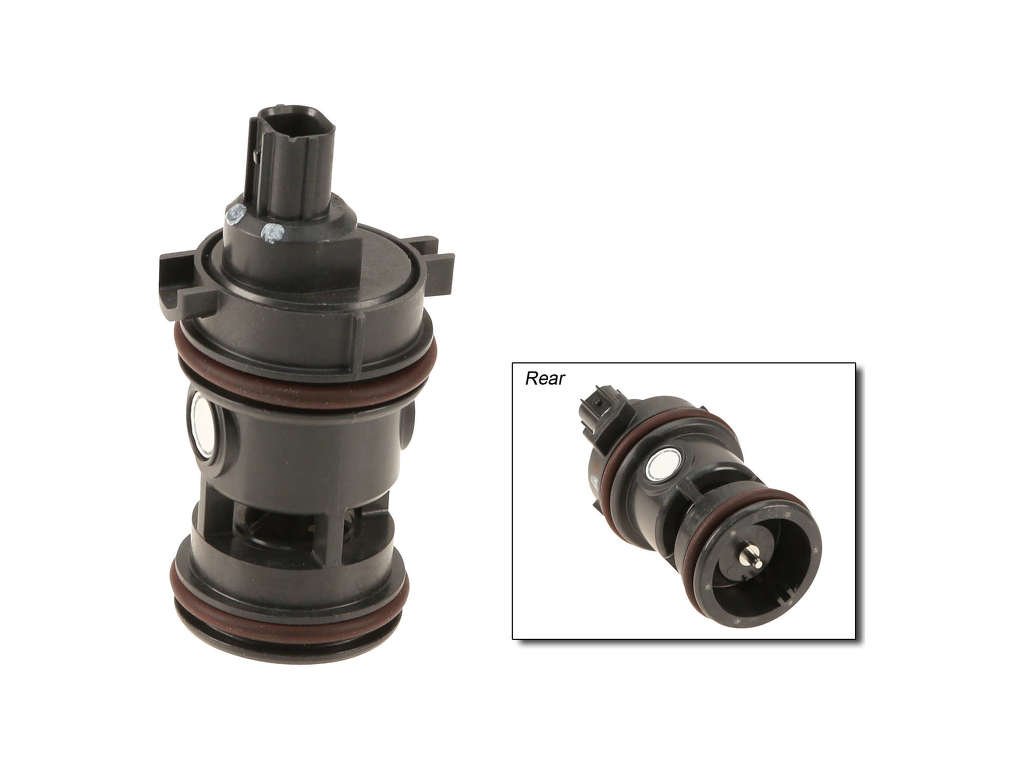
Est. part cost: $200-$300 for a new canister and the required filter kit. - Failed EVAP Canister Vent Shut Valve/Solenoid 🟡 Medium Probability The valve can fail internally from age or become physically stuck from the same dirt that clogs the vent tube. Sometimes, even after cleaning the tube, the valve remains stuck.
How to confirm: If the vent tube is clear, the valve itself may be faulty. You can test the solenoid with a multimeter for proper resistance or by applying 12V power and ground to see if it clicks open and closed. A capable scan tool can also command the valve to cycle.
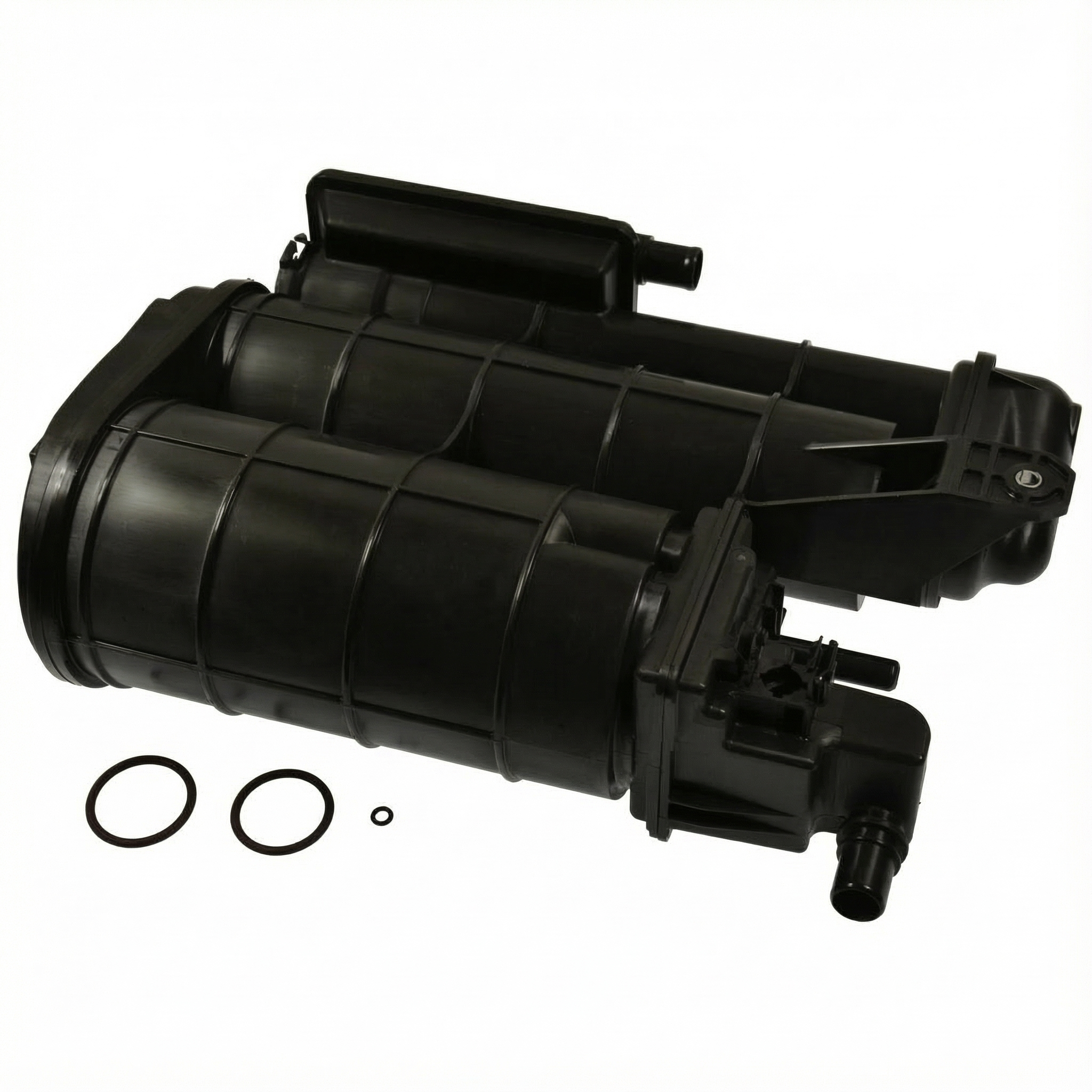
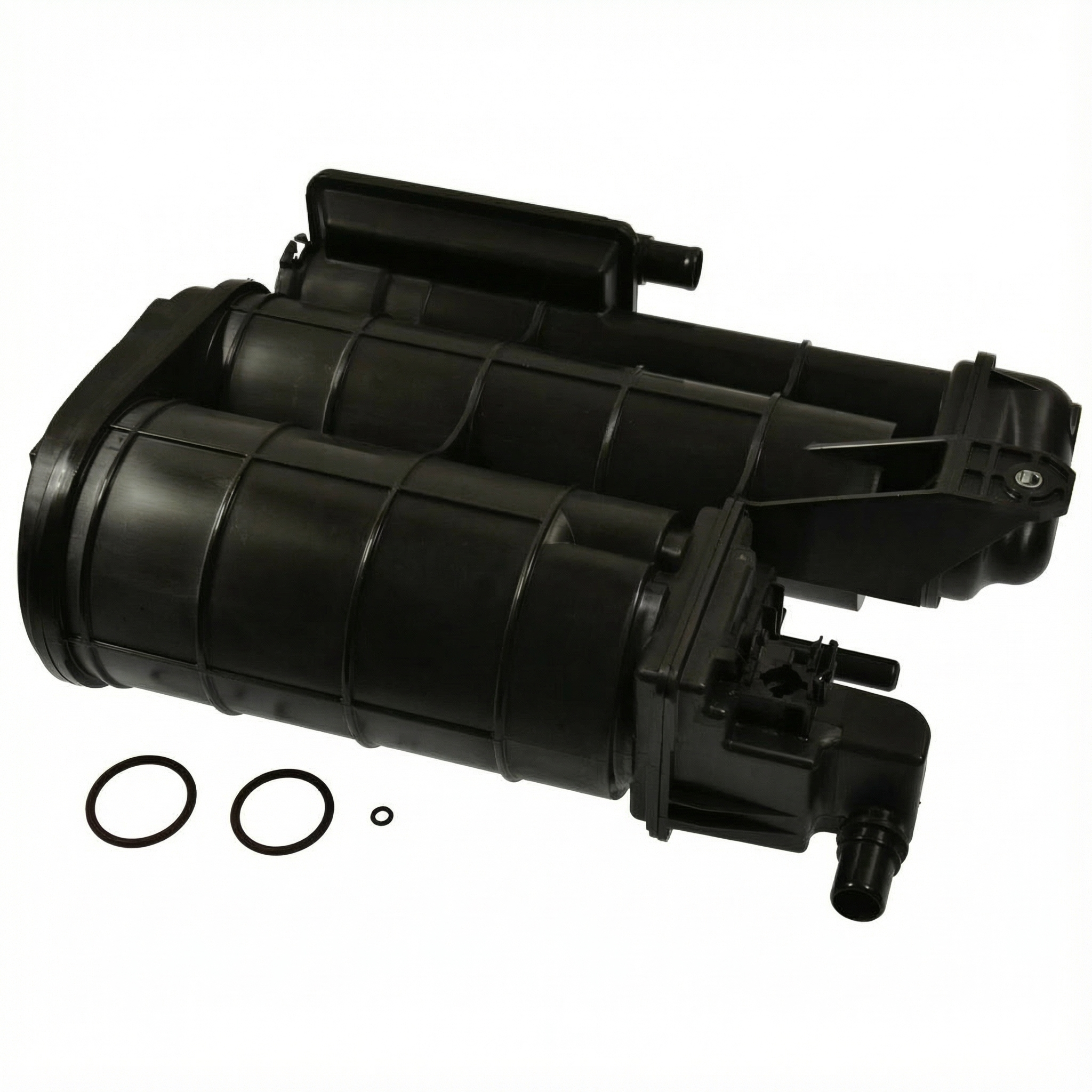
Typical fix: Replace the EVAP canister vent shut valve. On the 2017-2022 Ridgeline, the valve is integrated into the charcoal canister assembly, requiring the replacement of the whole unit. The canister part number varies by year: 17011-TZ5-A01 for 2017-2019 models and 17011-TG7-A11 for 2020-2022 models.
Est. part cost: $180-$250, as the valve is included with the canister assembly. - Wiring or Connector Issue ⚪ Low Probability
How to confirm: Visually inspect the wiring harness and two-pin connector going to the vent valve solenoid for any signs of damage, corrosion, or loose pins. Check for battery voltage at the connector with the key in the ON position.
Typical fix: Repair the damaged section of the wiring harness or clean/replace the connector. The connector pigtail can be sourced using part number 6189-7036.
Est. part cost: $5-$50 for wiring repair supplies.
Rare But Worth Checking
- Spider Webs or Insect Nests: Older Honda TSBs for this same code on other models, like the Accord, specifically call out spiders building webs in the vent hose or drain box. This is enough to cause a blockage and is a quick, easy check. The webs can act as a one-way valve, allowing air out but not in.
- Faulty Powertrain Control Module (PCM): This is extremely rare. The PCM should only be considered after all other possibilities, including the vent valve, tubing, and wiring, have been thoroughly tested and ruled out.
Diagnosis Steps
- Confirm the code P2422 is present using an OBD-II scanner.
- Locate the EVAP canister assembly, which is mounted under the truck bed, just forward of the spare tire.
- Disconnect the rubber vent/drain tube from the canister. Visually inspect the tube and canister port for fine dust, dirt, or spider webs as described in TSB A20-002. Tap the tube over a clean surface to see if dirt falls out.
- If the tube is clogged with dirt, the official fix is to replace the canister assembly and install the updated filter kit (Part No. 06171-T6Z-305) per the TSB.
- If the tube is clear, inspect the wiring harness and 2-pin connector for the vent valve solenoid. Look for any breaks, corrosion, or loose connections. Check for 12V power at the connector with the key on.
- If the wiring is good, test the vent valve solenoid itself. Use a capable scan tool like the Honda HDS to command the 'EVAP CVS ON' function and listen for a click. Alternatively, apply battery voltage and ground directly to the solenoid's pins to check for operation.
- If the solenoid does not operate, it has failed. Since it is integrated, the entire canister assembly must be replaced. Use part number 17011-TZ5-A01 for 2017-19 models or 17011-TG7-A11 for 2020-22 models.
- After repairs, clear the DTC with a scan tool and perform the EVAP function test using a Honda-specific scanner (i-HDS) to confirm the fix.
Parts You'll Likely Need

- EVAP Canister Set
(OEM #17011-TZ5-A01 (2017-19) or 17011-TG7-A11 (2020-22))— This is the primary fix if the vent tube is clogged with dirt, as per TSB A20-002. The vent valve is integrated into this assembly.
Trusted brands: Genuine Honda
OEM price range: $180-$250
Aftermarket price range: $150-$200 - Canister Drain Kit
(OEM #06171-T6Z-305)— This kit is the official countermeasure from Honda to prevent the issue from reoccurring. It includes a filter box and hoses to relocate the vent air intake to a cleaner area.
Trusted brands: Genuine Honda
OEM price range: $40-$60
Aftermarket price range: N/A
Related Codes That Often Appear With This One
- P1454: Often seen with P2422 on platform mates like the Honda Pilot, indicating a related issue with the Fuel Tank Pressure (FTP) sensor's performance, likely triggered by the same blockage. The ECM may store both as temporary DTCs before setting a hard code.
Technical Service Bulletins (TSBs) & Recalls

- A20-002: States the MIL is on with DTC P2422 due to a clogged EVAP canister vent tube, and the fix is to replace the canister and install a filter kit. Applies to 2017-22 Ridgeline.
- 08-087 (Superseded): An older TSB for 2008-09 Accords with the same P2422 code, identifying spider webs as the primary cause and prescribing cleaning and installing a spring in the drain box to prevent entry.
Platform-Specific Known Issues
- Honda Technical Service Bulletin A20-002 (updated August 30, 2022) was issued for the 2017-2022 Ridgeline specifically for DTC P2422. It identifies the root cause as dirt clogging the EVAP canister vent tube and provides a corrective action to replace the canister and install a filter kit (06171-T6Z-305).
- The TSB provides different part numbers for the canister depending on the model year: 17011-TZ5-A01 for 2017-19 and 17011-TG7-A11 for 2020-22.
Mechanic-Grade Diagnostic Values
- Fuel Tank Pressure (FTP) Sensor Live Data — expected: 0.67 to 1.33 kPa (with fuel cap off). Failure: Values outside this range may indicate a sensor issue or a blockage.
- EVAP Canister Vent Shut Valve Solenoid Resistance — expected: Varies by source; 0.4-2.0 ohms, 20-30 ohms, or 20-50 ohms are commonly cited for similar valves.. Failure: An open circuit (infinite resistance) or a dead short (zero resistance) indicates a failed solenoid coil. Values significantly outside the expected range for the specific part also indicate failure.
- EVAP Canister Vent Shut Valve Voltage — expected: Battery voltage (approx. 12V) on one pin of the connector with the ignition key in the ON position.. Failure: No voltage indicates a problem with the power supply circuit, such as a blown fuse or broken wire.
Hidden / Shadow Codes Worth Checking
- Temporary DTC P1454 and P2422: On some Honda systems, if excessive vacuum is detected at startup, the ECM/PCM may store both a temporary P1454 (FTP Sensor Range/Performance) and a temporary P2422. Depending on subsequent tests, one or both may be stored as a permanent code. This explains why P1454 is frequently seen with P2422. (see via This logic is internal to the PCM but may be visible in some advanced scan tools or HDS snapshot data.)
Scan Tool Commands That Help
- Honda Diagnostic System (i-HDS): EVAP CVS ON in the SINGLE SOLENOID test — This bidirectional command is used to manually activate the EVAP canister vent shut valve. A technician can command the valve closed and listen for an audible click to confirm the solenoid is mechanically responding. This is found in the 'INSPECTION MENU'.
- Honda Diagnostic System (i-HDS): EVAP system function test — This is a comprehensive, automated test run after a repair is completed to verify that the entire EVAP system is functioning correctly and that the P2422 fault condition has been resolved.
Wiring & Ground Locations
- Chassis Ground Point Hack — An unused, pre-threaded M6 hole in the sheet metal of the driver's side fender area, inside the engine bay.. The battery negative terminal is difficult to access on this platform. For electrical testing requiring a solid ground (like checking voltage at the EVAP canister connector), owners have found that installing a 10mm-head M6x1.0 bolt (approx. 40mm long) into this hole creates a reliable and easily accessible ground post.
- EVAP Canister Vent Valve Connector — On the EVAP canister assembly, under the rear of the vehicle. It is a 2-pin connector.. This is the connector that must be inspected for damage, corrosion, and proper voltage. If the connector or its pigtail is damaged, a replacement can be sourced using the reference part number 6189-7036.
Real Owner Repair Stories
- Honda-Tech Forums User (2008 Honda Accord) — Check Engine Light with code P2422.
✅ What actually fixed it The user followed the older TSB (08-087) which pointed to spider webs as the cause. They located the EVAP drain box, found it was blocked by spider webbing, cleaned it out, and the code was resolved. This confirms that even minor obstructions can trigger the code. - Honda Civic Forum User (2006 Honda Civic 1.8L) — Check Engine Light with code P2422.
❌ Tried (didn't work) Immediately replacing the EVAP vent valve without further diagnosis.
✅ What actually fixed it The code returned immediately after replacing the valve. The resolution was understanding the full diagnostic criteria: the code is set when the FTP sensor detects excessive vacuum when it shouldn't. This can be caused by a blockage or a sensor fault, not just a bad valve. The fix required proper diagnosis rather than just parts replacement.
"I Checked Everything" — The Actual Cause
- A smoke test is the wrong procedure for P2422. This code indicates the valve is 'stuck closed' or the system is blocked, not that there is a leak to the atmosphere. A properly sealed system (which would pass a smoke test) is a prerequisite for the computer to even detect the 'stuck closed' fault. The actual cause is almost always the physical blockage from dirt described in TSB A20-002 or an electrical/mechanical failure of the vent valve itself.
OEM Part Supersession History
17011-TZ5-A01→17011-TG7-A11— Part update for newer model years.
Heads up: 17011-TZ5-A01 is for 2017-2019 Ridgeline models. 17011-TG7-A11 is for 2020-2022 models and also fits the Pilot and Passport of similar years.N/A→06171-T6Z-305 (Kit)— Introduction of a countermeasure.
Heads up: This is the Canister Drain Kit specified in TSB A20-002 to prevent the dirt clog from reoccurring. It should be installed whenever the canister is replaced for this code.
Model Year Variations Within This Range
- 2017-2019 vs 2020-2022: The part number for the EVAP Canister Set changes. 2017-2019 models use 17011-TZ5-A01, while 2020-2022 models use 17011-TG7-A11.
- Later models in the generation: Some newer Honda models (Pilot/Passport/Ridgeline) may have a factory-installed ground bolt in the engine bay, negating the need for the owner 'hack' to create one for testing purposes.
Helpful Videos


![Honda P2422 [Canister Vent Solenoid/valve] Stuck Closed Diagnosis and Repair](https://img.youtube.com/vi/Q34wILAH22s/mqdefault.jpg)
Used OEM Parts in Stock
New Aftermarket Parts Available


The information in this article is provided for general reference and educational purposes only. Vehicle specifications, procedures, and part compatibility can vary by production date, trim level, and region. Always consult your vehicle's factory service manual and verify part numbers before purchasing or performing repairs. Safety-critical components such as airbags, seat belts, and braking systems should be installed by a qualified professional.
- Honda RIDGELINE:
- 🎬 Helpful Videos
- 🛍️ Shop This Part
- What's Unique About the 2017-2022 Honda RIDGELINE
- Diagnostic Flowchart
- Symptoms You May Notice
- Most Likely Causes
- Rare But Worth Checking
- Diagnosis Steps
- Parts You'll Likely Need
- Related Codes That Often Appear With This One
- Technical Service Bulletins (TSBs) & Recalls
- Platform-Specific Known Issues
- Mechanic-Grade Diagnostic Values
- Hidden / Shadow Codes Worth Checking
- Scan Tool Commands That Help
- Wiring & Ground Locations
- Real Owner Repair Stories
- "I Checked Everything" — The Actual Cause
- OEM Part Supersession History
- Model Year Variations Within This Range
- 🎟️ Get 5% Off