

P2422 on 2013-2017 Honda Accord: EVAP Vent Valve Stuck Closed Causes and Fixes
On a 2013-2017 Honda Accord, code P2422 almost always means the EVAP canister vent system is clogged with dirt, debris, or spider webs, a known issue covered by Honda Technical Service Bulletin A15-010. The fix is to inspect and clean the vent tube and, in many cases, install an updated filter kit (P/N 06171-T2A-315) or replace the entire EVAP canister assembly if it's contaminated.
- P2422 on a 2013-2017 Accord is almost certainly caused by a physical blockage of the EVAP vent system by dirt or spider webs, as confirmed by Honda TSB A15-010.
- The first step is always to physically inspect and clean the vent tube/filter box located near the rear driver's side wheel.
- Honda's official long-term fix is to install an updated 'Canister Drain Kit' (P/N 06171-T2A-315) to prevent future blockages.
- While less common, the vent valve solenoid itself can fail; it can often be replaced separately from the canister.
- In cases of water immersion or fuel saturation, the entire charcoal canister assembly will need to be replaced.
What's Unique About the 2013-2017 Honda ACCORD

The 9th generation Honda Accord is particularly susceptible to this code due to a design that allows dirt, dust, and sometimes even spider webs to clog the EVAP canister's vent tube and filter box. Honda acknowledged this specific weakness in multiple Technical Service Bulletins (TSBs), noting that repeated occurrences are common for vehicles driven in dry, dusty conditions. The official fix often involves installing an updated filter kit rather than just replacing the valve, as the root cause is external debris entering the system.
Diagnostic Flowchart

Tap your situation to follow the diagnostic path that matches what you're seeing on this vehicle.
Symptoms You May Notice
- Check Engine Light is on
- Failing a vehicle emissions test
- Difficulty filling the fuel tank (pump clicks off before full).
- A message on the dash reading "emission system problem".
- Replacing the gas cap. While a loose gas cap can cause other EVAP codes (like P0455 or P0457), it does not cause P2422.
- Replacing the EVAP purge valve. The purge valve is located in the engine bay and typically sets different codes when it fails, such as P0497 or P145C.
Most Likely Causes

- Clogged EVAP Canister Vent Tube or Filter 🔴 High Probability As documented in Honda TSB A15-010, the vent tube's location under the car makes it prone to collecting dirt, dust, and even spider webs, which obstruct airflow. This has been a recurring issue on Accords for many years.
How to confirm: Locate the EVAP canister assembly behind the driver's side rear wheel. Remove the canister vent tube and visually inspect it for blockages. Tapping or shaking the tube may dislodge dirt, confirming the issue. You can also try blowing compressed air through it (in the reverse direction of normal flow).
Typical fix: Clean the vent tube thoroughly. If significant dirt is found, Honda recommends installing a 'Canister Drain Kit' (P/N 06171-T2A-315 for non-hybrid) which includes a new, redesigned filter box to prevent future clogs. In cases of heavy contamination or water ingress (e.g., from driving through deep puddles), the entire EVAP canister assembly may be saturated and require replacement.
Est. part cost: $50-$100 for the filter kit, $350-$550 for a full canister assembly. - Failed EVAP Canister Vent Shut Valve/Solenoid 🟡 Medium Probability The solenoid can fail electrically or become mechanically stuck from internal debris or corrosion. Water intrusion from deep puddles has also been reported by owners to cause valve failure.
How to confirm: With the valve removed from the canister, you can apply 12V power to its two terminals to see if it clicks open and closed. A multimeter can also be used to check for proper resistance across the terminals (typically between 15-30 ohms, but refer to a service manual for exact specs).
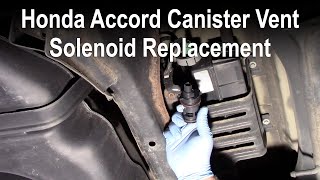
Typical fix: Replace the EVAP canister vent shut valve. On the 9th gen Accord, this valve can often be purchased separately (P/N 17310-TA0-A01) and is removed by twisting it out of the canister body. If it is seized or the canister housing is damaged, the entire canister assembly must be replaced.
Est. part cost: $40-$110 for the valve itself. - Wiring or Connector Issues ⚪ Low Probability The wiring harness leading to the vent valve is located under the vehicle near the rear wheel, exposing it to road salt, water, and physical damage, which can lead to corrosion or broken wires over time.
How to confirm: Visually inspect the wiring harness and connector for any signs of damage, corrosion, or loose pins. Unplug the connector and check for moisture or green/white corrosion on the terminals. Use a multimeter to check for 12V power and ground at the connector when the key is on.
Typical fix: Repair the damaged section of wiring or replace the connector pigtail. Clean corroded terminals with a contact cleaner.
Est. part cost: $10-$30
Rare But Worth Checking
- Faulty Powertrain Control Module (PCM): This is extremely rare. The PCM should only be considered after all other possibilities, including wiring, have been exhaustively ruled out by a professional.
- Saturated Charcoal Canister: Consistently overfilling the gas tank (topping off after the pump clicks) can force liquid fuel into the charcoal canister, saturating the charcoal pellets and causing a permanent blockage. This will typically require replacing the entire canister assembly.
Diagnosis Steps
- Read the code with an OBD-II scanner to confirm P2422 is present.
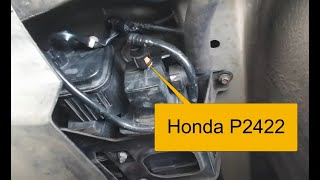
- Safely raise the rear of the vehicle. Locate the EVAP canister assembly. It is a black plastic box found under the vehicle, just in front of the rear driver's side wheel.
- Following the procedure outlined in Honda TSB A15-010, disconnect and remove the canister vent tube. Inspect it for dirt, dust, or spider webs. Tap it on a clean surface to see if debris falls out.
- If the tube is clogged, clean it with compressed air and reinstall. For a permanent fix, install the updated Canister Drain Kit (P/N 06171-T2A-315). Clear the code and drive to see if it returns.
- If the tube is clean, inspect the wiring and connector going to the vent shut valve for damage or corrosion. Ensure the connector is seated firmly.
- If wiring is good, test the vent shut valve itself. You can command it open and closed with a capable bidirectional scanner. Alternatively, remove it (it usually twists out of the canister) and apply 12V and ground to its pins to listen for a click.
- If the valve fails the test, replace it (P/N 17310-TA0-A01). If the valve works when tested externally, the blockage may be within the charcoal canister itself (from debris or fuel saturation), requiring canister replacement.
- After any repair, clear the code and perform an EVAP system self-test or drive the vehicle for several days to confirm the fix.
Parts You'll Likely Need
- EVAP Canister Drain Kit
(OEM #06171-T2A-315)— This is the official Honda-recommended fix to prevent the common issue of the vent tube getting clogged with dirt, which is the primary cause of P2422 on this vehicle per TSB A15-010.
Trusted brands: Honda (Genuine)
OEM price range: $50-$80
Aftermarket price range: N/A - EVAP Canister Vent Shut Valve / Solenoid
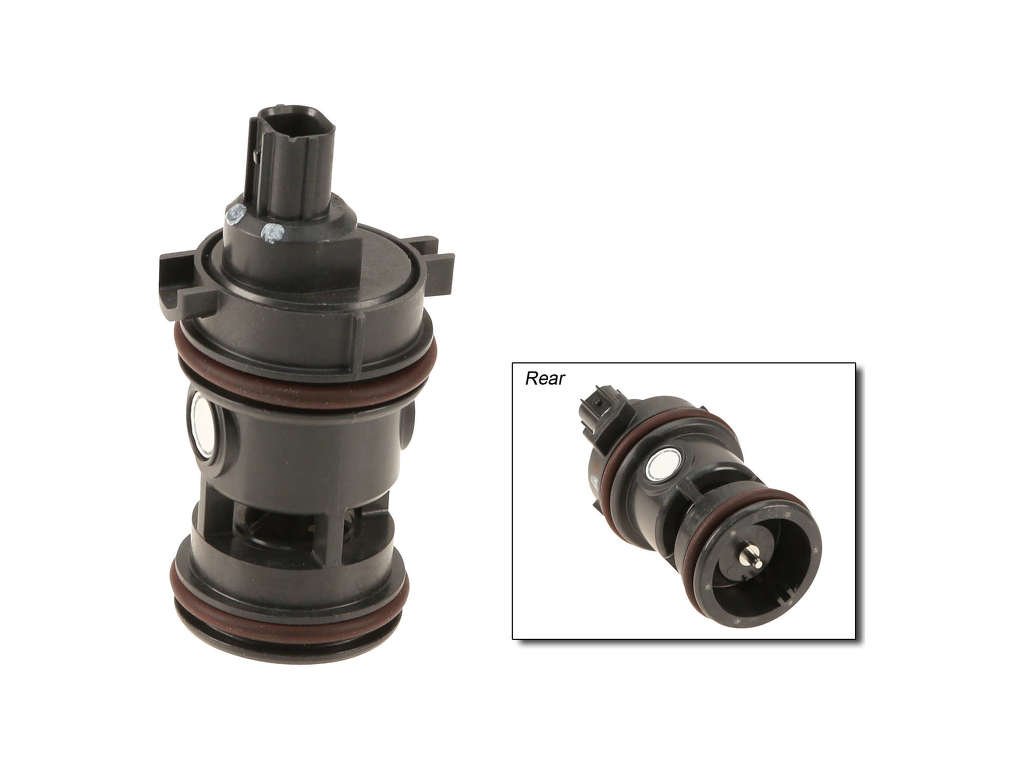
(OEM #17310-TA0-A01)— If a clog is not the issue, the valve itself may have failed mechanically or electrically. This is often replaceable separately from the canister.
Trusted brands: Honda (Genuine), Dorman, Standard Motor Products, Wells
OEM price range: $90-$110
Aftermarket price range: $40-$70 - EVAP Canister Set (Non-California Emissions)
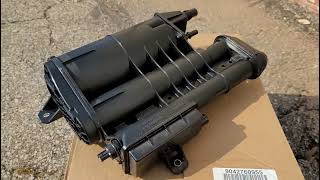
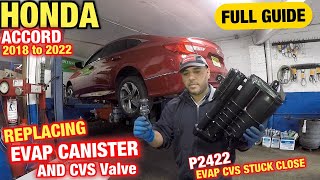
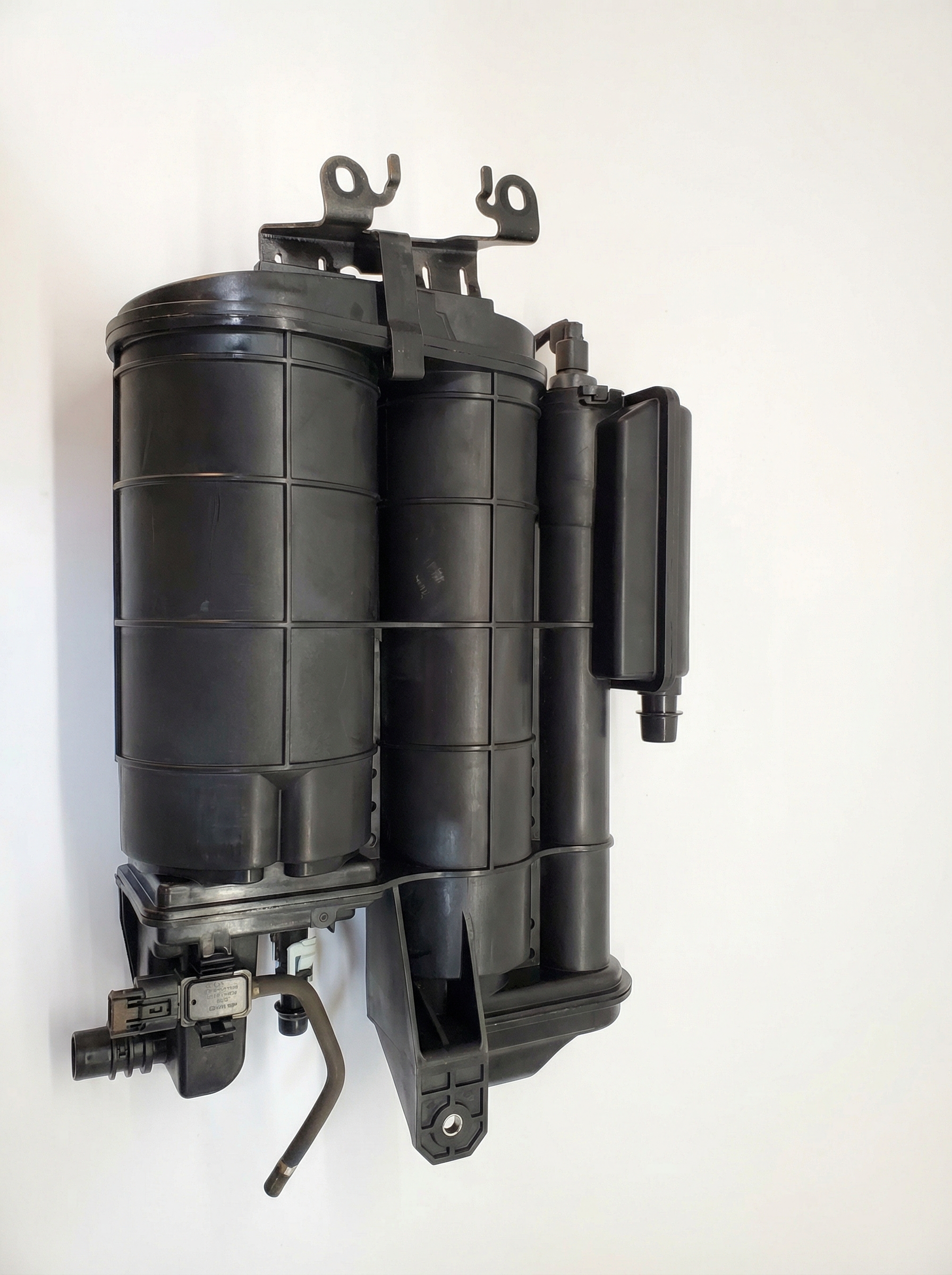
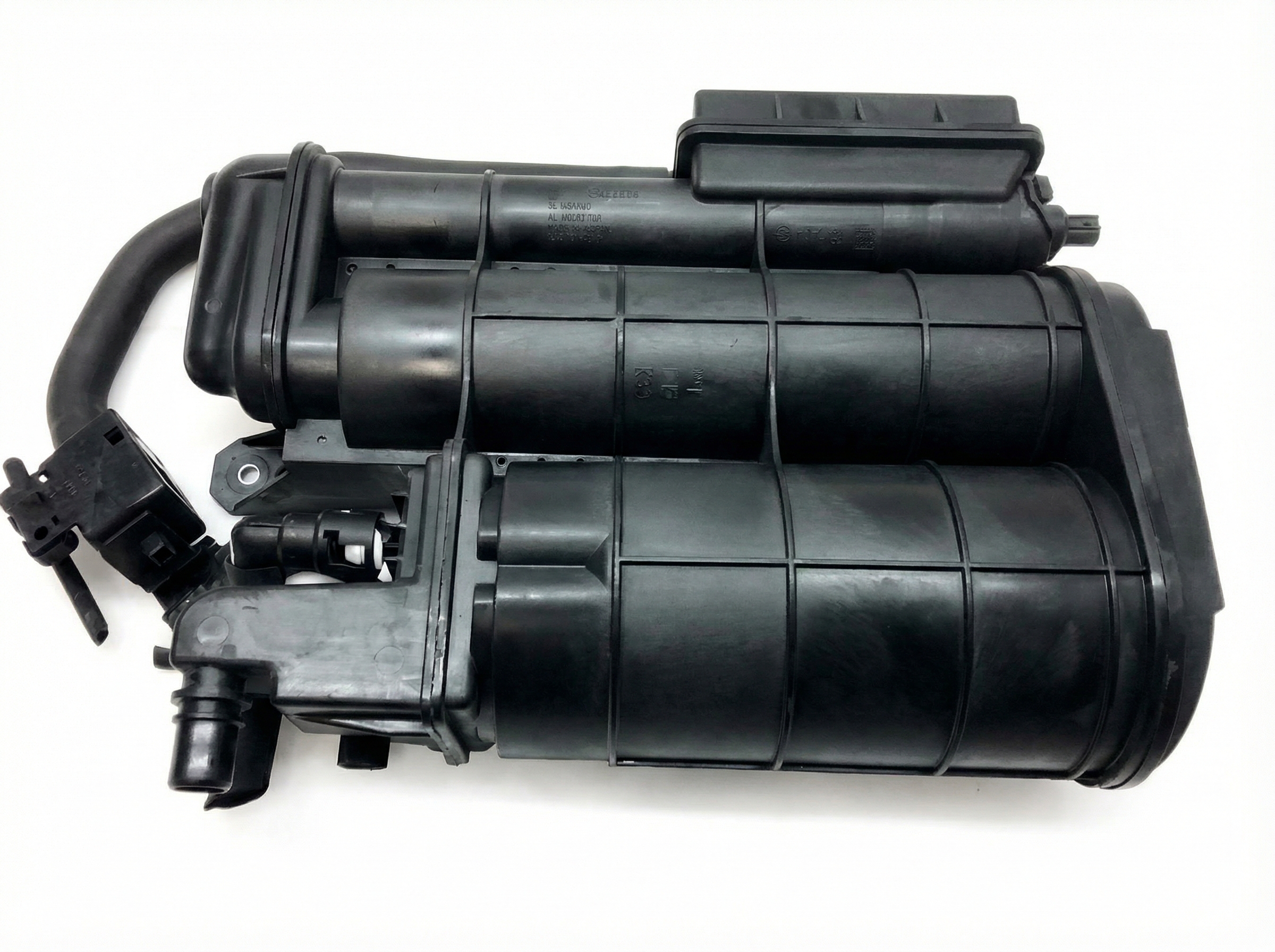
(OEM #17011-T2A-A01)— If the canister's internal filter is clogged, it's saturated with fuel, or the vent valve is seized within it, the entire assembly must be replaced.
Trusted brands: Honda (Genuine)
OEM price range: $350-$540
Aftermarket price range: $150-$250
Technical Service Bulletins (TSBs) & Recalls

- A15-010: 'The MIL is on with DTC P2422 (EVAP canister vent shut valve stuck closed malfunction). Dirt may be clogging the EVAP canister vent tube.' Corrective action is to inspect, and if dirt is found, replace the canister assembly and install a new canister drain kit.
- ATS160701: Notes repeated occurrences of P2422 when driving regularly in very dry and dusty conditions. [NHTSA Data]
- 08-087 (for older Accords): 'PROBABLE CAUSE: Spider webs are clogging the EVAP canister vent hose or the drain box.'
Platform-Specific Known Issues
- Honda issued Technical Service Bulletin (TSB) #A15-010, which directly addresses DTC P2422 on 2013-2017 Accords. It states the most likely cause is dirt clogging the EVAP canister vent tube and recommends installing a new drain kit.
- A previous TSB for 2008-09 Accords (08-087) specifically called out spider webs clogging the drain box and vent hose as the probable cause, recommending cleaning and installing a spring in the drain box to deter them. This highlights a long-standing design vulnerability.
- A Reddit user with a 2020 Accord reported getting P2422 after driving through a deep puddle. Replacing only the valve didn't fix it; they had to replace the canister as well, suggesting water had contaminated the charcoal bed.
Mechanic-Grade Diagnostic Values
- EVAP Canister Vent Shut Valve Solenoid Resistance — expected: 25 to 30 ohms at room temperature. Failure: A reading outside this range indicates a faulty valve.
- Voltage at EVAP Canister Vent Shut Valve Connector — expected: Approximately 12V (battery voltage) at the power supply pin with the ignition ON.. Failure: No voltage suggests a blown fuse or an open in the power wire between the fuse box and the valve.
Scan Tool Commands That Help
- Honda Diagnostic System (HDS) or equivalent bidirectional scanner: EVAP System Function Test — This command initiates a self-test of the entire EVAP system, commanding valves to open and close to check for leaks and proper function. It is the definitive way to verify a repair is successful or to confirm a fault when the code is intermittent.
- Honda Diagnostic System (HDS) or equivalent bidirectional scanner: EVAP Canister Vent Shut Valve (CVS) ON/OFF — This is a direct, active test to command the vent valve open or closed. It allows a technician to listen for the valve's click and, when used with a smoke machine, to confirm if it's sealing and opening correctly.
Wiring & Ground Locations
- EVAP Canister Vent Shut Valve 2-Pin Connector — On the EVAP canister vent shut valve, located on the charcoal canister assembly in front of the driver's side rear wheel.. This is the direct electrical connection to the component. A wiring diagram for a similar model shows a Black/Yellow wire for power (from an under-dash fuse) and a Light Green/Red wire for the control signal from the PCM. Damage or corrosion here is a common cause of failure.
Real Owner Repair Stories
- Reddit user in r/Honda (2020 Honda Accord (demonstrates issue persists beyond the 2013-2017 range)) — Check Engine Light with code P2422 after driving through a deep puddle.
❌ Tried (didn't work) Replacing only the EVAP canister vent valve.
✅ What actually fixed it Replacing both the vent valve and the entire charcoal canister assembly solved the problem, suggesting water had saturated the canister's charcoal bed and created a blockage that a new valve alone could not fix. - Honda-Tech.com user (2008 Honda Accord) — Check Engine Light with code P2422.
✅ What actually fixed it Following Honda TSB 08-087, the user found and cleaned spider webs from the EVAP drain box and vent hose. This resolved the code, confirming the long-standing nature of this specific failure mode.
OEM Part Supersession History
17310-TA0-A01→17310-TBA-A01— Part consolidation and potential design update across multiple Honda and Acura models.
Heads up: The new part number (17310-TBA-A01) is listed as a direct replacement for the original (17310-TA0-A01) and is backward compatible.
Model Year Variations Within This Range
- 2013-2017: The 9th generation Accord had a facelift for the 2016 model year, which included exterior styling changes. However, the core EVAP system components, including the canister, vent valve, and the associated TSB for P2422, apply to the entire 2013-2017 range without significant differences in diagnosis or repair for this specific code.
Helpful Videos
![Honda P2422 [Canister Vent Solenoid/valve] Stuck Closed Diagnosis and Repair](https://img.youtube.com/vi/Q34wILAH22s/mqdefault.jpg)

Used OEM Parts in Stock

New Aftermarket Parts Available


The information in this article is provided for general reference and educational purposes only. Vehicle specifications, procedures, and part compatibility can vary by production date, trim level, and region. Always consult your vehicle's factory service manual and verify part numbers before purchasing or performing repairs. Safety-critical components such as airbags, seat belts, and braking systems should be installed by a qualified professional.
- Honda ACCORD:
- 🎬 Helpful Videos
- 🛍️ Shop This Part
- What's Unique About the 2013-2017 Honda ACCORD
- Diagnostic Flowchart
- Symptoms You May Notice
- Most Likely Causes
- Rare But Worth Checking
- Diagnosis Steps
- Parts You'll Likely Need
- Technical Service Bulletins (TSBs) & Recalls
- Platform-Specific Known Issues
- Mechanic-Grade Diagnostic Values
- Scan Tool Commands That Help
- Wiring & Ground Locations
- Real Owner Repair Stories
- OEM Part Supersession History
- Model Year Variations Within This Range
- 🎟️ Get 5% Off