

P2421 on 2017-2023 VW Jetta: EVAP Vent Valve Stuck Open Causes & Fixes
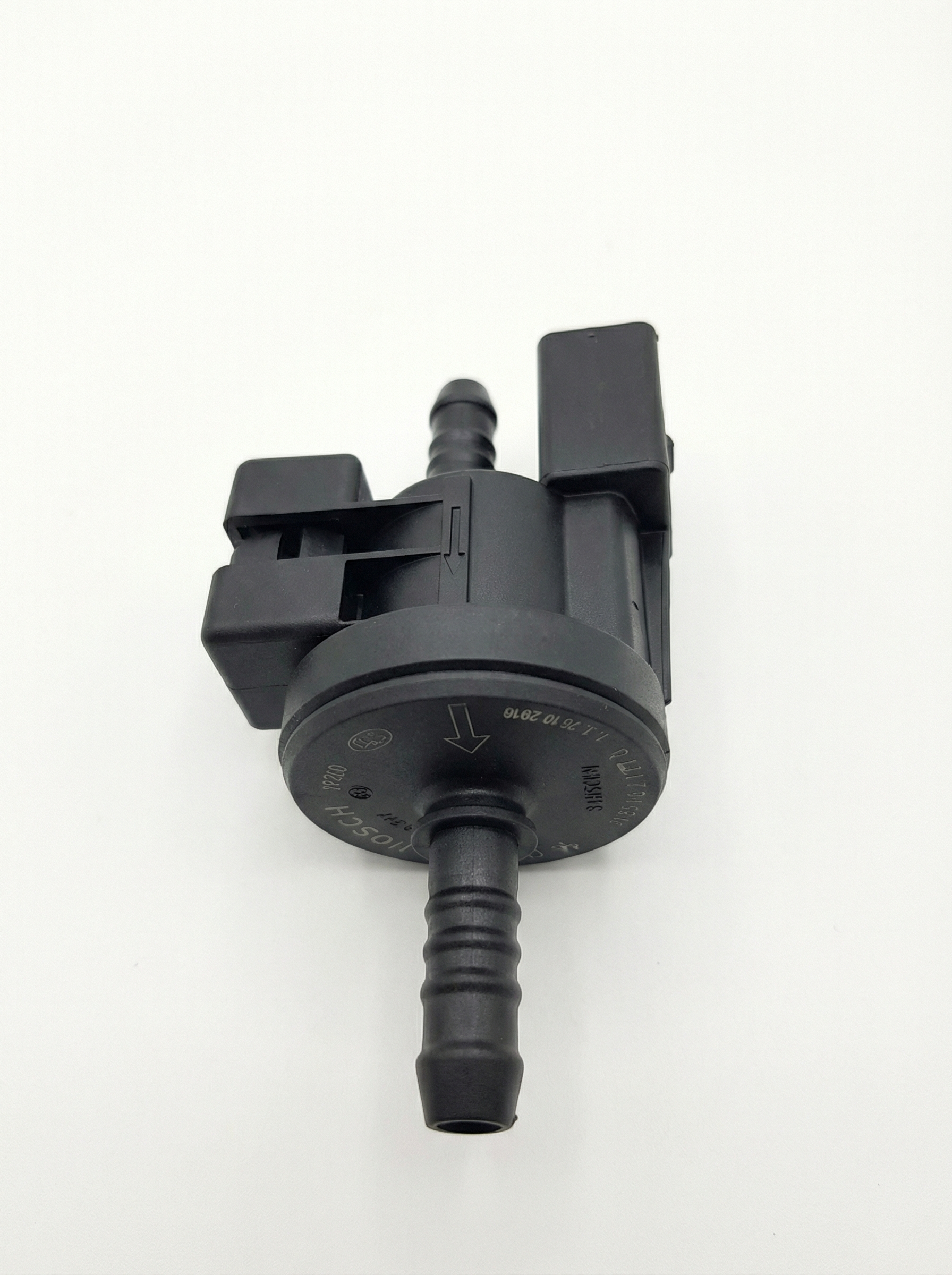
This code almost always means the EVAP Leak Detection Pump (LDP), which includes the vent valve, has failed. It's a common issue on these Jettas. Before replacing the LDP (Part # 5Q0-906-253-D or similar), check with a dealer for critical software updates per TSB #2072378, as a software glitch can falsely trigger the code. A replacement LDP costs $100-$200 and is a relatively easy DIY fix.
- P2421 on a 2017-2023 Jetta points to a stuck open EVAP vent valve.
- The most likely culprit is a failed Leak Detection Pump (LDP) assembly, a known issue for this platform.
- Before replacing parts, always check with a VW dealer for TSBs, as a software update (TSB #2072378) might be the required fix.
- The LDP is located in the rear passenger-side wheel well and is a manageable DIY replacement for those with basic tools.
- Driving with this code is safe, but the vehicle will not pass an emissions test.
What's Unique About the 2017-2023 Volkswagen JETTA

On many modern Volkswagens built on the MQB platform, including the Jetta, Golf, and Atlas, the component that triggers this code isn't just a simple valve. The vent valve is integrated into a larger assembly called the Leak Detection Pump (LDP). This is why you'll often see P2421 appear alongside other EVAP codes, as noted in manufacturer TSBs. The failure of this entire LDP assembly is a well-documented issue on this platform, making it the primary suspect anytime P2421 appears.
Diagnostic Flowchart

Tap your situation to follow the diagnostic path that matches what you're seeing on this vehicle.
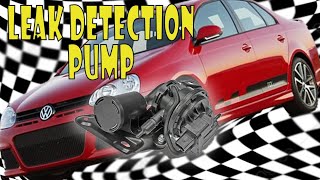
Generation note: The 2017-2023 year range covers two Jetta generations: the end of the A6 (Mk6) from 2017-2018 🎬 Watch a replacement walkthrough for the Mk6 Jetta platform. and the A7 (Mk7) from 2019-2023. While the EVAP system principles are the same, the exact part number for the Leak Detection Pump may differ. Always verify the part with your vehicle's VIN. The issue is confirmed to persist even on 2024 models.
Symptoms You May Notice

- Check Engine Light (MIL) is on
- Inability to pass an emissions test
- A faint smell of gasoline, especially around the rear of the car
- A rattling noise from underneath the vehicle, as mentioned in TSB #VIN4APIN20230912
- Replacing the N80 Purge Valve. The N80 valve is located in the engine bay and controls vapor flow to the intake. While it's part of the EVAP system, it is not the vent valve and will not fix a P2421 code.
- Replacing the charcoal canister. While a canister can become clogged, it's much less common than the LDP failing. The LDP should be tested first before considering a canister replacement.
Most Likely Causes

- Faulty EVAP Leak Detection Pump (LDP) 🔴 High Probability The LDP, which contains the vent valve, is a known failure point on this platform, as evidenced by forum discussions and TSBs. The internal pressure sensor or the valve mechanism itself can fail, causing the valve to stick open.
How to confirm: Use a scan tool to command the vent valve/LDP. If it doesn't respond or you can't hear it click, it's likely faulty. The part is located in the rear passenger-side wheel well area, accessible after removing the fender liner with a T25 Torx driver.
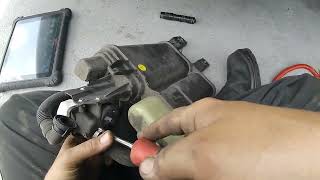
Typical fix: Replace the entire Leak Detection Pump assembly. 🎬 Watch this step-by-step guide to replacing the Jetta leak detection pump.
Est. part cost: $100 - $200 - Damaged Wiring or Connector 🟡 Medium Probability The LDP is located in the wheel well, exposing its wiring to road debris, moisture, and corrosion over time, which can lead to a short or open circuit.
How to confirm: Visually inspect the wiring harness and connector going to the Leak Detection Pump for any signs of damage, corrosion, or loose pins. Test for power (approx. 12-14V) and a pulse-width modulated ground signal at the connector with a multimeter when the valve is commanded by a scan tool.
Typical fix: Repair the damaged section of the wiring harness or replace the connector pigtail.
Est. part cost: $10 - $30 - Loose or Faulty Gas Cap ⚪ Low Probability While a loose gas cap typically causes a 'small leak' code (like P0456), it can sometimes confuse the system and contribute to other EVAP codes. It's a simple and free check.
How to confirm: Ensure the gas cap is tightened until it clicks at least once. Inspect the cap's seal for cracks or damage.
Typical fix: Tighten the gas cap. If the seal is damaged, replace the gas cap.
Est. part cost: $15 - $40
Rare But Worth Checking
- ECM Software Issue: Volkswagen has issued TSBs that address an erroneous P2421 fault. TSB #01-22-03 initially covered this, but a later revision directs technicians to use a separate bulletin, TSB #2072378, specifically for P2421 issues. This is a critical first check at a dealership before replacing any parts.
- Faulty Fuel Tank Isolation Valve (FTIV): TSB #01-22-03 for 2020-2021 Jettas mentions that in addition to a software update, an improved Fuel Tank Isolation Valve (FTIV), part number -N288-, may need to be installed to prevent erroneous P2421 codes. This valve is mounted on the EVAP canister assembly.
Diagnosis Steps
- Read the code with an OBD-II scanner and check for any other pending or stored codes.
- CRITICAL FIRST STEP: Check with a VW dealer for any open campaigns or TSBs related to P2421 for your vehicle's VIN. Specifically mention TSB #2072378, as a software update may be the only fix required.
- Check the gas cap to ensure it is tight and the seal is in good condition.
- Visually inspect the Leak Detection Pump (LDP) and its wiring harness. The LDP is located behind the rear passenger-side wheel well liner, which is held by T25 Torx screws. Look for any obvious damage, cracks, or corrosion.
- Using a capable scan tool, attempt to command the EVAP vent valve/LDP to close. Listen for an audible click from the pump assembly.
- If no click is heard, check for power and a ground signal at the LDP connector with a multimeter to rule out a wiring issue.
- If wiring is good but the pump does not actuate, the Leak Detection Pump assembly is faulty and needs to be replaced.
- If the code appeared on a 2020-2021 model, inspect the Fuel Tank Isolation Valve (FTIV) on the EVAP canister to see if it is the updated part per TSB #01-22-03.
- After any repair, clear the codes and perform a complete EVAP drive cycle to confirm the fix.
Parts You'll Likely Need
- EVAP Leak Detection Pump
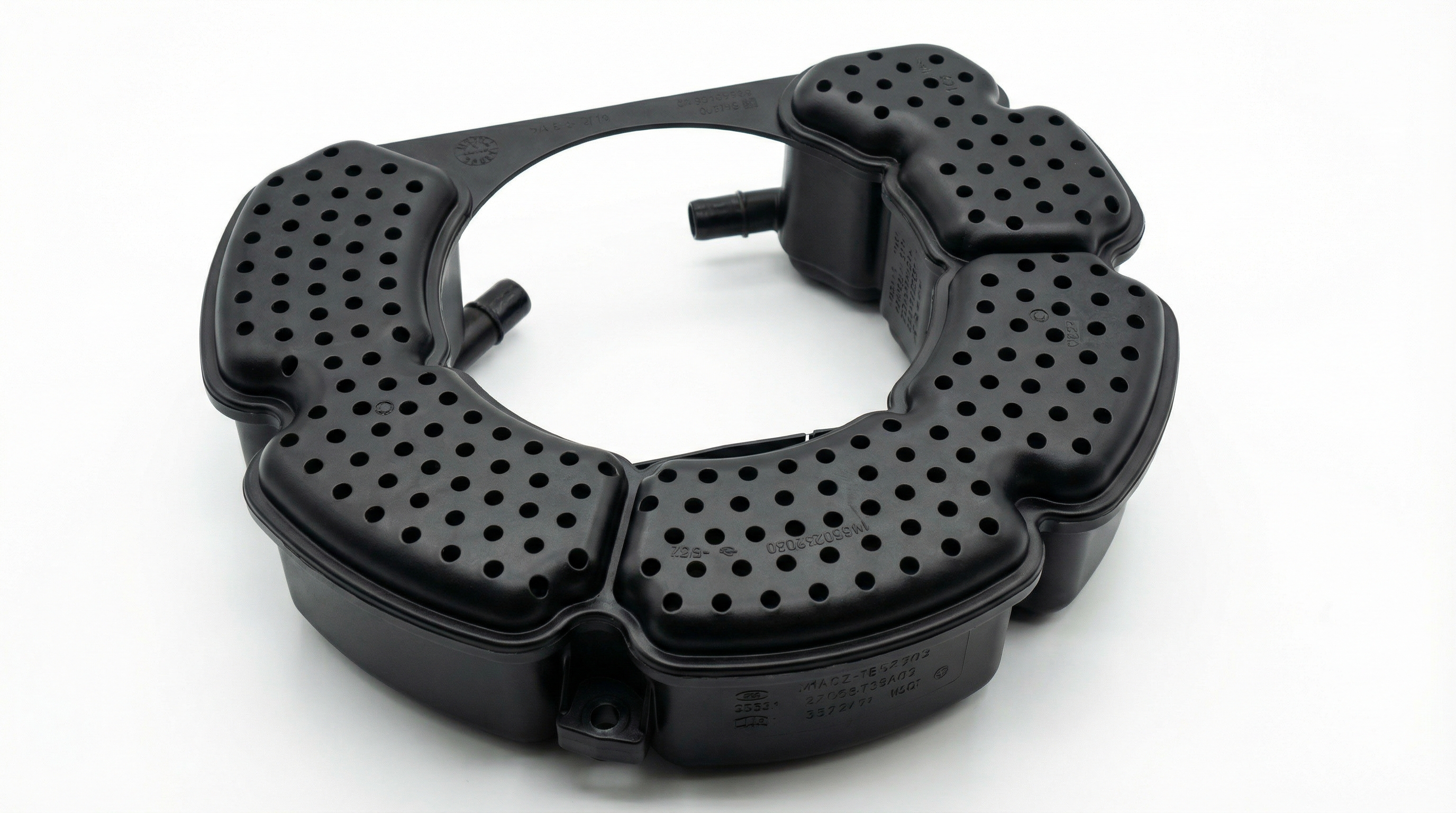
(OEM #5Q0-906-253-D (supersedes 5Q0906253A, 5Q0906253B, 5Q0906253C))— This assembly contains the vent valve that is the root cause of the P2421 code. It is the most common failure point for this issue on the Jetta and its platform mates.
Trusted brands: Bosch, Genuine VW/Audi
OEM price range: $150-$220
Aftermarket price range: $90-$150
Related Codes That Often Appear With This One
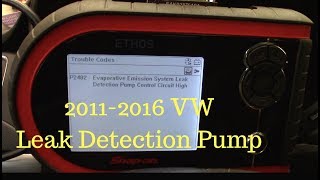
- P2402 — This code for 'EVAP Leak Detection Pump Control Circuit High/Open' is mentioned alongside P2421 in TSB #VIN4APIN20230912. This strongly indicates an electrical failure within the LDP assembly itself, as it points to a fault in the same component. 🎬 See how to swap the pump when dealing with a P2402 code.
- P0441 — This code for 'Incorrect Purge Flow' can sometimes appear with other EVAP faults as the system struggles to operate with a major leak, like a stuck open vent valve. TSB #01-22-03 also links these codes to a potential software fix.
Technical Service Bulletins (TSBs) & Recalls
- VIN4APIN20230912: Customer states MIL-on, P2421 stored in ECM memory
- VIN4APIN20210114: Customer states MIL-on with P2421
- VIN4APIN20210121: Customer states MIL-on with P2421
- 01-22-03 (NHTSA ID 10210031): Proactively corrects P2421 DTCs via software update and potential hardware change (FTIV) on 2020-2021 models.
- TSB 2072378: Noted in a revision of TSB 01-22-03 as the correct bulletin to follow for P2421 diagnosis, superseding the procedure in the original TSB.
Platform-Specific Known Issues
- TSB #VIN4APIN20230912, #VIN4APIN20210114, and #VIN4APIN20210121 all list customer complaints of 'MIL-on with P2421' for 2017-2023 Jettas, confirming this is a recognized issue.
- TSB #01-22-03 (and its successor for this code, TSB #2072378) notes that a software update may be required to prevent erroneous P2421 faults, and in some cases, an improved Fuel Tank Isolation Valve (FTIV) may need to be installed.
Mechanic-Grade Diagnostic Values
- Leak Detection Pump (V144) internal resistance — expected: Between pins 1 & 3: 640 to 720 Ω. Between pins 2 & 3: 15 to 17 Ω.. Failure: Readings outside of these ranges indicate a faulty LDP.
- Voltage supply to LDP connector — expected: Battery voltage (~12V) at pin 3 with ignition on.. Failure: No voltage indicates a wiring or fuse issue upstream of the pump.
Scan Tool Commands That Help
- VCDS (Ross-Tech): Basic Settings - Group 070 (Tank Leakage Test) — To command the EVAP system to run its self-test. The results will show 'Fuel tank ventilation OK' or 'Fuel tank ventilation not OK', directly testing the system's ability to seal, which is compromised by a stuck-open vent valve.
- VCDS (Ross-Tech): Basic Settings - Group 071 (Tank Leak Test) — This test specifically looks for small or large leaks and can help confirm the system's failure to seal. The status will show 'Abort Syst. OK' or 'Abort Syst. Not OK'.
- ODIS (VW Dealer Tool): Guided Fault Finding (GFF) — This is the dealer-level procedure that walks a technician through the official diagnostic plan for P2421, including checking software versions (per TSBs), commanding components, and running system tests.
Wiring & Ground Locations
- Ground Connection 681 / 682 — In the luggage compartment / right rear side panel area.. The LDP is located in the rear passenger wheel well. A poor ground connection at one of these nearby points could cause intermittent or complete failure of the LDP's electrical circuit, mimicking a failed pump.
- LDP Connector (T4cb) — Directly on the Leak Detection Pump (V144) in the rear passenger wheel well.. This is the primary point for electrical testing. Pin 3 is the voltage supply, while pins 1 and 2 are for the control circuit from the ECM. Checking for voltage and continuity here is essential to differentiate a wiring fault from a pump failure.
Real Owner Repair Stories
- Reddit user AirlineAdventurous26 (2021 Jetta SE) — Check Engine Light with code P2421, seemingly triggered after using remote start.
❌ Tried (didn't work) Took the car to the dealer 6 times between March 2022 and April 2024 for the same P2421 code. The issue kept returning despite multiple repair attempts.
✅ What actually fixed it The issue was not resolved after multiple dealer visits, leading the owner to pursue a vehicle buyback from VW North America. This highlights that even with dealer tools, the root cause (potentially a software or intermittent wiring issue) can be extremely difficult to pinpoint. - Reddit user Tortoise307 (2024 Jetta S, 137 miles) — Check Engine Light with code P2421 on a brand new car.
❌ Tried (didn't work) Clearing the code, which returned shortly after.
✅ What actually fixed it The dealership replaced the valve that was stuck open under warranty. This confirms the LDP assembly can be faulty from the factory and is an issue on the latest model years.
OEM Part Supersession History
5Q0906253A, 5Q0906253B, 5Q0906253C→5Q0906253D— Parts are often superseded to improve reliability, change manufacturing processes, or use different materials. In this case, it reflects ongoing revisions to a known failure-prone component.
Heads up: All listed revisions (A, B, C, D) are generally cross-compatible. Using the latest revision (5Q0-906-253-D) is always recommended.
Model Year Variations Within This Range
- 2017-2018 (A6) vs 2019-2023 (A7): The 2019 model year marked a major redesign, moving the Jetta to the global MQB platform. While the 1.4L engine carried over, the vehicle architecture, body, and electrical systems were completely new. This means that while the function of the LDP is the same, wiring diagrams, ground locations, and module communications can differ significantly between a 2018 and a 2019 model.
- 2020-2021: As per TSB 01-22-03, these specific model years may require not only a software update but also the installation of an improved Fuel Tank Isolation Valve (FTIV), component -N288-, to fully resolve erroneous P2421 faults. This is a hardware change not specified for other years in the range.
Helpful Videos
We Have This Part in Stock

The information in this article is provided for general reference and educational purposes only. Vehicle specifications, procedures, and part compatibility can vary by production date, trim level, and region. Always consult your vehicle's factory service manual and verify part numbers before purchasing or performing repairs. Safety-critical components such as airbags, seat belts, and braking systems should be installed by a qualified professional.
- Volkswagen JETTA:
- 🎬 Helpful Videos
- 🛍️ Shop This Part
- What's Unique About the 2017-2023 Volkswagen JETTA
- Diagnostic Flowchart
- Symptoms You May Notice
- Most Likely Causes
- Rare But Worth Checking
- Diagnosis Steps
- Parts You'll Likely Need
- Related Codes That Often Appear With This One
- Technical Service Bulletins (TSBs) & Recalls
- Platform-Specific Known Issues
- Mechanic-Grade Diagnostic Values
- Scan Tool Commands That Help
- Wiring & Ground Locations
- Real Owner Repair Stories
- OEM Part Supersession History
- Model Year Variations Within This Range
- 🎟️ Get 5% Off