

P2421 on 2013-2019 Ford Escape: EVAP Vent Valve Stuck Open Causes and Fixes
This code means the EVAP system's vent valve, located near the fuel tank, is stuck open. The most common fix is replacing the canister vent valve solenoid itself. Expect to pay between $40-$70 for an aftermarket part and around $100-$130 for an OEM Motorcraft part. This is not the same as the purge valve in the engine bay, which is related to code P1450 and hard starting after refueling.
- P2421 specifically refers to the EVAP Vent Valve, which is located at the rear of the Escape near the fuel tank, NOT the purge valve in the engine bay.
- The most likely cause is a failed vent valve solenoid (Motorcraft part 9U5Z-9F945-C), which is a relatively inexpensive part and can be replaced by a DIYer with basic tools.
- Before replacing the valve, check its electrical connector and nearby wiring for corrosion or damage, as this can also cause the code.
- Do not confuse this code with P1450, which relates to the purge valve and has different symptoms like stalling after refueling.
- Driving with this code is not dangerous, but it will cause your vehicle to fail an emissions test.
What's Unique About the 2013-2019 Ford Escape
On this generation of Ford Escape, EVAP system codes are common, but owners and technicians frequently confuse the part implicated by P2421 (the rear vent valve/solenoid) with the more widely discussed engine-bay-mounted purge valve. The purge valve (related to codes like P1450) is notorious for causing hard starting after refueling and rough idling. However, P2421 specifically points to the vent valve circuit at the rear of the vehicle, near the charcoal canister, and replacing the purge valve will not fix it.
Symptoms You May Notice
- Check Engine Light is on.
- Possible faint fuel smell near the rear of the vehicle.
- Inability to pass a state emissions inspection.
- In some cases, may be accompanied by difficulty filling the fuel tank (gas pump clicks off repeatedly), though this is more common with a clogged canister or stuck closed valve.
- Replacing the engine-bay mounted 'Vapor Canister Purge Valve'. This is a very common failure part on Ford Escapes that causes rough running, stalling after refueling, and is often associated with code P1450. While it is part of the EVAP system, it is a completely different component from the 'Canister Vent Valve' (also called a vent solenoid) indicated by P2421, which is located at the rear of the vehicle.
Most Likely Causes
- Failed EVAP Canister Vent Valve/Solenoid 🔴 High Probability The valve is located underneath the vehicle, exposing it to road debris, moisture, and corrosion which can cause it to fail either mechanically (stuck) or electrically.
How to confirm: Using a capable scan tool, command the vent valve to close while monitoring system pressure. If the system cannot build a vacuum, the valve is likely stuck open. You can also apply 12V power directly to the solenoid's pins to listen for a 'click'; no click suggests an electrical failure. A smoke test is definitive: if smoke flows out of the vent valve when it is commanded closed, it has failed.
Typical fix: Replace the canister vent valve solenoid. This part is typically mounted directly on or next to the charcoal canister at the rear of the vehicle, near the spare tire well. 🎬 Watch: Step-by-step guide to replacing the rear vent solenoid.
Est. part cost: $40-$130 - Damaged or Corroded Wiring/Connector 🟡 Medium Probability The wiring harness leading to the vent valve is routed under the car and can be damaged by road debris, or the connector pins can corrode from moisture.
How to confirm: Visually inspect the wiring harness for any breaks, chafing, or signs of damage. Unplug the connector and check for green or white corrosion on the pins. Use a multimeter to check for continuity and proper voltage at the connector when the valve is commanded by the scan tool.
Typical fix: Repair the damaged section of wire or clean/replace the electrical connector.
Est. part cost: $5-$50 - Debris in Vent Valve ⚪ Low Probability Dust, dirt, or even insects can sometimes enter the EVAP system's fresh air intake and physically jam the vent valve open.
How to confirm: Remove the vent valve and inspect its orifice for any foreign material that would prevent the pintle from seating and sealing. Sometimes tapping the valve can dislodge debris.
Typical fix: Attempt to clean the debris out of the valve. If it cannot be fully cleaned or is damaged, replace the valve.
Est. part cost: $0-$130
Rare But Worth Checking
- Cracked Charcoal Canister or EVAP Hose: A significant leak in the EVAP system near the vent valve, such as a crack in the charcoal canister body or a disconnected hose, can mimic the signature of a stuck-open valve, causing the PCM to set P2421 incorrectly. A smoke test is the best way to confirm this. Liquid fuel contamination from overfilling the tank can also saturate and ruin the canister.
- Faulty Powertrain Control Module (PCM): This is extremely rare. The PCM should only be considered as the cause after all other possibilities (valve, wiring, hoses) have been exhaustively tested and ruled out.
Diagnosis Steps
- Verify code P2421 is present using an OBD-II scanner.
- Visually inspect the area around the charcoal canister at the rear of the vehicle, underneath near the spare tire well. Look for any disconnected hoses, obvious cracks in the canister, or damage to the vent valve's wiring harness.
- Using a bidirectional scan tool, command the EVAP vent valve to close. Listen for an audible click from the solenoid.
- If a click is heard, perform an EVAP system smoke test. Introduce smoke into the system (usually via the purge valve line or a dedicated service port) and check if smoke exits from the vent valve assembly. If it does, the valve is mechanically stuck open and must be replaced.
- If no click is heard, disconnect the electrical connector at the vent valve. Check for 12V power and a ground signal at the connector pins when the valve is commanded by the scan tool. If power and ground are present, the valve has failed electrically and needs replacement.
- If power or ground is missing at the connector, inspect the wiring harness for breaks, chafing, or corrosion. Trace the circuit back toward the PCM to find the open or short.
- If the valve, wiring, and hoses are all confirmed to be good, the charcoal canister itself may be internally faulted or cracked, requiring a smoke test to confirm. A canister saturated with fuel can also cause issues.
Parts You'll Likely Need
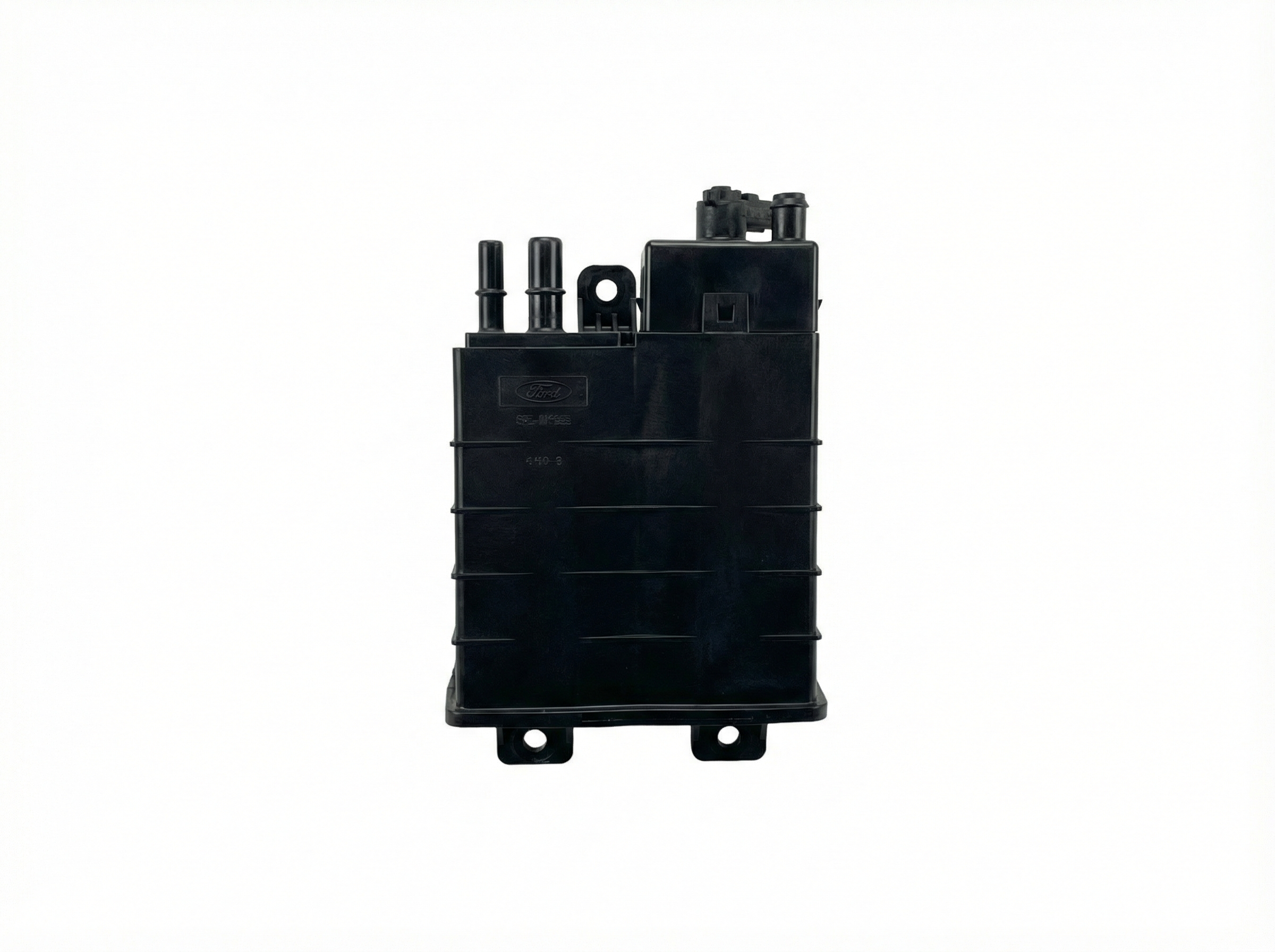
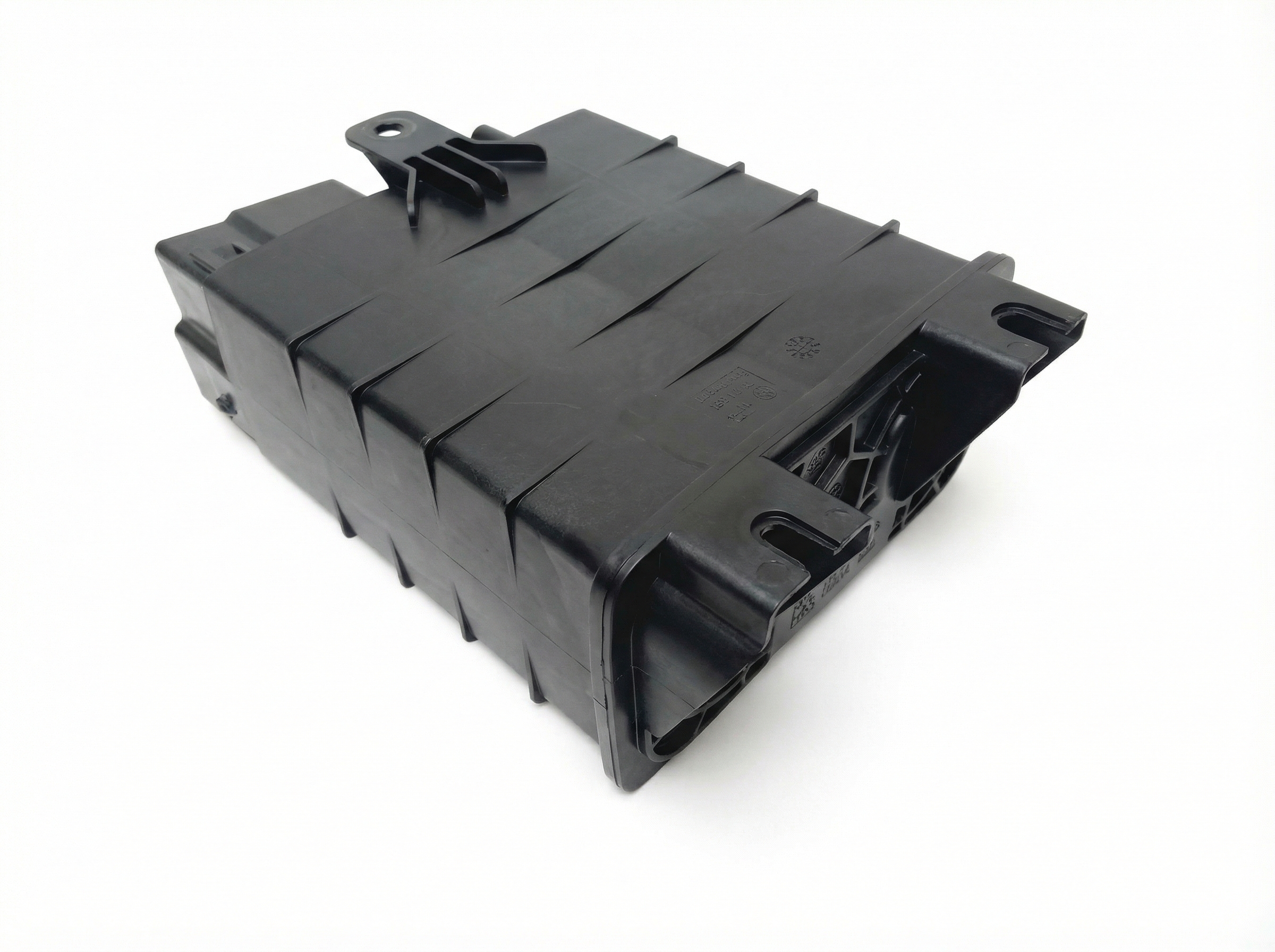
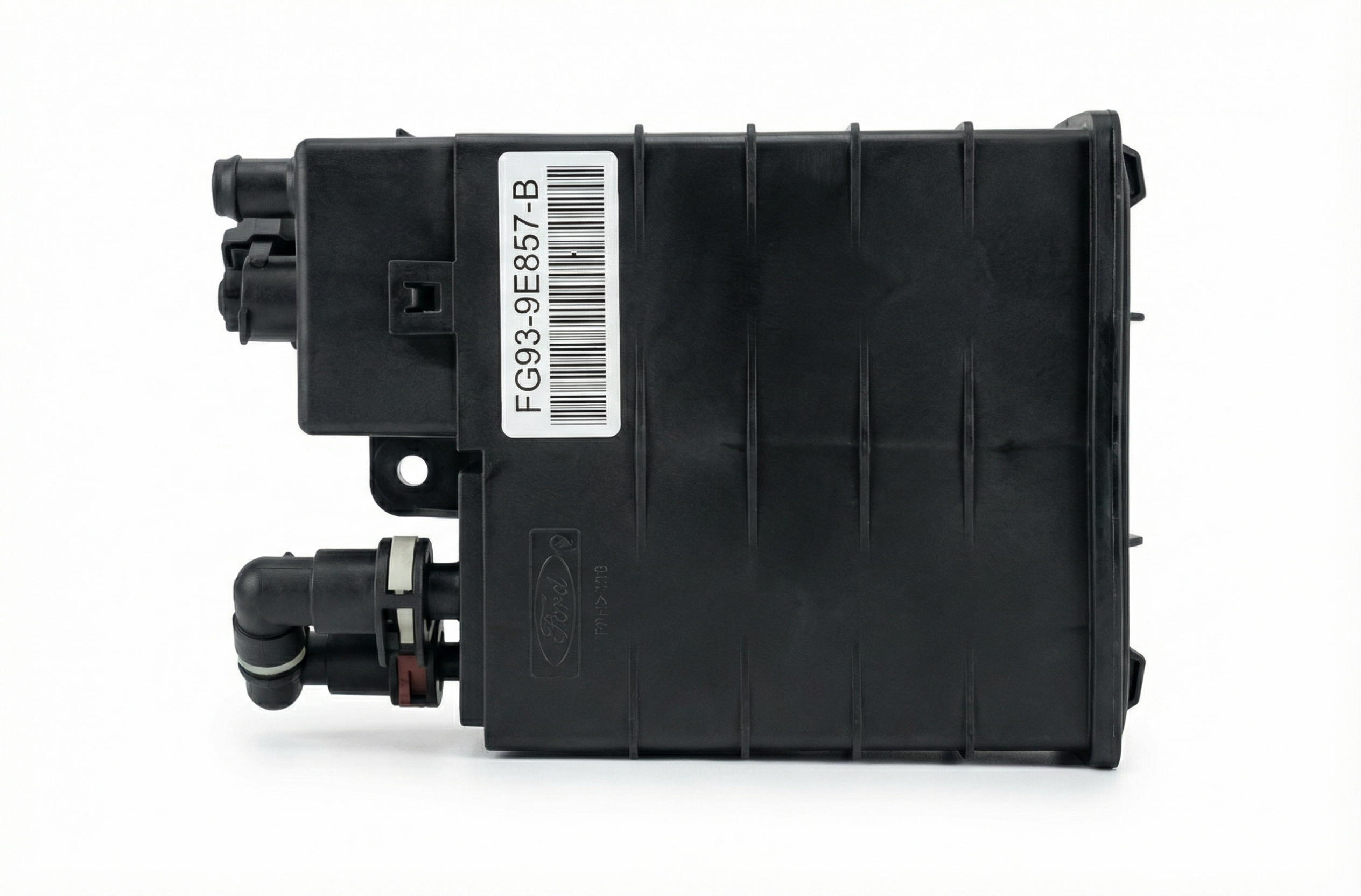
- EVAP Canister Vent Valve Solenoid
(OEM #9U5Z-9F945-C)— This is the component directly identified by the fault code. It is an electromechanical valve that is prone to failure from environmental exposure under the vehicle. The OEM part is Motorcraft CX-2746.
Trusted brands: Motorcraft, Dorman, Standard Motor Products (SMP), API
OEM price range: $100-$130
Aftermarket price range: $40-$70
Related Codes That Often Appear With This One
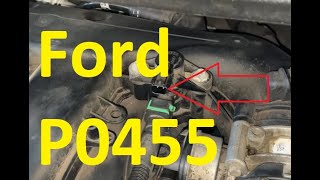
- P0455 — A 'Gross Leak Detected' code often accompanies P2421 because a vent valve that is stuck wide open is considered a very large leak by the system. 🎬 See how to diagnose and fix gross EVAP system leaks.
- P0449 — This code points specifically to an electrical fault in the vent valve's control circuit (e.g., open or shorted wiring), which could be the root cause of why the valve is stuck open and triggering P2421.
Technical Service Bulletins (TSBs) & Recalls
- While no TSB directly addresses P2421 for this specific model range, Ford has issued related EVAP system recalls and bulletins for other models that share components. For example, recall 18S32 / NHTSA 18V735 addresses a stuck-open canister purge valve (CPV) and a necessary PCM software update on other Ford vehicles. This highlights the brand's history of issues with EVAP system valves.
Platform-Specific Known Issues
- Owner Experience: P2421 and P1450 Confusion: On fordescape.org forums, owners frequently post about EVAP codes. A common thread is confusion between the P1450 code (Unable to Bleed Up Fuel Tank Vacuum), which points to the engine bay purge valve and causes stalling after fill-ups, and P2421, which points to the rear vent valve. Users often mistakenly replace the purge valve for a P2421 code with no success, only to later find the issue was the vent solenoid near the tank.
- Repair Story: Simple Vent Valve Replacement: A user on a Reddit thread described resolving their P2421 code on a similar Ford platform by simply replacing the canister vent solenoid. The part was located under the rear of the car, exposed to the elements. After confirming the valve wouldn't 'click' when 12V was applied, they swapped the part in under an hour, which resolved the Check Engine Light.
Mechanic-Grade Diagnostic Values
- Canister Vent Solenoid (CVS) Connector Voltage - Power Pin — expected: Battery Voltage (~12V) with Key On, Engine Off. Failure: No voltage indicates a wiring issue upstream (fuse, harness).
- Canister Vent Solenoid (CVS) Connector Voltage - Control Pin — expected: The PCM provides a switched ground to close the valve. Voltage will be near battery voltage when open (inactive) and drop to near 0V when commanded closed (active).. Failure: Voltage does not change when valve is commanded closed, indicating a wiring or PCM driver issue.
- Canister Vent Solenoid (CVS) Coil Resistance — expected: Approximately 20-40 Ohms, but this is a generic value. Always consult the specific vehicle service manual if possible.. Failure: Infinite resistance (open circuit) or zero resistance (short circuit) indicates a failed solenoid coil.
- EVAP System Leak Test Target Pressure (via Scan Tool) — expected: During a system self-test, the PCM may try to pull the system down to approximately -8.0 inches of water (-8.0 in-H2O).. Failure: If the system is unable to achieve this target vacuum when the vent valve is commanded closed, it indicates a leak. P2421 is set when the PCM knows the vent is commanded closed but pressure readings indicate it is still open.
Hidden / Shadow Codes Worth Checking
- Mode $06 Data: This is not a trouble code, but a diagnostic mode that shows the results of the PCM's self-tests for non-continuously monitored systems, including the EVAP system. A technician can view the raw data for the EVAP leak test to see if the system is passing or failing, and by how much, sometimes before a code is set. (see via A capable OBD-II scan tool that supports Mode $06 functionality.)
Scan Tool Commands That Help
- FORScan: EVAP System Test — FORScan is a powerful aftermarket diagnostic tool for Ford vehicles. It can be used to initiate the onboard EVAP system self-test on demand, which commands the vent and purge solenoids through their cycle and reports back a pass/fail status. This is useful for verifying a repair without having to perform a full drive cycle.
- Ford IDS (or equivalent professional scanner): Output State Control for EVAPCV (Canister Vent) — This bidirectional command allows a technician to manually open and close the canister vent solenoid from the scan tool. This is critical for diagnosis, allowing you to listen for the solenoid's 'click' and to seal the system for a smoke test.
Wiring & Ground Locations
- EVAP Canister Vent Valve Connector — At the EVAP canister vent valve, located on or near the charcoal canister at the rear of the vehicle, near the spare tire well.. This is the primary connection to test for power, ground, and signal. The connector and its pins are susceptible to corrosion and damage due to their exposed location under the vehicle.
- EVAP Component Wiring (1.5L EcoBoost) — Harness routing from the PCM to the rear of the vehicle.. On some models (e.g., 1.5L), a White wire with a Brown tracer has been identified as a common power feed for multiple EVAP components, including the vent valve. A fault on this shared circuit could affect multiple components.
OEM Part Supersession History
7U5Z-9F945-D, 7U5Z-9F945-E→9U5Z-9F945-C— Standard part revision and consolidation by the manufacturer.
Heads up: The newer part number (9U5Z-9F945-C) is the correct replacement for the older versions. Some parts vendors incorrectly label this part as a 'Purge Solenoid', which can add to diagnostic confusion.
Model Year Variations Within This Range
- 2013-2016 vs 2017-2019: The primary smaller EcoBoost engine option changed. 2013-2016 models used a 1.6L EcoBoost, while the facelifted 2017-2019 models used a 1.5L EcoBoost. However, the EVAP canister vent valve part number (9U5Z-9F945-C) appears to be consistent across the entire 2013-2019 model range for all engine types, so the diagnosis and repair of P2421 remain the same regardless of the facelift or engine.
Diagnostic Flowchart
Other Known Issues on This Vehicle
Issues unrelated to this code that are worth knowing about as an owner of this generation:
- 1.5L/1.6L EcoBoost Coolant Intrusion 🔴 High — Common issue affecting 2013-2019 models. A defect in the engine block design can allow coolant to leak into the cylinders, leading to misfires, white smoke, and eventual engine failure. (Ref: Ford TSB 19-2375 addresses this for 1.5L engines, recommending a short block replacement.)
- 6F35 Transmission Failures and Harsh Shifting 🔴 High — Widespread across many model years, particularly 2013-2016. Symptoms include shuddering, slipping, harsh shifts, and complete failure, sometimes at low mileage. (Ref: Multiple TSBs exist, like 16-0043 for leaking seals. A class-action lawsuit was filed in 2024 regarding these transmission issues.)
- Faulty Door Latches 🟠 Medium — Common on 2013-2015 models. A component within the latch can break, preventing the door from closing securely or causing it to open while driving. (Ref: Ford Recall 16S30 was issued to replace the faulty door latches free of charge.)
- Engine Overheating (1.6L EcoBoost) 🔴 High — Prevalent in 2013 models, leading to engine fires in some cases. Caused by issues in the cooling system. (Ref: Ford issued recall 13S12 to address the overheating risk.)
- Failed Canister Purge Valve (P1450) 🟡 Low — Extremely common across all engines. The valve sticks open, causing difficult starting and rough idling immediately after refueling. (Ref: Recall 18S32 / 18V735 was issued for some Ford models due to a stuck purge valve deforming the fuel tank.)
Used vs. New Parts: Buying Guide for This Vehicle
When a used part is the smart pick: For this specific part, a used component is not recommended. The part is an electromechanical solenoid located in a high-corrosion area under the vehicle. The low cost of a new aftermarket part makes the risk of premature failure from a used part not worth the small savings.
What to inspect on the donor part:
- Not applicable as used part is not recommended.
OEM-only on this vehicle (don't cheap out):
- While not strictly 'OEM-only', using a Motorcraft (OEM) part provides the highest confidence in fit, function, and material quality. Some complex electronic modules on other vehicle systems are often recommended as OEM-only, but for this solenoid, reputable aftermarket is a viable option.
Aftermarket brands forum-validated for this vehicle:
- Dorman
- Standard Motor Products (SMP)
Brands owners have reported issues with on this vehicle:
- No specific brands were consistently cited in forums as being problematic for this particular part. However, be cautious of unbranded, deeply discounted parts from online marketplaces, as quality can be highly variable.
Real Owner Stories
Aggregated from forums and TSBs cited above. Mileages and costs reflect what owners reported in those sources.
Ford Escape (similar platform)
Symptoms: The Check Engine Light was on with a P2421 code. The owner tested the old valve and confirmed it would not 'click' when 12V was applied.
What fixed it: The owner resolved the issue by replacing the canister vent solenoid, which was located under the rear of the car.
Source hint: Repair Story: Simple Vent Valve Replacement from a Reddit thread
Ford Escape
Symptoms: Check Engine Light with code P2421.
What fixed it: After mistakenly replacing the engine bay purge valve with no success, the owner found the actual problem was the vent solenoid located near the fuel tank.
Source hint: Owner Experience: P2421 and P1450 Confusion from fordescape.org forums
Related OBD-II Codes
Frequently Asked Questions
Where is the canister vent valve for code P2421 located on my 2013-2019 Ford Escape?
I have a P2421 code, but my Escape is also stalling right after I fill it with gas. Is this related?
Is there a Ford recall that specifically covers the P2421 code on my Escape?
My gas pump keeps clicking off when I try to fill the tank. Is this caused by the P2421 fault?
To fix a P2421 code, should I start by replacing the purge valve in the engine bay?
What is the most common part that fails to cause code P2421 on this Ford Escape?
Helpful Videos

Used OEM Parts in Stock

New Aftermarket Parts Available


The information in this article is provided for general reference and educational purposes only. Vehicle specifications, procedures, and part compatibility can vary by production date, trim level, and region. Always consult your vehicle's factory service manual and verify part numbers before purchasing or performing repairs. Safety-critical components such as airbags, seat belts, and braking systems should be installed by a qualified professional.
- Ford Escape:
- 🎬 Helpful Videos
- 🛍️ Shop This Part
- What's Unique About the 2013-2019 Ford Escape
- Symptoms You May Notice
- Most Likely Causes
- Rare But Worth Checking
- Diagnosis Steps
- Parts You'll Likely Need
- Related Codes That Often Appear With This One
- Technical Service Bulletins (TSBs) & Recalls
- Platform-Specific Known Issues
- Mechanic-Grade Diagnostic Values
- Hidden / Shadow Codes Worth Checking
- Scan Tool Commands That Help
- Wiring & Ground Locations
- OEM Part Supersession History
- Model Year Variations Within This Range
- Diagnostic Flowchart
- Other Known Issues on This Vehicle
- Used vs. New Parts: Buying Guide for This Vehicle
- Real Owner Stories
- Ford Escape (similar platform)
- Ford Escape
- Related OBD-II Codes
- Frequently Asked Questions
- 🎟️ Get 5% Off