

OBD-II Code P2421: EVAP Vent Valve Stuck Open
What P2421 means, why it triggers, and how to fix it
- A faulty EVAP vent valve—either mechanically stuck open or electrically dead—causes 80% of P2421 codes.
- Volkswagen, Audi, and Honda models from 2016-2024 frequently require a mandatory $150-$250 dealership software update to permanently resolve this code.
- You can safely drive with a P2421 code, but the vehicle will automatically fail state emissions testing until the EVAP system is repaired and reset.
- Accurate diagnosis requires a bidirectional scan tool (costing $80+) to manually command the vent valve closed and verify if it clicks.
What Does P2421 Mean?

The Powertrain Control Module (PCM) detected a problem with the Evaporative Emission (EVAP) system. Specifically, the vent valve is stuck open. The EVAP system traps gasoline vapors from the fuel tank to prevent them from escaping into the air.
Technical definition: The official SAE/OBD-II definition is "Evaporative Emission System Vent Valve Stuck Open." This means the PCM commanded the EVAP vent valve to close for a system leak test, but an onboard pressure sensor detected that the valve remained open, preventing the system from sealing and holding pressure.
Can I Drive With P2421?
Yes, But With Caution. You can drive with code P2421, as it does not affect engine performance or immediate safety. However, your car will release harmful emissions and automatically fail an emissions test. Ignoring the code long-term degrades other EVAP components and stresses the catalytic converter, increasing final repair costs.
Common Causes

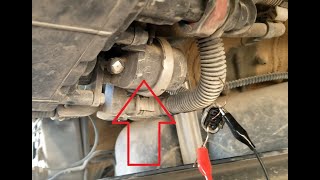
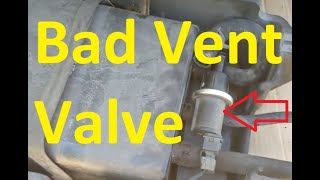
- Faulty EVAP Vent Valve/Solenoid (Very Common) — The electronically controlled valve fails mechanically (gets stuck) or electrically (the 🎬 See a mechanic explain symptoms and test for failure internal coil burns out).
- Outdated Engine Control Module (ECM) Software (Very Common) — On modern Volkswagen, Audi, and Honda models, an error in the ECM's monitoring logic triggers the code. A dealership software update (reflash) is required to fix it.
- Damaged or Corroded Wiring/Connector (Common) — Located under the car, the wiring and connector are exposed to moisture and road debris. Corrosion or broken wires prevent the valve from receiving the signal to close.
- Debris or Blockage in the Vent Valve or Hose (Common) — Dirt, dust, or spider webs enter the vent valve or attached hose, physically preventing the valve from closing. This frequently affects GM trucks where the valve sits near the spare tire.
- Blown Fuse for the EVAP Circuit (Less Common) — A blown fuse cuts power to the vent valve solenoid, causing it to remain in its normally open state.
- Cracked or Disconnected EVAP Hoses (Less Common) — Brittle or disconnected vacuum and vapor hoses create a massive leak that the computer interprets as a stuck-open vent valve.
- Damaged Charcoal Canister (Less Common) — Overfilling the gas tank or road debris damages the charcoal canister. A cracked canister causes a constant leak identical to a stuck-open valve.
- Faulty Powertrain Control Module (PCM) (Rare) — The driver circuit within the PCM fails, preventing it from sending the correct signal to the vent valve. This is extremely rare.
Symptoms

- Check Engine Light is On — This is the most common and often the only symptom.
- Failed Emissions Test — The vehicle automatically fails emissions inspections because the EVAP system cannot control fuel vapors.
- Fuel Smell — A faint smell of gasoline appears around the rear of the vehicle as fuel vapors escape.
- Slightly Reduced Fuel Economy — Gas mileage decreases slightly because fuel vapors are lost to the atmosphere instead of being burned by the engine.
- Difficulty Starting After Refueling — A stuck-open vent valve causes a long crank or difficulty starting the engine immediately after filling the gas tank.
- Remote Start Disabled — Modern vehicles (like the VW Taos) automatically disable remote start when an emissions-related Check Engine Light is active.
Diagnostic Flowchart

Tap your situation to follow the diagnostic path that matches what you're seeing on this code.
Common Fixes & Costs
- Replace EVAP Vent Valve/Solenoid — Parts: $30-$150, Labor: $50-$200, ~1 hr book time (DIY)
- Update Powertrain Control Module (PCM) Software — Parts: $0, Labor: $150-$250, ~1.5 hr book time (Professional)
- Repair Wiring or Replace Connector — Parts: $10-$50, Labor: $100-$200, ~1.5 hr book time (Intermediate)
- Replace Blown Fuse — Parts: $1-$10, Labor: $0-$50, ~0.1 hr book time (Beginner)
- Replace Charcoal Canister — Parts: $200-$600+, Labor: $100-$200, ~1.2 hr book time (Intermediate)
DIY vs Professional
- Replace EVAP Vent Valve/Solenoid — Beginner:
Tools: Socket set, pliers, jack and jack stands. - Repair Wiring or Replace Connector — Beginner:
Tools: Multimeter, wire strippers, wire crimpers, heat shrink tubing, soldering iron (optional). - Replace Charcoal Canister — Beginner:
Tools: Socket set, hose clamp pliers, jack and jack stands. - Update PCM Software — Beginner:
Tools: Proprietary dealership scan tool (e.g., VW ODIS) and software subscription.
Used vs. New Parts: Buying Guide
When a used part is worth it: For a simple, standalone EVAP vent valve/solenoid, a used OEM part from a low-mileage vehicle is a cost-effective alternative to a new aftermarket part.
Donor-vehicle mileage cap: roughly under 60000 miles for the part to have meaningful remaining life.
Donor quality checklist:
- Verify the part number matches exactly.
- Source from a reputable salvage yard that offers a short warranty (30-90 days).
- Avoid parts from vehicles in rust-belt states, as corrosion is a primary failure mode.
Decision logic:
- If The part is a simple solenoid and the new OEM part is over $150 → A used OEM part is a reasonable choice if a low-mileage donor is available.
- If The vent valve is integrated into the charcoal canister → Buy new. The charcoal itself has a finite life and a used canister is likely near the end of its service life.
- If The failure is due to a known TSB requiring an updated part → Buy new from the dealer to ensure you get the latest revised part; a used part retains the original defect.
Warranty tradeoff: Used parts typically offer a 30-90 day warranty. Aftermarket new parts come with a 1-year to limited lifetime warranty, but quality is inconsistent. New OEM parts offer the best quality and warranty but at the highest price.
Worst-case if a used part fails: $150-$300 if a used or cheap aftermarket part fails shortly after installation, requiring repeat labor costs.
What Happens If You Wait — Timeline
- 0-1 month: Code P2421 is set, the Check Engine Light is on, and remote start is disabled. A faint fuel smell is noticeable near the rear of the car after driving. (MPG impact: 0-2%% · Added cost: $0)
- 1-6 months: The vehicle automatically fails any OBD-II emissions test. The fuel smell becomes more consistent. A minor but measurable drop in fuel economy occurs as unburned fuel vapors are consistently lost. (MPG impact: 2-5%% · Added cost: $25-$75 in wasted fuel)
- 6-18 months: Constant exposure to fuel vapors begins to degrade other rubber hoses and plastic seals within the EVAP system, causing them to become brittle and crack, leading to new leak codes (like P0442 or P0455). (MPG impact: 3-7%% · Added cost: $100-$300 for additional hose/seal replacements)
- 18+ months: The altered air-fuel mixtures from the EVAP leak contributes to conditions that place additional stress on the catalytic converter, reducing its efficiency and lifespan. (MPG impact: 5-10%% · Added cost: $500-$2000+ if catalytic converter damage occurs)
Cost of Not Fixing It
- 0-3 months: Failed emissions test, check engine light remains on, and a persistent fuel smell is present. A minor decrease in fuel economy occurs. (Added cost: Negligible)
- 3-12 months: Constant exposure to fuel vapors degrades other rubber and plastic components in the EVAP system, such as hoses and seals, leading to additional leaks. (Added cost: $50-$200)
- 12+ months: An improperly functioning EVAP system contributes to conditions that stress the catalytic converter, leading to premature failure. (Added cost: $1200-$2800)
Diagnosis Steps

- Check for Technical Service Bulletins (TSBs)
Before any diagnosis, check with a dealer or online for TSBs related to P2421. VW, Audi, and Honda models require a specific software update as the primary fix, saving hours of unnecessary component testing.
Tools: Vehicle Identification Number (VIN), Internet Access (Beginner) - Command the Vent Valve with a Scan Tool
Using a bidirectional scan tool, access the EVAP system tests. Command the EVAP vent valve to cycle between open and closed. You must hear an audible 'click' from the valve each time. If you hear no click, the valve is bad, lacks power, or the wiring is faulty.
Tools: Bidirectional OBD-II Scan Tool (Intermediate) - Visual Inspection
Look underneath the car near the fuel tank for the EVAP vent valve and charcoal canister. Check for disconnected hoses, cracked wires, or visible damage to the components and their lines.
Tools: Flashlight, Jack and Jack Stands (Beginner) - Check for Power at the Connector
Disconnect the vent valve's electrical connector. Turn the ignition to the 'ON' position (engine off). Use a multimeter to check for battery voltage at the power pin on the harness side of the connector. You must read approximately 12 volts. If no voltage is present, check the EVAP system fuse and the wiring from the fuse box.
Tools: Multimeter, Vehicle-specific Wiring Diagram (Intermediate) - Advanced: Check Solenoid Resistance
With the vent valve disconnected, set your multimeter to Ohms (Ω). Measure the resistance between the two pins on the valve itself. Most EVAP vent solenoids read between 20 and 40 Ohms. A reading of 'OL' (Open Loop) indicates a broken internal coil. A reading near zero ohms indicates a short circuit. Both results mean the valve requires replacement.
Tools: Multimeter (Advanced) - Perform a Smoke Test
If the valve works electrically but the code persists, a smoke test finds the leak. Inject low-pressure smoke (under 1 PSI) into the EVAP system. With the vent valve commanded closed, smoke must not escape from the valve's outlet. If it does, the valve is mechanically stuck open. Smoke appearing elsewhere indicates a cracked hose or canister.
Tools: EVAP Smoke Machine, Bidirectional OBD-II Scan Tool (Advanced) - Advanced: Monitor EVAP Pressure Sensor Data
With a scan tool, monitor the live data for the Fuel Tank Pressure (FTP) sensor. During an EVAP self-test when the vent valve is commanded closed, the system pulls a slight vacuum, causing this voltage to change. If the pressure does not change when the vent valve is commanded shut, it confirms the system cannot seal.
Tools: Advanced OBD-II Scan Tool (Advanced) - Advanced: Voltage Drop Test on Ground Circuit
If power is present but the valve fails to work, test the PCM-controlled ground. Reconnect the valve. Place the multimeter's red lead on the ground wire at the connector and the black lead on a known good chassis ground. Command the valve closed with a scan tool. The voltage reading must drop to near 0V. A reading higher than 0.5V indicates excessive resistance in the ground wire.
Tools: Multimeter, Bidirectional OBD-II Scan Tool, Back-probe Kit (Advanced)
When This Code Triggers (Freeze-Frame Conditions)
- Engine Coolant Temp: 170-210°F (Engine is fully warmed up.)
- Fuel Level: 15-85% (The EVAP monitor will not run on a full or empty tank.)
- Vehicle Speed: 40-65 mph (Steady-state cruise, avoiding sharp turns or large hills.)
- Ambient Air Temperature: 40-95°F (The EVAP test requires a 'cold soak' and will not run in extreme temperatures.)
Related Codes
- P0455 — This code means 'EVAP System Gross Leak Detected.' It appears with P2421 because a vent valve stuck wide open is a very large leak. P2421 is set when the PCM's specific test of the vent valve's function fails, directly pointing to the valve as the source of the leak. P0455 simply indicates a large leak somewhere in the system.
- P0449 — This code indicates a malfunction in the vent valve's electrical circuit. You see this code if there's an open, short, or high resistance in the wiring or the solenoid coil itself. P2421 is a functional code; the PCM believes the electrical circuit is intact but its pressure test fails, indicating the valve is physically stuck open despite receiving the correct electrical signal.
- P0446 — This code points to a 'Vent Control Circuit Malfunction.' It is very similar to P0449 and indicates an electrical problem. The key distinction from P2421 is 'Circuit' vs. 'Stuck Open.' P0446 means the computer sees an electrical problem, whereas P2421 means the circuit looks fine electrically, but the valve is not physically closing when commanded.
- P0442 — This code indicates a 'Small Leak Detected' in the EVAP system. While P2421 represents a large, specific leak at the vent valve, P0442 points to a much smaller leak from a cracked hose, a bad seal, or a faulty purge valve. It is less commonly associated with P2421.
Climate & Environmental Factors
- High Humidity / Heavy Rain: The EVAP vent valve and its electrical connector are located underneath the vehicle, exposed to the elements. Prolonged exposure to moisture accelerates corrosion on the connector pins and wiring, leading to high resistance or a loss of connection that triggers P2421.
- Cold Climates / Road Salt (Rust Belt): In regions where road salt is used during winter, the corrosive environment severely damages the vent valve solenoid's metal components and electrical wiring. This causes the valve to seize mechanically or the wiring to fail electrically.
- Dusty or Off-Road Conditions: The vent valve's function is to let fresh air into the system through a filter. In very dusty or muddy environments, this filter becomes overwhelmed, allowing dirt and debris to enter the valve itself, physically preventing it from closing.
How to Talk to a Mechanic About This Code
Say this: "I have a P2421 code, indicating the EVAP vent valve is stuck open. Please check for any TSBs related to this code for my vehicle. I need you to test the vent valve's function and its electrical circuit before recommending a replacement part."
This signals you've done your research and understand the common causes. It directs the mechanic to perform a proper diagnosis (checking for software updates and testing the specific component) rather than just replacing parts, which saves you money on unnecessary repairs.
Avoid saying:
- 'Just fix my check engine light.'
- 'I think I have an EVAP leak, can you find it?'
- 'My car smells like gas, just replace whatever is broken.'
Questions to ask before authorizing the repair:
- Did you check for any software updates (TSBs) from the manufacturer first?
- Were you able to command the vent valve to close with a scan tool, and did it click?
- Did you test for power and ground at the valve's connector?
- If you are recommending a new part, what tests confirmed the original part has failed?
- What is the warranty on this specific repair, including both parts and labor?
Where to Take It: Dealer vs Independent vs Chain
- Dealer:
Recommended for VW/Audi/Honda due to known software and part-specific issues. For other makes, an independent shop is more cost-effective.
Best for: Volkswagen, Audi, and Honda vehicles, which require manufacturer-specific software updates (TSBs) for this code., Vehicles still under the federal emissions warranty (8 years/80,000 miles), as this repair is covered.
Downsides: Higher labor rates, typically 1.5-2x more than an independent shop., Dealers recommend replacing an entire assembly (like a charcoal canister) when only an integrated valve has failed. (Typical cost: +50% vs. baseline) - Independent Shop:
Best fit for most non-German vehicles. A good independent shop diagnoses and repairs a faulty valve, wiring, or hose leak efficiently.
Best for: Out-of-warranty vehicles from makes like Ford, GM, Toyota, and Hyundai where P2421 is a standard component failure., Vehicle owners who have a trusted relationship with a local mechanic.
Downsides: Shop quality and diagnostic capabilities vary; ensure they have bidirectional scan tools and experience with EVAP systems., Independent shops lack access to the latest manufacturer TSBs or software flashing tools. (Typical cost: +0% vs. baseline) - Chain Shop:
AVOID for P2421 diagnosis. The risk of misdiagnosis and unnecessary parts replacement is high.
Best for: Simple, unrelated maintenance like oil changes or tire rotations.
Downsides: Technician skill varies widely., High pressure to sell parts leads to replacing the vent valve without proper diagnosis of the electrical circuit or checking for blockages., Chain shops lack the advanced bidirectional scanners or smoke machines needed for a correct diagnosis. (Typical cost: -10% vs. baseline)
When to Walk Away From the Repair
If the total estimated repair cost for the P2421 code and any other needed repairs exceeds 40% of your car's current private-party value, pause and consider if the investment is worthwhile.
- Car worth $10000, fix is $350: Fix it. This is a relatively minor repair cost compared to the vehicle's value.
- Car worth $4000, fix is $750: Borderline, but likely worth fixing. This repair is for a more expensive component (e.g., canister with integrated valve), but it's still well under the 40% threshold.
- Car worth $2500, fix is $1200: Walk away. The repair cost is nearly 50% of the car's value. It is not economically sensible to invest this much into an older, lower-value vehicle.
What Scan Tool You Need for This Code
Minimum: A bidirectional scan tool that commands the EVAP vent valve to open and close.
A basic $20-$50 code reader only shows you the P2421 code. It cannot perform the most critical diagnostic step: actively testing the vent valve. Without bidirectional control, you are guessing whether the problem is the valve, the wiring, or something else, which leads to replacing perfectly good parts.
Budget: Topdon TopScan Lite / XTOOL A30M (~$80) — These are Bluetooth dongles that pair with your smartphone. They offer basic bidirectional control, allowing you to command the EVAP vent valve to cycle, which is the key test needed for P2421.
Mid-range: Foxwell NT510 Elite / Innova 5610 (~$180) — These handheld or tablet scanners provide full bidirectional control for EVAP system components. They offer live data graphing to monitor fuel tank pressure, which helps confirm if the valve is sealing, and access manufacturer-specific codes, providing a complete diagnosis.
Professional: Autel MaxiCOM MK808 / XTOOL D7 (~$450) — These are professional-grade tablets with full bidirectional capabilities, extensive live data, and access to special functions and resets. They run automated EVAP system leak tests and provide the most comprehensive data for diagnosing complex wiring or module-related faults.
Rent vs buy: Most auto parts stores (like AutoZone) rent out basic code readers for free, but these are NOT sufficient for P2421. They lack the necessary bidirectional control. If you plan to diagnose and fix the issue yourself, you must buy a scanner with at least basic bidirectional capabilities.
How to Clear the Code After You Fix It
- Use an OBD-II scan tool to clear the P2421 trouble code.
- Ensure the fuel tank is between 1/4 and 3/4 full.
- Perform the specific EVAP drive cycle for your vehicle.
Drive cycle (~20 minutes): A general EVAP drive cycle involves a cold start (sitting for 8+ hours), idling for 2-3 minutes, followed by 10-15 minutes of steady driving at highway speeds (45-65 mph), and then allowing the vehicle to cool down. Specific procedures vary greatly by manufacturer.
Readiness monitors affected: EVAP System Monitor, Catalyst Monitor, Oxygen (O2) Sensor Monitor
Before emissions retest: drive at least 50 miles to fully set monitors.
Watch out for:
- Disconnecting the battery clears the code but resets all readiness monitors, requiring a full drive cycle to complete them again.
- The EVAP monitor is the last and most difficult monitor to set; many states allow an emissions test to pass with the EVAP monitor showing 'Not Ready'.
- The code returns if the underlying mechanical or electrical fault is not properly repaired.
Will This Fail Emissions / State Inspection?
Yes — this code typically fails an OBD-II emissions inspection.
- California: A P2421 code is an automatic failure. All OBD readiness monitors must be 'Ready'. After repair, a full drive cycle is required before re-testing.
- New York: The NYVIP3 inspection includes an OBD-II scan; an active P2421 code causes an immediate test failure. Most inspections allow the test to proceed if only the EVAP monitor is 'Not Ready'.
- Texas: In the 17 counties requiring emissions testing, an active Check Engine Light for P2421 results in a failed inspection. Texas allows up to two readiness monitors to be incomplete for vehicles model year 2001 and newer.
Most Commonly Affected Vehicles
- Volkswagen Jetta, Golf, Passat, Taos, Tiguan (2017-2024) — Extremely common issue, addressed by a Technical Service Bulletin (TSB) requiring both an ECM software update and a new, improved vent valve (Fuel Tank Isolation Valve). Check TSBs 01-22-03, 2066602, 2072378, and 01-22-05. The repair is often covered under the federal emissions warranty (8 years/80,000 miles).
- Honda Civic, Accord, Pilot, Ridgeline, HRV (2016-2022) — These models set P2421 due to a faulty 'Canister Vent Shut Valve'. On many models, this valve is integrated into the charcoal canister (OEM Part #17011-TBA-L01 for Civic), making the part more expensive.
- Chevrolet / GMC Silverado, Sierra, Equinox, Traverse (2007-2021) — This code is frequently seen on GM vehicles and relates to a faulty vent valve or solenoid (OEM #84148818 for 2017 Silverado). On trucks, the valve's location near the spare tire makes it prone to collecting dirt and debris, causing it to stick.
- Ford F-150, Focus, Fusion, Escape (2009-2020) — P2421 is a commonly reported code across many Ford vehicles. It points to a standard vent valve failure, though wiring issues near the valve are also frequent.
- BMW 3-Series (E90/E92), X3 (F25), X5 (2006-2017) — On BMWs, this code appears as '315A'. The cause is a faulty DMTL pump, which combines the vent valve and leak detection functions. Frayed wiring to the pump, located near the rear passenger-side wheel well, is also a common cause.
- Toyota Camry, Corolla, RAV4 (2005-2019) — Toyota vehicles experience this code due to a standard failure of the vent valve assembly on the charcoal canister.
- Hyundai Elantra, Sonata, Tucson (2011-2022) — This code occurs on various Hyundai models, caused by a faulty canister close valve (CCV) or related wiring. The CCV is Hyundai's term for the EVAP vent valve.
- Kia Optima, Sorento, Sportage (2011-2022) — Similar to Hyundai, Kia vehicles set the P2421 code due to a failure of the canister close valve (CCV) or its associated wiring.
Manufacturer-Specific Notes
- Volkswagen/Audi: For modern VW and Audi models (2017+), the first step must be checking for a TSB. A specific ECM software update is required, sometimes along with replacing the vent valve with an updated part, to permanently fix the issue. The repair is often covered under the 8-year/80,000-mile federal emissions warranty.
- Honda: On many Honda models, the vent valve is called the 'Canister Vent Shut Valve' and is integrated directly into the charcoal canister assembly. This design makes the replacement part more expensive than a standalone valve.
- General Motors (GM): On many GM trucks and SUVs, the vent valve is located near the spare tire and is prone to getting clogged with dust and dirt. Simply cleaning the valve and its filter resolves the code without needing to replace the part.
- BMW: BMW uses a 'Diagnostic Module for Tank Leakage' (DMTL) pump, which serves the function of the vent valve and leak detection pump. The corresponding fault code is '315A'. Diagnosis involves checking the pump itself or its wiring harness, which is vulnerable to damage near the rear passenger-side wheel well.
Real Owner Stories
2022 VW Taos with recurring P2421
Check Engine Light appeared. Tightening the gas cap made the light go away temporarily, but it returned. Remote start was also disabled due to the fault.
Outcome: The owner took the vehicle to a VW dealership. The dealer replaced the Leak Detection Pump (LDP) to resolve the issue, and the code did not return.
Lesson: On modern VWs, P2421 is a known issue requiring a dealer visit. While a loose gas cap causes EVAP codes, a recurring P2421 points to a component failure like the LDP or the need for a software update per a TSB.
2018 Honda Odyssey at 45k miles with intermittent P2421
Check Engine Light appeared intermittently, often when the fuel tank was around 1/4 full during city driving. No other symptoms were noticed.
Outcome: The suggested fix was to locate the charcoal canister near the rear of the vehicle, trace the vacuum lines to the vent valve solenoid, and clean it by tapping or blowing through it to unstick the valve.
Lesson: For an intermittent P2421 without other symptoms, a sticking valve is a high probability. Debris is cleared from the valve without replacing it, offering a no-cost first attempt at a fix before buying parts.
2017 Chevy Silverado with P2421
The Check Engine Light came on, and a code scan revealed P2421. The truck is frequently driven in dusty, rural conditions.
Outcome: The valve and its vent filter were heavily clogged with dirt and dust. The owner removed the valve, cleaned it thoroughly, and cleared the code. The code did not return.
Lesson: Vehicle usage and environment matter. On trucks and SUVs where the vent valve is exposed, checking for and cleaning out debris is a simple and effective fix, preventing the unnecessary replacement of a mechanically sound part.
How to Prevent This Code From Triggering
- Do not 'top off' your fuel tank (Every fill-up) — Overfilling the gas tank forces liquid gasoline into the charcoal canister, which is designed only for vapor. This saturates the charcoal, ruins its ability to store vapors, and sends debris down the line, clogging the vent valve.
- Inspect and clean the vent valve filter/inlet (Every 30,000 miles, or if driving in dusty conditions) — The vent valve draws in fresh air through a filter. In dusty, muddy, or off-road conditions, this filter clogs, allowing dirt and insects to get sucked into the valve, causing it to stick.
- Use a quality, OEM-spec gas cap (As needed) — While a bad cap is unlikely to cause P2421 directly, it causes other EVAP codes. Using a quality, properly sealing cap ensures the entire system maintains integrity, preventing the PCM from trying to compensate for other, non-existent leaks.
- Periodically inspect EVAP hoses and wiring (During regular oil changes) — The rubber hoses and plastic wiring under the car are exposed to heat, moisture, and road salt. A quick visual inspection for brittle, cracked hoses or corroded-looking connectors catches a problem before it causes a persistent code.
Frequently Asked Questions
Can I fix a P2421 code myself?
Yes, replacing a bad vent valve is a straightforward DIY job requiring basic hand tools. However, if the fix requires a dealership software update (common on VWs) or an EVAP smoke test, take the vehicle to a professional. Proper diagnosis with a bidirectional scanner is essential before swapping parts.
Will replacing the gas cap fix a P2421 code?
No, a loose gas cap triggers gross leak codes like P0455 or P0457. Code P2421 specifically isolates the vent valve mechanism. The PCM directly tests this valve, confirming it is physically stuck open.
How much does it cost to fix P2421?
A professional diagnostic fee runs $100-$165. Replacing the EVAP vent valve costs $80 to $350 total, while a required dealer software update costs $150-$250. On vehicles where the valve is integrated into the charcoal canister (like some Hondas), replacement costs jump to $400-$700.
What happens if I don't fix P2421?
Your car will release raw fuel vapors and automatically fail state emissions tests. While short-term engine damage is unlikely, long-term neglect degrades other EVAP hoses and stresses the catalytic converter. This turns a $150 repair into a $1,500+ catalytic converter replacement.
Is the EVAP vent valve the same as the purge valve?
No, they perform opposite functions. The vent valve sits near the fuel tank and stays open to let fresh air in. The purge valve sits in the engine bay and stays closed until it needs to route trapped fuel vapors into the engine.
What are common misdiagnosis mistakes for P2421?
The most common mistake is replacing the purge valve instead of the vent valve due to naming confusion. On modern Volkswagens and Hondas, owners waste money replacing the valve when a mandatory ECM software update is the actual fix. Always check for Technical Service Bulletins (TSBs) before buying parts.
My Check Engine Light for P2421 went away on its own. Am I in the clear?
No, the underlying issue is likely intermittent, such as a sticking valve or a loose wiring connection. The light turns off if the system temporarily passes a self-test, but the code remains stored in the PCM's history. The Check Engine Light will return once the valve sticks again.
Why did P2421 appear right after getting gas?
The EVAP system runs its primary self-test shortly after refueling. The PCM seals the system and attempts to create a vacuum to check for leaks. If the vent valve fails to close during this specific test, it triggers the P2421 code immediately.
Key Takeaways
- A faulty EVAP vent valve—either mechanically stuck open or electrically dead—causes 80% of P2421 codes.
- Volkswagen, Audi, and Honda models from 2016-2024 frequently require a mandatory $150-$250 dealership software update to permanently resolve this code.
- You can safely drive with a P2421 code, but the vehicle will automatically fail state emissions testing until the EVAP system is repaired and reset.
- Accurate diagnosis requires a bidirectional scan tool (costing $80+) to manually command the vent valve closed and verify if it clicks.
Helpful Videos

The information in this article is provided for general reference and educational purposes only. Vehicle specifications, procedures, and part compatibility can vary by production date, trim level, and region. Always consult your vehicle's factory service manual and verify part numbers before purchasing or performing repairs. Safety-critical components such as airbags, seat belts, and braking systems should be installed by a qualified professional.
- 🎬 Helpful Videos
- What Does P2421 Mean?
- Can I Drive With P2421?
- Common Causes
- Symptoms
- Diagnostic Flowchart
- Common Fixes & Costs
- DIY vs Professional
- Used vs. New Parts: Buying Guide
- What Happens If You Wait — Timeline
- Cost of Not Fixing It
- Diagnosis Steps
- When This Code Triggers (Freeze-Frame Conditions)
- Related Codes
- Climate & Environmental Factors
- How to Talk to a Mechanic About This Code
- Where to Take It: Dealer vs Independent vs Chain
- When to Walk Away From the Repair
- What Scan Tool You Need for This Code
- How to Clear the Code After You Fix It
- Will This Fail Emissions / State Inspection?
- Most Commonly Affected Vehicles
- Manufacturer-Specific Notes
- Real Owner Stories
- 2022 VW Taos with recurring P2421
- 2018 Honda Odyssey at 45k miles with intermittent P2421
- 2017 Chevy Silverado with P2421
- How to Prevent This Code From Triggering
- Frequently Asked Questions
- Can I fix a P2421 code myself?
- Will replacing the gas cap fix a P2421 code?
- How much does it cost to fix P2421?
- What happens if I don't fix P2421?
- Is the EVAP vent valve the same as the purge valve?
- What are common misdiagnosis mistakes for P2421?
- My Check Engine Light for P2421 went away on its own. Am I in the clear?
- Why did P2421 appear right after getting gas?
- Key Takeaways
- 🎟️ Get 5% Off