

OBD-II Code P2414: O2 Sensor Exhaust Sample Error (Bank 1, Sensor 1)
What P2414 means, why it triggers, and how to fix it
- A failed upstream oxygen sensor (Bank 1, Sensor 1) causes over 70% of P2414 codes and typically requires a $150 to $500 replacement.
- Inspect the O2 sensor heater fuse and check for exhaust leaks before buying parts, as these mimic a dead sensor but cost under $50 to fix.
- Driving with P2414 drops fuel economy by 10-20% and dumps raw fuel into the exhaust, which destroys the catalytic converter and leads to a $1,500+ repair bill.
- Owners of 2013-2014 Volkswagens must update the Engine Control Module (ECM) software when replacing the sensor, or the new sensor will fail prematurely.
What Does P2414 Mean?

P2414 means the Powertrain Control Module (PCM) detects an implausible signal from the upstream oxygen (O2) sensor on engine bank 1. This sensor measures exhaust oxygen before the catalytic converter. 'Exhaust Sample Error' means the signal is slow, stuck, or incorrect, preventing the computer from adjusting the air-fuel mixture. The PCM sets this code when it alters the fuel mixture during a diagnostic test and the sensor's voltage fails to respond quickly.
Technical definition: The SAE/OBD-II definition is "O2 Sensor Exhaust Sample Error Bank 1 Sensor 1". It triggers when the PCM detects the upstream oxygen sensor for Bank 1 is unresponsive during diagnostic tests. The PCM flags the reading as implausible because the voltage is stuck, slow to transition, or outside the expected 0.1V to 0.9V range under specific engine loads. On some vehicles, like certain Hyundais, the code triggers if the sensor voltage exceeds a specific threshold (e.g., 3.7V) for a set duration.
Can I Drive With P2414?
Yes, But With Caution. Yes, but fix it within a few weeks. Driving with P2414 causes poor fuel economy, increased pollution, and expensive catalytic converter damage. A failing O2 sensor forces the engine to run rich, dumping unburned fuel into the exhaust and overheating the catalytic converter, leading to a $1,000+ repair bill.
Common Causes

- Faulty Bank 1, Sensor 1 Oxygen Sensor (Very Common) — The internal sensing element or heater circuit wears out (typically between 60,000-100,000 miles) or gets contaminated, causing slow or incorrect signals.
- Wiring or Connector Issues (Common) — Exhaust heat, chafing, or road debris damages the O2 sensor wiring harness. Loose, corroded, or moisture-filled connectors disrupt the signal to the PCM, mimicking a dead sensor.
- Exhaust Leak (Common) — A crack in the exhaust manifold, downpipe, or a blown gasket before the O2 sensor introduces outside oxygen into the exhaust stream. This skews the readings, causing the PCM to flag the sensor even though it is reading the altered exhaust correctly.
- Blown Fuse or Faulty Relay (Less Common) — The O2 sensor's internal heater relies on a dedicated circuit. If the 'A/F Heater' or 'O2 Heater' fuse blows, the sensor fails to reach operating temperature, causing slow response times and triggering the sample error.
- Powertrain Control Module (PCM) Software Issue (Less Common) — The vehicle's software calibration is sometimes too sensitive. Manufacturers like Volkswagen have released Technical Service Bulletins (TSBs) with software updates to correct how the PCM interprets the O2 sensor signal.
- Contaminated O2 Sensor (Less Common) — Oil from internal engine leaks, coolant from blown head gaskets, or silicone from improper sealants coats the sensor tip. This physical barrier prevents the sensor from sampling the exhaust accurately.
- Engine Vacuum Leak (Rare) — Cracked intake manifolds, faulty PCV valves, or broken vacuum hoses allow unmetered air into the engine. The resulting lean mixture creates an oxygen-rich exhaust that the PCM misinterprets as a sensor error.
- Faulty Mass Airflow (MAF) Sensor (Rare) — A dirty MAF sensor incorrectly measures incoming air, causing the PCM to calculate the wrong fuel mixture. The abnormal exhaust composition triggers P2414 as a secondary fault.
- Incorrect Fuel Pressure or Contaminated Fuel (Rare) — Low fuel pressure creates a lean condition, while high pressure causes a rich condition. Both scenarios push exhaust gas compositions outside the sensor's expected range, prompting the PCM to flag the sample as an error.
Symptoms

- Check Engine Light is On — A solid Check Engine Light on the dashboard is the most common and often only initial symptom.
- Reduced Fuel Economy — Fuel consumption increases by 10-20% because the PCM defaults to a rich, safe fuel map when it loses the O2 sensor signal.
- Rough Idle or Hesitation — The engine runs unevenly at a stop or hesitates during acceleration due to the imbalanced air-fuel ratio.
- Loss of Engine Power — The engine feels sluggish and less responsive as the PCM relies on inefficient default fuel parameters.
- Black Smoke or Rotten Egg Smell from Exhaust — A rich mixture produces black smoke from partially burned fuel. A sulfur or 'rotten egg' smell indicates the catalytic converter is overheating.
- Failed Emissions Test (scan-tool only — no driver-felt sign) — Elevated hydrocarbons (HC) and carbon monoxide (CO) cause the vehicle to fail mandatory smog inspections.
Diagnostic Flowchart
Tap your situation to follow the diagnostic path that matches what you're seeing on this code.
Common Fixes & Costs
- Replace Bank 1, Sensor 1 Oxygen (O2) Sensor
— Parts: $60-$250, Labor: $120-$300, ~1 hr book time
(DIY)
: OEM
: OEM
: OEM - Repair Damaged Wiring or Connector — Parts: $10-$50, Labor: $100-$250, ~1.8 hr book time (Intermediate)
- Repair Exhaust Leak — Parts: $20-$200, Labor: $120-$400, ~2.5 hr book time (Intermediate)
- Replace Blown Fuse — Parts: $1-$5, Labor: $0-$60, ~0.2 hr book time (Beginner)
- Update or Reprogram Powertrain Control Module (PCM) — Parts: $0, Labor: $150-$300, ~1.2 hr book time (Professional)
DIY vs Professional
- Replace Oxygen Sensor — Beginner:
- Repair Damaged Wiring — Beginner:
- Repair Exhaust Leak — Beginner:
- Replace Blown Fuse — Beginner:
Used vs. New Parts: Buying Guide
When a used part is worth it: Buying a used oxygen sensor never makes sense. It is a wear item with a finite lifespan. The minimal savings do not justify the risk of premature failure.
Donor-vehicle mileage cap: roughly under 40000 miles for the part to have meaningful remaining life.
Donor quality checklist:
- Only consider sensors from low-mileage, wrecked vehicles.
- Avoid sensors from rust-belt states due to corrosion.
- Never buy used sensors online from unknown sources.
Decision logic:
- If The part is an Oxygen Sensor. → Always buy new from a reputable OEM brand (Bosch, Denso, NTK).
- If You are on an extreme budget and doing the labor yourself. → A used sensor from a known-good donor is a last resort.
Warranty tradeoff: Used sensors offer 30-day warranties at best. New aftermarket sensors provide 1-year to lifetime warranties.
Worst-case if a used part fails: $150-$300. A failed used sensor requires paying for labor twice, negating any initial savings.
What Happens If You Wait — Timeline
- 0-2 weeks: Check Engine Light illuminates. The PCM logs the P2414 fault. (MPG impact: 0-5%% · Added cost: $0)
- 2 weeks - 3 months: Fuel economy drops as the PCM defaults to a rich fuel mixture. Minor hesitation on acceleration occurs. (MPG impact: 5-15%% · Added cost: $25-$75 in wasted fuel.)
- 3-8 months: The rich fuel mixture overheats the catalytic converter, cracking its internal ceramic honeycomb. A 'rotten egg' smell appears. (MPG impact: 10-20%% · Added cost: $500-$1,200 (Risk of needing catalytic converter replacement is now high).)
- 8+ months: Catastrophic catalytic converter failure. The melted substrate clogs the exhaust, causing severe power loss and stalling. (MPG impact: >20%% · Added cost: $1,500-$3,000+ (Catalytic converter replacement is now almost certainly required).)
Cost of Not Fixing It
- 0-1 month: Fuel economy drops 10-20%, increasing emissions and causing smog test failures. (Added cost: $20-$50 per month in extra fuel costs.)
- 1-6 months: The rich fuel mixture overheats the catalytic converter, reducing its lifespan. A sulfur smell may appear. (Added cost: $0, but risk of major damage is high.)
- 6+ months: Catastrophic catalytic converter failure. The melted substrate clogs the exhaust, causing severe power loss and stalling. (Added cost: $1200-$2800 for catalytic converter replacement.)
Diagnosis Steps

- Check for Other Codes
Use an OBD-II scanner to read all stored codes. Address heater circuit codes (P0135, P2237), fuel trim codes (P0171/P0172), or MAF codes first, as they often cause P2414.
Tools: OBD-II Scanner (Beginner) - Visually Inspect the Sensor and Wiring
Locate the Bank 1, Sensor 1 O2 sensor (before the catalytic converter). Check for frayed wires, melted insulation, exhaust contact, and green corrosion on the connector pins.
Tools: Flashlight, Safety Glasses (Beginner) - Check the O2 Sensor Heater Fuse
Locate the fuse box and identify the oxygen sensor heater fuse (often 'O2 HTR' or 'A/F Heater'). Inspect the fuse and replace it if blown.
Tools: Owner's Manual, Fuse Puller or Pliers (Beginner) - Inspect for Exhaust and Vacuum Leaks
Start the engine cold and listen for a ticking noise near the exhaust manifold that fades as the engine warms. Spray soapy water on intake vacuum hoses to check for unmetered air leaks.
Tools: Mechanic's Stethoscope (optional), Soapy Water Spray Bottle (Intermediate) - Analyze Live Sensor Data (Voltage Graph)
With the engine warm and running at 2500 RPM, observe the Bank 1, Sensor 1 voltage graph on a scan tool. A healthy sensor fluctuates rapidly between 0.1V and 0.9V. A stuck or flatlined voltage confirms a bad sensor.
Tools: OBD-II Scanner with Live Data Graphing (Intermediate) - Test the Sensor's Heater Circuit
Unplug the O2 sensor and measure the resistance across the heater circuit pins (usually the two same-colored wires) with a multimeter. Normal resistance is 2-30 ohms. Infinite resistance means the internal heater is broken.
Tools: Digital Multimeter, Vehicle-Specific Repair Manual (Intermediate) - Advanced: Analyze Voltage Transition Speed
Watch the live data graph and quickly snap the throttle. A healthy sensor jumps to ~0.9V (rich) and settles back in about 300 milliseconds. Sluggish reactions taking over a second indicate a degraded sensor.
Tools: OBD-II Scanner with Live Data Graphing (Advanced) - Pro Tip: Force a Rich/Lean Condition
Test reaction time by introducing a small vacuum leak to force a lean condition (voltage drops below 0.3V). Spray brake cleaner into the intake to force a rich condition (voltage jumps above 0.7V). Failing sensors react slowly or not at all.
Tools: OBD-II Scanner with Live Data, Propane Torch (unlit) or Brake Cleaner (Advanced) - Advanced: Analyze Fuel Trims
Check Short-Term (STFT) and Long-Term Fuel Trims (LTFT). Values consistently above +10% indicate the PCM is adding fuel to fix a lean condition (e.g., vacuum leak). This points to an underlying issue, not a bad O2 sensor.
Tools: OBD-II Scanner with Live Data (Advanced) - Check for a PCM Software Update
Search for Technical Service Bulletins (TSBs) for your specific make and model. Volkswagen, for example, requires a software update to fix how the PCM interprets sensor data for this code.
Tools: Phone or Computer (Advanced) - Advanced: Check Fuel Pressure
Connect a fuel pressure gauge to the fuel rail. With the key on and engine off, verify the pressure matches manufacturer specs (typically 35-60 PSI). Incorrect pressure causes rich/lean conditions that trigger P2414.
Tools: Fuel Pressure Gauge, Vehicle-Specific Repair Manual (Advanced)
When This Code Triggers (Freeze-Frame Conditions)
- Engine Coolant Temp: 180-210°F (82-99°C) (The engine must be fully warmed up and in closed-loop fuel control.)
- RPM: 1500-2500 RPM (A steady engine speed is required for the diagnostic to run.)
- Engine Load: 20-60% (The test runs under moderate, stable engine load, not during heavy acceleration.)
- Vehicle Speed: 40-60 mph (65-97 km/h) (The code typically sets during steady highway cruising.)
Related Codes
- P2626 — O2 Sensor Pumping Current Trim Circuit/Open. Indicates a specific electrical open circuit. If present with P2414, the fault is electrical, not mechanical.
- P2237 — O2 Sensor Positive Current Control Circuit/Open. Points to an electrical open circuit. VW TSBs group P2237 and P2414 together for software updates.
- P0171 — System Too Lean (Bank 1). Indicates too much air or not enough fuel. Vacuum or exhaust leaks cause both codes. Fix leaks before replacing the sensor.
- P2415 — O2 Sensor Exhaust Sample Error (Bank 1 Sensor 2). The direct equivalent of P2414 but for the downstream sensor, which monitors catalytic converter efficiency.
Climate & Environmental Factors
- Cold Climates: Extreme cold makes the sensor's internal heater wiring brittle, leading to fractures. Longer engine warm-up times also stress the sensor.
- Road Salt & High Humidity: Moisture and road salt corrode the sensor body and electrical connector, causing intermittent signal loss and triggering P2414.
How to Talk to a Mechanic About This Code
Say this: "I have code P2414 for the Bank 1 Sensor 1 O2 sensor. Before replacing it, please check for upstream exhaust leaks, inspect the wiring, and view the live data voltage graph."
This directs the mechanic to perform a thorough diagnosis rather than just replacing the most obvious part, saving money if the issue is a simple leak.
Avoid saying:
- 'My check engine light is on, can you just fix it?'
- 'I'm pretty sure it's the O2 sensor, just replace it.'
- 'Do whatever you think is best.'
Questions to ask before authorizing the repair:
- Did you find any exhaust or vacuum leaks?
- Was the live data graph for the O2 sensor stuck or switching slowly?
- Can you provide a printout of the freeze-frame data?
- What is the warranty on parts and labor?
Where to Take It: Dealer vs Independent vs Chain
- Dealer:
Best for: Vehicles under emissions warranty., Vehicles requiring manufacturer-specific software updates (e.g., VW)., Complex electrical issues requiring proprietary tools.
Downsides: Labor rates are significantly higher., May recommend replacing entire assemblies instead of smaller components. (Typical cost: +40% vs. baseline) - Independent Shop:
Best fit for most vehicles. An experienced independent technician easily diagnoses P2414 causes. However, vehicles needing TSB software updates must go to a dealer or specialized shop.
Best for: Out-of-warranty vehicles., Common diagnostic issues., Building a long-term relationship.
Downsides: Quality varies; vet the shop through reviews., May lack software for manufacturer-only updates. (Typical cost: +0% vs. baseline) - Chain Shop:
Acceptable for straightforward O2 sensor replacement if you diagnosed it yourself. Avoid for initial diagnosis.
Best for: Simple, routine maintenance.
Downsides: High employee turnover and varying skill levels., Business model encourages upselling., Lacks in-depth diagnostic experience. (Typical cost: -10% vs. baseline)
When to Walk Away From the Repair
If the repair cost exceeds 40-50% of the car's private-party value, consider selling or trading it in.
- Car worth $4000, fix is $2000: Borderline. The repair is 50% of the car's value. Get a second opinion, as other age-related repairs are likely imminent.
- Car worth $12000, fix is $1800: Fix it. The repair cost is only 15% of the vehicle's value.
- Car worth $2500, fix is $1500: Walk away. The repair cost is 60% of the car's value. It is not economically sensible to proceed.
What Scan Tool You Need for This Code
Minimum: An OBD-II scanner that displays live data, specifically for graphing O2 sensor voltage.
A basic $20 code reader only shows the P2414 code. It cannot display the live sensor voltage graph needed to determine if the sensor is lazy, stuck, or working correctly.
Budget: BlueDriver Pro Scan Tool (~$100) — Connects via Bluetooth and provides excellent live data graphing for the O2 sensor. Reads freeze-frame data and suggests verified fixes.
Mid-range: Innova 5610 (~$330) — Handheld scanner offering detailed live data and bidirectional controls to command vehicle systems for advanced diagnostics.
Professional: Autel MaxiCOM MK808S (~$500) — Professional tablet scanner providing full system diagnostics, fast graphing, and access to manufacturer-specific data points.
Rent vs buy: Auto parts stores loan basic scanners for free, but they often lack live data graphing. Buying a tool like the BlueDriver is a worthwhile investment for DIY diagnosis.
How to Clear the Code After You Fix It
- Use an OBD-II scan tool to clear the DTC.
- Perform a complete drive cycle to run readiness monitors.
- Do NOT disconnect the battery, as this erases all monitors and causes emissions test failures.
Drive cycle (~30 minutes): 1) Cold start (sit for 8+ hours). 2) Idle for 3 minutes. 3) Drive steadily at 55-60 mph for 15 minutes. 4) Drive in stop-and-go city traffic for 15 minutes. 5) Let the vehicle cool down.
Readiness monitors affected: Oxygen (O2) Sensor Monitor, Catalyst (CAT) Monitor, Oxygen Sensor Heater Monitor
Before emissions retest: drive at least 50 miles to fully set monitors.
Watch out for:
- Clearing the code without fixing the issue causes it to return.
- Disconnecting the battery resets readiness monitors to 'Not Ready'.
- Failing to drive at steady highway speeds prevents the O2 sensor monitor from running.
Will This Fail Emissions / State Inspection?
Yes — this code typically fails an OBD-II emissions inspection.
- California: Automatic failure. A lit Check Engine Light is an instant fail. All readiness monitors must be 'Ready' before a retest.
- New York: Automatic failure. The NYS DMV OBD-II scan fails any vehicle with an emissions-related code like P2414.
- Texas: Automatic failure in emissions-testing counties. Only one monitor can be 'Not Ready' to pass after clearing the code.
Most Commonly Affected Vehicles
- Volkswagen Jetta, Beetle, Beetle Convertible (2013-2014) — TSB V011507 requires replacing the sensor and updating the ECM software to prevent the catalyst heating process from damaging the new sensor.
- MINI Cooper (R56 Chassis) (2007-2013) — Coolant from a leaking thermostat housing wicks up the wiring harness and contaminates the ECU connector. Highly sensitive to non-OEM sensors.
- BMW 3-Series (E90, E92), M3, X3, X5 (2006-2013) — Often appears alongside lean codes (P0171/P0174) due to vacuum leaks from a cracked valve cover or failed Crankcase Ventilation (CCV) system.
- Toyota Camry, Tacoma, RAV4 (2005-2012) — Frequently caused by a failed Air-Fuel Ratio sensor or a blown 'A/F Heater' fuse in the engine bay.
- Hyundai Santa Fe, i30, Accent (2010-2014) — The PCM sets the code if the sensor signal exceeds 3.7V for over 10 seconds under load, indicating a faulty sensor or poor connection.
- Kia Optima, Sorento, Sportage (2011-2016) — Linked to failing oxygen sensors or wiring issues. Sometimes related to Hydraulic Electronic Control Unit (HECU) electrical shorts.
- Audi A4, A6, Q5 (2009-2016) — Often a companion to lean codes (P0171). The root cause is usually a vacuum leak from a failed PCV valve or cracked breather hoses.
- Subaru Outback, Forester, Impreza (2010-2015) — Commonly caused by a failing front Air/Fuel ratio sensor or exhaust leaks at the manifold flange gaskets.
Manufacturer-Specific Notes

- Volkswagen: A mandatory ECM software update (TSB V011507) is required when replacing the front O2 sensor on 2013-2014 2.0L models to prevent sensor damage.
- MINI: Coolant from leaking thermostat housings wicks into the ECU connector, causing shorts. R56 models also reject non-Bosch aftermarket sensors.
- BMW: P2414 is frequently a secondary symptom of unmetered air from a cracked valve cover or failed CCV system. Always check for vacuum leaks first.
- Audi/VW (Turbo Engines): Failing turbocharger diverter valves cause incorrect air-fuel mixtures under boost, triggering P2414 due to unexpected exhaust samples.
Real Owner Stories
2010 MINI Cooper R56 with P2414
Check engine light came on intermittently, sometimes with the P2414 code and sometimes without. The owner noted the car had a history of running low on oil.
What they tried:
- Cleaned both the upstream and downstream O2 sensors, which made the code disappear temporarily.
- Monitored live data with a scan tool, which confirmed the P2414 code would return even if the check engine light didn't.
Outcome: The owner suspected the pre-cat (upstream) O2 sensor was the ultimate culprit. Forum advice strongly recommended using a specific OEM-brand sensor (Bosch) for MINIs, as they are notoriously picky.
Lesson: On sensitive European cars like MINI, don't just replace the sensor; replace it with the correct OEM brand. Also, intermittent codes that appear without a check engine light can still be read with a live data scanner and point to the real issue.
BMW E90 3-Series with P2414, P0171, and P2195
Vehicle had multiple codes: P2414 (O2 Sample Error), P0171 (System Too Lean), and P2195 (O2 Sensor Signal Stuck Lean).
What they tried:
- Replaced the Bank 1, Sensor 1 O2 sensor based on the codes.
- Cleared the codes, but they immediately returned without even driving the car.
Outcome: Another owner with the exact same codes chimed in that the root cause was a cracked valve cover, a common source of vacuum leaks on this model. The O2 sensor was likely just reporting the lean condition caused by the leak.
Lesson: When P2414 appears with lean codes like P0171, the O2 sensor is often the messenger, not the cause. Always diagnose and fix vacuum leaks (from sources like cracked valve covers or bad PCV systems) before replacing the sensor.
2013 VW Jetta 2.0L with P2414 and P2237
The check engine light was on, and the ECU stored both P2414 (O2 Sample Error) and P2237 (O2 Sensor Positive Current Control Circuit Open).
What they tried:
- The owner took the car to a shop familiar with Volkswagens.
Outcome: The fix required two steps as specified by Volkswagen's Technical Service Bulletin (TSB #V011507). First, the front oxygen sensor was replaced (Part No. 06K906262H). Second, the Engine Control Module (ECM) was reprogrammed with updated software. The TSB states the original software's catalyst heating process could damage the sensor.
Lesson: For specific models like the 2013-2014 VW Jetta, replacing the sensor alone is not enough. A mandatory ECM software update is required to prevent the new sensor from failing prematurely. Always check for TSBs for your vehicle.
How to Prevent This Code From Triggering
- Use Top-Tier certified gasoline. (Every fill-up) — Top-Tier gas contains detergents that prevent carbon buildup, reducing contaminants that foul the O2 sensor.
- Perform regular engine maintenance (oil and filter changes). (Per manufacturer's schedule) — Clean oil prevents sludge and internal leaks that contaminate the exhaust stream and poison the O2 sensor.
- Address engine misfires and running issues promptly. (Immediately) — Misfires dump raw fuel into the exhaust, melting the catalytic converter and fouling the O2 sensor.
- Consider replacing upstream O2 sensors proactively. (Every 80,000-100,000 miles) — O2 sensors degrade over 60,000 to 100,000 miles. Replacing them restores fuel efficiency and protects the catalytic converter.
- Avoid long periods of engine idling. (Daily habit) — Extended idling causes incomplete combustion and carbon buildup on the O2 sensor.
Frequently Asked Questions
What are the most common misdiagnosis mistakes for P2414?
The most common mistake is immediately replacing the oxygen sensor without performing a full diagnosis. Technicians and DIYers often fail to check for exhaust leaks, vacuum leaks, or inspect the wiring and connectors first. An exhaust leak before the sensor will cause this code but is a separate, often cheaper, repair.
I replaced the O2 sensor, but the code came back. What now?
If a new sensor doesn't fix P2414, check the O2 heater fuse and inspect for exhaust leaks upstream of the sensor. Next, test the wiring harness for continuity and verify you used an OEM-spec sensor (like Bosch for European cars). Finally, check for manufacturer Technical Service Bulletins (TSBs) requiring a software update.
Can a vacuum leak cause a P2414 code?
Yes, a vacuum leak introduces unmetered air, creating a lean air-fuel mixture. The PCM sees the resulting extreme oxygen levels in the exhaust as an implausible reading, triggering P2414. This scenario almost always triggers a companion P0171 (System Too Lean) code.
Can a bad MAF sensor cause P2414?
Yes, a dirty or failing MAF sensor provides incorrect airflow data, causing the PCM to inject the wrong amount of fuel. This creates an abnormal exhaust composition that the O2 sensor reports. If the reading falls outside expected parameters, the PCM logs P2414.
What does 'Bank 1, Sensor 1' mean?
'Bank 1' refers to the side of the engine containing cylinder #1 (inline engines only have one bank). 'Sensor 1' is the upstream oxygen sensor located before the catalytic converter. It acts as the primary monitor for the engine's air-fuel mixture.
Can I clean the O2 sensor instead of replacing it?
No, cleaning an O2 sensor is not a reliable fix for P2414. The code usually indicates an internal failure of the sensing element or heater circuit, which cleaning cannot repair. Replacement is the only permanent solution.
Will the P2414 code clear itself?
No, the code persists until the underlying mechanical or electrical fault is repaired. After fixing the issue, clear the code with an OBD-II scanner. The vehicle must then complete a full drive cycle to verify the repair and reset emissions monitors.
Key Takeaways
- A failed upstream oxygen sensor (Bank 1, Sensor 1) causes over 70% of P2414 codes and typically requires a $150 to $500 replacement.
- Inspect the O2 sensor heater fuse and check for exhaust leaks before buying parts, as these mimic a dead sensor but cost under $50 to fix.
- Driving with P2414 drops fuel economy by 10-20% and dumps raw fuel into the exhaust, which destroys the catalytic converter and leads to a $1,500+ repair bill.
- Owners of 2013-2014 Volkswagens must update the Engine Control Module (ECM) software when replacing the sensor, or the new sensor will fail prematurely.
Helpful Videos
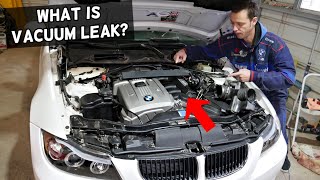

The information in this article is provided for general reference and educational purposes only. Vehicle specifications, procedures, and part compatibility can vary by production date, trim level, and region. Always consult your vehicle's factory service manual and verify part numbers before purchasing or performing repairs. Safety-critical components such as airbags, seat belts, and braking systems should be installed by a qualified professional.
- 🎬 Helpful Videos
- What Does P2414 Mean?
- Can I Drive With P2414?
- Common Causes
- Symptoms
- Diagnostic Flowchart
- Common Fixes & Costs
- DIY vs Professional
- Used vs. New Parts: Buying Guide
- What Happens If You Wait — Timeline
- Cost of Not Fixing It
- Diagnosis Steps
- When This Code Triggers (Freeze-Frame Conditions)
- Related Codes
- Climate & Environmental Factors
- How to Talk to a Mechanic About This Code
- Where to Take It: Dealer vs Independent vs Chain
- When to Walk Away From the Repair
- What Scan Tool You Need for This Code
- How to Clear the Code After You Fix It
- Will This Fail Emissions / State Inspection?
- Most Commonly Affected Vehicles
- Manufacturer-Specific Notes
- Real Owner Stories
- 2010 MINI Cooper R56 with P2414
- BMW E90 3-Series with P2414, P0171, and P2195
- 2013 VW Jetta 2.0L with P2414 and P2237
- How to Prevent This Code From Triggering
- Frequently Asked Questions
- What are the most common misdiagnosis mistakes for P2414?
- I replaced the O2 sensor, but the code came back. What now?
- Can a vacuum leak cause a P2414 code?
- Can a bad MAF sensor cause P2414?
- What does 'Bank 1, Sensor 1' mean?
- Can I clean the O2 sensor instead of replacing it?
- Will the P2414 code clear itself?
- Key Takeaways
- 🎟️ Get 5% Off