

P2407 on 2016 Volkswagen Golf R: EVAP Pump Circuit Fault Causes and Fixes
On a 2016 VW Golf R, code P2407 is most often caused by a faulty EVAP Leak Detection Pump (LDP) or corrosion on its electrical connector. Before replacing parts, check with a VW dealer about software updates, as a TSB exists for this issue. The LDP is a common failure point and costs around $150-$250 for the part.
- P2407 is an electrical circuit fault with the EVAP Leak Detection Pump (LDP), not a physical leak.
- Before replacing any parts, contact a VW dealer to see if your Golf R needs a software update per TSB 2069630, as this can be a no-cost fix.
- The most common physical problem is corrosion on the LDP's electrical connector in the rear passenger wheel well; cleaning it and adding dielectric grease is a low-cost first repair step.
- If software and wiring are good, the LDP itself (Part #5Q0906253D) is the next most likely failure point.
What's Unique About the 2016-2016 Volkswagen GOLF R
The 2016 Golf R is built on Volkswagen's MQB platform, which is known to have issues with this specific code. VW has issued Technical Service Bulletins (TSBs) acknowledging that the engine's diagnostic software can be overly sensitive, falsely triggering the P2407 code. Furthermore, the LDP's location in the rear passenger-side wheel well makes its 3-pin electrical connector (T3as) highly susceptible to corrosion from road salt and moisture, a very common cause of this fault on the Golf R and its platform mates like the GTI and Audi S3.
Diagnostic Flowchart
Tap your situation to follow the diagnostic path that matches what you're seeing on this vehicle.
Symptoms You May Notice
- Check Engine Light is illuminated.
- Vehicle will fail an emissions test.
- Inability for the EVAP system readiness monitor to complete.
- A faint fuel odor near the rear of the car may be noticeable in some rare cases.
- Replacing the gas cap. A faulty gas cap typically causes codes for large or small leaks (like P0455/P0456), not a circuit-specific code like P2407.
- Performing a smoke test. P2407 is an electrical fault, not a physical leak. A smoke test will not identify a bad sensor or corroded wire and is a waste of diagnostic time.
- Replacing the charcoal canister or purge valve (N80). While part of the EVAP system, P2407 is specific to the LDP's sense circuit and these components are unlikely to be the cause.
Most Likely Causes
- Outdated Engine Control Module (ECM) Software 🔴 High Probability Volkswagen has issued TSB 01-23-04 (also #2069630) which states that overly sensitive diagnostic software can erroneously trigger a P2407 fault. A revision to this TSB on 05/24/2023 specifically adds the 2022 Golf R and DTC P0456, confirming the link for this platform.
How to confirm: Contact a Volkswagen dealership and provide your VIN. They can check if TSB 2069630 is applicable and if the software update has been performed.
Typical fix: The dealership reprograms the ECM with the updated software. This is often covered under emissions warranties.
Est. part cost: $0 - Corroded or Damaged Leak Detection Pump (LDP) Connector/Wiring 🔴 High Probability The LDP is located in the rear passenger wheel well, where it is exposed to road salt, water, and debris, making corrosion (often a green or white crust) on the 3-pin connector a very common failure point.
How to confirm: Remove the rear passenger wheel and fender liner. Unplug the LDP and visually inspect the connector pins and wiring for green or white crust, moisture, or physical damage.
Typical fix: Clean the connector terminals thoroughly with electrical contact cleaner and a small brush. Apply dielectric grease to the connector before reassembly to prevent future moisture intrusion. If the connector or wiring is too damaged, a new pigtail connector (Part #8K0973703) will need to be spliced in.
Est. part cost: $5-$45 - Faulty Leak Detection Pump (LDP) 🟡 Medium Probability The internal sense circuit (magnetic reed switch) within the LDP assembly is a common point of failure. Since the sensor is integrated into the pump, the entire unit must be replaced.
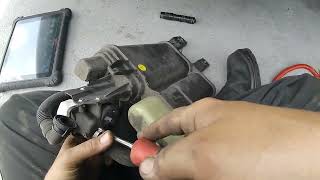
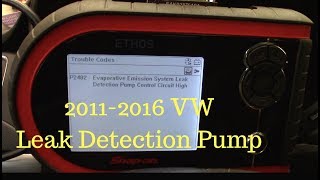
How to confirm: If the ECM software is up-to-date and the wiring/connector is clean and has proper voltage/ground, the pump itself is the likely culprit. 🎬 Watch this walkthrough for replacing a faulty leak detection pump A bi-directional scan tool can be used to command the pump to run; an erratic signal on the sense line (should be a stable ~4.5-5.0V) confirms a bad pump.
Typical fix: Replace the Leak Detection Pump assembly.
Est. part cost: $150-$280
Rare But Worth Checking
- Blown EVAP System Fuse: A blown fuse for the EVAP system can interrupt power to the LDP circuit, causing a P2407 code. Always check the fuse box before replacing more expensive components.
- Faulty Engine Control Module (ECM): This is extremely rare. The ECM should only be considered after all other possibilities, including software, wiring, fuses, and the pump itself, have been definitively ruled out.
Diagnosis Steps
- Read the fault codes with an OBD-II scanner to confirm P2407 is present.
- Contact a VW dealer with your VIN to check for applicability of TSB 2069630 regarding an ECM software update. This should be the first step.
- If software is up-to-date, raise and safely support the rear of the vehicle. Remove the passenger-side rear wheel.
- Remove the felt wheel well liner to access the EVAP system components, including the charcoal canister and Leak Detection Pump (LDP).
- Locate the LDP and unplug its 3-pin electrical connector.
- Thoroughly inspect the connector on both the harness and pump sides for corrosion (green/white powder), moisture, or damaged pins.
- If corrosion is found, clean it with electrical contact cleaner and a small brush. Apply dielectric grease before reconnecting.
- If the connector is clean, use a multimeter to check for power, ground, and a stable signal voltage (typically 4.5-5.0V) at the connector with the key on. Wiggle the harness to check for intermittent breaks.
- If wiring is confirmed good, the LDP is the most likely cause. Replace the LDP assembly. 🎬 Watch: Step-by-step guide to replacing the leak detection pump
- Clear the fault code and perform a complete EVAP drive cycle to ensure the repair was successful and the readiness monitor is set.
Parts You'll Likely Need
- EVAP Leak Detection Pump
(OEM #5Q0906253D)— This pump contains the internal sensor that fails, triggering the P2407 circuit code. It is the most common hardware replacement for this issue after ruling out software and wiring. This part number supersedes previous versions 5Q0906253B and 5Q0906253C.
Trusted brands: Bosch, Genuine Volkswagen
OEM price range: $200-$280
Aftermarket price range: $150-$220 - LDP Connector Pigtail
(OEM #8K0973703)— If the original 3-pin connector is severely corroded or damaged, it must be replaced to ensure a reliable electrical connection to the new pump.
Trusted brands: Genuine Volkswagen, Dorman
OEM price range: $25-$45
Aftermarket price range: $15-$30
Related Codes That Often Appear With This One
- P0442 — This code for a small EVAP leak is mentioned in the same VW software TSB (2069630) as P2407, as the overly sensitive diagnostic logic can incorrectly flag a leak.
- P0456 — This code for a very small EVAP leak is specifically mentioned for the Golf R in the revised TSB (2069630) for the software update, indicating it can be falsely triggered along with P2407.
- P2450 — Mentioned in forum discussions, this code for 'EVAP System Switching Valve Performance/Stuck Open' can sometimes appear alongside P2407, indicating a broader EVAP system electronic issue.
Technical Service Bulletins (TSBs) & Recalls
- VIN-4-A-PIN APRI: Original NHTSA TSB which lists P2407 as a possible fault in the ECM for the 2016 Golf R.
- 01-23-04 / 2069630: States that the ECM software is too sensitive and can cause a false P2407. A revision on 05/24/2023 specifically adds the 2022 Golf R and mentions associated false codes P0442 and P0456. This is a critical diagnostic step.
- 2071770/5 (Audi): While for newer Audi Q3/Q5 models, this TSB also addresses P2407 by recommending a software update for 'OBD diagnostics too sensitive,' showing a pattern of this issue across the VW/Audi family.
Platform-Specific Known Issues
- The 2016 Golf R is subject to VW Technical Service Bulletin 01-23-04 (also #2069630), which calls for an ECM software update to correct an overly sensitive diagnostic that can falsely trigger code P2407. This is a critical first step in diagnosis.
Mechanic-Grade Diagnostic Values
- Leak Detection Pump (V144) Internal Resistance — expected: Between terminal 1 and terminal 3: 640-720 Ω. Between terminal 2 and terminal 3: 17.5-27.5 Ω.. Failure: Readings outside these ranges indicate an internal electrical fault in the pump.
- LDP Sense Circuit Voltage (Live Data) — expected: A stable voltage of approximately 4.5-5.0 V when the pump is commanded on.. Failure: Rapid fluctuations, spikes, or drops to 0V indicate an intermittent signal, triggering P2407.
- LDP Connector Pin 3 Voltage (Power) — expected: Approximately 12V (Battery Voltage).. Failure: No voltage indicates a power supply issue, likely a blown fuse or broken wire.
- LDP Connector Pin 2 (Signal) — expected: The ECM provides a ground on this pin to activate the pump.. Failure: If the ECM never provides a ground during an output test, it could point to a wiring or ECM issue.
Scan Tool Commands That Help
- VCDS (VAG-COM): Engine -> Output Tests -> EVAP Leak Detection Pump — This function allows a technician to directly command the LDP to activate, making it possible to hear it click and to measure voltage signals at the connector while the pump is supposed to be running. This is essential for confirming if the pump is receiving the command and if the sense circuit is responding correctly.
- VCDS (VAG-COM): Engine -> Basic Settings -> Group 070 (EVAP System Test) — This is a more comprehensive automated test of the entire EVAP system. It will cycle the LDP and other valves to check for leaks and proper function. A failure or abort during this test can help confirm a problem within the EVAP system, although P2407 is more specifically diagnosed with the Output Test.
Wiring & Ground Locations
- LDP Connector (T3as) — In the rear passenger-side wheel well, connected to the Leak Detection Pump which is mounted near the charcoal canister.. This 3-pin connector is the primary failure point for P2407 due to its high susceptibility to corrosion from road salt and water spray, leading to intermittent signal from the pump's sensor.
- Ground Point 673 — On the front of the left longitudinal member in the engine compartment.. While not the direct ground for the LDP, a poor main engine harness ground can cause a variety of strange electrical issues. A wiring diagram for the MK7 Golf indicates this as a key grounding point for the engine harness.
Real Owner Repair Stories
- Ross-Tech Forums User (Audi A4 B7 (similar LDP system)) — Check Engine Light with code P2402 (Short to Plus), which is closely related to P2407. Light would appear instantly on a cold start after sitting overnight.
❌ Tried (didn't work) Smoke test (no leaks found), Replacing the N80 purge valve, Replacing the Leak Detection Pump (LDP) twice, even though both passed resistance tests.
✅ What actually fixed it The user found a faulty vacuum check valve located at the top of the vacuum pump was the root cause. This bad check valve was preventing sufficient vacuum from operating the LDP correctly, even though the LDP itself was functional. Replacing the small plastic check valve solved the problem.
"I Checked Everything" — The Actual Cause
- P2407 is an electrical circuit code, not a physical leak code. A smoke test is designed to find physical leaks in hoses or the tank and will almost always pass when P2407 is the only code present. The fault lies in the communication between the LDP's internal sensor and the ECM, which is caused by corroded wiring, a faulty sensor inside the pump, or a software issue, none of which a smoke test can identify.
OEM Part Supersession History
5Q0906253A, 5Q0906253B, 5Q0906253C→5Q0906253D— Standard part revision by the manufacturer to improve reliability or address known issues.
Heads up: The newer part number 5Q0906253D is a direct replacement for the older versions and is fully compatible.
Helpful Videos
We Have This Part in Stock



The information in this article is provided for general reference and educational purposes only. Vehicle specifications, procedures, and part compatibility can vary by production date, trim level, and region. Always consult your vehicle's factory service manual and verify part numbers before purchasing or performing repairs. Safety-critical components such as airbags, seat belts, and braking systems should be installed by a qualified professional.
- Volkswagen GOLF R:
- 🎬 Helpful Videos
- 🛍️ Shop This Part
- What's Unique About the 2016-2016 Volkswagen GOLF R
- Diagnostic Flowchart
- Symptoms You May Notice
- Most Likely Causes
- Rare But Worth Checking
- Diagnosis Steps
- Parts You'll Likely Need
- Related Codes That Often Appear With This One
- Technical Service Bulletins (TSBs) & Recalls
- Platform-Specific Known Issues
- Mechanic-Grade Diagnostic Values
- Scan Tool Commands That Help
- Wiring & Ground Locations
- Real Owner Repair Stories
- "I Checked Everything" — The Actual Cause
- OEM Part Supersession History
- 🎟️ Get 5% Off