

P2407 on 2010-2017 Volkswagen Golf: EVAP Leak Detection Pump Circuit Fixes
This code points to an electrical problem with the EVAP system's Leak Detection Pump (LDP), not a physical leak. The most common cause is a corroded connector at the pump or damaged wiring due to its exposed location under the car. Inspect and clean the LDP wiring and connector before replacing the pump itself. On some VW models, this code can also be erroneously triggered by sensitive software, which may require a dealer update.
- P2407 is an electrical circuit code, not a physical leak code. Focus on the wiring first.
- The most likely cause on a 2010-2017 Golf is a corroded electrical connector at the Leak Detection Pump, located near the rear passenger wheel.
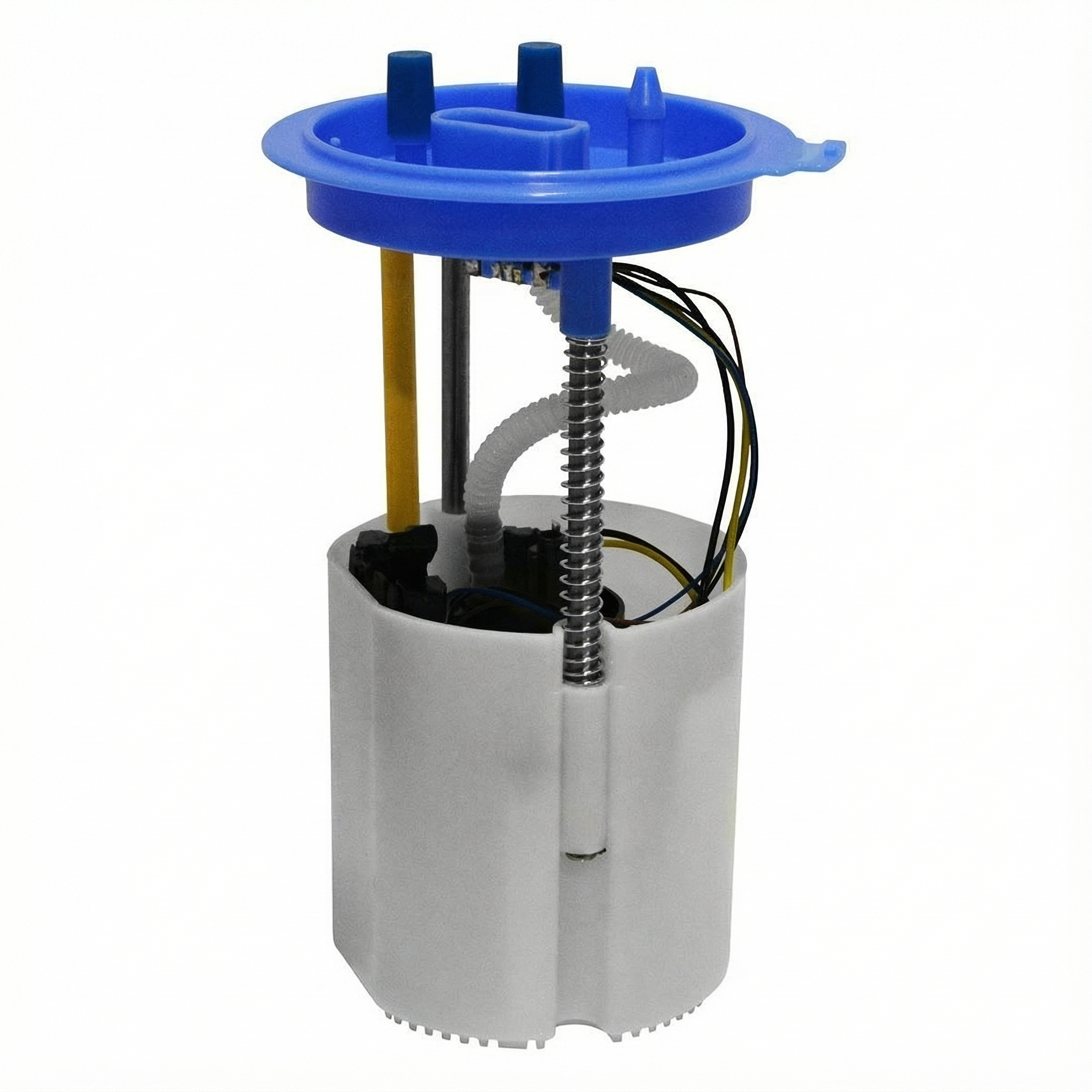
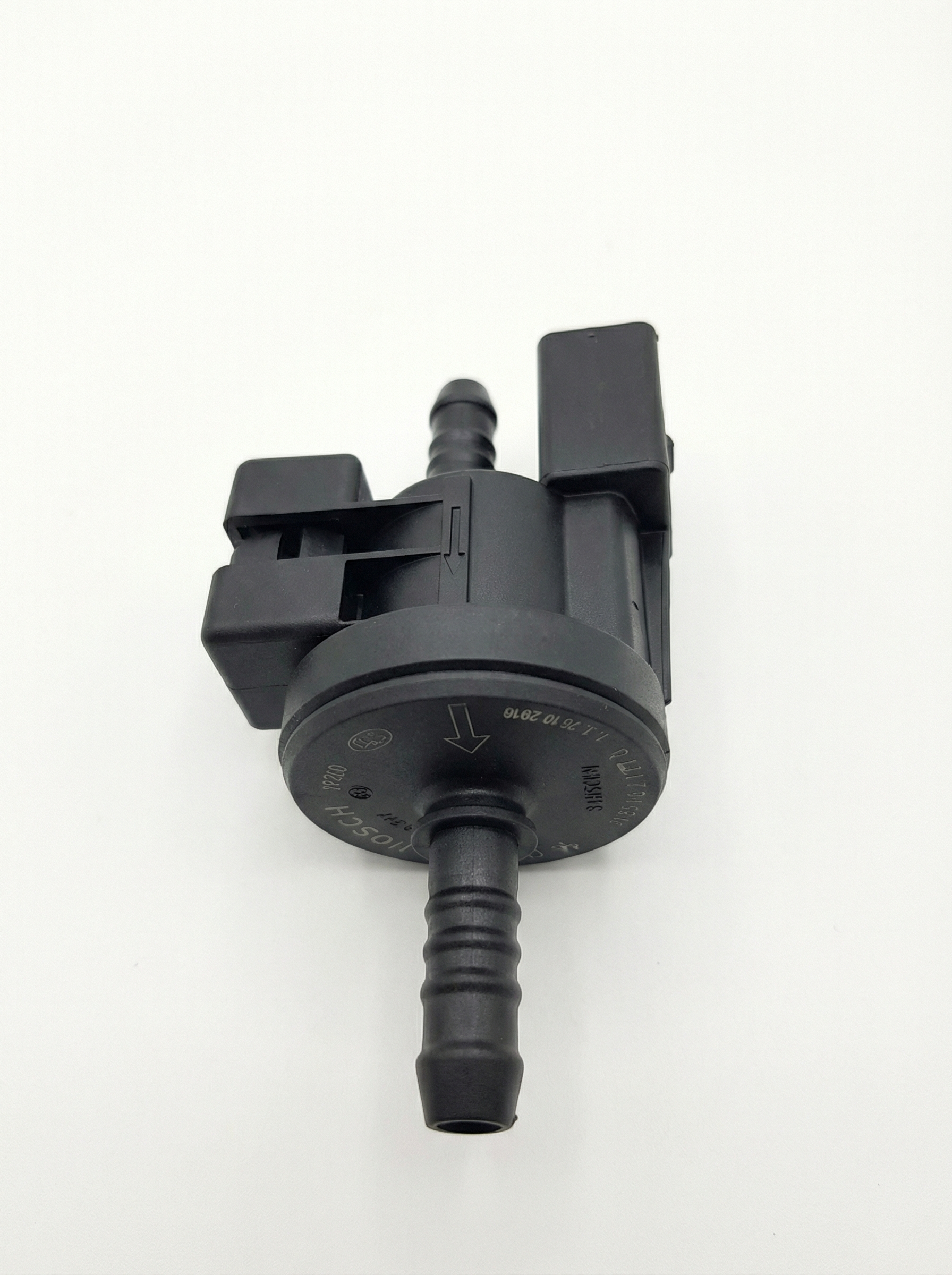
- If the wiring is good, the pump itself is the next likely failure. The OEM part number is 1K0906201D.
- In some VW Group vehicles, this code can be triggered by overly sensitive software, requiring a dealer update to fix.
What's Unique About the 2010-2017 Volkswagen GOLF
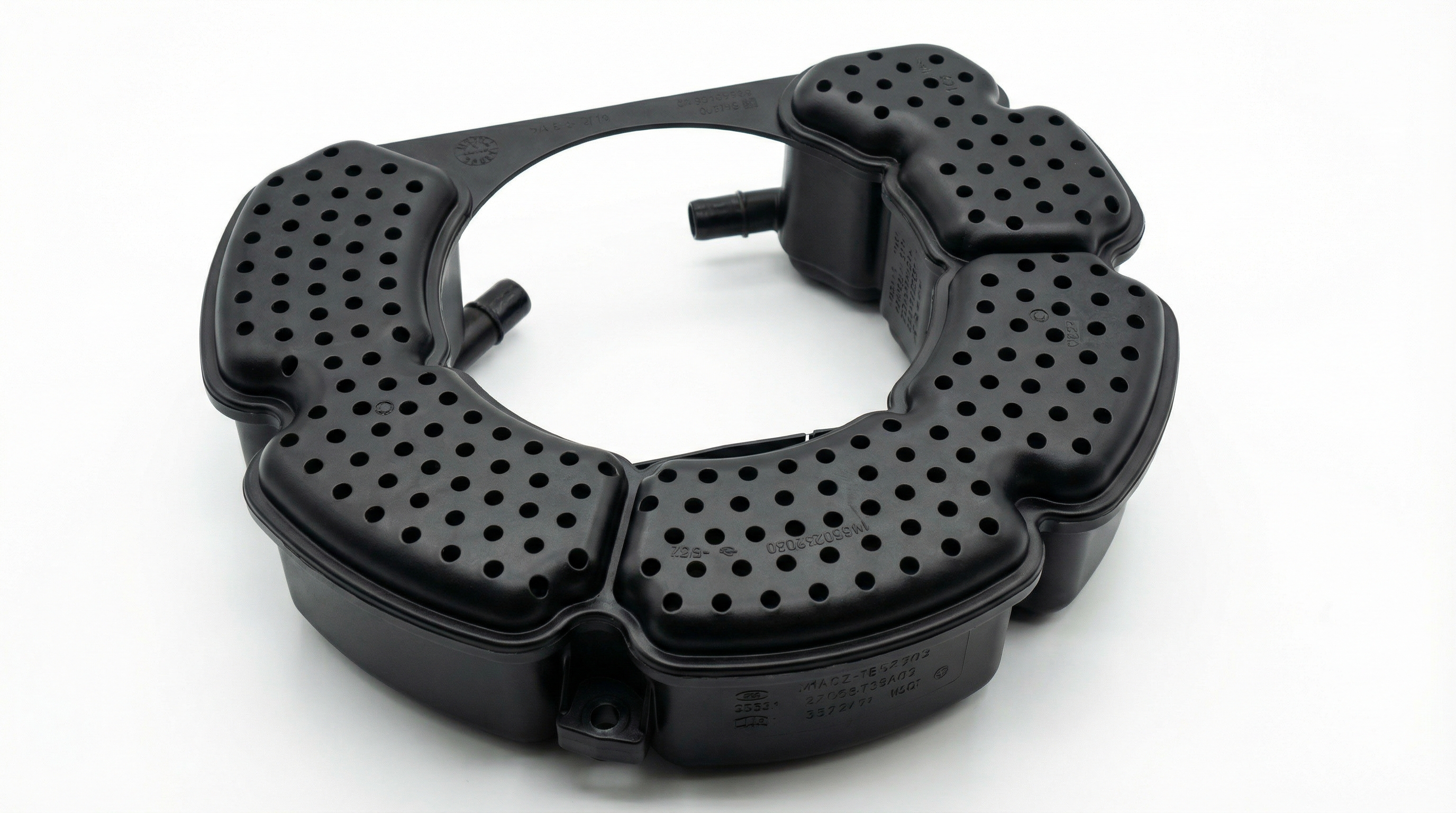
On the Mk6 and Mk7 Golf, the Leak Detection Pump is located near the charcoal canister by the rear axle, exposing its wiring and connector to road salt, moisture, and debris. This makes corrosion and wire damage a primary suspect for P2407 on these vehicles. While the pump itself can fail, owners often find the problem lies in the electrical connection to it. The issue is so common that many forum users immediately point to checking the connector for the tell-tale 'green crusties' of corrosion.
Diagnostic Flowchart
Tap your situation to follow the diagnostic path that matches what you're seeing on this vehicle.
Generation note: This range covers the Volkswagen Golf Mk6 (2010-2014) and Mk7 (2015-2017). The function and location of the Leak Detection Pump are similar across these generations, making the causes and diagnostic steps largely the same. The LDP is a common part across many VW/Audi models from this era.
Symptoms You May Notice
- Check Engine Light is on.
- Failure to pass an emissions inspection.
- A faint fuel odor may be noticeable near the rear of the car.
- EVAP system readiness monitor will show as 'incomplete' or 'not ready' on an OBD-II scan tool.
- Replacing the gas cap. A loose or faulty gas cap typically causes codes for small or large leaks (like P0456 or P0455), not a circuit code like P2407.
- Replacing EVAP system hoses. While cracked hoses cause EVAP leaks, P2407 specifically points to an electrical circuit issue with the pump, not a physical leak in a hose.
Most Likely Causes
- Damaged or Corroded LDP Wiring/Connector 🔴 High Probability The LDP is mounted underneath the car near the rear passenger-side wheel, exposing the connector to moisture and road salt, which leads to corrosion (often seen as 'green crusties').
How to confirm: Visually inspect the wiring harness and electrical connector going to the Leak Detection Pump. Unplug it and check for any green or white corrosion on the pins. A service manual specifies checking for voltage at terminal 3 and ground at terminal 1 of the connector with the ignition on.
Typical fix: Clean the connector pins thoroughly with an electrical contact cleaner and a small brush. Apply dielectric grease before reconnecting to prevent future moisture intrusion. If the wiring is frayed or broken, it will need to be repaired or spliced using weatherproof connectors.
Est. part cost: $5-$20 - Faulty EVAP Leak Detection Pump (LDP) 🟡 Medium Probability The internal sense circuit (often a reed switch or Hall-effect sensor) can fail from age or internal moisture, causing it to send erratic signals. This is the next logical part to fail if the wiring is confirmed to be good.
How to confirm: If the wiring and connector are in good condition, and power/ground are confirmed at the pump, the pump itself is the likely culprit. A scan tool may be used to monitor the sense circuit voltage during an EVAP test; unstable or absent voltage points to a faulty pump. You can also test the internal resistance of the pump with a multimeter.
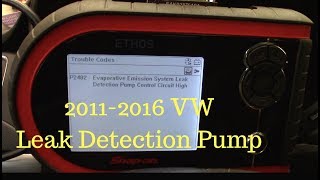
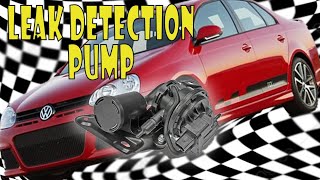
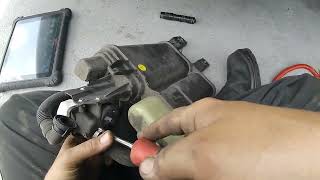
Typical fix: Replace the Leak Detection Pump. 🎬 Watch this step-by-step guide to replacing the pump on a similar VW. This part is often mounted directly on or next to the charcoal canister via three screws. 🎬 See how to access and swap the pump in this video.
Est. part cost: $80-$200 - Blown Fuse or Faulty Relay ⚪ Low Probability
How to confirm: Check the vehicle's fuse box diagram for any fuses related to the EVAP system or emissions controls. For example, on a similar Jetta platform, fuse 15 in fuse panel B powers the LDP. Verify the fuse is intact.
Typical fix: Replace the blown fuse.
Est. part cost: $1-$5
Rare But Worth Checking
- Faulty Powertrain Control Module (PCM): This is extremely rare. The PCM's internal circuit that reads the LDP signal can fail, but every other possibility, especially wiring and the pump itself, should be exhaustively ruled out first.
- Sensitive ECM Software: On some other VW/Audi models like the Atlas and Q3/Q5, TSBs have been issued stating that overly sensitive software can erroneously trigger P2407, especially during refueling. The fix is a software update performed by a dealer. While not specifically issued for the Golf in this year range, it highlights a known potential cause within the VW family.
Diagnosis Steps
- Read the Code: Use an OBD-II scanner to confirm P2407 is the active code and check for any other related codes.
- Visual Inspection: Locate the Leak Detection Pump near the charcoal canister, typically behind the passenger side rear wheel well liner. Unplug its 3-pin electrical connector and thoroughly inspect for corrosion (green/white powder), moisture, or damaged pins.
- Clean and Secure: If corrosion is present, clean it with electrical contact cleaner and a small brush. Apply dielectric grease to the connector pins before reconnecting to seal out moisture. Ensure the connection is secure.
- Check for Power and Ground: Use a multimeter to verify power and ground at the connector with the ignition on. According to service data for a similar platform, you should have battery voltage at terminal 3 and a good ground at terminal 1.
- Inspect the Wiring: Carefully examine the wiring harness leading to the LDP for any signs of chafing, breaks, or heat damage, as it is in a vulnerable location.
- Test the Pump (Advanced): If you have a capable scan tool, you can command the EVAP system test and monitor the live data from the LDP sense circuit. Unstable or absent voltage (should be a stable 4.5-5.0V) points to a faulty pump. You can also check the internal resistance of the pump's sensor, which should typically be between 300-500 ohms.
- Replace the LDP: If the wiring is confirmed to be good and the pump is receiving power but still setting the code, replace the Leak Detection Pump. 🎬 Check out this walkthrough for replacing the EVAP leak detection pump.
Parts You'll Likely Need
- EVAP Leak Detection Pump (LDP)
(OEM #1K0906201D (replaces 1K0906201, 1K0906201A, 1K0906201B, 1K0906201C))— This is the most common part to fail when the wiring and connector are confirmed to be in good condition. The internal sensor fails, causing the erratic signal.
Trusted brands: Bosch, Genuine VW/Audi
OEM price range: $150-$370
Aftermarket price range: $80-$180 - Electrical Contact Cleaner — Essential for cleaning corrosion from the LDP connector, which is a very common cause of this code.
Trusted brands: CRC, WD-40 Specialist
Aftermarket price range: $5-$15
Related Codes That Often Appear With This One
- P0442 — P0442 indicates a small EVAP leak. An intermittent LDP signal could cause the system to incorrectly flag a leak, or a related issue could cause both codes. The provided TSBs list them together as potential customer complaints. [Bulletin #VIN4APIN20200728, #VIN4APIN20200720] A VW TSB for the Golf R also groups P2407 and P0456 (very small leak) as being caused by the same software issue.
- P2450 — This code relates to the 'EVAP System Switching Valve'. A Reddit user with a 2014 VW Jetta GLI reported seeing both P2407 and P2450, suggesting a related fault in the EVAP system's electrical components. The user ultimately fixed both codes by replacing the leak detection pump.
Technical Service Bulletins (TSBs) & Recalls
- VIN4APIN20200803: Notes customer complaints of MIL-on with code P2407 on 2014 models.
- VIN4APIN20200728: Lists P2407 as a reason for a MIL-on complaint for 2011 models.
- VIN4APIN20200720: Mentions P2407 as a customer complaint for a MIL-on condition on 2014 models.
- VW TSB 2063514/1 (01-21-09): For 2018-2021 Atlas models, identifies a software issue causing erroneous P2407 or P0456 codes during refueling and provides a software update as the solution.
- Audi TSB 2071770/5 (01-24-16): For 2022-2023 Q3/Q5 models, states that 'OBD diagnostics too sensitive' can cause P2407 and the fix is a new software version for the engine control module.
Platform-Specific Known Issues
- Volkswagen Technical Service Bulletins (TSBs) list P2407 as a potential code when a customer complains of the Malfunction Indicator Lamp (MIL) being on. These TSBs group it with a wide range of other codes, suggesting it can be part of a more complex electrical issue, though they do not specify a direct cause or fix for P2407 itself. [Bulletin #VIN4APIN20200803, #VIN4APIN20200728, #VIN4APIN20200720]
- A TSB for the VW Atlas (2018-2021) notes that P2407 can be set erroneously because the diagnostic test runs during refueling. The fix is a software update. This indicates a precedent for software-related triggers for this code in the VW family.
Mechanic-Grade Diagnostic Values
- LDP Sense Circuit Voltage (Live Data) — expected: Stable 4.5-5.0 V while the pump cycles.. Failure: Rapid spikes or drops to 0 V, or erratic fluctuations.
- LDP Internal Sensor Resistance — expected: 300–500 Ω. Failure: A reading outside of this range indicates a faulty internal sensor.
- LDP Ground Strap to Chassis Resistance — expected: < 0.1 Ω. Failure: A higher resistance reading indicates a poor ground connection that needs to be cleaned and tightened.
Scan Tool Commands That Help
- VCDS (VAG-COM) or ODIS: EVAP System Leak Test (Basic Setting) — This function commands the LDP to run, allowing a technician to monitor the sense circuit's live data (voltage, frequency) to see if it is operating correctly or providing an erratic signal. It's used to confirm if the pump's sensor is failing under operational demand.
Wiring & Ground Locations
- Ground Point 50 — Inside the luggage compartment on the left side.. A poor ground connection at this point could cause intermittent electrical issues for components located at the rear of the vehicle, including the LDP circuit.
- Ground Point 681 / 682 — In the right rear side panel of the luggage compartment.. These are the primary ground points on the same side of the vehicle as the LDP. Verifying these grounds are clean and tight is a key step in diagnosing any electrical fault in this area.
- LDP Connector (3-Pin) — Connected directly to the Leak Detection Pump, near the charcoal canister by the rear axle.. This is the most common failure point. Pin 1 is ground, and Pin 3 is the power supply from the fuse. The center pin is the sense circuit signal wire. Corrosion here directly causes P2407.
Real Owner Repair Stories
- Reddit r/JettaGLI (2014 Volkswagen Jetta GLI) — Check Engine Light with codes P2407 and P2450 appearing, one at a time.
❌ Tried (didn't work) The user was considering replacing the EVAP pressure sensor or just the LDP.
✅ What actually fixed it The owner replaced the Leak Detection Pump (LDP) themselves. This resolved both the P2407 and P2450 codes, and the car subsequently passed its smog inspection.
OEM Part Supersession History
1K0906201, 1K0906201A, 1K0906201B, 1K0906201C→1K0906201D— Standard part evolution for performance and reliability updates.
Heads up: All previous versions are replaced by 1K0906201D, which should be used for all repairs.
Model Year Variations Within This Range
- 2010-2014 (Mk6) vs 2015-2017 (Mk7): The Mk7 Golf is built on the newer MQB platform and is lighter and more aerodynamic than the Mk6. While the LDP function is the same, the Mk7 features more complex electronics and a different engine (EA888 Gen 3 vs EA113/EA888 Gen 1/2 in Mk6), which can affect diagnostic approaches. For example, accessing the oil filter is easier from the top on the Mk7, indicating changes in engine bay layout and serviceability.
Helpful Videos
We Have This Part in Stock


The information in this article is provided for general reference and educational purposes only. Vehicle specifications, procedures, and part compatibility can vary by production date, trim level, and region. Always consult your vehicle's factory service manual and verify part numbers before purchasing or performing repairs. Safety-critical components such as airbags, seat belts, and braking systems should be installed by a qualified professional.
- Volkswagen GOLF:
- 🎬 Helpful Videos
- 🛍️ Shop This Part
- What's Unique About the 2010-2017 Volkswagen GOLF
- Diagnostic Flowchart
- Symptoms You May Notice
- Most Likely Causes
- Rare But Worth Checking
- Diagnosis Steps
- Parts You'll Likely Need
- Related Codes That Often Appear With This One
- Technical Service Bulletins (TSBs) & Recalls
- Platform-Specific Known Issues
- Mechanic-Grade Diagnostic Values
- Scan Tool Commands That Help
- Wiring & Ground Locations
- Real Owner Repair Stories
- OEM Part Supersession History
- Model Year Variations Within This Range
- 🎟️ Get 5% Off