

OBD-II Code P2405: EVAP Leak Detection Pump Sense Circuit Low
The Ultimate Guide to Meaning, Diagnosis, and Repair
- P2405 indicates a low voltage signal in the EVAP leak detection pump's sense circuit, meaning the engine computer cannot verify the pump is running.
- Test the pump's electrical connector for 12V power and a solid ground before spending $250+ on a replacement pump.
- Inspect the undercarriage wiring harness for corrosion or chafing, which causes over 30% of P2405 codes in salt-belt states.
- Check for Technical Service Bulletins (TSBs); 2015-2016 Subarus and 2004-2009 Mazdas often resolve this code with a dealer software update rather than parts.
- Do not ignore a P2405 code if you have an upcoming state inspection, as the disabled EVAP monitor guarantees an automatic emissions test failure.
What Does P2405 Mean?
The Engine Control Module (ECM) detects that the voltage signal from the EVAP leak detection pump's monitoring circuit is below the manufacturer's specified range. The pump pressurizes the fuel system to check for leaks. This code means the ECM cannot confirm the pump is operating, preventing the fuel system's diagnostic self-test.
Technical definition: Evaporative Emission System Leak Detection Pump Sense Circuit Low. The Powertrain Control Module (PCM) sets this code when the voltage signal from the EVAP leak detection pump's feedback circuit falls below the expected threshold. A 'low' signal indicates an open circuit, a high-resistance ground path, a blown fuse, or a failed pump motor drawing zero power.
Can I Drive With P2405?
Yes, But With Caution. You can safely drive with a P2405 code, as it causes no immediate performance or safety issues. However, your vehicle will automatically fail an emissions test. Unresolved EVAP faults cause a slight decrease in fuel economy and a persistent fuel smell. On modern vehicles (like Subarus), this code disables advanced driver-assistance systems like EyeSight or Reverse Automatic Braking as a safety precaution.
Common Causes
- Faulty EVAP Leak Detection Pump (Very Common) — The pump motor or its internal Hall-effect sensor is the most frequent point of failure. Internal wear, an electrical short, or complete motor burnout prevents it from running, resulting in zero voltage on the sense circuit.
- Damaged Wiring or Poor Ground Connection (Common) — The wiring harness and chassis ground point are located under the car, vulnerable to road salt and debris. Chafed wires, corroded connector pins, or a rusty ground create an open or high-resistance condition that drops the voltage signal.
- Blown Fuse or Faulty Relay (Common) — A blown fuse cuts all power to the circuit, and a failed relay prevents power from reaching the pump. Both result in an immediate low voltage reading at the PCM.
- Water Intrusion into Charcoal Canister Assembly (Less Common) — On certain Toyota models, water leaks into the charcoal canister assembly. This shorts out the integrated pump's electronics and damages the canister, triggering a cluster of EVAP codes including P2405.
- Cracked or Damaged Fuel Filler Neck (Rare) — A rusted fuel filler neck prevents the gas cap from sealing. While this typically sets a P0455 (Large Leak) code, it is sometimes a contributing factor to broader EVAP system faults.
- Faulty Powertrain Control Module (PCM) (Very Rare) — A defective PCM driver circuit fails to correctly interpret the signal from the pump. Consider this only after exhaustively testing the wiring, grounds, and the pump itself.
Symptoms
- Check Engine Light is On — The primary and often only symptom. The light illuminates immediately when the circuit fails the self-test.
- Failed Emissions Test — The EVAP system's readiness monitor cannot complete its self-test, resulting in an automatic failure of a state OBD-II emissions inspection.
- Dashboard Warning Message — Some vehicles display a specific message on the instrument cluster, such as "EVAP System Leak Detected" or "Check Gas Cap."
- Fuel Smell — A faint odor of gasoline around the rear of the vehicle occurs because the EVAP system is not properly containing and purging fuel vapors.
- Slight Decrease in Fuel Economy — Fuel vapors escape into the atmosphere instead of being burned by the engine, causing a minor 1-2% decrease in overall fuel efficiency.
Diagnostic Flowchart
Tap your situation to follow the diagnostic path that matches what you're seeing on this code.
Common Fixes & Costs
- Replace EVAP Leak Detection Pump — Parts: $150-$350, Labor: $150-$250, ~1.2 hr book time (Intermediate)
- Repair Damaged Wiring or Connectors — Parts: $20-$60, Labor: $150-$300, ~2 hr book time (Professional)
- Replace Blown Fuse or Faulty Relay — Parts: $5-$40, Labor: $0-$50, ~0.2 hr book time (DIY)
- Replace Charcoal Canister Assembly — Parts: $400-$1000+, Labor: $150-$300, ~1.5 hr book time (Intermediate)
DIY vs Professional
- Replace Blown Fuse or Faulty Relay — Beginner:
Tools: Owner's Manual, Fuse Puller - Replace EVAP Leak Detection Pump — Beginner:
Tools: Jack and Jack Stands, Socket Set, Pliers, Screwdrivers, Safety Glasses - Repair Damaged Wiring or Connectors — Beginner:
Tools: Multimeter, Wire Strippers, Crimpers, Heat Shrink Tubing, Soldering Iron, Service Manual - Replace Charcoal Canister Assembly — Beginner:
Tools: Jack and Jack Stands, Socket Set, Hose Clamp Pliers, Safety Glasses
Used vs. New Parts: Buying Guide
When a used part is worth it: A used Leak Detection Pump is rarely a good value. Buy used only for a very old, high-mileage vehicle where the budget is extremely tight.
Donor-vehicle mileage cap: roughly under 60000 miles for the part to have meaningful remaining life.
Donor quality checklist:
- Verify the donor vehicle was not scrapped for emissions-related failures.
- Avoid parts from rust-belt states, as connectors will be corroded.
- Match the part number exactly.
Decision logic:
- If Part is electronic with a known wear-out failure mode (like a pump motor) → Buy a new OEM or reputable aftermarket part.
- If Vehicle is less than 10 years old or has under 150k miles → Buy new. The cost savings of a used part do not justify the risk of premature failure.
- If The labor cost for installation is more than the cost of the new part → Buy new to avoid paying for the same job twice.
Warranty tradeoff: Used salvage parts have a 30-90 day warranty covering only the part. New aftermarket parts offer a 1-year to limited lifetime warranty. New OEM parts carry a 1-year/12,000-mile warranty.
Worst-case if a used part fails: $300-$500 if a used pump fails after the short warranty period, requiring a new part plus repeat labor costs.
What Happens If You Wait — Timeline
- Immediate: Check Engine Light illuminates. The EVAP readiness monitor is disabled, resulting in an automatic failure of any OBD-II emissions test. (MPG impact: 0%% · Added cost: $0)
- 1-6 months: A faint fuel smell becomes noticeable. A slight drop in fuel economy occurs as vapors escape. (MPG impact: 1-2%% · Added cost: $5-$25 in wasted fuel)
- 6-12 months: On vehicles like Subaru, integrated safety systems (EyeSight) are disabled as a fail-safe. Corroded wiring worsens, making repair more difficult. (MPG impact: 1-2%% · Added cost: $50-$150 (increased wiring repair complexity))
- 12+ months: The active Check Engine Light masks new, serious trouble codes. Ignoring a masked misfire destroys the catalytic converter. (MPG impact: 2-5%% · Added cost: $1200-$2800 (catalytic converter replacement))
Cost of Not Fixing It
- Immediate: Guaranteed failure of any state OBD-II emissions inspection. Check Engine Light remains on, masking potential new trouble codes. (Added cost: $40-$150 in state re-inspection fees and fines.)
- 1-6 months: Slight decrease in fuel economy (1-3%) as fuel vapors escape. Annoying fuel odors around the vehicle. (Added cost: $5-$15 per month in wasted fuel.)
- 6+ months: Ignoring the EVAP system leads to a consistently rich fuel mixture in some failure modes, destroying the catalytic converter. (Added cost: $1200-$2800 for catalytic converter replacement.)
Diagnosis Steps
- Scan and Document Freeze Frame Data
Use an OBD-II scanner to confirm P2405 is the active code. Document the freeze frame data to capture the exact sensor readings when the fault occurred. Note any other related EVAP codes.
Tools: OBD-II Scanner (Beginner) - Check Fuses and Relays
Locate the fuse and relay for the EVAP system or leak detection pump in the owner's manual. Inspect the fuse. If intact, temporarily swap the pump's relay with an identical one from a less critical system (like the horn) to test for a failed relay.
Tools: Fuse Puller or Pliers, Owner's Manual (Beginner) - Visually Inspect the EVAP System and Wiring
Raise the vehicle safely. Locate the leak detection pump near the fuel tank. Inspect the wiring harness for chafing, melting, or corrosion. Verify the connector is securely plugged in and the chassis ground bolt is tight and rust-free.
Tools: Flashlight, Jack and Jack Stands (Beginner) - Test the Pump's Wiring Connector for Power and Ground
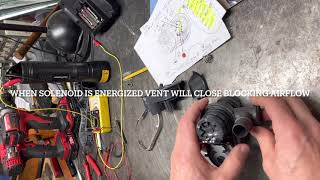
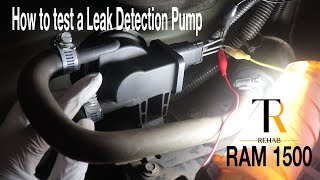
Disconnect the pump's electrical connector. With the ignition on, use a multimeter to verify battery voltage (12V) on the power wire and a solid ground (close to 0V) on the ground wire.
Tools: Multimeter, Service Manual (Intermediate) - [PRO TIP] Measure Pump Motor Resistance
With the connector unplugged, measure the resistance between the power and ground terminals on the pump itself. Compare this to the manufacturer's specification (typically 30-50 Ohms). Infinite resistance confirms an open circuit and a dead pump motor.
Tools: Multimeter, Service Manual (Advanced) - [PRO TIP] Command Pump Activation with a Bi-Directional Scan Tool
Command the leak detection pump to turn on using a bi-directional scan tool. If the tool shows the pump is activated but it makes no sound and the sense voltage reads low, it confirms a wiring break or a failed pump.
Tools: Bi-Directional Scan Tool (Advanced) - [PRO TIP] Test the Sense Circuit Voltage and Continuity
Back-probe the sense wire at the connector while commanding the pump on. A normal reading is 4.5-5.0V. A reading below 3.0V confirms the fault. Measure resistance on the sense wire between the pump and the PCM; a reading over 5 Ohms indicates a broken wire.
Tools: Multimeter, Service Manual, Back-Probe Kit, Bi-Directional Scan Tool (Advanced) - Inspect the Gas Cap and Fuel Filler Neck
Remove and re-tighten the gas cap until it clicks. Inspect the seal for cracks and the filler neck for rust. While rarely the direct cause of a circuit code like P2405, it is a necessary baseline check for any EVAP diagnosis.
Tools: Flashlight (Beginner)
When This Code Triggers (Freeze-Frame Conditions)
- Engine Coolant Temp: 40-95°F (At startup, from a cold soak (engine temp near ambient temp).)
- Fuel Level: 15-85% (The EVAP test will not run on a full or nearly empty tank.)
- Vehicle Speed: 40-65 mph (During steady-state cruise, often for several minutes.)
- Engine Load: 20-50% (Light to moderate throttle, avoiding heavy acceleration or deceleration.)
Related Codes
- P2401 — EVAP Leak Detection Pump Control Circuit Low. P2405 refers to the 'Sense' (monitoring) circuit, while P2401 refers to the 'Control' (command) circuit. They point to the same root causes.
- P2402 — Control Circuit High. Seeing P2401, P2402, and P2405 together strongly suggests a failing pump assembly or a major wiring problem, especially on Toyotas.
- P043E — EVAP System Leak Detection Reference Orifice Low Flow. Appears with P2405 on Toyotas because water intrusion damages both the pump's electronics and clogs the reference orifice.
- P0455 — Large EVAP System Leak. If you have P2405, the system cannot run the pressure test to detect a leak. Fixing the P2405 electrical issue reveals if an underlying P0455 leak exists.
Climate & Environmental Factors
- Road Salt / High Humidity: Road salt and humidity corrode the undercarriage wiring and ground connections for the EVAP pump. This creates high resistance, lowering the voltage on the sense circuit and triggering the P2405 code.
- Cold Weather: On Subaru and Mazda models, cold, dense air causes minor fluctuations in the EVAP system's self-test that overly sensitive ECM logic incorrectly flags as a circuit fault.
- Heavy Rain / Water Intrusion: Driving through high water forces moisture into the charcoal canister on 2009-2013 Toyota Corollas and Matrixes. This shorts out the integrated leak detection pump.
How to Talk to a Mechanic About This Code
Say this: "I have an active P2405 code for the EVAP leak detection pump sense circuit. I'd like to schedule a diagnostic to test the circuit itself, including the fuse, relay, wiring, and connector, before replacing the pump."
This signals that you understand P2405 is an electrical code. It directs the technician to perform a proper diagnosis rather than immediately replacing the expensive pump.
Avoid saying:
- 'My check engine light is on, can you just fix it?'
- 'I think I have a gas leak.'
- 'Just replace the leak detection pump.'
Questions to ask before authorizing the repair:
- Did you test for 12V power and a good ground at the pump's connector?
- Was the wiring harness inspected for corrosion or damage?
- If the pump needs to be replaced, can you show me the old part and explain the failure?
- What is the warranty on the parts and labor for this repair?
Where to Take It: Dealer vs Independent vs Chain
- Dealer:
Recommended only if a specific TSB applies or if the vehicle is under warranty.
Best for: Vehicles under warranty, Vehicles with a known Technical Service Bulletin (TSB) for a software update, Complex electrical issues on high-end European brands
Downsides: Highest labor rate and part costs., Defaults to replacing entire assemblies instead of repairing a specific wire. (Typical cost: +50% vs. baseline) - Independent Shop:
Best overall fit. A good independent shop has the diagnostic tools to correctly identify the fault without overcharging.
Best for: Out-of-warranty vehicles where cost is a factor., Diagnosing common electrical faults on most domestic and Asian vehicles.
Downsides: Quality varies; look for shops with ASE-certified technicians specializing in electrical repair. (Typical cost: +0% vs. baseline) - Chain Shop:
AVOID for P2405. This code requires specific electrical diagnostic procedures beyond the scope of a typical chain repair shop.
Best for: Simple, routine maintenance like oil changes or tire rotations.
Downsides: Technician skill varies dramatically., Lacks the advanced diagnostic tools for in-depth electrical troubleshooting., High pressure to sell parts leads to misdiagnosis. (Typical cost: -10% vs. baseline)
When to Walk Away From the Repair
If the estimated repair cost for P2405 exceeds 40-50% of your car's current private-party value, seriously consider if the investment is worthwhile.
- Car worth $4000, fix is $1300: Borderline. The repair is a significant percentage of the car's value. Get a second opinion before proceeding.
- Car worth $12000, fix is $700: Fix it. The repair cost is well below the threshold and is necessary to pass emissions.
- Car worth $2500, fix is $1500: Walk away. The repair cost is too high relative to the vehicle's value.
What Scan Tool You Need for This Code
Minimum: A code reader that reads and clears codes, and views live data for the EVAP system pressure.
A basic $20 reader cannot command the leak detection pump to turn on. Without bi-directional control, you cannot verify if the pump is failing or if the command isn't being received.
Budget: BlueDriver Pro (~$99) — Reads and clears the code, provides freeze frame data, and shows live data for EVAP system pressure.
Mid-range: Foxwell NT510 Elite (~$180) — Offers bi-directional control to command the EVAP pump and valves to operate, directly testing their function.
Professional: Autel MaxiCOM MK808S (~$500) — Provides full bi-directional control to run active tests on the pump and offers advanced all-system diagnostics.
Rent vs buy: Renting is not ideal. Free loaner tools at parts stores are basic readers that cannot perform bi-directional active tests. Buying a mid-range scanner is a worthwhile investment.
How to Clear the Code After You Fix It
- Use an OBD-II scan tool to clear the P2405 code.
- Ensure the fuel tank is between 15% and 85% full.
- Perform a complete drive cycle to run the EVAP readiness monitor.
Drive cycle (~30 minutes): From a cold start (sit for 8+ hours), idle for 2-3 minutes. Drive for 5-10 minutes in stop-and-go traffic. Then, drive for 15 minutes at a steady highway speed (55-65 mph). Allow the vehicle to cool down.
Readiness monitors affected: Evaporative System, Oxygen Sensor, Catalyst
Before emissions retest: drive at least 100 miles to fully set monitors.
Watch out for:
- Clearing codes with a scanner resets all readiness monitors, not just EVAP.
- The code returns immediately if the underlying electrical fault is not fixed.
- The EVAP monitor will not run if the fuel tank is full or nearly empty, or if ambient temperatures are extreme.
Will This Fail Emissions / State Inspection?
Yes — this code typically fails an OBD-II emissions inspection.
- California: Automatic failure. CARB requires most readiness monitors to be 'Ready'. After repair, a full drive cycle covering 100+ miles is needed before re-testing.
- New York: Automatic failure. The NYVIP2 inspection includes an OBD-II scan, and any active Check Engine Light results in failure.
- Texas: Automatic failure in the 17 counties requiring emissions testing.
Most Commonly Affected Vehicles
- Toyota Corolla, Matrix (2009-2013) — TSB T-SB-0200-11 addresses water intrusion into the charcoal canister causing a cluster of codes (P043E, P043F, P2401, P2402, P2419) alongside P2405. The fix is replacing the entire canister assembly.
- Subaru Legacy, Outback (2015-2016) — TSB 09-103-23 addresses overly sensitive ECM logic triggered by cold weather. The fix is a dealer ECM software update, not parts replacement.
- Ford Focus, Fusion (2012-2018) — The EVAP pump wiring harness rubs against the rear subframe, causing an open circuit in the sense wire. Inspect this harness carefully before replacing the pump.
- BMW 3-Series (E90), X3, X5 (2006-2013) — The DMTL (leak detection) pump fails frequently, triggering P2405. The pump itself is the most common culprit.
- Mazda All Models (2004-2009) — Highly sensitive EVAP monitoring systems trigger false codes. A dealer ECU software update makes the system less sensitive.
- Toyota Tacoma (2016-2023) — Throws a cluster of EVAP codes, including P2405, often traced back to a failing seal on the original gas cap or a faulty pump assembly.
- Volkswagen/Audi Jetta, Golf, A4 (2005-2012) — The Leak Detection Pump (LDP) fails electrically, often misdiagnosed as a P0455 leak when the underlying problem is the pump's inability to run the test.
Manufacturer-Specific Notes
- Toyota: On 2009-2013 Corollas and Matrixes, a specific group of five EVAP codes (P043E, P043F, P2401, P2402, P2419) appearing together indicates water intrusion into the charcoal canister (TSB T-SB-0200-11). Replace the entire canister assembly.
- Subaru: On 2015-2016 models, overly sensitive ECM software falsely triggers pump circuit codes in cold weather. TSB 09-103-23 advises a dealer software update as the solution.
- Mazda: On 2004-2009 models, sensitive EVAP monitoring logic triggers P2405 without a hard fault. A dealer ECU reflash prevents false codes.
- Ford: On 2012-2018 Focus and Fusion models, the EVAP pump wiring harness rubs against the rear subframe, breaking the sense circuit wire. Inspect this harness before replacing the pump.
Real Owner Stories
2010 Toyota Corolla at 145K miles
Check Engine Light illuminated with a cluster of five EVAP codes: P043E, P043F, P2401, P2402, and P2419.
Outcome: Replacing the entire charcoal canister assembly (OEM Part #77740-02130) resolved all codes permanently.
Lesson: A specific, well-documented cluster of codes is a direct signal to replace the canister assembly on these Toyota models.
2007 Mazda 3 at 112K miles
Check Engine Light came on with codes P2405 and P2402. The light cleared itself intermittently.
Outcome: The dealer confirmed the leak detection pump was failing only under specific conditions and replaced it under warranty.
Lesson: Intermittent codes are stored in the computer's memory. A shop can scan for stored codes to confirm a recurring issue even if the light is currently off.
How to Prevent This Code From Triggering
- Avoid topping off the fuel tank after the nozzle clicks off (Every fill-up) — Overfilling forces raw liquid fuel into the vapor-only charcoal canister. This saturates the canister and puts severe stress on the leak detection pump.
- Wash the vehicle's undercarriage (Seasonally, especially after winter in salt-belt regions) — Washing away road salt and grime prevents corrosion on the EVAP pump's electrical connector and chassis ground point.
- Apply dielectric grease to under-vehicle connectors (Once every few years) — Sealing the EVAP pump's electrical connector with dielectric grease displaces moisture, preventing the high resistance that triggers 'circuit low' codes.
Frequently Asked Questions
What is the most common misdiagnosis for P2405?
The most common mistake is replacing the expensive leak detection pump without testing the circuit. The fault is just as likely to be in the wiring, a fuse, a relay, or the ground connection. Always test for power and ground at the pump connector first.
Can topping off my fuel tank cause a P2405 code?
Overfilling saturates the charcoal canister with liquid fuel, which puts stress on the pump and contributes to its eventual failure. However, it is not the direct, immediate cause of this electrical circuit code.
What's the difference between the 'sense' and 'control' circuits?
The 'control' circuit (P2401/P2402) is the PCM's command telling the pump to turn on. The 'sense' circuit (P2405) is the pump's response, confirming it is running. A fault in either prevents the EVAP test from completing.
Why is it bad to clear the code right away?
Clearing the code erases the 'freeze frame' data. This data is a critical snapshot of sensor readings at the exact moment the fault occurred. Without it, professional diagnosis is much more difficult.
Can a bad battery cause a P2405 code?
Yes. A weak battery causes low system voltage during engine cranking, triggering spurious trouble codes across various modules.
Will replacing the gas cap fix P2405?
It is highly unlikely. A bad gas cap causes a physical leak (P0455), whereas P2405 is an electrical circuit fault. Checking the cap is good practice, but it will not resolve a circuit problem.
How much does it cost to fix P2405?
The cost varies widely based on the cause. A simple fuse costs $20, while a wiring repair runs $150-$300. Replacing the leak detection pump typically costs $400-$700, and a worst-case canister replacement exceeds $1,200.
What happens if I ignore the P2405 code?
Your car will fail an emissions test, and you will release harmful fuel vapors into the atmosphere. On some vehicles, safety systems like adaptive cruise control are disabled as a precaution until the fault is repaired.
Key Takeaways
- P2405 indicates a low voltage signal in the EVAP leak detection pump's sense circuit, meaning the engine computer cannot verify the pump is running.
- Test the pump's electrical connector for 12V power and a solid ground before spending $250+ on a replacement pump.
- Inspect the undercarriage wiring harness for corrosion or chafing, which causes over 30% of P2405 codes in salt-belt states.
- Check for Technical Service Bulletins (TSBs); 2015-2016 Subarus and 2004-2009 Mazdas often resolve this code with a dealer software update rather than parts.
- Do not ignore a P2405 code if you have an upcoming state inspection, as the disabled EVAP monitor guarantees an automatic emissions test failure.
Helpful Videos





The information in this article is provided for general reference and educational purposes only. Vehicle specifications, procedures, and part compatibility can vary by production date, trim level, and region. Always consult your vehicle's factory service manual and verify part numbers before purchasing or performing repairs. Safety-critical components such as airbags, seat belts, and braking systems should be installed by a qualified professional.
- 🎬 Helpful Videos
- What Does P2405 Mean?
- Can I Drive With P2405?
- Common Causes
- Symptoms
- Diagnostic Flowchart
- Common Fixes & Costs
- DIY vs Professional
- Used vs. New Parts: Buying Guide
- What Happens If You Wait — Timeline
- Cost of Not Fixing It
- Diagnosis Steps
- When This Code Triggers (Freeze-Frame Conditions)
- Related Codes
- Climate & Environmental Factors
- How to Talk to a Mechanic About This Code
- Where to Take It: Dealer vs Independent vs Chain
- When to Walk Away From the Repair
- What Scan Tool You Need for This Code
- How to Clear the Code After You Fix It
- Will This Fail Emissions / State Inspection?
- Most Commonly Affected Vehicles
- Manufacturer-Specific Notes
- Real Owner Stories
- 2010 Toyota Corolla at 145K miles
- 2007 Mazda 3 at 112K miles
- How to Prevent This Code From Triggering
- Frequently Asked Questions
- What is the most common misdiagnosis for P2405?
- Can topping off my fuel tank cause a P2405 code?
- What's the difference between the 'sense' and 'control' circuits?
- Why is it bad to clear the code right away?
- Can a bad battery cause a P2405 code?
- Will replacing the gas cap fix P2405?
- How much does it cost to fix P2405?
- What happens if I ignore the P2405 code?
- Key Takeaways
- 🎟️ Get 5% Off