

P2404 on 2023 Subaru Outback: EVAP Pump Circuit Causes and Fixes
On a 2023 Subaru Outback, code P2404 is almost always caused by overly sensitive software in the Engine Control Module (ECM). The primary fix is an ECM reprogram performed by a Subaru dealer, as specified in Technical Service Bulletin #09-108-23. This is often covered under warranty and should be your first step before replacing any parts.
- For a P2404 code on a 2023 Outback, your first and most important step is to contact a Subaru dealer about TSB #09-108-23 for an ECM software update.
- Do not replace any parts, especially the gas cap or the leak detection pump, until you have confirmed the vehicle's software is up-to-date.
- This code indicates an electrical or software issue with the pump's monitoring circuit, not a physical leak in the EVAP system.
- The vehicle is safe to drive, but the Check Engine Light will prevent it from passing an emissions test and will disable safety systems like EyeSight.
What's Unique About the 2023-2023 Subaru OUTBACK
For this specific model year and its platform mates, Subaru has acknowledged that the original diagnostic logic for P2404 can be overly sensitive. In some cases, condensation can form inside the pump, causing it to temporarily seize, which the original software incorrectly flags as a circuit fault. Subaru issued Technical Service Bulletin #09-108-23 with updated ECM software that includes enhanced logic to prevent this false detection, sometimes referred to as a 'cleaning mode'. This makes a software update the most common and critical first step before any hardware is replaced.
Diagnostic Flowchart
Tap your situation to follow the diagnostic path that matches what you're seeing on this vehicle.
Symptoms You May Notice
- Check Engine Light is on
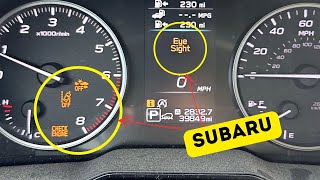
- Advanced driver-assist systems like EyeSight and Reverse Automatic Braking (RAB) may be disabled
- Cruise control may be disabled
- Multiple warning lights on the dashboard, often described by owners as being 'lit up like a Christmas tree 🎬 Watch: Why EyeSight and other systems disable during this fault.'
- Replacing the gas cap. This code is for an electrical circuit fault, not a system leak that a loose cap would cause.
- Replacing the leak detection pump before verifying the ECM software is up-to-date. This can lead to unnecessary expense as the new pump may trigger the same code if the software logic is the root cause.
- Performing a generic smoke test. Subaru warns against this as residual oil from the smoke can contaminate and damage the sensitive ELCM. The correct procedure is to use the Subaru Select Monitor to run a system self-test.
Most Likely Causes
- Outdated Engine Control Module (ECM) Software 🔴 High Probability Subaru has officially recognized this issue and released a software update to fix it, as detailed in TSB #09-108-23. The original software logic is too sensitive and can misinterpret a temporarily seized pump (often due to moisture) as a circuit fault. The updated logic is designed to prevent or work through this temporary seizure.
How to confirm: A Subaru dealership or a qualified independent shop can check the current software calibration ID (CID) against the updated versions listed in TSB #09-108-23 to see if an update is available.
Typical fix: Reprogramming the ECM with the latest software update provided by Subaru. This is a software-only fix and is often performed under the vehicle's 8-year/80,000-mile federal emissions warranty.
Est. part cost: $0 - Faulty EVAP Leak Detection Pump 🟡 Medium Probability The pump, also called the Evaporative Leak Check Module (ELCM), can fail internally from wear or moisture intrusion. The TSBs note that the pump can temporarily seize, which the original software flags as a fault. Forum discussions indicate this part fails frequently enough across multiple Subaru models that it can sometimes be on backorder from dealers.
How to confirm: If the ECM software is up-to-date and the code returns, the pump itself should be tested. A technician will use a Subaru Select Monitor (SSM) to perform a forced self-test of the EVAP system called the 'Evaporative System Leak Test'. If the pump fails to operate correctly (vacuum value does not go below -0.26 PSI), it is deemed faulty. A technician may also use an oscilloscope to analyze the pump's electrical waveform during operation.
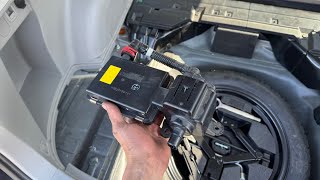
Typical fix: Replacement of the EVAP leak detection pump/module. The part is located near the charcoal canister at the rear of the vehicle.
Est. part cost: $150-$300 - Wiring or Connector Issue ⚪ Low Probability While less common on a new vehicle, damage to the wiring harness or corrosion at the pump's electrical connector can disrupt the signal to the ECM. The pump's location under the rear of the vehicle exposes it to road debris and moisture.
How to confirm: Visually inspect the wiring harness leading to the leak detection pump for any signs of damage, chafing, or corrosion. A multimeter can be used to check for proper voltage and ground at the connector, and continuity should be less than 1.0 Ohm. The TSB also instructs technicians to inspect the ELCM drain tube for water or oil.
Typical fix: Repairing the damaged section of the wiring harness or cleaning/replacing the connector.
Est. part cost: $10-$50
Diagnosis Steps
- Use a scan tool to confirm that P2404 is the only code present. If codes like P2419, P2420, P2401, or P2402 are present, diagnose them first per the service manual.
- Contact a Subaru dealership and reference TSB #09-108-23. Inquire if the ECM software update has been performed on your vehicle by checking its Calibration Identification Number (CID).
- If the update has not been performed, have the dealer reprogram the ECM. This is the most likely solution and should be covered under the emissions warranty.
- If the code returns after the software update, a more thorough diagnosis is needed. Raise the vehicle and locate the ELCM (pump) near the fuel tank.
- Inspect the ELCM drain tube for any signs of water or oil, and clean if necessary.
- Visually inspect the pump's wiring and connector for any damage or corrosion.
- Using a Subaru Select Monitor (SSM), command the 'Evaporative System Leak Test' and check the vacuum value. The value should be lower than -0.26 PSI.
- If the vacuum value is not lower than -0.26 PSI, run the 'ELCM Pump Active Test' for 35 minutes to attempt to un-seize the pump, then re-run the leak test.
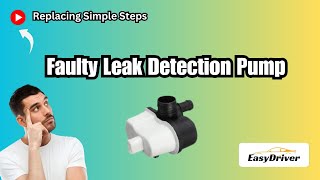
- If the pump fails the self-test after the active test, or the sensor readings are incorrect, replace the EVAP leak detection pump 🎬 Watch: Step-by-step guide to replacing a faulty leak detection pump. (ELCM).
- After any repair, clear the code and perform a drive cycle to ensure the EVAP monitor runs and the fix is complete.
Parts You'll Likely Need
- EVAP Leak Detection Pump
(OEM #42084VA031 (supersedes 42084VA030))— If the primary fix (ECM software update) does not resolve the issue, the pump itself is the next most likely component to have failed. It is also referred to as the Evaporative Leak Check Module (ELCM).
Trusted brands: Subaru (OEM)
OEM price range: $200-$300
Aftermarket price range: $150-$250
Technical Service Bulletins (TSBs) & Recalls
- 09-108-23: Announces diagnostic procedures and new Engine Control Module (ECM) reprogramming files to address DTC P2404 detection on 2020-23 Legacy & Outback models. This is the primary TSB for the specified vehicle.
- 09-122-24R: Announces new ECM reprogramming files to address DTC P2404 for various models including the 2020-22 Outback, 2019-23 Forester, 2018-23 Crosstrek, and 2017-23 Impreza, showing the widespread nature of the issue.
- 09-109-23: Announces diagnostic procedures and new ECM reprogramming files for DTC P2404.
- 09-103-23: A similar bulletin for 2015 Legacy & Outback models, indicating this has been a recurring issue for Subaru across generations.
Platform-Specific Known Issues
- Subaru has issued TSB #09-108-23 specifically for the 2020-23 Outback (and Legacy) to address false P2404 codes with an ECM software update. The bulletin states that the original software has overly sensitive logic and that 'In rare cases, the internal pump for the Evaporative Leak Check Module (ELCM) system can seize temporarily.' The new software contains enhanced logic to prevent this.
- Owner experiences on forums like Reddit confirm that this is a common issue across many new Subaru models, including the Forester, Ascent, and Impreza. Many report that the dealer performs the software update or replaces the pump under warranty, but sometimes the replacement part is on backorder, indicating a high failure rate.
Mechanic-Grade Diagnostic Values
- ELCM Vacuum Value during 'Evaporative System Leak Test' — expected: Value should be lower than -0.26 PSI.. Failure: A value of -0.26 PSI or higher indicates a fault in the ELCM system, likely the pump itself.
- Reprogramming Power Supply Voltage — expected: A steady 13.5 Volts.. Failure: Voltage rising above 14 Volts can cause the reprogramming procedure to abort, indicating a battery or power supply issue.
- Wiring Harness Continuity Check — expected: Resistance should be less than 1.0 Ohm.. Failure: A resistance value of 1.0 Ohm or higher indicates a damaged or corroded section of the harness that needs repair.
- ELCM Connector Voltage (Back-probe) — expected: Pin 3 (Red wire) should show a voltage signal and Pin 4 (Gray wire) is the ECM ground control, best analyzed with an oscilloscope to see the pump's electrical signature ramp.. Failure: An erratic or missing waveform compared to a known-good pump indicates a faulty pump or wiring issue.
Hidden / Shadow Codes Worth Checking
- P2419, P2420, P2401, P2402: These are related EVAP system circuit codes for the switching valve and pump control circuits. Subaru's diagnostic procedure in TSB #09-108-23 requires diagnosing and repairing these codes first if they are present alongside P2404. (see via Any standard OBD-II scanner or the Subaru Select Monitor (SSM) will display these codes if they are stored in the ECM.)
Scan Tool Commands That Help
- Subaru Select Monitor (SSM): Evaporative System Leak Test — This is the primary diagnostic function to use after checking for software updates. It commands the ELCM to perform a self-test, and the resulting vacuum value determines if the pump is functioning correctly.
- Subaru Select Monitor (SSM): ELCM Pump Active Test — This function is used if the 'Evaporative System Leak Test' fails. It runs the pump continuously for 35 minutes or more in an attempt to free a pump that is temporarily seized due to moisture before re-running the primary leak test.
Wiring & Ground Locations
- ELCM Connector — At the Evaporative Leak Check Module (ELCM) itself, which is located at the rear of the vehicle, typically mounted above the rear subframe near the charcoal canister.. This is the direct electrical connection for the pump. Corrosion, moisture, or physical damage to this connector or its pins (especially Pin 3 Red and Pin 4 Gray) is a direct cause of a P2404 circuit fault.
- Main ECU Ground — While not specific to one circuit, a common location for the main engine ground that the ECU relies on is the top of the intake manifold.. A poor main ground connection can introduce electrical noise and voltage discrepancies across multiple systems, potentially causing an out-of-range sensor reading like P2404 even if the pump and its dedicated wiring are fine.
Real Owner Repair Stories
- YouTube - 'That SUBARU Guy' (2021 Subaru Outback) — P2404 Check Engine Light.
❌ Tried (didn't work) Initially following the basic manufacturer flowchart without deeper analysis.
✅ What actually fixed it The technician used an oscilloscope to analyze the electrical waveform from the pump's sense circuit on pins 3 and 4. He compared the sketchy-looking ramp-up of the suspect pump's waveform to the clean waveform of a known-good pump from another vehicle. This confirmed the original pump was electrically faulty, and replacement of the pump was the correct fix.
"I Checked Everything" — The Actual Cause
- A smoke test should not be performed for an isolated P2404 code. Subaru technical documents explicitly warn against it, stating: 'Never put pressure into the ELCM or use smoke as residual oil in the smoke can contaminate the ELCM and cause internal components to malfunction.' The code indicates an electrical circuit performance issue, not a physical leak that a smoke test is designed to find. The proper procedure is to use the Subaru Select Monitor's 'Evaporative System Leak Test' function.
OEM Part Supersession History
42084VA030→42084VA031— The widespread nature of P2404 and the TSBs addressing temporary pump seizure from condensation suggest the updated part is likely more robust or has design improvements to better resist moisture-related failures when paired with the updated ECM software.
Helpful Videos

Used OEM Parts in Stock

New Aftermarket Parts Available


The information in this article is provided for general reference and educational purposes only. Vehicle specifications, procedures, and part compatibility can vary by production date, trim level, and region. Always consult your vehicle's factory service manual and verify part numbers before purchasing or performing repairs. Safety-critical components such as airbags, seat belts, and braking systems should be installed by a qualified professional.
- Subaru OUTBACK:
- 🎬 Helpful Videos
- 🛍️ Shop This Part
- What's Unique About the 2023-2023 Subaru OUTBACK
- Diagnostic Flowchart
- Symptoms You May Notice
- Most Likely Causes
- Diagnosis Steps
- Parts You'll Likely Need
- Technical Service Bulletins (TSBs) & Recalls
- Platform-Specific Known Issues
- Mechanic-Grade Diagnostic Values
- Hidden / Shadow Codes Worth Checking
- Scan Tool Commands That Help
- Wiring & Ground Locations
- Real Owner Repair Stories
- "I Checked Everything" — The Actual Cause
- OEM Part Supersession History
- 🎟️ Get 5% Off