

P2404 on 2015-2022 Subaru Outback: EVAP Pump Circuit Fault Causes & Fixes
On 2015-2022 Subaru Outbacks, code P2404 is most often caused by a software glitch in the Engine Control Module (ECM). The primary fix is a dealership software update as specified in multiple Technical Service Bulletins. If the software is current, the leak detection pump itself may have failed or be temporarily seized.
- For a P2404 code on a 2015-2022 Outback, your first step should be to inquire about an ECM software update at a Subaru dealership, referencing the numerous TSBs.
- Do not replace the leak detection pump or any other parts until you have confirmed the vehicle's software is up-to-date.
- The issue is typically electrical or software-related, not a physical leak in the EVAP system. Do not use a smoke machine for initial diagnosis.
- This code will not affect how your car drives, but it will cause an automatic failure on an emissions test and may disable safety features like EyeSight.
What's Unique About the 2015-2022 Subaru OUTBACK

For this specific generation of Subaru Outback, the P2404 code is notoriously linked to the engine computer's software logic. Subaru has issued several Technical Service Bulletins (TSBs) because the original ECM programming can be too sensitive, falsely triggering the code when the pump temporarily seizes. In some cases, condensation can build up in the pump, and updated software includes a 'cleaning mode' or enhanced logic to prevent the pump from seizing, making a simple software update the most common and critical first step.
Diagnostic Flowchart

Tap your situation to follow the diagnostic path that matches what you're seeing on this vehicle.
Generation note: This issue affects both the 5th generation (2015-2019) and 6th generation (2020-2022) Subaru Outback. Subaru has released TSBs covering models across both generations, indicating a similar EVAP system design (the ELCM, or Evaporative Leak Check Module) and a persistent software issue.
Symptoms You May Notice

- Check Engine Light is on
- Inability to pass an emissions inspection.
- Advanced safety systems like EyeSight may be disabled.
- Replacing the gas cap. While a loose gas cap can cause other EVAP codes (like P0457), it is not a direct cause for a circuit performance code like P2404. Multiple forum users report being told it was the gas cap, only for the code to return.
- Replacing the leak detection pump without first checking for ECM software updates. This can lead to unnecessary expense as the new pump may still trigger the code if the software logic is the root cause.
- Using a generic smoke machine for diagnosis. Subaru explicitly warns against this in a TechTIPS newsletter, as residual oil from the smoke can contaminate and damage the sensitive ELCM. The proper first step is a forced self-test with the Subaru Select Monitor.
Most Likely Causes

- Outdated Engine Control Module (ECM) Software 🔴 High Probability Subaru has officially acknowledged this issue through multiple TSBs (e.g., 09-122-24R, 09-109-23, 09-108-23, 09-103-23). The original software logic is prone to misinterpreting signals from the leak detection pump, especially if it temporarily seizes due to moisture. The updated software includes enhanced logic to prevent this.
How to confirm: A Subaru dealership or a shop with a Subaru Select Monitor (SSM) can check the current software calibration ID (CID) against the updated versions listed in the TSBs.
Typical fix: Reprogramming the ECM with the latest software update provided by Subaru. This is a software-only fix and is often performed under warranty.
Est. part cost: $0 - Faulty EVAP Leak Detection Pump 🟡 Medium Probability The pump, also called the Evaporative Leak Check Module (ELCM), can fail internally from wear or moisture intrusion. TSBs note that the pump can temporarily seize, which the original software flags as a fault. Forum users report this part being on backorder at times, indicating a high failure rate.
How to confirm: If the ECM software is already up-to-date, a technician will use a Subaru Select Monitor (SSM) to perform a forced self-test of the EVAP system. If the pump fails to operate correctly or generate the specified vacuum during the test, it is deemed faulty.
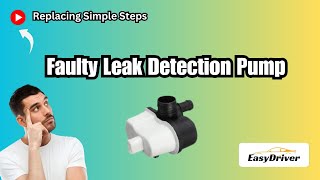
Typical fix: Replacement of the EVAP Leak Detection Pump/Module. This is done after verifying the software is current. 🎬 See this walkthrough on how to replace the detection pump.
Est. part cost: $150-$300 - Wiring or Connector Issue ⚪ Low Probability The pump is located under the vehicle near the charcoal canister, exposing its wiring and connector to road debris and moisture, which can lead to corrosion or damage over time. A user on CarKiller.com noted the code appeared after driving in heavy rain.
How to confirm: Visually inspect the wiring harness and connector leading to the leak detection pump for any signs of breaks, corrosion, or loose pins. A multimeter can be used to check for proper voltage and continuity.
Typical fix: Repairing the damaged section of wire or cleaning/replacing the electrical connector.
Est. part cost: $5-$50
Rare But Worth Checking
- Clogged EVAP Canister or Lines: While not a circuit fault, a significant blockage in the EVAP system could potentially cause the pump to work outside its expected parameters, indirectly triggering a performance-related code. Over-filling the fuel tank is a known cause of canister saturation.
Diagnosis Steps
- Scan the vehicle for trouble codes to confirm P2404 is the primary code present.
- Crucial First Step: Check with a Subaru dealer or qualified shop if the vehicle's ECM has the latest software. Reference TSBs #09-122-24R, #09-109-23, #09-108-23, and #09-103-23. If not, have the ECM reprogrammed. This is the most common fix.
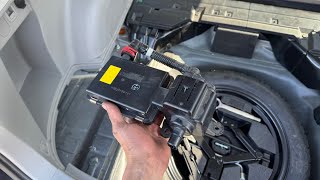
- If the code returns after the update, or if the software is already current, locate the EVAP leak detection pump (ELCM), typically near the charcoal canister at the rear of the vehicle. 🎬 Watch: Locating and removing the pump and canister assembly.
- Visually inspect the pump's electrical connector and wiring for any signs of corrosion, damage, or loose connections. Repair as needed. Check the drain tube for signs of water or oil.
- If wiring is intact, a technician must use a bi-directional scan tool, preferably a Subaru Select Monitor (SSM), to command a forced 'Evaporative System Leak Test'. Do NOT use a smoke machine initially.
- According to TSBs, if the test fails or P2404 is stored again, the technician may run an 'ELCM Pump Active Test' for 35+ minutes to try and un-seize the pump, then re-run the leak test.
- If the pump still does not respond or its electrical feedback is out of specification after the active test, the pump is faulty and should be replaced.
- After any repair, clear the trouble codes and perform a complete EVAP drive cycle to ensure the fix was successful.
Parts You'll Likely Need
- EVAP Leak Detection Pump (Evaporative Leak Check Module - ELCM)
(OEM #42084AL00C (supersedes 42084AL00A))— This is the component that fails if the issue is not software-related. It contains the motor and sensor that the P2404 code monitors. Part numbers are frequently superseded.
Trusted brands: Subaru (OEM), Denso
OEM price range: $200-$300
Aftermarket price range: $150-$220
Technical Service Bulletins (TSBs) & Recalls
- 09-122-24R: Announces new ECM reprogramming files to address DTC P2404 detection for 2020-22MY Legacy & Outback 2.5L, among other models.
- 09-109-23: Announces diagnostic procedures and new ECM reprogramming files for DTC P2404.
- 09-108-23: Announces diagnostic procedures and new ECM reprogramming files for DTC P2404 for 2020-23MY Legacy & Outback 2.4L and 2023MY 2.5L models.
- 09-103-23: Announces ECM reprogramming for 2015 Legacy & Outback models to fix temporary seizing of the ELCM pump causing P2404.
Platform-Specific Known Issues
- Subaru has released multiple Technical Service Bulletins confirming that the Engine Control Module (ECM) can incorrectly detect a fault and store DTC P2404. The fix is a software update.
- In some instances, condensation can form inside the pump, causing it to temporarily seize. The updated ECM software includes enhanced logic to prevent this from happening, sometimes referred to as a 'cleaning mode'.
- On newer models (approx. 2020+), the P2404 code will often disable safety systems like EyeSight and Reverse Automatic Braking (RAB), causing multiple warning lights on the dashboard. 🎬 Watch: See how a 2021 Outback behaves with code P2404.
Mechanic-Grade Diagnostic Values
- EVAP System Leak Test Vacuum Value — expected: Lower than -0.26 PSI. Failure: A value greater than or equal to -0.26 PSI, or if DTC P2404 is stored again immediately after the test.
- ELCM Pump Sense Circuit Voltage (Pump OFF) — expected: ~10 Volts. Failure: Voltage significantly different from 10V on the ECM side of the pump circuit when the pump is commanded off.
Hidden / Shadow Codes Worth Checking
- P2419, P2420, P2401, P2402, P24BA, P24BB, P24B9: These are other EVAP system DTCs related to the switching valve, pump control circuit, and pressure sensor. Subaru TSBs instruct technicians to diagnose these codes first if they appear alongside P2404, as they may indicate a more specific circuit fault. (see via Standard OBD-II scanner or Subaru Select Monitor (SSM).)
Scan Tool Commands That Help
- Subaru Select Monitor (SSM): Evaporative System Leak Test — This is the primary diagnostic self-test for the EVAP system. It commands the ELCM to run its internal check and reports the resulting vacuum level and any codes. This is the first step after checking for software updates.
- Subaru Select Monitor (SSM): ELCM Pump Active Test — This command is used if the initial 'Evaporative System Leak Test' fails. The test runs the pump continuously for 35 minutes or more to attempt to un-seize it from moisture or debris before re-running the leak test.
Wiring & Ground Locations
- ELCM Connector — On the EVAP Leak Check Module (ELCM), located under the vehicle, typically behind the fuel tank near the charcoal canister.. This is the primary connection point for the pump. A diagnostic video on a 2021 Outback showed probing pins 3 (Red wire) and 4 (Gray wire) to analyze the pump's electrical signature. Corrosion or damage at this connector is a potential cause of the code.
- Main ECU Ground — Subaru ECUs often derive their primary ground reference from the top of the intake manifold.. While not specific to the P2404 circuit, a poor main ground connection at the intake manifold can cause a wide range of bizarre electrical issues and sensor reading errors across the vehicle. Ensuring this ground is clean and tight is a good practice when chasing intermittent electrical faults.
Real Owner Repair Stories
- Reddit user Round-Geologist-3692 (2023 Subaru Forester Premium (13k miles)) — Check Engine Light on, P2404 code stored as 'permanent'.
❌ Tried (didn't work) Tightening the gas cap., Dealer performing a 'reboot' (likely clearing codes or a software reflash).
✅ What actually fixed it The dealer eventually found a malfunctioning 'evap check valve' that was internally damaged. It was not detected on the first EVAP test but was found when the test failed a second time after the vehicle was left overnight.
OEM Part Supersession History
42084AL00A→42084AL00B, then 42084AL00C— Part revision to improve reliability and address failure modes. The existence of multiple revisions aligns with the TSBs and widespread nature of this issue.
Model Year Variations Within This Range
- 2015-2019 (Gen 5) vs. 2020-2022 (Gen 6): The 6th generation (2020+) Outback is built on the new Subaru Global Platform, which is significantly stiffer. While the P2404 issue persists across both generations, the 2020+ models feature a redesigned 2.5L engine (90% new parts) and the introduction of a 2.4L Turbo engine. The EVAP system components and logic, however, remain similar enough that the same P2404 fault and TSBs apply to early Gen 6 models.
Helpful Videos
Used OEM Parts in Stock

New Aftermarket Parts Available


The information in this article is provided for general reference and educational purposes only. Vehicle specifications, procedures, and part compatibility can vary by production date, trim level, and region. Always consult your vehicle's factory service manual and verify part numbers before purchasing or performing repairs. Safety-critical components such as airbags, seat belts, and braking systems should be installed by a qualified professional.
- Subaru OUTBACK:
- 🎬 Helpful Videos
- 🛍️ Shop This Part
- What's Unique About the 2015-2022 Subaru OUTBACK
- Diagnostic Flowchart
- Symptoms You May Notice
- Most Likely Causes
- Rare But Worth Checking
- Diagnosis Steps
- Parts You'll Likely Need
- Technical Service Bulletins (TSBs) & Recalls
- Platform-Specific Known Issues
- Mechanic-Grade Diagnostic Values
- Hidden / Shadow Codes Worth Checking
- Scan Tool Commands That Help
- Wiring & Ground Locations
- Real Owner Repair Stories
- OEM Part Supersession History
- Model Year Variations Within This Range
- 🎟️ Get 5% Off