

OBD-II Code P2403: EVAP Leak Detection Pump Sense Circuit/Open
The Ultimate Guide to Diagnosing and Fixing P2403
- Code P2403 indicates a broken electrical connection (open circuit) in the EVAP leak detection pump's sense wire, not a physical vapor leak.
- Water intrusion and road salt cause over 80% of P2403 failures by corroding the pump's electrical connector or destroying the internal motor.
- You can safely drive with a P2403 code, but your vehicle automatically fails state emissions testing until the circuit is repaired.
- Always test the electrical circuit first by verifying 12V power, a ground reading under 1.0 Ohm, and a 5V reference signal before replacing the $150+ pump.
- Volkswagen and Audi models have a known 15-year/150,000-mile extended warranty for this exact pump failure, often signaled by a 15-second buzzing noise on cold starts.
What Does P2403 Mean?

Your car's Powertrain Control Module (PCM) detected an electrical problem with the EVAP Leak Detection Pump (LDP). This pump pressurizes the evaporative emissions system to check for fuel vapor leaks. Code P2403 means the computer identified a broken or 'open' connection in the pump's sense circuit, receiving zero electrical feedback from the pump's internal sensor.
Technical definition: EVAP System Leak Detection Pump Sense Circuit/Open. The Powertrain Control Module (PCM) sets this DTC when it detects an open circuit or abnormal signal from the leak detection pump's sense circuit, preventing the EVAP system diagnostic self-test.
Can I Drive With P2403?
Yes, But With Caution. Yes, you can continue to drive. The P2403 code indicates an emissions system fault and does not affect engine performance or cause mechanical damage. However, your vehicle automatically fails state-mandated emissions tests. Address the issue promptly to ensure compliance and extinguish the Check Engine Light, which masks future, more severe problems.
Common Causes

- Faulty EVAP Leak Detection Pump (LDP) (Very Common) — The pump motor fails, seizes, or develops an internal open circuit in its sense component. Due to its location under the vehicle, it is highly susceptible to damage from water, salt, and road debris, making it the most frequent cause of P2403.
- Damaged Wiring or Corroded Connectors (Common) — The electrical wires leading to the pump become frayed, broken, or pinched. More commonly, water intrusion into the electrical connector causes corrosion (appearing as green or white powder), which disrupts the signal and triggers the code.
- Blown Fuse or Faulty Relay (Less Common) — The LDP circuit is protected by a fuse (typically 10-15A) and sometimes a relay. A blown fuse cuts power to the pump and its sense circuit, directly causing an open circuit code.
- Blocked or Damaged Charcoal Canister Assembly (Less Common) — Hoses connected to the charcoal canister or the LDP become clogged with dirt or charcoal pellets from a deteriorating canister. A crack in the canister housing from road debris or impact damages the pump or its wiring.
- Faulty Purge Valve/Solenoid (Less Common) — A stuck or electrically failed purge valve causes the EVAP system to behave unexpectedly during a self-test. While less common, the PCM flags the pump circuit if the overall system doesn't respond as anticipated.
- Faulty Powertrain Control Module (PCM) (Very Rare) — In rare instances, the internal driver circuit within the PCM that communicates with the LDP fails. Consider this only after exhaustively ruling out all other possibilities, including wiring and the pump itself.
Symptoms

- Check Engine Light is On — This is the most common and often the only symptom. The light illuminates as soon as the PCM detects the open circuit fault.
- Failed Emissions Test — With a P2403 code active, the EVAP system monitor cannot run its self-test, resulting in an automatic failure of any OBD-II emissions inspection.
- Fuel Smell — In some cases, a faint smell of gasoline is noticeable near the rear of the vehicle, as the EVAP system is not being properly monitored or sealed.
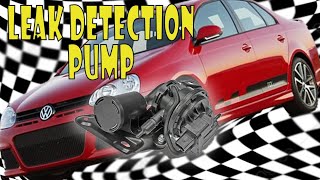
- Buzzing or Rough Noise After Cold Start — Particularly common on Volkswagen and Audi models, a failing LDP produces a noticeable buzzing or rough running sound from the rear of the vehicle for about 15-30 seconds after a cold start as it attempts to run its test cycle. 🎬 Watch: How to replace the leak detection pump on a VW Jetta
- Slightly Reduced Fuel Economy — While often too minor to notice, if the EVAP system is not functioning correctly, lost fuel vapors lead to a marginal decrease in overall fuel economy.
Diagnostic Flowchart
Tap your situation to follow the diagnostic path that matches what you're seeing on this code.
Common Fixes & Costs
- Replace EVAP Leak Detection Pump (LDP) — Parts: $80-$250, Labor: $120-$200, ~1.2 hr book time (Intermediate)
- Repair Damaged Wiring or Replace Connector — Parts: $20-$100, Labor: $120-$250, ~1.5 hr book time (Intermediate)
- Replace Blown Fuse — Parts: $1-$10, Labor: $0-$50, ~0.1 hr book time (DIY)
- Replace EVAP Purge Valve/Solenoid — Parts: $30-$150, Labor: $50-$120, ~0.8 hr book time (DIY)
- Replace Charcoal Canister Assembly — Parts: $200-$600+, Labor: $100-$200, ~1.5 hr book time (Professional)
Used vs. New Parts: Buying Guide
When a used part is worth it: A used Leak Detection Pump (LDP) is rarely recommended. Given that the primary failure mode is corrosion or motor wear, a used part carries a high risk of premature failure. It only makes sense if the budget is extremely tight and the part is sourced from a low-mileage, dry-climate vehicle.
Donor-vehicle mileage cap: roughly under 50000 miles for the part to have meaningful remaining life.
Donor quality checklist:
- Verify the donor vehicle was not from a region using road salt (Rust Belt).
- Inspect the electrical connector on the used pump for any signs of corrosion (green or white powder).
- Match the part number exactly, as even visually identical pumps have different internal logic.
Decision logic:
- If The vehicle is a VW, Audi, BMW, or Jaguar known for high LDP failure rates. → Buy a new OEM or high-quality aftermarket (e.g., Bosch) part. The failure is a known wear item.
- If A new aftermarket part costs less than $150. → Buy new. The savings from a used part do not justify the risk and repeat labor cost.
- If The vehicle is over 15 years old and the budget is the primary concern. → A used part is a gamble but is acceptable; expect a significantly shorter lifespan.
Warranty tradeoff: Used parts typically offer a 30-90 day warranty, which is not long enough to cover failure. New aftermarket parts usually come with a 1-year to limited lifetime warranty. New OEM parts offer a 1-2 year warranty.
Worst-case if a used part fails: $200-$400 if a used pump fails after the warranty period, requiring a second replacement part plus repeat labor costs.
What Happens If You Wait — Timeline
- 0-1 month: Code P2403 is stored and the Check Engine Light is on. The EVAP readiness monitor will not complete. There are no noticeable driving symptoms. (MPG impact: 0-1%% · Added cost: $0)
- 1-6 months: The EVAP system is not being monitored for leaks. Small amounts of fuel vapor continuously escape, leading to a minor, often unnoticed, drop in fuel economy. The Check Engine Light remains on, masking any new potential issues. (MPG impact: 1-2%% · Added cost: $20-$60 in wasted fuel)
- 6-18 months: The initial electrical fault, if caused by corrosion, worsens. The corrosion travels up the wiring harness from the connector, making a simple pump or pigtail replacement more difficult and expensive. The pump motor, if intermittently failing, seizes completely. (MPG impact: 1-2%% · Added cost: $150-$400 if the wiring harness requires significant repair instead of just a connector replacement.)
- 18+ months: Worst-case scenario: If the pump failure was caused by a blocked charcoal canister that was ignored, fuel filling issues develop. A persistent electrical issue in the harness requires a costly harness replacement. (MPG impact: 1-2%% · Added cost: $400-$1000+ if the charcoal canister and a section of the wiring harness both need to be replaced.)
Cost of Not Fixing It
- 0-3 months: Automatic failure of state emissions inspection. A very minor decrease in fuel economy occurs due to lost fuel vapors. (Added cost: Negligible, other than potential fines or inability to register the vehicle.)
- 3-12 months: The Check Engine Light remains on, which masks new, more serious problems that arise. (Added cost: $0)
- 12+ months: Continued exposure of a faulty pump or wiring to the elements leads to more complex electrical issues in the EVAP system harness. If the pump failure was caused by a blocked canister, ignoring it leads to fuel filling issues. (Added cost: $250-$800 if wiring harness or charcoal canister requires replacement due to neglect.)
Diagnosis Steps

- Read the Code and Freeze Frame Data
Use a quality OBD-II scanner to confirm P2403 is the active code. Review the freeze frame data to see the conditions (engine temperature, speed, etc.) under which the code was set. Note any other related codes.
Tools: OBD-II Scanner (Beginner) - Inspect the EVAP Fuse
Consult your owner's manual to locate the fuse for the EVAP system or leak detection pump (often 10-15A). Visually inspect the fuse and replace it if it's blown. This is a simple but crucial first check.
Tools: Fuse puller or needle-nose pliers (Beginner) - Visually Inspect Pump, Wiring, and Connector
Safely raise the vehicle and locate the leak detection pump, typically found on or near the charcoal canister by the fuel tank. Perform a thorough visual inspection of the pump, its connector, and the wiring harness. Look for obvious signs of damage like cracked hoses, frayed wires, rodent damage, or signs of impact. Pay extremely close attention to the electrical connector for any green or white powdery residue, which indicates corrosion.
Tools: Flashlight, safety glasses, jack and jack stands (Intermediate) - Check for Voltage at the Connector
With the LDP connector disconnected and the ignition key in the 'On' position (engine off), use a multimeter to test the circuit. Check for battery voltage (typically 12V) on the power supply pin and a reference voltage (typically 5V) on the sense wire pin. Refer to your vehicle's specific wiring diagram for the correct pinout. If either voltage is missing, you have a wiring issue or a faulty PCM.
Tools: Multimeter, vehicle-specific wiring diagram (Advanced) - Test the Ground Circuit
A poor ground is a common and often overlooked cause of circuit codes. Disconnect the LDP connector. Set your multimeter to resistance (Ohms). Place one probe on the ground pin of the connector (harness side) and the other on a clean, unpainted chassis ground. A good ground reads less than 1.0 Ohm; some specifications call for less than 0.1 Ohms. A high reading indicates a faulty ground connection that needs to be cleaned or repaired.
Tools: Multimeter, vehicle-specific wiring diagram (Advanced) - Test the Leak Detection Pump's Internal Resistance
With the pump disconnected, use a multimeter to measure the resistance between the pins on the pump itself. These values are manufacturer-specific. For many Volkswagen/Audi models, you should find 640-720 Ω between the solenoid pins (e.g., 1 and 3) and 12-28 Ω between the sense switch pins (e.g., 2 and 3). A reading of infinite resistance (OL) indicates an open circuit and a failed pump.
Tools: Multimeter, vehicle-specific repair manual (Advanced) - Bench Test the Leak Detection Pump Motor
If the wiring provides proper power, ground, and signal voltage, the pump itself is the primary suspect. You can bench test the pump by applying a 12V power source and ground directly to the pump's power and ground terminals. If the pump motor does not run, it has failed and must be replaced.
Tools: Power probe or jumper wires, 12V power source (Advanced) - Perform a Wiring 'Wiggle Test'
If you suspect an intermittent wiring issue, a 'wiggle test' helps locate it. With the multimeter probes connected to the sense wire and ground (or while monitoring live data on a scan tool), gently wiggle and flex the wiring harness along its entire length from the pump to the PCM. If you see the voltage reading fluctuate or drop out, you found the location of the break in the wire.
Tools: Multimeter or bi-directional scan tool (Advanced) - Use a Bi-Directional Scan Tool
A professional scan tool (like VCDS for VW/Audi or ISTA for BMW) commands the LDP to activate. While running this output test, monitor the live data PID for the sense circuit. The voltage should be stable, typically between 4.5V and 5.0V. If the voltage is erratic, jumps around, or drops to zero, it confirms an intermittent fault in the pump or wiring.
Tools: Bi-directional scan tool (Advanced) - Perform a Smoke Test (Only if Necessary)
A smoke test finds physical leaks, not electrical faults. Use it for P2403 *after* all electrical tests pass. The EVAP system operates on very low pressure, typically less than 1.0 PSI (or about 28 inches of H2O). If the pump and wiring are confirmed good but the code returns with other leak codes (like P0442 or P0456), introduce smoke at the specified low pressure to check for cracked hoses or a faulty canister.
Tools: EVAP-approved smoke machine with pressure gauge (Professional)
When This Code Triggers (Freeze-Frame Conditions)
- Engine Coolant Temp: 45-95°F (Cold start after sitting for 8+ hours)
- Fuel Level: 15-85% (Not full and not empty)
- Ambient Air Temp: 40-95°F (Not during extreme heat or cold)
- Vehicle Speed: 45-65 mph (Steady highway cruise for several minutes)
Related Codes
- P2404 — Indicates a 'range/performance' issue with the pump sense circuit. While P2403 means the circuit is completely open (no signal), P2404 means the PCM receives a signal, but it's irrational or outside the expected range, suggesting a weak pump, partial short, or software issue.
- P2401 — This code points to a 'low' signal in the pump's control circuit, often caused by a short to ground. P2403 indicates an 'open' circuit, which is a complete break in a wire or an internal pump failure resulting in no signal at all.
- P0442 — This code for a 'small leak' is a result of a failed system test. P2403 is an electrical fault with the test equipment itself (the pump circuit). A faulty pump prevents the leak test from running, but P2403 must be fixed first before a P0442 can be accurately diagnosed.
- P0456 — Similar to P0442, this code indicates a 'very small leak.' The P2403 code points to the electrical integrity of the pump circuit, which is necessary for the system to even begin testing for leaks. You must resolve the P2403 fault before addressing any leak codes.
Climate & Environmental Factors
- Road Salt and Moisture: This is a primary contributor to P2403 failures. On many affected vehicles (VW, Audi, BMW, Jaguar), the LDP is located in the rear wheel well, where it is directly exposed to corrosive road salt and water spray. This leads to severe corrosion of the pump's electrical connector and internal components, causing an open circuit.
- Cold Temperatures: Moisture that has ingressed into the pump assembly freezes in cold climates. This causes the internal pump mechanism to seize or damage the plastic housing, leading to motor failure or creating intermittent faults that appear only during cold weather.
How to Talk to a Mechanic About This Code
Say this: "I have an OBD-II code P2403, which is for the EVAP Leak Detection Pump Sense Circuit. I'd like to schedule a diagnostic appointment. Please focus on testing the electrical circuit—specifically power, ground, and the sense signal at the pump connector—before recommending a part replacement. I want to avoid an unnecessary smoke test since this is an electrical code."
This signals to the shop that you understand P2403 is an electrical fault, not a physical leak. It directs the technician to perform the correct diagnostic steps (multimeter tests) first, saving time and preventing you from being charged for a misdiagnosed smoke test.
Avoid saying:
- 'My check engine light is on, can you look at it?'
- 'I think I have an EVAP leak.'
- 'Just fix whatever is wrong with the emissions system.'
Questions to ask before authorizing the repair:
- Did you test for 12V power and a good ground at the pump's electrical connector?
- What was the voltage reading on the sense wire? Was it stable?
- Did you find any corrosion on the connector pins or damage to the wiring harness?
- If the pump needs to be replaced, what is the warranty on the new part and your labor?
Where to Take It: Dealer vs Independent vs Chain
- Dealer:
Recommended if your vehicle is under warranty or has a specific TSB. Otherwise, a trusted independent shop is more cost-effective.
Best for: Vehicles under an emissions or extended warranty (e.g., VW/Audi LDP warranty)., Vehicles with known TSBs for this issue (e.g., Jaguar)., Complex electrical issues if an independent shop cannot find the fault.
Downsides: Typically higher labor rates and part costs., May default to replacing a larger assembly when a smaller component repair is possible. (Typical cost: +50% vs. baseline) - Independent Shop:
Best fit for most situations. P2403 is a common code that any competent independent technician should be able to diagnose and repair correctly.
Best for: Most out-of-warranty vehicles., Diagnosing common electrical faults., Providing a better balance of cost and expertise.
Downsides: Diagnostic skill varies; choose a shop with good reviews and ASE-certified technicians specializing in electrical or emissions work. (Typical cost: +0% vs. baseline) - Chain Shop:
Use with caution. Best to avoid for the initial diagnosis of an electrical code like P2403. Only consider if you are certain which part needs replacing.
Best for: Simple part replacements if you have already performed the diagnosis yourself.
Downsides: Technician skill varies widely., May lack the advanced diagnostic tools or experience for electrical circuit tracing., Higher risk of being upsold unnecessary services like a full EVAP system cleaning or shotgunning parts. (Typical cost: -10% vs. baseline)
When to Walk Away From the Repair
If the estimated repair cost exceeds 50% of your car's private-party value, you should pause and carefully consider your options.
- Car worth $4000, fix is $550: Fix it. The repair cost is well below the 50% threshold and is much cheaper than a new car payment.
- Car worth $2000, fix is $1100: Walk away. The repair cost is over 50% of the car's value. It's not financially sound to invest this much into an aging vehicle.
What Scan Tool You Need for This Code
Minimum: A code reader that can read and clear generic powertrain codes and show freeze frame data.
A basic $20 reader only tells you the P2403 code exists. It cannot help you test the circuit. For proper diagnosis, you need to test wiring with a multimeter. A more advanced scanner with bi-directional control is needed to command the pump to turn on, which is a key diagnostic step.
Budget: BlueDriver Pro (~$90) — Reads and clears the code, provides freeze frame data, and offers live data graphing. While it lacks full bi-directional control for the LDP on all models, its repair reports offer valuable model-specific fixes.
Mid-range: Foxwell NT530 / NT650 Elite (~$180) — Offers manufacturer-specific diagnostics and bi-directional control (actuator tests) to command the EVAP pump and valves directly from the scanner. This allows you to confirm if the pump is receiving the command to run, which is crucial for diagnosing a P2403.
Professional: Autel MaxiCOM MK900 / Foxwell NT809BT (~$500-700) — Provides full bi-directional control for all vehicle systems, advanced live data graphing, and access to OEM-level diagnostic functions. These tools are essential for a professional or a very serious DIYer needing to trace complex wiring or intermittent faults.
Rent vs buy: For a one-time code read, many auto parts stores scan your code for free. However, these tools are basic readers. For diagnosing P2403, which often requires electrical testing and potentially bi-directional control, buying a capable scanner is a better investment if you plan to do the diagnosis yourself.
How to Clear the Code After You Fix It
- Use an OBD-II scan tool to clear the P2403 code.
- Ensure the fuel tank is between 1/4 and 3/4 full.
- Perform a complete EVAP drive cycle.
Drive cycle (~30 minutes): Start with a cold engine (sit overnight). Idle for 2-3 minutes. Drive at a steady speed between 45-65 mph for 10-15 minutes, avoiding sharp turns or hills. Allow the vehicle to coast down without hard braking. Let the vehicle sit with the engine off for up to 40 minutes, as some tests run after shutdown.
Readiness monitors affected: EVAP System Monitor, Comprehensive Component Monitor
Before emissions retest: drive at least 100 miles to fully set monitors.
Watch out for:
- Disconnecting the battery clears the code but also resets all readiness monitors, requiring a full drive cycle for all systems.
- The code returns if the underlying electrical fault is not properly repaired.
- The EVAP monitor often runs last and has strict enabling criteria (fuel level, temperature), making it difficult to set.
Will This Fail Emissions / State Inspection?
Yes — this code typically fails an OBD-II emissions inspection.
- California: An active P2403 code causes an immediate smog check failure. After repair, the EVAP readiness monitor must be 'Ready' to pass. For 2001 and newer vehicles, only one monitor can be incomplete.
- New York: The NYS DMV inspection includes an OBD-II scan. A P2403 code is an automatic failure. All required readiness monitors must be complete before a re-test.
- Texas: In applicable counties, a vehicle with code P2403 fails the emissions portion of the state inspection. A passing emissions report is required for vehicle registration renewal.
Most Commonly Affected Vehicles

- Volkswagen Jetta, Golf, Passat (2006-2014) — Extremely common failure. The LDP on these models is a known weak point. A buzzing noise from the rear on cold starts is a classic sign of failure. VW issued an extended warranty for the LDP on some models, covering it for up to 15 years or 150,000 miles.
- Audi A4, A6, Q5 (2005-2012) — Shares the same LDP design as Volkswagen, making it a frequent failure item. Wiring in the rear wheel well area is also susceptible to corrosion from road salt and moisture. The extended warranty for the LDP also applies to certain Audi models.
- Jaguar XJ, XF (2010-2015) — A well-documented issue covered by TSB JTB00436NAS2. Water spray from the rear tire damages the pump and connector. The official fix requires replacing the pump and adding a protective foam shield to prevent recurrence.
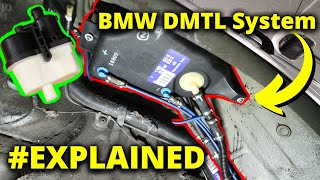
- BMW 3-Series (E46), X3 (E83), X5 (E53) (2001-2006) — The leak detection pump, called a DMTL pump on BMWs, is a very common failure point. It is located in the rear passenger-side wheel well, attached to the charcoal canister, where it is exposed to the elements.
- Subaru Outback, Forester, Impreza (2005-2014) — Subaru issued TSBs for related EVAP codes caused by moisture in the pump. Corrosion of the LDP wiring and connectors is a frequent cause of P2403 in regions that use road salt.
- Dodge/Chrysler Charger, Durango, Grand Caravan (2008-2016) — The EVAP System Integrity Monitor (ESIM) or LDP is a high-failure item. A critical installation quirk is that the pump must be installed with the electrical connector at the 3 o'clock position; incorrect orientation causes it to fail the self-test.
- Toyota RAV4, Camry (2013-2019) — The leak detection pump assembly on these models fails, triggering P2403. On some RAV4 models, it is located under a protective cover near the driver's side door.
- Hyundai Elantra, Sonata (2011-2016) — While less common than on German vehicles, the LDP fails. Inspect the purge control valve, as it is another known failure point in the EVAP system on these models.
Manufacturer-Specific Notes
- Volkswagen/Audi: On many models, VW/Audi issued an extended warranty for the EVAP Leak Detection Pump, extending coverage to 15 years or 150,000 miles. Owners receive a letter and can be reimbursed for prior repairs. A rough, buzzing noise from the rear of the car for 15-30 seconds after a cold start is a tell-tale symptom of a failing pump.
- Jaguar: For 2010-2015 XJ and XF models, Jaguar released TSB JTB00436NAS2. It states that water and debris from the rear tire get trapped in the pump's filter, causing corrosion and failure. The official fix requires replacing the pump and installing a protective foam block to shield it.
- BMW: The DMTL pump on E46, E53, and E83 models is a frequent failure point due to its exposed location in the rear passenger-side wheel well. It is attached to the charcoal canister and is highly susceptible to damage from road salt, water, and debris, leading to internal failure or connector corrosion.
- Porsche: On early Cayenne models (955/957), while P2403 is caused by the typical pump or wiring failure, it is also linked to failed fuel tank rollover valves. This is a much more complex and expensive repair that requires fuel tank replacement and should be considered if pump-level diagnostics don't resolve the issue.
- Dodge/Chrysler: On vehicles using an ESIM (EVAP System Integrity Monitor), the orientation during installation is critical. The pump uses internal weights and must be installed with the electrical connector facing the 3 o'clock position. Installing it in any other orientation causes the self-test to fail and triggers circuit codes.
Real Owner Stories
2006 VW Jetta with 100K miles (160k km)
Check Engine Light appeared. Owner noted a rough, buzzing sound from the rear of the car for about 15 seconds after starting the engine from cold.
What they tried:
- A mechanic first suggested and replaced the purge valve solenoid, which is a common EVAP system part. The light went off for four days but then returned with the same P2403 code.
- The mechanic also recommended a smoke test, but this was incorrect for a P2403, which is an electrical fault, not a physical leak.
Outcome: The owner learned from online forums that the buzzing noise on a VW is a classic sign of a failing Leak Detection Pump (LDP). Replacing the LDP itself was the correct fix.
Lesson: On VW/Audi models, a buzzing noise from the rear on a cold start almost always points directly to a failing LDP motor. Don't waste money on other parts like purge valves or smoke tests until the pump and its wiring are tested.
2011 Jaguar XF with P2403
The Check Engine Light was on. The owner found Jaguar's Technical Service Bulletin (TSB JTB00436NAS2) which described the exact problem.
What they tried:
- Following the TSB, the owner accessed the pump located in the right-rear wheel well. Upon inspection, the electrical connector was filled with green corroded gunk.
Outcome: The owner replaced the LDP and installed the protective foam shield recommended by the TSB to prevent water from the tire from spraying onto the new pump. The repair took about 30 minutes and resolved the code.
Lesson: Always check for manufacturer TSBs. For certain Jaguar, BMW, and VW models, the LDP failure is a known pattern issue caused by its exposed location. The official fix often includes an updated part or a new protective shield to prevent recurrence.
2002 BMW E46 M3 with EVAP code
Check Engine Light was on with a pending EVAP code, causing the car to fail an emissions test. The owner initially suspected a simple fix.
What they tried:
- The owner first replaced the gas cap, which is a common cause for many EVAP leak codes. This did not fix the problem.
Outcome: The actual fault was a failed DMTL pump (BMW's name for the LDP). The owner found the pump located in the rear passenger-side wheel well, noting the screws were heavily rusted due to exposure. After replacing the pump using a cheaper Bosch OEM-supplier part instead of the BMW-branded one, the code resolved.
Lesson: P2403 is an electrical circuit code, not a leak code. Replacing the gas cap will not fix it. The cause is almost always the pump or its wiring. You save significant money buying the part from the OEM supplier (e.g., Bosch) rather than the vehicle manufacturer.
How to Prevent This Code From Triggering
- Apply Dielectric Grease to the LDP Connector (Once, or whenever the connector is disconnected.) — Since the primary failure cause is water intrusion and corrosion, applying a small amount of dielectric grease to the connector seal creates a waterproof barrier, protecting the pins from moisture and road salt.
- Periodically Inspect and Clean the Pump Area (Every 15,000-20,000 miles, or during tire rotations.) — The LDP is often in a wheel well, exposed to debris. Hosing down the area (when cool) washes away accumulated road salt and dirt that traps moisture against the pump and its wiring, reducing corrosion risk.
- Install Protective Shields (If Applicable) (Once.) — For vehicles with known issues like the Jaguar XF, a TSB recommends adding a foam block or shield. This is a permanent solution designed by the manufacturer to deflect water and debris away from the vulnerable pump.
- Avoid Over-Topping the Fuel Tank (Every fill-up.) — Forcing extra fuel into the tank after the pump automatically shuts off saturates the charcoal canister with liquid fuel. This leads to charcoal pellets getting into the EVAP lines, clogging and damaging the leak detection pump or other valves.
Frequently Asked Questions
What's the difference between P2403 and an EVAP leak code like P0442?
P2403 is an electrical fault code indicating the computer cannot communicate with the leak detection pump. P0442 is a system integrity code, meaning the pump worked but detected a small vapor leak. You must fix the electrical P2403 code first, as the system cannot check for leaks without a working pump circuit.
Can I fix a P2403 code myself?
Yes, replacing the pump is often a DIY-friendly repair requiring basic tools, a multimeter, and comfort working under the car. It typically involves removing a wheel well liner, a few hoses, and mounting bolts. Repairing damaged wiring requires more skill but remains manageable for experienced DIYers.
Will replacing the gas cap fix P2403?
No, replacing the gas cap will not fix this code. A bad gas cap causes physical leaks and triggers codes like P0455 or P0457. P2403 specifically points to an electrical circuit problem with the pump itself, not a vapor leak.
What are common misdiagnosis mistakes for P2403?
The most common mistake is immediately performing a smoke test to look for a physical leak. P2403 is an electrical code, so the first step must always be testing the circuit's integrity (fuse, ground, power, signal). Replacing other EVAP parts like the purge solenoid before confirming the LDP circuit is working is another frequent error.
I hear a buzzing noise from the back of my VW on a cold start. Is this related to P2403?
Yes, this is a classic symptom of a failing pump. The sound is the electric motor in the leak detection pump struggling to run its initial self-test. This noise strongly indicates the pump motor has failed or is failing, making it the primary cause of the P2403 code.
How serious is code P2403?
Mechanically, it is not serious and your car drives normally. However, it causes your vehicle to release excess pollutants and results in an automatic failure of an emissions test. This prevents you from renewing your vehicle's registration in states with emissions testing.
What is a leak detection pump and what does it do?
It is a small electric pump that lightly pressurizes the fuel tank and vapor lines to less than 1 PSI. The car's computer monitors the system to see if it holds that pressure, which is how it checks for leaks. If the pressure drops, the system flags a leak code.
How much does it cost to diagnose a P2403 code?
Most repair shops charge a standard diagnostic fee ranging from $125 to $185 to pinpoint the exact electrical fault. This fee covers the initial hour of labor for multimeter testing. Shops often apply this fee as a credit toward the final repair cost if you authorize the work.
Key Takeaways
- Code P2403 indicates a broken electrical connection (open circuit) in the EVAP leak detection pump's sense wire, not a physical vapor leak.
- Water intrusion and road salt cause over 80% of P2403 failures by corroding the pump's electrical connector or destroying the internal motor.
- You can safely drive with a P2403 code, but your vehicle automatically fails state emissions testing until the circuit is repaired.
- Always test the electrical circuit first by verifying 12V power, a ground reading under 1.0 Ohm, and a 5V reference signal before replacing the $150+ pump.
- Volkswagen and Audi models have a known 15-year/150,000-mile extended warranty for this exact pump failure, often signaled by a 15-second buzzing noise on cold starts.
Helpful Videos


The information in this article is provided for general reference and educational purposes only. Vehicle specifications, procedures, and part compatibility can vary by production date, trim level, and region. Always consult your vehicle's factory service manual and verify part numbers before purchasing or performing repairs. Safety-critical components such as airbags, seat belts, and braking systems should be installed by a qualified professional.
- 🎬 Helpful Videos
- What Does P2403 Mean?
- Can I Drive With P2403?
- Common Causes
- Symptoms
- Diagnostic Flowchart
- Common Fixes & Costs
- Used vs. New Parts: Buying Guide
- What Happens If You Wait — Timeline
- Cost of Not Fixing It
- Diagnosis Steps
- When This Code Triggers (Freeze-Frame Conditions)
- Related Codes
- Climate & Environmental Factors
- How to Talk to a Mechanic About This Code
- Where to Take It: Dealer vs Independent vs Chain
- When to Walk Away From the Repair
- What Scan Tool You Need for This Code
- How to Clear the Code After You Fix It
- Will This Fail Emissions / State Inspection?
- Most Commonly Affected Vehicles
- Manufacturer-Specific Notes
- Real Owner Stories
- 2006 VW Jetta with 100K miles (160k km)
- 2011 Jaguar XF with P2403
- 2002 BMW E46 M3 with EVAP code
- How to Prevent This Code From Triggering
- Frequently Asked Questions
- What's the difference between P2403 and an EVAP leak code like P0442?
- Can I fix a P2403 code myself?
- Will replacing the gas cap fix P2403?
- What are common misdiagnosis mistakes for P2403?
- I hear a buzzing noise from the back of my VW on a cold start. Is this related to P2403?
- How serious is code P2403?
- What is a leak detection pump and what does it do?
- How much does it cost to diagnose a P2403 code?
- Key Takeaways
- 🎟️ Get 5% Off