

P2402 on 2022 Volkswagen Passat: EVAP Leak Detection Pump Circuit High Causes and Fixes
P2402 on a 2022 VW Passat almost always points to a faulty EVAP Leak Detection Pump (LDP). This is a common failure item on VW's MQB platform. Expect to pay between $150-$300 for a replacement pump, which is a manageable DIY job for many owners located in the rear passenger-side wheel well.
- P2402 means there's a high voltage problem in the EVAP Leak Detection Pump (LDP) circuit.
- The most likely cause by far is a failed LDP itself, a known weak point on this platform.
- Driving is not dangerous, but you will not pass an emissions test until the fix is complete.
What's Unique About the 2022-2022 Volkswagen PASSAT

On modern Volkswagens built on the MQB platform, like the 2022 Passat, the EVAP leak detection pump is a known common failure point. The issue is frequent enough that VW has issued multiple Technical Service Bulletins (TSBs) that mention this code alongside other EVAP leak codes for this model year and its platform mates. Owners often report this code appearing without any other symptoms besides 🎬 Watch: A quick overview of why this code appears. the check engine light. The failure is so common that the replacement part is sometimes on national backorder, as noted by owners of similar models like the Jetta. The failure is often attributed to internal component wear or moisture ingress over time.
Diagnostic Flowchart
Tap your situation to follow the diagnostic path that matches what you're seeing on this vehicle.
Symptoms You May Notice
- Check Engine Light is on.
- Vehicle will fail an emissions test.
- Possible faint fuel odor, although this is less common than with actual leak codes.
- Replacing the gas cap. While a loose or faulty gas cap can cause other EVAP codes (like P0456 or P0442), it does not cause a P2402 circuit code, which is electrical in nature.
Most Likely Causes

- Faulty EVAP Leak Detection Pump (LDP) 🔴 High Probability The LDP is a very common failure item on this platform, as noted by extensive owner experiences and repair videos for the Passat, Jetta, and Atlas. Internal components, such as the electric motor's carbon brushes or bearings, can wear out or seize, causing the pump to draw excessive current or short internally, triggering the 'Circuit High' fault.
How to confirm: Using a capable OBD-II scanner, attempt to activate the LDP via a bi-directional test. If the pump does not make a humming sound or the code returns immediately after clearing, the pump is likely bad. You can also test the pump's internal resistance with a multimeter; an out-of-spec reading indicates failure. A technician noted that the PCM controls the pump via a pulse-width modulated ground signal.
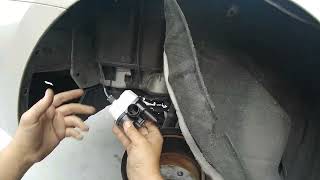
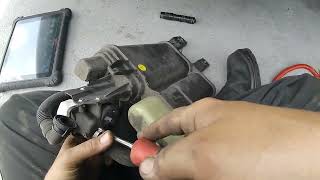
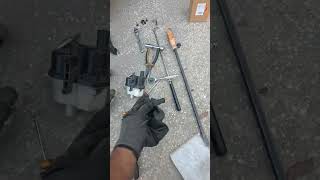
Typical fix: Replace the leak detection pump. The pump is located in the rear passenger-side wheel well, attached to the charcoal canister assembly. 🎬 See this step-by-step guide to replacing the pump. It is recommended to use an OEM or high-quality OEM-supplier (like Bosch) part, as some owners report issues with aftermarket units having incorrect resistance values.
Est. part cost: $150 - $300 - Damaged Wiring or Corroded Connector 🟡 Medium Probability The LDP is located in the wheel well, exposing its wiring harness and connector to moisture, road salt, and debris, which can lead to corrosion or physical damage over time. This can cause a short to power, resulting in the high voltage reading.
How to confirm: Visually inspect the wiring harness leading to the LDP for any signs of chafing, breaks, or corrosion. Unplug the connector and check the pins for green or white corrosive buildup or damage. With the ignition on, use a multimeter to check for proper voltage at the connector's power pin (should be battery voltage) and verify the signal on the PCM-controlled ground pin.
Typical fix: Repair the damaged section of the wire or clean/replace the electrical connector. Apply dielectric grease to the new connector to prevent future moisture intrusion.
Est. part cost: $10 - $50
Rare But Worth Checking
- Faulty Powertrain Control Module (PCM): This is very rare. Before suspecting the PCM, all other possibilities, especially the LDP and its wiring, must be thoroughly ruled out. A faulty driver circuit within the PCM can cause a high voltage reading. This would typically be diagnosed by confirming the wiring and pump are good, yet the high voltage condition persists on the control wire coming from the PCM.
Diagnosis Steps
- Read the code with an OBD-II scanner to confirm P2402 is present.
- Clear the code and see if it returns immediately. If it does, it points strongly to a hard electrical fault.
- Locate the EVAP Leak Detection Pump (LDP) assembly. On the Passat, it is found in the rear passenger-side wheel well, behind the fender liner. 🎬 Watch: How to access and swap the LDP on this platform.
- Inspect the electrical connector and wiring harness going to the LDP for any visible damage, corrosion, or loose connections.
- If you have a bi-directional scanner, command the LDP to activate. Listen for a humming or buzzing sound from the pump. If it makes no noise or a struggling sound, it has likely failed.
- If the pump does not activate, use a multimeter to check for power (battery voltage) and the ground signal at the connector with the key on. The PCM controls the pump on the ground side, often with a pulse-width modulated signal.
- If power and a proper ground signal are present but the pump doesn't run, the Leak Detection Pump is faulty and needs to be replaced.
- After replacing the part, clear the code and perform a complete drive cycle to allow the EVAP monitor to run and confirm the fix.
Parts You'll Likely Need

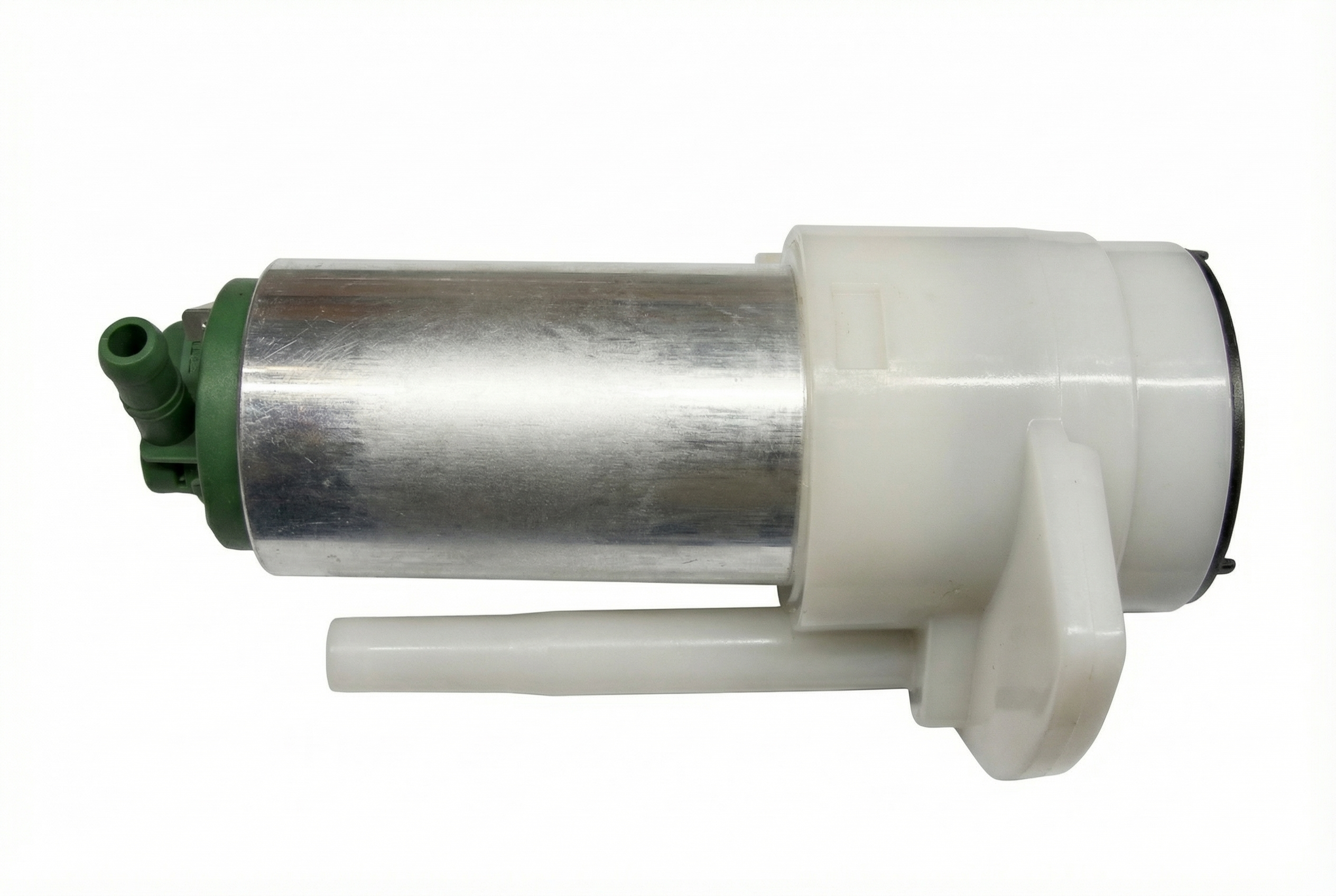
- EVAP Leak Detection Pump (LDP)
(OEM #5Q0906253E (Verify with VIN))— This is the most common cause for a P2402 code on this vehicle due to internal electrical failure. It is strongly recommended to use a genuine VW/Audi part or one from the original supplier (Bosch) to ensure correct electrical resistance and function.
Trusted brands: Volkswagen (Genuine), Bosch
OEM price range: $220-$300
Aftermarket price range: $150-$220
Related Codes That Often Appear With This One
- P0456 — Indicates a very small EVAP leak. The TSBs for the 2022 Passat explicitly link P2402 with P0456, suggesting a failure in the leak testing system can be flagged alongside a leak code. (Bulletin #VIN4APIN20230522, #VIN4APIN20230330)
- P0442 — Indicates a small EVAP leak. Similar to P0456, this code is mentioned in the same TSBs as P2402 for the 2022 Passat, pointing to a comprehensive EVAP system fault. (Bulletin #VIN4APIN20230522, #VIN4APIN20230518)
- P2401 — This code means "EVAP Leak Detection Pump Control Circuit Low." It's the opposite of P2402 and points to an open circuit or different electrical fault within the same system.
Technical Service Bulletins (TSBs) & Recalls
- VIN4APIN20230522: Customer states MIL-on, fault P2402 stored in ECM memory.
- VIN4APIN20230518: Customer states MIL-on, fault P2402 stored in ECM memory.
- VIN4APIN20230330: Customer states MIL-on, fault P2402 stored in ECM memory.
Platform-Specific Known Issues
- Multiple Technical Service Bulletins (TSBs) for the 2022 model year link P2402 with other EVAP codes like P0456 and P0442, indicating a known pattern of faults in the emissions system. (Bulletins: #VIN4APIN20230522, #VIN4APIN20230518, #VIN4APIN20230330)
- A TSB from May 2023 (#VIN4APIN20230518 summary) specifically lists P2402 for 2022 model year VWs, confirming manufacturer awareness of the issue.
Mechanic-Grade Diagnostic Values
- Leak Detection Pump (V144) internal resistance, pins 1 to 3 — expected: 640 to 720 Ω. Failure: A reading outside this range indicates an internal pump fault.
- Leak Detection Pump (V144) internal resistance, pins 2 to 3 — expected: 15 to 17 Ω (or 12.5 to 19.5 Ω on older models). Failure: A reading outside this range indicates an internal pump fault.
- Voltage at LDP connector, pin 3 to ground (Key On) — expected: Battery Voltage. Failure: No voltage indicates a problem with the power supply fuse or wiring.
Scan Tool Commands That Help

- VCDS (VAG-COM): Engine -> Output Tests -> EVAP Leak Detection Pump (V144) — This command directly activates the LDP. You should hear the pump click or buzz. It's used to confirm if the pump is responding to commands from the ECM, which helps differentiate between a dead pump and a wiring/control issue.
- VCDS (VAG-COM): Engine -> Basic Settings -> Group 070 (Tank Leakage Test) — This initiates the full EVAP system leak test sequence. It can be used after a repair to verify the system is functioning correctly and can help identify intermittent issues or confirm the LDP is able to seal the system.
Wiring & Ground Locations
- LDP Connector Pin 3 — At the Leak Detection Pump connector in the rear passenger wheel well.. This is the power supply pin for the pump. It should have constant battery voltage with the key on. Lack of voltage points to a blown fuse or a break in the power wire.
- LDP Connector Pin 2 — At the Leak Detection Pump connector.. This is the control wire that is switched by the ECM. On some models, this wire runs to Pin 69 of the 94-pin ECM connector. A 'Circuit High' fault can be caused by this wire being shorted to a power source.
- LDP Connector Pin 1 — At the Leak Detection Pump connector.. This is the signal wire for the pump's internal switch. On some models, this wire runs to Pin 64 of the 94-pin ECM connector.
Real Owner Repair Stories
- Ross-Tech Forums user 'ahidley' (Volkswagen (model not specified, but common platform)) — P2402 code would appear consistently on a cold start, a few seconds after the engine fired up. It would not appear while driving.
❌ Tried (didn't work) Replacing the Leak Detection Pump (tried two different pumps)., Verifying LDP resistance values were in spec., Confirming power and ground at the LDP connector., Performing a smoke test (no leaks found)., Running VCDS output tests (pump would click)., Checking wiring continuity to the ECU.
✅ What actually fixed it A faulty vacuum check valve located at the top of the vacuum pump was replaced. The user theorized that insufficient vacuum prevented the LDP's internal diaphragm from moving correctly, which kept the signal circuit in a state the ECU interpreted as a fault.
OEM Part Supersession History
5Q0906253B, 5Q0906253C→5Q0906253D— Standard part revision and improvement by the manufacturer.
Heads up: The part listed in the Pass 2 data, 5Q0906253E, appears to be a valid, even later revision. It is critical to verify the correct part number with the vehicle's VIN, as multiple revisions exist. Using an incompatible revision could lead to incorrect operation even if it physically fits.
Helpful Videos
Used OEM Parts in Stock
New Aftermarket Parts Available


The information in this article is provided for general reference and educational purposes only. Vehicle specifications, procedures, and part compatibility can vary by production date, trim level, and region. Always consult your vehicle's factory service manual and verify part numbers before purchasing or performing repairs. Safety-critical components such as airbags, seat belts, and braking systems should be installed by a qualified professional.
- Volkswagen PASSAT:
- 🎬 Helpful Videos
- 🛍️ Shop This Part
- What's Unique About the 2022-2022 Volkswagen PASSAT
- Diagnostic Flowchart
- Symptoms You May Notice
- Most Likely Causes
- Rare But Worth Checking
- Diagnosis Steps
- Parts You'll Likely Need
- Related Codes That Often Appear With This One
- Technical Service Bulletins (TSBs) & Recalls
- Platform-Specific Known Issues
- Mechanic-Grade Diagnostic Values
- Scan Tool Commands That Help
- Wiring & Ground Locations
- Real Owner Repair Stories
- OEM Part Supersession History
- 🎟️ Get 5% Off