

OBD-II Code P2321: Ignition Coil 'H' Primary Control Circuit Low
The Ultimate Expert Guide to Diagnosing and Fixing P2321
- P2321 indicates low voltage in the primary control circuit for the cylinder 8 ignition coil, disabling the spark plug.
- A failed ignition coil causes 80% of P2321 codes, followed closely by frayed wiring or oil leaking from a degraded valve cover gasket.
- Stop driving immediately if the Check Engine Light flashes; raw fuel from the misfire destroys catalytic converters in under 50 miles, risking a $1,200+ repair.
- Swap the cylinder 8 coil with cylinder 6 before buying parts; if the code moves to P2315, replace the coil.
- Test the coil connector with a multimeter to verify 12.6V power and less than 0.5 ohms of ground resistance before condemning the PCM.
What Does P2321 Mean?
P2321 indicates the Powertrain Control Module (PCM) detects low voltage in the primary control circuit for the cylinder 'H' (cylinder 8) ignition coil. The primary circuit is the low-voltage side the PCM uses to charge the coil. Without proper voltage, the coil cannot generate the high-voltage energy required to fire the spark plug, causing an engine misfire.
Technical definition: The PCM uses a transistor driver to rapidly switch the ignition coil's ground path on and off. P2321 sets when the PCM commands the cylinder 'H' coil to charge but detects voltage below the specified threshold, indicating an inability to control the coil.
Can I Drive With P2321?
Yes, But With Caution. Yes, but only for a few miles. Driving with a misfire dumps unburnt fuel into the exhaust, destroying the catalytic converter in as little as 50 miles. This turns a $100 coil replacement into a $1,200 to $3,000 exhaust repair.
Common Causes
- Faulty Ignition Coil 'H' (Very Common) — Internal windings degrade or short out from constant heat cycles and vibration, causing a primary circuit failure that drops the voltage.
- Wiring or Connector Damage (Common) — Engine heat, vibration, or rodents damage the wiring harness between the PCM and the coil, creating an open circuit, short to ground, or high resistance.
- Leaking Valve Cover or Spark Plug Tube Seals (Common) — A leaking valve cover gasket floods the spark plug well with oil. 🎬 See why oil leaks into spark plug wells and how to fix it. This saturates the coil boot, causing swelling and electrical arcing that destroys the primary circuit.
- Corroded Connector Pins (Common) — Moisture intrusion corrodes the pins inside the ignition coil or PCM connector, creating unwanted resistance and a voltage drop.
- Poor Ground Connection (Less Common) — A loose or corroded engine ground strap creates a voltage potential difference, tricking the PCM into reading low coil voltage.
- Powertrain Control Module (PCM) Driver Failure (Rare) — The internal PCM driver circuit controlling the coil fails due to thermal stress or a voltage spike, permanently disabling the control signal.
- Blown Fuse or Faulty Relay (Rare) — A failing ignition relay or partially blown fuse drops voltage to the entire coil bank, sometimes triggering a single-cylinder code first before affecting others.
Symptoms
- Engine Misfire and Rough Idle — You feel a distinct popping or jerking as cylinder 8 fails to fire, most noticeable at idle or under light load.
- Reduced Engine Power and Acceleration — The vehicle feels sluggish and struggles when climbing hills or accelerating heavily.
- Decreased Fuel Economy — The engine works harder to compensate for the dead cylinder, dropping fuel efficiency by 10-15%.
- Engine Hesitation or Stumbling — The vehicle hesitates or stumbles when pressing the accelerator due to inconsistent spark delivery.
- Check Engine Light (MIL) is On or Flashing (also visible on scanner) — The PCM illuminates the Malfunction Indicator Lamp. A flashing light signals a severe, catalyst-damaging misfire.
Diagnostic Flowchart
Tap your situation to follow the diagnostic path that matches what you're seeing on this code.
Common Fixes & Costs
- Replace Ignition Coil 'H' — Parts: $40-$120, Labor: $60-$150, ~0.8 hr book time (DIY)
- Repair Wiring or Replace Connector Pigtail — Parts: $15-$80, Labor: $100-$350, ~2.5 hr book time (Intermediate)
- Replace Valve Cover Gasket and Spark Plug Tube Seals — Parts: $50-$150, Labor: $200-$400, ~2.5 hr book time (Intermediate)
- Clean or Repair Ground Connection — Parts: $5-$15, Labor: $50-$125, ~0.8 hr book time (DIY)
- Replace Powertrain Control Module (PCM) — Parts: $550-$900, Labor: $150-$300, ~2 hr book time (Professional)
Used vs. New Parts: Buying Guide
When a used part is worth it: Buying a used ignition coil rarely makes sense. The savings are minimal compared to the risk of premature failure. Use a salvage coil only for temporary diagnosis.
Donor-vehicle mileage cap: roughly under 40000 miles for the part to have meaningful remaining life.
Donor quality checklist:
- Verify the part number is an exact match.
- Avoid coils from high-mileage vehicles; they have a limited lifespan of 80,000-100,000 miles.
- Inspect for physical damage, cracks, or corrosion on the connector pins.
Decision logic:
- If The cost of a new aftermarket coil is under $100. → Always buy new. The small savings from a used part are not worth repeated labor costs.
- If Vehicle is older (>150k miles) and budget is extremely tight. → A used coil from a low-mileage donor is a gamble but serves as a temporary option.
- If The part is an ignition coil. → Strongly favor a new OEM or reputable aftermarket part for reliability and warranty.
Warranty tradeoff: Used parts from a salvage yard typically have a 30-90 day warranty. New aftermarket coils offer 1-year to limited lifetime warranties. New OEM coils carry a 12-24 month warranty.
Worst-case if a used part fails: $150-$300 if a used coil fails shortly after installation, requiring repeat labor and another part.
What Happens If You Wait — Timeline
- 0-1 week: Code P2321 sets, solid Check Engine Light appears. Driver notices a slight rough idle, especially on cold starts, but performance is otherwise near-normal. (MPG impact: 3-5%% · Added cost: $0-$20 in wasted fuel.)
- 1 week - 2 months: Misfire becomes consistent. Rough idle is obvious, and hesitation occurs during acceleration. Check Engine Light flashes during heavy load. Fuel economy drops noticeably. (MPG impact: 10-15%% · Added cost: $50-$150 in wasted fuel.)
- 2-4 months: Catalytic converter begins to suffer damage. Unburnt fuel constantly entering the exhaust superheats the catalyst substrate, causing it to start melting internally. The vehicle feels very sluggish. (MPG impact: 15-25%% · Added cost: $1,200-$2,800 (catalytic converter replacement is now likely required).)
- 4+ months: Complete catalytic converter meltdown. The internal substrate breaks apart, creating a severe exhaust blockage. The engine stalls or fails to start. Extreme backpressure damages exhaust valves. (MPG impact: 25-50%+% · Added cost: $2,500-$4,500+ (includes catalytic converter, O2 sensors, and diagnostic labor for secondary damage).)
Cost of Not Fixing It
- 0-1 month: Noticeable drop in fuel economy (5-15%), rough idle, and poor acceleration. Increased stress on other ignition components. (Added cost: Negligible in repairs, but costs increase due to higher fuel consumption.)
- 1-6 months: High risk of catalytic converter damage. Unburnt fuel superheats the converter, melting its internal substrate and causing a blockage. (Added cost: $1,200-$2,800)
- 6+ months: Severe catalytic converter failure is certain. Potential for secondary damage, such as fouling oxygen sensors or washing oil from the cylinder wall with raw fuel. (Added cost: $2,500-$4,500+)
Diagnosis Steps
- Read Codes and Review Freeze Frame Data
Use an OBD-II scanner to confirm P2321. Check for related codes like P0308 (Cylinder 8 Misfire). Analyze freeze-frame data to identify engine RPM and load conditions when the fault occurred.
Tools: OBD-II Scanner (Beginner) - Perform a Detailed Visual Inspection
Locate ignition coil 'H' (cylinder 8). Inspect for cracks or burn marks. Check the wiring harness for fraying or melting. Look for oil pooling in the spark plug well.
Tools: Flashlight, Inspection mirror (Beginner) - Swap the Ignition Coil
Swap the cylinder 8 ignition coil with an adjacent working cylinder. Clear codes and drive. If the code follows the coil (e.g., P2318 for coil 'G'), replace the faulty coil.
Tools: Socket set or screwdriver (Intermediate) - Inspect and Test the Connector
Disconnect the coil connector. Inspect both sides for corrosion, bent pins, or backed-out terminals. Clean with electrical contact cleaner and ensure tight pin tension.
Tools: Electrical contact cleaner, Small pick or terminal tool (Intermediate) - Check for Power and Ground at the Coil Connector
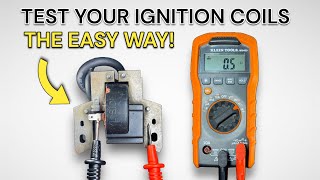
Turn the key ON (engine off). Use a multimeter to verify battery voltage (12.6V) at the power supply wire. Verify the ground wire has less than 0.5 ohms of resistance to chassis ground.
Tools: Multimeter, Vehicle-specific wiring diagram (Intermediate) - [PRO TIP] Test the Control Circuit Wiring
Disconnect the PCM and coil connectors. Measure resistance of the control wire end-to-end. A reading above 0.5 ohms or 'OL' indicates a broken wire requiring repair.
Tools: Multimeter, Vehicle-specific wiring diagram (Advanced) - [PRO TIP] Check for a Short to Ground
With connectors unplugged, measure resistance between the coil connector's control pin and chassis ground. A reading other than 'OL' (infinite) indicates a short to ground.
Tools: Multimeter (Advanced) - [ADVANCED] Test Ignition Coil Internal Resistance
Remove the coil. Measure primary resistance between the positive and negative terminals (typically 0.4-2.0 ohms). Measure secondary resistance between the positive terminal and output tower (6,000-15,000 ohms). Replace if out of spec.
Tools: Multimeter, Vehicle-specific repair manual (Advanced) - [ADVANCED] Live Voltage Monitoring
Use a live-data scanner to monitor Coil 'H' primary voltage with the engine running. Values consistently below 3.0V confirm the low circuit condition.
Tools: Advanced OBD-II Scanner (Advanced) - Perform a PCM Ground Pulse Test (Scope Test)
Connect an oscilloscope to the coil control wire. Start the engine. Look for a clear 0-12V square wave with a 50-400V inductive spike. A flatline or malformed pattern with good wiring confirms a failed PCM driver.
Tools: Oscilloscope, Back-probe kit (Professional)
When This Code Triggers (Freeze-Frame Conditions)
- Engine Coolant Temp: 175-210°F (The fault typically registers once the engine reaches full operating temperature.)
- RPM: 1500-2500 RPM (The code sets during steady-state cruising or light acceleration.)
- Engine Load: 30-60% (Misfires and circuit faults are most detectable under moderate engine load.)
- Vehicle Speed: 45-65 mph (The fault triggers at steady highway speeds, a key part of diagnostic drive cycles.)
Related Codes
- P0308 — Cylinder 8 Misfire Detected. P2321 identifies the electrical cause, while P0308 reports the resulting misfire.
- P0358 — Ignition Coil 'H' Primary/Secondary Circuit Malfunction. A broader code; P2321 specifically isolates the fault to low voltage on the primary side.
- P2322 — Ignition Coil H Primary Control Circuit High. The exact opposite of P2321, indicating excess voltage (short to power) rather than a voltage drop.
- P2323 — Ignition Coil H Secondary Circuit. Indicates a fault on the high-voltage side (spark plug/boot) rather than the low-voltage control side.
Climate & Environmental Factors
- High Humidity / Heavy Rain: Moisture penetrates connector seals, especially if old or damaged. This leads to corrosion on the pins for the coil and PCM, creating resistance and triggering P2321.
- Extreme Cold: Plastic and rubber components become brittle. Wire insulation cracks if disturbed, and connector seals shrink, allowing moisture to enter and cause intermittent open circuits.
- Road Salt (Winter Climates): Saline mist coats the engine bay, accelerating the degradation of wiring harnesses and ground connections, significantly increasing the likelihood of electrical faults.
How to Talk to a Mechanic About This Code
Say this: "I have a P2321 code and a misfire on cylinder 8. I'd like to schedule a diagnostic to determine if the cause is the coil, the wiring, or the PCM driver. Please start with basic electrical checks before recommending part replacements."
This signals you understand the code is electrical and specific to one cylinder. It encourages the technician to perform a proper diagnosis (e.g., coil swap, voltage/ground tests) rather than immediately replacing the most common part.
Avoid saying:
- 'My check engine light is on, can you look at it?'
- 'The car is running rough, just fix it.'
- 'I think I need a new ignition coil.'
Questions to ask before authorizing the repair:
- Did you confirm the diagnosis by swapping the coil to another cylinder?
- If the coil wasn't the issue, what were the voltage and ground readings at the connector?
- Can you show me the damaged wiring or corroded connector that you found?
- What is the warranty on the parts and labor for this repair?
Where to Take It: Dealer vs Independent vs Chain
- Dealer:
Best for: Vehicles still under powertrain warranty., Complex diagnosis that has confirmed a PCM failure, as they have direct access to OEM programming tools., Known manufacturer-specific issues covered by a TSB (Technical Service Bulletin).
Downsides: Significantly higher labor rates, often 1.5x to 2x that of an independent shop., May recommend replacing an entire assembly when a simpler repair is possible. (Typical cost: +50% vs. baseline) - Independent Shop:
Best overall fit. A P2321 diagnosis is a routine task for any competent independent mechanic. They easily perform the necessary electrical checks and part swaps without the dealership price premium.
Best for: Most out-of-warranty vehicles., Standard electrical diagnostics like coil, connector, and wiring tests., Cost-conscious owners who want a good balance of expertise and value.
Downsides: Shop quality and technician skill vary widely; look for ASE certifications and good reviews., May not have immediate access to the latest manufacturer-specific software for PCM programming. (Typical cost: +0% vs. baseline) - Chain Shop:
Use with caution. Acceptable if you have already diagnosed a bad coil yourself and just need it replaced. AVOID for initial diagnosis of an intermittent or complex electrical fault.
Best for: Simple, clear-cut part replacements like a confirmed bad ignition coil.
Downsides: Technician skill varies dramatically., Less likely to perform in-depth electrical diagnosis; defaults to replacing parts unnecessarily., High pressure to upsell services (e.g., recommending a full tune-up for a single coil code). (Typical cost: -10% vs. baseline)
When to Walk Away From the Repair
If the estimated repair cost exceeds 40-50% of the car's private-party value, it's time to seriously consider selling or trading it in.
- Car worth $12000, fix is $450: Fix it. This is a standard repair cost and is well below the threshold.
- Car worth $4000, fix is $1800: Walk away. The repair cost is approaching half the car's value. Driving with the misfire likely caused this expensive catalytic converter failure.
- Car worth $2500, fix is $1000: Borderline. For an older car, this is a significant investment. If the rest of the car is in excellent shape, it might be worth it. Otherwise, it's likely time to move on.
What Scan Tool You Need for This Code
Minimum: Basic OBD-II code reader that can read and clear engine codes.
A basic $25 code reader gets the P2321 code and clears it after a repair. However, it cannot show live data, which is needed for advanced diagnosis. A scanner with live data displays the coil control circuit voltage in real-time, confirming the 'low' condition the PCM sees.
Budget: BlueDriver Pro or Foxwell NT301 (~$70) — Reads and clears codes, shows freeze-frame data, and displays live data streams on your smartphone (BlueDriver) or on the device screen (Foxwell). This is enough to confirm the code and monitor basic engine parameters.
Mid-range: Innova 5610 or XTOOL D7 (~$300) — Offers bidirectional controls, allowing you to command specific components to test their function. For P2321, it helps test the PCM driver circuit without needing an oscilloscope in some cases. It provides detailed live data and manufacturer-specific codes.
Professional: Autel MaxiCOM MK808 / MK906BT (~$500-1200) — Provides full, professional-level diagnostics, including extensive bidirectional control, ECU coding capabilities (if a PCM replacement is needed), and advanced data graphing that mimics some functions of an oscilloscope. This is overkill for a one-time DIY fix but essential for a professional shop.
Rent vs buy: Most auto parts stores (like AutoZone) scan your codes for free. If you perform the repair yourself, a basic code reader is a good investment. Buy a more advanced scanner only if you plan to do your own diagnostics regularly.
How to Clear the Code After You Fix It
- Use an OBD-II scan tool to erase the diagnostic trouble codes.
- Perform a complete OBD-II drive cycle to allow the readiness monitors to run.
- Reconnect the battery if disconnected (this clears codes but resets all readiness data).
Drive cycle (~30 minutes): A generic drive cycle includes a cold start, a 5-minute idle, 10-15 minutes of steady highway driving (55-60 mph), followed by 10 minutes of stop-and-go city driving. Avoid aggressive acceleration.
Readiness monitors affected: Misfire Monitor, Catalyst (CAT) Monitor, Oxygen (O2) Sensor Monitor
Before emissions retest: drive at least 100 miles to fully set monitors.
Watch out for:
- Clearing the code with a scanner does not fix the physical problem; the code returns quickly.
- Disconnecting the battery resets all readiness monitors to 'Incomplete', causing an automatic emissions test failure.
- Failing to drive a full cycle leaves monitors 'Incomplete'.
Will This Fail Emissions / State Inspection?
Yes — this code typically fails an OBD-II emissions inspection.
- California: An active Check Engine Light is an automatic failure. After repair, CARB requires all readiness monitors to be set. You may need to drive 100+ miles to complete the drive cycle.
- New York: The NYS DMV vehicle inspection includes an OBD-II scan. An illuminated MIL for P2321 is an automatic failure.
- Texas: In emissions-testing counties, an illuminated Check Engine Light is an automatic failure. After clearing the code, you can have at most one readiness monitor 'Not Ready' to pass.
Most Commonly Affected Vehicles
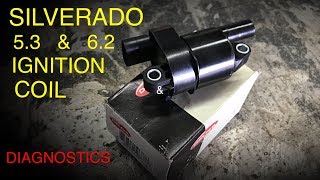
- Chevrolet Silverado 1500 (2014-2018) — Subject to GM service bulletin 22-NA-258, which points to water intrusion causing corrosion in coil connectors. The fix involves cleaning, adding dielectric grease, and potentially replacing the coil.
- GMC Sierra 1500 (2014-2018) — Affected by the same water intrusion issue as its Chevrolet counterpart under GM service bulletin 22-NA-258.
- Dodge Ram 1500 (2011-2018) — Common on the 5.7L Hemi engine. The coil-on-plug design is susceptible to heat-related failures of both the coil and the wiring harness, which becomes brittle over time.
- Ford F-150 (2004-2010) — On models with the 5.4L 3V Triton engine, oil leaks from the VCT solenoids or valve covers saturate the coil boots in the deep spark plug wells, leading to this code.
- Nissan Sentra (2002-2006) — Specifically cited in repair manuals as being prone to P2321, often related to wiring harness faults or coil failure.
- BMW 3-Series / 5-Series (2006-2013) — Failures are often due to a faulty coil, but a failing PCM ignition driver is also a known issue on these models.
Manufacturer-Specific Notes
- General Motors (Chevrolet/GMC): GM issued service bulletin 22-NA-258 for 2014+ trucks identifying water intrusion into the ignition coil connector as a primary cause for P2321. The official fix is to inspect for corrosion, replace the coil if damaged, and apply dielectric grease to the connector boot.
- Ford: On Triton engines, the deep-set spark plug wells are a known weak point. A failing valve cover gasket or VCT solenoid O-ring causes the wells to fill with oil, saturating the coil boot and leading to premature coil failure.
- Dodge / Ram / Chrysler: For 5.7L Hemi engines, the ignition coil wiring harness is exposed to significant engine heat. Over time, the plastic loom and wire insulation become brittle and crack, leading to shorts or open circuits.
- Nissan: On older Nissan models, verify the code definition with a high-quality scanner. In some vehicle families, a similar code format (e.g., B2321) refers to an entirely different system, such as the oil level sensor.
Real Owner Stories
2014 Chevy Silverado with P2321 and P0308
Check engine light came on with a noticeable rough idle, especially in the morning. The truck felt sluggish when accelerating onto the highway.
What they tried:
- Owner initially replaced the spark plug for cylinder 8, but the code and misfire remained.
- Performed a coil swap test, moving the coil from cylinder 8 to cylinder 6.
- After clearing codes and driving, a new code P2315 (Ignition Coil 'F' Primary Control Circuit Low) appeared, confirming the coil was bad.
Outcome: Replaced the single faulty ignition coil with a new ACDelco part. The total repair cost was the price of the coil (around $90) and 15 minutes of labor. The codes cleared and did not return.
Lesson: The coil swap is the fastest and most definitive way to confirm a bad ignition coil before spending money. It isolates the fault to the component itself, ruling out wiring or PCM issues.
2012 Ram 1500 5.7L Hemi with 115K miles
Intermittent P2321 code that would appear for a few days and then disappear. The engine had a slight hesitation but no constant, severe misfire.
What they tried:
- A mechanic replaced the ignition coil on cylinder 8, but the code returned a week later.
- The mechanic then replaced the spark plug and the coil connector pigtail, but the issue persisted.
- A second shop traced the wiring harness and found a section near the back of the engine where the insulation had become brittle from heat and was intermittently shorting to a bracket.
Outcome: The damaged section of the control wire was repaired with a new piece of wire and heat-shrink tubing. The harness was re-routed slightly to prevent future heat damage. The P2321 code was resolved permanently.
Lesson: For intermittent electrical codes, wiring is a strong suspect. A simple parts replacement may not fix it. Inspecting the full length of the wire harness for heat damage, chafing, or corrosion is critical.
2014 GMC Sierra with P2321 after engine cleaning
The check engine light (P2321) appeared the day after the owner pressure-washed the engine bay.
What they tried:
- The owner swapped the coil to another cylinder, but the code P2321 remained, indicating the problem was not the coil itself.
- Following GM Service Bulletin 22-NA-258, the owner disconnected the coil connector for cylinder 8 and found water inside.
Outcome: The connector was dried out thoroughly with compressed air and cleaned with electrical contact cleaner. A generous amount of dielectric grease was applied to the connector boot to seal it against future moisture intrusion. The code was cleared and did not return.
Lesson: Moisture is a major cause of ignition circuit faults. Never pressure wash a modern engine bay. If a code appears after rain or cleaning, check connectors for water intrusion first.
How to Prevent This Code From Triggering
- Replace Spark Plugs at Recommended Intervals (Every 60,000 to 100,000 miles, per vehicle manual.) — Worn spark plugs have a wider gap, forcing the ignition coil to generate a higher voltage to create a spark. This increased workload causes the coil to run hotter and fail prematurely.
- Use Dielectric Grease on Coil Boots and Connectors (Whenever replacing a coil or spark plug.) — Dielectric grease is a non-conductive sealant that prevents moisture, oil, and dirt from entering the electrical connector and the spark plug boot. This stops corrosion and voltage arcing.
- Address Engine Oil Leaks Promptly (Inspect for leaks during every oil change.) — A leaking valve cover gasket fills the spark plug wells with oil. Engine oil degrades the rubber boots and plastic housing of the ignition coils, leading to shorts and eventual failure.
- Keep the Engine Bay Reasonably Clean (Annually or as needed.) — A thick layer of dirt and grime traps heat, causing ignition coils and wiring to run hotter than designed. A clean engine bay allows for better heat dissipation.
- Use High-Quality OEM or Reputable Aftermarket Coils (When replacement is needed.) — Cheaper, low-quality ignition coils use inferior internal windings and potting compounds that cannot withstand engine heat and vibration for long, leading to repeated failures.
Frequently Asked Questions
What does the 'H' in P2321 mean?
In the OBD-II standard, letters designate cylinders beyond the 8th. 'H' corresponds to the 8th cylinder in the engine's firing order. Therefore, P2321 points to a fault in the ignition coil circuit for cylinder #8.
What is the most common misdiagnosis for P2321?
The most frequent mistake is immediately replacing the ignition coil without testing the circuit. Technicians often find the root cause is a simple wiring issue, such as a corroded pin or a broken wire in the harness. Confirming power, ground, and signal is essential before buying parts.
My mechanic found oil in the spark plug well. Could that cause P2321?
Yes, absolutely. A leaking valve cover gasket allows oil to pool around the coil and spark plug. The oil degrades the coil boot, leading to electrical arcing and shorts that damage the coil's internal primary circuits.
Can I just replace the spark plug to fix this?
No. P2321 is an electrical fault code for the ignition coil's control circuit, not the spark plug itself.
What's the difference between the primary and secondary ignition circuit?
The primary circuit is the low-voltage (12V) side controlled by the PCM to charge the coil. The secondary circuit is the high-voltage side (20,000V+) that fires the spark plug. P2321 specifically flags a voltage drop on the low-voltage primary side.
Why did my mechanic suggest replacing all the ignition coils at once?
Ignition coils are all subjected to the same age, heat, and vibration. When one fails, it indicates others will fail soon. Replacing them all simultaneously is preventative maintenance that saves you from future breakdowns and repeated labor charges.
Can a bad battery or alternator cause a P2321 code?
It is highly unlikely. A system-wide voltage problem from a bad battery typically causes multiple random electrical codes across various systems. P2321 is highly specific to the control circuit of a single ignition coil.
Is it okay to just clear the code and keep driving?
You can clear the code, but it returns immediately because the physical fault remains. Ignoring P2321 leads to poor performance, bad fuel economy, and expensive catalytic converter damage.
Key Takeaways
- P2321 indicates low voltage in the primary control circuit for the cylinder 8 ignition coil, disabling the spark plug.
- A failed ignition coil causes 80% of P2321 codes, followed closely by frayed wiring or oil leaking from a degraded valve cover gasket.
- Stop driving immediately if the Check Engine Light flashes; raw fuel from the misfire destroys catalytic converters in under 50 miles, risking a $1,200+ repair.
- Swap the cylinder 8 coil with cylinder 6 before buying parts; if the code moves to P2315, replace the coil.
- Test the coil connector with a multimeter to verify 12.6V power and less than 0.5 ohms of ground resistance before condemning the PCM.
Helpful Videos
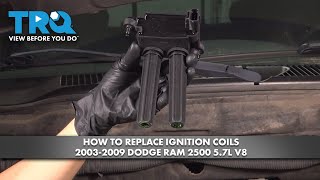
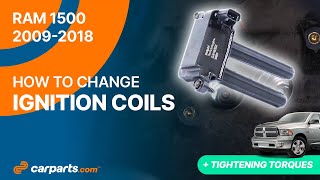
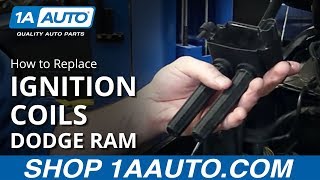

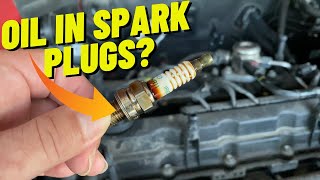

The information in this article is provided for general reference and educational purposes only. Vehicle specifications, procedures, and part compatibility can vary by production date, trim level, and region. Always consult your vehicle's factory service manual and verify part numbers before purchasing or performing repairs. Safety-critical components such as airbags, seat belts, and braking systems should be installed by a qualified professional.
- 🎬 Helpful Videos
- What Does P2321 Mean?
- Can I Drive With P2321?
- Common Causes
- Symptoms
- Diagnostic Flowchart
- Common Fixes & Costs
- Used vs. New Parts: Buying Guide
- What Happens If You Wait — Timeline
- Cost of Not Fixing It
- Diagnosis Steps
- When This Code Triggers (Freeze-Frame Conditions)
- Related Codes
- Climate & Environmental Factors
- How to Talk to a Mechanic About This Code
- Where to Take It: Dealer vs Independent vs Chain
- When to Walk Away From the Repair
- What Scan Tool You Need for This Code
- How to Clear the Code After You Fix It
- Will This Fail Emissions / State Inspection?
- Most Commonly Affected Vehicles
- Manufacturer-Specific Notes
- Real Owner Stories
- 2014 Chevy Silverado with P2321 and P0308
- 2012 Ram 1500 5.7L Hemi with 115K miles
- 2014 GMC Sierra with P2321 after engine cleaning
- How to Prevent This Code From Triggering
- Frequently Asked Questions
- What does the 'H' in P2321 mean?
- What is the most common misdiagnosis for P2321?
- My mechanic found oil in the spark plug well. Could that cause P2321?
- Can I just replace the spark plug to fix this?
- What's the difference between the primary and secondary ignition circuit?
- Why did my mechanic suggest replacing all the ignition coils at once?
- Can a bad battery or alternator cause a P2321 code?
- Is it okay to just clear the code and keep driving?
- Key Takeaways
- 🎟️ Get 5% Off