

OBD-II Code P2317: Ignition Coil 'F' Secondary Circuit Malfunction
The Ultimate 2026 Guide: What P2317 means, why it triggers, and how to fix it for good.
- P2317 indicates a high-voltage secondary circuit failure for ignition coil 'F', preventing the spark plug from firing properly.
- Swap the suspected bad coil with a neighboring cylinder; if the misfire code follows the coil to the new cylinder, replace the coil.
- Driving with an active P2317 code for more than 50 miles forces raw fuel into the exhaust, destroying a $1,500+ catalytic converter.
- If a new coil and spark plug fail to clear the code, test the wiring harness and PCM connector pins for shorts or loose connections.
What Does P2317 Mean?

P2317 means your vehicle's Powertrain Control Module (PCM) detects a malfunction in the secondary circuit of the ignition coil for cylinder 'F'. The secondary circuit is the high-voltage side of the ignition system, transforming the battery's 12 volts into the 20,000+ volts required to spark the plug. A fault here means the spark is weak, intermittent, or absent, preventing combustion in that cylinder.
Technical definition: The SAE/OBD-II definition for P2317 is "Ignition Coil 'F' Secondary Circuit". This indicates the PCM detects abnormal voltage, resistance, or performance within the high-voltage section of the 'F' ignition coil circuit. Chrysler, Dodge, and Jeep vehicles often describe this as "Insufficient Ionization," referring to their specific method of monitoring the secondary spark event.
🎬 See this guide on diagnosing insufficient ionization codesCan I Drive With P2317?
Yes, But With Caution. You can drive for short distances in an emergency, but it is strongly discouraged. Driving with a P2317 code means one cylinder is misfiring, causing rough running, poor fuel economy, and a significant loss of power. Continuing to drive forces unburnt fuel into the exhaust, which rapidly overheats and destroys the catalytic converter. This turns a $100 repair into a $2,000+ bill. Drive less than 50 miles and only to a repair shop.
Common Causes

- Faulty Ignition Coil (Very Common) — The ignition coil is the primary culprit. Internal windings degrade from millions of heat cycles and constant vibration, or moisture intrusion causes an internal short, resulting in a weak or non-existent spark.
- Damaged or Worn Spark Plug (Common) — A spark plug with a worn electrode, excessive carbon fouling, or an incorrect gap requires significantly higher voltage to spark. This high demand overworks the ignition coil, causing it to fail and trigger P2317. Carbon tracking on the ceramic insulator also creates a shortcut to ground, weakening the spark.
- Defective Coil-on-Plug (COP) Boot or Oil Contamination (Common) — The rubber boot connecting the coil to the spark plug degrades, cracks, or becomes saturated with oil from a leaking valve cover gasket. This allows the high-voltage spark to arc directly to the cylinder head instead of the spark plug.
- Damaged Wiring or Connectors (Less Common) — The electrical connector for the ignition coil corrodes, loosens, or suffers poor pin fitment. Engine heat, vibration, or rodents damage the wiring harness, causing an open or short circuit.
- Vacuum Leak (Uncommon) — A significant vacuum leak from a cracked hose or failed intake manifold gasket near the affected cylinder introduces excess air. This creates a lean mixture that resists ignition, causing a persistent misfire the PCM interprets as a secondary ignition fault.
- Poor Engine or PCM Ground (Uncommon) — A corroded, loose, or broken engine ground strap creates electrical instability. This disrupts ignition system performance, causing voltage drops under load that trigger secondary circuit codes.
- Faulty Powertrain Control Module (PCM) (Rare) — The internal driver circuit within the PCM that controls ignition coil 'F' fails. Consider this only after exhausting all other possibilities. Multiple simultaneous coil circuit codes (e.g., P2302, P2305, P2317) strongly indicate PCM failure.
Symptoms

- Engine Misfire, Rough Idle, or Shaking — The engine shakes, stumbles, or runs unevenly at idle or under light load. This vibration directly results from one cylinder failing to contribute power.
- Reduced Engine Power and Hesitation — With one dead cylinder, the vehicle feels noticeably sluggish. You experience a distinct hesitation or 'cough' during acceleration as the engine struggles to respond.
- Raw Fuel Smell from Exhaust — Unburnt fuel from the misfiring cylinder exits through the exhaust system. You notice a distinct gasoline odor from the tailpipe.
- Decreased Fuel Economy — Engine efficiency plummets as the PCM compensates for the dead cylinder by injecting excess fuel. Your miles-per-gallon drops noticeably.
- Engine Stalling — Under heavy load or when pulling away from a stop, the strain on the remaining cylinders causes the engine to stall completely.
- Check Engine Light is On or Flashing (also visible on scanner) — A solid Check Engine Light is guaranteed. If the misfire is severe enough to risk catalytic converter damage, the light flashes to alert you to the critical condition.
Diagnostic Flowchart
Tap your situation to follow the diagnostic path that matches what you're seeing on this code.
Common Fixes & Costs
- Replace Ignition Coil 'F' — Parts: $30-$150, Labor: $80-$150, ~0.8 hr book time (DIY)
- Replace Spark Plug and Coil Boot for Cylinder 'F' — Parts: $15-$40, Labor: $40-$100, ~0.5 hr book time (DIY)
- Replace all Ignition Coils and Spark Plugs — Parts: $200-$900, Labor: $150-$400, ~2.5 hr book time (DIY)
- Repair Wiring or Replace Connector Pigtail — Parts: $10-$50, Labor: $120-$300, ~1.5 hr book time (Intermediate)
- Replace Powertrain Control Module (PCM) — Parts: $800-$1500, Labor: $150-$300, ~1.5 hr book time (Professional)
Used vs. New Parts: Buying Guide
When a used part is worth it: A used OEM ignition coil from a low-mileage vehicle is a cost-effective choice for a quick, budget-friendly repair, especially if replacing just one failed coil.
Donor-vehicle mileage cap: roughly under 80000 miles for the part to have meaningful remaining life.
Donor quality checklist:
- Verify the part number exactly matches your original coil.
- Ask the salvage yard for the mileage of the donor vehicle.
- Avoid coils that show signs of physical damage, melting, or corrosion.
Decision logic:
- If The vehicle has over 100,000 miles and coils are difficult to access (e.g., under an intake manifold). → Buy a full set of new, high-quality aftermarket or OEM coils. The labor cost makes it inefficient to use used parts or replace them one by one.
- If The vehicle is low-mileage and the budget is extremely tight. → A single used OEM coil is an acceptable short-term solution to get the vehicle running properly.
- If You are choosing between cheap, no-name new coils and used OEM coils. → Favor the used OEM coils. They are often more reliable than brand-new, low-quality aftermarket parts.
Warranty tradeoff: Used parts from a salvage yard typically have a 30-90 day functional warranty. New aftermarket coils often come with a 1-year to limited lifetime warranty. New OEM parts carry a 1-2 year warranty.
Worst-case if a used part fails: $150-$400 if a used coil fails shortly after installation, requiring repeat labor and the cost of another part.
What Happens If You Wait — Timeline
- 0-1 week: Check Engine Light (CEL) is on. A slight, intermittent hesitation is felt during acceleration. The misfire is not yet constant. (MPG impact: 0-5%% · Added cost: $0)
- 1 week - 1 month: CEL flashes during heavy acceleration. The engine runs noticeably rough at idle, and power loss is apparent. Fuel smell from the exhaust is present after a cold start. (MPG impact: 5-15%% · Added cost: $20-$80 in wasted fuel.)
- 1-3 months: The flashing CEL becomes frequent as the misfire is constant. Unburnt fuel is consistently dumped into the exhaust, causing the catalytic converter's internal temperature to rise dramatically, melting the ceramic substrate. (MPG impact: 15-25%% · Added cost: $1,200-$3,500 (Catalytic converter requires replacement).)
- 3+ months: The catalytic converter is severely damaged or completely clogged. The engine has extreme power loss, fails to accelerate past a certain speed, and stalls frequently. The melted converter damages downstream oxygen sensors. (MPG impact: 25-50%% · Added cost: $1,500-$4,200+ (Cost of catalytic converter, plus one or two oxygen sensors).)
Cost of Not Fixing It
- 0-1 month: Noticeable drop in fuel economy (5-15%), rough engine performance, and potential for stalling. Failed emissions test is guaranteed. (Added cost: Negligible, besides increased fuel consumption.)
- 1-6 months: Severe and irreversible damage to the catalytic converter due to overheating from unburnt fuel. This is the most significant risk. (Added cost: $1200-$3400)
- 6+ months: Damage to oxygen sensors from contamination, and internal engine damage from the persistent misfire and improper combustion. (Added cost: $150-$300 per oxygen sensor, plus potential engine repair costs.)
Diagnosis Steps

- Read Codes, Freeze Frame, and Live Data
Using an OBD-II scanner, confirm P2317 is active. Check for related codes like P0306 (misfire on cylinder 6). View live data to monitor misfire counters for each cylinder and analyze freeze-frame data to identify the exact engine conditions when the fault occurred.
Tools: OBD-II Scanner (Beginner) - Swap the Ignition Coil (The 'Money' Test)
Swap the suspected faulty coil from cylinder 'F' with a known good coil from an adjacent cylinder (e.g., cylinder 'E'). Clear the codes and drive the vehicle. If the code changes to P2314 (for coil 'E'), you definitively proved the ignition coil is bad.
Tools: Basic Hand Tools (Socket/Ratchet) (Intermediate) - Inspect the Spark Plug and Coil Boot
If the code remains on cylinder 'F' after the swap, remove the spark plug. Inspect it for wear, fouling, or cracks in the ceramic insulator. Check the inside of the coil boot for a white, chalky residue or a black line, indicating spark arcing.
Tools: Spark Plug Socket, Torque Wrench, Ratchet (Intermediate) - Perform a Detailed Visual Inspection
Inspect the wiring harness and electrical connector for coil 'F'. Look for corrosion, pushed-out pins, or a loose fit. Check for oil pooling in the spark plug tube from a leaking valve cover gasket, a primary cause of boot failure.
Tools: Flashlight, Inspection Mirror (Beginner) - Test Coil Control Circuit with a Test Light
Disconnect the coil connector. Connect a test light to battery ground and probe the signal wire terminal. Have a helper crank the engine. The test light must flash, indicating the PCM is sending a trigger signal. No flash means an upstream wiring or PCM problem.
Tools: 12V Test Light, Wiring Diagram (Advanced) - Test Circuit Wiring for Continuity and Shorts
Disconnect the coil and PCM connectors. Using a multimeter set to Ohms, check for continuity on the control wire between both connectors (must be < 1 Ohm). Check for a short to ground by testing continuity between the control wire and chassis ground (must be OL/infinite).
Tools: Digital Multimeter, Wiring Diagram (Advanced) - Check for Poor Pin Fit at the PCM
A loose connection at the PCM is a frequent failure point on Chrysler/Dodge vehicles. Disconnect the PCM connector and use a terminal testing tool to check the tension of the female pin for the coil 'F' driver. A pin with no 'drag' causes the fault.
Tools: Terminal Pin Fit Testers (Advanced) - Test Ignition Coil Resistance
Set a multimeter to Ohms. Test primary resistance across the positive and negative coil terminals (typically 0.4 to 2.0 ohms). Test secondary resistance between the positive terminal and the high-voltage output tower (typically 5,000 to 20,000 ohms). Readings outside manufacturer specs indicate failure.
Tools: Digital Multimeter, Repair Manual (Advanced) - Analyze Live Data: Fuel Trims
Observe Short-Term and Long-Term Fuel Trims (STFT/LTFT) at idle. If LTFT on the bank with cylinder 'F' exceeds +10%, the PCM is adding fuel to compensate for a lean condition, pointing to a vacuum leak near that cylinder.
Tools: OBD-II Scanner with Live Data (Advanced) - Test the PCM with an Oscilloscope
Back-probe the ignition coil's control wire while the engine runs. You must see a clean square wave pattern indicating the PCM commands the coil to fire. A missing or malformed waveform, with verified good wiring, confirms a failed PCM driver circuit.
Tools: Oscilloscope, Back-Probe Pins (Professional)
When This Code Triggers (Freeze-Frame Conditions)
- Engine Coolant Temp: 180-210°F (Fully warmed up during operation.)
- RPM: 1500-3000 (Light acceleration or steady-state cruise.)
- Engine Load: 30-60% (The engine is under a moderate load, such as climbing a slight incline or accelerating gently.)
- Vehicle Speed: 45-65 mph (Highway or freeway driving speeds.)
Related Codes

- P0300-P0312 — These are misfire codes. P0300 is a random misfire, while P0301-P0312 are specific to a cylinder (e.g., P0306 for cylinder 6). P2317 identifies the suspected cause (ignition circuit fault), while P0306 confirms the result (misfire). Seeing them together is very common.
- P2302, P2305, P2308, P2311, P2314, etc. — These are identical codes for the other ignition coils. If you have multiple coil circuit codes simultaneously, it's highly improbable that multiple coils failed at once. This pattern strongly suggests a common-point failure like a bad PCM, a faulty ground, or a damaged shared wiring harness.
- P0356 — This code is 'Ignition Coil F Primary/Secondary Circuit'. It's a more general code than P2317. While P2317 specifically points to the high-voltage secondary side, P0356 is triggered by a fault in either the secondary side or the low-voltage primary (control) side.
- P0171 / P0174 — These are 'System Too Lean' codes. If you see one of these alongside P2317, an unmetered air leak (vacuum leak) is the root cause. A severe lean condition leads to a misfire that fouls a spark plug, triggering the P2317 code. Fixing the lean condition solves the ignition fault.
Climate & Environmental Factors
- High Humidity: Moisture in the air makes it easier for high voltage to escape from cracks in an old ignition coil or a degraded coil boot, causing an arc to the cylinder head instead of the spark plug. This leads to more frequent P2317 codes in humid climates.
- High Altitude: At higher altitudes, the air is less dense. This lower density reduces the air's insulating properties, making it easier for a spark to jump a gap. A pre-existing weakness in a coil or spark plug becomes more apparent, causing a misfire that wouldn't occur at sea level.
- Extreme Cold: Cold temperatures cause plastic and rubber components, like coil housings and wire insulation, to become brittle and crack. This creates pathways for voltage to escape or for moisture to enter, leading to a secondary circuit fault when the engine starts in very cold weather.
How to Talk to a Mechanic About This Code
Say this: "I have a P2317 code, which I know is for the ignition coil 'F' secondary circuit. The engine is misfiring and running rough. I'd like to schedule a diagnostic to confirm if the cause is the coil, spark plug, or wiring. Please let me know your diagnostic fee."
This signals you've done your research and understand the specific nature of the problem. It focuses the technician on the correct system, discourages a broad, expensive 'fishing expedition,' and establishes you as an informed customer.
Avoid saying:
- 'My check engine light is on, can you just fix it?' (This is too vague and invites unnecessary upselling).
- 'I think it's the coil, just replace it.' (Don't dictate the repair; a proper diagnosis is needed to avoid wasting money on the wrong part).
- 'Do whatever you think is best.' (This gives up your right to approve the cost and scope of the repair).
Questions to ask before authorizing the repair:
- What was the specific point of failure you found during diagnosis? (e.g., 'Did the coil fail a resistance test?' or 'Did you find a short in the wiring?').
- If the coil and plug are good, what is your plan for testing the wiring and the PCM circuit?
- Will you provide me with the old parts when the job is done?
- What is the warranty on the parts and labor for this specific repair?
Where to Take It: Dealer vs Independent vs Chain
- Dealer:
Recommended if the vehicle is under warranty or if initial diagnosis points to a rare PCM failure. Otherwise, a qualified independent shop is more cost-effective.
Best for: Vehicles still under a powertrain or emissions warranty., Complex electrical issues where a PCM replacement is suspected., Known manufacturer-specific issues or TSBs (Technical Service Bulletins) apply.
Downsides: Typically higher labor rates and parts costs., Defaults to replacing larger assemblies rather than performing a component-level repair (e.g., replacing a harness instead of fixing one wire). (Typical cost: +50% vs. baseline) - Independent Shop:
Best fit for most P2317 scenarios. An experienced technician efficiently diagnoses and repairs a faulty coil, plug, or wiring issue at a reasonable cost.
Best for: Out-of-warranty vehicles where cost is a factor., Common diagnostic codes like P2317 that don't typically require dealer-exclusive tools., Shops with good reviews and ASE-certified technicians specializing in electrical diagnostics.
Downsides: Shop quality and technician skill vary widely., Lacks access to the very latest manufacturer software updates or security-locked functions. (Typical cost: +0% vs. baseline) - Chain Shop:
Use with caution. Acceptable for a straightforward coil or spark plug replacement, but AVOID for initial diagnosis of an intermittent or complex P2317 fault that involves wiring or the PCM.
Best for: Simple parts replacement like spark plugs if you already have a firm diagnosis.
Downsides: Technician experience with electrical diagnostics is inconsistent., High pressure to upsell services (e.g., fuel system cleanings) that are not related to the P2317 code. (Typical cost: -10% vs. baseline)
When to Walk Away From the Repair
If the total estimated repair cost exceeds 50% of your car's current private-party value (check Kelley Blue Book or Edmunds), it's time to seriously consider selling or trading it in.
- Car worth $4000, fix is $2200: Walk away. The repair cost is over 50% of the car's value. The risk of other age-related repairs is too high.
- Car worth $12000, fix is $800: Fix it. This repair is well below the threshold and restores the vehicle's primary function and value.
- Car worth $3000, fix is $1600: Borderline, but likely walk away. Get a second opinion, but be prepared to sell as-is rather than invest over half the car's value.
What Scan Tool You Need for This Code
Minimum: An OBD-II scanner that reads and clears codes, shows freeze-frame data, and displays live data streams (specifically misfire counters per cylinder).
A basic $20 code reader only gives you the 'P2317' code. It cannot show you live misfire data to confirm the fault is active or if your repair worked. You need to see the data to diagnose effectively.
Budget: XTOOL A30D/A30M or BlueDriver Pro (~$120) — These Bluetooth dongles connect to your smartphone. They read codes from all vehicle systems, view freeze-frame data, and graph live data, which is essential for watching misfire counts in real-time.
Mid-range: Foxwell NT630 or MUCAR 689 (~$250) — These are dedicated handheld units that offer full system diagnostics and live data. Some include basic bidirectional controls, allowing you to command simple tests without starting the engine, which helps verify wiring.
Professional: Autel MaxiCOM MK808BT or Launch X431 series (~$500-1200) — Offers full bidirectional control to actively command the ignition coil to fire (or not fire), making it much faster to test the control circuit. Provides manufacturer-specific code details and access to advanced diagnostic functions, essential if the problem is suspected to be the PCM.
Rent vs buy: For a one-time fix, many auto parts stores like AutoZone or O'Reilly loan you a scanner for free (with a refundable deposit). If you plan to do your own car maintenance regularly, buying a budget or mid-range scanner is a worthwhile investment.
How to Clear the Code After You Fix It
- Use an OBD-II scan tool to clear the P2317 code.
- Perform a complete drive cycle to allow the onboard diagnostics to run their tests.
- Check readiness monitor status with the scan tool to confirm the repair.
Drive cycle (~30 minutes): Start with a cold engine. Let it idle for 2-3 minutes. Drive in mixed city conditions (stop-and-go, varying speeds up to 45 mph) for about 15 minutes. Then, drive at a steady highway speed (55-60 mph) for at least 5 minutes. Allow the vehicle to cool down completely.
Readiness monitors affected: Catalyst Monitor, Misfire Monitor, Oxygen (O2) Sensor Monitor
Before emissions retest: drive at least 100 miles to fully set monitors.
Watch out for:
- Simply disconnecting the battery clears the code, but it also resets all readiness monitors to 'Not Ready', causing an automatic emissions test failure.
- The code returns immediately if the underlying mechanical or electrical fault is not properly fixed.
- Not driving long enough or under the right conditions fails to complete the drive cycle and set the readiness monitors.
Will This Fail Emissions / State Inspection?
Yes — this code typically fails an OBD-II emissions inspection.
- California: An active P2317 code is an automatic failure. After repair, all readiness monitors must be set to 'Ready' before a re-test is possible, which requires driving 50-100 miles.
- New York: The NYS DMV inspection includes an OBD-II scan. An illuminated Check Engine Light for a code like P2317 results in an automatic inspection failure.
- Texas: In counties requiring emissions testing, an illuminated Check Engine Light is an automatic failure. After clearing the code, you can have at most one readiness monitor 'Not Ready' (or two for model years 1996-2000) to pass.
Most Commonly Affected Vehicles
- Dodge Ram 1500 (Hemi) (2004-2013) — Very common on the 5.7L Hemi. Often appears as 'Insufficient Ionization'. Owners report that these engines are sensitive to spark plug brands; using OEM-spec plugs (like NGK SPLZFR5C11) resolves stubborn issues.
- Jeep Grand Cherokee / Liberty (2004-2012) — Prevalent on 3.7L V6 and 5.7L V8 engines. On the 3.7L, cylinder #6 (often 'F') is located near the A/C accumulator, and the coil connector is easily damaged during A/C service. Multiple coil codes strongly indicate a failing PCM.
- Jeep Wrangler (JK) (2012-2018) — The 3.6L Pentastar V6 throws this code. Due to the left-side cylinder head's proximity to the exhaust, coils and wiring in that area are subject to extreme heat, causing premature failure.
- Ford F-150 / Expedition (2004-2014) — On the 5.4L 3V Triton engine, this code is caused by moisture intrusion past the coil boot seal or oil leaking from the VCT solenoids into the spark plug wells, fouling the plugs and boots.
- Chevrolet / GMC Silverado, Sierra, Tahoe, Yukon (2007-2013) — On 5.3L and 6.2L V8s, this code is a symptom of a failing Active Fuel Management (AFM) lifter. A collapsed lifter causes a consistent misfire on one cylinder that the PCM initially flags as an ignition fault.
- BMW 3-Series (E90), 5-Series (E60) (2006-2013) — Common on N52, N54, and N55 engines. While often a simple coil or plug issue, it is also caused by a leaking or faulty fuel injector which fouls the spark plug, leading to the secondary ignition code.
- Mercedes-Benz C-Class (W204), E-Class (W212) (2008-2014) — On V6 and V8 models, the wiring harnesses become brittle with age, leading to shorts in the control wires to the coils. Scan tools provide a more specific definition like 'short circuit to ground'.
- Honda Accord / Odyssey (2003-2013) — On J-series V6 engines, the rear bank of cylinders is difficult to access. Coils and plugs are often neglected, leading to failure. Oil leaking from the valve cover spool valve fouls the rear plugs.
Manufacturer-Specific Notes
- Dodge / Jeep / Chrysler: The code description is displayed as 'Insufficient Ionization'. This is their term for monitoring the spark event. TSB #18-069-16 exists for some 2015-2016 3.6L models involving a PCM reflash to address overly sensitive coil monitoring logic. Multiple ionization codes are a known precursor to PCM failure.
- Mercedes-Benz: Advanced diagnostic tools for Mercedes provide a detailed fault description, such as 'The control line to the ignition coil of cylinder X has a short circuit to ground', directing the technician to test the wiring harness rather than the coil itself.
- Ford: On Triton engines, oil contamination in the spark plug wells from leaking VCT solenoids or valve cover gaskets is a primary cause of coil boot failure and subsequent P2317 codes.
- General Motors (Chevrolet/GMC): For V8 engines with Active Fuel Management (AFM), a P2317 code accompanied by a P030X misfire code on an AFM cylinder (1, 4, 6, or 7) prompts inspection of the AFM system. A collapsed lifter causes a persistent misfire that mimics an ignition system failure.
Real Owner Stories
Dodge Dakota with P2317 after new spark plugs
Owner replaced all spark plugs as routine maintenance. Shortly after, the truck threw a P2317 code for "Ignition Coil 6 Secondary Circuit-Insufficient Ionization".
What they tried:
- Swapped ignition coils between cylinders, but the P2317 code remained on cylinder 6.
- Checked all wiring for visible damage.
- Replaced the ignition coil on cylinder 6 with a brand new one, but the code persisted.
Outcome: The owner replaced the brand new AC Delco spark plugs with Autolite copper plugs, and the problem was immediately solved. The truck ran perfectly with no codes returning after 300+ miles.
Lesson: Some engines, particularly from Dodge/Chrysler/Jeep, are highly sensitive to the brand and type of spark plug used. Always check forums and OEM recommendations; using non-spec plugs causes ignition monitoring codes like P2317.
2012 Jeep Wrangler JK with recurring P2317 and P0306
Vehicle suddenly started shaking and misfiring, throwing codes P2317 and P0306 (Cylinder 6 Misfire). The issue was intermittent but persistent.
What they tried:
- Replaced the coil and spark plug on cylinder 6; the problem returned after two days.
- Replaced all other coils and spark plugs; the problem returned after one hour.
- Replaced a fuel injector and the battery; the problem returned after 20 minutes.
Outcome: After multiple failed attempts at part replacement, a technician at a specialty shop found a loose terminal pin in the PCM connector for the cylinder 6 coil driver circuit. Tightening the pin fixed the issue permanently.
Lesson: If replacing the common culprits (coil, plug) fails to fix the issue, the problem is in the circuit itself. Before condemning the expensive PCM, meticulously check the wiring harness for damage and inspect the pin tension at both the coil and PCM connectors.
2005 Jeep Grand Cherokee with multiple coil and lean codes
Vehicle with 108,000 miles developed a severe misfire and threw multiple codes: P2317, P2305, P2302 (for coils F, B, and A) and lean codes P0171 and P0174.
What they tried:
- The owner suspected a bad PCM due to the multiple simultaneous coil circuit codes.
- Before replacing the PCM, they performed a full tune-up as a basic first step.
Outcome: Upon removal, the original spark plugs were worn down to a nub, with gaps far exceeding specifications. After replacing all six spark plugs and ignition coils, all codes resolved and the engine ran smoothly.
Lesson: Even when symptoms point towards a major failure like the PCM, never skip the basics. Extremely worn spark plugs increase resistance enough to cause multiple, seemingly unrelated ignition circuit faults.
How to Prevent This Code From Triggering
- Replace spark plugs at the manufacturer's recommended interval (Typically every 60,000 to 100,000 miles) — Worn spark plugs have a larger gap, requiring the ignition coil to produce a much higher voltage to create a spark. This extra strain significantly increases heat and stress on the coil's internal windings, leading to premature failure.
- Use high-quality, OEM-spec ignition coils and spark plugs (At time of replacement) — Cheaper aftermarket coils use inferior materials and windings that are less resistant to heat and vibration, causing early failure. Some engines are highly sensitive to spark plug brands, making OEM parts a safer bet.
- Keep the engine bay clean and address fluid leaks promptly (During routine inspections) — Oil leaking from a valve cover gasket or coolant spills seep into spark plug wells and onto coil connectors. This fluid degrades rubber boots, causes corrosion on electrical contacts, and provides a path for the spark to short to ground.
- Inspect and protect wiring harnesses (Every 1-2 years or during other maintenance) — Regularly check for signs of fraying, cracking, or damage from heat or rodents. Using protective wire loom and ensuring harnesses are secured away from hot exhaust manifolds prevents shorts and opens in the circuit.
- Apply dielectric grease to coil boots and connectors (When replacing coils or spark plugs) — A small amount of dielectric grease inside the spark plug boot seals out moisture, preventing corrosion and voltage leaks. It also prevents the boot from sticking to the spark plug, making future service easier.
Frequently Asked Questions
What does the 'F' in P2317 mean?
The 'F' represents the sixth cylinder in the engine's ignition sequence, often corresponding to cylinder #6 on a V6 or V8. This is not a universal rule. Always consult your vehicle's specific repair manual or wiring diagram to confirm the exact cylinder layout.
I replaced the coil and spark plug, but P2317 came back. What's next?
If new parts fail to fix the code, the issue lies in the electrical circuit. Inspect the coil's connector for bent or corroded pins. Test the control wire between the coil and the PCM for continuity and shorts, and check the pin fit at the PCM connector.
What is 'Insufficient Ionization'?
This is Chrysler/Dodge/Jeep's specific terminology for monitoring the spark event. The PCM measures the voltage remaining after the spark plug fires to evaluate combustion. An abnormal reading indicates a weak spark or fouled plug, triggering the code for a secondary circuit fault.
Why did P2317 appear right after I changed my spark plugs?
The ceramic insulator on the new spark plug was likely cracked during installation, or the plug was gapped incorrectly. Alternatively, the coil boot is not fully seated on the spark plug, or the electrical connector is loose. Always apply dielectric grease inside the boot to ensure a proper seal.
Is it better to replace just one ignition coil or all of them?
If your vehicle has over 80,000 miles, replace all ignition coils simultaneously. Coils are wear-and-tear items operating under identical conditions, meaning if one fails, the others will follow shortly. Replacing them all at once saves significant labor costs on engines where coils are difficult to access.
Can a bad fuel injector cause a P2317 code?
Yes, a leaking or clogged fuel injector creates an overly rich or lean mixture, severely fouling the spark plug. A fouled plug requires excessive voltage to fire, overworking the ignition coil. This causes a misfire that the PCM interprets as a secondary ignition fault.
How much does it cost to diagnose a P2317 code?
Most repair shops charge a standard diagnostic fee between $125 and $185. This covers the technician's time to read the code, view live data, and perform pinpoint electrical tests. Reputable shops typically credit this fee towards the final repair cost.
Key Takeaways
- P2317 indicates a high-voltage secondary circuit failure for ignition coil 'F', preventing the spark plug from firing properly.
- Swap the suspected bad coil with a neighboring cylinder; if the misfire code follows the coil to the new cylinder, replace the coil.
- Driving with an active P2317 code for more than 50 miles forces raw fuel into the exhaust, destroying a $1,500+ catalytic converter.
- If a new coil and spark plug fail to clear the code, test the wiring harness and PCM connector pins for shorts or loose connections.
Helpful Videos
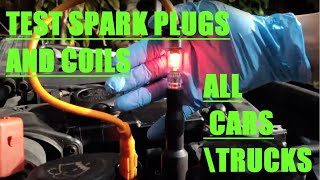


The information in this article is provided for general reference and educational purposes only. Vehicle specifications, procedures, and part compatibility can vary by production date, trim level, and region. Always consult your vehicle's factory service manual and verify part numbers before purchasing or performing repairs. Safety-critical components such as airbags, seat belts, and braking systems should be installed by a qualified professional.
- 🎬 Helpful Videos
- What Does P2317 Mean?
- Can I Drive With P2317?
- Common Causes
- Symptoms
- Diagnostic Flowchart
- Common Fixes & Costs
- Used vs. New Parts: Buying Guide
- What Happens If You Wait — Timeline
- Cost of Not Fixing It
- Diagnosis Steps
- When This Code Triggers (Freeze-Frame Conditions)
- Related Codes
- Climate & Environmental Factors
- How to Talk to a Mechanic About This Code
- Where to Take It: Dealer vs Independent vs Chain
- When to Walk Away From the Repair
- What Scan Tool You Need for This Code
- How to Clear the Code After You Fix It
- Will This Fail Emissions / State Inspection?
- Most Commonly Affected Vehicles
- Manufacturer-Specific Notes
- Real Owner Stories
- Dodge Dakota with P2317 after new spark plugs
- 2012 Jeep Wrangler JK with recurring P2317 and P0306
- 2005 Jeep Grand Cherokee with multiple coil and lean codes
- How to Prevent This Code From Triggering
- Frequently Asked Questions
- What does the 'F' in P2317 mean?
- I replaced the coil and spark plug, but P2317 came back. What's next?
- What is 'Insufficient Ionization'?
- Why did P2317 appear right after I changed my spark plugs?
- Is it better to replace just one ignition coil or all of them?
- Can a bad fuel injector cause a P2317 code?
- How much does it cost to diagnose a P2317 code?
- Key Takeaways
- 🎟️ Get 5% Off