

OBD-II Code P2315: Ignition Coil 'F' Primary Control Circuit Low
The Ultimate Guide to Diagnosing and Fixing Trouble Code P2315
- P2315 indicates low voltage in the control circuit for ignition coil 'F' (cylinder #6), which directly causes an engine misfire.
- Swap the ignition coil from cylinder #6 to cylinder #5; if the trouble code changes to P2312, the coil is faulty and must be replaced.
- Always inspect the spark plug well for oil pooling, as a leaking valve cover gasket ($200-$400 repair) is a frequent hidden cause of coil failure.
- Never drive more than a few miles with a flashing Check Engine Light, as the resulting misfire destroys your catalytic converter and costs upwards of $1,500.
What Does P2315 Mean?
P2315 means the Powertrain Control Module (PCM) detects low voltage in the control circuit for ignition coil 'F' (typically cylinder #6). This starves the spark plug of the energy needed to ignite fuel, causing an engine misfire.
Technical definition: Ignition Coil 'F' Primary Control Circuit Low. The PCM grounds the primary (low-voltage) circuit of the ignition coil to build a magnetic field, then removes the ground to collapse the field and fire the spark plug. P2315 sets when the PCM detects voltage on this primary circuit is below the manufacturer's specified threshold, indicating a short to ground, high resistance, or a faulty PCM driver.
Can I Drive With P2315?
yes_but_extremely_limited. You can drive a short distance to a safe location, but it risks severe damage. Driving with a misfire dumps unburned fuel into the exhaust, which destroys the catalytic converter ($800-$2,500 repair). If the Check Engine Light flashes, pull over immediately and tow the vehicle.
Common Causes
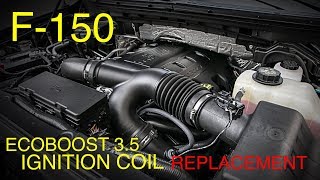
- Faulty Ignition Coil 'F' (Very Common) — The ignition coil fails internally due to heat, vibration, and age. This is the most frequent cause of P2315. 🎬 Watch: Step-by-step guide to replacing a faulty ignition coil.
- Worn or Fouled Spark Plug (Common) — A bad spark plug increases the electrical load on the ignition coil, causing it to overheat and fail prematurely.
- Damaged Wiring or Connectors (Common) — The wiring harness leading to the ignition coil can fray, short to ground, or break. Corroded or loose connector pins cause severe voltage drops.
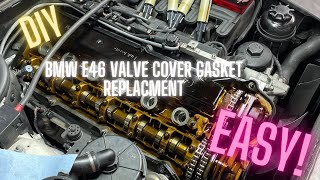
- Oil Leak Fouling Coil and Plug (Less Common) — A leaking valve cover gasket allows engine oil to seep into the spark plug well. This saturates the ignition coil boot, causing shorts and eventual coil failure.
- Failing Powertrain Control Module (PCM) (Rare) — The internal transistor within the PCM that controls the ignition coil fails. This requires professional diagnosis after ruling out the coil and wiring.
- Faulty Relay or Blown Fuse (Rare) — A malfunctioning main ignition relay or blown fuse lowers the voltage supplied to all ignition coils, triggering a low voltage code.
Symptoms
- Rough Idle and Engine Shaking — The engine vibrates noticeably when stopped, feeling like it will stall.
- Sluggish Acceleration — The vehicle hesitates, stumbles, or lacks power when pressing the gas pedal due to the dead cylinder.
- Reduced Fuel Economy — The dead cylinder pumps unburned fuel straight into the exhaust, wasting gas.
- Engine Stalling — The engine dies at low speeds or when coming to a stop due to unstable combustion.
- Check Engine Light is On or Flashing (also visible on scanner) — A solid light indicates a fault; a flashing light indicates a severe, catalyst-damaging misfire.
Diagnostic Flowchart
Tap your situation to follow the diagnostic path that matches what you're seeing on this code.
Common Fixes & Costs
- Replace Ignition Coil and Spark Plug — Parts: $60-$150, Labor: $100-$180, ~1.0 hr book time (DIY)
- Replace Ignition Coil 'F' Only — Parts: $40-$110, Labor: $80-$150, ~0.8 hr book time (DIY)
- Repair Wiring or Connector — Parts: $10-$40, Labor: $150-$250, ~1.5 hr book time (Intermediate)
- Replace Valve Cover Gasket and Tube Seals — Parts: $40-$100, Labor: $200-$400, ~2.5 hr book time (Intermediate)
- Replace Powertrain Control Module (PCM) — Parts: $500-$900, Labor: $150-$300, ~1.5 hr book time (Professional)
- Diagnostic Fee — Parts: $0, Labor: $100-$180, ~1.0 hr book time (Professional)
Used vs. New Parts: Buying Guide
When a used part is worth it: Buying a used ignition coil is not recommended. As a wear-and-tear electronic component, its remaining lifespan is unknown. The low cost of a new aftermarket coil makes the labor risk of installing a used part not worthwhile.
Donor-vehicle mileage cap: roughly under 40000 miles for the part to have meaningful remaining life.
Donor quality checklist:
- Source from a low-mileage vehicle (under 40k miles) scrapped for reasons unrelated to engine performance.
- Ensure the part number is an exact OEM match.
- Avoid parts with physical damage, melting, or oil contamination.
Decision logic:
- If The cost of a new OEM or quality aftermarket coil is less than $100. → Always buy new. The reliability and warranty are worth the price difference.
- If The vehicle is very old, has low value, and a used OEM coil is under $20. → A used coil is a temporary budget option, but accept the risk of premature failure.
Warranty tradeoff: Used salvage parts offer a 30-90 day warranty. New aftermarket coils offer 1-year to limited lifetime warranties. New OEM parts carry a 1-2 year warranty.
Worst-case if a used part fails: 100-250. If the used coil fails, you pay for repeat diagnostic and replacement labor, plus another part.
What Happens If You Wait — Timeline
- 0-2 weeks: Check Engine Light is on. Slight rough idle on cold starts. Intermittent misfire. (MPG impact: 0-5%% · Added cost: $0-20 in wasted fuel)
- 2 weeks - 3 months: Consistent misfire. Constant rough idle and hesitation. Check Engine Light flashes during heavy acceleration. Catalytic converter begins overheating. (MPG impact: 10-20%% · Added cost: $50-150 in wasted fuel.)
- 3-6 months: Severe engine degradation. Constant shaking. Catalytic converter substrate melts and coats with soot. (MPG impact: 20-30%% · Added cost: $800-1,500 for catalytic converter replacement.)
- 6+ months: Catastrophic failure. Clogged catalytic converter creates extreme exhaust backpressure, causing burnt exhaust valves or piston damage. Vehicle stalls frequently. (MPG impact: 30-50%+% · Added cost: $1,500-4,000+ for catalytic converter and engine repairs.)
Cost of Not Fixing It
- 0-1 month: Noticeable drop in fuel economy (5-15%), rough idle, and hesitation. Guaranteed emissions test failure. (Added cost: 25-75)
- 1-6 months: Constant misfire overheats the catalytic converter, causing irreversible internal damage. May damage the oxygen sensor. (Added cost: 1200-2800)
- 6+ months: Complete catalytic converter failure, potential engine damage from excessive backpressure, and damage to other ignition coils. (Added cost: 1500-4000+)
Diagnosis Steps
- Read the Codes and Freeze Frame Data
Use an OBD-II scanner to confirm P2315. Look for misfire codes like P0306 (Cylinder 6 Misfire), which pairs with P2315. Analyze freeze frame data to see engine conditions when the code set.
Tools: OBD-II Scanner (Beginner) - Swap the Ignition Coil
Swap coil 'F' (cylinder 6) with coil 'E' (cylinder 5). Clear the codes and drive. If the code changes to P2312 (coil 'E'), the ignition coil is bad. If P2315 returns, the problem is in the wiring or PCM.
Tools: Basic socket set (Beginner) - Visually Inspect the Area
Inspect ignition coil 'F' for cracks or burn marks. Check the wiring and connector for fraying, melting, or pushed-out pins. Look for oil pooling in the spark plug well.
Tools: Flashlight (Beginner) - Check the Spark Plug
Remove the spark plug from cylinder 'F'. Check for severe wear, carbon fouling, or damaged ceramic. A bad plug destroys coils; replace it if its age is unknown.
Tools: Spark plug socket and ratchet (Intermediate) - Test the Connector for Power and Ground
With the key on and engine off, use a multimeter to probe the coil connector. One pin must have battery voltage (12.0V - 12.6V). Check the ground pin for continuity to the chassis (less than 0.1 Ω).
Tools: Multimeter (Intermediate) - Test the Control Circuit for a Short to Ground
Disconnect the coil and PCM connectors. Test for continuity between the control wire terminal at the coil and chassis ground. Low resistance means a short in the wiring harness.
Tools: Multimeter, Vehicle Wiring Diagram (Advanced) - [ADVANCED] Test Ignition Coil Primary Resistance
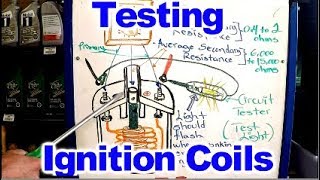
Measure resistance between the positive and negative terminals on the coil. Typical primary resistance is 0.4 to 2.0 Ohms. Infinity (OL) or zero indicates internal failure.
Tools: Multimeter, Vehicle Service Manual (Advanced) - [ADVANCED] Test the Control Circuit Signal
Backprobe the control signal wire at the coil connector while cranking the engine. Set the multimeter to AC Voltage. A fluctuating voltage indicates the PCM is sending a signal. 0V or a constant 12V indicates a PCM or wire fault.
Tools: Multimeter with backprobe pins (Advanced) - [PROFESSIONAL] Analyze the Primary Waveform
Connect an oscilloscope to the control circuit wire. Start the engine and observe the square waveform. A consistent voltage reading below ~9V on the high side confirms the 'Circuit Low' condition. Glitches point to a failing PCM driver.
Tools: Automotive Oscilloscope (Professional)
When This Code Triggers (Freeze-Frame Conditions)
- Engine Coolant Temp: 180-210°F (Fully warmed up during normal operation.)
- Engine RPM: 1500-3000 RPM (Under light to moderate acceleration or steady cruise.)
- Engine Load: 30-70% (The engine is working, but not at full throttle.)
- Vehicle Speed: 25-60 mph (City or highway driving, often when demand on the ignition system increases.)
Related Codes
- P0306 — Cylinder 6 misfire code. It pairs with P2315 because low voltage to coil 'F' prevents a proper spark. Diagnosing P2315 resolves P0306.
- P0356 — Indicates a general malfunction in the ignition coil 'F' circuit (open or short). P2315 is more specific, indicating the voltage is specifically low.
- P2312 — Identical 'low circuit' fault for ignition coil 'E' (cylinder 5). Multiple codes point to a systemic issue like a failing PCM or damaged shared wiring harness.
- P2600 — On Mercedes-Benz, this code ('Circuit 87 Voltage Low') appearing with P2315 indicates a broader electrical or CAN bus issue, not a bad ignition coil.
Climate & Environmental Factors
- High Heat: Excessive under-hood temperature accelerates the breakdown of the coil's internal windings and epoxy insulation, causing internal shorts.
- Cold Weather: Cold increases electrical resistance and exposes weak ignition coils. A borderline coil fails to produce a strong spark on a cold start, causing rough idle and misfires.
- High Humidity: Moisture penetrates aging connectors, causing corrosion on electrical terminals. This increases resistance and triggers a low voltage code.
How to Talk to a Mechanic About This Code
Say this: "I have code P2315, indicating an 'Ignition Coil F Primary Control Circuit Low' issue causing a misfire. Can you start by swapping the coil with an adjacent cylinder to confirm the fault follows the coil before replacing parts?"
This proves you understand the most efficient diagnostic step. It requests a logical test to prevent the shop from immediately replacing a potentially good coil.
Avoid saying:
- 'My check engine light is on, can you look at it?'
- 'The car is shaking, just fix whatever's wrong.'
- 'My buddy said it's probably a bad coil, so just replace it.'
Questions to ask before authorizing the repair:
- Did the trouble code move to the new cylinder after you swapped the ignition coil?
- If the code did not move, did you test for 12V power and good ground at the coil connector?
- If the coil and wiring are good, what is the next step to test the PCM driver circuit?
- Will you provide a written estimate with a clear breakdown of parts and labor costs?
- What is the warranty on the parts and the labor for this repair?
Where to Take It: Dealer vs Independent vs Chain
- Dealer:
Recommended only for complex wiring/PCM issues or warranty work.
Best for: Vehicles under powertrain warranty., Complex electrical issues where the fault is suspected to be the PCM., Known manufacturer-specific quirks (like Mercedes-Benz CAN bus issues).
Downsides: Highest labor rates, often 1.5-2x more than an independent shop., May recommend replacing all coils and plugs as a package, increasing cost. (Typical cost: +50% vs. baseline) - Independent Shop:
Best fit for most P2315 scenarios. Offers the best balance of cost and quality for routine repairs.
Best for: Out-of-warranty vehicles where cost is a major factor., Straightforward diagnosis and replacement of a bad ignition coil or spark plug., Building a relationship with a trusted local mechanic.
Downsides: Diagnostic capabilities vary; check for ASE certifications., May lack the latest manufacturer-specific software for PCM flashing. (Typical cost: +0% vs. baseline) - Chain Shop:
Use with caution. Acceptable if you diagnosed the bad coil yourself, but avoid for initial diagnosis due to upsell risk.
Best for: Simple, quick replacement of an already-diagnosed bad ignition coil.
Downsides: Technician skill varies dramatically., High pressure to upsell services like fuel system cleanings., Lacks advanced diagnostic tools for wiring or PCM faults. (Typical cost: -10% vs. baseline)
When to Walk Away From the Repair
If the total estimated repair cost exceeds 40-50% of your car's private-party value, seriously consider selling or trading in the vehicle instead of repairing it.
- Car worth $12000, fix is $350: Fix it. A simple coil and plug replacement is a minor cost relative to the car's value.
- Car worth $4000, fix is $1200: Borderline. The repair (likely a PCM replacement) is 30% of the car's value. Get a second opinion.
- Car worth $2500, fix is $1500: Walk away. A repair cost that is 60% of the vehicle's value is a poor financial decision.
What Scan Tool You Need for This Code
Minimum: A basic OBD-II code reader that reads/clears codes and displays Freeze Frame data.
A $20 reader performs the 'swap test' but cannot show live data (like circuit voltage), which is crucial for diagnosing wiring or PCM problems.
Budget: BlueDriver Pro (~$100) — Connects via Bluetooth. Reads/clears codes, shows freeze frame data, and graphs live data to monitor ignition coil circuit voltage stability.
Mid-range: Foxwell NT510 Elite / Autel MaxiCOM MK808S (~$180-380) — Handheld units offering full-system diagnostics and bidirectional controls. Faster than phone apps, allowing component testing and service resets.
Professional: Autel MaxiSys MS906 Pro / Launch X431 Series (~$600-1200+) — Provides full bidirectional control, advanced ECU coding, and detailed topology mapping. Necessary for definitively diagnosing a faulty PCM driver.
How to Clear the Code After You Fix It
- Use an OBD-II scan tool to clear the diagnostic trouble codes (DTCs).
- Perform a complete drive cycle to allow the vehicle's readiness monitors to run.
- Rescan the vehicle to ensure P2315 and related codes do not return.
Drive cycle (~20 minutes): From a cold start (sit for 8+ hours), idle for 2-3 minutes. Drive in stop-and-go traffic for 5-10 minutes. Drive at a steady highway speed (55-60 mph) for 5-10 minutes. Allow the vehicle to cool down.
Readiness monitors affected: Misfire Monitor, Catalyst Monitor, Oxygen (O2) Sensor Monitor
Before emissions retest: drive at least 50 miles to fully set monitors.
Watch out for:
- Disconnecting the battery clears the code but resets all readiness monitors, guaranteeing an emissions test failure until a full drive cycle is completed.
- The code returns immediately if the underlying mechanical or electrical fault is not repaired.
- EVAP system monitors require specific fuel levels (15-85%) and take several days of normal driving to set.
Will This Fail Emissions / State Inspection?
Yes — this code typically fails an OBD-II emissions inspection.
- California: An active P2315 code is an automatic smog check failure. After repair, a complete drive cycle must set all readiness monitors before a retest.
- New York: The NYS DMV inspection includes an OBD-II scan. Any active check engine light results in an immediate failure.
- Texas: In the 17 counties requiring emissions testing, an active P2315 code fails the OBD-II portion of the inspection.
Most Commonly Affected Vehicles
- Ford F-150 (2011-2016) — Common on 3.5L EcoBoost V6 engines where high heat contributes to premature coil failure. Replace the associated spark plug simultaneously.
- Mercedes-Benz C-Class (W203/W204), E-Class (W211) (2005-2014) — This code has a dual meaning. It indicates an ignition fault, or a CAN bus communication failure with the instrument cluster. If P2600 is present, suspect the CAN bus.
- Dodge / Ram Ram 1500, Durango, Charger (2009-2018) — Frequent on the 5.7L HEMI V8 engine. Diagnosis is straightforward and almost always points to a bad coil.
- Jeep Grand Cherokee (2011-2019) — Appears on 3.6L V6 and 5.7L V8 models, caused by a failed coil or wiring harness chafing.
- Ford Escape, Explorer (2013-2019) — Turbocharged 4-cylinder and V6 engines experience this due to wiring issues near the connectors or standard coil failure.
- Chevrolet / GMC Suburban, Tahoe, Silverado, Sierra (2007-2013) — Appears on V8 models, often related to a chafed wiring harness contacting hot engine components.
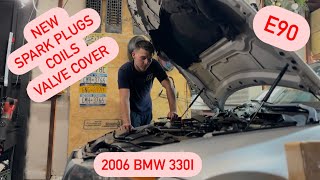
- BMW 3-Series, 5-Series (E90, E60, F10) (2006-2017) — Often accompanied by a 'Drivetrain Malfunction' warning. Frequently caused by oil leaks from the valve cover gasket fouling the spark plugs and coils.
- Volkswagen Jetta, Golf, Passat (2008-2016) — Points specifically to a low voltage condition in the control circuit for ignition coil 6. The cause is the coil pack or connector wiring.
Manufacturer-Specific Notes
- Mercedes-Benz: P2315 can mean 'Fault in CAN communication with control unit A1 (Instrument cluster)'. If the car has shifting issues but the engine runs smoothly, the problem is the CAN bus network, not the ignition system.
- Ford: On EcoBoost engines, high heat and pressure lead to premature coil failure. Always replace the spark plug with the coil, as a worn plug accelerates coil failure.
- Chrysler/Dodge/Jeep: On the 5.7L HEMI V8, this is a very common wear item. Swap the coil; if the code follows, replace the coil. No widespread warranty extensions exist.
- BMW: A leaking valve cover gasket is a primary catalyst for P2315. Oil pools in the spark plug wells, saturating the coil boot. You must replace the gasket to prevent repeat coil failures.
Real Owner Stories
2015 Dodge Charger 3.6L at 72K miles
Check engine light flashed at a red light with severe shaking. Scanner showed P0305 (Cylinder 5 Misfire), which presents identically to P2315 for cylinder 6.
What they tried:
- Owner feared a known Pentastar cylinder head failure.
- Swapped the ignition coil from cylinder 5 to cylinder 1.
Outcome: The misfire code followed the coil to cylinder 1, confirming the coil was the sole issue. This free diagnostic step prevented a costly misdiagnosis. The fix was a new $57 ignition coil.
Lesson: Don't assume the worst-case scenario. Swapping coils quickly isolates the problem and saves money.
2011 BMW 328i (E90) at 110K miles
Car threw P2315 and P0306 codes with a rough idle. Owner suspected a bad ignition coil.
What they tried:
- Removed the engine cover and ignition coil from cylinder 6.
- Discovered the spark plug well was filled with engine oil.
Outcome: The P2315 code was a symptom of an oil-saturated connection caused by a leaking valve cover gasket. The fix required replacing the gasket, the oil-fouled coil, and the spark plug.
Lesson: On vehicles prone to oil leaks, inspect the spark plug well. Replacing the coil without fixing the leak guarantees a repeat failure.
2015 Ram 1500 5.7L HEMI at 107,000 km
After driving on a bumpy field, the truck started, ran for two seconds, and shut off.
What they tried:
- Checked for disconnected wiring.
- Towed to a dealer who spent 8 hours diagnosing without success.
Outcome: A P2315 code appearing with a start-and-stall condition after a bumpy event suggests a wiring harness issue or major electrical fault triggered by vibration. The bumpy ride likely dislodged a connector or shorted a wire to ground.
Lesson: If the code appears immediately after a physical jolt, thoroughly inspect the wiring harness for chafing or loose connections before replacing parts.
How to Prevent This Code From Triggering
- Replace spark plugs at the manufacturer's recommended interval. (Every 60,000-100,000 miles) — Worn spark plugs force the ignition coil to generate higher voltage, causing the coil to overheat and fail prematurely.
- Address engine oil leaks promptly, especially from the valve cover gasket. (At first sign of a leak) — Oil leaking into spark plug tubes saturates the ignition coil boot, causing poor connections, arcing, and coil failure.
- Keep the engine bay and coil connectors clean and dry. (During routine checks) — Moisture causes corrosion on electrical terminals, increasing resistance and triggering a 'Circuit Low' code.
- Use dielectric grease on coil boots and electrical connectors. (When replacing coils or plugs) — Dielectric grease keeps moisture out, prevents corrosion, and ensures a solid electrical connection.
- Ensure the battery and charging system are healthy. (Annually) — Low system voltage (below 12.4V at rest) strains the ignition system, causing the PCM to overwork the coils.
Frequently Asked Questions
What does the 'F' in P2315 mean?
The 'F' designates the sixth cylinder in the engine's firing order, usually labeled as cylinder #6. The PCM uses letters sequentially (A=1, B=2, C=3, etc.) to identify individual ignition coils.
What is the most common misdiagnosis for P2315?
The most common mistake is replacing the ignition coil without testing it first. Swapping the suspect coil to another cylinder is a free, definitive test. If the code doesn't move with the coil, the problem is in the wiring or PCM.
What does 'primary control circuit' actually mean?
An ignition coil has a low-voltage 'primary' circuit and a high-voltage 'secondary' circuit. The PCM controls the primary circuit (usually 12V) to trigger the spark. P2315 means the electrical fault is on this low-voltage control side.
Can I just replace the one bad ignition coil?
Yes, replacing just the faulty coil fixes the immediate problem. However, mechanics often recommend replacing all coils and spark plugs simultaneously on high-mileage vehicles, as the others are nearing the end of their lifespan.
Is it safe to drive with a flashing Check Engine Light?
No. A flashing light indicates a severe misfire dumping raw fuel into the exhaust. This overheats and destroys the catalytic converter within minutes, resulting in a repair bill exceeding $1,500.
Why replace the spark plug with the coil?
A worn spark plug requires more voltage to create a spark, forcing the ignition coil to work harder. This extra strain causes the coil to overheat and fail prematurely. Replacing both ensures the new coil operates under ideal conditions.
What happens if I ignore code P2315?
Ignoring P2315 causes terrible gas mileage, failed emissions tests, and a consistently rough-running engine. Over time, the constant misfire destroys the catalytic converter, turning a $100 repair into a $2,000+ nightmare.
Key Takeaways
- P2315 indicates low voltage in the control circuit for ignition coil 'F' (cylinder #6), which directly causes an engine misfire.
- Swap the ignition coil from cylinder #6 to cylinder #5; if the trouble code changes to P2312, the coil is faulty and must be replaced.
- Always inspect the spark plug well for oil pooling, as a leaking valve cover gasket ($200-$400 repair) is a frequent hidden cause of coil failure.
- Never drive more than a few miles with a flashing Check Engine Light, as the resulting misfire destroys your catalytic converter and costs upwards of $1,500.
Helpful Videos

The information in this article is provided for general reference and educational purposes only. Vehicle specifications, procedures, and part compatibility can vary by production date, trim level, and region. Always consult your vehicle's factory service manual and verify part numbers before purchasing or performing repairs. Safety-critical components such as airbags, seat belts, and braking systems should be installed by a qualified professional.
- 🎬 Helpful Videos
- What Does P2315 Mean?
- Can I Drive With P2315?
- Common Causes
- Symptoms
- Diagnostic Flowchart
- Common Fixes & Costs
- Used vs. New Parts: Buying Guide
- What Happens If You Wait — Timeline
- Cost of Not Fixing It
- Diagnosis Steps
- When This Code Triggers (Freeze-Frame Conditions)
- Related Codes
- Climate & Environmental Factors
- How to Talk to a Mechanic About This Code
- Where to Take It: Dealer vs Independent vs Chain
- When to Walk Away From the Repair
- What Scan Tool You Need for This Code
- How to Clear the Code After You Fix It
- Will This Fail Emissions / State Inspection?
- Most Commonly Affected Vehicles
- Manufacturer-Specific Notes
- Real Owner Stories
- 2015 Dodge Charger 3.6L at 72K miles
- 2011 BMW 328i (E90) at 110K miles
- 2015 Ram 1500 5.7L HEMI at 107,000 km
- How to Prevent This Code From Triggering
- Frequently Asked Questions
- What does the 'F' in P2315 mean?
- What is the most common misdiagnosis for P2315?
- What does 'primary control circuit' actually mean?
- Can I just replace the one bad ignition coil?
- Is it safe to drive with a flashing Check Engine Light?
- Why replace the spark plug with the coil?
- What happens if I ignore code P2315?
- Key Takeaways
- 🎟️ Get 5% Off