

P2313 on 2021-2024 Ford Bronco: Ignition Fault and Critical PCM Software Issue
P2313 indicates a real ignition system misfire, but on these Broncos, a known software bug in the Powertrain Control Module (PCM) often reports the wrong cylinder. The most likely cause is a failed ignition coil, but a dealer PCM update is required to fix the diagnostic mapping and prevent future misdiagnosis. A power balance test is essential to find the true failing cylinder before replacing parts.
- P2313 on a 2021-2024 Bronco means there is a real misfire, but the location reported by the code is likely wrong due to a known software bug.
- DO NOT replace an ignition coil based on the code alone. You must first identify the actual failing cylinder using a power balance test.
- The most common cause of the misfire is a faulty ignition coil or spark plug.
- After replacing the failed hardware, the vehicle's computer (PCM) should be updated by a dealer to fix the diagnostic bug for the future.
- This issue is confirmed by Ford for the 2.3L and 3.0L EcoBoost engines in TSB 24-2406.
What's Unique About the 2021-2024 Ford BRONCO
The 2021-2024 Ford Bronco platform has a specific, documented issue outlined in Ford Technical Service Bulletins (TSBs) TSB 24-2406 and its predecessor, SSM 52342. These bulletins state that due to a software error, the PCM has 'incorrect cylinder to DTC mapping'. This means that when a component like an ignition coil fails, the resulting trouble code (like P2313) may point to a perfectly healthy cylinder, leading to incorrect repairs. The official fix involves both repairing the underlying ignition fault (coil, plug, etc.) and reprogramming the PCM with updated software to correct the mapping logic for future diagnostics.
Diagnostic Flowchart
Tap your situation to follow the diagnostic path that matches what you're seeing on this vehicle.
Symptoms You May Notice
- Check Engine Light is on or flashing
- Rough idle or engine shaking/juddering
- Engine hesitation or stumbling during acceleration
- Noticeable loss of power
- Reduced fuel economy
- Engine may run rough for a short period and then seem to clear up
- Replacing the ignition coil on the cylinder suggested by the code without first performing a power balance test. Due to the PCM mapping issue, you may replace a good part and not fix the problem.
- Clearing the code and assuming it was a temporary glitch without further investigation. While sometimes true, the underlying issue often remains and will cause the code to return.
Most Likely Causes
- Incorrect Cylinder-to-DTC Mapping in PCM 🔴 High Probability A documented software bug confirmed by Ford in TSB 24-2406 and SSM 52342 affects 2.3L and 3.0L EcoBoost engines in this date range.
How to confirm: A Ford dealer can check the vehicle's software version against the TSB. This doesn't cause the misfire but is critical for accurate diagnosis. The presence of P2313 alongside a misfire symptom strongly suggests this issue is in play.
Typical fix: Reprogram the Powertrain Control Module (PCM) to the latest software level using the Ford Diagnosis and Repair System (FDRS). This is typically done at a dealership after the physical fault is repaired.
Est. part cost: $0 - Faulty Ignition Coil 🔴 High Probability Coil-on-plug systems are common failure points across many vehicles. 🎬 Watch: Troubleshooting tips for EcoBoost misfire codes and ignition issues. The underlying misfire is very often a bad coil, even if the code points to the wrong one. Heat and vibration contribute to their failure over time.
How to confirm: Perform a power balance test to identify the actual misfiring cylinder. A DIY method is to swap the suspected coil with one from a known good cylinder and see if the misfire moves. Since the code is unreliable, a better method is to disconnect each coil one-by-one with the engine idling; the cylinder that causes no change in RPM is the faulty one.
Typical fix: Replace the ignition coil on the correctly identified cylinder.
Est. part cost: $40-$85 - Worn or Fouled Spark Plug 🟡 Medium Probability
How to confirm: After identifying the misfiring cylinder, remove the spark plug and inspect it for wear, carbon fouling, oil, or damage to the electrode or ceramic. In a rare but severe case on a Bronco6G forum, a user reported the ground electrode broke off, causing catastrophic engine damage.
Typical fix: Replace the spark plug. It is best practice to replace all spark plugs as a set if they are near the end of their service life.
Est. part cost: $10-$25 per plug - Damaged Ignition Coil Connector or Wiring ⚪ Low Probability
How to confirm: Visually inspect the wiring harness and connector for the failing ignition coil. Look for signs of melting, corrosion, chafing, or broken wires. A user on a Reddit forum mentioned a loose pin in a fuel injector connector caused their misfire, highlighting the importance of checking connections.
Typical fix: Repair the damaged section of the wiring harness or replace the pigtail connector.
Est. part cost: $15-$50 for a connector
Rare But Worth Checking
- Failed PCM: While rare, it's possible for the ignition driver circuit within the PCM to fail. This should only be considered after all other possibilities (coil, plug, wiring) have been definitively ruled out.
- Internal Engine Damage: A user on the Bronco6G forum experienced a misfire code after a spark plug's ground electrode broke off, leading to cylinder, piston, and head damage requiring a full engine replacement. This is an extremely rare but documented failure.
Diagnosis Steps
- Scan for all DTCs. Note P2313 and any other accompanying codes like P030x or P035x.
- Crucial Step: Acknowledge TSB 24-2406/SSM 52342. Understand that the cylinder indicated by the code may be wrong.
- Professional Method: Use a high-level scan tool like the Ford FDRS or a capable bidirectional scanner (Snap-on, Autel, etc.) to perform a 'Power Balance Test'. This test graphically shows the power contribution of each cylinder, immediately revealing the weak one by monitoring RPM drop as each cylinder's fuel injector is disabled.
- DIY Method (Power Balance Test): Start the engine and let it idle. Carefully disconnect the electrical connector to one ignition coil at a time for only 1-2 seconds. Listen for a drop in engine RPM. A good cylinder will cause a noticeable drop. The cylinder that causes little or no drop in RPM is the one that is misfiring. Reconnect the connector immediately after testing each cylinder.
- Once the faulty cylinder is identified, turn off the engine.
- Swap the ignition coil from the faulty cylinder with a coil from a known good cylinder.
- Clear the codes, restart the engine, and let it run to see if the misfire 'moves' with the coil. Rescan for codes. If the misfire code now points to the cylinder you moved the coil to, the ignition coil is bad.
- If the misfire stays on the original cylinder, the issue is likely the spark plug or wiring for that cylinder. Remove and inspect the spark plug first.
- Final Step: After repairing the hardware fault (e.g., replacing the bad coil), contact a Ford dealer to have the PCM reprogrammed to the latest software level as per TSB 24-2406. This corrects the mapping issue and prevents future misdiagnosis.
Parts You'll Likely Need
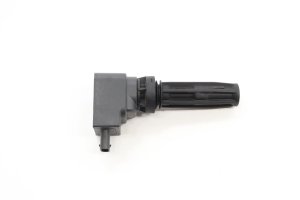
- Ignition Coil (for 2.3L I4)
(OEM #JX6Z-12029-B)— This is the most common hardware failure causing an ignition-related misfire on this engine. This part number supersedes JX6Z-12029-A.
Trusted brands: Motorcraft, NGK, Standard Motor Products
OEM price range: $75-$90
Aftermarket price range: $40-$65 - Ignition Coil (for 3.0L V6)
(OEM #PB5Z-12029-A)— The most frequent hardware failure for a misfire on the 3.0L EcoBoost engine.
Trusted brands: Motorcraft, Bosch
OEM price range: $80-$100
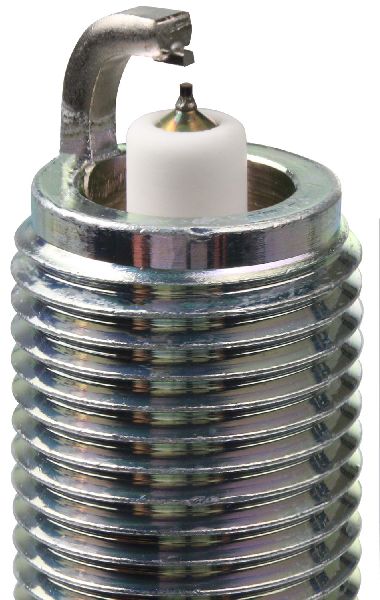
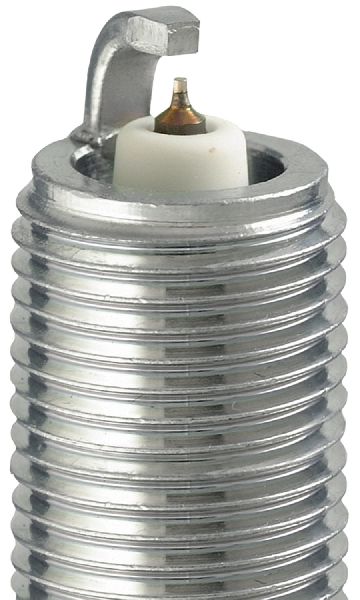
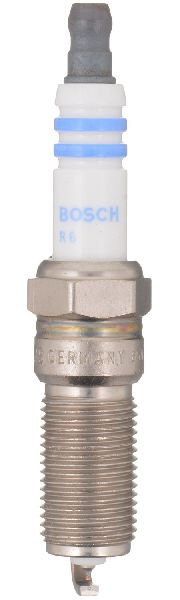
Aftermarket price range: $45-$70 - Spark Plug (for 2.3L I4)
(OEM #Motorcraft SP-594 (supersedes SP-578))— A worn or fouled spark plug is the second most likely cause of a single-cylinder misfire. It's recommended to check the gap before installation (0.027 - 0.031 in).
Trusted brands: Motorcraft, NGK
OEM price range: $15-$25
Aftermarket price range: $10-$20
Related Codes That Often Appear With This One
- P030X — A P030X code (e.g., P0301, P0302) indicates a misfire on a specific cylinder. This will often accompany a P2313 code, but due to the mapping issue, the cylinder number in the P030X code may also be incorrect.
- P035X — These codes (e.g., P0352, P0353) indicate a fault in the primary circuit of an ignition coil. They are listed in the same TSB as P2313 and are subject to the same incorrect cylinder mapping issue.
Technical Service Bulletins (TSBs) & Recalls
- TSB 24-2406 / SSM 52342: '2.3L/3.0L - Illuminated MIL With An Ignition System DTC - DTC Sets For Incorrect Cylinder'. This bulletin is the primary source confirming the PCM software issue and advises technicians to perform a power balance test to find the true faulty cylinder and then reprogram the PCM. TSB 24-2406 supersedes the earlier SSM 52342.
Platform-Specific Known Issues
- A software bug in the Powertrain Control Module (PCM) causes incorrect cylinder-to-DTC mapping for ignition system faults. This is documented in Ford TSB 24-2406 and SSM 52342. The presence of code P2313 confirms a real ignition fault, but a power balance test is required to identify the actual failed cylinder before replacing parts.
- Owners on forums like Bronco6G and Reddit have shared experiences of misfires, with some confirming that the dealer had to perform a software update to resolve diagnostic issues.
Mechanic-Grade Diagnostic Values
- Ignition Coil Primary Winding Resistance — expected: 0.4 to 2.0 ohms. Failure: A reading outside this range indicates a faulty coil.
- Ignition Coil Secondary Winding Resistance — expected: 6,000 to 10,000 ohms. Failure: A reading outside this range suggests the coil's secondary winding has failed.
- Ignition Coil Power Supply Voltage (Key On, Engine Off) — expected: Battery Voltage (approx. 12V). Failure: No voltage indicates a problem with the power supply wire or fuse, not the coil itself.
- Ignition Coil Control Wire (KOEO) — expected: Should show no power and no ground.. Failure: Constant power or ground on the control wire with the key on (engine off) points to a short in the wiring or a failed PCM driver.
- Continuity between Coil Connector and PCM Connector — expected: Less than 2.0 ohms. Failure: Higher resistance indicates a wiring problem (corrosion, break) between the PCM and the ignition coil.
Hidden / Shadow Codes Worth Checking
- Mode $06, Test ID $53 (pre-CAN bus) or $A2-$AF (CAN bus): This is not a DTC, but a monitor within the PCM that tracks misfire counts per cylinder, even for misfires not severe enough to set a P030x code. For CAN bus vehicles, Test IDs $A2 through $AF typically correspond to cylinders 1 through 8. For example, $A5 would be cylinder 4. This data can reveal the true misfiring cylinder despite the incorrect P2313 code. (see via A capable scan tool with Mode $06 functionality is required. Software like FORScan is well-suited for this on Ford vehicles.)
Scan Tool Commands That Help
- Ford IDS/FDRS, Snap-on, Autel: Power Balance Test — This is the most critical diagnostic step for this specific issue. The test disables one fuel injector at a time and graphs the resulting RPM drop for each cylinder. The cylinder that shows little or no RPM drop is the one that is not contributing power, thus identifying the true source of the misfire regardless of what the DTC indicates.
- Generic OBD-II Scanner / PCM Reset: Clear Fault Codes / Battery Disconnect — After replacing a hardware component like an ignition coil, the fault codes must be cleared. There is no special 'relearn' procedure required for the ignition coil itself; the PCM will adapt to the new component during subsequent drive cycles. A simple code clear or disconnecting the battery for 15 minutes is sufficient.
Wiring & Ground Locations
- PCM Connector C1551E (example, may vary) — On the Powertrain Control Module (PCM), which is typically located in the engine bay.. This connector contains the pins for the ignition coil control circuits. For a P2313 on a 3.0L V6 (Coil 'E'/Cylinder 5), the control wire would be at a specific pin on this connector (e.g., Pin 58 on some Ford V8s). Testing for a ground pulse at this pin can determine if the PCM driver is functioning correctly. A lack of pulse points to a faulty PCM.
- Main Engine Ground — A heavy gauge cable from the negative battery terminal to the engine block, often near the starter motor.. A poor main engine ground can cause a host of electrical issues, including erratic behavior from ignition components. While not a direct cause of a single-coil code, ensuring all grounds are clean and tight is a fundamental step in any electrical diagnosis.
- Ignition Coil Connector — Directly on top of each ignition coil.. P2313 specifically relates to the primary control circuit. The fault is often located at the connector itself or the wiring leading to it. One pin will have battery voltage (Key On), and the other is the control wire from the PCM, which receives a ground pulse to fire the coil.
OEM Part Supersession History
PB5Z-12029-A→DG-588— Standard part number update and consolidation across multiple vehicle lines.
Helpful Videos

Used OEM Parts in Stock


New Aftermarket Parts Available


The information in this article is provided for general reference and educational purposes only. Vehicle specifications, procedures, and part compatibility can vary by production date, trim level, and region. Always consult your vehicle's factory service manual and verify part numbers before purchasing or performing repairs. Safety-critical components such as airbags, seat belts, and braking systems should be installed by a qualified professional.
- Ford BRONCO:
- 🎬 Helpful Videos
- 🛍️ Shop This Part
- What's Unique About the 2021-2024 Ford BRONCO
- Diagnostic Flowchart
- Symptoms You May Notice
- Most Likely Causes
- Rare But Worth Checking
- Diagnosis Steps
- Parts You'll Likely Need
- Related Codes That Often Appear With This One
- Technical Service Bulletins (TSBs) & Recalls
- Platform-Specific Known Issues
- Mechanic-Grade Diagnostic Values
- Hidden / Shadow Codes Worth Checking
- Scan Tool Commands That Help
- Wiring & Ground Locations
- OEM Part Supersession History
- 🎟️ Get 5% Off