

OBD-II Code P2313: Ignition Coil 'E' Primary Control Circuit High
The Ultimate Guide to Diagnosing and Fixing P2313
- P2313 indicates a high-voltage fault in the primary control circuit for ignition coil 'E', which corresponds to cylinder #5 on most engines.
- Swap the ignition coil from cylinder #5 to another cylinder; if the misfire code follows the coil, replace the faulty coil for $125 to $300.
- Never drive with an active P2313 code, as the resulting misfire dumps raw fuel into the exhaust and destroys the catalytic converter within 50 to 100 miles.
- Inspect the coil connector for water intrusion or frayed wires before buying parts, as damaged pigtails account for nearly 30% of primary circuit faults.
What Does P2313 Mean?
P2313 means your car's Powertrain Control Module (PCM) detects abnormally high voltage in the control circuit for ignition coil 'E'. The PCM uses this circuit to tell the ignition coil when to fire the spark plug by grounding the circuit to charge the coil, then releasing the ground to fire the spark. When the PCM attempts to ground the circuit but the voltage remains near battery voltage instead of dropping to near-zero, it triggers this code. This indicates an open circuit, a short to power, or a failed coil.
Technical definition: The official SAE/OBD-II definition is "Ignition Coil 'E' Primary Control Circuit High". This indicates the Powertrain Control Module (PCM) registered a voltage in the primary (low-voltage) control circuit of ignition coil 'E' that is higher than the expected value during the coil's charging phase, preventing the PCM from controlling the spark sequence.
Can I Drive With P2313?
Yes, But With Caution. You can drive short distances, but we strongly advise against it. The engine will run poorly, consume excessive fuel, and stall in traffic. Critically, a misfiring cylinder dumps raw fuel into the exhaust, destroying the catalytic converter in a matter of miles. This turns a $150 coil repair into a $1,500-$2,500 exhaust system replacement. It is not worth the financial risk.
Common Causes
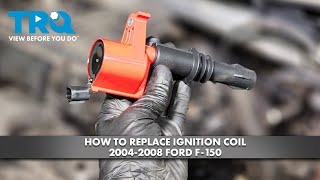
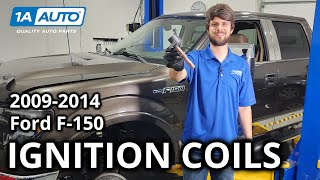
- Faulty or Cheap Aftermarket Ignition Coil 'E' (Very Common) — The ignition coil itself is the most frequent culprit. Internal components short out, develop an open in the primary winding, or fail from age and heat. Cheap aftermarket coils fail prematurely because they do not meet OEM resistance specifications. 🎬 Watch: A helpful walkthrough for replacing Ford F-150 ignition coils.
- Wiring or Connector Issues (Common) — The wiring harness leading to the ignition coil becomes damaged, frayed, or shorted to power. Connectors get loose, causing a bad connection and high circuit voltage.
- Water Intrusion at Coil Connector (Common) — Water seeping into the ignition coil connector causes corrosion and short circuits, leading to high voltage readings. A specific Technical Service Bulletin (TSB) for GM vehicles highlights this exact issue.
- Worn or Defective Spark Plug (Less Common) — A spark plug with an excessive gap creates high resistance in the secondary ignition circuit. This overloads the ignition coil, causing it to overheat and fail, manifesting as a primary circuit fault code.
- Poor Electrical Grounds (Rare) — A missing, loose, or corroded engine ground connection creates electrical potential differences. This instability disrupts the ignition circuit's reference ground, leading to unexpected high voltage readings.
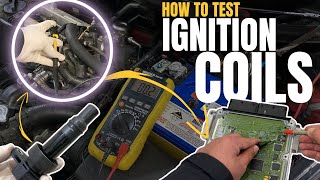
- Faulty Powertrain Control Module (PCM) (Rare) — The internal driver circuit (transistor) within the PCM that controls the ignition coil fails. This is a last-resort diagnosis; rule out the coil, wiring, and grounds first. 🎬 Watch: How to test ignition coils, wiring, and ECM circuits.
Symptoms
- Rough Engine Idle and Misfiring — The engine shakes, runs unevenly, and produces popping sounds from the exhaust, especially when stopped or at low speeds.
- Check Engine Light is On or Flashing — The Malfunction Indicator Lamp (MIL) illuminates. A flashing light indicates a severe, catalyst-damaging misfire.
- Reduced Engine Power and Hesitation — The car feels sluggish and struggles to accelerate, especially when going uphill or merging into traffic.
- Gasoline Smell from Exhaust — A strong smell of raw gasoline from the tailpipe occurs because unburnt fuel from the misfiring cylinder is pushed directly into the exhaust system.
- Decreased Fuel Economy — Because one cylinder isn't firing correctly, the engine burns fuel inefficiently, causing a noticeable drop in MPG.
Diagnostic Flowchart
Tap your situation to follow the diagnostic path that matches what you're seeing on this code.
Common Fixes & Costs
- Replace Ignition Coil 'E' — Parts: $50-$175, Labor: $75-$125, ~0.8 hr book time (DIY)
- Repair Wiring or Connector — Parts: $10-$60, Labor: $125-$250, ~1.5 hr book time (Intermediate)
- Replace Spark Plugs — Parts: $10-$40, Labor: $100-$300, ~1.2 hr book time (Intermediate)
- Clean or Repair Engine Ground Connection — Parts: $5-$20, Labor: $50-$100, ~0.7 hr book time (DIY)
- Replace Powertrain Control Module (PCM) — Parts: $600-$1200, Labor: $150-$350, ~1.5 hr book time (Professional)
DIY vs Professional
- Replace Ignition Coil 'E' — Beginner: Yes
Tools: Basic socket set or screwdriver. - Repair Wiring or Connector — Beginner: No
Tools: Multimeter, wire strippers, crimpers, heat shrink, soldering iron, pigtail connector. - Replace Spark Plugs — Beginner: Yes, if accessible.
Tools: Spark plug socket, ratchet with extensions, torque wrench. - Clean or Repair Engine Ground Connection — Beginner: Yes
Tools: Socket set, wire brush, sandpaper. - Replace Powertrain Control Module (PCM) — Beginner: No
Tools: Professional diagnostic scan tool for programming/flashing, socket set.
Used vs. New Parts: Buying Guide
When a used part is worth it: Buying used ignition coils is strongly discouraged. They are wear-and-tear items with a finite lifespan. The small cost savings are not worth the risk of premature failure and repeated labor. Only buy used in an emergency to get the vehicle running or if a new OEM part is completely unavailable.
Donor-vehicle mileage cap: roughly under 40000 miles for the part to have meaningful remaining life.
Donor quality checklist:
- Only consider used OEM coils, never used aftermarket parts.
- Source from a low-mileage vehicle scrapped for reasons unrelated to engine performance.
- Inspect for cracks, burn marks, or corrosion on the housing and electrical connector.
Decision logic:
- If The part is an ignition coil. → Buy a new OEM or high-quality aftermarket (e.g., NGK, Denso, Bosch) part. Reliability is worth the extra cost.
- If Budget is extremely tight and the vehicle is old. → A used OEM coil from a low-mileage donor is a better gamble than a new, ultra-cheap, no-name aftermarket coil.
- If The part has a known high failure rate with aftermarket brands. → Strongly favor new OEM to avoid repeat failures and diagnostic headaches.
Warranty tradeoff: Used salvage yard parts carry a 30-90 day warranty. New aftermarket coils offer 1-year to limited lifetime warranties. New OEM parts carry a 1-2 year manufacturer's warranty.
Worst-case if a used part fails: $150-$300 if a used or cheap coil fails shortly after installation, requiring repeat labor and a new part.
What Happens If You Wait — Timeline
- 0-50 miles: Check Engine Light (MIL) turns on. Intermittent hesitation or rough idle is felt under load. No physical damage yet. (MPG impact: 3-8%% · Added cost: $0-$10 in wasted fuel)
- 50-200 miles: Misfire becomes constant. Engine runs noticeably rough, shakes at idle, and has poor acceleration. The MIL flashes, indicating raw fuel is entering the exhaust. The catalytic converter begins to overheat. (MPG impact: 10-20%% · Added cost: $20-$50 in wasted fuel)
- 200-500 miles: Sustained high temperatures from burning raw fuel melt the internal ceramic substrate of the catalytic converter. A strong smell of sulfur or raw gasoline is present. The vehicle struggles to exceed 40 mph. (MPG impact: 20-35%% · Added cost: $1,200 - $2,800 (catalytic converter replacement is required))
- 500+ miles: The catalytic converter becomes fully clogged with melted substrate. Extreme exhaust backpressure causes severe engine performance loss, frequent stalling, and damages oxygen sensors and internal engine components. (MPG impact: 35-50%+% · Added cost: $2,000 - $4,000+ (includes catalytic converter, oxygen sensors, and internal engine repairs))
Cost of Not Fixing It
- Immediate (0-100 miles): Failed emissions test, 10-15% drop in fuel economy, and poor engine performance. The check engine light flashes, indicating a severe, catalyst-damaging misfire. (Added cost: Negligible, other than increased fuel consumption.)
- Short-Term (100-500 miles): Raw fuel from the misfiring cylinder overheats and melts the internal substrate of the catalytic converter, causing permanent damage. (Added cost: $1,200 - $2,800 for catalytic converter replacement.)
- Long-Term (500+ miles): A completely clogged catalytic converter creates excessive backpressure, leading to severe engine damage, fouled spark plugs, damaged oxygen sensors, and frequent stalling. (Added cost: $3,000+ for catalytic converter, O2 sensors, and internal engine repairs.)
Diagnosis Steps
- Read the Code and Freeze Frame Data
Use an OBD-II scanner to confirm P2313 is the active code. Check the freeze frame data to see the engine conditions when the code set. Note any other codes, especially misfire codes like P0305, which corroborates the issue.
Tools: OBD-II Scanner (Beginner) - Visually Inspect the Ignition System
Locate ignition coil 'E' (often cylinder #5). Inspect the coil, electrical connector, and wiring harness for cracks, burn marks, melted plastic, corrosion on the pins, or oil/water contamination. Tug gently on the wires to check for loose connections.
Tools: Flashlight (Beginner) - Swap the Ignition Coil
Swap the suspected bad coil ('E') with a known working coil from another cylinder (e.g., cylinder 'D'). Clear the codes and drive. If the code changes to the new cylinder (e.g., P2311 for coil 'D'), the ignition coil is faulty and requires replacement.
Tools: Socket set or screwdriver (Beginner) - Inspect and Swap the Spark Plug
If the code did not move with the coil, remove the spark plug from cylinder 'E'. Check for excessive wear, oil fouling, or a cracked insulator. Swap it with a plug from another cylinder, clear codes, and see if the misfire follows the plug.
Tools: Spark plug socket, ratchet, extension (Intermediate) - Check for Voltage at the Coil Connector
Turn the ignition key to 'On' (engine off). Set your multimeter to DC volts. Connect the black probe to a known good ground. Probe the power supply wire in the ignition coil's connector with the red probe. You should see battery voltage (12.0-12.6V). No voltage indicates a power supply wiring or fuse issue.
Tools: Multimeter (Intermediate) - Test Coil Control Signal with a Noid Light
Unplug the coil connector and connect a noid light to the control wire and power wire terminals. Crank the engine. A flashing noid light indicates the PCM driver is sending a pulse signal. If the light flashes but the code persists, the PCM driver is functioning correctly.
Tools: Noid Light Set (Intermediate) - Perform a Ground Circuit Voltage Drop Test
Set your multimeter to DC volts (mV scale). Connect the red probe to the negative battery terminal and the black probe to the engine block near the ignition coil. With the engine running, the reading should be under 50mV. A reading higher than 100mV indicates high resistance in the main engine ground strap.
Tools: Multimeter (Advanced) - Test Ignition Coil Primary Resistance
Set a multimeter to the lowest Ohms (Ω) setting. Disconnect the coil. Touch the probes to the positive and negative terminals of the coil's primary circuit connector. A healthy coil reads between 0.4 and 2.0 ohms. An 'OL' (Over Limit) reading indicates an open circuit inside the coil, confirming it is bad.
Tools: Multimeter (Advanced) - Analyze the Primary Ignition Waveform with an Oscilloscope
Connect a scope probe to the coil's primary control circuit. A good waveform shows voltage dropping to near zero as the PCM grounds the circuit, then a sharp 200-400V spike when released. For P2313, you will likely see a flat line near battery voltage, indicating the PCM driver isn't grounding the circuit or there's an open wire.
Tools: Automotive Oscilloscope, back-probe pins (Professional)
When This Code Triggers (Freeze-Frame Conditions)
- Engine Coolant Temp: 180-200°F (The fault often appears once the engine is fully warmed up and operating in closed-loop fuel control.)
- RPM: 1500-2500 (The code frequently sets under light to moderate acceleration or when cruising at a steady speed.)
- Engine Load: 30-60% (Moderate load conditions, typical of highway cruising or climbing a slight incline, trigger the fault.)
- Vehicle Speed: 35-55 mph (The fault registers during steady-state city or highway driving rather than during hard acceleration or idle.)
Related Codes
- P0305 — Means 'Cylinder 5 Misfire Detected.' It almost always appears with P2313. P2313 is the cause (coil control circuit problem) and P0305 is the effect (cylinder misfiring). Fix P2313 first.
- P0355 — Means 'Ignition Coil 'E' Primary/Secondary Circuit Malfunction.' P0355 is a general code for a fault anywhere in the coil's circuit. P2313 specifically identifies a high voltage condition on the primary side.
- P2314 — Means 'Ignition Coil 'E' Secondary Circuit'. Points to a problem on the high-voltage side (between coil and spark plug). A major coil failure triggers faults in both primary and secondary circuits.
- P0300 — Means 'Random Misfire Detected.' A significant electrical issue (bad ground or failing PCM) initially presents as P2313 but causes intermittent issues on other cylinders, triggering P0300.
Climate & Environmental Factors
- Cold Weather: Low temperatures increase the electrical resistance of wiring and internal coil components. This exposes an already weak coil, causing it to malfunction during cold starts when the electrical system is under the highest load.
- High Humidity & Salt Belt Regions: Salty moisture accelerates corrosion on wiring connectors, coil terminals, and ground points. This corrosion creates unwanted resistance and leads to short circuits, directly causing high voltage circuit codes like P2313.
How to Talk to a Mechanic About This Code
Say this: "I have a P2313 code, which is for the ignition coil 'E' primary circuit. I'd like to schedule a diagnostic to confirm if the issue is the coil, the wiring, or something else. Please start with a visual inspection and a coil swap test before recommending parts."
This signals you are an informed customer. It directs the mechanic to perform the most logical and cost-effective diagnostic steps first, preventing them from replacing parts without confirming the failure.
Avoid saying:
- My check engine light is on, can you just fix it?
- I think I need a new ignition coil, can you replace it?
- Just do whatever you think is necessary.
Questions to ask before authorizing the repair:
- Did the fault code move to another cylinder when you swapped the ignition coils?
- Did you inspect the wiring harness and connector for damage or corrosion?
- Can you show me the damaged part?
- What is the warranty on the parts and labor for this repair?
Where to Take It: Dealer vs Independent vs Chain
- Dealer:
Recommended if the vehicle is under warranty or if initial diagnosis at an independent shop fails to solve the problem.
Best for: Vehicles still under a powertrain or emissions warranty., Complex, manufacturer-specific issues (like a PCM failure or a known TSB)., Newer vehicles where specialized diagnostic tools are required.
Downsides: Typically the highest labor rates., May recommend replacing more parts than necessary for a comprehensive 'dealer-level' repair. (Typical cost: +50% vs. baseline) - Independent Shop:
Best fit for most situations. An experienced independent technician easily diagnoses and repairs a P2313 code, as it is a standard ignition system fault.
Best for: Out-of-warranty vehicles where cost is a factor., Common repairs with well-understood diagnostic procedures., Building a long-term relationship with a trusted mechanic.
Downsides: Quality and expertise vary significantly; find a shop with ASE-certified technicians., May not have the latest specialized tools for very new or complex models. (Typical cost: +0% vs. baseline) - Chain Shop:
Use with caution. While they can replace an ignition coil, they misdiagnose wiring or PCM issues, leading to repeat visits. Avoid for anything beyond a confirmed bad coil.
Best for: Simple, routine maintenance like oil changes or tire rotations.
Downsides: Technician skill level varies dramatically., High pressure to upsell services leads to unnecessary repairs., Lacks in-depth diagnostic experience for electrical issues beyond simple part replacement. (Typical cost: -10% vs. baseline)
When to Walk Away From the Repair
If the total estimated repair cost exceeds 50% of your car's private-party value, it is time to seriously consider selling or trading it in.
- Car worth $4000, fix is $2000: Borderline. This repair is 50% of the car's value. Get a second opinion before proceeding.
- Car worth $12000, fix is $1800: Fix it. The repair cost is well below the threshold and is a reasonable investment to keep a more valuable car running.
- Car worth $2500, fix is $1500: Walk away. The repair cost is over 50% of the car's value. It is not a sound financial decision.
What Scan Tool You Need for This Code
Minimum: A scanner that reads and clears engine trouble codes (DTCs) and displays live sensor data.
A basic $20 code reader only gives you the 'P2313' code. To properly diagnose, you need to see live data, such as engine RPM and sensor readings, to understand the conditions under which the fault occurs.
Budget: BlueDriver Pro Scan Tool (~$100) — Connects to your smartphone via Bluetooth and allows you to read/clear codes, view freeze frame data, and graph live data streams to monitor the ignition system's performance.
Mid-range: Foxwell NT510 Elite / NT680 Pro (~$150) — Offers manufacturer-specific diagnostics, providing more detailed information than generic OBD2. It graphs multiple live data streams at once and offers bidirectional control to test components.
Professional: Autel MaxiCOM MK808 / MK906BT (~$500-1200) — Provides full bidirectional control, allowing you to command components directly from the scanner. It offers OE-level diagnostics for all vehicle systems and is essential for diagnosing complex wiring or PCM faults.
Rent vs buy: If this is a one-time repair, auto parts stores read codes for free. For DIY diagnosis, buying a budget-friendly scanner is a worthwhile investment, saving hundreds on future diagnostic fees.
How to Clear the Code After You Fix It
- Use an OBD-II scan tool to clear the diagnostic trouble codes.
- Perform a complete drive cycle to allow the onboard diagnostics to run their self-tests.
- Check for pending or active codes again after the drive cycle to confirm the fix.
Drive cycle (~30 minutes): A typical OBD-II drive cycle includes a cold start, 5 minutes of idling, 15 minutes of mixed city driving (stops, starts, varied speeds), followed by 5-10 minutes of steady highway speed (55-60 mph). Shut the vehicle off and let it cool down for the evaporative monitor to run.
Readiness monitors affected: Misfire Monitor, Catalyst Monitor, Oxygen (O2) Sensor Monitor, Evaporative System (EVAP) Monitor
Before emissions retest: drive at least 100 miles to fully set monitors.
Watch out for:
- Disconnecting the battery clears the code but resets all readiness monitors to 'Not Ready', causing an automatic emissions test failure.
- The code returns immediately if the root cause (e.g., bad coil, wiring short) is not repaired.
- Failing to drive the vehicle through varied conditions prevents readiness monitors from completing their self-tests.
Will This Fail Emissions / State Inspection?
Yes — this code typically fails an OBD-II emissions inspection.
- California: An illuminated Check Engine Light is an automatic failure. After repairs, all readiness monitors must be 'Ready' for the test to proceed, requiring up to 100 miles of driving.
- New York: An active P2313 code causes an automatic failure. For 2001 and newer vehicles, only one readiness monitor can be 'Not Ready' to pass.
- Texas: In emissions-testing counties, an active Check Engine Light is an automatic failure. After clearing codes, drive 50-100 miles to reset readiness monitors before re-testing.
Most Commonly Affected Vehicles
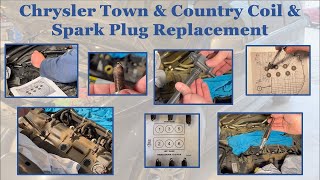
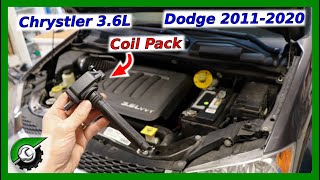
- Chrysler Town & Country / 200 (2011-2016) — Commonly caused by ignition coil failure on the 3.6L Pentastar V6. Issues with the Totally Integrated Power Module (TIPM) also cause this code.
- Dodge Grand Caravan / Avenger / Journey (2011-2019) — Shares the same 3.6L Pentastar engine and platform as Chrysler models, making them prone to identical ignition coil and TIPM issues.
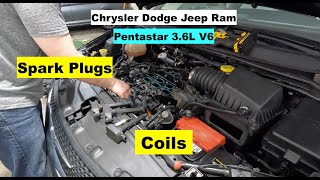
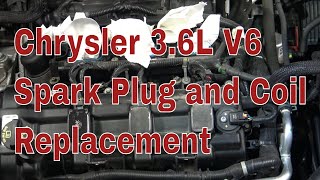
- Jeep Grand Cherokee / Wrangler (2011-2018) — The 3.6L Pentastar V6 frequently triggers ignition coil circuit codes. Diagnosis typically starts with a coil swap.
- Ford F-150 (2011-2017) — On V6 engines like the 3.5L, 'E' corresponds to cylinder #5, the middle cylinder on the driver's side bank. Coil-on-plug systems are a frequent source of ignition codes.
- Volkswagen Jetta / Golf / Passat (2010-2017) — The code often refers to cylinder #5, and the cause is typically a failed ignition coil or a wiring issue near the coil connector.
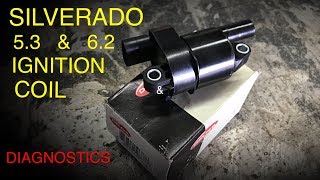
- Chevrolet / GMC Silverado 1500 / Sierra 1500 (2014-2018) — GM Technical Service Bulletin PIP5147A addresses this code, pointing to water intrusion in the coil connectors. The fix involves cleaning, applying dielectric grease, and replacing terminals.
- BMW Various models with N52/N54/N55 engines (2006-2016) — While coil failure is common, a known issue is the failure of the MOSFET driver transistor within the DME (ECU), requiring professional electronic repair or DME replacement.
- Mercedes-Benz Various Models (2002-2009) — On older models, P2313 has a manufacturer-specific definition of 'No TCM Bus Message,' indicating a communication failure with the Transmission Control Module, not an ignition coil fault.
Manufacturer-Specific Notes
- Chrysler/Dodge/Jeep: Known for issues with the Totally Integrated Power Module (TIPM), which causes erratic electrical problems, including ignition coil faults. If a new coil and good wiring don't fix the code, the TIPM is the hidden cause.
- Ford: The letter 'E' corresponds to cylinder #5. For V6 engines like the 3.5L, this is the middle cylinder on the driver's side bank.
- Mercedes-Benz: For some models, P2313 is defined as 'No TCM Bus Message.' This is a communication error, not an ignition fault. Diagnosis focuses on the CAN bus wiring or the Transmission Control Module.
- Chevrolet/GMC: GM TSB PIP5147A notes that codes like P2313 are caused by water intrusion into the ignition coil connector. The fix involves inspecting for moisture, repairing terminals, and applying dielectric grease.
Real Owner Stories
2012 Dodge Grand Caravan at 115K miles - The Easy Fix
Check engine light came on with a P2313 and a P0305 (Cylinder 5 misfire). The engine ran very rough at idle and hesitated badly when accelerating. A strong smell of gasoline was present.
What they tried:
- Identified Cylinder 5 (middle cylinder on the front bank).
- Swapped the ignition coil from cylinder 5 with the coil from cylinder 3.
- Cleared the codes and test drove. The code changed to P2311 (Ignition Coil 'A' Primary Control Circuit High) and P0301, confirming the coil was the problem.
Outcome: Replaced the single faulty ignition coil with a new OEM part for $65. The repair took 20 minutes. The codes were cleared and did not return. Engine performance returned to normal immediately.
Lesson: Always use the coil-swap test before buying parts. It is a free and definitive way to confirm a bad coil, saving you from replacing parts unnecessarily.
2015 Ford F-150 3.5L at 80K miles - A Misdiagnosis Story
Truck had an intermittent rough idle and threw a P2313 code. The owner took it to a shop that immediately replaced the ignition coil and spark plug for cylinder 5.
What they tried:
- Shop replaced coil and plug for cylinder #5 ($250) - the code returned the next day.
- Owner took it to a second, more experienced technician.
- The second tech inspected the wiring harness and found the plastic loom was brittle and a wire leading to the coil 'E' connector had rubbed through on the engine block, causing an intermittent short.
Outcome: The technician repaired the damaged wire and replaced the connector pigtail. Total cost for the correct diagnosis and repair was $180. The misfire was resolved permanently.
Lesson: Do not assume the most common fix is the right one. A thorough visual inspection of the wiring harness and connector is critical. A simple wire repair saves hundreds on parts-swapping.
2014 GMC Sierra 1500 at 95K miles - The Unusual Cause
The P2313 code appeared intermittently, usually after heavy rain or going through a car wash. The engine ran rough for a short period and then corrected itself.
What they tried:
- Owner noticed the pattern with moisture and researched technical service bulletins (TSBs).
- Found GM TSB PIP5147A, which describes this exact issue.
- Disconnected the coil 'E' connector and found slight discoloration and moisture inside.
Outcome: The owner dried the connector with compressed air, applied dielectric grease to the seal to waterproof it, and reconnected it securely. Total cost was under $5. The code never returned.
Lesson: Pay attention to when the code appears. If it is linked to environmental factors like rain, check for TSBs related to your vehicle, as the manufacturer may have already documented the fix.
2008 BMW 335i at 137K miles - The Rare PCM Failure
Car suddenly lost power with multiple misfire codes (cylinders 4, 5, 6) and an internal DME (BMW's term for PCM) failure code. The car barely ran.
What they tried:
- Owner suspected a major issue beyond coils or plugs.
- Forum research indicated that on MSD80 DMEs, the MOSFET driver transistors are a known failure point.
- A continuity test on the DME's circuit board confirmed a shorted MOSFET for one of the failing cylinders.
Outcome: Instead of a $1,500 DME replacement, the owner sent the DME to a specialized electronics repair service. The service replaced all MOSFETs for $250. The repaired DME was reinstalled, and the car ran perfectly.
Lesson: For certain European vehicles, a PCM/DME failure is a known possibility. Before spending thousands on a new computer, research specialized repair services. A $250 board-level repair saves over $1,000.
How to Prevent This Code From Triggering
- Replace spark plugs at manufacturer-recommended intervals. (Typically every 60,000 to 100,000 miles.) — Worn spark plugs with a large gap require the ignition coil to produce a much higher voltage to create a spark. This extra strain overheats the coil and causes premature failure.
- Use only OEM or high-quality aftermarket ignition coils. (When replacement is needed.) — Cheap aftermarket coils use inferior materials that cannot handle heat and voltage demands, failing in as little as 20,000 miles, whereas OEM coils last over 80,000 miles.
- Address engine oil and coolant leaks promptly. (As soon as they are noticed.) — Oil leaking from a valve cover gasket seeps into spark plug tubes, soaking the coil boot and connector. This degrades materials and causes short circuits.
- Keep the engine bay and coil connectors clean and dry. (During routine inspections.) — Moisture gets into electrical connectors, causing corrosion on the pins. This corrosion creates high resistance, directly causing circuit high codes like P2313.
- Apply dielectric grease to coil boots and connector seals. (When replacing coils or spark plugs.) — Dielectric grease is a non-conductive sealant that protects against moisture intrusion and corrosion, and prevents the boot from sticking to the spark plug.
Frequently Asked Questions
What does the 'E' in P2313 mean?
The 'E' refers to the specific ignition coil and cylinder that the computer has identified as having a fault. In engines with more than 4 cylinders, letters are used to designate cylinders after 'D'. 'E' is typically cylinder #5.
What is the most common misdiagnosis for P2313?
The most common mistake is immediately replacing the ignition coil without first inspecting the wiring and connector. A technician might also overlook oil or water contamination in the spark plug tube, which ruins the new coil. Always perform a thorough visual inspection and use the coil swap test to confirm the failure.
Can a bad ground really cause code P2313?
Yes. The ignition system relies on a stable ground reference. A loose, corroded, or missing engine ground strap causes voltage fluctuations across the entire electrical system, leading the PCM to incorrectly flag a high voltage condition.
Is it okay to use a cheap aftermarket ignition coil?
While it saves money upfront, low-quality aftermarket coils fail quickly, sometimes within hours or days of installation. This leads to repeated failures and leaves you stranded. Always use OEM or reputable OEM-equivalent brands (like NGK or Denso) for reliability.
Should I replace all my ignition coils if one fails?
It is not strictly necessary, but it is highly recommended as preventative maintenance. Ignition coils endure the same heat cycles, so if one fails from age, the others will likely follow soon. Replacing them all at once saves future diagnostic and labor costs.
What happens if I just clear the code?
You can clear the code with a scanner, but because P2313 indicates a hard electrical fault, it will return immediately or after a short drive. Clearing the code does not fix the underlying problem and provides no diagnostic value.
What is the difference between the primary and secondary circuit?
The primary circuit is the low-voltage side (typically 12V) controlled by the car's computer (PCM). The secondary circuit is the high-voltage side that sends the powerful spark (25,000+ volts) to the spark plug. P2313 specifically points to a problem on the low-voltage primary control side.
Key Takeaways
- P2313 indicates a high-voltage fault in the primary control circuit for ignition coil 'E', which corresponds to cylinder #5 on most engines.
- Swap the ignition coil from cylinder #5 to another cylinder; if the misfire code follows the coil, replace the faulty coil for $125 to $300.
- Never drive with an active P2313 code, as the resulting misfire dumps raw fuel into the exhaust and destroys the catalytic converter within 50 to 100 miles.
- Inspect the coil connector for water intrusion or frayed wires before buying parts, as damaged pigtails account for nearly 30% of primary circuit faults.
Helpful Videos

The information in this article is provided for general reference and educational purposes only. Vehicle specifications, procedures, and part compatibility can vary by production date, trim level, and region. Always consult your vehicle's factory service manual and verify part numbers before purchasing or performing repairs. Safety-critical components such as airbags, seat belts, and braking systems should be installed by a qualified professional.
- 🎬 Helpful Videos
- What Does P2313 Mean?
- Can I Drive With P2313?
- Common Causes
- Symptoms
- Diagnostic Flowchart
- Common Fixes & Costs
- DIY vs Professional
- Used vs. New Parts: Buying Guide
- What Happens If You Wait — Timeline
- Cost of Not Fixing It
- Diagnosis Steps
- When This Code Triggers (Freeze-Frame Conditions)
- Related Codes
- Climate & Environmental Factors
- How to Talk to a Mechanic About This Code
- Where to Take It: Dealer vs Independent vs Chain
- When to Walk Away From the Repair
- What Scan Tool You Need for This Code
- How to Clear the Code After You Fix It
- Will This Fail Emissions / State Inspection?
- Most Commonly Affected Vehicles
- Manufacturer-Specific Notes
- Real Owner Stories
- 2012 Dodge Grand Caravan at 115K miles - The Easy Fix
- 2015 Ford F-150 3.5L at 80K miles - A Misdiagnosis Story
- 2014 GMC Sierra 1500 at 95K miles - The Unusual Cause
- 2008 BMW 335i at 137K miles - The Rare PCM Failure
- How to Prevent This Code From Triggering
- Frequently Asked Questions
- What does the 'E' in P2313 mean?
- What is the most common misdiagnosis for P2313?
- Can a bad ground really cause code P2313?
- Is it okay to use a cheap aftermarket ignition coil?
- Should I replace all my ignition coils if one fails?
- What happens if I just clear the code?
- What is the difference between the primary and secondary circuit?
- Key Takeaways
- 🎟️ Get 5% Off