

P2312 on 2021-2024 Ford Bronco: Ignition Coil 'E' Circuit Fault Explained
On a 2021-2024 Bronco with the 2.3L or 3.0L EcoBoost engine, code P2312 almost always indicates a known software glitch in the Powertrain Control Module (PCM). Before replacing parts, check with a dealer for TSB 24-2406, which calls for a PCM software update. This is typically a low-cost, warranty-covered repair that corrects the PCM's incorrect mapping of cylinder faults.
- For a 2021-2024 Bronco, P2312 is a strong indicator of a known software bug.
- Your first step should always be to check with a dealer for TSB 24-2406 before buying or replacing any parts.
- The code refers to ignition coil 'E', which does not exist on the 2.3L 4-cylinder engine, confirming it's a reporting error.
- If a software update doesn't fix the issue, use a power balance test to find the actual misfiring cylinder, then diagnose the coil and spark plug for that cylinder.
What's Unique About the 2021-2024 Ford BRONCO
The 2021-2024 Bronco with the 2.3L and 3.0L EcoBoost engines is subject to a specific Technical Service Bulletin (TSB 24-2406) for this exact problem. The bulletin, and its preceding Special Service Message (SSM 52342), state that the PCM can have "incorrect cylinder to DTC mapping," causing it to set P2312 and other ignition codes for the wrong cylinders. This means a real misfire might be happening on cylinder 2, for example, but the PCM logs a code for a non-existent cylinder 'E'. This makes a software check the mandatory first step, unlike on other vehicles where P2312 would immediately point to a bad coil on a V6 or V8 engine.
Diagnostic Flowchart
Tap your situation to follow the diagnostic path that matches what you're seeing on this vehicle.
Symptoms You May Notice
- Check Engine Light (MIL) illuminated
- Rough or shaking idle
- Engine hesitation or stumbling during acceleration
- Reduced engine power
- Potential for stalling
- Audible engine misfire or 'sputtering' sound
- Replacing an ignition coil without first checking for the software update specified in TSB 24-2406. Since the PCM may be reporting the wrong cylinder, you could replace a perfectly good part.
- Replacing the ignition coil for the cylinder letter indicated by the code (e.g., trying to find a non-existent 'E' coil) instead of using a power balance test to find the true misfiring cylinder. 🎬 Watch: How to perform a Ford power balance test with a scanner.
Most Likely Causes
- Powertrain Control Module (PCM) Software Error 🔴 High Probability Ford has issued TSB 24-2406 and SSM 52342 specifically for this issue on 2021-2024 Broncos with 2.3L and 3.0L EcoBoost engines. This is a widely acknowledged glitch where the PCM misinterprets sensor data and assigns the fault to the wrong cylinder.
How to confirm: A Ford dealer or a qualified shop with access to Ford's diagnostic software (FDRS) can check if the TSB applies to your vehicle's VIN and if the PCM software is outdated. This is the definitive first step.
Typical fix: Reprogram the PCM to the latest software version. This is often covered under the vehicle's 8-year/80,000-mile federal emissions warranty.
Est. part cost: $0-$200 - Faulty Ignition Coil 🟡 Medium Probability Ignition coils are wear-and-tear items that operate in a high-heat environment. A coil failure is a common cause for misfires on any modern engine, including the EcoBoost.
How to confirm: After confirming the PCM software is up-to-date, use a scan tool's power balance test to identify the actual misfiring cylinder. Then, swap the suspected bad coil with a known good coil from another cylinder. If the misfire code follows the coil to the new cylinder, the coil is faulty.
Typical fix: Replace the failed ignition coil. The OEM Motorcraft part number for the 2.3L EcoBoost is often DG-576. 🎬 Watch: How to replace EcoBoost coil packs and fix common misfires.
Est. part cost: $40-$90 - Worn or Damaged Spark Plug 🟡 Medium Probability Spark plugs have a finite service life. A worn, fouled, or cracked spark plug can cause a misfire that the PCM may interpret as an ignition coil circuit fault. EcoBoost engines are sensitive to spark plug condition.
How to confirm: After ruling out the coil by swapping it, inspect the spark plug in the misfiring cylinder. Look for excessive wear on the electrode, carbon fouling, oil deposits, or cracks in the ceramic insulator.
Typical fix: Replace the faulty spark plug. It is best practice to replace all spark plugs as a set if they are near the end of their service interval. The OEM Motorcraft Iridium plug for the 2.3L is SP-594 🎬 See this step-by-step guide for replacing Bronco 2.3L spark plugs. (which supersedes SP-578).
Est. part cost: $15-$30 - Damaged Wiring or Connector ⚪ Low Probability The engine bay can be a target for rodents, who may chew on wiring harnesses. A user on the Bronco6G forum reported this exact issue causing a similar code. The wiring can also be damaged by heat or chafing.
How to confirm: Visually inspect the wiring harness and connector for the ignition coil on the misfiring cylinder. Look for signs of chewing, chafing, melting, corrosion, or loose pins.
Typical fix: Repair the damaged section of the wiring harness or replace the connector pigtail. The Motorcraft connector kit is part number WPT-1492.
Est. part cost: $25-$60
Rare But Worth Checking
- Faulty Powertrain Control Module (PCM): This is very rare. If a PCM reflash doesn't solve the problem and all ignition components and wiring are confirmed to be good, the PCM's internal driver circuit may have failed. This would be the last resort after all other possibilities are exhausted.
Diagnosis Steps
- Check for TSBs First: Contact a Ford dealership or use a professional diagnostic service to check if TSB 24-2406 or SSM 52342 are open for your vehicle's VIN. This is the most critical step.
- Perform PCM Update: If a TSB is active, the first and most likely fix is to have the PCM reprogrammed to the latest software level using the Ford Diagnostic and Repair System (FDRS). This alone often resolves the issue.
- Identify the Misfiring Cylinder: If the code returns after the update, use a scan tool with a power balance test feature to identify which cylinder is actually misfiring. SSM 52342 explicitly states this is necessary because the logged code is unreliable.
- Swap the Ignition Coil: Move the ignition coil from the identified misfiring cylinder to a known good cylinder. Clear the codes and run the engine. If the misfire code moves to the new cylinder, the ignition coil is faulty and must be replaced.
- Inspect the Spark Plug: If the misfire stays on the original cylinder after the coil swap, remove and inspect the spark plug. Replace it if it's worn, damaged, or fouled. Consider replacing all plugs as a set.
- Inspect Wiring: If the coil and plug are good, carefully inspect the ignition coil's connector and wiring harness for any signs of damage, corrosion, or looseness. Check for evidence of rodent damage, as reported by owners.
- Test the Circuit: If no physical damage is found, a professional may need to use a multimeter to test for proper voltage and ground at the coil connector to rule out a wiring issue or a rare PCM driver failure.
Parts You'll Likely Need
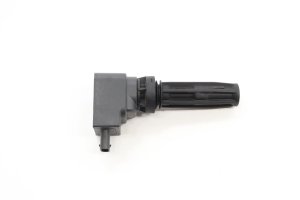
- Ignition Coil
(OEM #DG-576 (Motorcraft))— If the issue is not the PCM software, a failed ignition coil is the next most likely cause of the underlying misfire.
Trusted brands: Motorcraft, NGK, Denso
OEM price range: $60-$100
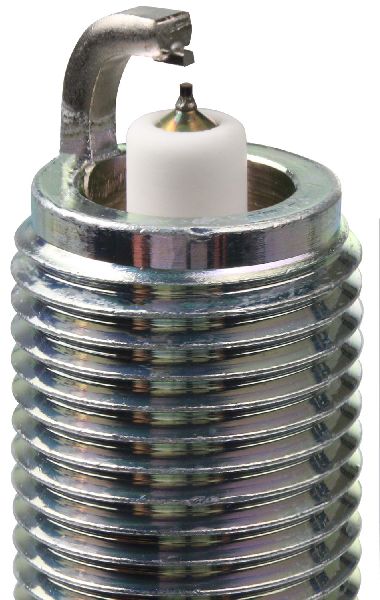
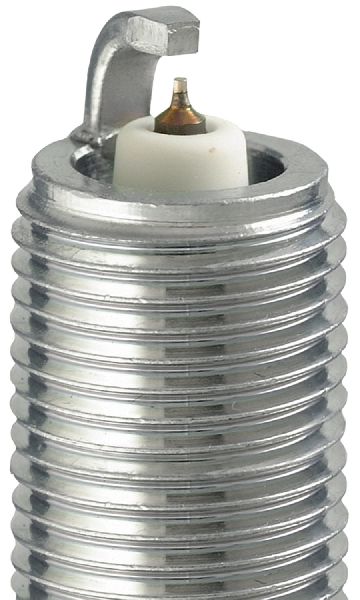
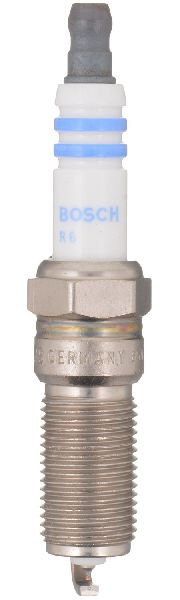
Aftermarket price range: $40-$80 - Spark Plug
(OEM #SP-594 (Motorcraft Iridium, supersedes SP-578))— A worn or fouled spark plug can cause the misfire that triggers the code. They are often replaced along with the ignition coil as good practice.
Trusted brands: Motorcraft, NGK, Bosch
OEM price range: $20-$35
Aftermarket price range: $15-$25 - Ignition Coil Connector Pigtail
(OEM #WPT-1492 (Motorcraft))— In cases of rodent or heat damage to the wiring, the connector itself may need to be replaced.
Trusted brands: Motorcraft, Dorman, Standard Motor Products
OEM price range: $45-$60
Aftermarket price range: $25-$45
Related Codes That Often Appear With This One
- P0352, P0353, P0354, P0355 — These are other ignition coil primary/secondary circuit codes. They often appear in a cluster with P2312 due to the PCM software mapping error.
- P2303, P2306, P2309, P2310, P2313 — These are additional ignition coil circuit codes listed in TSB 24-2406 and SSM 52342 as being part of the same software glitch.
- P030X (e.g., P0301, P0302) — A generic misfire code for a specific cylinder (P0301 for cylinder 1, etc.). This may be the 'real' code indicating the actual location of the fault, while P2312 is the 'ghost' code from the software error.
- P0300, P0316 — These codes for random misfire and misfire on startup have been noted in newer 2025 models with the 2.3L, also suspected to be a software issue pending a fix. While a separate issue, it highlights the platform's sensitivity to PCM software calibration.
Technical Service Bulletins (TSBs) & Recalls
- TSB 24-2406: States that 2021-2024 Broncos with 2.3L/3.0L engines may exhibit an illuminated MIL with various ignition DTCs (including P2312) due to incorrect cylinder-to-DTC mapping in the PCM, requiring a software update.
- SSM 52342: A precursor to TSB 24-2406, this Special Service Message also identified the incorrect cylinder-to-DTC mapping issue and advised technicians to use a power balance test to find the true misfiring cylinder.
Platform-Specific Known Issues
- A primary issue for this platform is the PCM software's tendency to incorrectly map Diagnostic Trouble Codes (DTCs) to the wrong cylinders, as documented in Ford's Technical Service Bulletins. This can lead to significant confusion and unnecessary replacement of parts if not diagnosed correctly.
- Some owners on forums like Bronco6G have reported wiring damage from rodents leading to ignition codes, suggesting the engine bay layout may be susceptible.
Mechanic-Grade Diagnostic Values
- Ignition Coil Power Supply Voltage — expected: Approximately 12V (battery voltage). Failure: A reading below 9V or no voltage indicates a problem in the power supply circuit, fuse, or relay, not necessarily the coil itself.
- Ignition Coil Ground Circuit Resistance — expected: Close to 0 ohms. Failure: High resistance indicates a poor ground connection, which can cause misfires even with a good coil.
- Aftermarket Ignition Coil Primary Resistance — expected: ~0.49 ohms. Failure: Significant deviation from this value may indicate a faulty coil. Note: OEM specs may vary slightly.
- Aftermarket Ignition Coil Secondary Resistance — expected: ~7.3k ohms. Failure: Significant deviation from this value may indicate a faulty coil. Note: OEM specs may vary slightly.
Hidden / Shadow Codes Worth Checking
- Mode $06, TID $53: This is not a DTC but a monitor within the PCM's diagnostic self-tests. TID (Test ID) $53 is Ford's monitor for misfire counts. It tracks misfires per cylinder over 200 and 1000 revolution periods. A technician can view these raw counts to see which cylinder is actually misfiring, even if the count isn't high enough to set a standard P030X code, or if the PCM is setting a 'ghost' code like P2312. (see via A professional scan tool with Mode $06 capability. The data will be listed by Test ID (TID) and Component ID (CID), where the CID corresponds to the cylinder number (e.g., CID $01 for cylinder 1).)
Scan Tool Commands That Help
- Ford IDS (Integrated Diagnostic System) / FDRS: Power Balance Test — This is the essential next step after a PCM update fails to resolve the issue. The test graphically displays the power contribution of each cylinder, allowing a technician to definitively identify the misfiring cylinder, bypassing the incorrect P2312 code. The command path is typically: Powertrain -> Power Balance.
- Ford IDS (Integrated Diagnostic System) / FDRS: Coil on Plug Stress Test — This is a bidirectional test that commands the PCM to repeatedly fire a specific ignition coil while monitoring the circuit. It can help identify intermittent failures in a coil or its wiring that may not be apparent during a simple resistance test. The command path is typically: Powertrain -> Ignition -> Coil on Plug Stress Test.
Wiring & Ground Locations
- Engine Bay Firewall Grounds — Inside the engine compartment, along the seam between the cowl and the firewall, there are body grounds screwed into welded nuts on each side of the compartment.. The PCM and ignition system rely on clean, solid ground connections. A corroded or loose ground in this primary area can cause erratic voltage, leading to misfires and triggering codes like P2312. These are critical checkpoints if wiring is suspected.
- Passenger Footwell Ground — Located in the passenger side outboard footwell, behind the plastic trim panel near the speaker.. This is a key interior grounding point for various modules. While less likely to be the direct cause for an engine coil code, a fault here can cause bizarre electrical issues throughout the vehicle, and it's a known location to check for corrosion or looseness if multiple, seemingly unrelated codes are present.
- Ignition Coil Trigger Circuit — The signal wire in the 3-wire connector (WPT-1492) running from the PCM to each ignition coil.. This is the 'Primary Control Circuit' mentioned in the code definition. This wire carries a low-voltage control signal, not high power. Damage to this specific wire (chafing, corrosion) can cause the voltage to drop, directly triggering a 'Circuit Low' code. It should not be used to power accessories, as it can damage the PCM driver.
Real Owner Repair Stories
- YouTube mechanic video on a platform-mate Ford Ranger (2020 Ford Ranger with 2.3L EcoBoost engine) — Check engine light on, running rough, codes P0304 (Cylinder 4 Misfire) and P0299 (Turbo Underboost).
❌ Tried (didn't work) Swapped ignition coil from cylinder 4 to cylinder 2; the misfire code did not move and remained P0304.
✅ What actually fixed it The spark plug in cylinder #4 was found to be completely fouled and caked in oil, causing the misfire. Replacing just the spark plug resolved the P0304 code.
Model Year Variations Within This Range
- 2025: Some 2025 Bronco models with the 2.3L EcoBoost may exhibit an illuminated MIL with DTCs P0300 (Random Misfire) and P0316 (Misfire on Startup) after a cold soak. Ford has indicated this is a software issue and that replacing parts will not resolve it. A software fix is reportedly in development, expected in Q2 2026. This highlights the platform's ongoing sensitivity to PCM calibration, distinct from the P2312 issue in 2021-2024 models.
Helpful Videos
Used OEM Parts in Stock


New Aftermarket Parts Available


The information in this article is provided for general reference and educational purposes only. Vehicle specifications, procedures, and part compatibility can vary by production date, trim level, and region. Always consult your vehicle's factory service manual and verify part numbers before purchasing or performing repairs. Safety-critical components such as airbags, seat belts, and braking systems should be installed by a qualified professional.
- Ford BRONCO:
- 🎬 Helpful Videos
- 🛍️ Shop This Part
- What's Unique About the 2021-2024 Ford BRONCO
- Diagnostic Flowchart
- Symptoms You May Notice
- Most Likely Causes
- Rare But Worth Checking
- Diagnosis Steps
- Parts You'll Likely Need
- Related Codes That Often Appear With This One
- Technical Service Bulletins (TSBs) & Recalls
- Platform-Specific Known Issues
- Mechanic-Grade Diagnostic Values
- Hidden / Shadow Codes Worth Checking
- Scan Tool Commands That Help
- Wiring & Ground Locations
- Real Owner Repair Stories
- Model Year Variations Within This Range
- 🎟️ Get 5% Off