

OBD-II Code P2306: Ignition Coil 'C' Primary Control Circuit Low
An ASE-Certified Master Technician's Expanded Guide to P2306
- Code P2306 indicates a low voltage condition—typically a short to ground—in the primary control circuit for the ignition coil on cylinder 3.
- Over 80% of P2306 codes are resolved by replacing the faulty ignition coil and its corresponding spark plug.
- Stop driving immediately to prevent unburned fuel from melting the catalytic converter, which adds $1,200 to $2,800 to your repair bill.
- Perform a free 'coil swap' diagnostic test by moving the cylinder 3 coil to cylinder 4 to see if the misfire code follows the part before buying replacements.
- If a new coil and spark plug do not fix the issue on a Ford or Chrysler vehicle, expect to replace the Powertrain Control Module (PCM) for $650 to $1,100.
What Does P2306 Mean?

The Powertrain Control Module (PCM) detects that the voltage in the ignition coil control circuit for cylinder 'C' (cylinder 3) is below the specified range. This prevents the spark plug from firing, causing a dead cylinder and a severe engine misfire.
Technical definition: Ignition Coil 'C' Primary Control Circuit Low. The PCM monitors the primary (low-voltage) control circuit for ignition coil 'C'. If the voltage drops below the expected threshold—typically due to a short to ground in the coil, wiring harness, or PCM driver—code P2306 is set.
Can I Drive With P2306?

No — Do Not Drive. Do not drive the vehicle. The engine is actively misfiring, dumping unburned fuel directly into the exhaust. This raw fuel overheats and destroys the catalytic converter in a very short time, adding $1,200 to over $2,800 to your repair bill.
Common Causes

- Faulty Ignition Coil 'C' (Very Common) — The ignition coil is the most frequent failure point. Internal windings break down or short out over time from engine heat, preventing proper spark generation and causing a low voltage reading.
- Worn or Fouled Spark Plug (Very Common) — A worn spark plug increases electrical resistance, forcing the ignition coil to overheat and fail. Always replace the spark plug when replacing a failed coil to prevent repeat failures.
- Damaged Wiring or Connector (Common) — Engine heat and vibration cause the electrical connector or wiring to become brittle, loose, or frayed. This creates a short to ground, dropping voltage and triggering the code.
- Failing Powertrain Control Module (PCM) (Less Common) — The internal electronic switch (driver) controlling the ignition coil fails and gets stuck 'on,' grounding the circuit permanently. This is a documented failure point on many Chrysler, Dodge, Jeep, and Ford vehicles. 🎬 Watch: Diagnosing ignition circuit codes on Chrysler, Dodge, and Jeep models.
- Coolant Contamination (GM Specific) (Uncommon) — On 2011-2020 GM vehicles (Cruze, Sonic, Trax), a leaking thermostat housing heater forces coolant up the wiring harness into the ECM connector, shorting the ignition circuits to ground.
- Incorrect Aftermarket Ignition Components (Uncommon) — Low-quality aftermarket ignition coils fail to meet precise OEM resistance specifications, triggering a false low-voltage fault in the PCM.
- Low System Voltage (Rare) — A failing alternator or weak battery drops system voltage below 12V, starving the ignition system of required power. This typically triggers other low-voltage codes alongside P2306.
- Blown Fuse or Faulty Relay (Rare) — A blown ignition system fuse or failing relay cuts primary power to the coils, though this usually affects multiple cylinders simultaneously.
- Lean Misfire Condition (Rare) — A clogged fuel injector or vacuum leak creates a lean air/fuel mixture, increasing spark resistance and overworking the coil until it fails.
Symptoms
- Check Engine Light On or Flashing — The Malfunction Indicator Lamp (MIL) illuminates. A flashing MIL indicates a severe, catalyst-damaging misfire requiring immediate shutdown.
- Engine Misfire and Rough Idle — The engine vibrates heavily and runs rough, especially at idle, because cylinder 3 is dead.
- Hesitation and Loss of Power — The vehicle hesitates, jerks, or feels sluggish during acceleration due to the loss of power from the dead cylinder.
- Fuel Smell from Exhaust — A raw gasoline smell from the exhaust confirms unburned fuel is passing through the dead cylinder directly into the catalytic converter.
- Reduced Fuel Economy — Fuel economy drops 10-25% as the engine dumps unburned fuel and struggles to maintain power.
- Hard Starting or Stalling — The engine cranks longer than normal or stalls at idle because the faulty cylinder destabilizes the engine's balance.
Diagnostic Flowchart

Tap your situation to follow the diagnostic path that matches what you're seeing on this code.
Common Fixes & Costs
- Replace Ignition Coil 'C' — Parts: $40-$120, Labor: $75-$110, ~0.8 hr book time (DIY)
- Replace Spark Plugs — Parts: $20-$150 (for a set), Labor: $60-$180, ~1.2 hr book time (DIY)
- Repair Wiring or Connector — Parts: $10-$50, Labor: $100-$250, ~1.5 hr book time (Intermediate)
- Replace Powertrain Control Module (PCM) — Parts: $500-$800, Labor: $150-$300, ~1.8 hr book time (Professional)
- Replace Ignition System Fuse or Relay — Parts: $5-$30, Labor: $20-$50, ~0.2 hr book time (DIY)
DIY vs Professional
- Replace Ignition Coil and Spark Plug — Beginner:
Tools: Basic socket set, ratchet, spark plug socket, torque wrench. - Repair Wiring or Connector — Beginner:
Tools: Multimeter, wiring diagrams, wire strippers, crimpers, heat shrink tubing. - Replace Powertrain Control Module (PCM) — Beginner:
Tools: Socket set, professional-grade scan tool with OEM programming subscription.
Used vs. New Parts: Buying Guide
When a used part is worth it: Buying a used ignition coil rarely makes sense. The labor to replace it again outweighs any initial savings. A used PCM is viable if a new one is prohibitively expensive.
Donor-vehicle mileage cap: roughly under 40000 miles for the part to have meaningful remaining life.
Donor quality checklist:
- Only consider parts from a low-mileage wrecked vehicle.
- Match the part number exactly; visually identical coils have different internal resistance.
- Avoid parts with melted plastic, cracked housings, or corroded connector pins.
Decision logic:
- If The part is an ignition coil. → Buy a new OEM or quality aftermarket part (Bosch, Denso, NGK). Used coils are not worth the risk of premature failure.
- If The part is a PCM and a new one is prohibitively expensive. → Buy a used PCM from a reputable supplier that offers programming and a warranty.
Warranty tradeoff: Salvage yard parts offer a 30-90 day warranty. New aftermarket coils offer 1-year to lifetime warranties. OEM parts carry a 12-month warranty.
Worst-case if a used part fails: $150-$300 if a used ignition coil fails shortly after installation, requiring repeat labor.
What Happens If You Wait — Timeline
- 0-1 month: Check Engine Light illuminates with code P2306. The misfire causes a slight rough idle. The driver notices a minor drop in performance. (MPG impact: 5-10%% · Added cost: $0-$50 in wasted fuel.)
- 1-3 months: The misfire becomes constant, causing severe shaking at idle and hesitation during acceleration. The Check Engine Light flashes, indicating a catalyst-damaging misfire. (MPG impact: 10-25%% · Added cost: $50-$150 in wasted fuel. The catalytic converter is actively overheating.)
- 3-6 months: The catalytic converter's internal substrate melts and breaks apart from raw fuel saturation. Exhaust flow becomes restricted, triggering code P0420. (MPG impact: 25-40%% · Added cost: $1,200-$2,800 for catalytic converter replacement.)
- 6+ months: Complete catalytic converter meltdown blocks the exhaust. Extreme backpressure damages exhaust valves or piston rings, requiring major engine repairs. (MPG impact: 40%+% · Added cost: $3,000-$8,000+ for catalytic converter and engine rebuild.)
Cost of Not Fixing It
- 0-1 month: Noticeable drop in fuel economy (5-15%), rough idle, and poor acceleration. Risk of stalling in traffic. (Added cost: $0-$50)
- 1-6 months: Constant misfiring overheats the catalytic converter, causing irreversible damage to the internal substrate. (Added cost: $1200-$2800)
- 6+ months: Prolonged misfiring washes oil from cylinder walls, leading to accelerated wear on piston rings and loss of compression. (Added cost: $3000-$8000)
Diagnosis Steps
- Read Codes and Freeze Frame Data
Use an OBD-II scanner to confirm P2306 and check for accompanying misfire codes (like P0303). Analyze freeze frame data to identify engine RPM, load, and temperature when the fault occurred.
Tools: OBD-II Scanner (Beginner) - Perform a Coil Swap Test
Move ignition coil 'C' (cylinder 3) to cylinder 'D' (cylinder 4). Clear codes and run the engine. If code P2309 appears, the coil is bad. If P2306 returns, the wiring or PCM is faulty.
Tools: Socket set, OBD-II Scanner (Beginner) - Visually Inspect the Wiring and Connector
Inspect the cylinder 3 coil connector and wiring harness for melted plastic, corrosion, pushed-out pins, or frayed wires. Wiggle the harness while the engine idles to check for intermittent shorts.
Tools: Flashlight (Beginner) - Inspect the Spark Plug
Remove and inspect the cylinder 3 spark plug for excessive gap wear, carbon fouling, or cracked ceramic. A bad plug destroys new coils.
Tools: Spark plug socket, ratchet, extension (Intermediate) - Check Power and Ground at the Connector
Disconnect the coil. With the key ON (engine OFF), use a multimeter to verify 12V+ on the power pin and <0.1 ohms on the ground pin. This confirms the main power supply is intact.
Tools: Multimeter (Intermediate) - Test Control Circuit for a Short to Ground
Disconnect the coil and PCM. Measure resistance between the coil connector's control pin and chassis ground. A reading other than infinite (OL) confirms a short to ground in the wiring harness.
Tools: Multimeter, vehicle-specific wiring diagram (Advanced) - PRO TIP: Control Circuit Load Test
Connect the control wire to the positive battery terminal through a 12V headlight bulb, and ground the other end at the PCM connector. A dim or unlit bulb proves the wire is internally broken and cannot carry current.
Tools: 12V headlight bulb, jumper wires, wiring diagram (Advanced) - ADVANCED: Scan Tool Live Data Analysis
Monitor live misfire counters on a professional scan tool. Cylinder 3 should increment rapidly. Verify system voltage remains stable between 13.8V and 14.4V to rule out alternator issues.
Tools: Professional OBD-II Scan Tool (Advanced) - PRO TIP: Oscilloscope Waveform Analysis
Probe the control circuit with the engine running. A healthy signal shows a clean 0V to 5V/12V square wave. A flat 0V line confirms a constant ground from a shorted wire or blown PCM driver.
Tools: Automotive Oscilloscope (Professional) - ADVANCED: Primary and Secondary Resistance Test
Measure the coil's primary (0.3-2.0 ohms) and secondary (6,000-15,000 ohms) resistance. Readings outside OEM specs confirm internal failure, though heat-dependent failures may still test normal when cold.
Tools: Multimeter, OEM specifications (Advanced)
When This Code Triggers (Freeze-Frame Conditions)
- Engine Coolant Temp: 180-210°F (Fully warmed up, during normal operation.)
- RPM: 1500-3000 (Light to moderate acceleration or steady cruise.)
- Engine Load: 30-70% (The fault is most apparent when the engine is under load, such as climbing a hill.)
- Vehicle Speed: 25-60 mph (Occurs during city or highway driving, not typically at idle.)
Related Codes
- P0303 — Cylinder 3 Misfire Detected. P2306 is the cause, and P0303 is the effect. If you have P2306, you will almost always have P0303.
- P2307 — Ignition Coil 'C' Primary Control Circuit High. The opposite of P2306. P2306 is a short to ground, while P2307 is an open circuit or short to voltage.
- P2308 — Ignition Coil 'C' Secondary Circuit. Indicates a fault on the high-voltage side (coil to spark plug), whereas P2306 is on the low-voltage control side.
- P0353 — Ignition Coil 'C' Primary/Secondary Circuit Malfunction. A general code for cylinder 3 coil issues. P2306 provides the specific detail that voltage is low.
Climate & Environmental Factors
- High Humidity and Water Intrusion: Moisture accelerates corrosion on the ignition coil connector pins. This corrosion creates high resistance or shorts to ground, directly causing the low voltage condition.
- Extreme Temperature Cycles: Repeated expansion and contraction from engine heat stresses the internal windings and epoxy potting of the coil, causing microscopic cracks and internal shorts.
- Cold Weather: Cold weather exacerbates symptoms of a failing ignition coil. A borderline coil fails to provide sufficient spark energy for a cold start, causing severe rough idling.
How to Talk to a Mechanic About This Code
Say this: "I have an active P2306 code for the ignition coil on cylinder 3, and the engine is misfiring. Please start by swapping the coil to another cylinder to see if the fault follows the coil. If it doesn't, please test the control circuit wiring for a short to ground before recommending a new PCM."
This directs the technician to perform the simplest tests first (coil swap, wiring check) and prevents them from jumping to the most expensive conclusion (a bad PCM) without justification.
Avoid saying:
- 'My check engine light is on, can you just fix it?' (Invites unnecessary part replacements.)
- 'I think I need a new computer.' (Never suggest the most expensive fix first.)
- 'Just do whatever you think is best.' (Gives up your right to authorize specific work.)
Questions to ask before authorizing the repair:
- Did you perform a coil swap, and did the misfire code move to the new cylinder?
- If the coil wasn't the problem, can you show me the multimeter reading indicating a short in the wiring or a bad PCM driver?
- If the PCM needs replacement, is the new unit pre-programmed, and what is the warranty?
- Will you be replacing the spark plug for that cylinder at the same time as the coil?
Where to Take It: Dealer vs Independent vs Chain
- Dealer:
Recommended if the diagnosis points to a failed PCM requiring programming, or if the vehicle is under warranty.
Best for: Vehicles under powertrain or emissions warranty., Complex cases requiring PCM replacement and manufacturer-specific programming., Known manufacturer-specific issues, like the GM coolant wicking problem (TSB PIP5895A).
Downsides: Highest labor rates, often 1.5x to 2x more than independent shops., May recommend expensive PCM replacement without exhausting wiring checks. (Typical cost: +50% vs. baseline) - Independent Shop:
Best fit for most P2306 situations. A good independent mechanic easily diagnoses and fixes the most common causes at a fair price.
Best for: Out-of-warranty vehicles where cost is a primary concern., Standard P2306 causes like a bad coil, spark plug, or wiring issue.
Downsides: Shop quality varies; look for ASE certifications., May lack expensive tools to program a new PCM, requiring a dealer visit. (Typical cost: +0% vs. baseline) - Chain Shop:
Avoid for initial diagnosis of a P2306 code, as they frequently misdiagnose wiring or PCM issues.
Best for: Simple parts replacement like an ignition coil if you have already diagnosed the problem yourself.
Downsides: Technician skill varies dramatically; lacks advanced electrical diagnostic experience., High pressure to upsell services; may recommend replacing all coils when only one is needed., Not equipped for complex wiring or PCM diagnostics. (Typical cost: -10% vs. baseline)
When to Walk Away From the Repair
If the total estimated repair cost exceeds 50% of your car's private-party value, consider selling or trading it in. For older cars over 150,000 miles, lower this threshold to 40%.
- Car worth $4000, fix is $2200: Walk away. The repair cost is 55% of the car's value, making it a poor financial decision.
- Car worth $12000, fix is $1200: Fix it. The repair cost is 10% of the vehicle's value, a sound investment to keep a reliable car on the road.
- Car worth $2500, fix is $1500: Walk away. At 60% of the car's value, this repair is not worth it, especially if the fix involves an expensive PCM.
What Scan Tool You Need for This Code
Minimum: A scanner that reads and clears engine trouble codes (DTCs) and views live data, specifically misfire counters for each cylinder.
A basic $20 code reader only provides the P2306 code. It lacks live misfire data to confirm which cylinder is the problem, leading to guesswork and replacing the wrong parts.
Budget: BlueDriver Pro (~$100) — Connects to your smartphone via Bluetooth. Reads and clears P2306, views freeze frame data, and displays live misfire counts to confirm the issue is on cylinder 3.
Mid-range: Foxwell NT510 Elite (~$180) — A handheld unit providing manufacturer-specific diagnostics. Offers reliable live data graphing and performs basic active tests on ignition system components.
Professional: Autel MaxiCOM MK808S (~$380) — A full-featured diagnostic tablet. Provides robust live data graphing, misfire counters, and full bidirectional control to command the PCM to trigger the ignition coil.
Rent vs buy: For a one-time diagnosis, AutoZone's Loan-A-Tool program allows you to rent a basic OBD-II scanner for free. If you perform regular maintenance, buying the BlueDriver Pro offers excellent long-term value.
How to Clear the Code After You Fix It
- Use an OBD-II scan tool to clear P2306 and any related misfire codes.
- Ensure the fuel tank is between 15% and 85% full.
- Perform a complete drive cycle to allow the vehicle's readiness monitors to run.
Drive cycle (~30 minutes): Start with a cold soak (engine off for 8+ hours). Idle for 3 minutes. Drive at a steady 55 mph for 10 minutes. Perform stop-and-go city driving for 15 minutes with several idle periods.
Readiness monitors affected: Catalyst monitor, Evaporative System (EVAP) monitor, Oxygen (O2) sensor monitor
Watch out for:
- Disconnecting the battery clears the code but resets all readiness monitors to 'Not Ready', guaranteeing an emissions test failure.
- The code returns immediately if the root cause (bad coil, shorted wire) was not correctly repaired.
- Incorrect fuel levels prevent the EVAP monitor from running.
Will This Fail Emissions / State Inspection?
Yes — this code typically fails an OBD-II emissions inspection.
- California: An active P2306 code is an automatic failure. After repair, all readiness monitors must be 'Ready' before a retest is possible.
- New York: The NYS DMV inspection includes an OBD-II scan. An illuminated Check Engine Light from P2306 results in an automatic failure.
- Texas: In counties requiring emissions testing, an illuminated Check Engine Light from code P2306 is an automatic failure.
Most Commonly Affected Vehicles
- Ford F-150, Explorer, Edge (2011-2018) — Common on the 3.5L EcoBoost engine. A failing spark plug destroys the coil, which then shorts out the PCM driver. Use only specified Motorcraft spark plugs.
- Dodge / Chrysler / Ram Grand Caravan, Town & Country, Ram 1500, Dart (2008-2018) — The 2.4L Multiair and 3.6L Pentastar engines have a high rate of PCM driver failure, directly causing P2306.
- Jeep Grand Cherokee, Wrangler, Compass, Renegade (2007-2020) — The PCM is a known weak point. The 2.4L Multiair engine in the Compass and Renegade frequently experiences these ignition circuit faults.
- Chevrolet Cruze, Sonic, Trax (2011-2020) — GM Bulletin PIP5895A details a leaking thermostat heater forcing coolant into the ECM harness, shorting the ignition control circuits.
- Volkswagen Jetta, Golf, Passat (2006-2015) — Caused by standard ignition coil failure, a very common maintenance item on these models. Replacing the full set is recommended.
- Audi A4, A6 (2005-2012) — Frequently linked to premature ignition coil failure. Technicians advise replacing all coils if one fails.
Manufacturer-Specific Notes

- Chrysler / Dodge / Jeep: The PCM is a highly common failure point. Technicians suspect a bad PCM driver immediately if a new coil and plug do not resolve the issue on 2.4L and 3.6L engines.
- Ford: On EcoBoost engines, a faulty spark plug quickly destroys the ignition coil, which then shorts out the PCM driver circuit. Address misfires immediately to prevent PCM damage.
- General Motors (Chevrolet): Per TSB PIP5895A, a leaking thermostat housing heater on the Cruze and Sonic forces coolant into the main ECM connector, shorting the ignition control circuit to ground.
- All Makes: A persistent lean condition in one cylinder (from a vacuum leak or faulty injector) forces the coil to generate a hotter spark, leading to overheating and eventual failure.
Real Owner Stories
2015 Ford F-150 3.5L EcoBoost with multiple codes
Truck entered limp mode with a flashing check engine light. A shop replaced ignition coil pigtails, but P2306 and P2309 returned alongside communication codes (U0155, U0253).
What they tried:
- Replaced ignition coil pigtails.
- Swapped a new coil pack with an old one.
Outcome: The recurrence of multiple coil circuit low voltage codes pointed to a failed PCM. The shop recommended a dealership visit for PCM replacement and programming.
Lesson: When multiple specific ignition coil circuit codes appear together, especially with communication 'U' codes, the root cause is almost always the PCM, not the individual coils.
DIY coil swap leads to confusion
An owner performed a diagnostic coil swap, moving the coil from cylinder 'C' to cylinder 'A' to identify the fault.
What they tried:
- Swapped ignition coils between cylinders.
Outcome: After driving for two hours, the original P2306 code remained. The owner failed to clear the codes before the test, rendering the results invalid.
Lesson: After swapping components, you must clear the existing trouble codes with a scan tool. The system does not automatically update the code to the new cylinder.
2011+ Chevy Cruze with P2306 and coolant loss
Owner experienced a P2306 code and a slowly dropping coolant level with no visible external leaks.
What they tried:
- Replaced coil 'C' and spark plug.
Outcome: A technician identified a leaking thermostat housing heater causing coolant to wick up the wiring harness into the ECM connector, shorting the ignition control circuit. The fix required replacing the thermostat housing and cleaning the ECM connector.
Lesson: On 2011-2020 GM models, P2306 accompanied by unexplained coolant loss requires immediate inspection of the ECM connector for coolant contamination per GM Bulletin PIP5895A.
How to Prevent This Code From Triggering
- Replace spark plugs at the recommended interval. (Every 60,000 to 100,000 miles for iridium/platinum plugs.) — As spark plugs wear, the gap widens, forcing the ignition coil to produce a higher voltage. This extra strain causes the coil to overheat and fail prematurely.
- Apply dielectric grease inside the ignition coil boot. (Whenever replacing coils or spark plugs.) — Dielectric grease prevents moisture and corrosion from forming on the connection and stops the boot from seizing to the plug.
- Address engine oil and coolant leaks promptly. (As needed.) — Oil leaking from a valve cover gasket fills spark plug wells, destroying the coil boot. Coolant leaks contaminate wiring connectors, causing shorts.
- Use high-quality OEM or reputable aftermarket ignition coils. (When replacement is needed.) — Low-quality aftermarket coils use inferior windings that cannot withstand engine heat, leading to premature failure and repeat repairs.
- Keep the engine bay clean. (Annually or as needed.) — Removing built-up dirt and oil helps components run cooler and prevents contamination of electrical connectors.
Frequently Asked Questions
What does the letter 'C' in P2306 mean?
The letter 'C' refers to the third cylinder in the engine's firing order. On most inline and V6/V8 engines, this corresponds to cylinder number 3.
Can a weak battery cause code P2306?
Yes. A failing alternator or weak battery drops system voltage below 12V, starving the ignition system of required power. This typically triggers other low-voltage codes alongside P2306.
My mechanic wants to replace all the coils and plugs for one P2306 code. Is this necessary?
Replacing all coils and plugs is a strong preventative measure because they share the same age and wear. Doing so prevents future failures and saves on repeat labor costs. However, only the components for cylinder 'C' are strictly required to fix the immediate P2306 code.
What is a common misdiagnosis mistake with P2306?
The most common mistake is replacing the ignition coil without performing a free coil swap test or inspecting the wiring. Technicians often miss corroded connector pins or frayed wires. This leads to replacing a perfectly good coil when the real problem is a simple electrical short.
I have P2306 but the car seems to run fine. What should I do?
Do not ignore the code, even if the car feels fine. Intermittent misfires dump unburned fuel into the exhaust, which silently destroys the catalytic converter over time. Perform diagnostics immediately before a $100 coil repair turns into a $2,000 exhaust replacement.
Is it safe to drive my car with code P2306?
No. Driving with a constant misfire allows raw fuel to enter the exhaust and overheat the catalytic converter. This causes irreversible damage that adds $1,000 to $4,000 to your final repair bill.
Why did my mechanic also replace the spark plug?
A worn spark plug increases electrical resistance, forcing the ignition coil to work harder, overheat, and fail. Replacing both parts simultaneously is required to prevent the old plug from destroying the new coil.
What's the difference between the 'primary' and 'secondary' ignition circuit?
The primary circuit is the low-voltage 12V side controlled by the engine computer. The secondary circuit is the high-voltage side sending thousands of volts to the spark plug. P2306 specifically indicates a fault on the low-voltage primary control side.
After swapping the coil, do I need to clear the code?
Yes. After swapping the coil to a known good cylinder, clear the codes with a scanner and run the engine. If the code follows the coil (e.g., P2309), the coil is bad; if P2306 returns, the wiring or PCM is faulty.
Key Takeaways
- Code P2306 indicates a low voltage condition—typically a short to ground—in the primary control circuit for the ignition coil on cylinder 3.
- Over 80% of P2306 codes are resolved by replacing the faulty ignition coil and its corresponding spark plug.
- Stop driving immediately to prevent unburned fuel from melting the catalytic converter, which adds $1,200 to $2,800 to your repair bill.
- Perform a free 'coil swap' diagnostic test by moving the cylinder 3 coil to cylinder 4 to see if the misfire code follows the part before buying replacements.
- If a new coil and spark plug do not fix the issue on a Ford or Chrysler vehicle, expect to replace the Powertrain Control Module (PCM) for $650 to $1,100.
Helpful Videos
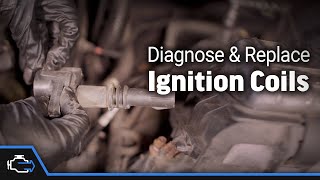
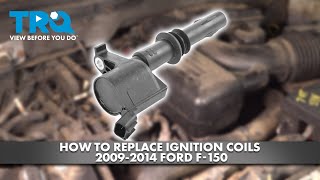
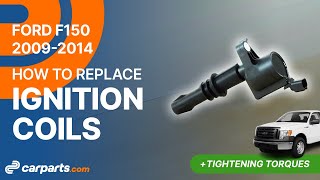
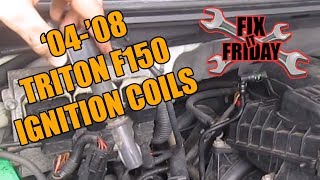

The information in this article is provided for general reference and educational purposes only. Vehicle specifications, procedures, and part compatibility can vary by production date, trim level, and region. Always consult your vehicle's factory service manual and verify part numbers before purchasing or performing repairs. Safety-critical components such as airbags, seat belts, and braking systems should be installed by a qualified professional.
- 🎬 Helpful Videos
- What Does P2306 Mean?
- Can I Drive With P2306?
- Common Causes
- Symptoms
- Diagnostic Flowchart
- Common Fixes & Costs
- DIY vs Professional
- Used vs. New Parts: Buying Guide
- What Happens If You Wait — Timeline
- Cost of Not Fixing It
- Diagnosis Steps
- When This Code Triggers (Freeze-Frame Conditions)
- Related Codes
- Climate & Environmental Factors
- How to Talk to a Mechanic About This Code
- Where to Take It: Dealer vs Independent vs Chain
- When to Walk Away From the Repair
- What Scan Tool You Need for This Code
- How to Clear the Code After You Fix It
- Will This Fail Emissions / State Inspection?
- Most Commonly Affected Vehicles
- Manufacturer-Specific Notes
- Real Owner Stories
- 2015 Ford F-150 3.5L EcoBoost with multiple codes
- DIY coil swap leads to confusion
- 2011+ Chevy Cruze with P2306 and coolant loss
- How to Prevent This Code From Triggering
- Frequently Asked Questions
- What does the letter 'C' in P2306 mean?
- Can a weak battery cause code P2306?
- My mechanic wants to replace all the coils and plugs for one P2306 code. Is this necessary?
- What is a common misdiagnosis mistake with P2306?
- I have P2306 but the car seems to run fine. What should I do?
- Is it safe to drive my car with code P2306?
- Why did my mechanic also replace the spark plug?
- What's the difference between the 'primary' and 'secondary' ignition circuit?
- After swapping the coil, do I need to clear the code?
- Key Takeaways
- 🎟️ Get 5% Off