

OBD-II Code P2301: Ignition Coil 'A' Primary Control Circuit High
The Ultimate Guide to Diagnosing and Fixing P2301
- Code P2301 indicates a short to power in the primary control circuit for ignition coil 'A' (cylinder #1), preventing the spark plug from firing.
- Swap the cylinder #1 ignition coil with cylinder #2; if the code changes to P2304, replace the faulty coil for $40-$150.
- If the code remains P2301 after a coil swap, the fault is a damaged wiring harness or a shorted connector, requiring a multimeter to trace the 12V+ short.
- Stop driving immediately if the check engine light flashes; unburnt fuel will destroy your catalytic converter, adding $1,200 to $2,800 to the repair bill.
What Does P2301 Mean?

The Powertrain Control Module (PCM) detected excessively high voltage in the primary control circuit for ignition coil 'A' (cylinder #1). The PCM uses a transistor 'driver' to turn the coil on and off by grounding the circuit. Code P2301 means the PCM lost control, and the circuit voltage remains high when it should be low, preventing the coil from firing.
Technical definition: The SAE/OBD-II definition is "Ignition Coil 'A' Primary Control Circuit High". The PCM expects near-zero volts when the coil driver activates. A persistent high voltage reading indicates a short to power in the wiring, an internal coil failure, or a faulty PCM driver.
Can I Drive With P2301?

yes_but_briefly. You can drive briefly, but it is strongly discouraged. The engine misfires, runs rough, and stalls, posing a safety hazard. Continuing to drive sends unburnt fuel into the exhaust, rapidly overheating and destroying the catalytic converter. This turns a minor repair into a $1,200-$2,800 converter replacement. A flashing check engine light indicates severe misfiring; pull over and shut off the engine immediately.
Common Causes

- Damaged or faulty wiring harness (Very Common) — Wires to the ignition coil melt from engine heat, chafe from vibration, or get pinched, causing a direct short to a 12V power source. Rodents also chew on engine wiring in colder climates.
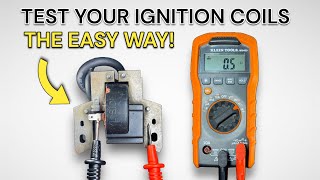
- Failed ignition coil (Common) — A short circuit within the ignition coil's internal primary windings 🎬 Watch: How to test any ignition coil with a multimeter. causes the high voltage reading that triggers the code.
- Poor electrical connection at the coil (Common) — The connector at the ignition coil becomes loose, corroded, or contaminated with moisture or oil, disrupting the voltage signal.
- Faulty Powertrain Control Module (PCM) (Less Common) — The driver circuit inside the PCM that controls the ignition coil fails and gets stuck 'on', causing a persistent high voltage signal. Test all wiring before replacing the PCM.
- Incorrect or Poor Quality Aftermarket Coil (Uncommon) — Using a cheap aftermarket ignition coil alters the internal resistance or primary winding specifications, leading the PCM to interpret the voltage as too high.
- Faulty Alternator or Charging System (Uncommon) — An over-charging alternator creates system-wide high voltage conditions (above 14.5V), stressing the ignition circuit and triggering P2301.
Symptoms
- Flashing or Solid Check Engine Light — The Malfunction Indicator Lamp (MIL) illuminates solid for intermittent faults or flashes during active misfires to warn of impending catalytic converter damage.
- Rough engine idle and misfires — The engine shakes, stumbles, and runs poorly at idle, accompanied by a jerking or popping sensation during acceleration.
- Reduced engine power and acceleration — The vehicle feels sluggish, hesitates, and struggles to reach highway speeds.
- Engine stalls — The engine stalls at low speeds or when coming to a complete stop due to severe misfire instability.
- Worse fuel economy — Fuel efficiency drops by 10-20% because the engine runs inefficiently on one less cylinder.
- Smell of raw fuel from exhaust — Unburnt fuel passes directly into the exhaust, creating a strong gasoline odor from the tailpipe.
Common Fixes & Costs

- Repairing or replacing the wiring harness/connector — Parts: $10-$50, Labor: $100-$300, ~1.5 hr book time (Intermediate)
- Replacing the ignition coil — Parts: $40-$150, Labor: $80-$150, ~1 hr book time (DIY)
- Cleaning corrosion from connectors — Parts: $10, Labor: $50-$150, ~0.5 hr book time (DIY)
- Replacing the spark plug — Parts: $10-$30, Labor: $50-$100, ~0.8 hr book time (DIY)
- Replacing the Powertrain Control Module (PCM) — Parts: $600-$1200, Labor: $150-$300, ~1.5 hr book time (Professional)
DIY vs Professional
- Replacing the ignition coil and/or spark plug — Beginner:
Tools: Basic socket set, spark plug socket, torque wrench, dielectric grease. - Cleaning connectors — Beginner:
Tools: Electrical contact cleaner, small brush, dielectric grease. - Repairing wiring harness — Beginner:
Tools: Multimeter, wire strippers, crimpers, heat shrink tubing, soldering iron, wiring diagram. - Replacing the PCM — Beginner:
Tools: Socket set, dealer-level programming software.
Used vs. New Parts: Buying Guide
When a used part is worth it: Buying a used ignition coil never makes sense. A new, warrantied aftermarket coil costs $40-$80. The labor to install a used coil outweighs any negligible savings.
Donor-vehicle mileage cap: roughly under 40000 miles for the part to have meaningful remaining life.
Donor quality checklist:
- Only consider from a very low-mileage vehicle that was wrecked.
- Ensure the part number is an exact match, including any suffixes.
Decision logic:
- If The cost of a new aftermarket coil is under $100 → Always buy new. The warranty and peace of mind are worth the price difference.
- If The part is an expensive OEM-only coil → A used part might be considered only if a new aftermarket equivalent is unavailable.
Warranty tradeoff: Used parts: 30-90 day warranty. New aftermarket parts: 1-year to limited lifetime warranty. New OEM parts: 1-year warranty.
Worst-case if a used part fails: $150-$300 if a used coil fails soon after installation, requiring repeat labor.
Cost of Not Fixing It
- 0-1 month: Noticeable drop in fuel economy (10-20%), rough engine performance, stalling, and failed emissions test. (Added cost: $20-$80 in wasted fuel)
- 1-6 months: Severe damage to the catalytic converter from unburnt fuel saturation. The internal structure melts, causing exhaust blockage and severe power loss. (Added cost: $1200-$2800)
- 6+ months: Complete catalytic converter failure, damaged oxygen sensors from overheating, and engine damage from excessive exhaust backpressure. (Added cost: $1500-$3500+)
Diagnosis Steps

- Read the Codes and Freeze Frame Data
Use an OBD-II scanner to confirm P2301. Check for related codes (like P0301) and analyze freeze frame data to see engine conditions (RPM, temp, load) when the fault occurred.
Tools: OBD-II Scanner (Beginner) - Swap the Ignition Coil (The 'Money Saver' Test)
Swap the ignition coil from cylinder 'A' (#1) with cylinder 'B' (#2). Clear codes and drive. If the code changes to P2304, the ignition coil is faulty. If P2301 returns, the coil is good; the problem is the wiring or PCM.
Tools: Basic socket set (Beginner) - Visually Inspect the Ignition Coil and Wiring
Inspect the wires in the harness leading to cylinder 1 for several inches. Look for burns, melting, chafing, or exposed copper rubbing against the engine block.
Tools: Flashlight, Inspection mirror (Beginner) - Check the Connector and Apply Dielectric Grease
Unplug the coil connector. Inspect pins for corrosion, moisture, or damage. Clean with contact cleaner, apply dielectric grease to the seal, and reconnect firmly until it clicks.
Tools: Dielectric grease, Contact cleaner (Beginner) - Test the Control Circuit with a Multimeter
Set multimeter to DC Volts. Disconnect the coil connector. Turn ignition 'ON' (engine off). Probe the control wire terminal. A steady 12V+ reading indicates a short to power in the harness or a failed PCM driver. A good circuit shows 0V and pulses when cranking.
Tools: Multimeter, Vehicle-specific wiring diagram (Advanced) - Isolate the Circuit and Check for Shorts
Disconnect the battery, coil connector, and PCM connector. Set multimeter to Ohms. Measure resistance between the control wire pin at the coil and the positive battery cable. A low resistance reading confirms the wire is shorted to a power source.
Tools: Multimeter (Advanced) - Test Ignition Coil Resistance
Measure resistance across the two primary circuit pins on the coil (typically 0.2-2.0 Ohms). Measure secondary resistance between the high-voltage tower and a primary pin (typically 5kΩ-20kΩ). Infinite (OL) or zero Ohms indicates a failed coil.
Tools: Multimeter, Vehicle-specific service manual (Advanced) - Perform a Voltage Drop Test on the Ground Circuit
Set multimeter to low DC Volts (2V). Connect red lead to the coil ground wire and black lead to battery negative. Crank the engine. Readings above 0.1 volts indicate high resistance in the ground circuit requiring repair.
Tools: Multimeter (Advanced) - Test the PCM with an Oscilloscope
Connect an oscilloscope to the coil control wire. Start the engine. A healthy circuit shows a square wave dropping to near zero. A voltage stuck high (near 12V) without dropping confirms a failed PCM driver or a harness short.
Tools: Oscilloscope (Professional)
When This Code Triggers (Freeze-Frame Conditions)
- Engine Coolant Temp: 180-200°F (82-93°C) (Fully warmed up)
- RPM: 1500-2500 (Cruise / steady throttle)
- Engine Load: 30-60% (Moderate acceleration or maintaining speed on a slight incline)
- Vehicle Speed: 35-55 mph (56-88 km/h) (City or highway driving)
Related Codes
- P0301 — Cylinder 1 Misfire Detected. The high voltage fault in coil 'A's control circuit (P2301) prevents the coil from firing, causing the misfire (P0301). Fix P2301 first.
- P0351 — Ignition Coil 'A' Primary/Secondary Circuit Malfunction. A general ignition coil circuit fault. P2301 is more specific, indicating high voltage on the primary control side.
- P2300 — Ignition Coil 'A' Primary Control Circuit Low. The direct opposite code. P2301 means a short to power; P2300 means an open circuit or short to ground.
- P0420 / P0430 — Catalyst System Efficiency Below Threshold. A costly consequence of ignoring P2301. The misfire dumps raw fuel into the catalytic converter, destroying it.
Climate & Environmental Factors
- High Humidity / Heavy Rain: Moisture penetrates weathered connector seals, causing corrosion on pins. This creates unwanted resistance or short circuits, triggering P2301.
- Cold Climates: Rodents seek shelter in warm engine bays and chew on soy-based wiring insulation, causing direct shorts to power.
- Extreme Heat Cycles: Engine heat makes plastic wiring looms brittle over time. Vibration causes exposed wires to rub against the engine block, leading to a short.
How to Clear the Code After You Fix It
- Reconnect battery (if disconnected for repair)
- Use an OBD-II scan tool to clear diagnostic trouble codes
- Perform a complete OBD-II drive cycle to allow readiness monitors to run
Drive cycle (~30 minutes): Start with a cold engine. Idle for 2-3 minutes with electrical loads (A/C, defroster) on. Drive in stop-and-go traffic for 15-20 minutes with several idle periods. Drive at a steady highway speed (55-60 mph) for at least 5 minutes. Allow the vehicle to cool down completely.
Readiness monitors affected: Catalyst Monitor, Misfire Monitor, Oxygen (O2) Sensor Monitor
Before emissions retest: drive at least 100 miles to fully set monitors.
Watch out for:
- Clearing the code resets readiness monitors, causing an immediate emissions test failure if a drive cycle is not completed.
- The code returns immediately if the underlying electrical short circuit is not repaired.
Will This Fail Emissions / State Inspection?
Yes — this code typically fails an OBD-II emissions inspection.
- California: An active P2301 code and illuminated Check Engine Light trigger an automatic failure. All required OBD readiness monitors must read 'Ready' after repair.
- New York: A vehicle with an active P2301 code automatically fails the emissions portion of the NYS inspection.
- Texas: In the 17 counties requiring emissions testing, an illuminated Check Engine Light due to P2301 is an automatic failure.
Most Commonly Affected Vehicles
- Dodge Dart, Charger, Durango (2013-2016) — Common on 2.4L MultiAir engines. The wiring harness routes tightly, chafing against the engine block. TSB 18-035-16 addresses related wiring issues.
- Jeep Cherokee, Renegade, Compass (2014-2020) — Highly prone to this code on the 2.4L MultiAir engine. The cause is frequently the ignition coil or the wiring harness leading to it. 🎬 See this walkthrough on how to replace an ignition coil.
- Chrysler 200 (2015-2017) — The 2.4L MultiAir engine commonly experiences this fault, pointing to a failed coil or a wiring short.
- Fiat 500X, Toro (2015-2020) — Shares the 2.4L MultiAir engine and its associated P2301 issues, traced to a bad coil or a loose/corroded connector.
- Ram ProMaster City (2015-2020) — Uses the 2.4L MultiAir engine. Replacing the ignition coil is the most frequent fix.
- Chevrolet Cruze, Sonic, Aveo (2012-2016) — On 1.4L and 1.8L engines, corrosion inside the main ECM connector shorts terminals together, damaging the ignition module or ECM.
- Ford Focus, Fiesta, F-150 (2011-2018) — TSBs exist for PCM software updates to correct false positives for ignition circuit codes. Diagnosis often points to a failed coil or wiring issue.
- Subaru Impreza, Crosstrek, Outback (2013-2016) — A failing ignition coil triggers the P2301 circuit code as the coil breaks down internally.
Manufacturer-Specific Notes
- Chrysler/Dodge/Jeep/Fiat: On 2.4L MultiAir engines, wiring harnesses route too tightly and rub against engine components. TSB 18-035-16 addresses intermittent misfires related to these wiring issues.
- Ford: A PCM software update is often required to fix overly sensitive computers setting incorrect ignition circuit codes. Check for TSBs before replacing hardware.
- Harley-Davidson: Appears after washing the bike or riding in heavy rain due to moisture in the ignition coil connector. Dielectric grease prevents this.
- Volkswagen/Audi: Defined as "Control Circuit for Ignition Coil 1: Short to Plus". The diagnostic approach remains identical: find the short to power or replace the coil pack.
Frequently Asked Questions
What does the 'A' in P2301 stand for?
The 'A' refers to the first ignition coil in the sequence, corresponding to cylinder #1. Code P2304 refers to coil 'B' (cylinder 2), P2307 to coil 'C' (cylinder 3), following the alphabet for cylinder order.
I replaced the ignition coil, but the P2301 code came back. What now?
If a new coil didn't fix the problem, the issue is a short in the wiring harness or the connector. Use a multimeter to test the control circuit for a short to a power source. In rare cases, a failed PCM driver causes this.
What is the most common misdiagnosis for P2301?
The most common mistake is replacing the ignition coil without testing the circuit. Often, a damaged wire or corroded connector is the actual culprit. Always perform the 'coil swap test' before buying parts to avoid wasting money.
Can a bad spark plug cause a P2301 code?
A bad spark plug does not directly cause a P2301 code, which specifically flags the coil's electrical control circuit. However, a severely worn spark plug forces the ignition coil to work harder. This overheats the coil, causing an internal short that triggers P2301.
Can a bad battery cause a P2301 code?
A low-voltage battery does not cause a 'Circuit High' code. However, a faulty alternator over-charging the system (above 14.5V) stresses electrical components and contributes to the fault. Always verify stable battery voltage at idle.
What's the difference between the primary and secondary ignition circuits?
The primary circuit is the low-voltage side (12V) involving the wiring from the PCM to the ignition coil. The secondary circuit is the high-voltage side (20,000+ volts) creating the spark. P2301 specifically flags a fault on the low-voltage primary control wire.
How long does it take to fix a P2301 code?
A simple ignition coil replacement takes under an hour. If the wiring is shorted, tracing and repairing the damage takes 1.5 to 3 hours. PCM replacement and programming requires 2 to 4 hours at a specialized shop.
Key Takeaways
- Code P2301 indicates a short to power in the primary control circuit for ignition coil 'A' (cylinder #1), preventing the spark plug from firing.
- Swap the cylinder #1 ignition coil with cylinder #2; if the code changes to P2304, replace the faulty coil for $40-$150.
- If the code remains P2301 after a coil swap, the fault is a damaged wiring harness or a shorted connector, requiring a multimeter to trace the 12V+ short.
- Stop driving immediately if the check engine light flashes; unburnt fuel will destroy your catalytic converter, adding $1,200 to $2,800 to the repair bill.
Helpful Videos

The information in this article is provided for general reference and educational purposes only. Vehicle specifications, procedures, and part compatibility can vary by production date, trim level, and region. Always consult your vehicle's factory service manual and verify part numbers before purchasing or performing repairs. Safety-critical components such as airbags, seat belts, and braking systems should be installed by a qualified professional.
- 🎬 Helpful Videos
- What Does P2301 Mean?
- Can I Drive With P2301?
- Common Causes
- Symptoms
- Common Fixes & Costs
- DIY vs Professional
- Used vs. New Parts: Buying Guide
- Cost of Not Fixing It
- Diagnosis Steps
- When This Code Triggers (Freeze-Frame Conditions)
- Related Codes
- Climate & Environmental Factors
- How to Clear the Code After You Fix It
- Will This Fail Emissions / State Inspection?
- Most Commonly Affected Vehicles
- Manufacturer-Specific Notes
- Frequently Asked Questions
- What does the 'A' in P2301 stand for?
- I replaced the ignition coil, but the P2301 code came back. What now?
- What is the most common misdiagnosis for P2301?
- Can a bad spark plug cause a P2301 code?
- Can a bad battery cause a P2301 code?
- What's the difference between the primary and secondary ignition circuits?
- How long does it take to fix a P2301 code?
- Key Takeaways
- 🎟️ Get 5% Off