

P2299 on 2014-2017 Dodge Journey: Brake and Accelerator Pedal Incompatible Causes and Fixes
On a 2014-2017 Dodge Journey, code P2299 almost always means the driver is pressing the brake and accelerator pedals at the same time, a habit known as 'two-footed driving'. Manufacturer TSBs #9003413 and #53034160A strongly advise against replacing parts before verifying driving habits. If the issue persists after correcting driving style, the next most likely cause is a faulty brake light switch (Mopar P/N 56029473AD), which is an inexpensive part.
- P2299 means the car's computer sees the brake and gas pedals pressed at the same time.
- The most common cause on a Dodge Journey is the driver's foot resting on the brake pedal while accelerating. This requires no parts to fix.
- Do not replace the expensive accelerator pedal assembly unless you have definitively ruled out driver habit and a faulty brake light switch.
- If a part is needed, the inexpensive brake light switch is the most likely culprit.
- For models with the 2.4L engine, a PCM software update might be available to resolve the issue.
What's Unique About the 2014-2017 Dodge JOURNEY
For the Dodge Journey and other FCA/Stellantis vehicles, this code is so frequently caused by driver habit that Dodge has issued multiple Technical Service Bulletins (TSBs) about it. TSBs #9003413 and #53034160A explicitly state that P2299 is "usually caused by a two footed driver and accelerator pedal should not be replaced for this fault." This is a strong and repeated warning to technicians and owners to investigate driving habits before spending money on parts. Additionally, TSB #18-086-16 indicates that for 2014 models with the 2.4L engine, a PCM software update may be required to resolve the issue, suggesting the factory logic for triggering the code could be overly sensitive.
Diagnostic Flowchart
Tap your situation to follow the diagnostic path that matches what you're seeing on this vehicle.
Symptoms You May Notice
- Check Engine Light is on
- Reduced engine performance or vehicle in 'limp mode'
- Hesitation during acceleration
- Electronic Throttle Control (ETC) light may illuminate
- Inability to use cruise control
- Replacing the accelerator pedal assembly. This is an expensive part and the TSBs explicitly state it is rarely the cause of P2299. Always rule out driver habit and the brake light switch first.
Most Likely Causes
- Driver Pressing Both Pedals Simultaneously 🔴 High Probability This is often due to 'two-footed driving,' where the driver rests their left foot on the brake pedal while their right foot is on the accelerator. Manufacturer TSBs #9003413 and #53034160A identify this as the most common cause across many Dodge/Chrysler/Ram vehicles.
How to confirm: Ask the primary driver(s) about their driving habits. Check for bunched-up or oversized floor mats that could be interfering with the pedals. Clear the code and perform a test drive, consciously keeping the left foot on the floor/dead pedal. If the code does not return, driver habit is the cause.
Typical fix: Advise the driver to avoid resting their foot on the brake pedal. No parts are required.
Est. part cost: $0 - Faulty Brake Pedal Position Sensor (Brake Light Switch) 🟡 Medium Probability This switch tells the PCM when the brakes are applied. It's a high-use electromechanical part that can fail, getting stuck in the 'on' position or sending an erratic signal. This makes the PCM think the brakes are being pressed even when they are not.
How to confirm: Observe if the brake lights are stuck on. Use a scan tool to monitor the live data for the brake pedal position sensor; it should change state from 'On' to 'Off' when the pedal is pressed and released. The switch is located above the brake pedal arm and can be visually inspected.
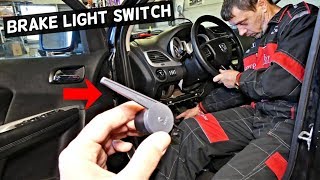
Typical fix: Replace the brake light switch. 🎬 Watch: How to find and replace the brake light switch On some Mopar vehicles, a calibration procedure using a capable scan tool (like AlfaOBD or wiTECH) may be required after replacement to teach the module the new sensor's resting position.
Est. part cost: $15-$40 - Outdated Powertrain Control Module (PCM) Software ⚪ Low Probability TSB #18-086-16 specifically lists P2299 for the 2014 Journey (both 2.4L and 3.6L engines) as a code that can be resolved by a software update. The update likely adjusts the sensitivity or logic for triggering the code to prevent false positives.
How to confirm: A Dodge dealership or a qualified repair shop with access to OEM software (like wiTECH) can check your vehicle's VIN against the TSB to see if the update is available and has not been performed.
Typical fix: Update the PCM software. This is a reprogramming procedure, not a part replacement.
Est. part cost: $0-$200 - Wiring or Connector Issue ⚪ Low Probability Corrosion or damage to the wiring or connectors for either the brake pedal sensor or the accelerator pedal position (APP) sensor can cause erratic signals. The connectors are in the driver's footwell and can be susceptible to moisture or physical damage.
How to confirm: Visually inspect the wiring harnesses and connectors at both pedals for pushed-out pins, corrosion, or frayed wires. TSB #53034160A advises checking wiring before replacing parts.
Typical fix: Repair or replace the damaged section of the wiring harness or the connector.
Est. part cost: $5-$100
Rare But Worth Checking
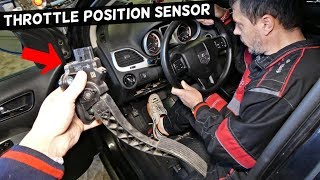
- Faulty Accelerator Pedal Position (APP) Sensor: This is a rare cause. Multiple TSBs (#9003413, #53034160A) specifically warn against replacing the accelerator pedal for this code unless all other possibilities have been exhausted. A failing APP sensor 🎬 See this walkthrough for replacing the accelerator pedal assembly would likely present with other specific APP sensor codes as well, such as P2122 or P2127.
Diagnosis Steps
- Read the code and any other stored codes with an OBD-II scanner. Note the freeze frame data if available.
- Interview the driver to determine if they might be driving with two feet or resting their foot on the brake pedal. This is the most common cause.
- Inspect the driver's side floor mat to ensure it is not bunched up and interfering with pedal operation.
- Clear the code and perform a test drive, ensuring only one foot is used for the pedals. If the code does not return, the issue is resolved.
- If the code returns, check the brake lights. Are they stuck on? Do they function correctly when the pedal is pressed and released?
- Use a scan tool with live data capability to monitor the status of the Brake Pedal Position sensor and the Accelerator Pedal Position (APP) sensors. Verify they report accurate information as the pedals are operated. The brake switch should read OFF with the pedal released and ON when pressed.
- Visually inspect the wiring and connectors at both the brake pedal switch and the accelerator pedal assembly for any signs of damage, corrosion, or loose connections.
- If all sensors and wiring appear correct, contact a Dodge dealership with your VIN to check for any available Powertrain Control Module (PCM) software updates, specifically referencing TSB #18-086-16.
Parts You'll Likely Need
- Brake Light Switch (Brake Pedal Position Sensor)
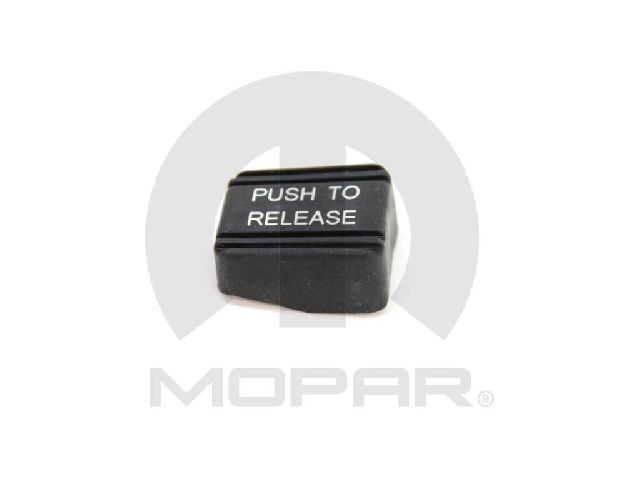
(OEM #56029473AD)— This is the most likely hardware failure to cause P2299 after driver habit is ruled out. It's a common wear item that can get stuck or fail electronically. Part number 56029473AD supersedes previous versions 56029473AA, 56029473AB, and 56029473AC.
Trusted brands: Mopar, Standard Motor Products, Dorman
OEM price range: $20-$30
Aftermarket price range: $15-$40
Related Codes That Often Appear With This One
- P0335 — Listed in TSB #18-086-16 as a code that may appear alongside P2299 on 2.4L and 3.6L engines, potentially related to a PCM software issue.
- P050B — Also listed in TSB #18-086-16 for 2.4L engines, suggesting a related software calibration issue that can be fixed with a PCM flash.
- U0140 — Another code mentioned in TSB #18-086-16, indicating a communication issue with the Body Control Module that might be resolved with the same PCM update.
- P2122 / P2127 — These codes relate directly to the accelerator pedal position sensor circuit. TSB #9003413 notes they can appear if the pedal is disconnected during diagnosis, but their presence could also point toward a genuine pedal or wiring fault.
Technical Service Bulletins (TSBs) & Recalls
- 9003413: States P2299 is usually caused by a 'two footed driver' and the accelerator pedal should not be replaced.
- 18-086-16: Lists P2299 as a code that may be resolved with a PCM software update on 2014 2.4L and 3.6L engines.
- 53034160A: Repeats the warning about 'two footed drivers' and advises checking wiring and connectors before replacing the accelerator pedal.
Platform-Specific Known Issues
- As documented in TSBs #9003413 and #53034160A, this platform is highly susceptible to this code being set by 'two-footed' driving habits rather than a component failure.
- A real-world owner experience on DodgeForum.com for a different Dodge model confirms a user-caused P2299 from 'power braking' (applying brake and throttle simultaneously), which stored the code.
Mechanic-Grade Diagnostic Values
- Accelerator Pedal Position Sensor 1 (APPS1) Voltage — expected: Approximately 0.45V at idle, sweeping smoothly to approximately 4.6V when fully depressed.. Failure: Voltage is erratic, does not sweep smoothly, or is outside the expected range.
- Accelerator Pedal Position Sensor 2 (APPS2) Voltage — expected: Approximately 0.22V at idle, sweeping smoothly to approximately 2.31V when fully depressed.. Failure: Voltage is erratic, does not sweep smoothly, or is outside the expected range.
- Brake Pedal Position Sensor (Brake Light Switch) Continuity — expected: With the pedal released (plunger depressed), there should be no continuity. With the pedal pressed (plunger extended), there should be continuity (audible beep on multimeter).. Failure: Continuity exists when the pedal is released, or there is no continuity when the pedal is pressed.
Hidden / Shadow Codes Worth Checking
- C2205: This code, stored in the ABS module, can indicate an internal failure or circuit issue with the brake pedal switch. While P2299 is a PCM code, an underlying ABS fault like C2205 could be the root cause of the implausible signal. (see via A scan tool capable of reading ABS module codes, such as a dealer wiTECH tool or advanced aftermarket scanners.)
Scan Tool Commands That Help
- AlfaOBD / wiTECH: Brake Pedal Calibration — After replacing the brake light switch (Brake Pedal Position Sensor). This procedure is found in the ABS module functions and teaches the module the new sensor's resting or 'zero' position to prevent false 'brake applied' signals, which can cause P2299 or keep brake lights stuck on.
Wiring & Ground Locations
- C201 — The 6-pin connector at the Accelerator Pedal Position (APP) sensor assembly.. This is the primary connection point for the APP sensor. Checking for 5V supply, ground, and signal voltages at these pins is a critical diagnostic step. A 2014 Journey V6 uses Pin 1 (WT/BR) for Signal 2, Pin 2 (BR/VT) for Ground 2, Pin 3 (BR/YL) for Ground 1, Pin 4 (K23 BR/WT) for Signal 1, and Pin 5/6 for 5V supply.
- Main Chassis Ground Stud — Located on the driver's side strut tower in the engine bay. The negative battery cable connects here.. The Dodge Journey is noted by owners for having a weak factory grounding system. Poor grounds can cause fluctuating voltages and unpredictable behavior in sensitive electronic sensors like the APP and brake pedal sensors. Ensuring this primary ground point and the associated cable to the engine block are clean and tight is a crucial step in diagnosing any electronic fault.
OEM Part Supersession History
56029473AA, 56029473AB, 56029473AC→56029473AD— Standard part revision and improvement by the manufacturer.
Heads up: All previous versions are replaced by 56029473AD, which is the current correct service part for the 2014-2017 Journey. No known incompatibilities exist when using the latest part number.
Model Year Variations Within This Range
- 2014: TSB #18-086-16 specifically calls out the 2014 model year (with 2.4L or 3.6L engines) as potentially needing a PCM software update to resolve a false P2299 code. This suggests the original software calibration was too sensitive compared to later model years within this range.
Helpful Videos
We Have This Part in Stock



The information in this article is provided for general reference and educational purposes only. Vehicle specifications, procedures, and part compatibility can vary by production date, trim level, and region. Always consult your vehicle's factory service manual and verify part numbers before purchasing or performing repairs. Safety-critical components such as airbags, seat belts, and braking systems should be installed by a qualified professional.
- Dodge JOURNEY:
- 🎬 Helpful Videos
- 🛍️ Shop This Part
- What's Unique About the 2014-2017 Dodge JOURNEY
- Diagnostic Flowchart
- Symptoms You May Notice
- Most Likely Causes
- Rare But Worth Checking
- Diagnosis Steps
- Parts You'll Likely Need
- Related Codes That Often Appear With This One
- Technical Service Bulletins (TSBs) & Recalls
- Platform-Specific Known Issues
- Mechanic-Grade Diagnostic Values
- Hidden / Shadow Codes Worth Checking
- Scan Tool Commands That Help
- Wiring & Ground Locations
- OEM Part Supersession History
- Model Year Variations Within This Range
- 🎟️ Get 5% Off