

P2299 on 2014-2017 Dodge Durango: Brake/Accelerator Pedal Incompatible Causes & Fixes
This code almost always means the brake and gas pedals were pressed at the same time. Dodge TSB #9003413 states it's often caused by 'two-footed driving' and the accelerator pedal should not be replaced. Before buying parts, check for floor mat obstruction and review driving habits. The vehicle's computer will intentionally reduce engine power as a safety measure when this code is active.
- P2299 is a safety code triggered when the Durango's computer sees both the brake and gas pedals pressed at the same time, a condition it interprets as a potential risk.
- The most common cause, by far, is driver habit (two-footed driving or resting a foot on the brake), as confirmed by a specific Dodge Technical Service Bulletin (TSB #9003413).
- Do not immediately replace the expensive accelerator pedal assembly; it is rarely the cause according to Dodge.
- Simple, free checks should be done first: confirm driving style (one-foot only) and ensure the floor mat is not obstructing the pedals.
- If a part has failed, the most likely candidate is the inexpensive and easy-to-replace brake light switch, which can be confirmed by checking for stuck-on brake lights or using a scan tool's live data.
What's Unique About the 2014-2017 Dodge DURANGO
For this specific generation of Dodge Durango, the manufacturer has been very clear about the primary cause of P2299. A Technical Service Bulletin (TSB #9003413) explicitly states that this code is 'usually caused by a two footed driver' and warns technicians not to replace the accelerator pedal for this fault. This is a strong indication that for many Durango owners, the code is a result of driving style (resting a foot on the brake pedal or left-foot braking) rather than a component failure. Forum discussions among Dodge owners confirm that 'power braking' or even accidentally pressing both pedals will trigger this specific code.
Diagnostic Flowchart
Tap your situation to follow the diagnostic path that matches what you're seeing on this vehicle.
Symptoms You May Notice
- Check Engine Light is on
- Electronic Throttle Control (ETC) light may be illuminated
- Reduced engine power or 'limp mode'
- Sluggish, unresponsive, or no acceleration
- Cruise control may be disabled
- Inability to shift out of Park if the brake switch has failed completely
- Replacing the Accelerator Pedal Assembly. TSB #9003413 specifically warns technicians that this is usually not the correct fix for a P2299 code.
Most Likely Causes
- Driver Habit (Two-Footed Driving) 🔴 High Probability Dodge issued a TSB (#9003413) specifically calling this out as the most common cause. Diagnostic procedures for technicians explicitly state to ask the driver about their habits first.
How to confirm: Observe driving habits. Does the driver rest their left foot on the brake pedal while driving or use both feet to operate the pedals? This can also be triggered by 'brake torquing' (holding the brake and applying throttle before releasing the brake).
Typical fix: Modify driving style to use only the right foot for both pedals. Clear the code and see if it returns.
Est. part cost: $0 - Floor Mat Obstruction 🟡 Medium Probability
How to confirm: Visually inspect the driver's side floor mat. Ensure it is properly secured and not bunched up, which could cause either the brake pedal to be slightly depressed or the accelerator pedal to not return to idle fully.
Typical fix: Adjust, secure, or replace the floor mat. Ensure it is the correct type for the vehicle.
Est. part cost: $0-$150 - Faulty Brake Pedal Position Sensor (Brake Light Switch) ⚪ Low Probability This is a common wear item. The sensor can fail intermittently or become stuck, sending a constant 'brake applied' signal to the PCM.
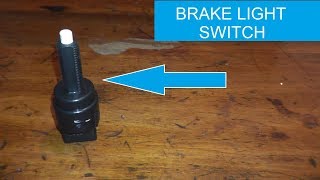
How to confirm: Use a scan tool to monitor live data for the brake pedal position sensor. Check if it shows 'Applied' or 'Pressed' when the pedal is not being touched. Also, check if brake lights are stuck on or operate inconsistently. A simple continuity test with a multimeter can also verify function; there should be continuity only when the pedal is pressed. 🎬 See how to test and replace the brake light switch
Typical fix: Replace the brake pedal position sensor/switch. This is a simple twist-in component located above the brake pedal.
Est. part cost: $25-$60
Rare But Worth Checking
- Faulty Accelerator Pedal Position (APP) Sensor: While a Dodge TSB warns against replacing this part first, a faulty APP sensor can still be the cause if it sends an incorrect signal, such as not returning to 0% when the pedal is released. This should only be considered after ruling out the more common causes. A user on a ScannerDanner forum ultimately traced a similar set of codes to a faulty fuel tank pressure sensor that shared a 5V reference circuit with the APP sensor.
- Wiring or Connector Issues: Damage to the wiring harness or corrosion in the connectors for either the brake or accelerator pedal sensors can cause intermittent or incorrect signals. This can include poor ground connections near the PCM or on the engine block.
- Software Calibration or Update Mismatch: TSB 18-049-20 involves a PCM software update that addresses P2299, among other codes. This suggests that in some cases, the sensitivity of the monitoring software could be a factor, and an update may resolve the issue. This can also occur if a module is replaced and not properly calibrated.
- Powertrain Control Module (PCM) Fault: In very rare cases, the PCM itself may have internal processing errors, leading it to misinterpret valid sensor inputs. This is a last resort after all other possibilities have been exhausted.
Diagnosis Steps
- Ask about driving habits. Specifically, inquire about two-footed driving, as this is the most likely cause per Dodge.
- Inspect the driver's floor area. Check for any obstructions, like a bunched-up or incorrect floor mat, that could interfere with pedal operation.
- Use an OBD-II scanner to check for any other stored codes. Diagnose and address any other brake or accelerator sensor codes first.
- Use the scanner's live data function to monitor the signals from both the Accelerator Pedal Position (APP) sensor and the Brake Pedal Position (BPP) sensor.
- Observe the BPP sensor status. Does it show 'Pressed' or 'Applied' when the brake pedal is untouched? Check if the brake lights are stuck on. If so, the brake switch is the likely culprit.
- Observe the APP sensor data. With the pedal untouched, it should read 0%. Slowly depress the pedal; the reading should increase smoothly. One APP sensor (APP1) should read from ~0.45v to ~4.6v, and the second (APP2) from ~0.22v to ~2.31v. If the reading is stuck above 0% or does not change smoothly, the APP sensor may be faulty.
- If sensor data appears correct, inspect the wiring harnesses and connectors for both pedal assemblies for any signs of damage, chafing, or corrosion.
- If the vehicle is a 2016-2017 model, check if TSB 18-049-20 has been performed. A PCM software update may be required to change the fault sensitivity.
Parts You'll Likely Need
- Brake Pedal Position Sensor / Stop Light Switch
(OEM #68078700AE (supersedes 68078700AB, 68078700AC, 68078700AD))— If a part has failed, it is most likely the brake sensor sending a false 'on' signal, which then conflicts with the accelerator pedal input. This is a relatively inexpensive and easy part to replace.
Trusted brands: Mopar, Standard Motor Products, Duralast
OEM price range: $40-$60
Aftermarket price range: $25-$45 - Accelerator Pedal Assembly
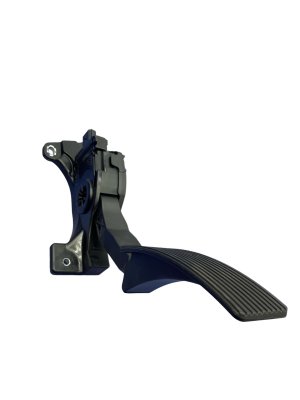
(OEM #52124785AF)— This is a less common cause, as noted in TSB #9003413. It should only be replaced if diagnostic testing confirms the Accelerator Pedal Position (APP) sensor is faulty. The sensor is integrated into the pedal assembly and is not sold separately.
Trusted brands: Mopar, Standard Motor Products, Hella, Dorman
OEM price range: $150-$200
Aftermarket price range: $75-$130
Technical Service Bulletins (TSBs) & Recalls
- 9003413: States that DTC P2299 is usually caused by a two-footed driver and the accelerator pedal should not be replaced for this fault.
- 18-049-20: A PCM software update for 2016-2017 models that lists P2299 - Brake Pedal Position/Accelerator Pedal Position Incompatible as one of the codes it addresses.
- 1802417: Lists P2299-00 - Brake Pedal Position/Accelerator Pedal Position Incompatible as a potential code.
- 18-024-17 REV. C: Lists P2299-00 - Brake Pedal Position/Accelerator Pedal Position Incompatible as a potential code.
- 18-024-17: Lists P2299-00 - Brake Pedal Position/Accelerator Pedal Position Incompatible as a potential code.
Platform-Specific Known Issues
- Dodge has issued multiple Technical Service Bulletins that list P2299. TSB #9003413 is particularly relevant, as it directly identifies 'two footed driver' habits as the primary cause and advises against replacing the accelerator pedal without proper diagnosis.
- TSB 18-049-20, which supersedes earlier bulletins, involves a software update for the Powertrain Control Module (PCM) for 2016-2017 models that can resolve an instance of P2299, suggesting some cases are due to software sensitivity rather than a hard fault.
Mechanic-Grade Diagnostic Values
- Accelerator Pedal Position Sensor 1 (APP1) Voltage — expected: Approx. 0.45V at idle to 4.6V at wide-open throttle, with a smooth transition.. Failure: Voltage is stuck, does not change smoothly, or is outside the expected range.
- Accelerator Pedal Position Sensor 2 (APP2) Voltage — expected: Approx. 0.22V at idle to 2.31V at wide-open throttle, with a smooth transition.. Failure: Voltage is stuck, does not change smoothly, or is outside the expected range.
- Brake Pedal Position Sensor Continuity — expected: Continuity should exist between terminals 1 and 2 only when the brake pedal is pressed. No continuity when released.. Failure: Continuity exists when the pedal is released (stuck on), or no continuity when pressed (failed open).
Scan Tool Commands That Help
- wiTECH: ETC RELEARN — After replacing the Accelerator Pedal Position (APP) sensor assembly, this function must be used to relearn the new sensor's values.
- wiTECH: PCM Reprogramming/Flash — To apply software updates as specified in TSBs like 18-049-20 or 18-049-16, which can change the sensitivity and logic for setting P2299.
- wiTECH: ABS VERIFICATION TEST — If other ABS codes like C0042-62 are present, this test is used to verify the function of the ABS module and related sensors after a repair.
Wiring & Ground Locations
- Accelerator Pedal Connector (D1563A) — At the top of the accelerator pedal assembly.. This 6-pin connector provides the 5V reference, ground, and signal lines for both APP sensors. A loose connection or corrosion here can directly cause P2299. Pin 2 (BR/WT) is APP Signal 1, Pin 5 (WT/BR) is APP Signal 2, and Pins 3 (BR/YL) and 4 (BR/VT) are the sensor grounds.
- Brake Lamp Switch Connector — At the top of the brake pedal arm, connected to the brake light switch.. This connector carries the signal that tells the PCM the brake is applied. A fault here can cause a false 'brake on' signal. Testing for continuity across terminals 1 and 2 of the switch itself can diagnose a faulty switch.
- PCM Ground — Typically located on the chassis near the PCM itself or on the alternator bracket.. A poor PCM ground or a dangling engine ground strap can introduce electrical noise and voltage fluctuations across multiple sensor circuits, including the 5V reference circuits used by the pedal sensors, potentially causing erratic behavior and fault codes.
Real Owner Repair Stories
- ScannerDanner Forum (2013 Dodge Durango 3.6L V6) — Car occasionally goes into limp mode, becoming more frequent. Throws multiple codes including P2127 (APP Sensor 2 Circuit Low) and others related to the 5V reference circuit.
❌ Tried (didn't work) Replaced alternator, Replaced PCM, Replaced battery, Replaced both camshaft sensors, crankshaft sensor, TPS, MAP sensor, accelerator pedal sensor, and oil pressure sensor, Visually inspected engine harness, Cleaned ground point near PCM
✅ What actually fixed it The owner discovered a Fuel Tank Pressure Sensor, which was also on the same 5V reference circuit (K856), was faulty. After replacing this sensor, which required dropping the fuel tank, the issue was resolved.
OEM Part Supersession History
68078700AB, 68078700AC, 68078700AD→68078700AE— Standard part revision and consolidation by the manufacturer.
Model Year Variations Within This Range
- 2016-2017: TSB 18-049-20 provides a PCM software update specifically for these model years (and some 2016s built within a specific date range) to address P2299, among other codes. This suggests the fault logic or sensitivity was adjusted via software for later models in this range.
Helpful Videos
Used OEM Parts in Stock
New Aftermarket Parts Available


The information in this article is provided for general reference and educational purposes only. Vehicle specifications, procedures, and part compatibility can vary by production date, trim level, and region. Always consult your vehicle's factory service manual and verify part numbers before purchasing or performing repairs. Safety-critical components such as airbags, seat belts, and braking systems should be installed by a qualified professional.
- Dodge DURANGO:
- 🎬 Helpful Videos
- 🛍️ Shop This Part
- What's Unique About the 2014-2017 Dodge DURANGO
- Diagnostic Flowchart
- Symptoms You May Notice
- Most Likely Causes
- Rare But Worth Checking
- Diagnosis Steps
- Parts You'll Likely Need
- Technical Service Bulletins (TSBs) & Recalls
- Platform-Specific Known Issues
- Mechanic-Grade Diagnostic Values
- Scan Tool Commands That Help
- Wiring & Ground Locations
- Real Owner Repair Stories
- OEM Part Supersession History
- Model Year Variations Within This Range
- 🎟️ Get 5% Off