

P2299 on 2013-2017 Dodge Charger: Brake and Accelerator Pedal Incompatible Fixes
This code almost always means the driver is pressing the brake and gas pedals at the same time. Before buying any parts, check for this 'two-footed driving' habit, as noted in Dodge TSB #9003413. The fix is typically adjusting your driving style, costing $0. If that's not the cause, the next most likely culprit is a cheap, easy-to-replace brake light switch.
- First, check your driving habits. P2299 is most often caused by resting your left foot on the brake while accelerating.
- Do not replace the accelerator pedal unless it has been properly tested and other specific fault codes are present.
- If driving style is not the cause, check for simple issues like a misplaced floor mat before inspecting sensors.
- A faulty brake light switch is a more likely and much cheaper component to fail than the entire accelerator pedal assembly.
What's Unique About the 2013-2017 Dodge CHARGER
For the Dodge Charger and its platform mates (Chrysler 300, Dodge Challenger), this code is so frequently caused by driver habit that Dodge issued a specific Technical Service Bulletin (TSB #9003413) to its technicians. The bulletin explicitly states that P2299 is 'usually caused by a two footed driver' and warns that the 'accelerator pedal should not be replaced for this fault' unless other specific pedal sensor codes are also present. This makes it crucial to rule out driving style before attempting any mechanical repairs. Forum posts from owners confirm this, with many realizing the code was set during 'power braking' or resting their left foot on the brake pedal.
Diagnostic Flowchart
Tap your situation to follow the diagnostic path that matches what you're seeing on this vehicle.
Symptoms You May Notice
- Check Engine Light is on
- Vehicle enters limp mode with reduced engine power
- Electronic Throttle Control (ETC) warning light may be on
- Brief engine idle fluctuation
- Cruise control may be disabled
- In some cases, hard starting and rough idle if the underlying cause is a faulty component.
- Replacing the accelerator pedal assembly. TSB #9003413 explicitly warns that this is usually an incorrect fix for a P2299 code and is often a waste of money unless specific pedal sensor fault codes are also present. This is the most common unnecessary repair for this code.
Most Likely Causes
- Driver Habit (Two-Footed Driving) 🔴 High Probability The system logic is sensitive to overlapping pedal input. Dodge TSB #9003413 directly identifies this as the most common cause. Owners on forums frequently admit to causing the code by 'power braking' or resting their left foot on the brake pedal while driving.
How to confirm: Pay close attention to your driving habits. Confirm if you are resting your left foot on the brake pedal while accelerating with your right foot. Ask other drivers of the vehicle if they do. The code often appears after an attempt to do a 'burnout' or 'brake torque' the engine.
Typical fix: Adjust driving style to use only the right foot for both the accelerator and brake pedals. Clear the code using an OBD-II scanner or by disconnecting the battery for a few minutes.
Est. part cost: $0 - Faulty Brake Light Switch (Stop Lamp Switch) 🟡 Medium Probability This switch can fail and remain stuck in the 'on' position, telling the PCM the brakes are applied even when they are not. It's a relatively common failure point on many vehicles.
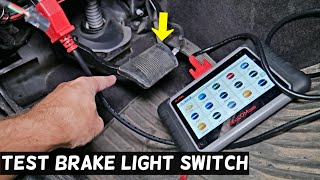
How to confirm: Check if your brake lights are stuck on, even when the pedal is not pressed. Use a scan tool to monitor the brake pedal position sensor (BPP) live data; it should change state from 'Released' to 'Applied' when the pedal is pressed. If it's stuck in the 'Applied' or 'On' state, the switch is the likely culprit. 🎬 Watch: How to test the brake light switch yourself.
Typical fix: Replace the brake light switch located on the brake pedal support bracket under the dashboard. This is a simple twist-in component.
Est. part cost: $15-$40 - Floor Mat Obstruction ⚪ Low Probability
How to confirm: Visually inspect the driver's side floor area. Check if an improperly placed, aftermarket, or bunched-up floor mat is preventing either the brake or accelerator pedal from returning to its full resting position.
Typical fix: Reposition, secure, or replace the floor mat. Ensure both pedals have a full and clear range of motion.
Est. part cost: $0
Rare But Worth Checking
- Faulty Accelerator Pedal Position (APP) Sensor: This is a rare cause. TSB #9003413 specifically warns against replacing the pedal assembly for P2299 alone. Only consider this if you have other codes like P2122 or P2127 that directly point to a pedal sensor failure, and after the sensor's voltage has been tested and confirmed to be faulty. A mechanically stuck pedal can also cause this code.
- Wiring Harness Damage: Corrosion or damage to the wiring or connectors for either the brake pedal switch or the accelerator pedal sensor can cause erratic signals. This is unlikely without other symptoms or visible damage.
- PCM Software Issue: Multiple TSBs (#1807517, #18-073-20, #18-062-17, #18-061-17) mention P2299 in conjunction with other codes that are resolved by a PCM software update. TSB #18-073-20 specifically applies to 2013-2015 models with the 5.7L Hemi engine. If P2299 appears with other codes listed in these bulletins (like P0456, P2610, U1424), a dealer may need to reflash the PCM.
Diagnosis Steps
- Ask the driver about their driving habits. Specifically, inquire about two-footed driving (left foot on brake, right on gas). This is the most likely cause.
- Scan for any other Diagnostic Trouble Codes (DTCs). The presence of other codes (e.g., P0456, P2610, U1424) can point towards a PCM software update being needed.
- Inspect the driver's floor area for any obstructions, such as a bunched-up floor mat, that could interfere with pedal movement.
- With the ignition on (engine off), use a scan tool to view live data for the Accelerator Pedal Position (APP) sensor and the Brake Pedal Position (BPP) sensor.
- Confirm that the BPP sensor shows 'Off' or 'Released' when the brake pedal is not touched, and 'On' or 'Applied' when it is pressed. Check physically if the brake lights are stuck on.
- Confirm that the APP sensor shows 0% throttle at rest. Slowly press the accelerator pedal; APP Sensor 1 voltage should sweep smoothly from ~0.45V to ~4.6V, and APP Sensor 2 from ~0.22V to ~2.31V. Any jumps or dead spots indicate a faulty pedal assembly.
- If the BPP sensor is stuck 'On', the brake light switch is the primary suspect. Replace it.
- If no issues are found with live data or driving habits, clear the code. Test drive the vehicle using only the right foot. If the code returns immediately, investigate wiring. If it returns with other specific codes, research the relevant TSBs for a potential PCM flash.
- If the throttle body has been recently cleaned or replaced, a throttle relearn procedure may be necessary. This involves disconnecting the battery for several minutes, reconnecting, and turning the ignition to 'ON' (without starting) for at least 10 seconds.
Parts You'll Likely Need
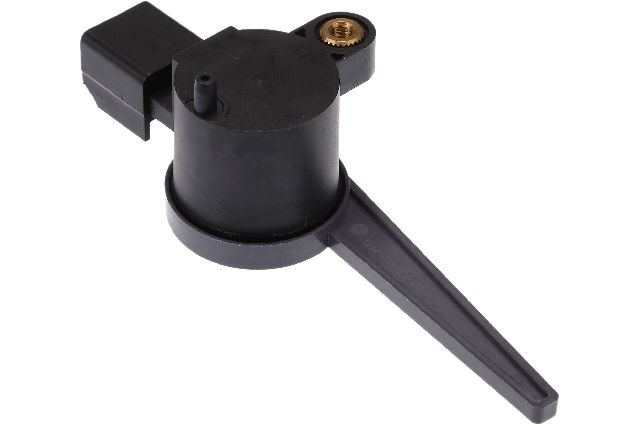
- Brake Light Switch / Stop Lamp Switch
(OEM #05189366AB)— If the code is not caused by driver habit, a faulty brake light switch stuck in the 'on' position is the next most likely component failure. It is inexpensive and easy to replace.
Trusted brands: Mopar, Standard Motor Products (SMP), Dorman
OEM price range: $15-$25
Aftermarket price range: $10-$20 - Accelerator Pedal Assembly
(OEM #04861714AH)— This part should ONLY be replaced if diagnostic testing confirms it has failed and other pedal-specific codes (like P2122/P2127) are present, as per TSB #9003413. This part number supersedes previous versions 4861714AB through 4861714AG.
Trusted brands: Mopar, Hella, Duralast
OEM price range: $150-$200
Aftermarket price range: $80-$150
Related Codes That Often Appear With This One
- P0456 — TSBs #1807517 and #18-073-20 list this EVAP system code alongside P2299 as part of a group of faults that may be resolved with a PCM software update on 5.7L models.
- P2610 — This 'PCM Internal Engine Off Timer Performance' code is also mentioned in TSBs #1807517 and #18-073-20 with P2299, suggesting a potential software-related issue that requires a dealer reflash.
- U1424 — Mentioned in TSBs #18-073-20 and #18-061-17, this code for 'Implausible Engine Torque Signal Received' relates to conflicting data, similar to the logic of P2299, and can be part of the same PCM software update fix.
Technical Service Bulletins (TSBs) & Recalls
- 9003413: States that P2299 is usually caused by a two-footed driver and the accelerator pedal should not be replaced for this fault alone.
- 1807517: Lists P2299 among other codes that may be addressed by a PCM software update.
- 18-073-20: Includes P2299 in a list of DTCs related to a PCM software update for 2013-2015 Charger, Challenger, and 300 models, primarily with the 5.7L engine.
- 18-062-17: Mentions P2299 in a list of potential codes related to a PCM software update.
- 18-061-17: Includes P2299 with other codes that may be resolved by a PCM update.
Platform-Specific Known Issues
- Dodge has explicitly identified this code as being commonly set by 'two-footed drivers' via TSB #9003413. This bulletin was issued to service technicians to prevent the unnecessary replacement of the accelerator pedal assembly.
- A PCM software update may be required, particularly on 2013-2015 models with the 5.7L Hemi engine, if P2299 is present with a cluster of other seemingly unrelated codes like P0456 or U1424, as detailed in TSB 18-073-20.
Mechanic-Grade Diagnostic Values
- Accelerator Pedal Position Sensor 1 (APP1) Voltage — expected: Sweep from ~0.45V at idle to ~4.6V at wide-open throttle (WOT).. Failure: Voltage is stuck, drops out, or does not sweep smoothly.
- Accelerator Pedal Position Sensor 2 (APP2) Voltage — expected: Sweep from ~0.22V at idle to ~2.31V at wide-open throttle (WOT).. Failure: Voltage is stuck, drops out, or does not sweep smoothly. The two APP signals must be in agreement.
- Brake Pedal Status (Live Data) — expected: Scan tool should display 'Released' or 'Off' with no pedal pressure, and 'Pressed' or 'On' the moment the pedal is depressed.. Failure: Status is stuck on 'Pressed' even when the pedal is released, or status flickers without input.
- Brake Pedal Travel Sensor (Live Data) — expected: On models equipped, a scan tool should show the travel percentage or value increasing as the pedal is pressed further.. Failure: The value does not change or changes erratically when the pedal is moved.
Scan Tool Commands That Help
- wiTECH or equivalent professional scanner: Live Data Monitoring (APP & BPP Sensors) — This is the primary diagnostic step after checking for driver habit. It allows you to see exactly what the PCM is seeing from both pedals to determine if a sensor is faulty or stuck.
- Manual Procedure or Scan Tool: Throttle Body Relearn / Idle Relearn — Use after cleaning or replacing the throttle body, or after disconnecting the battery for an extended period. An incorrect idle position could potentially contribute to setting conflict codes, although it's not a primary cause for P2299.
Wiring & Ground Locations
- Accelerator Pedal Position (APP) Sensor Connector — At the top of the accelerator pedal assembly, under the driver's side dashboard.. This 6-pin connector is the source of the throttle input signals. Probing these pins is necessary for voltage tests. Based on platform-mate diagrams, key pins are: Pin 1 (5V Supply), Pin 2 (APP Signal 1), Pin 3 (Sensor Ground), Pin 5 (APP Signal 2).
- Brake Light Switch Connector — On the brake pedal support bracket, above the brake pedal arm.. A faulty connection here can cause the PCM to believe the brakes are applied when they are not. The Dark Green/White wire is often the brake signal wire on these vehicles.
- Battery / Main Power Distribution — The battery and a rear fuse box are located in the trunk, under the floor next to the spare tire. A primary fuse/relay box (Power Distribution Center) and remote positive/negative terminals are under the hood.. Poor system voltage or bad grounds can cause erratic sensor behavior. The under-hood terminals are the correct points for jump-starting or connecting a battery charger to ensure stable voltage during diagnosis.
- Chassis Grounds (G102, G305) — G102 is typically located in the engine bay on or near the shock tower. G305 is often in the rear of the vehicle. Specific locations can vary slightly by year and engine.. The APP and BPP sensors rely on a clean ground reference (Sensor Ground/Return) to send accurate voltage signals to the PCM. A corroded or loose ground can cause incorrect readings that could trigger P2299.
"I Checked Everything" — The Actual Cause
- For code P2299, the equivalent of a 'smoke test clean' scenario is when all diagnostic tests on the brake switch and accelerator pedal sensor come back normal. In these cases, the root cause is almost always what the TSB #9003413 states: the driver's habit of resting their left foot on the brake pedal while accelerating with their right ('two-footed driving'). The system correctly identifies the conflicting inputs and sets the code as designed.
When the Usual Fixes Don't Work
- While TSB #9003413 correctly identifies driver habit as the most frequent trigger for P2299, it is not the only cause. A significant number of cases are resolved by replacing the brake light switch. This component can fail electrically and remain stuck in the 'on' state, perfectly replicating the 'two-footed driving' scenario for the PCM. Therefore, if the driver is confident they are not causing the issue, the brake light switch should be the first component to be tested and, if necessary, replaced, before suspecting more complex wiring or pedal sensor issues.
OEM Part Supersession History
4861714AB, AC, AD, AE, AF, AG→04861714AH— Design revision and consolidation of part numbers for the accelerator pedal assembly.
Heads up: Using an older, superseded part number may lead to premature failure. 04861714AH is the correct service part.
Model Year Variations Within This Range
- 2013-2015: A PCM software update is available under TSB #18-073-20, primarily for 5.7L engines, which addresses P2299 when it appears with other codes like P0456 and U1424. Later models may have this logic update from the factory.
- General: The physical mounting of the brake light switch may vary. Some earlier models or different trims may use a switch secured by a 7mm bolt that requires adjustment, while many use a simpler quarter-turn twist-in switch that is not adjustable. It is important to visually inspect the existing switch before ordering a replacement.
Helpful Videos
We Have This Part in Stock



The information in this article is provided for general reference and educational purposes only. Vehicle specifications, procedures, and part compatibility can vary by production date, trim level, and region. Always consult your vehicle's factory service manual and verify part numbers before purchasing or performing repairs. Safety-critical components such as airbags, seat belts, and braking systems should be installed by a qualified professional.
- Dodge CHARGER:
- 🎬 Helpful Videos
- 🛍️ Shop This Part
- What's Unique About the 2013-2017 Dodge CHARGER
- Diagnostic Flowchart
- Symptoms You May Notice
- Most Likely Causes
- Rare But Worth Checking
- Diagnosis Steps
- Parts You'll Likely Need
- Related Codes That Often Appear With This One
- Technical Service Bulletins (TSBs) & Recalls
- Platform-Specific Known Issues
- Mechanic-Grade Diagnostic Values
- Scan Tool Commands That Help
- Wiring & Ground Locations
- "I Checked Everything" — The Actual Cause
- When the Usual Fixes Don't Work
- OEM Part Supersession History
- Model Year Variations Within This Range
- 🎟️ Get 5% Off