

P2299 on 2013-2017 Chrysler 300: Brake and Accelerator Pedal Incompatibility Explained
This code almost always means the brake and gas pedals were pressed at the same time. Before replacing any parts, check for 'two-footed driving' habits. If the code persists, the next most likely cause is a faulty brake pedal position sensor, which is an inexpensive part. In some cases, a PCM software update from the dealer is required to fix overly sensitive logic.
- The most common cause for P2299 on a Chrysler 300 is a driver resting their foot on the brake while accelerating.
- Do not replace any parts until you have ruled out driving habits as the cause.
- If a part has failed, the brake pedal position sensor is a more likely and less expensive culprit than the accelerator pedal assembly.
- The vehicle may enter a reduced power mode as a safety precaution, so address the issue promptly.
- Check for available PCM software updates, as this can sometimes resolve overly sensitive code-triggering logic.
What's Unique About the 2013-2017 Chrysler 300
Chrysler has explicitly stated in multiple Technical Service Bulletins (TSBs) that P2299 is commonly caused by 'two-footed driving'—where the driver rests their left foot on the brake while accelerating with their right. [Bulletin #9003413] The manufacturer specifically advises against replacing the accelerator pedal for this fault unless further diagnostics confirm a part failure. This makes it unique, as the primary cause is often user behavior, not a defective component. Forum discussions on Dodge and Chrysler platforms frequently confirm that changing driving habits or discovering an obstruction under the pedal resolves the issue.
Diagnostic Flowchart
Tap your situation to follow the diagnostic path that matches what you're seeing on this vehicle.
Symptoms You May Notice
- Check Engine Light is on
- Reduced engine power or 'limp mode'
- Brief engine idle fluctuation [Bulletin #1807517]
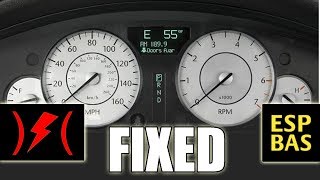
- Electronic Throttle Control (ETC) warning light may illuminate 🎬 Watch: How to fix the Electronic Throttle Control light (often a red lightning bolt symbol)
- Cruise control may be disabled or cannot be activated
- Brake light warning lamp may flash or stay on
- Hesitation or unresponsive accelerator pedal
- Replacing the accelerator pedal assembly without first ruling out two-footed driving habits or checking the brake light switch. Chrysler TSB #9003413 specifically warns that the pedal should not be replaced for this fault without proper diagnosis.
Most Likely Causes
- Driver Habit (Two-Footed Driving) 🔴 High Probability The PCM logic is sensitive to overlapping pedal signals. Chrysler TSBs specifically call this out as the most frequent cause. [Bulletin #9003413] This can also be caused by 'brake torquing' (holding the brake and gas to do a burnout).
How to confirm: Question the driver about their habits. Clear the code and test drive, consciously keeping the left foot off the brake pedal. If the code does not return, this was the cause. Also check for floor mats or other objects obstructing the pedals.
Typical fix: Advise the driver to use only their right foot for both pedals. Clear the diagnostic trouble code. Ensure floor mats are properly secured.
Est. part cost: $0 - Faulty Brake Pedal Position Sensor (Stop Light Switch) 🟡 Medium Probability This sensor can fail, stick, or become misaligned, sending a constant 'brake applied' signal to the PCM even when the pedal is released. It's a relatively common failure point on many vehicles.
How to confirm: Use a scan tool to monitor the live data for the brake pedal position sensor. The sensor's status should change from 'Off' to 'On' when the pedal is pressed and vice-versa. If it's stuck in the 'On' position or its voltage is incorrect, the sensor is faulty. A continuity test with a multimeter can also be performed on the switch.
Typical fix: Replace the brake pedal position sensor. It is located on the brake pedal support bracket under the dashboard.
Est. part cost: $25-$50 - PCM Software Update Needed ⚪ Low Probability Multiple TSBs for Chrysler vehicles, including TSB #18-049-16, explicitly state that a PCM reflash can resolve a P2299 code, indicating the original software logic may be too sensitive. These updates often bundle fixes for other unrelated codes like P0456 (EVAP leak) and P2610. [Bulletin #1807517, #18-073-20]
How to confirm: A Chrysler dealership or a qualified shop with a wiTECH scan tool can check if the vehicle's PCM has a pending software update by comparing the current software version to the latest available.
Typical fix: Update the Powertrain Control Module (PCM) software. This is a dealer or specialist-level repair.
Est. part cost: $0-$250 (depending on dealer labor rates, which can be 1-2 hours) - Faulty Accelerator Pedal Position (APP) Sensor ⚪ Low Probability While possible, Chrysler TSBs explicitly warn against replacing the accelerator pedal assembly unless diagnostics prove it has failed. [Bulletin #9003413] The entire pedal assembly must be replaced as the sensor is integrated.
How to confirm: Use a scan tool to monitor the APP sensor's voltage. It should sweep smoothly from a low baseline (around 0.45V) to a high value (around 4.6V) as the pedal is pressed, with no dropouts. Any sticking, dropouts, or incorrect baseline voltage indicates a failure.
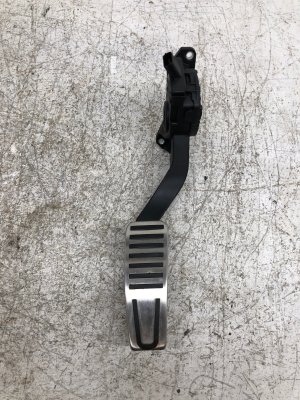
Typical fix: Replace the accelerator pedal assembly. 🎬 Watch: Step-by-step guide to replacing the electric gas pedal
Est. part cost: $100-$150
Rare But Worth Checking
- Wiring or Connector Issue: A damaged wire or corroded connector for either the brake or accelerator pedal sensor can cause erratic signals, leading to the P2299 code. This should be checked after confirming sensors are good. Pay close attention to the harness near the pedals where it can be kicked or stressed.
Diagnosis Steps
- Ask the primary driver if they drive with two feet or rest their left foot on the brake pedal. This is the most common cause.
- Check for any obstructions under the pedals, such as a bunched-up floor mat.
- If driver habit is a possibility, clear the code and perform a test drive using only the right foot. If the code does not return, the issue is resolved.
- If the code returns, connect an OBD-II scanner and view the live data stream.
- Monitor the Brake Pedal Position (BPP) sensor status while pressing and releasing the brake pedal. It should switch cleanly between 'On' and 'Off' (or similar states). If it's stuck, the sensor is likely bad.
- Monitor the Accelerator Pedal Position (APP) sensor voltage. It should read near a low baseline (e.g., ~0.45 volts) with the pedal released and increase smoothly to a high value (e.g., ~4.6 volts) as you press it.
- Visually inspect the wiring and connectors for both the BPP sensor (located on the brake pedal support) and the APP sensor (part of the accelerator pedal assembly) for any signs of damage or corrosion.
- If sensor data is erratic or incorrect, and wiring is intact, replace the suspect sensor. Start with the less expensive brake pedal sensor first.
- If all components test good, contact a Chrysler dealership or qualified repair shop to check for available PCM software updates, as noted in several TSBs like #18-049-16.
Parts You'll Likely Need
- Brake Pedal Position Sensor (Stop Light Switch)
(OEM #4671336AD)— If the cause is not driver habit, a failing or misaligned brake sensor is the next most likely component to fail, sending a false 'brake applied' signal. This part number supersedes previous versions like 4671336AB and 4671336AC.
Trusted brands: Mopar, Standard Motor Products, Duralast
OEM price range: $40-$60
Aftermarket price range: $20-$40 - Accelerator Pedal Assembly
(OEM #4581661AA)— This is a less common cause. It should only be replaced if diagnostic testing confirms the internal Accelerator Pedal Position (APP) sensor has failed. Per TSBs, this is an uncommon fix for this specific code. [Bulletin #9003413] The sensor is integrated into the pedal assembly.
Trusted brands: Mopar, Dorman, Standard Motor Products
OEM price range: $120-$160
Aftermarket price range: $90-$130
Related Codes That Often Appear With This One
- P0456 — This EVAP system code is listed alongside P2299 in TSBs #1807517 and #18-073-20, which often indicates a PCM software update is available to address multiple unrelated issues at once.
- P2610 — Like P0456, this 'PCM Internal Engine Off Timer Performance' code is also mentioned in TSBs #1807517 and #18-073-20 as being resolved by a PCM software update that also addresses P2299.
- P0335 — This 'Crankshaft Position Sensor Circuit' code is mentioned in TSB #18-073-20 as another issue resolved by a PCM software update that also covers P2299.
Technical Service Bulletins (TSBs) & Recalls
- Bulletin #9003413: States that P2299 is usually caused by a 'two footed driver' and the accelerator pedal should not be replaced for this fault without further diagnosis.
- Bulletin #1807517: Lists P2299 as one of several codes addressed by a PCM software update for 2016 models.
- Bulletin #18-073-20: Also lists P2299 in a group of codes that may be resolved with a PCM reflash for 2015 models.
- Bulletin #1809416: Confirms the definition as 'Brake Pedal Position / Accelerator Pedal Position Incompatible'.
- Bulletin #18-049-16: A specific TSB for 2016 models that identifies P2299 as a primary code fixed by a PCM software update.
- GPOP Tech Tip (related to TSB #9003413): Reinforces that P2299 is usually caused by a two-footed driver and to follow diagnostic procedures before replacing the pedal.
Platform-Specific Known Issues
- Chrysler has issued multiple TSBs acknowledging this code, often pointing to driver habit or the need for a PCM software update rather than a hard part failure. [Bulletin #9003413, #1807517, #18-073-20]
- TSB #18-049-16 specifically addresses P2299 on 2016 models (including platform mate Dodge Durango) and confirms the fix is to reprogram the PCM with updated software.
Mechanic-Grade Diagnostic Values
- Accelerator Pedal Position (APP) Sensor 1 Voltage — expected: Starts at ~0.45V (pedal released) and increases smoothly to ~4.6V (pedal fully depressed).. Failure: Voltage is stuck, drops out, or does not follow a smooth sweep.
- Resistance between APP sensor harness connector and PCM connector — expected: Less than 5.0 ohms.. Failure: Resistance greater than 5.0 ohms indicates excessive resistance in the wiring.
- Brake Light Switch Continuity (6-pin Chrysler type) — expected: At rest (plunger out): Pins 1&2 have continuity. Pins 3&4 and 5&6 are open. Depressed (plunger in): Pins 1&2 are open. Pins 3&4 and 5&6 have continuity.. Failure: Any deviation from this pattern indicates a faulty switch.
Scan Tool Commands That Help
- wiTECH: Reprogram PCM — Used to apply software updates as specified in TSBs like #18-049-16 and #18-007-14 REV. A to correct overly sensitive logic that can trigger P2299.
- wiTECH: Clear all DTCs — This function is automatically presented after a PCM flash and must be performed to clear any codes set during the reprogramming process.
Wiring & Ground Locations
- G300 — Below the center console.. This is a primary interior ground point. A loose or corroded G300 can cause erratic behavior in multiple interior electronic modules and sensors, including the pedal assemblies which are located nearby.
- Data Link Connector — Left side of the dash, above the pedals.. This is the OBD-II port used to connect a scan tool. Its proximity to the pedals means its wiring could potentially be disturbed or damaged, affecting communication with the PCM.
- Brake Pedal Position Sensor Connector — On the brake pedal support bracket, connected to the brake light switch.. This is the direct electrical connection for the brake switch. The pins must be clean and the connector fully seated for a reliable signal to the PCM. A common 6-pin connector is used on many Chrysler vehicles.
OEM Part Supersession History
4671336, 4671336AB, 4671336AC→4671336AD— Standard part revision and improvement over time.
Heads up: The newest part number (4671336AD) is the correct service replacement for the previous versions.
Model Year Variations Within This Range
- 2016: TSB #18-049-16 specifically targets 2016 models (and the Dodge Durango platform mate) built within a narrow timeframe (March 14, 2016 to March 30, 2016) for a PCM reflash to fix P2299.
Helpful Videos

Used OEM Parts in Stock
New Aftermarket Parts Available



The information in this article is provided for general reference and educational purposes only. Vehicle specifications, procedures, and part compatibility can vary by production date, trim level, and region. Always consult your vehicle's factory service manual and verify part numbers before purchasing or performing repairs. Safety-critical components such as airbags, seat belts, and braking systems should be installed by a qualified professional.
- Chrysler 300:
- 🎬 Helpful Videos
- 🛍️ Shop This Part
- What's Unique About the 2013-2017 Chrysler 300
- Diagnostic Flowchart
- Symptoms You May Notice
- Most Likely Causes
- Rare But Worth Checking
- Diagnosis Steps
- Parts You'll Likely Need
- Related Codes That Often Appear With This One
- Technical Service Bulletins (TSBs) & Recalls
- Platform-Specific Known Issues
- Mechanic-Grade Diagnostic Values
- Scan Tool Commands That Help
- Wiring & Ground Locations
- OEM Part Supersession History
- Model Year Variations Within This Range
- 🎟️ Get 5% Off