

P2281 on 2014-2020 Ram 2500 6.7L Cummins: Air Leak Causes and Fixes
P2281 on a 6.7L Cummins almost always indicates a physical air leak in the charge air system (intercooler hoses/boots) or a severe restriction caused by a soot-clogged EGR system. The most common fix is replacing a cracked intercooler hose or boot, particularly the factory plastic cold-side pipe, which costs between $50 and $250 for parts. Before replacing any sensors, a thorough visual inspection and pressure test of the intake system is critical.
- P2281 almost always points to a physical problem: either an air leak or an air restriction.
- Before buying any parts, thoroughly inspect all intake hoses, boots, and clamps between the turbo and the engine.
- Do not rule out a restriction. On the 6.7L Cummins, a soot-clogged EGR cooler or intake heater grid is a known cause for this code.
- Replacing the MAF sensor is rarely the correct fix and can be an expensive misdiagnosis.
- Upgrading to higher quality silicone intercooler boots and T-bolt clamps is a wise investment to prevent repeat failures.
What's Unique About the 2014-2020 Ram 2500

On the Ram 2500 with the 6.7L Cummins, P2281 is uniquely tied to the emissions system's performance, particularly the EGR (Exhaust Gas Recirculation) system. The factory-installed plastic intercooler pipes and rubber boots are known weak points that become brittle and fail under high boost and heat cycles. Furthermore, multiple manufacturer Technical Service Bulletins (TSBs) link this air leak code directly to a plugged EGR cooler. [Bulletin #9003758] This means that unlike in many other vehicles where this code points only to a simple hose leak, on these trucks, it can often be a symptom of a deeper issue involving heavy soot buildup in the emissions and intake systems, which the PCM misinterprets as a leak.
Diagnostic Flowchart

Tap your situation to follow the diagnostic path that matches what you're seeing on this vehicle.
Generation note: This year range covers the end of the fourth generation (2014-2018) and the start of the fifth generation (2019-2020) Ram trucks. While the fundamental 6.7L Cummins architecture is similar, the intake plumbing, intercooler pipes, and sensor locations may have slight differences. However, the common causes of cracked hoses and soot buildup apply to both generations. The factory plastic cold-side intercooler pipe is a known failure point on these trucks.
Symptoms You May Notice
- Check Engine Light (MIL) is on
- Reduced engine power or 'limp mode', especially when towing or under load.
- Noticeable hissing or whooshing sound from the engine bay under acceleration.
- Poor fuel economy; one owner reported a drop from 10 mpg to 6 mpg while towing.
- Hesitation or surging during acceleration
- Black smoke from the exhaust.
- Engine running rough or stalling at idle
- Noticeably lower boost pressure on the gauge (e.g., limited to 10 psi).
- Replacing the Mass Airflow (MAF) sensor. This is rarely the cause, as the code indicates a leak *after* the sensor, not a failure of the sensor itself.
- Replacing the MAP sensor without first cleaning it or checking for physical leaks.
- Repeatedly replacing intercooler hoses without addressing underlying issues like oil saturation from the CCV system or upgrading to better clamps, leading to repeat failures.
Most Likely Causes

- Cracked or Split Intercooler Hoses (Boots) & Pipes 🔴 High Probability The factory rubber and plastic components in the charge air system become brittle over time due to heat, pressure cycles, and oil saturation from the CCV system. The plastic cold-side intercooler pipe is a particularly notorious failure point. The issue often appears under heavy load, like towing, when boost pressures are highest.
How to confirm: Visually inspect all hoses and boots between the turbo, intercooler, and intake manifold. Look for cracks, splits, or oily residue which indicates a leak. A smoke test can pinpoint leaks that aren't visible. A DIY method involves blocking the turbo inlet with stiff cardboard while the engine is idling to create a vacuum, which can make leaks audible as the engine stalls.
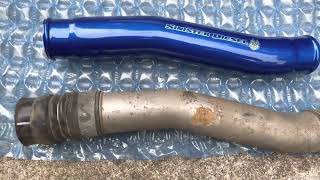
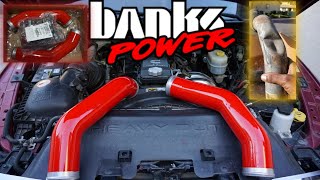
Typical fix: Replace the damaged hose or pipe. Many owners upgrade to more durable multi-ply silicone hoses and stronger T-bolt style clamps to prevent future failures. Aftermarket metal pipes are also a common upgrade for the plastic factory pipe.
Est. part cost: $50-$250 - Loose or Damaged Hose Clamps 🟡 Medium Probability Vibration and temperature changes can cause the factory spring or worm-gear clamps to loosen over time, allowing pressurized air to escape, especially under boost.
How to confirm: Physically check the tightness of every clamp in the intake tract. Spraying soapy water on connections while the engine is running can reveal bubbles from a leak.
Typical fix: Tighten any loose clamps. If a clamp is stripped or won't tighten properly, replace it. Upgrading to T-bolt clamps is a common preventative measure for better clamping force.
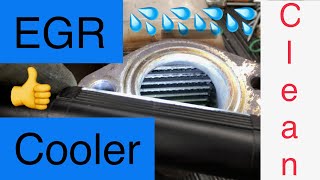
Est. part cost: $5-$50 - Clogged EGR System or Cooler 🟡 Medium Probability The 6.7L Cummins EGR system is known for heavy soot production, especially with city driving. This soot can clog the EGR cooler or related passages, creating a severe airflow restriction that the PCM interprets as a leak. TSB #9003758 directly identifies a plugged EGR Cooler as a cause for P2281.
How to confirm: If no physical leaks are found with a visual inspection or smoke test, the EGR system must be inspected. This involves removing components to check for heavy soot buildup inside the cooler and passages. A dealer can run an EGR Cooler Efficiency Test with a wiTECH tool. One owner's P2281 that only occurred while towing was finally fixed by replacing a plugged EGR cooler.
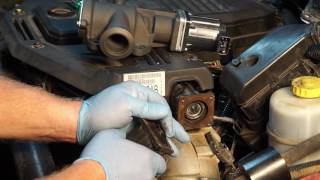
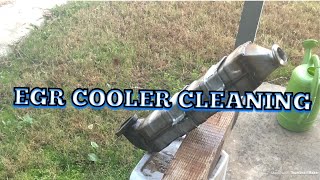
Typical fix: The EGR cooler and related components must be removed and professionally cleaned or replaced if cleaning is not sufficient. Some owners perform this cleaning at home.
Est. part cost: $300-$1000 for a new EGR cooler - Soot-Clogged Intake Heater Grid ⚪ Low Probability Soot from the EGR system can accumulate on the intake heater grid, which sits just before the intake manifold. This creates a bottleneck for incoming air that the PCM can misinterpret as a leak.
How to confirm: After confirming no leaks, remove the intake horn to visually inspect the heater grid for soot accumulation. A technician on the 'BobIsTheOilGuy' forum reported finding a grid 60% plugged on a truck with P2281 and P0101 after a smoke test passed.
Typical fix: Carefully clean the soot from the heater grid using brushes and a shop vacuum.
Est. part cost: $0 if DIY cleaning
Rare But Worth Checking
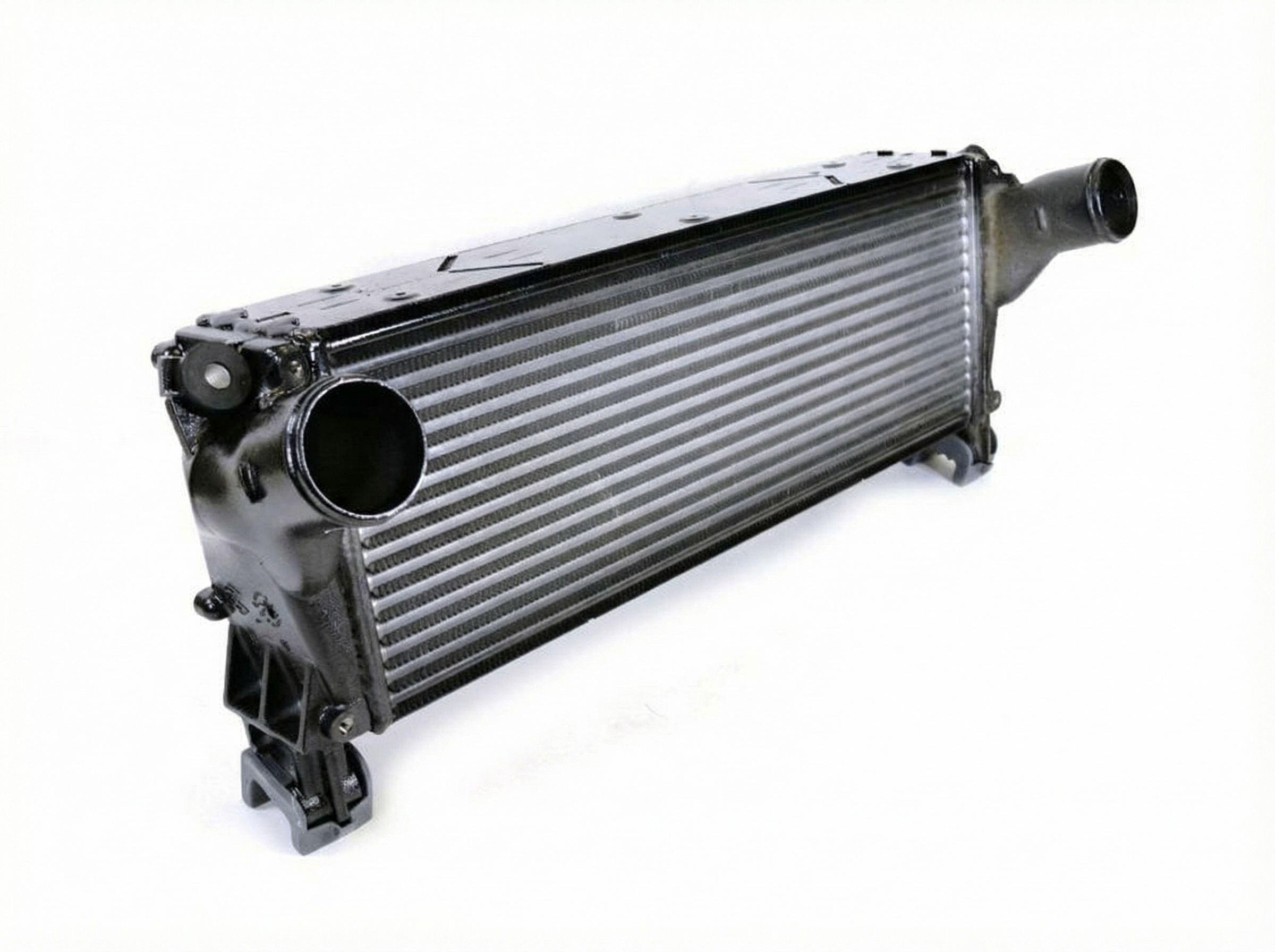
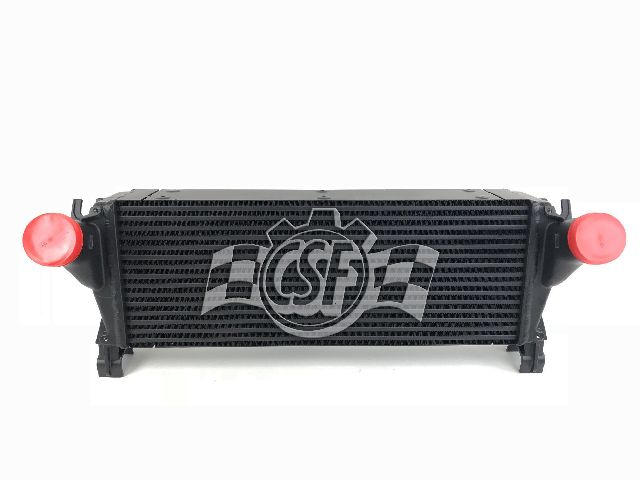
- Cracked Intercooler: Less common than hose failures, but the intercooler itself can crack from stress or impact, often at the seams where the end tanks meet the core. This usually requires a smoke test to confirm.
- Dirty or Faulty MAP/TMAP Sensor: A Manifold Absolute Pressure (MAP) sensor caked in soot can send incorrect readings to the PCM, causing it to misdiagnose a leak. Cleaning the sensor with dedicated electronics cleaner has resolved the code for some owners. One owner on a forum triggered a P2281 immediately after installing the wrong model year MAP sensor, highlighting its sensitivity.
- Leaking Intake Manifold Gasket: A failed gasket where the intake horn meets the cylinder head can cause an unmetered air leak. One owner on RamForum.com with a recurring P2281 found the cause to be a missing bolt under the heater grid, which created a leak.
- PCM Software Calibration: Multiple TSBs, such as 18-027-16, involve a PCM software update to improve diagnostic logic for P2281, sometimes changing it from a one-trip to a two-trip fault. This indicates the original logic could be overly sensitive, and a dealer reflash may be required to prevent false codes.
Diagnosis Steps
- Read the code and any other accompanying codes with an OBD-II scanner. Note any codes related to EGR (P0401/P0402) or boost (P0299/P0234).
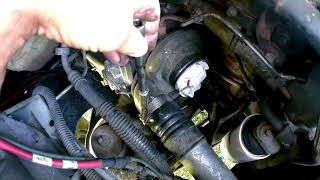
- Perform a thorough visual inspection of the entire intake air system, from the turbocharger outlet to the intake manifold. Pay close attention to all rubber/silicone boots and the plastic cold-side intercooler pipe, especially at bends and connection points.
- Check the tightness of all hose clamps in the charge air system.
- If no obvious leak is found, perform an intake air system pressure test (smoke test) to pinpoint small cracks or gasket leaks.
- A DIY diagnostic trick: Remove the air filter tube from the turbo inlet, start the engine, and then cover the turbo inlet with a piece of stiff cardboard to stall the engine. This creates a vacuum in the charge pipes, and any leaks may become audible as a hissing sound in the silence after the engine stops.
- If no leaks are found, inspect for restrictions. Remove the intake horn to check the intake heater grid and EGR passages for heavy soot buildup.
- Inspect and clean the MAP/TMAP sensor, which is located on the intake manifold. Heavy soot buildup can cause incorrect readings. Use a dedicated MAF/electronics cleaner, not brake cleaner.
- If TSB #9003758 applies, and the EGR cooler is suspected of being plugged (especially if the truck has a history of city driving or frequent idling), it should be inspected. This may require a dealer-level 'EGR Cooler Efficiency Test' using a wiTECH scan tool.
Parts You'll Likely Need
- Intercooler Hose / Boot
(OEM #52014735AB (Cold Side Pipe, 2013-18), 52014734AC (Hot Side Hose, 2013-18), 68417829AC (Cold Side, 2019+))— This is the most frequent failure point causing a P2281 code. The factory parts, especially the plastic cold-side pipe, can crack or split.
Trusted brands: Mishimoto, Sinister Diesel, Banks Power, Mopar (OEM), BD Diesel
OEM price range: $100-$320
Aftermarket price range: $50-$250 - T-Bolt Hose Clamps — They provide much higher and more consistent clamping force than factory clamps, preventing future leaks from loose connections or boots blowing off under high boost.
Trusted brands: Mishimoto, HPS, Vibrant Performance, BD Diesel
OEM price range: N/A
Aftermarket price range: $20-$50 for a set - EGR Cooler — If the code is caused by a restriction rather than a leak, a soot-plugged EGR cooler is a likely culprit as noted in TSBs. [Bulletin #9003758] This is especially common on trucks that do a lot of city driving or idling.
Trusted brands: Mopar (OEM), Dorman
OEM price range: $700-$1200
Aftermarket price range: $300-$800
Related Codes That Often Appear With This One
- P0401 — EGR Flow Insufficient. This code often appears with P2281 because a clogged EGR cooler can cause both a flow restriction and trigger the air leak logic. [Bulletin #9003758, #1813022]
- P0234 — Turbocharger Overboost Condition. An air leak can cause the turbo to work harder to build pressure, sometimes leading to an overboost condition. [Bulletin #9003758, #1813022]
- P0101 — Mass Air Flow (MAF) Circuit Range/Performance. This code can be set alongside P2281 when the PCM sees a major conflict between the MAF sensor's readings and what other sensors (like MAP) report.
- P0299 — Turbocharger Underboost. This is a common companion code, as a significant air leak prevents the turbo from building and maintaining the target boost pressure.
Technical Service Bulletins (TSBs) & Recalls
- 9003758: Explicitly links P2281, P0401, and P0234 to a soot-plugged EGR Cooler and advises technicians to contact the STAR Center, indicating a known complex issue.
- 1813022: Confirms P2281 can be set along with a cluster of EGR and boost-related codes like P0401, P0402, and P0234.
- 18-027-16 (and revisions): A PCM software update to improve diagnostic logic for P2281 and other codes, suggesting the original calibration could be too sensitive.
- 1807622 / 1802321 / 1801517: These TSBs list P2281 among a wide array of codes addressed by various PCM software updates, reinforcing that the code's trigger logic has been a focus of manufacturer revisions.
Platform-Specific Known Issues
- TSB #9003758 explicitly states that if a customer has a P2281 code along with P0401 or P0234, and the EGR cooler is found to be plugged with soot, a specific STAR Center contact should be made, indicating this is a known and tracked issue.
- TSBs #1813022, #1807622, #1802321, and #1801517 all list P2281 - "Air Leak Between MAF and Throttle Body" in conjunction with various other powertrain and emissions-related fault codes, highlighting its role as a symptom in a complex system.
- A software update mentioned in TSB 18-018-13 REV. D for 2013 models included improvements to prevent unnecessary MIL illumination for P2281, suggesting some cases could be triggered by overly sensitive software logic.
Mechanic-Grade Diagnostic Values
- MAP Sensor Power Supply Voltage (KOEO) — expected: Approximately 5V. Failure: A reading significantly lower than 5V suggests a wiring or PCM issue.
- MAP Sensor Ground Circuit Voltage (KOEO) — expected: Less than 100mV (0.10V). Failure: Voltage higher than 100mV indicates a poor ground connection, which can skew sensor readings.
- MAP Sensor Signal Voltage (KOEO) — expected: Around 4.5V at sea level (atmospheric pressure). Failure: A reading that does not correspond to the current atmospheric pressure can indicate a faulty sensor.
- MAP Sensor Signal Voltage (Engine Idling) — expected: Drops to 1-2V as vacuum is created in the intake.. Failure: Voltage that does not drop at idle or is unresponsive to throttle changes suggests a sensor or vacuum problem.
- TMAP (Temperature) Sensor Resistance — expected: 9k to 11k Ω at 25°C (77°F). Failure: Resistance far outside this range indicates a faulty temperature sensing element within the TMAP sensor.
Scan Tool Commands That Help
- wiTECH (Dealer Tool): EGR Cooler Efficiency Test — This is a guided test to run when a clogged EGR cooler is suspected as the root cause of P2281, as mentioned in TSB #9003758. It's used after physical leaks have been ruled out.
- wiTECH (Dealer Tool): PCM Reprogramming / Flash — As per multiple TSBs (e.g., 18-025-13), a PCM software update may be available to revise the diagnostic logic for P2281, making it less sensitive and preventing false codes. This should be checked if the code recurs without a clear physical cause.
Wiring & Ground Locations
- PCM/Engine Ground — On the driver's side of the engine block, there are ground wires that attach to a studded bolt that also secures the PCM to the block. These main ground wires typically run to the negative battery terminal.. A poor engine ground can cause incorrect voltage readings from critical sensors like the MAP/TMAP sensor, leading the PCM to misinterpret the data and set a false P2281 code.
- Body Grounds — On both the driver and passenger side inner fenders, there are ground wires from the main harness that connect to the truck's body.. While less direct, ensuring all body grounds are clean and tight is crucial for overall electrical system stability, which supports all sensor functions.
- MAP/TMAP Sensor Connector — Plugs into the MAP/TMAP sensor located on the intake manifold air horn. It is a 4-wire connector on these models.. The connector itself or its wiring can become damaged from heat and vibration, leading to intermittent or incorrect signals. Checking for loose pins or corrosion is a key diagnostic step before replacing the sensor.
Real Owner Repair Stories
- Reddit user / RamForum.com user (2016 Ram 3500 6.7L with Aisin, 45,000 miles, used for hotshot hauling) — Recurring P2281 and limp mode, specifically when towing a heavy load uphill.
❌ Tried (didn't work) Dealer replaced EGR Valve ($1,400), Another dealer diagnosed a small hole in the EGR Cooler and replaced it ($2,600), EGR system soot cleaning, Owner replaced the MAF sensor
✅ What actually fixed it The original poster did not provide a final update, but another forum user with technician experience noted that this exact scenario is common when only the EGR valve and cooler are cleaned/replaced. The fix requires cleaning the *entire* EGR system, including the bypass valve and intake elbow, to remove all restrictions. - Turbo Diesel Register forum user 'TomBrady' (Ram 2500 with 218k miles) — P2281 code appeared immediately after preventative maintenance.
❌ Tried (didn't work) Double-checking all air intake connections and tubes.
✅ What actually fixed it The owner had accidentally ordered and installed a MAP sensor for the wrong model year range. After reinstalling the old, cleaned sensor, the code disappeared. Replacing it with the correct part number permanently fixed the issue. - RamForum.com user (2020 Ram 3500 Aisin with 78,000+ miles) — Recurring P2281, P0420, P2459, and P2509, primarily when towing a 12,000 lb fifth wheel.
❌ Tried (didn't work) Forced DPF regeneration, Dealer replaced the intercooler for a diagnosed hole
✅ What actually fixed it After the intercooler was replaced, the P2281 code returned. A different dealership found a missing bolt under the heater grid, which was creating an air leak.
"I Checked Everything" — The Actual Cause
- A technician reported a 2017 Ram with P2281 and P0101 that repeatedly passed a smoke test. The actual cause was an intake heater grid that was 60% plugged with soot, creating a restriction the PCM interpreted as a leak.
- An owner on a forum performed a DIY vacuum test that showed no leaks. The P2281 code was ultimately resolved by removing and cleaning heavy carbon and soot buildup from the TMAP sensor, which had been sending incorrect pressure readings to the PCM.
When the Usual Fixes Don't Work
- In a case documented on a Ram forum, a 2016 truck used for heavy hauling repeatedly threw code P2281, especially under load. The owner spent over $4,000 at two different dealerships replacing the EGR valve and then the EGR cooler, both diagnosed as the source of the 'air leak'. However, the code continued to appear. This demonstrates that even when following TSB guidance pointing to the EGR system, simply replacing major components may not fix the issue if the entire system, including all passages and the intake elbow, is not thoroughly cleaned of soot restrictions.
OEM Part Supersession History
2897333, 4921850→5698455— Standard part revision and update by Cummins.
Heads up: These are the OEM part numbers for the MAP/TMAP sensor. Using a non-specified or incorrect model year part can immediately trigger a P2281 code, even if it fits physically.Unknown→52014735AB— This is the Mopar part number for the factory plastic cold-side intercooler pipe.
Heads up: This part number is specific to 2013-2018 Ram 6.7L Cummins trucks. The 2019+ (5th Gen) models use a different pipe design and part number.
Model Year Variations Within This Range
- 2019-2020: The 2019 model year marked the start of the 5th generation, which included significant engine updates. The 6.7L Cummins received a new compacted graphite iron (CGI) block, hydraulic lifters, and changes to the pistons and connecting rods. The air intake system, including the airbox and cold-side intercooler pipe, was redesigned and is not interchangeable with 2014-2018 models.
- 2014-2018: These 4th generation trucks use a specific plastic cold-side intercooler pipe (Mopar PN 52014735AB) that is a known failure point. While the failure mechanism is common across all years, the replacement part is specific to this generation.
Helpful Videos
Used OEM Parts in Stock
New Aftermarket Parts Available


The information in this article is provided for general reference and educational purposes only. Vehicle specifications, procedures, and part compatibility can vary by production date, trim level, and region. Always consult your vehicle's factory service manual and verify part numbers before purchasing or performing repairs. Safety-critical components such as airbags, seat belts, and braking systems should be installed by a qualified professional.
- Ram 2500:
- 🎬 Helpful Videos
- 🛍️ Shop This Part
- What's Unique About the 2014-2020 Ram 2500
- Diagnostic Flowchart
- Symptoms You May Notice
- Most Likely Causes
- Rare But Worth Checking
- Diagnosis Steps
- Parts You'll Likely Need
- Related Codes That Often Appear With This One
- Technical Service Bulletins (TSBs) & Recalls
- Platform-Specific Known Issues
- Mechanic-Grade Diagnostic Values
- Scan Tool Commands That Help
- Wiring & Ground Locations
- Real Owner Repair Stories
- "I Checked Everything" — The Actual Cause
- When the Usual Fixes Don't Work
- OEM Part Supersession History
- Model Year Variations Within This Range
- 🎟️ Get 5% Off